
Kentucky’s approximately 118 USDA-listed farmers markets give you a scalable sales network, with Louisville, Lexington, and Bowling Green anchoring the strongest demand for specialty produce like microgreens. Markets run primarily spring through fall, Saturday slots carry the highest foot traffic, and booth fees range from $15–$60 depending on location. Urban markets attract educated buyers already familiar with specialty crops, shortening your sales cycle considerably. What follows breaks down exactly how to find, apply for, and succeed at the right venue.
Key Takeaways
- Kentucky has approximately 118 USDA-listed farmers markets, concentrated in Louisville, Lexington, and Bowling Green, offering microgreens vendors consistent, repeatable sales channels.
- Most markets operate spring through fall, with Saturday slots carrying the highest customer demand and foot traffic for specialty produce vendors.
- Sunflower and pea shoots sell fastest with general shoppers, while radish and specialty brassicas attract chefs at urban markets.
- Booth fees typically range from $15–$60 per day; vendors must supply their own table, canopy, weights, and display infrastructure.
- Use the MGW Market Finder at markets.microgreensworld.com to identify Kentucky markets with open vendor slots and manageable drive times.
Farmers Markets in Kentucky for Microgreens Vendors
Kentucky’s approximately 118 USDA-listed farmers markets represent a substantial distribution network for microgreens vendors seeking consistent, repeatable sales channels across the state.
Louisville, Lexington, and Bowling Green anchor the highest market concentrations, giving you geographic targets where foot traffic and vendor competition both tend to run higher than in rural corridors.
The Kentucky market calendar operates primarily spring through fall, which means your production schedule and market applications need to align with that seasonal window if you’re going to move product efficiently.
Why Kentucky Markets Are Worth Your Attention
If you’re already growing microgreens at scale, Kentucky’s farmers market network deserves serious consideration as a distribution channel. The USDA database currently lists approximately 118 farmers markets kentucky vendors can access, spanning urban centers and smaller regional hubs.
Louisville, Lexington, and Bowling Green anchor the strongest buyer concentrations, where consumer familiarity with specialty produce tends to support consistent weekly volume. As a microgreens vendor kentucky growers increasingly recognize that the spring-through-fall calendar aligns well with peak production cycles, reducing the operational strain of selling outside optimal growing conditions.
The density of available markets also gives you geographic flexibility, meaning you can test multiple venues without committing to a single location before identifying where your product moves most reliably.
What the Kentucky Market Season Looks Like
The seasonal window for farmers markets in Kentucky runs primarily from spring through fall, with most markets opening in April or May and closing out by October or November. If you’re planning your microgreens farmers market entry, that compressed calendar matters. You have roughly six months to establish relationships, build a customer base, and hone your booth setup before markets go dormant.
Farmers markets Kentucky vendors steer tend to cluster weekend activity heavily, meaning Saturday slots carry the most competitive demand. A few year-round indoor markets exist in Louisville and Lexington, but those are the exception. Build your production schedule around the April start date, because showing up consistently from opening weekend signals to market managers that you’re a reliable, long-term vendor.
How to Find the Right Market in Kentucky

Before you apply to any market in Kentucky, you’ll want to assess vendor density, foot traffic patterns, and whether the market’s customer base actually buys specialty produce.
Louisville’s network of markets, including those in the Highlands and St. Matthews corridors, tends to draw health-conscious shoppers who are already familiar with microgreens, which shortens your sales cycle considerably.
Lexington and Bowling Green each support active market communities, but the competitive landscape differs enough between them that what works at a Lexington urban market won’t necessarily translate to a smaller Bowling Green venue.
What to Look for Before You Apply
Choosing the right Kentucky farmers market isn’t simply a matter of proximity, because a market ten minutes from your greenhouse can underperform compared to one forty minutes away that draws a consistent, health-conscious customer base willing to pay for specialty produce. Before submitting your farmers market vendor Kentucky application, evaluate foot traffic data, vendor composition, and whether competing microgreens booth farmers market presence already saturates that location.
A market running Saturday mornings in a higher-income neighborhood will typically outperform a midweek rural stop for specialty crops. Contact the market manager directly, ask about average weekly attendance, and confirm whether the vendor mix includes direct competitors. That conversation tells you more than any website description will. Qualified markets reward vendors who arrive already knowing the landscape.
Ready to locate Kentucky markets worth applying to? Utilize the free Market Finder at markets.microgreensworld.com.
Markets Near Louisville
Louisville’s density of farmers markets makes it one of the more competitive entry points for microgreens vendors in Kentucky, but that competition signals genuine consumer demand worth pursuing. If you’re offering microgreens for sale kentucky-wide, Louisville’s established buyer base justifies the application effort.
| Market | Location | Season |
|---|---|---|
| Louisville Farmers Market | Downtown Louisville | Spring–Fall |
| Bardstown Road Farmers Market | Louisville Highlands | Summer–Fall |
| St. Matthews Farmers Market | St. Matthews neighborhood | Spring–Fall |
| Norton Commons Market | Prospect area | Summer–Fall |
| Westport Farmers Market | East Louisville | Spring–Fall |
Each louisville farmers market operates under distinct vendor policies, so reviewing application windows before committing saves wasted effort. Prioritize markets with consistent foot traffic and existing specialty produce buyers already present.
Use the free Market Finder at [markets.microgreensworld.com](https://markets.microgreensworld.com) to identify your best Louisville-area opportunity.
Markets Near Lexington and Bowling Green
Lexington and Bowling Green consistently attract specialty produce buyers who pay attention to quality and provenance, which makes both cities viable entry points for microgreens vendors looking beyond Louisville’s competitive application pools.
The Lexington farmers market circuit includes multiple weekly venues with vendor rosters that rotate seasonally, giving you realistic application windows if you approach coordinators before March.
Bowling Green farmers market operations tend toward smaller footprints, which actually works in your favor because vendor relationships carry more weight than they do in larger metro settings.
Both cities sit within Kentucky’s primary spring-through-fall market calendar, so timing your outreach matters considerably. Employ the free Market Finder tool at markets.microgreensworld.com to pull current USDA-sourced listings for both markets and identify which ones still have open specialty produce slots.
What to Expect When You Get There
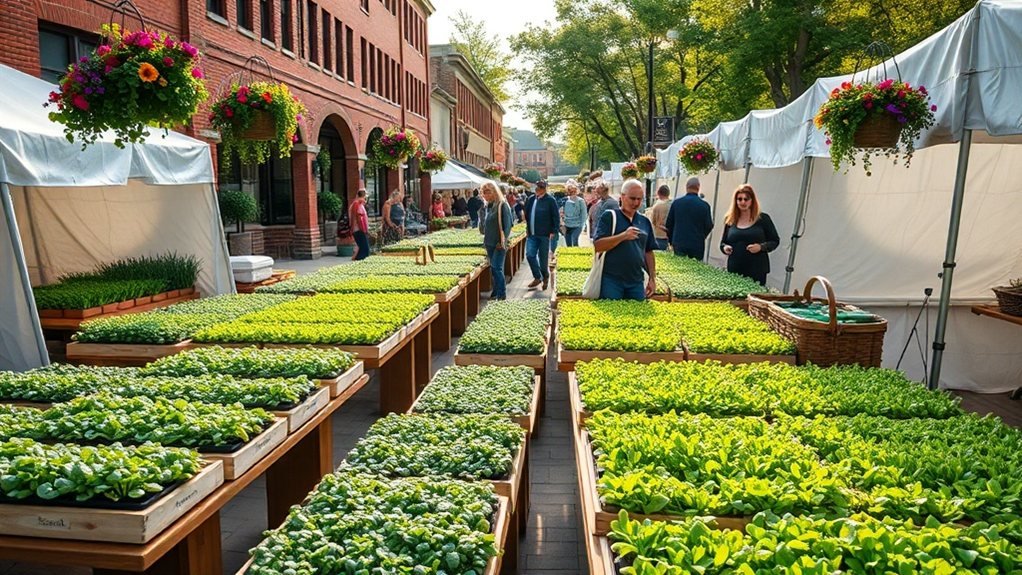
Once you’ve secured a spot, you’ll encounter booth fees that typically range from a flat daily rate to seasonal contracts, with Kentucky markets generally charging between $15 and $50 per market day depending on location and foot traffic.
Setup expectations vary by market, but most require you to supply your own table, canopy, and display infrastructure, meaning your first few appearances demand logistical preparation well before the opening bell.
What actually moves at Kentucky markets tends to skew toward familiar varieties like sunflower and pea shoots, which resonate with shoppers in Louisville’s urban corridors and Lexington’s food-forward communities, while more specialized cuts can gain traction once you’ve established a consistent presence.
Booth Fees and Setup Basics
Before you commit to a Kentucky farmers market, you need a realistic picture of what booth fees actually look like across the state, because the range is wider than most new vendors expect.
Smaller rural markets often charge between $15 and $25 per day, while established urban markets in Louisville or Lexington can run $30 to $60 weekly, sometimes requiring a seasonal commitment upfront.
Knowing how to get a farmers market booth means understanding that fees are only part of the cost equation. You’ll also need a six-foot table, a canopy rated for wind, and weights.
Farmers markets Kentucky microgreens vendors compete in require clean, professional presentation, so your physical setup signals credibility before a single customer stops walking.
What Moves at Kentucky Markets
Setting up a proper booth gets you through the door, but what you actually sell determines whether you come back next weekend or start questioning the whole venture.
Kentucky farmers market vendors consistently report that sunflower and pea shoots move fastest among general shoppers, while chefs sourcing through weekend markets favor radish, amaranth, and specialty brassicas.
As someone looking to sell microgreens at farmers market events across Kentucky, you’ll notice that educated buyers appear more frequently at urban markets in Louisville and Lexington than at smaller rural venues.
Farmers market Kentucky vendors who track weekly sell-through rates learn within two or three markets exactly which varieties justify tray space.
Price your product accordingly, bring variety depth, and you’ll identify your core buyers faster than most new vendors expect.
Getting Your Application Ready

Your application is the market manager’s first substantive assessment of you as a vendor, so the materials you submit must reflect both your operational readiness and your product’s commercial viability within their specific vendor mix.
Most Kentucky markets, particularly those in Louisville and Lexington where competition for spots is measurably higher, expect to see proof of cottage food compliance or applicable licensure, a clear product description, and documentation that demonstrates you’ve considered how your microgreens fit their existing vendor categories.
Understanding what managers are screening for, and where applicants consistently fall short, puts you in a considerably stronger position before you submit a single form.
What Market Managers Want to See
When a market manager opens your application, they’re looking for signals that you understand the professional standards of their market, not just that you grow something interesting. As a microgreens grower Kentucky vendors compete in a regulated environment, meaning your application must demonstrate compliance, not just enthusiasm. They want proof of a Kentucky Department of Agriculture cottage food registration or applicable license, liability insurance documentation, and clear product labeling examples.
Markets where microgreens sell locally at high volumes, like Louisville’s Phoenix Hill or Lexington’s Chevy Chase market, attract competitive applicant pools. Managers filter quickly for vendors who present organized booth photos, consistent packaging, and verifiable contact references. Your application is your first transaction with that market, and it tells them exactly how you’ll operate every single Saturday.
Common Mistakes to Avoid
Most application rejections don’t come from bad microgreens. They come from incomplete farmers market vendor applications, specifically missing documentation, vague product descriptions, or photos that fail to communicate your setup’s professionalism.
Kentucky market managers review dozens of applications; yours needs to demonstrate operational readiness, not just enthusiasm. When learning how to sell microgreens competitively, understand that submitting before confirming you meet the market’s specific product category requirements is a common and avoidable error.
Some markets prioritize locally grown staples, making a specialty crop pitch ineffective without situational framing. Submit your application with complete food handling documentation, a clear production summary, and photos showing your actual booth configuration. Precision in these details signals that you’ll be a reliable, low-maintenance vendor worth accepting.
Use the Market Finder to Shortcut Your Search

Tracking down open vendor slots across Kentucky‘s 118 USDA-listed markets takes considerable time when you’re working through each market’s website, social media page, or phone contact individually. The MGW Market Finder at markets.microgreensworld.com consolidates that research, pulling from verified USDA data so you’re not chasing outdated information.
For anyone building a microgreens business, that efficiency matters early, when your time is already split between growing cycles and selling microgreens locally. Enter your Kentucky location, filter by proximity, and you’ll surface markets you likely didn’t know were operating within a reasonable drive.
Some of Kentucky’s strongest vendor opportunities sit outside Louisville and Lexington, in mid-sized communities where microgreens competition is thin. Start your search at markets.microgreensworld.com and employ the Market Finder to identify your next real opportunity.
Frequently Asked Questions
Can You Sell Microgreens at Kentucky Farmers Markets Without a License?
You can sell microgreens at most Kentucky farmers markets without a license, but you’ll likely need a basic cottage food registration depending on how you’re growing, packaging, and presenting your product at the booth.
How Much Does It Typically Cost to Rent a Kentucky Market Booth?
You’ll typically pay $15 to $50 per day at most Kentucky markets, though larger urban markets in Louisville or Lexington can run higher. Seasonal stall fees vary widely, so contact each market manager directly.
Do Kentucky Markets Allow Shared Vendor Spaces Between Two Growers?
Some Kentucky markets allow shared vendor spaces, but you’ll need to ask each market manager directly. Policies vary widely, and many markets require both vendors to register separately before approving any booth-sharing arrangement.
What Happens if Your Microgreens Sell Out Before the Market Ends?
If you sell out early, pack up cleanly and let the market manager know. It builds credibility. Next week, bring more or stagger your harvest dates so you’ve always got product through closing.
Are There Kentucky Markets That Run Indoors During Winter Months?
Yes, some Kentucky markets do run indoor winter sessions. Louisville and Lexington tend to have the most options. You’ll want to confirm schedules directly with market managers since winter programming changes year to year.
Wrap-up
Kentucky’s farmers market landscape gives you a concrete starting point, with roughly 118 venues distributed across Louisville, Bowling Green, and the central Bluegrass region. You’ve got a defined seasonal window to build vendor relationships and move product consistently. The next step isn’t complicated: identify markets that align with your production schedule, prepare a clean application, and make contact. The infrastructure’s already there — you just need to utilize it.
Leave a Reply