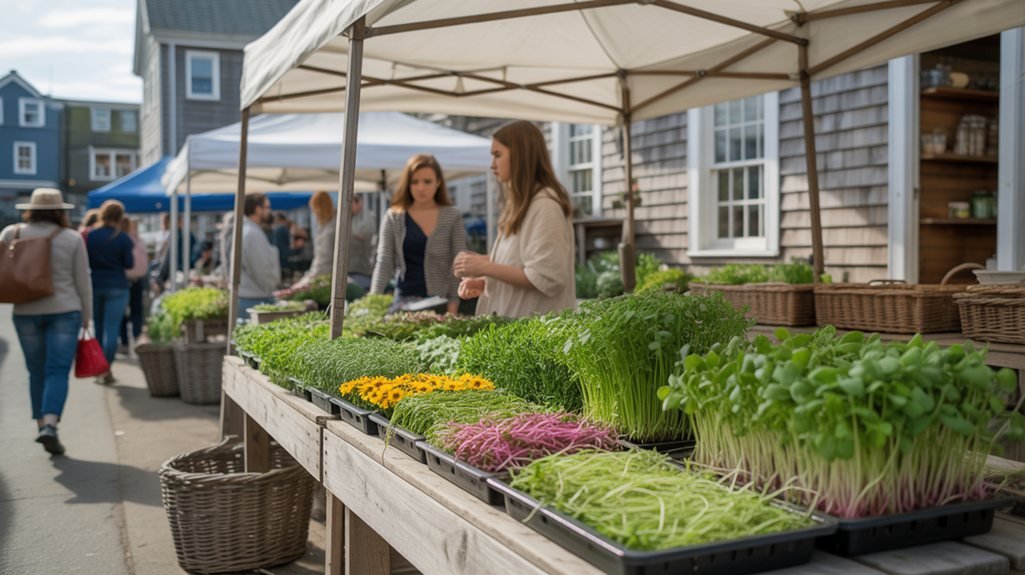
Rhode Island’s approximately 89 active farmers markets, concentrated in Providence, Newport, and Narragansett, give you a competitive selling environment where culinary-aware buyers and coastal demographics with higher disposable income converge. The season runs late April through October, with peak demand clustering in July and August. You’ll find manageable booth fees, ranging from $20 to $60 per market day, and the state’s compact geography lets you scout multiple venues in a single weekend — everything you need to know continues below.
Key Takeaways
- Rhode Island has approximately 89 active farmers markets, with the strongest concentrations in Providence, Newport, and Narragansett.
- High-demand microgreen varieties include sunflower, pea shoots, and radish, with sunflower generating high volume and repeat buyers.
- Booth fees typically range from $20 to $60 per market day, with seasonal contracts in Providence and Newport running higher.
- Application timing varies by region: Downtown Providence requires January–February outreach, while northern suburbs allow March–April applications.
- Required application materials include business registration, liability insurance, product photos, pricing, and cottage food compliance documentation.
Farmers Markets in Rhode Island for Microgreens Vendors
Rhode Island’s farmers market landscape, though compact by geographic standards, supports approximately 89 active markets listed in the USDA database, giving microgreens vendors a surprisingly dense network to work within.
You’ll find the strongest market concentrations in Providence, Newport, and Narragansett, where foot traffic and buyer familiarity with specialty produce tend to support consistent vendor performance.
The market season runs primarily spring through fall, which means your planning window is relatively defined, and securing a spot before the season opens requires early outreach to market managers.
Why Rhode Island Markets Are Worth Your Attention
Small states often punch above their weight regarding farmers market density, and Rhode Island is a clear example of that pattern. With approximately 89 markets listed in the USDA database, the state offers a microgreens vendor Rhode Island opportunities that its geographic footprint wouldn’t suggest.
Providence farmers market activity anchors the northern region, drawing consistent foot traffic from a population that skews toward culinary awareness and premium produce. Newport and Narragansett extend your reach into coastal demographics with substantial disposable income. Because the state is compact, you can realistically scout multiple markets within a single weekend without significant logistical strain.
That density matters when you’re building a vendor rotation, testing price points across different buyer profiles, and establishing the kind of repeat customer base that stabilizes your weekly harvest planning.
What the Rhode Island Market Season Looks Like
Knowing that Rhode Island‘s market density works in your favor is one thing, but understanding how the season maps onto your production calendar is what actually shapes your grow schedule.
Most farmers markets in Rhode Island open between late April and May, running consistently through October. That window gives you roughly five to six months of reliable selling opportunities, which demands disciplined succession planting rather than reactive growing.
Providence markets tend to anchor the calendar, operating weekly and drawing consistent foot traffic throughout summer. Newport and Narragansett markets follow similar rhythms, with peak attendance clustering around July and August.
If you’re entering the microgreens farmers market space for the first time, planning your first seedings six weeks before opening day puts you in a strong position from the start.
How to Find the Right Market in Rhode Island
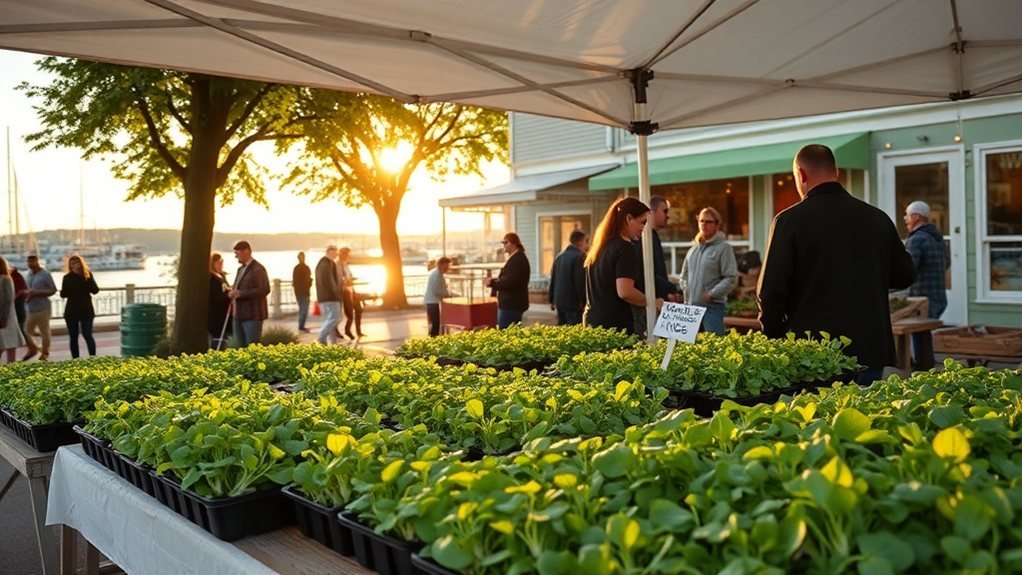
Before you apply to any market in Rhode Island, you need to evaluate each opportunity against your current production capacity, your delivery range, and the competitive landscape at that specific venue. Providence-area markets, including those operating in the capital’s densely populated neighborhoods, tend to attract high foot traffic but also draw more established vendors, which means your booth positioning and product differentiation matter from day one. Newport and Narragansett markets skew seasonal and tourist-driven, offering strong summer volume but requiring you to plan your growing schedule around a compressed, high-demand window rather than a steady year-round cadence.
What to Look for Before You Apply
Not every farmers market in Rhode Island is going to be the right fit for a microgreens vendor, and applying without doing your homework first can cost you time, money, and a spot you’re not ready to fill.
Before you commit as a farmers market vendor Rhode Island has application fees, booth minimums, and attendance requirements that vary significantly between markets.
A microgreens booth farmers market setup that works in a high-foot-traffic Providence location may be entirely wrong for a smaller seasonal market in Narragansett.
Check vendor density, existing produce sellers, and whether the market coordinator actively promotes specialty crops.
Review the market’s current vendor roster, confirm your product category isn’t already saturated, and verify that their operating schedule aligns with your production cycle.
Markets Near Providence
Within the greater Providence metro area, Rhode Island’s highest concentration of farmers markets creates a competitive but genuinely productive landscape for microgreens vendors who approach the application process strategically. As a local microgreens Rhode Island grower, understanding which markets align with your production volume matters before you submit anything.
| Market Area | Vendor Competition | Application Timing |
|---|---|---|
| Downtown Providence | High | January–February |
| East Providence | Moderate | February–March |
| Cranston | Moderate | February–March |
| North Providence | Lower | March–April |
| Johnston | Lower | March–April |
Farmers market Rhode Island vendors who target mid-tier Providence suburbs often secure spots faster than those chasing the flagship markets. Position yourself where demand exists but saturation hasn’t yet arrived.
Markets Near Newport and Narragansett
Moving south from Providence’s suburban markets, the Newport and Narragansett corridor presents a distinctly different vendor environment, one shaped by seasonal tourism, coastal demographics, and a customer base that skews toward higher disposable income.
The newport farmers market draws visitors alongside locals, which compresses your selling window into peak summer months but intensifies foot traffic considerably. You’ll want to position microgreens as a premium product here, because buyers in this corridor expect quality presentation and are accustomed to paying for it.
The narragansett farmers market operates with similar seasonal intensity, typically running through the warmer months when coastal communities swell with population.
Securing a spot in either location requires early outreach to market managers, well before the season opens.
Find both markets through the free tool at [markets.microgreensworld.com](https://markets.microgreensworld.com).
What to Expect When You Get There
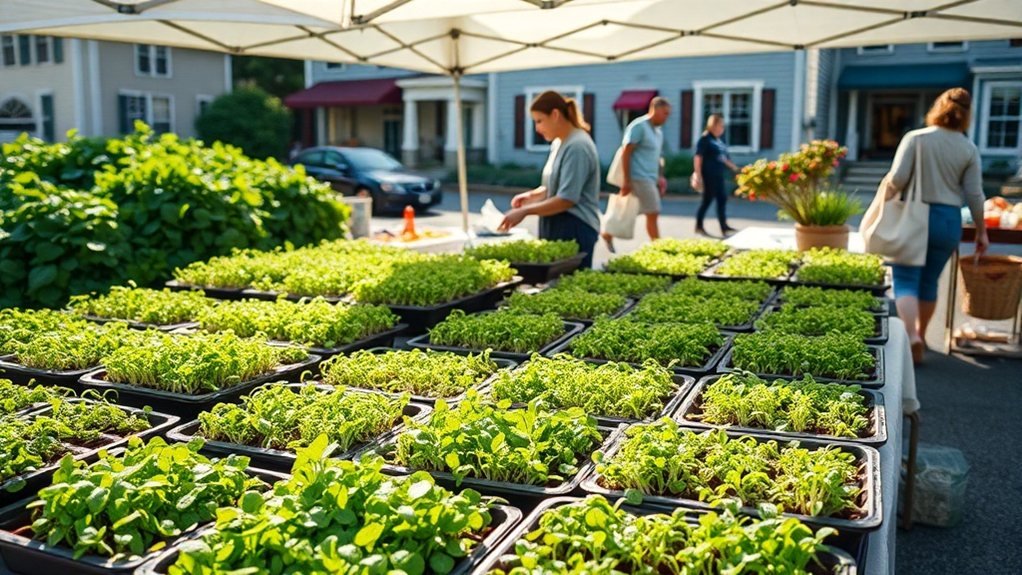
Once you’ve identified a viable market, you’ll encounter a predictable operational structure: booth fees, load-in windows, and product display expectations that vary by market size and management.
Fees at Rhode Island markets typically range from flat daily rates to seasonal contracts, with Providence’s larger markets often requiring more formal vendor agreements than smaller coastal operations in Narragansett or Newport.
Understanding what moves at each specific market, particularly the premium positioning of specialty crops like microgreens against conventional produce vendors, determines whether your margins justify the commitment.
Booth Fees and Setup Basics
Before you commit to a market, you need to understand what booth fees actually look like in Rhode Island, because the range is wider than most new vendors expect. Fees at farmers markets rhode island microgreens vendors frequent typically run between $20 and $60 per market day, though seasonal contracts at established Providence or Newport markets can push higher.
Knowing how to get a farmers market booth means understanding that lower fees don’t always signal lower foot traffic. Smaller Narragansett markets, for example, often charge modestly while delivering a concentrated, loyal customer base.
Budget for your canopy, a six-foot table, and adequate product display before your first setup, since underprepared booths lose credibility quickly with market managers evaluating vendor performance.
What Moves at Rhode Island Markets
The microgreens that consistently move at Rhode Island markets tend to cluster around a handful of varieties that shoppers already recognize, particularly sunflower, pea shoots, and radish, which sell reliably because buyers connect them to flavors they’ve encountered before.
| Variety | Market Performance |
|---|---|
| Sunflower | High volume, repeat buyers |
| Pea Shoots | Strong spring demand |
| Radish | Year-round turnover |
When you’re positioning microgreens for sale Rhode Island buyers respond to, lead with what’s familiar, then introduce specialty crops like amaranth or shiso once you’ve built trust with a customer base. Your farmers market vendor application should reflect the varieties you’re actually prepared to supply consistently, because market managers notice vendors who overcommit and underdeliver.
Getting Your Application Ready
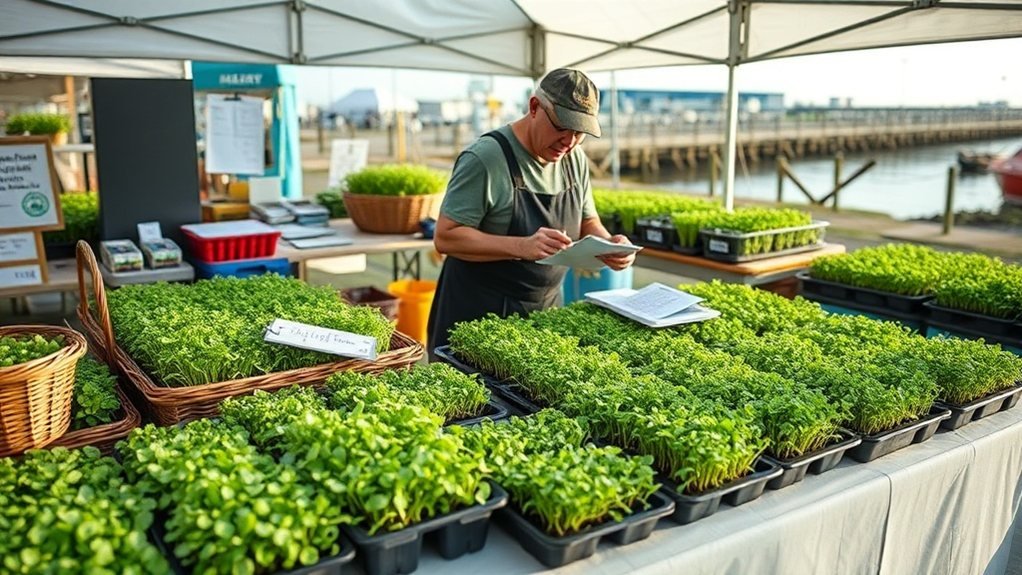
Your application is the market manager’s first impression of your operation, and in competitive Rhode Island markets, a poorly assembled submission can disqualify you before you’ve spoken a word.
Most managers want documented proof of your growing setup, a clear product list with pricing, and evidence that you understand local food safety requirements, particularly cottage food or commercial kitchen compliance where applicable.
Vendors who skip the liability insurance certificate or submit vague descriptions of their microgreens varieties tend to get passed over, even when booth space is available.
What Market Managers Want to See
Getting accepted at a Rhode Island farmers market starts well before you fill out the application form, because market managers are evaluating your operation’s legitimacy and consistency from the first point of contact. As a microgreens grower Rhode Island vendors compete alongside established produce sellers, so your documentation needs to signal professionalism immediately.
| What They’re Reviewing | Why It Matters |
|---|---|
| Business registration | Confirms legal operation |
| Liability insurance certificate | Required at most RI markets |
| Growing documentation | Validates your production claims |
| Product photos | Demonstrates presentation standards |
When you sell microgreens at farmers market applications, managers want evidence that you’ll show up reliably and represent their market well. Bring organized paperwork, clear product images, and proof that your growing space meets Rhode Island’s cottage food or agricultural requirements.
Common Mistakes to Avoid
Most application rejections at Rhode Island farmers markets aren’t about the quality of your microgreens at all, but rather about avoidable procedural gaps that signal operational immaturity to market managers.
Submitting incomplete documentation, particularly missing liability certificates or unlicensed cottage food paperwork, immediately disqualifies your microgreens market stand before anyone evaluates your product.
When selling microgreens locally, you’re competing against established vendors who’ve honed their applications across multiple seasons, so procedural sloppiness reads as unpreparedness.
Another common failure involves applying without researching the market’s existing vendor roster, which means you might propose a category already saturated.
Rhode Island managers notice when applicants haven’t visited the market beforehand, because booth layout descriptions and pricing structures reveal whether you’ve actually observed the operational environment firsthand.
Use the Market Finder to Shortcut Your Search
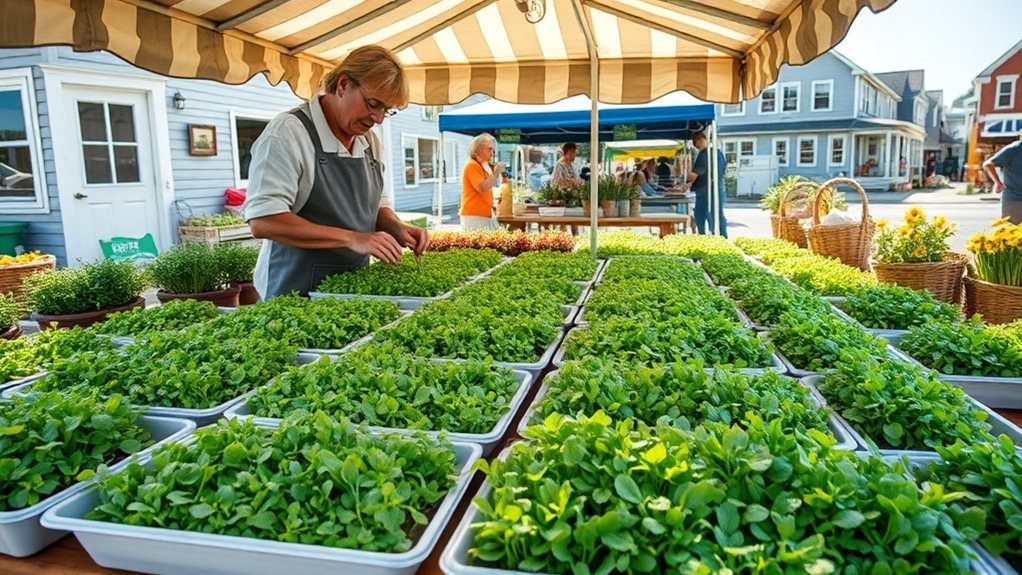
Tracking down every active farmers market in Rhode Island by hand takes longer than most new vendors expect, particularly when you’re cross-referencing websites, calling market managers, and revealing that half the contact information is outdated. The MGW Farmers Market Finder at markets.microgreensworld.com pulls from USDA data to surface approximately 89 Rhode Island markets, organized so your microgreens business can evaluate proximity, seasonality, and vendor fit without the manual research burden.
If you’re serious about how to sell microgreens at scale, eliminating inefficient prospecting early matters. Providence, Newport, and Narragansett markets appear prominently in the results, giving you a structured starting point rather than a scattered one. Employ the free Market Finder tool at markets.microgreensworld.com to identify your next opportunity.
Frequently Asked Questions
Can I Sell Microgreens at Multiple Rhode Island Markets Simultaneously?
Yes, you can run multiple Rhode Island markets simultaneously by hiring help or rotating schedules. Many vendors stack weekend markets across Providence, Newport, and Narragansett to maximize reach without overextending their production capacity.
Do Rhode Island Farmers Markets Require Proof of Insurance for Vendors?
Most Rhode Island farmers markets do require proof of liability insurance before you can set up your booth, so you’ll want a vendor policy secured before applying.
How Much Does a Typical Rhode Island Market Vendor Booth Cost?
Most Rhode Island market booth fees run $20 to $50 per day, though established markets in Providence or Newport can push higher. You’ll want to confirm fees directly when you apply.
Are There Year-Round Indoor Farmers Markets Operating in Rhode Island?
A few Rhode Island markets do run year-round indoors, but they’re limited. Providence tends to have the strongest options. Verify current schedules directly with market managers since indoor winter programming changes frequently.
Do Rhode Island Markets Allow First-Time Vendors Without Sales History?
Most do. Rhode Island markets typically evaluate you on product quality and presentation, not past sales. Bring samples, a clean setup, and confidence. Your microgreens will speak louder than any sales history.
Wrap-up
Rhode Island’s 89 farmers markets represent a concentrated, accessible distribution network that’s genuinely worth your time as a microgreens vendor. You’ve got strong anchor markets in Providence, Newport, and Narragansett, plus a spring-through-fall season that gives you enough runway to test, adjust, and build a loyal customer base. Employ the tools available to you, get your application in early, and treat your first season as structured market research.
Leave a Reply