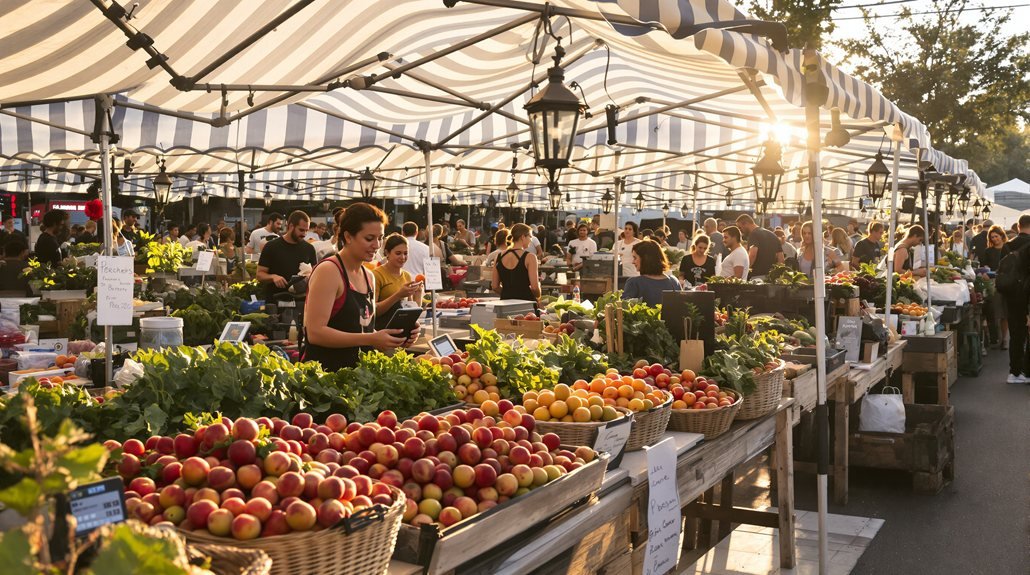
Category: Market Access

  • Farmers Markets That Accept SNAP and EBT Near You (And Why It Matters for Vendors Too)

    Farmers Markets That Accept SNAP and EBT Near You (And Why It Matters for Vendors Too)

    You can find farmers markets that accept SNAP and EBT near you using the MGW Market Finder at markets.microgreensworld.com — it filters by location and pulls from USDA data. Once you’re there, the market either swipes your card at a central booth and gives you tokens or runs a wireless terminal directly at the vendor’s booth. Both work like cash. Vendors benefit too — SNAP-accepting markets bring steadier foot traffic and more repeat customers. There’s more worth knowing before you go.

    Key Takeaways

    • Use the MGW Market Finder at markets.microgreensworld.com to locate nearby SNAP/EBT-accepting farmers markets using a built-in USDA-sourced filter.
    • Confirm market hours, SNAP acceptance, and whether a token system or wireless terminal is used before visiting.
    • SNAP covers fresh produce and food-producing plants like microgreens, but not hot foods, alcohol, or non-food items.
    • Vendors must obtain USDA SNAP retailer authorization through fns.usda.gov before accepting EBT at their market stall.
    • SNAP-accepting markets attract broader, mixed-income customer bases, generating higher foot traffic and more repeat buyers for vendors.

    Farmers Markets That Accept SNAP and EBT Near You (And Why It Matters for Vendors Too)

    Whether you’re shopping on a tight budget or trying to sell at a farmers market, SNAP acceptance changes the equation for both sides of the table.

    Since 2014, the number of SNAP-authorized farmers markets in the U.S. has grown from under 2,000 to more than 8,000, which means more buyers with purchasing power and more competition for vendor spots at those markets.

    That’s not a small shift — it’s reshaped who shows up, who buys, and what sells.

    How SNAP Changed the Customer Mix at Farmers Markets

    SNAP acceptance at farmers markets quietly drew in a whole new wave of shoppers who weren’t showing up before. SNAP benefits farmers market access opened the door for families who relied on grocery stores simply because that’s where their card worked. Now those same families shop alongside longtime regulars.

    Before SNAP acceptance After SNAP acceptance
    Mostly higher-income shoppers Mixed income customer base
    Smaller weekly foot traffic Increased consistent attendance
    Narrower community connection Broader neighborhood participation

    That shift changes the whole feel of a market. You’re not selling to one type of person anymore. You’re part of something the whole community uses. For vendors, that’s not just good optics. That’s real, recurring foot traffic from people who come back weekly.

    Why This Is a Different Conversation for Buyers and Sellers

    Buying with SNAP at a farmers market and accepting SNAP as a vendor are two completely different problems to solve. If you’re a buyer, your question is simple: which EBT farmers market is near me and what can I get there? If you’re a vendor, the question goes deeper. You need federal authorization, the right equipment, and a clear understanding of what your customers actually need from you.

    Neither perspective is more crucial than the other. But mixing them up creates confusion fast.

    This article speaks to both of you directly. When the advice is for buyers, it’s for buyers. When it shifts to vendors, you’ll know. You belong in this conversation either way.

    How Do You Find Farmers Markets That Accept SNAP Near You?
    find snap accepting farmers markets

    Finding a SNAP-accepting farmers market used to mean calling around or just hoping for the best. The MGW Market Finder at markets.microgreensworld.com has a built-in SNAP/EBT filter that pulls from USDA data, so you can search by location and filter results to show only markets that accept EBT.

    Before you go, confirm the market’s current hours and check whether they employ a token system or a wireless terminal, since both are valid but work differently at the booth.

    Using the MGW Market Finder SNAP Filter

    If you’ve ever tried searching “farmers market SNAP near me” and gotten a wall of outdated Yelp results, you’re not alone. Most search results don’t tell you whether a market currently accepts EBT or not.

    That’s exactly what the MGW Farmers Market Finder addresses. Head to markets.microgreensworld.com and utilize the built-in SNAP/EBT filter. It pulls live data from the USDA, so you’re not guessing. Just set your location, flip the filter on, and you’ll see farmers market SNAP EBT options near you.

    No more calling ahead. No more showing up and finding out the hard way.

    Whether you’re shopping or selling, this tool puts you in the right place with the right community around you.

    What to Check Before You Go

    The SNAP/EBT filter at markets.microgreensworld.com gets you a solid list, but there’s a short checklist worth running through before you load up your bags and head out. Understanding SNAP at farmers market how it works saves you a wasted trip.

    What to check Why it matters Where to confirm
    SNAP acceptance is current Listings change seasonally Call the market directly
    EBT terminal or token system Some markets use wooden tokens instead of cards Market website or social page
    Operating hours and dates Many markets run spring through fall only USDA market directory
    Vendors selling produce Not every booth takes SNAP Ask the market manager

    How Does SNAP Work at a Farmers Market Booth?

    ebt tokens for microgreens

    If you’ve never utilized an EBT card at a farmers market before, the process is simpler than it sounds.

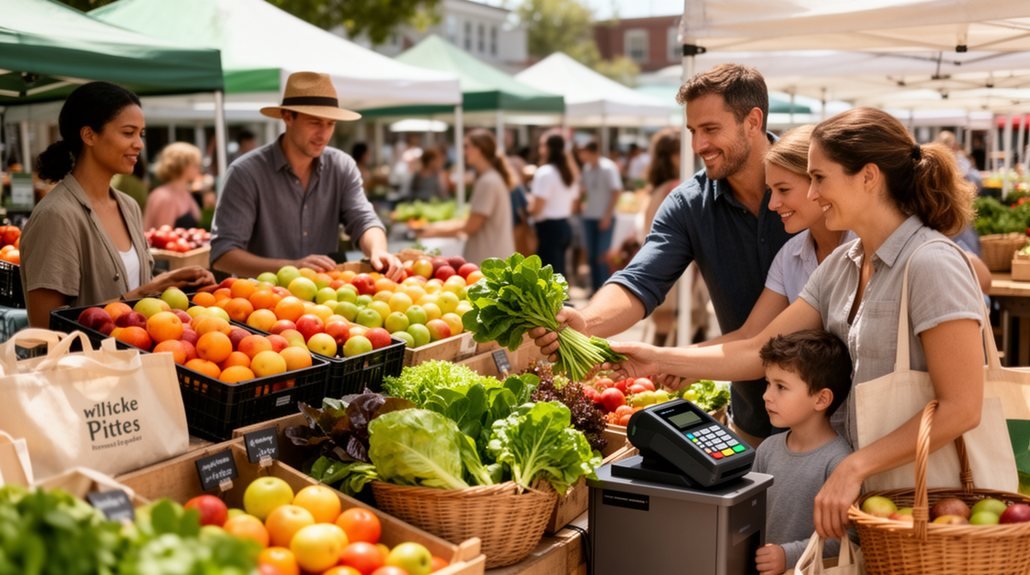
    Most SNAP-accepting markets utilize a token system — you bring your EBT card to a central market booth, swipe it for a dollar amount, and receive wooden or plastic tokens you spend at any participating vendor table.

    Your card covers the same eligible foods it covers at a grocery store: fruits, vegetables, and other staple food items, which means microgreens qualify.

    What EBT Cards Can Buy at a Vendor Table

    Most EBT cards work the same way at a farmers market booth as they do at a grocery store — you’re spending SNAP benefits on eligible food items. That means fresh produce, seeds, and plants that grow food all qualify.

    Eligible with EBT Not eligible with EBT
    Fresh microgreens Hot prepared foods
    Vegetables and fruit Alcohol or tobacco
    Food-producing seeds Non-food items

    Using your ebt card farmers market visit means you buy the same things you’d grab at any store. Raw, edible, and unheated. That’s the rule. Microgreens sold fresh at a booth clear that bar easily. If something’s cooked on-site and served warm, SNAP won’t cover it.

    How the Token or Card Transaction Works at Market

    Paying with EBT at a farmers market booth operates a little differently than swiping your card at a grocery store, but it’s not complicated once you see it once.

    Most markets run a central cashier station. You bring your EBT card there, tell them how much you want to spend, and they process the transaction. In return, you get wooden or plastic tokens worth the same dollar amount. Then you spend those tokens directly at any vendor who agreed to accept SNAP at farmers market booths.

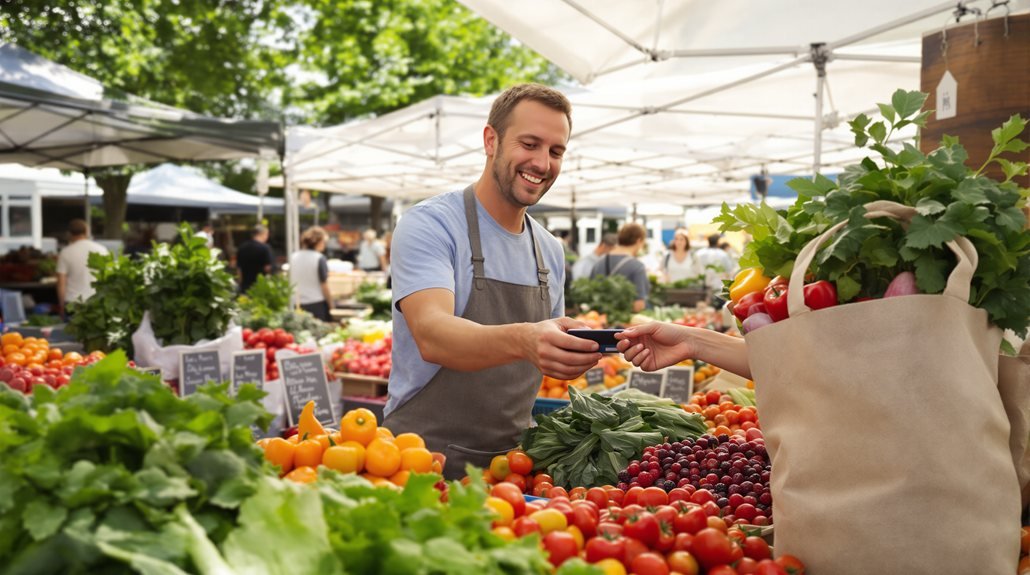
    Some markets skip the token system entirely and make use of a wireless EBT terminal right at the booth. Either way, the tokens or the terminal act like cash. Nothing marks you as different from any other shopper.

    What Is the WIC Farmers Market Nutrition Program?

    wic farmers market vouchers

    WIC and SNAP are two completely different programs, and mixing them up at a market booth can cost you a sale.

    WIC stands for Women, Infants, and Children — it’s a federal nutrition program that issues paper vouchers or checks specifically for fresh fruits and vegetables at approved farmers markets, not a general-purpose EBT card.

    Some states run much stronger WIC Farmers Market Nutrition Program (FMNP) operations than others, with California, New York, and Pennsylvania consistently distributing the highest volume of FMNP benefits to market vendors.

    How WIC Benefits Differ From SNAP at Markets

    Although both programs help low-income families buy food, SNAP and WIC work very differently at the farmers market. SNAP loads onto an EBT card like a debit card. You swipe it and buy what you need. WIC is more specific. It gives you vouchers or checks tied to particular foods — think fruits, vegetables, dairy, and grains. You can’t just buy anything.

    At a farmers market, WIC vouchers are accepted only at authorized vendors. Not every SNAP booth qualifies for WIC automatically. That’s a separate authorization process.

    If you’re searching for markets using a snap farmers market locator, confirm which programs each market accepts. The two lists don’t always overlap. Knowing the difference saves you a wasted trip.

    Which States Have the Strongest WIC Market Programs

    The WIC Farmers Market Nutrition Program — known as FMNP — is a federal benefit that gives WIC participants extra money specifically to spend at farmers markets. It runs separately from regular WIC benefits.

    Not every state participates. Currently, around 25 states run active FMNP programs. States with the strongest programs include California, New York, Pennsylvania, and Michigan. These states fund higher voucher amounts and partner with more markets.

    If you’re a vendor in one of these states, getting into a WIC FMNP market opens your booth to a dedicated group of shoppers who’ve money set aside specifically for fresh produce. Microgreens qualify.

    Check your state’s WIC agency directly to confirm current participation and voucher values in your area.

    Why Should Vendors Care Which Markets Accept SNAP?

    increased steady snap customer base

    Choosing a SNAP-accepting market directly influences who shows up to buy from you. Markets that accept SNAP tend to draw a wider mix of shoppers, including buyers who prioritize fresh produce and visit consistently.

    Vendors at these markets report steadier foot traffic and repeat customers, which matters more than a single high-sales day.

    How SNAP Acceptance Changes the Customer Mix at a Market

    Vendors often overlook market selection as a competitive decision, but it directly shapes who walks past your booth.

    A farmers market with EBT accepted draws a wider slice of the community. That includes working families, seniors on fixed incomes, and people who genuinely want fresh food but are watching every dollar.

    That customer isn’t just a transaction. They’re often a loyal, repeat buyer once they find a vendor they trust.

    Markets without SNAP pull from a narrower pool. You’re competing for the same weekend shoppers everyone else wants.

    SNAP-enabled markets shift that dynamic. You’re not adding charity to your business model. You’re adding people. And people who feel welcomed at a market tend to come back.

    What Vendors Report About Sales at SNAP-Friendly Markets

    Sales numbers tell the real story here. Vendors at SNAP-accepting markets consistently report higher foot traffic and more repeat customers than at markets without EBT access. That’s not a coincidence. When you search “farmers market SNAP near me” and show up at one of those locations, you’re walking into a market that’s already built trust with a wider community.

    Microgreens vendors specifically note that SNAP customers often buy weekly once they uncover a product they like. That kind of loyalty adds up fast. You’re not chasing new faces every weekend. You’re building regulars.

    The market itself matters as much as your booth. Picking the right location means you’re already positioned where consistent, returning buyers are showing up.

    How Do You Apply to Accept SNAP at Your Booth?

    obtain usda approval terminal

    Accepting SNAP at your booth starts with two things: a USDA SNAP retailer authorization and a way to process EBT payments on-site. You apply for that authorization directly through the USDA Food and Nutrition Service website, and the process is free.

    Once you’re approved, you’ll need a wireless EBT terminal or you can work through your market’s token system if they’ve one set up.

    The Authorization and Equipment You Need

    To sell with SNAP at your booth, you need two things: a USDA retailer authorization and a way to process EBT transactions. The authorization comes first — apply at fns.usda.gov. Equipment comes second. Most vendors use a wireless EBT terminal or a snap token system farmers market programs often run through the market itself.

    Item What it is Where to get it
    USDA retailer authorization Federal approval to accept EBT fns.usda.gov
    Wireless EBT terminal Swipes cards on-site Terminal provider or market
    SNAP token system Physical tokens exchanged for EBT value Market coordinator
    Market agreement Confirms shared equipment access Your market manager
    Backup plan Manual token log if terminal fails Create your own

    How the Application Process Works for Farmers Market Vendors

    Applying for SNAP retailer authorization is more straightforward than it sounds. You go to fns.usda.gov and submit an online application through the USDA Food and Nutrition Service portal. You’ll need your business name, address, and tax ID. For a farmers market booth, your market stall location counts as your business address.

    The USDA reviews your application and may ask follow-up questions. Approval typically takes a few weeks. Once you’re approved, you get your retailer authorization number. That number is what lets you legally accept farmers market SNAP EBT transactions at your booth.

    The process feels like a lot at first. It’s not. Most vendors get through it in one sitting.

    Frequently Asked Questions

    Can You Use SNAP Benefits to Buy Microgreens at Farmers Markets?

    You can utilize your SNAP benefits to buy microgreens at farmers markets. They qualify as fresh produce, so bring your EBT card and shop at any SNAP-authorized market booth near you.

    Do All Vendors at a Snap-Accepting Market Automatically Accept EBT?

    Not all vendors accept EBT, even when the market does. Each vendor gets authorized separately, so you’ll want to ask individual sellers before you shop.

    Is There a Spending Limit When Using SNAP at Farmers Markets?

    Your monthly SNAP benefit balance is your only spending limit. There’s no cap on how much you can spend at a farmers market — you just can’t exceed what’s loaded on your EBT card.

    Can Farmers Markets Lose Their SNAP Authorization, and How Often?

    Yes, they can lose it. The USDA can revoke a market’s SNAP authorization for violations like fraud or expired paperwork. Reauthorization isn’t guaranteed, so check markets.microgreensworld.com before your next visit.

    Does Double up Food Bucks Work the Same Way as SNAP?

    Double Up Food Bucks doesn’t work the same way as SNAP. It’s a matching program — you spend SNAP dollars, and you get extra funds specifically for fruits and vegetables. Participation varies by market.

    Wrap-up

    Whether you’re shopping or selling, SNAP access changes what’s possible at a farmers market. Shoppers get real food with their benefits. Vendors get more customers. It’s a straightforward win for both sides. Utilize the MGW Farmers Market Finder at markets.microgreensworld.com to find SNAP-accepting markets near you. Filter by location, show up, and see what’s available. The tool does the hard part. You just have to go.
  • What Is Double Up Food Bucks and Which Farmers Markets Offer It?

    What Is Double Up Food Bucks and Which Farmers Markets Offer It?

    Double Up Food Bucks is an EBT matching program that doubles what you spend on fresh produce at participating farmers markets — up to a daily limit set by each market. Swipe your SNAP card, buy eligible fruits and vegetables, and you get matching funds to spend on more produce that same day. Not every market that accepts SNAP participates, so you’ll want to confirm before you go. Keep scrolling to find out exactly how to locate a participating market near you.

    Key Takeaways

    • Double Up Food Bucks is an EBT matching program that doubles SNAP dollars spent on fresh fruits and vegetables at participating farmers markets.
    • The program began in Michigan in 2009 and has since expanded to more than 25 states with varying local rules.
    • When SNAP is spent on eligible produce, an equal match is issued as tokens or digital credit, usable the same day.
    • Not every farmers market that accepts SNAP participates in Double Up; confirmation with each market is required before visiting.
    • Use the MGW Farmers Market Finder at markets.microgreensworld.com to locate nearby SNAP-accepting markets, then confirm Double Up participation separately.

    What Is Double Up Food Bucks and Which Farmers Markets Offer It?

    If you utilize SNAP benefits and shop at farmers markets, Double Up Food Bucks was built for you.

    The program started in Michigan in 2009 to solve a straightforward problem: SNAP dollars didn’t stretch far enough at markets, so fresh produce stayed out of reach for a lot of families.

    It worked well enough that it spread to 25+ states, each running its own version through local administrators.

    What Problem Double Up Food Bucks Was Designed to Solve

    Fresh produce costs more than most people expect when shopping at a farmers market. That price gap keeps a lot of SNAP households from buying the food they actually want.

    Double Up Food Bucks farmers market programs exist specifically to close that gap. When you spend SNAP dollars on fruits and vegetables, Double Up matches what you spend — up to a set limit — so your budget goes twice as far.

    It started in Michigan as a direct response to that affordability wall. The program recognized that wanting fresh food and being able to afford it are two different things. You’re not alone in that. The program was built around that exact reality.

    How the Program Grew From Michigan to 25+ States

    What started in Michigan didn’t stay in Michigan. The program launched in Detroit in 2009 through the Fair Food Network. It worked. So other states paid attention.

    From there, Double Up Food Bucks states grew to include more than 25 across the country. Places like California, New York, Iowa, and Oregon now run their own versions. Each state has its own administrator and its own rules. That’s worth knowing before you assume the program works the same everywhere.

    The growth happened because local food advocates in each state pushed for it. They saw what Michigan built and wanted in.

    If you’re shopping at a farmers market with SNAP benefits, there’s a real chance Double Up is available near you now.

    How Does Double Up Food Bucks Work at a Farmers Market?

    matches snap purchases for produce

    The mechanics of Double Up are simpler than they sound. You spend SNAP dollars on eligible produce at a participating market, and the program matches those dollars up to a set limit so you walk away with more food for the same out-of-pocket cost.

    Not everything at the market qualifies, though, so knowing what counts before you shop saves you a headache at the token table.

    The Dollar-Matching System Explained Step by Step

    When you swipe your EBT card at a Double Up participating market, the program matches what you spend on fruits and vegetables — up to the daily limit set by that market’s program administrator.

    Spend $10 on produce, get $10 more to spend on produce. That’s double up food bucks how it works in practice.

    The match comes as market tokens or a digital credit, depending on the market. You utilize those matched funds the same day on eligible fresh produce only. No meat. No packaged goods.

    Each market sets its own daily cap, so ask the info booth what the limit is before you shop.

    Knowing that number upfront helps you plan your purchases and get the most out of every visit.

    What Produce Qualifies and What Does Not

    Fresh fruits and vegetables are what Double Up covers — both raw and whole. That means apples, tomatoes, leafy greens, and yes, microgreens count as double up food bucks eligible produce at most participating markets. If it grows from the ground and you eat it as-is, you’re probably in good shape.

    What doesn’t qualify? Processed items, prepared foods, meat, dairy, and seeds. Even if a vendor sells all of those things at the same stand, only the fresh produce portion triggers the match.

    One thing people miss: dried herbs and frozen vegetables vary by state. Some programs include them. Some do not. Ask your market manager directly before you assume something qualifies. They know their program rules better than anyone.

    Which States Have Double Up Food Bucks Programs?

    varied statewide and local coverage

    Double Up Food Bucks is active in over 25 states, but the programs aren’t all built the same.

    Some states run a single statewide program that works at every participating market across the state.

    Others only have coverage in certain cities or regions, so your zip code determines whether you have access at all.

    States With Statewide Programs

    As of 2025, over 25 states have some version of Double Up Food Bucks running. Michigan is where it all started, and Double Up Food Bucks Michigan remains one of the most established programs in the country. From there, it spread to states like California, New York, Washington, Colorado, Iowa, and many others.

    Some states run a single unified program with one administrator. That’s a statewide program. It means the rules, the dollar-match limits, and the participating markets are all coordinated under one umbrella. If you’re in one of those states, you’re working with one consistent set of guidelines.

    Statewide programs tend to have broader market participation and more consistent support for both shoppers and vendors.

    States With Regional or City-Level Programs Only

    Not every state has pulled together a single program that covers the whole map. Some states run Double Up Food Bucks through a patchwork of local organizations instead. That means the SNAP matching program at farmers markets only exists in certain cities or regions within those states.

    Texas, for example, has active Double Up sites in Houston and a few other metro areas but nothing statewide. Same story in some parts of the Northeast and South.

    If you live in one of these states, your market might still participate. You just have to check. You belong in this program as much as anyone else. Consult the MGW Farmers Market Finder at markets.microgreensworld.com to see which nearby markets accept SNAP and offer matching.

    How Do You Find Farmers Markets That Offer Double Up Food Bucks?

    find markets with doubleup

    Finding a market that accepts SNAP is step one, but confirming it also runs Double Up is a separate step that a lot of people skip.

    Start with the MGW Market Finder at markets.microgreensworld.com, which includes a SNAP filter to locate accepting markets near you.

    Once you’ve got a short list, contact each market directly to ask whether they participate in Double Up before you make the trip.

    Using the MGW Market Finder to Find SNAP Markets Near You

    Tracking down a farmers market that actually accepts SNAP is one thing. Finding one that also offers Double Up Food Bucks is another.

    The MGW Farmers Market Finder at markets.microgreensworld.com has a SNAP filter built in. Employ it to locate nearby markets that accept SNAP/EBT. That’s your starting point. Not every SNAP-accepting market participates in Double Up, so once you find a market through the tool, confirm Double Up availability directly with that market. A quick call or website check does it.

    You’re not alone in figuring this out. A lot of shoppers hit this same wall. The finder gets you closer faster than searching blind. Start at markets.microgreensworld.com and go from there.

    How to Confirm Double Up Participation Before You Visit

    Once you’ve spotted a market through the SNAP filter, the next step is confirming it actually participates in Double Up. SNAP acceptance and Double Up are two different things. A market can accept your EBT card without offering the matching benefit.

    Before you go, call the market directly. Most post a phone number on their website. You can also search “double up food bucks near me” through your state’s program administrator to get a current list of participating locations.

    State program websites update more frequently than any third-party directory, including ours. So treat the MGW Market Finder as your starting point, then verify with the source. One quick call saves you a wasted trip.

    Do Microgreens Qualify for Double Up Food Bucks?

    microgreens generally qualify statewide

    If you sell microgreens at a farmers market, you’re probably wondering whether they count as eligible produce under Double Up Food Bucks. In most states, microgreens qualify because program rules define fresh produce broadly to include any fresh, unprocessed fruits and vegetables.

    That definition typically covers microgreens without issue, but you’ll want to confirm with your specific state’s program administrator since rules can vary by location.

    How Fresh Produce Is Defined Under Most State Program Rules

    Whether microgreens qualify for Double Up Food Bucks depends on how your state defines “fresh produce.” Most states follow a straightforward rule: if it’s a fresh fruit or vegetable sold for human consumption, it counts.

    Microgreens fit that definition almost everywhere. They’re harvested young, sold fresh, and eaten as food. No processing. No additives. Just cut greens in a clamshell or bag.

    A few states get more specific in their program guidelines. Some list eligible items by category. Others leave it broad. Either way, microgreens tend to land on the right side of the rule.

    When you’re at a market, ask the vendor or the market manager directly. They’ll know exactly how double up food bucks applies to what’s on the table.

    What Vendors Need to Know About Eligible Products

    Consumers see the benefit right away — but vendors have a different set of questions to work through. Your first question is usually: do my products qualify? For microgreens, the answer is yes in most cases.

    The double up food bucks program treats microgreens as fresh produce. That means they can be purchased with SNAP dollars and matched with Double Up tokens.

    But here is the catch. Not every market that accepts SNAP also participates in Double Up. Those are two separate programs. You need to confirm both with your market manager before assuming your sales qualify. Ask directly. Get it in writing if you can. Knowing exactly where your products stand keeps you from giving customers wrong information at the table.

    How Can Farmers Market Vendors Join the Double Up Program?

    contact market manager first

    If you sell at a farmers market and want to accept Double Up tokens, you start by contacting your market manager — not the program directly. The market itself has to be authorized first, and then individual vendors are added through that market’s agreement with the state administrator.

    Once you’re in, Double Up customers can spend their matched tokens at your booth on eligible fruits and vegetables, which typically means bigger transaction sizes from shoppers who already came to buy.

    The Authorization Process for Vendors

    Getting authorized to accept Double Up Food Bucks takes a few steps, but it’s not as complicated as it sounds.

    First, your market needs to already accept SNAP/EBT. Double Up works on top of that — it’s an ebt matching farmers market program, not a replacement for standard SNAP.

    Once your market has EBT in place, you contact your state’s Double Up administrator to apply. Every state runs it differently, so the timeline and paperwork vary.

    Some states enroll individual vendors. Others enroll the market as a whole, and you participate through the market.

    Either way, you’re joining a network of vendors who serve more customers and move more produce. That’s the goal.

    Start by confirming whether your state has an active program.

    What Participation Means for Your Booth Sales

    Once you’re authorized, the effect on your booth shows up pretty fast. Customers who utilize SNAP can now stretch their dollars further through Double Up Food Bucks, which means they’re more likely to spend more at your table. A shopper who might’ve grabbed one container of microgreens now grabs two. That’s a real difference in your daily totals.

    You also become part of a market community that draws more foot traffic. SNAP shoppers actively look for Double Up participating vendors. Being one of them puts your booth on that list.

    You won’t see overnight miracles. But authorized vendors consistently report larger average transactions from SNAP customers. That’s the practical payoff for going through the process.

    Frequently Asked Questions

    Can You Use Double up Food Bucks at Farm Stands Outside Markets?

    Most farm stands can’t utilize Double Up Food Bucks. The program’s tied to authorized farmers markets. Check your state’s program page to see if any nearby stands have earned that designation.

    Is There a Spending Limit on Double up Food Bucks Matches?

    Yes, there’s a spending limit. Most programs match your SNAP purchases dollar-for-dollar up to $25 per market visit, but the cap varies by state and sometimes by individual market.

    Do Double up Food Bucks Expire After You Receive Them?

    Your Double Up dollars expire at the end of the market day in most programs. Spend them before you leave, because you can’t carry them over to your next visit.

    Can Double up Food Bucks Be Used to Buy Seeds or Plants?

    No, you can’t utilize Double Up Food Bucks for seeds or plants. The benefit covers fresh fruits and vegetables only, so spend your matched dollars on ready-to-eat produce at your participating market.

    Does Double up Food Bucks Work With WIC or Other Benefits?

    Double Up doesn’t work with WIC or other benefits programs. It’s only paired with SNAP/EBT. If you’re using WIC, check with your market directly about any separate produce incentive programs they offer.

    Wrap-up

    Double Up Food Bucks stretches your SNAP dollars when you need it most. You spend on fruits and vegetables and get matched dollar-for-dollar. Simple. Not every market participates though, so you’ll want to confirm before you go. Start at markets.microgreensworld.com to find markets near you that accept EBT. If microgreens are on your list, they qualify too. Now you’ve got everything you need to shop smarter.