Category: Vendor Intelligence

  • Retail Shelves Are Filling Up With Microgreens. Here Is Why That Is Good for Your Farmers Market Booth.

    Retail Shelves Are Filling Up With Microgreens. Here Is Why That Is Good for Your Farmers Market Booth.

    Sunswell Greens just stocked Publix and Winn-Dixie shelves across the Southeast, and that’s your opening. Retail proves customers already want microgreens, so you’re not educating a cold crowd anymore. But retail can’t match what you cut this morning. Your booth sets the price — $8 or $12 — without freight, brokers, or retailer margins cutting your take. Keep going to see exactly how to turn Sunswell’s shelf space into weekly loyal buyers at your booth.

    Key Takeaways

    • Retail microgreens expansion proves real consumer demand exists, meaning buyers already recognize the product before reaching your booth.
    • Sunswell Greens’ Publix presence educates shoppers for free, eliminating the need to convince a cold audience at market.
    • Retail builds awareness but cannot build loyalty; that relationship belongs exclusively to the farmers market vendor.
    • Your product cut this morning beats any retail pack cut days earlier—freshness is measurable, smellable, and closes sales.
    • Retail sparks curiosity; your booth converts that curiosity into repeat weekly buyers retail can never capture.

    What did Sunswell Greens just do in the Southeast?

    Sunswell Greens, formerly Green Life Farms, rebranded in late 2025 and expanded into 300+ retail stores across the Southeast. You’ll find their products in Publix and Winn-Dixie locations as far north as Virginia.

    That kind of footprint tells you the demand for microgreens in this region is real and growing fast.

    The retail expansion and what it signals about microgreens demand

    A Florida hydroponic grower just made a move worth paying attention to. Sunswell Greens, formerly Green Life Farms, rebranded in late 2025 and pushed into 300+ retail stores across the Southeast.

    Director of Sales John Halle Jr. confirmed the expansion. Products like Micro Broccoli, Micro Arugula, and Spicy Mix now reach Publix and Winn-Dixie locations as far north as Virginia.

    That’s not a small test. That’s a category signal.

    When a commercial operation scales retail microgreens Southeast-wide, it means consumer demand is real enough to support mass distribution. Buyers already know what microgreens are. They’ve seen them on shelves. You’re not educating a cold audience at your booth. You’re meeting people who are already looking.

    Why Southeast markets are seeing more microgreens on store shelves

    One Florida grower just changed the shelf landscape across the entire Southeast. Sunswell Greens, formerly Green Life Farms, rebranded in late 2025 and pushed into 300+ retail stores by early 2026.

    Director of sales John Halle Jr. confirmed the Sunswell Greens Southeast expansion. Products like Micro Broccoli, Micro Arugula, and Spicy Mix now sit in Publix and Winn-Dixie locations from Florida to Virginia.

    Two hydroponic greenhouses in Lake Worth and Punta Gorda are driving that volume. The company holds Non-GMO Project Verified status and Fresh from Florida membership.

    That kind of retail reach doesn’t happen unless buyers are already asking for microgreens. The category demand is confirmed. You’re not introducing a new concept anymore.

    Why does retail expansion actually mean opportunity for farmers market vendors?
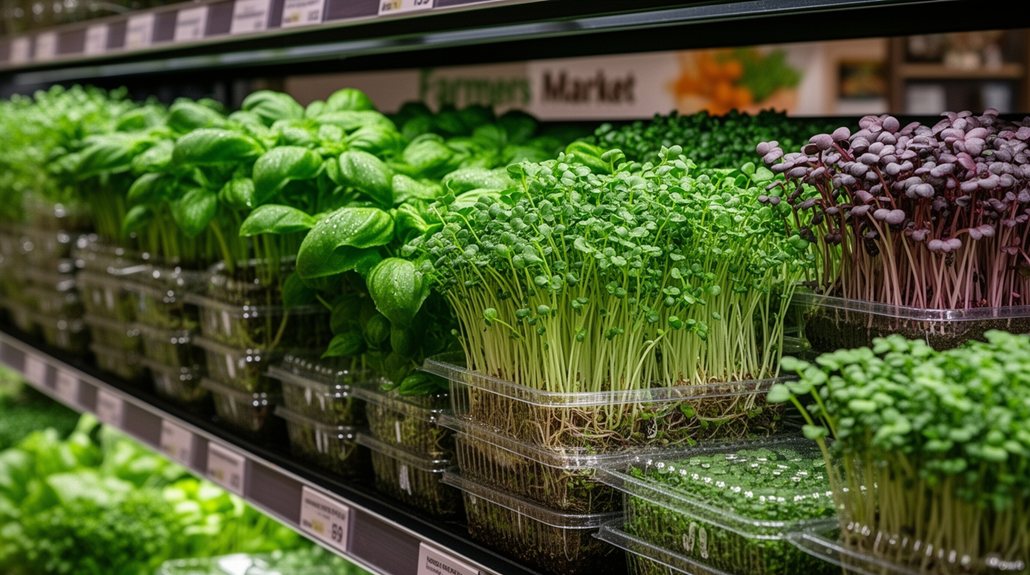
    retail demand opens vendor opportunity

    Sunswell Greens now stocks microgreens in 300+ stores across the Southeast, and that number tells you something.

    Buyers in your region already know what microgreens are and they’re already spending money on them.

    Retail proved the demand, but it didn’t lock it up.

    Rising demand is real and documented

    When a company like Sunswell Greens expands to 300+ retail stores across the Southeast, that’s not a threat to you. It’s proof that buyers in your region already want microgreens.

    Publix and Winn-Dixie don’t stock new categories unless the demand is there. They’ve done the market research. You get the benefit of that signal for free.

    Retail confirms the category. It doesn’t own your customer.

    The shopper grabbing a clamshell at Publix and the buyer stopping at your booth on Saturday are different people making different decisions. One wants convenience. The other wants freshness and a face they recognize.

    That second buyer is yours. Retail can’t compete there.

    Retail proves the market but does not own it

    Retail and farmers markets don’t compete for the same buyer. Publix shoppers grab retail microgreens vs fresh market microgreens for convenience. Your booth buyer comes for freshness and the person growing it.

    Sunswell Greens ships to 300+ Southeast stores. That product sits in a cooler for days before purchase. You harvest Thursday and sell Saturday. That gap is your advantage.

    Retail expands the category. More people learn what microgreens are. Some of those people start looking for a local grower they can trust.

    Retail is a price taker environment. You’re a price setter at your booth. Sunswell takes distributor terms. You set your own.

    What is the one thing retail microgreens cannot do?
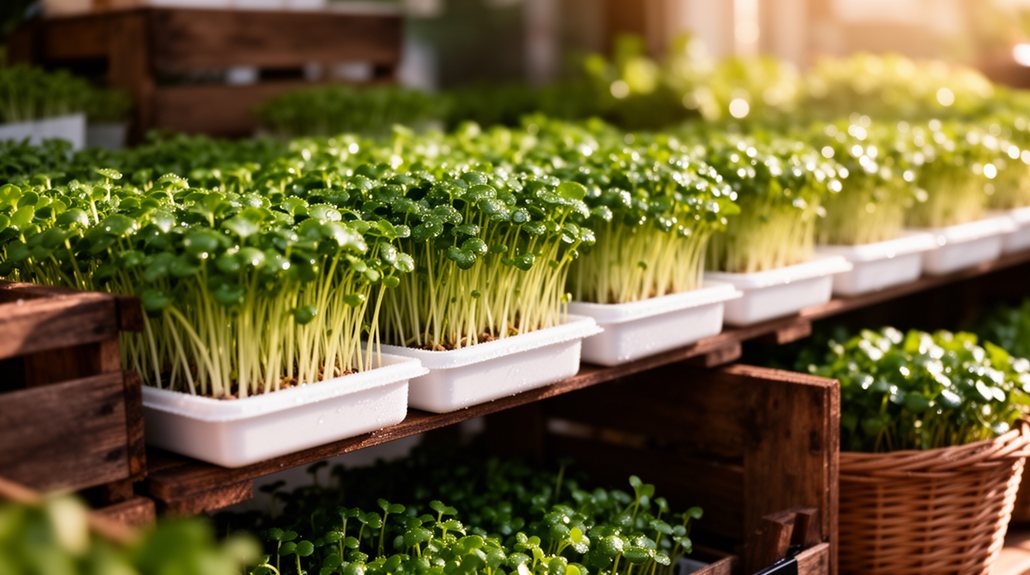
    hand cut same day microgreens

    Retail microgreens sit in a cooler for days before you buy them.

    You can hand a customer a tray cut that morning.

    That’s something no distribution chain can copy.

    Freshness that a distribution chain cannot match

    A box of Sunswell Greens Micro Broccoli sitting on a Publix shelf was cut, packed, and shipped days before you picked it up.

    Your tray gets harvested the morning of market day. That gap is your entire advantage.

    Farmers market microgreens freshness is measurable. A customer can taste the difference between a three-day-old retail pack and something cut six hours ago.

    Sunswell ships from Lake Worth or Punta Gorda through a distributor network reaching Virginia. That chain adds time. You subtract it.

    Retail buyers accept that lag. They’ve no other option.

    Your buyers do. They found you. That’s why farmers market shoppers come back to the same booth every week. They’re buying something the shelf can’t offer.

    The vendor relationship retail will never have

    Freshness gets customers to your booth. Relationship keeps them coming back every week.

    A Publix shopper doesn’t know who grew their Micro Broccoli. You do. That gap is your advantage as a farmers market microgreens vendor in the Southeast.

    Retail buyer Farmers market buyer
    Buys from a brand Buys from a person
    No grower contact Asks questions directly
    Fixed SKUs only Requests custom varieties
    One-time transaction Repeats weekly

    Name your regulars. Remember what they bought last Saturday. That’s something Sunswell Greens and any distributor chain physically cannot do at scale.

    You’re not just selling greens. You’re the grower they trust.

    Why does the price maker versus price taker distinction matter at your booth?
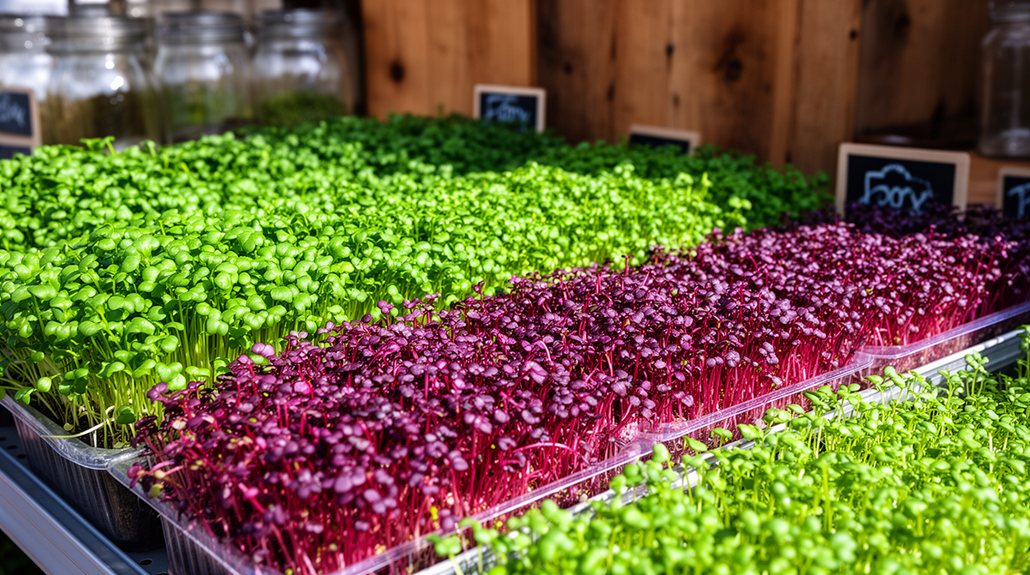
    you set price keep margin

    When a distributor is in the middle, they take a cut. That cut comes out of your margin, not theirs.

    At a farmers market booth, you set the price and keep the difference.

    What happens to your margin when a distributor is involved

    Distributors take a cut. For Sunswell Greens, that means Publix and Winn-Dixie set the shelf price. Sunswell takes what the distributor offers.

    That’s the price taker side of microgreens price maker price taker math.

    Your farmers market booth works differently. You set $8 for a 2 oz clamshell of micro broccoli. Nobody negotiates it down. A customer either buys it or moves on.

    That’s the price maker position.

    Retail growers shipping into Southeast distributors are absorbing freight, broker fees, and retailer margins. Those costs compress what they keep per unit.

    You have none of those layers. Your margin stays closer to full because the transaction is direct. The person handing you money is the end buyer.

    Why farmers market vendors set their own price

    Setting your own price isn’t a perk. It’s the core microgreens vendor advantage over retail.

    Sunswell Greens ships to Publix and Winn-Dixie. The distributor sets the margin. Sunswell takes what’s offered.

    You don’t do that. You stand at your booth in Sarasota or Raleigh and name your number. Customers who buy from you aren’t comparing shelf tags. They’re buying from someone they recognize.

    That relationship holds your price. A $12 clamshell of Micro Broccoli at your booth doesn’t compete with the $6 retail version. Different buyer. Different reason to purchase.

    Your community of repeat customers is what keeps that price stable week after week.

    How do you use this moment at a Southeast farmers market?
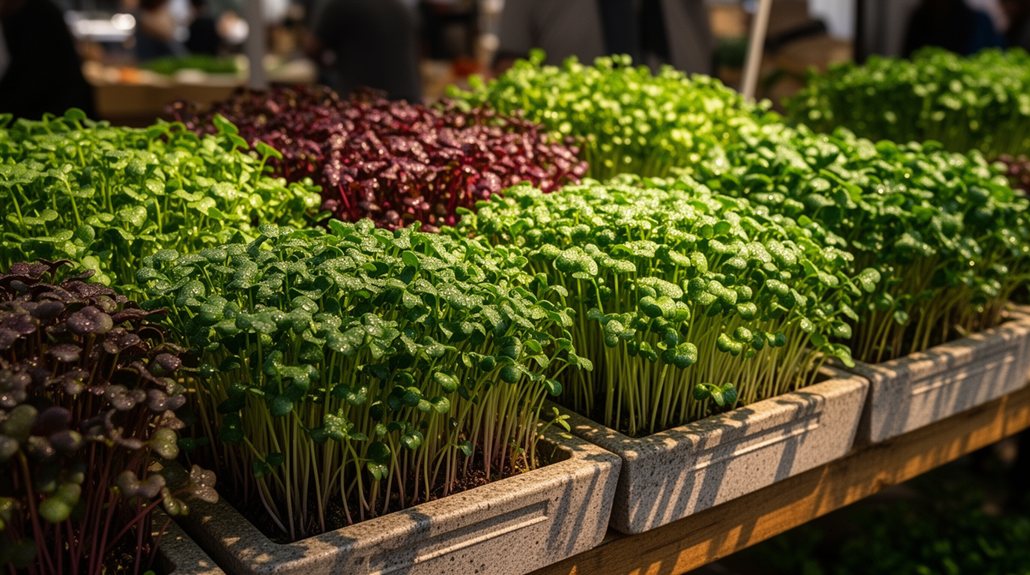
    leverage supermarket brand exposure

    Sunswell Greens is now on shelves at Publix and Winn-Dixie across the Southeast. That puts their name in front of your future customers before you ever meet them.

    You can utilize that exposure to your advantage at the booth and find the right markets where those customers are already shopping.

    What to say when customers mention store-bought Sunswell products

    When a customer says they’ve seen Sunswell at Publix, that’s your opening.

    Don’t get defensive. Say: “That’s us at a different level. What you’re holding here was cut this morning.

    That one line does the work. It separates you from the microgreens retail expansion southeast shoppers are seeing on store shelves. Sunswell ships product days ahead of sale. You don’t.

    Ask the customer when they bought the store pack. Then ask them to smell what’s in your hand. That comparison closes itself.

    You’re not competing with Sunswell. You’re showing the customer what fresh actually means. Retail gets them curious. You get them loyal.

    Loyal buyers come back every week. That’s the relationship retail can’t build. You can.

    How to find Southeast markets where the right customers are already shopping

    Finding the right market comes down to one thing: who’s already buying specialty produce there.

    Look for southeast farmers market microgreens vendors already operating. Their presence means buyers exist. That’s your baseline.

    Check foot traffic numbers and vendor mix before you apply. A market with a kombucha booth, an artisan cheese table, and a mushroom grower already has your customer.

    Dr. Booker T. Whatley called this building a Critical Mass of Customers. Know the buyer before you pick the location.

    The MGW Farmers Market Finder has 7,842 USDA-verified markets searchable by zip code, city, or state. Employ it to find and compare markets near you before you apply – markets.microgreensworld.com.

    The Microgreens Growth Path Tool maps your first move using local market data – growthpath.microgreensworld.com.

    Frequently Asked Questions

    How Many Trays Should a First-Time Farmers Market Vendor Bring Each Week?

    Bring 20 to 30 trays your first week. You’ll sell out faster than you expect. That sellout signals demand. Track what moves, then scale up the next week based on real buyer patterns.

    Do You Need a Business License to Sell Microgreens at a Farmers Market?

    You’ll likely need one, but it depends on your state and county. Check with your local clerk’s office first. Most markets also require a vendor permit. Get both before your first day.

    Which Microgreen Varieties Sell Fastest at Southeast Farmers Markets?

    Sunflower, pea shoots, and radish move fastest at Southeast farmers markets. Broccoli and spicy mixes sell well too. You’ll clear trays quicker when you’re set up near produce vendors with high foot traffic.

    How Do You Store Microgreens so They Stay Fresh at an Outdoor Booth?

    Keep your microgreens in a cooler with ice packs, never in direct sun. Harvest day-of, mist lightly before display, and utilize shallow trays so air circulates. Your customers notice the difference immediately.

    What Should a Farmers Market Table Setup Look Like for Microgreens?

    Your table needs a clean riser setup, labeled trays at eye level, and a small chalkboard with prices. Keep samples front and center. Shoppers buy what they can see and touch first.
  • Commercial Microgreens Growers Are Pitching to Restaurants. Here Is Why That Is Good for Your Farmers Market Booth.

    Commercial Microgreens Growers Are Pitching to Restaurants. Here Is Why That Is Good for Your Farmers Market Booth.

    BrightFarms executives pitched microgreens and edible flowers at West Coast Produce Expo 2026, targeting restaurants and retail chains, not your Saturday morning shoppers. That’s a different customer entirely. When commercial operators build awareness around a category, local vendors benefit without sharing the channel. You keep full retail price, skip distributor cuts of 20% to 40%, and sell product harvested that same morning. The gap between their supply chain and your booth is your advantage, and there’s more to it.

    Key Takeaways

    • Commercial operators like BrightFarms target restaurants and retail chains, not Saturday morning farmers market shoppers, so direct competition is minimal.
    • Large commercial investment in microgreens signals genuine category demand, validating what local vendors already sell.
    • Commercial expansion builds consumer awareness and familiarity with microgreens, warming up potential farmers market buyers.
    • Local vendors retain a freshness advantage commercial distribution cannot match, with same-day harvests versus two-to-four-day transit times.
    • Farmers market vendors keep full retail margins without distributor cuts, unlike commercial operators accepting volume-based price-taker economics.

    What did commercial microgreens growers say at West Coast Produce Expo 2026?

    At West Coast Produce Expo 2026, BrightFarms executives Laurie Altenbern, Greg Cyr, and Marc Oshima presented microgreens and edible flowers as growing premium foodservice trends. BrightFarms, based in San Marcos, California and operating as Fresh Origins and BrightFresh, serves commercial foodservice accounts nationally. That presentation tells you commercial operators are putting real money behind microgreens category demand.

    The BrightFarms presentation and what it signals about category demand

    When commercial players talk publicly about microgreens, pay attention. At West Coast Produce Expo 2026, BrightFarms executives Laurie Altenbern, Greg Cyr, and Marc Oshima presented microgreens and edible flowers as evolving premium foodservice trends. The Packer covered it on June 3, 2026.

    BrightFarms microgreens are sold under the Fresh Origins and BrightFresh brands. They operate out of San Marcos, California, and serve commercial foodservice accounts nationally.

    That presentation wasn’t aimed at you. It was aimed at restaurant buyers and distribution networks.

    But here is what it tells you. When a company that size puts microgreens on a stage, the category is no longer a niche conversation. Demand is real. Buyers already exist. You’re just reaching a different one.

    Why commercial operators are betting on microgreens in foodservice

    BrightFarms didn’t put microgreens on a stage at West Coast Produce Expo 2026 without a reason. Laurie Altenbern, Greg Cyr, and Marc Oshima presented microgreens and edible flowers as evolving premium foodservice trends. That presentation came from San Marcos, California, and reached a national audience.

    Commercial players don’t build a microgreens restaurant supply chain around a fad. Restaurants are paying for consistency, plating appeal, and a product that moves check averages up. BrightFarms saw that demand and built infrastructure around it.

    Sunswell Greens expanded into 300+ retail stores in the Southeast. That’s the same pattern. Big operations prove a category works, then scale it.

    The demand is real. The category is proven. You’re just selling it differently.

    What does commercial expansion mean for farmers market microgreens vendors?

    retail demand not supplier source

    Most vendors see BrightFarms and Sunswell Greens expanding and assume it’s bad news. It’s not.

    Commercial growth proves buyers want microgreens. It doesn’t prove those buyers want them from a grocery shelf.

    Why most vendors read this news wrong

    If you saw the BrightFarms presentation at West Coast Produce Expo 2026 and thought “competition,” you read it wrong.

    BrightFarms is targeting restaurants and retail chains. You’re targeting the Saturday morning buyer at your local market. Those are different people with different needs.

    The farmers market microgreens vendor advantage is real. You have same-day harvest. You have face-to-face trust. You have a price you control.

    BrightFarms, Fresh Origins, and Sunswell Greens compete on volume, shelf life, and distribution. You don’t play that game. You don’t have to.

    What their commercial push actually does is build awareness. Buyers see microgreens at restaurants and then look for them locally. That search ends at your table, not at a warehouse loading dock.

    How retail and foodservice growth proves the market without owning it

    Commercial players prove a category works before small growers have to. BrightFarms presented microgreens at West Coast Produce Expo 2026. That presentation cost you nothing and built buyer awareness you inherit.

    Commercial microgreens expansion trains consumers to recognize the product. When someone sees microgreens at a restaurant in San Marcos or a retail chain in the Southeast, they become a primed buyer. You meet them at the farmers market already knowing what they want.

    Sunswell Greens pushed into 300+ retail stores. BrightFarms is pitching national foodservice accounts. Neither of them is coming to your Saturday booth.

    That’s your market. You already belong there. They proved the demand. You collect it.

    What can a farmers market vendor offer that commercial growers cannot?

    morning harvested hyperlocal freshness

    BrightFarms and Fresh Origins ship product days old by the time it hits a restaurant plate.

    You harvest the morning of market day.

    That gap in freshness is something no distribution chain can close.

    Same-day harvest freshness and the distribution chain problem

    The distribution chain cuts into freshness before a restaurant ever opens the box. BrightFarms ships from San Marcos, California to accounts across the country. Transit alone adds two to four days.

    Your farmers market microgreens freshness advantage starts at harvest time. You cut Saturday morning and sell Saturday morning. That’s a same-day product no distributor can match.

    Buyers at your booth know you grew it. They’ve seen your setup. That shared experience is something a commercial label can’t replicate.

    The freshness gap is real and measurable. Sunflower shoots lose texture within 48 hours of harvest. Radish microgreens show yellowing by day three. You’re selling on day zero. That matters to the people standing in front of your table.

    The grower relationship that retail will never replicate

    Retail packaging hides the grower. The buyer sees a logo, not a face.

    Your microgreens vendor competitive advantage is that you’re the product. Buyers at your booth know your name, your farm, and your process.

    Dr. Booker T. Whatley built his framework on this exact point. Know your customer before you choose your market. Your repeat buyers are your critical mass. Ten loyal customers who return weekly beat fifty one-time shoppers.

    BrightFarms serves restaurants in bulk. You serve Sarah who comes back every Saturday for sunflower shoots.

    That relationship isn’t scalable for commercial growers. It belongs to you. Protect it by showing up consistently and knowing your regulars by name.

    Why does price control matter more than market size?

    control price protect margins

    At a farmers market, you set the price. No distributor takes a cut, and no buyer negotiates you down to break-even margins.

    The moment a middleman enters the chain, your margin shrinks before the product ever reaches the customer.

    The price maker versus price taker distinction for farmers market vendors

    When BrightFarms sets a price, restaurants accept it or find another supplier. BrightFarms is a price taker’s nightmare and a price maker’s model.

    You’re on the other side of that equation at your booth. No distributor controls your margin. No contract locks your rate to last quarter’s produce index.

    You set $18 per tray of sunflower microgreens. A customer pays it or doesn’t. You adjust based on what your buyers tell you directly, not what a procurement manager in another state decides.

    That’s the microgreens price maker advantage. Retail vendors chase volume at thin margins. You chase relationship buyers willing to pay for freshness they can’t find at Kroger.

    What happens to your margin when a distributor gets involved

    Setting your own price is one thing. Keeping that margin is another problem entirely.

    When a distributor enters the chain, they take 20% to 40% off the top. That’s before your packaging, labor, or delivery costs.

    Commercial vs local microgreens operate on completely different math. BrightFarms and Fresh Origins absorb that distributor cut because they’re moving volume at scale. You’re not.

    At your booth, no distributor touches your transaction. You collect the full price directly from the buyer standing in front of you.

    That direct margin is what makes your farmers market business structurally different. Protect it by never letting a middleman between you and your customer.

    How do you use this moment to your advantage at a farmers market booth?

    leverage brand driven market traffic

    Customers will mention BrightFarms or something they saw at Whole Foods. That’s your opening, not a problem.

    Here’s what to say and how to find the markets where buyers like that are already shopping.

    What to say when customers mention store-bought microgreens

    Don’t get defensive. Get specific.

    Tell them yours were cut this morning. Tell them the store pack shipped from a facility in San Marcos, California, days before it hit the shelf. That’s your microgreens direct to consumer advantage. Freshness is the product.

    Then name your farm. Say something like, “I’m the grower. These came off my trays at 6 a.m.”

    That answer closes the gap between your booth and any retail shelf. The store can’t say that. You can.

    How to find markets where the right customers are already shopping

    Knowing what to say at the booth is one part. Finding the right market is the other.

    Not every farmers market draws buyers who care about retail microgreens vs farmers market differences. Some markets attract deal-seekers. Others pull in food-curious regulars who ask questions and come back.

    Dr. Booker T. Whatley said it plainly: know your customer before you choose your market. Build enough repeat buyers to sustain revenue. Specialty produce is under-represented at most markets. That gap is your entry point.

    The MGW Farmers Market Finder has 7,842 USDA-verified markets searchable by zip code, city, or state. Employ it to find and compare markets near you before you apply – markets.microgreensworld.com.

    The Microgreens Growth Path Tool maps your first move using local market data – growthpath.microgreensworld.com.

    Frequently Asked Questions

    How Many Trays Should a New Vendor Bring to Their First Market?

    Bring 10 to 15 trays your first market day. That’s enough to look established without overcommitting. You’ll learn your sell-through rate fast, and that number tells you exactly what to bring next time.

    Which Microgreens Varieties Sell Fastest at Outdoor Farmers Markets?

    Sunflower, pea shoots, and radish move fastest. They’re bold, familiar, and easy to sample. Bring those three first. You’ll build repeat buyers quickly when shoppers recognize what they’re tasting.

    How Do You Store Cut Microgreens Overnight Before a Saturday Market?

    Cut them Friday evening. Layer them loosely in a lidded container lined with dry paper towels. Set your fridge between 34°F and 38°F. They’ll hold overnight without wilting if they’re dry going in.

    Do You Need a Cottage Food License to Sell Microgreens at Markets?

    Cottage food laws rarely cover microgreens. You’ll likely need a commercial kitchen license or a produce grower’s exemption. Check your state’s department of agriculture directly. Rules vary significantly by state.

    How Do You Price Microgreens When a Nearby Vendor Is Selling Cheaper?

    You don’t match their price. You hold yours and sell the difference. Tell buyers your greens were cut this morning. That story is what the cheaper vendor can’t offer.

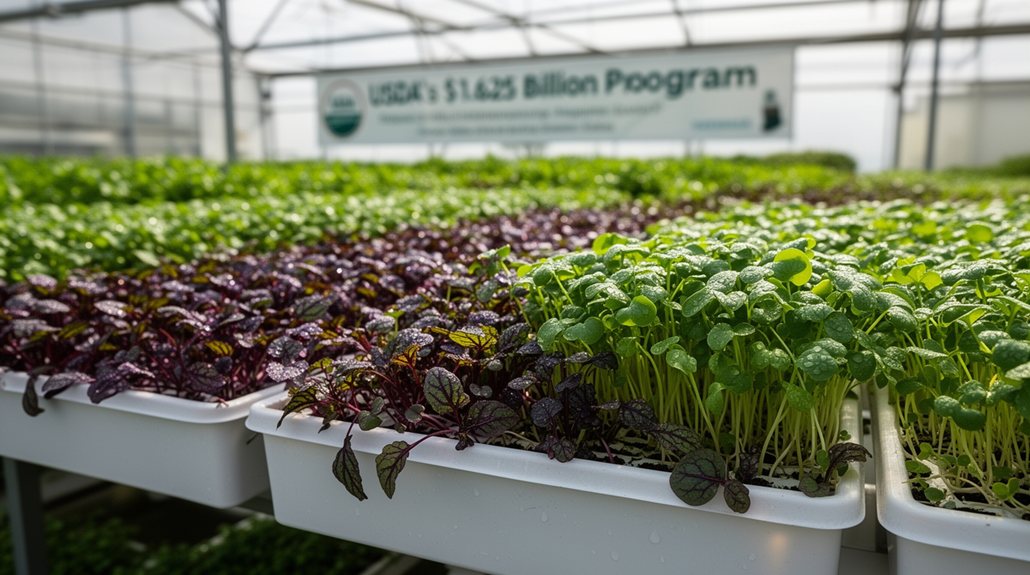
  • USDA Just Launched a $1.625 Billion Program for Specialty Crop Vendors. Here Is What Microgreens Growers Need to Do Before August 7.

    USDA Just Launched a $1.625 Billion Program for Specialty Crop Vendors. Here Is What Microgreens Growers Need to Do Before August 7.

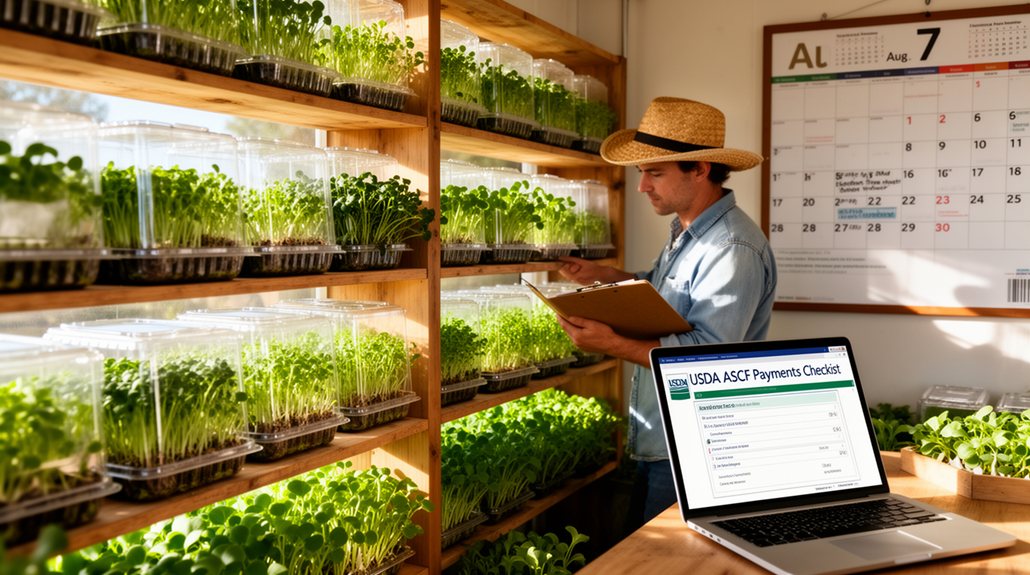
    The USDA’s Agricultural Stabilization Assistance for Commercial Farms (ASCF) program launched June 2026 with $1.625 billion for specialty crop growers, and microgreens vendors selling at farmers markets qualify. You need a USDA farm number and 2024–2025 sales and cost records before applying. Submit your application in person at your local FSA office before August 7, 2026. Everything you need to know about eligibility, covered costs, and exactly how to apply is below.

    Key Takeaways

    • Microgreens growers qualify for ASCF funding as specialty crop producers, but must have a USDA farm number before applying.
    • Contact your local FSA office immediately to confirm or obtain your farm number, as processing takes time before August 7.
    • Gather 2024–2025 invoices, receipts, and sales logs now, since incomplete records reduce or eliminate your payment amount.
    • Submit your application in person at your local FSA office; applications cannot be submitted online or by mail.
    • After submission, record your FSA case number and respond promptly to any follow-up requests to avoid disqualification.

    What is the USDA ASCF program and who qualifies?

    USDA launched the Agricultural Stabilization Assistance for Commercial Farms program in June 2026 with $1.625 billion in total funding.

    It’s built for specialty crop growers dealing with rising input costs and market upheavals.

    Microgreens qualify as a specialty crop, and if you sell at farmers markets, this program was made for operations like yours.

    Which specialty crop operations are eligible for ASCF payments

    Commercial specialty crop growers operating in the U.S. are the target for this specialty crop assistance 2026 program. That means you need to be selling, not growing as a hobby.

    USDA defines specialty crops to include vegetables, fruits, tree nuts, dried fruits, and horticulture crops. Microgreens fall under that classification.

    You also need a registered commercial operation. A USDA farm number is required. If you don’t have one, contact your local FSA office now. Processing takes time, and August 7 is a hard cutoff.

    The program offsets rising input costs and market disruptions. That covers exactly what small vendors are dealing with right now. If you’re selling at farmers markets, you’re in the right group.

    Why microgreens growers at farmers markets should pay attention

    So you qualify. The USDA ASCF program includes microgreens under its specialty crop classification. Most vendors at your market don’t know this program exists.

    That’s your opening.

    What it covers Why it matters
    Rising input costs Seeds, trays, lights, soil
    Market interruptions Lost sales, reduced foot traffic
    Specialty crop growers Microgreens are explicitly included
    Commercial operations Farmers’ market vendors qualify
    $1.625 billion total Real money, real deadline

    The August 7 cutoff is firm. Missing it means waiting for a program that may not return.

    You’re already selling at markets. You’re already commercial. Apply.

    How much money is available and what does it cover?

    1 625b for specialty crop costs

    The ASCF program has $1.625 billion set aside for specialty crop growers nationwide.

    It covers rising input costs like seeds, growing media, and packaging, plus losses tied to market interruptions.

    Payment amounts are calculated based on your operation’s scale and documented expenses, so your records need to be current and specific.

    What the $1.625 billion program pays for specifically

    $1.625 billion breaks down into direct payments to commercial specialty crop growers. The USDA specialty crop payments target two specific cost areas.

    Payment category What it covers
    Input cost offsets Seeds, growing media, packaging
    Market interruption relief Lost revenue from market closures
    Infrastructure support Equipment tied to commercial production

    You qualify if your operation is commercial, not a hobby setup.

    Microgreens sit inside the same category as vegetables and horticulture crops. That puts you in the same pool as fruit and nut growers who’ve used these programs for years.

    Your costs are real. This program acknowledges that directly.

    How payments are calculated for small-scale specialty crop operations

    Payment size ties directly to your documented costs and gross revenue from specialty crop sales. The ASCF program employs a formula based on your verifiable input expenses and market losses.

    Your microgreens USDA payment starts with what you can prove. Seed costs, growing media, trays, lighting, and packaging all count. So does documented revenue loss from market disruptions.

    FSA calculates your payment from your records. No records means no payment, or a smaller one. Start pulling invoices, receipts, and sales logs now.

    Small-scale growers qualify the same way large farms do. The formula scales to your operation size. What matters is accuracy, not volume.

    What do you need to apply for USDA ASCF payments?

    farm number and records

    You need two things before you walk into a USDA FSA office: a farm number and your production records.

    Most small vendors don’t have a farm number yet, and getting one takes time. Start there first, then pull your cost and sales documents together.

    The USDA farm number requirement and how to get one fast

    The USDA farm number is the first thing to sort out before you do anything else. Without it, your ASCF application goes nowhere.

    Contact your local FSA office now. Processing takes time, and August 7 doesn’t move.

    When you call, tell them you grow microgreens as a commercial operation and you need a farm number to apply for USDA FSA specialty crops assistance. They’ll walk you through the registration steps. Bring proof of your growing operation. A lease, utility bill for your grow space, or sales records all help.

    Most farmers market vendors in this program have never registered with FSA before. You’re not behind. But you need to move today, not next week.

    The MGW Farmers Market Finder has 7,842 USDA-verified markets searchable by zip code, city, or state. Employ it to find and compare markets near you before you apply – markets.microgreensworld.com.

    The Microgreens Growth Path Tool maps your first move using local market data – growthpath.microgreensworld.com.

    Documents and records to gather before August 7

    Before you walk into your FSA office, gather your records first. Missing paperwork delays your microgreens grower financial assistance application.

    Pull your 2024 and 2025 sales records. Farmers market receipts, invoices, and Square or PayPal transaction reports all count.

    Bring proof of input costs. Seed purchases, growing medium receipts, and utility bills tied to production work here.

    You’ll also need your USDA farm number. No number means no application.

    Prepare a photo ID and your business formation documents if you’re an LLC or sole proprietor.

    FSA staff will ask about your acreage or production space. Have that number ready in square feet or acres.

    How do you submit a USDA ASCF application?

    apply in person at fsa

    You don’t mail anything in and you don’t apply online.

    USDA ASCF applications go through your local Farm Service Agency office in person. Knowing the exact steps before you walk in saves time and reduces the chance of a rejection.

    Where to go and what the process looks like

    Applications go through your local USDA Farm Service Agency office. Find yours at fsa.usda.gov/contact-fsa.

    Walk in or call ahead. Tell them you’re applying for the ASCF program before the usda ascf application deadline of August 7, 2026.

    You’ll need your USDA farm number at the appointment. If you don’t have one, contact your FSA office immediately. Processing takes time, and August 7 won’t move.

    Bring documentation showing your microgreens operation is commercial. Sales records, vendor permits, and market agreements work. Hobby growers don’t qualify.

    The MGW Farmers Market Finder has 7,842 USDA-verified markets searchable by zip code, city, or state. Use it to find and compare markets near you before you apply – markets.microgreensworld.com.

    The Microgreens Growth Path Tool maps your first move using local market data – growthpath.microgreensworld.com.

    What happens after you submit

    Once your FSA office receives your application, they’ll assign it a case number. Track it. Don’t assume silence means approval.

    Review timelines vary by office workload. The specialty crop assistance program August 2026 deadline means offices are processing high volume.

    Stage What happens Your action
    Submission Case number assigned Write it down
    Review FSA verifies farm number Answer calls promptly
    Decision Approval or denial issued Appeal within 30 days

    If FSA contacts you for missing documents, respond same day. Delays on your end can disqualify your application.

    Other growers in your region are moving through this same process. Stay responsive and keep copies of everything you submitted.

    What should farmers market microgreens vendors do right now?

    confirm usda number call fsa

    You’ve got two steps to take this week before August 7 closes the window.

    First, confirm you have a USDA farm number.

    Second, locate your FSA office and call them today.

    The two steps to take this week before the window closes

    If you sell microgreens at a farmers market, two actions need to happen this week.

    First, confirm you have a USDA farm number. Without one, you can’t apply. Call your local FSA office today. Processing takes time, and August 7 doesn’t move.

    Second, gather your commercial sales records. The ASCF program targets commercial operations. You’ll need documentation that proves active market sales, not hobby-level output.

    A usda farm payment microgreens application without both pieces is a dead end. Other growers in your market are likely missing this window entirely. That’s your advantage if you move now.

    The MGW Farmers Market Finder has 7,842 USDA-verified markets searchable by zip code, city, or state. Employ it to find and compare markets near you before you apply – markets.microgreensworld.com.

    The Microgreens Growth Path Tool charts your first move using local market data – growthpath.microgreensworld.com.

    How to find your local FSA office and what to ask

    For most microgreens vendors, the FSA office is less than 30 miles away. Go to fsa.usda.gov and employ the office locator tool.

    Call before you go. Tell them you’re a specialty crop grower applying for ASCF funding.

    Ask two things. First, do you have a USDA farm number on file? Second, what documents do they need from you to process your application before August 7?

    If you don’t have a farm number, say that immediately. Processing takes time you don’t have.

    The MGW Farmers Market Finder has 7,842 USDA-verified markets searchable by zip code, city, or state. Employ it to find and compare markets near you before you apply – markets.microgreensworld.com.

    The Microgreens Growth Path Tool maps your first move using local market data – growthpath.microgreensworld.com.

    Frequently Asked Questions

    Can You Apply to USDA ASCF if You Sell at Multiple Markets?

    Yes, you can. Selling at multiple markets doesn’t disqualify you. Your eligibility is based on your farm operation, not how many markets you’re in.

    Does Selling Online or Through a CSA Affect Your ASCF Eligibility?

    Selling online or through a CSA doesn’t disqualify you. ASCF eligibility is based on your crop classification and commercial status, not your sales channel. All revenue streams count toward proving you’re a commercial operation.

    What Happens if the August 7 Deadline Passes Before Your Farm Number Arrives?

    You’re locked out. The FSA won’t accept late applications. Call your local FSA office today, explain the timeline, and ask if an emergency processing option exists before August 7.

    Can a Beginning Farmer With One Growing Season Qualify for ASCF Payments?

    You can qualify with one season. The ASCF doesn’t set a minimum years-in-operation requirement. You need a farm number and proof you’re selling commercially, not growing as a hobby.

    Is There an Income or Farm Size Limit That Disqualifies Small Microgreens Operations?

    There’s no income or farm size minimum listed for ASCF. You qualify if you’re a commercial operation, not a hobby grower. Confirm your status with your local FSA office before August 7.

  • Retail Shelves Are Filling Up With Microgreens. Here’s Why That’s Good for Your Farmers Market Booth.

    Retail Shelves Are Filling Up With Microgreens. Here’s Why That’s Good for Your Farmers Market Booth.

    Retail microgreens hitting shelves at Publix and Winn-Dixie across the Southeast is doing your marketing for you. Shoppers who spot them at the store get curious. Then they find your booth. The difference is that yours were cut this morning, and theirs sat in a truck. You also set your own price and keep all of it. There’s more to this than freshness — keep going.

    Key Takeaways

    • Retail microgreens train shoppers on the category, so farmers market vendors inherit that awareness without spending extra time on education.
    • Retail and farmers market channels serve distinct buyers, meaning a Publix shelf and your booth are not competing for the same sale.
    • Retail distribution chains add days between harvest and purchase, giving same-day market vendors an unbeatable freshness advantage.
    • Shoppers curious after seeing retail microgreens often seek out farmers’ markets looking for fresher, locally grown alternatives.
    • Farmers market vendors set their own prices and collect full revenue, unlike wholesale growers who accept retailer-controlled margins.

    Retail Shelves Are Filling Up With Microgreens. Here Is Why That Is Good for Market Vendors

    If you saw the news about Sunswell Greens hitting 300+ retail stores across the Southeast, your first reaction was probably worry.

    Most growers assume more retail product means more competition and less room for them.

    That’s the wrong read.

    The News: Sunswell Greens Just Hit 300 Stores Across the Southeast

    One Florida microgreens company just landed on shelves in over 300 retail stores across the Southeast. Sunswell Greens (formerly Green Life Farms, rebranded late 2025) now distributes through Publix, Winn-Dixie, and major foodservice accounts stretching as far north as Virginia.

    | Detail | Info |

    |—|—|

    | Headquarters | Lake Worth and Punta Gorda, FL |

    | Retail Footprint | 300+ stores across the Southeast |

    | Products Sold | Broccoli, Arugula, Cilantro, Spicy Mix, Rainbow Mix, Super Mix |

    | Distribution Reach | Florida north through Virginia |

    | Certifications | Non-GMO Project Verified, Fresh from Florida |

    For any microgreens vendor in Florida or a microgreens southeast farmers market operator watching this, that footprint matters. It tells you retail buyers are convinced the category sells. That’s validation you didn’t have to pay for.

    Why Most Growers Read This Wrong

    Most growers see that headline and feel nervous. A big hydroponic operation just landed 300 stores. You’re running a 10×20 canopy at a Saturday market. Feels like a losing comparison.

    That’s the wrong read.

    Microgreens retail vs farmers market isn’t a competition. It’s two different buyers making two different decisions. The person grabbing a clamshell at Publix wants convenience. The person stopping at your booth wants something else entirely.

    Here’s what most growers miss: retail expansion proves the category works. Consumers already know what microgreens are. That education happened without you spending a dime.

    As a farmers’ market microgreens vendor, you’re not fighting Sunswell Greens. You’re walking into a market that they have already warmed up for you.

    What Retail Expansion Actually Means for the Category

    retail-microgreens-expansion-farmers-market-vendors

    When a company like Sunswell Greens locks up shelf space in Publix and Winn-Dixie across six states, it means one thing: customers are already buying microgreens regularly enough to justify that kind of investment.

    Retail doesn’t create demand out of nowhere. It follows it.

    Rising Demand Is Real and Documented

    Sunswell Greens didn’t expand into 300 retail stores across the Southeast because they felt like it. They expanded because buyers kept saying yes. That’s documented demand. Publix, Winn-Dixie, foodservice distributors stretching as far north as Virginia — that’s not a trend being manufactured. That’s a market responding to real consumer appetite for microgreens.

    Here’s what that means if you sell microgreens at a farmers’ market. The Sunswell Greens Southeast footprint did something useful for you. It trained shoppers. People who picked up Micro Broccoli at Publix are now curious. Some of them shop at your market on Saturday morning.

    The category is proven. You’re not out there convincing people microgreens exist. That part’s already done.

    Retail Proves the Market. It Does Not Own It

    Retail expansion tells you something, but it doesn’t tell you what most growers think it does. It doesn’t mean the category is crowded. It means the category is proven. Sunswell Greens moving into 300 stores across the Southeast tells you that buyers exist and that microgreens direct to consumer demand is no longer a niche experiment. That’s useful information.

    Here’s what retail can’t do. It can’t harvest that morning. It can’t hand a sample to a skeptical customer. It can’t tell a story about where the seeds came from.

    Retail is a price-taker environment. The grower ships and accepts whatever the distributor offers. You, at your booth, are a price maker. Farmers’ market dynamics give you that control. Retail doesn’t compete with that. It confirms it.

    The One Thing Retail Microgreens Cannot Do

    retail-microgreens-expansion-farmers-market-vendors

    Retail microgreens sit in a cooler for days before anyone buys them.

    You harvest yours the morning of the market and hand them directly to the person who’s going to eat them. That gap in freshness isn’t something a distribution chain can close, no matter how efficient it gets.

    Freshness That a Distribution Chain Cannot Match

    When a retail customer picks up a clamshell of microgreens at Publix, that product has already traveled through a distribution chain that can span several days. It was harvested, packaged, loaded onto a truck, received at a warehouse, and then shipped again to a store. By the time someone buys it, the clock has been running for a while.

    You harvest the morning of the market. That’s it. That’s the whole supply chain.

    Customers who’ve bought retail microgreens before can taste the difference. Some of them are already frustrated by it. They show up at your booth because they’re looking for something better. You’re not fighting retail. You’re solving the problem that retail created.

    That’s a real competitive advantage. Employ it.

    The Vendor Relationship Retail Will Never Have

    A clamshell of microgreens sitting in a refrigerated case can’t answer questions. It can’t explain the difference between micro broccoli and a spicy mix. It can’t hand someone a sample and watch their face change. You can.

    That’s not a small thing. Retail moves product. It doesn’t build buyers. When a customer at your booth asks how to utilize sunflower microgreens or why yours taste different from the store brand, you’re in a conversation retail will never have.

    That conversation is where loyalty gets built. It’s where a one-time buyer becomes a weekly regular. Sunswell Greens can stock 300 stores. They can’t stand behind a table in your town and explain why same-day harvest matters. You can. That’s your edge.

    Price Maker vs. Price Taker: Which Side of the Table Are You On

    Price Maker vs. Price Taker: Which Side of the Table Are You On

    When a distributor gets involved, your margin shrinks fast — they take a cut, the retailer takes a cut, and you take what’s left. That’s the price taker position: someone else decides what your product is worth.

    At a farmers market, you set the price, the customer pays it directly, and nobody skims off the top.

    What Happens to Your Margin When a Distributor Is Involved

    Every dollar that passes through a distributor’s hands is a dollar that doesn’t reach yours. That’s not an opinion. That’s just how distribution math works.

    A grower selling through a distributor typically keeps 30 to 50 percent of the retail price. Sometimes less. The distributor takes their cut. The retailer takes theirs. By the time the product hits the shelf, the grower is deep in the chain.

    You don’t have that problem at a farmers’ market. You set the price. You collect the full amount. Nobody skims off the top before the money reaches your hand.

    Sunswell Greens built something real. But they’re also locked into that chain now. You’re not. That difference is worth protecting.

    Why Farmers Market Vendors Set Their Own Price

    There’s a concept worth knowing before you price your next flat of microgreens. It’s called price maker vs. price taker. A price taker ships a product to a distributor and accepts whatever margin is left after everyone else takes their cut. A price maker stands behind a table and names their number.

    Sunswell Greens sells through Publix and Winn-Dixie. That’s a price taker setup. The distributor sets the terms. The grower adjusts.

    You don’t have that problem at a farmers’ market. You decide what a clamshell of micro broccoli is worth. You decide when to raise it. No buyer approval required.

    That’s not a small thing. That’s the structural difference between building a margin and hoping one survives the supply chain.

    How to Use This Moment to Your Advantage in a Southeast Market

    How to Use This Moment to Your Advantage in a Southeast Market

    If you’re growing microgreens in Florida, Georgia, Virginia, North Carolina, or South Carolina right now, the timing actually works in your favor.

    Retail expansion in the Southeast means more shoppers have already seen microgreens on a shelf, which means fewer people at your booth will ask, “What even is this?” When a customer mentions they’ve seen them at Publix, that’s your opening, not your competition.

    States Where Microgreens Demand Is Strongest Right Now

    Sunswell Greens isn’t selling into Virginia and the Carolinas by accident. They follow distribution infrastructure and retail buyer interest. That trail tells you something valuable.

    Florida, Georgia, Virginia, North Carolina, and South Carolina are all showing real traction for microgreens right now. Sunswell’s reach into those states confirms what retail buyers are already seeing: consistent demand from shoppers who know what microgreens are and will pay for them.

    That matters to you. A customer who already buys microgreens at Publix isn’t a hard sell at your booth. They just need a reason to switch. Same-day harvest and a real person explaining the product gives them that reason.

    These five states are where the category is active. That’s where your market opportunity sits right now.

    What to Say at Your Booth When Customers Mention Store-Bought

    Knowing where demand is strongest is only half the puzzle. You also need to know what to say when a customer mentions they’ve seen microgreens at Publix. Don’t panic. That’s actually your opening.

    | What They Say | What It Means | Your Response |

    |—|—|—|

    | “I saw these at Publix.” | They already know the product | “Ours were cut this morning. Those sat in a truck.” |

    | “Are these like the store ones?” | They’re comparing quality | “Same greens. Different freshness window entirely.” |

    | “The store is cheaper.” | Price objection | “You’re paying for days of shelf life there. These are same-day.” |

    | “Do these last long?” | Skepticism about perishability | “Refrigerate them. Most people finish them in four days.” |

    | “Where are these grown?” | Trust signal | “Twenty minutes from here. I grew them myself.” |

    Retail opened the door. You close the sale.

    Find Your Southeast Market Before Someone Else Does

    Find Your Southeast Market Before Someone Else Does

    For growers in Florida, Georgia, Virginia, North Carolina, and South Carolina, the timing here matters more than most people realize. Sunswell Greens is already building brand recognition across your region. That works in your favor if you move now. Shoppers who see microgreens at Publix start asking questions. Some of them show up at farmers’ markets wanting more. You want to be the vendor they find.

    State-specific market guides for all five of these states are dropping soon at Microgreens World. I’m pulling USDA data through the MGW Farmers Market Finder at markets.microgreensworld.com so you can identify open slots in your area before another grower does. Check it now. The booth next to the tomato guy won’t stay empty.

    Frequently Asked Questions

    Can I Legally Sell Microgreens at a Farmers Market Without a License?

    It depends on your state. Most states require at least a cottage food or produce seller permit. Check your local department of agriculture’s rules before you sell a single tray.

    How Do I Price Microgreens Competitively Against Retail Store Products?

    Don’t price against retail. You’re not selling the same product. Set your price based on same-day harvest value, your local story, and direct customer relationships — things retail can’t offer at any price.

    What Packaging Works Best for Same-Day Harvest Microgreens at Markets?

    Clamshells keep same-day cuts visible and protected. Skip sealed bags — they trap moisture and accelerate wilt. A simple label with harvest date signals the freshness retail can’t match.

    How Often Should I Harvest Microgreens to Stay Fresh for Market Day?

    Harvest the morning of market day, every time. If you sell multiple days a week, stagger your trays accordingly. You’re not competing on price — you’re competing on cut-that-morning freshness, so protect it.

    Should I Grow Multiple Varieties or Specialize in One Microgreen Type?

    Start with one variety you can grow consistently well. Once you’ve nailed quality and timing, add a second. Depth before breadth builds customer trust faster than a crowded table with uneven products.

    Wrap-up

    Retail expansion isn’t your enemy. It’s your warm-up act. Every clamshell on a Publix shelf introduces someone new to microgreens. Some of those people will eventually wander into a farmers’ market and want more than a barcode. That’s your moment. You’ve got freshness, story, and a face behind the product. Retail can’t compete with that. So stop worrying about those shelves with worry. Start using them as a reason to show up better.

    I Want to Find Markets Near Me

  • The Microgreens Booth Strategy That’s Working at California’s #1 Farmers Market

    The Microgreens Booth Strategy That’s Working at California’s #1 Farmers Market

    At California’s #1 farmers market — Midtown in Sacramento — the vendors getting noticed aren’t just showing up. They’re applying to the right zone (Producers Plaza, the agricultural section), bringing photos that prove they’re actual growers, and running live demos with free samples to pull foot traffic. That combo signals “real grower” to both shoppers and market managers. Keep going and you’ll see exactly how to make it work for your booth.

    Key Takeaways

    • Apply to Producers Plaza, the agricultural vendor zone at Midtown Farmers Market, to signal grower status and improve application approval chances.
    • Submitting photos of trays, grow setups, and production process proves working grower status to market managers evaluating applications.
    • Selecting the wrong vendor category forces restarting the entire application process, reducing approval chances before booth evaluation begins.
    • Live cooking demos and free samples convert curious shoppers into repeat buyers faster than signage alone.
    • Treating the first season as an audition through consistent weekly presence moves vendors toward permanent spots and renewal priority.

    How Microgreens Vendors Are Standing Out at California Farmers Markets

    Most growers spend months figuring out how to grow a solid product and almost no time figuring out how to get noticed at a market. That’s the real problem.

    And if you’re thinking about California specifically, you need to understand that this isn’t a small-town Saturday hustle — you’re competing in a market ecosystem with over 800 active markets statewide, which means the bar for standing out is genuinely higher.

    The Problem Most Growers Hit Before They Even Get a Booth

    Getting approved as a vendor is where a lot of growers stall out.

    You grow great product. You show up ready. Then you hit the application and realize you don’t know which category you belong in.

    At a market like the Midtown Farmers Market Sacramento, the structure matters.

    There are zones for prepared food, artisan goods, and agricultural producers. As a microgreens vendor California growers need to land in the right one. That zone is Producers Plaza. Apply under the wrong category and your application likely gets passed over before anyone sees your trays.

    Most growers don’t know this distinction exists. That’s the real barrier. Not the competition. Not the pricing. Just not knowing where you fit before you apply.

    Why California Markets Are a Different Conversation

    California has over 800 farmers markets in the USDA database. That number matters if you’re a grower because it means you have real options — not just one shot.

    But volume alone isn’t the point. California farmers market vendor competition is intense. Buyers here are experienced. They’ve seen the same tired table setup dozens of times.

    Sacramento is a useful place to study what actually works. The sacramento farmers market microgreens scene isn’t theoretical. Homegrown Inc. is operating a booth right now at the Midtown Farmers Market — voted the number one market in California.

    They aren’t just showing up. They’re running demos and handing out samples.

    That difference is what separates vendors who build a customer base from vendors who pack up early.

    What Homegrown Inc. Is Doing Right at the Midtown Market

    applied demoed sampled converted

    Homegrown Inc. didn’t just set up a table and hope people would stop. They applied to the Producers Plaza, the agricultural zone at the Midtown Farmers Market, which is where growers belong, not the prepared foods section.

    And then they went further, running live cooking demos and handing out free samples, which is the kind of move that turns curious foot traffic into repeat customers.

    Selling in the Producers Plaza, Not the Prepared Foods Section

    When you apply to a market like the Midtown Farmers Market, the zone you apply for matters more than most growers realize.

    Homegrown Inc. microgreens operates in Producers Plaza Sacramento — the agricultural producer section. That placement is intentional. Producers Plaza is where growers belong, not the prepared foods area.

    The distinction affects how market managers evaluate your application and how customers perceive your booth. A microgreens vendor in a prepared foods zone looks like a snack seller. A microgreens vendor in Producers Plaza looks like a farmer. Those are two very different conversations with a customer.

    When you apply, be specific about what zone fits your operation. If you grow it, you belong in the producer section. Apply accordingly.

    Why Demos and Free Samples Change the Game for Vendors

    Getting your placement right is only half the battle.

    Homegrown Inc. ran a live cooking demo at the Midtown Farmers Market in March 2026 and handed out free microgreens samples. That one move does more for your booth than any sign or banner ever will.

    Here is why it works. Most shoppers at a market that size have never eaten microgreens off the stem. They don’t know what to do with them. A demo answers that question before they even have to ask it.

    If you’re figuring out how to sell microgreens california markets reward vendors who teach as they sell. Free samples pull people in. A short demo keeps them there. That combination turns first-time visitors into repeat buyers faster than anything else you can try.

    How to Position Your Microgreens Booth to Get Noticed

    standout professional engaging market presence

    Getting into a market is one thing. Getting asked back — and eventually getting a permanent spot — is something most growers never think about when they’re filling out the application.

    Market managers aren’t just looking for a product that fits; they’re watching how you show up, how you engage shoppers, and whether your booth makes their market look good. If you treat your first season like an audition, you’ll approach every Saturday differently than if you’re just trying to move trays.

    What Market Managers Actually Look For

    Most market managers aren’t thinking about you. They’re thinking about foot traffic, vendor mix, and whether their producers section looks alive on a Saturday morning. Your job is to give them a reason to say yes before you even show up.

    What gets attention is pretty simple. Show that you’re a working grower. Bring proof — photos of your setup, your trays, your process. Market managers in producer zones like Producers Plaza want actual farmers. Not resellers. Not hobbyists.

    They also notice consistency. Vendors who show up every week, engage shoppers, and run activations like demos or sampling move to the top of the renewal list fast.

    You don’t need to be perfect. You need to look like someone who takes this seriously.

    The Difference Between Getting In and Getting Asked Back

    There’s a big gap between getting approved as a vendor and actually building something at a market. Approval gets you a spot. What happens after that determines whether you’re back next season.

    Market managers watch how vendors perform. Are customers stopping? Are people coming back week after week asking for you specifically? That’s what gets you renewed and eventually moved to better placement.

    Homegrown Inc. didn’t just show up with bags of microgreens. They ran live cooking demos and handed out free samples. That kind of activation builds a customer base fast.

    You don’t need a big budget to do this. You need a reason for someone to stop walking. Give them one. That’s the difference between a vendor who lasts and one who quietly disappears.

    The Midtown Farmers Market: What Vendors Need to Know

    midtown sacramento saturday market

    If you’re thinking about applying to the Midtown Farmers Market, you need to know what you’re walking into.

    This market runs every Saturday year-round at 20th and K Street in Sacramento, it covers six city blocks with over 200 vendors, and it’s been voted the number one farmers market in California.

    Vendor applications are open through the Midtown Association at exploremidtown.org/vendors/, so the door isn’t closed — but knowing which zone to apply for matters more than most growers realize.

    Market Basics and Application Info

    Getting a booth at the Midtown Farmers Market isn’t a casual process. This is a year-round market, every Saturday, rain or shine, at 20th and K Street in Sacramento. Spring and summer hours run 8 a.m. to 1 p.m. Over 200 vendors spread across 6 city blocks. It’s the #1 ranked farmers market in California and #3 in the country.

    That reputation means competition is real.

    The market is managed by the Midtown Association. Vendor applications are open, and you can find everything you need at exploremidtown.org/vendors/. If you’re a grower, you’re applying specifically for Producers Plaza. That’s the agricultural section. Not the artisan zone. Not the food prep zone. Producers Plaza is where you belong, and applying to the right section matters.

    What the Producers Plaza Looks Like for Agricultural Vendors

    Producers Plaza is the agricultural section of the Midtown Farmers Market, and it’s where you’ll find growers selling crops they actually grew themselves. This isn’t the artisan section. Not the prepared food zone. If you’re growing microgreens and you want to apply, this is your section.

    Homegrown Inc. operates here. A Black-owned family farm out of Sacramento selling microgreens they grew. That distinction matters because market managers slot vendors into zones based on what you’re selling and how you produced it. Apply for the wrong zone and you’re starting from scratch.

    Producers Plaza signals to customers that what’s on the table came from someone’s grow operation. For microgreens that’s actually a selling point. Own it when you apply.

    Finding Your California Market to Start or Expand

    filter california farmers markets geographically

    California has over 800 farmers markets in the USDA database, which sounds like good news until you realize most growers have no idea where to start looking. That number becomes useful only when you can filter it by location and market type.

    The MGW Farmers Market Finder at markets.microgreensworld.com pulls directly from USDA data so you can search California markets near you.

    What to Look For Why It Matters for Microgreens Specifically
    Producers Plaza or agricultural vendor zone Placement here signals grower, not reseller — affects how managers and customers see you
    Year-round schedule Microgreens have short shelf life — consistent weekly markets beat seasonal ones
    Open vendor applications Top California markets like Midtown run waitlists — apply before you’re ready
    Foot traffic over 1,000 weekly Sampling works better at high-traffic markets — demos need an audience
    Dedicated produce section on the market map If there’s no producer zone, you may end up alongside candles and crafts

    Start with markets that have a dedicated producers section. That’s your lane as a grower.

    Frequently Asked Questions

    Do Microgreens Vendors Need a Cottage Food License to Sell at Markets?

    No, you don’t need a cottage food license to sell microgreens at farmers markets. They’re classified as whole produce, not processed food, so a standard agricultural handler’s permit typically covers you.

    How Much Does It Typically Cost to Rent a Farmers Market Booth?

    Booth fees vary widely, but you’ll typically pay $25 to $150 per market day, depending on the market’s size, location, and prestige. California’s top-tier markets often run higher than smaller community markets.

    Can You Sell Microgreens at Multiple California Markets Simultaneously?

    Yes, you can sell at multiple California markets simultaneously. Many growers stack weekday and weekend markets across nearby cities to maximize harvest cycles and build a consistent customer base without overextending production.

    What Equipment Do You Actually Need for a Microgreens Market Booth?

    You need a folding table, canopy, tablecloth, display trays, small scissors for sampling, a cash box or card reader, and signage. Keep it minimal until you know what sells.

    How Long Does the Typical Farmers Market Vendor Application Process Take?

    Most markets take two to eight weeks to process your application. Competitive ones like Midtown can run longer, so apply early, follow up politely, and don’t wait until you’re ready to sell.

    Ready to Find Your California Market?

    Homegrown Inc. figured out the right zone, showed up with demos and samples, and built a presence at the #1 market in California. That playbook works whether you’re in Sacramento or San Diego.

    California has over 800 markets in the USDA database. The MGW Farmers Market Finder pulls that data and lets you search by location so you can find producer-friendly markets near you before you apply.

    I Want to Find Markets Near Me.