
Alabama’s roughly 112 USDA-listed farmers markets give microgreens vendors a viable, structured channel to reach culinary-conscious buyers — but selecting the right market determines whether your operation scales or stalls. Birmingham’s Pepper Place draws sophisticated shoppers, Huntsville rewards year-round specialty growers, and Mobile’s Gulf Coast venues operate on a compressed spring-and-early-fall calendar. You’ll need liability insurance, proper documentation, and market-specific product photos before applying. The sections ahead break down exactly what each market type demands.
Key Takeaways
- Alabama has approximately 112 USDA-listed farmers markets, with the highest concentration in Birmingham and strong opportunities in Huntsville and Mobile.
- Birmingham’s Pepper Place Saturday Market attracts sophisticated buyers, while neighborhood markets like Homewood and Hoover have fewer competing microgreens vendors.
- Huntsville markets favor year-round operations and specialty-produce customers, rewarding vendors with documented growing practices and consistent weekly volume.
- Mobile’s Gulf Coast markets operate on a compressed seasonal calendar, focusing primarily on spring and early fall market windows.
- Sunflower, pea shoots, and spicy radish consistently sell across most venues, while radish and broccoli microgreens perform especially well with chefs.
Farmers Markets in Alabama for Microgreens Vendors
Alabama’s approximately 112 USDA-listed farmers markets represent a substantial distribution network for microgreens vendors seeking consistent, recurring sales channels across the state.
Markets concentrate most heavily in Birmingham, Huntsville, and Mobile, giving you defined geographic targets where consumer foot traffic and vendor infrastructure are already established.
The Alabama market calendar runs primarily spring through fall, which means your production planning, crop cycling, and booth scheduling all need to align with that seasonal window before you commit to a spot.
Why Alabama Markets Are Worth Your Attention
If you’re already growing microgreens at volume, Alabama gives you roughly 112 USDA-listed farmers markets to work with, a figure that represents serious geographic distribution across the state. For a microgreens farmers market vendor, that density matters because it creates strategic optionality, meaning you can test multiple venues before committing to a seasonal contract.
| Region | Market Concentration | Peak Season |
|---|---|---|
| Birmingham | High | Spring–Fall |
| Huntsville | Moderate-High | Spring–Fall |
| Mobile | Moderate | Spring–Fall |
| Rural North | Low | Summer |
| Rural South | Low | Summer–Fall |
Farmers markets Alabama vendors should understand that distribution across these regions allows you to sequence market entry systematically rather than spreading inventory thin across incompatible venues simultaneously.
What the Alabama Market Season Looks Like
The Alabama market season operates within a compressed but strategically dense window, running primarily from spring through fall, which means your grow schedule needs to align with that cadence before you commit to a single venue.
Most alabama farmers markets open between March and April, peak through summer, then taper by November. As a microgreens vendor alabama, you’re working with a crop that turns in seven to fourteen days, so you can recalibrate production faster than most vendors.
That flexibility matters when you’re steering through a season with abrupt weather shifts, particularly the intense summer heat that compresses outdoor market hours. Plan your seed-to-harvest cycles around market dates, not the other way around, and you’ll enter each season with inventory that arrives on time.
How to Find the Right Market in Alabama

Before you apply to any Alabama market, you need to assess vendor composition, customer traffic patterns, and management responsiveness, because these variables determine whether your microgreens move consistently or sit stagnant. Birmingham’s urban corridor supports several high-volume markets with established produce buyers, while Huntsville’s research-sector demographics tend to favor specialty crops like microgreens. Mobile’s Gulf Coast markets operate on a compressed seasonal calendar, so timing your application correctly matters as much as the application itself.
What to Look for Before You Apply
Choosing the right market before you apply is one of the most consequential decisions you’ll make as a microgreens vendor in Alabama, because not every market is structured to support a specialty crop producer.
Before you pursue how to get a farmers market booth, assess whether the market actually moves microgreens sell farmers market alabama-style products, meaning value-added, perishable, and niche. Review the vendor mix, foot traffic patterns, and whether the market attracts buyers who already understand specialty produce.
A market in Huntsville’s research corridor draws a different customer than a rural weekend market outside Tuscaloosa.
Check application windows, fee structures, and whether the market manager has experience placing specialty growers. Those variables determine your actual opportunity before you commit a single dollar or hour.
Markets Near Birmingham
Around Birmingham, you’re working with one of Alabama’s densest concentrations of farmers markets, which means more vendor opportunities but also more direct competition from established growers who’ve already carved out specialty produce niches.
As a microgreens grower Alabama vendors entering this market should study the vendor mix at each site carefully before applying. The Pepper Place Saturday Market draws sophisticated buyers who already understand specialty crops, while smaller neighborhood markets in suburbs like Homewood or Hoover may have fewer microgreens vendors competing for the same customer base.
Your product differentiation matters significantly here. A birmingham farmers market with an established microgreens presence requires you to arrive with a distinct variety lineup or price structure that justifies adding another similar vendor to the roster.
Markets Near Huntsville and Mobile
Huntsville and Mobile operate as distinct market ecosystems, and understanding what separates them structurally will save you considerable time when you’re sorting through Alabama’s 112 USDA-listed markets for viable vendor slots.
The Huntsville farmers market scene skews toward year-round operations, drawing a customer base that prioritizes specialty produce and is familiar with premium pricing. Mobile farmers market opportunities, by contrast, tend toward seasonal formats concentrated in spring and early fall, which affects how you’d plan your production schedule around application deadlines.
Both cities reward vendors who arrive with documented growing practices and consistent weekly volume. Before you commit to either market cluster, verify current vendor availability directly with each market manager, since USDA data reflects registration status rather than open slots.
Use the free Market Finder at markets.microgreensworld.com to identify specific markets in both cities.
What to Expect When You Get There
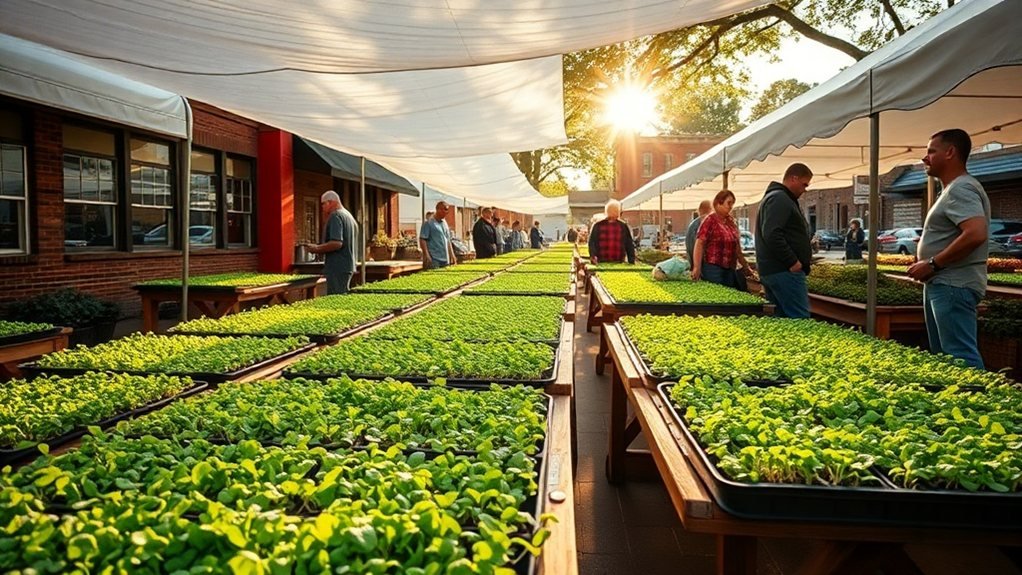
Once you’ve secured a spot, the operational mechanics of Alabama markets follow predictable patterns that reward preparation, particularly regarding booth fees, which typically range from a nominal daily rate at smaller rural venues to higher seasonal contracts at established urban markets like the Birmingham Pepper Place. Setup expectations vary considerably, but most markets require vendors to arrive 60 to 90 minutes before opening, bringing their own tables, canopies, and display infrastructure. What moves at these markets reflects Alabama’s particular consumer preferences, where culinary microgreens such as sunflower, pea shoots, and spicy radish consistently outperform novelty varieties among shoppers who value familiar flavors and visible freshness.
Booth Fees and Setup Basics
Booth fees across Alabama’s farmers markets vary more than most new vendors expect, and understanding that range before you commit saves you from budgeting surprises that can undercut your first season.
At smaller community markets, daily fees often run $15 to $25, while established urban markets in Birmingham or Huntsville frequently charge $30 to $60 per day. Some markets offer seasonal contracts at discounted rates, which rewards vendors who plan ahead.
For your microgreens booth at a farmers market, you’ll need a six-foot table, a canopy rated for wind, and weights securing each leg. Alabama’s spring humidity affects display materials, so moisture-resistant signage protects your investment.
Knowing these operational realities before applying to farmers markets in Alabama positions your microgreens operation for a financially sustainable start.
What Moves at Alabama Markets
Seasoned microgreens vendors consistently find that Alabama market shoppers gravitate toward familiar varieties first, with sunflower and pea shoots moving reliably across most venues, while more specialized offerings like amaranth or bulls blood beet require a brief education at the table before a sale closes.
As a farmers market Alabama vendors community, you’ll notice that urban markets in Birmingham and Huntsville tend toward culinary sophistication, where chefs and food-conscious buyers respond well to radish and broccoli microgreens. Smaller regional markets reward consistency above novelty.
Having microgreens for sale Alabama shoppers recognize week after week builds the transactional trust that sustains your booth long-term. Position familiar varieties at the front, place experimental cuts behind them, and let your regulars pull new customers deeper into what you’re growing.
Getting Your Application Ready

When a market manager opens your application, they’re evaluating whether you fit their vendor mix, meet their compliance standards, and can reliably show up week after week.
Most Alabama markets require proof of liability insurance, a current cottage food registration or commercial kitchen documentation, and product photos that accurately represent what you’ll bring to the booth.
Submitting incomplete paperwork, underestimating photo quality, or failing to address their specific product category needs are the mistakes that send applications to the bottom of the pile.
What Market Managers Want to See
Getting your application in front of a market manager is less about filling out a form and more about demonstrating that you’re a vendor who won’t create problems. When you sell microgreens at farmers market venues across Alabama, managers are evaluating your operational reliability as much as your product.
Your farmers market vendor application should document your production setup, your food handling certifications, and your liability insurance coverage clearly. Managers want confirmation that you understand Alabama’s cottage food rules or your applicable licensing tier, that your display meets space requirements, and that you’ve thought through your setup process.
A vendor who arrives with complete documentation and coherent answers to basic operational questions removes friction from the manager’s decision, which is precisely the position you want to occupy.
Common Mistakes to Avoid
Knowing what managers want is only half the equation, because even well-prepared growers routinely undermine their own applications through avoidable procedural errors. As a farmers market vendor Alabama applicants frequently miss submission windows, particularly at Birmingham and Huntsville markets that close applications months before the spring season opens. You should verify deadlines before finalizing your product documentation, not after.
Another critical error involves submitting incomplete cottage food or agricultural exemption paperwork, which stalls your application regardless of product quality. When learning how to sell microgreens professionally, understand that managers discard incomplete files routinely. Submitting generic booth photos rather than microgreens-specific display images signals inexperience immediately. Track every requirement meticulously, confirm receipt of submitted materials directly with the market coordinator, and never assume digital submissions processed correctly without confirmation.
Use the Market Finder to Shortcut Your Search

Sorting through 112 markets scattered across Alabama by hand is the kind of work that eats up hours you’d rather spend in the grow room. The MGW Market Finder consolidates that research, letting you filter by location and identify viable venues for your microgreens market stand without the manual labor.
| What You’d Do Manually | What the Tool Does |
|---|---|
| Search county by county | Filter by zip code instantly |
| Guess at local microgreens alabama demand | Surface active, verified markets |
| Spend hours cross-referencing USDA data | Pull structured results in seconds |
You’re building a business, not a spreadsheet. Employ the time you recover here to hone your production and approach market managers with precision.
Find your next opportunity at [markets.microgreensworld.com](https://markets.microgreensworld.com).
Frequently Asked Questions
Can I Sell Microgreens at Alabama Farmers Markets Without a Business License?
Most Alabama farmers markets don’t require a business license to sell microgreens, but you’ll likely need a cottage food registration or nursery permit depending on how you’re growing and selling.
How Do Alabama Health Department Rules Affect Microgreens Sales at Markets?
Alabama’s health department generally classifies microgreens as a whole produce item, so you’re typically exempt from cottage food rules. That said, your county’s specific requirements can vary, so contact your local health office directly.
Do Alabama Markets Require Liability Insurance Before Approving Vendor Applications?
Most Alabama markets require liability insurance before approving your vendor application. Coverage requirements typically range from $1M to $2M per occurrence. Contact each market manager directly to confirm their specific policy before you apply.
What Happens if My Microgreens Don’t Sell Well the First Weekend?
One slow weekend doesn’t define your market fit. Adjust your display, pricing, or variety mix and show up again. Consistency builds recognition, and recognition builds sales. Give it at least three weekends before drawing determinations.
Are There Alabama Markets That Run Indoors During Winter Months?
Yes, some Alabama markets run indoors through winter, particularly in Birmingham and Huntsville. Check each market’s individual schedule since indoor winter operations vary widely. Utilize the Market Finder at markets.microgreensworld.com to identify year-round options near you.
Wrap-up
You’ve got the tools, the product, and now you’ve got a map. Alabama’s 112 listed markets aren’t uniformly accessible, but you don’t need all of them—you need the right ones. Start with Birmingham, Huntsville, or Mobile if volume’s your priority, or target smaller markets if you’re building vendor experience first. Get your application materials together, contact the market manager directly, and secure your spot before the season fills.