
Alaska’s roughly 43 USDA-listed farmers markets run late May through early October, giving you a compressed but lucrative window where microgreens face far less field-crop competition than in the lower 48. Anchorage offers the highest market concentration and foot traffic, while Juneau’s geographic isolation limits competing supply, and Fairbanks buyers tend toward practical, nutrient-dense purchases. Sunflower and pea shoots consistently perform well across all three regions. What follows breaks down exactly how to position, apply, and operate successfully.
Key Takeaways
- Alaska has approximately 43 USDA-listed farmers markets, with Anchorage offering the highest concentration and longest seasonal window for microgreens vendors.
- The primary selling season runs late May through early October, giving vendors roughly 18–22 weekends to generate revenue.
- Cold-hardy varieties like sunflower shoots, pea shoots, and radish microgreens sell most consistently with Alaska’s health-conscious market shoppers.
- Applications should include production documentation, food handler certification, liability insurance, and a clear weekly inventory plan to avoid rejection.
- Use the MGW Farmers Market Finder at markets.microgreensworld.com to locate and compare USDA-listed Alaska markets efficiently.
Farmers Markets in Alaska for Microgreens Vendors
Alaska’s approximately 43 USDA-listed farmers markets represent a concentrated but high-demand landscape for microgreens vendors willing to work within the state’s compressed seasonal window.
You’re not competing against the same saturated field you’d find in the lower 48, where established growers have locked down booth space across year-round calendars.
The Alaska market season runs primarily through summer, which means your planning, your production schedule, and your vendor applications all converge around a tight window that rewards early action.
Why Alaska Markets Are Worth Your Attention
If you’re growing microgreens and looking for your next market opportunity, Alaska deserves serious consideration, particularly given the structural dynamics that make its markets unusually receptive to specialty produce.
The state’s compressed growing season creates genuine scarcity, which positions a microgreens vendor in Alaska favorably against conventional field crops that struggle with the climate.
Anchorage farmers market activity, concentrated during peak summer months, draws a health-conscious, high-engagement customer base that actively seeks locally sourced, nutrient-dense foods year-round. That demand rarely gets fully satisfied by regional growers.
When supply is constrained and customer intent is high, vendors who show up consistently with quality product hold considerable market influence.
Alaska’s approximately 43 USDA-listed markets represent real, underserved opportunities worth analyzing carefully before dismissing geography as an obstacle.
What the Alaska Market Season Looks Like
The Alaska market season operates within a narrow window, typically running from late May through early October, which compresses your entire selling cycle into roughly 18 to 22 weekends depending on the region.
Anchorage markets tend to open earlier and close later than interior locations, while Fairbanks vendors often contend with a tighter window due to harsher early spring conditions.
For microgreens farmers market vendors, this compression demands precise production scheduling, because missing even two weekends represents a meaningful percentage of your available selling time.
Farmers markets Alaska-wide don’t operate uniformly, so you’ll need to confirm individual market calendars rather than assuming regional patterns apply universally.
Starting your grow cycles in early May positions you to arrive at your first market with consistent, sellable product already in rotation.
How to Find the Right Market in Alaska
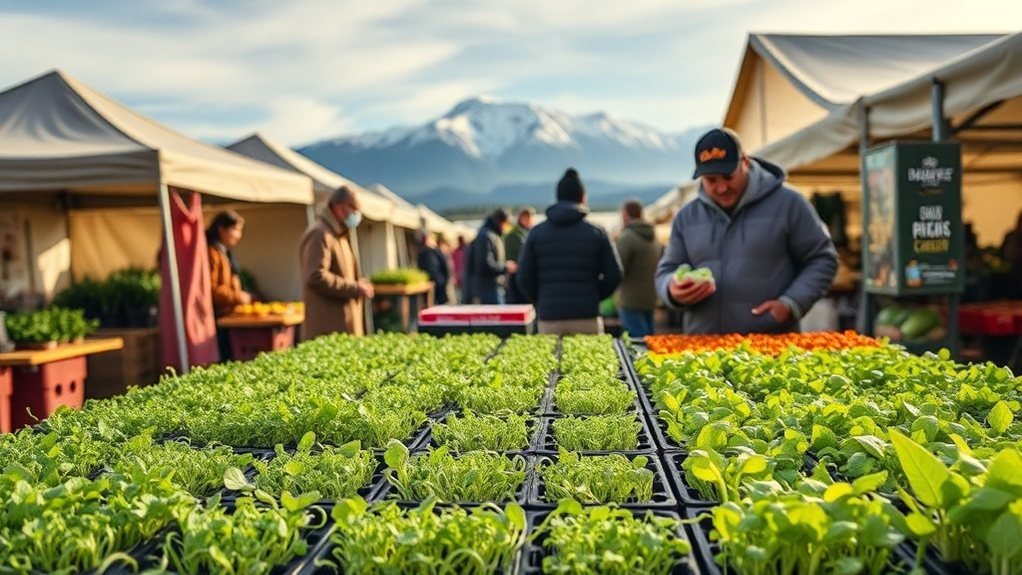
Before you apply to any Alaska market, you need to evaluate vendor mix, foot traffic patterns, and application timelines specific to each location, because a poorly matched market wastes product and time.
Anchorage hosts the highest concentration of established markets in the state, giving you more options to compare booth fees, customer demographics, and competing fresh produce vendors side by side.
Fairbanks and Juneau each operate on compressed seasonal windows, which means application deadlines arrive earlier than most lower-48 growers expect, and securing a spot requires you to move quickly once USDA-listed market contacts become reachable in late winter.
What to Look for Before You Apply
Choosing the right farmers market in Alaska demands more systematic evaluation than simply finding the nearest open-air stall with available vendor slots. As a farmers market vendor Alaska, you need to assess foot traffic patterns, customer demographics, and competing produce vendors before committing your time and product. A microgreens booth farmers market setup represents real infrastructure investment, so you want confirmed buyer intent, not just casual browsers.
Study whether the market attracts health-conscious regulars or primarily tourists passing through. Review vendor fee structures relative to expected volume, and determine whether the market enforces exclusivity zones that could protect your niche. Anchorage’s Saturday Market draws consistent local traffic, while smaller community markets offer tighter vendor relationships. Evaluate each opportunity against your production capacity before you submit any application.
Markets Near Anchorage
Anchorage concentrates more market opportunity than anywhere else in Alaska, making it the logical starting point if you’re trying to place microgreens with consistent, returning buyers.
The anchorage farmers market ecosystem includes multiple venues operating through the summer season, each drawing distinct customer segments with different purchasing behaviors. Downtown locations tend to attract higher foot traffic, while neighborhood markets often yield tighter vendor-buyer relationships, which matters considerably when you’re positioning local microgreens alaska shoppers haven’t encountered before.
Before you apply anywhere, cross-reference the USDA-listed markets against current vendor rosters, since produce saturation varies significantly by location. Understanding which markets lack an established microgreens presence gives you a structural advantage that generic market research simply won’t surface.
Use the free Market Finder at [markets.microgreensworld.com](https://markets.microgreensworld.com) to map every option.
Markets Near Fairbanks and Juneau
Moving beyond Anchorage, Fairbanks and Juneau represent meaningfully different market environments, each shaped by geography, population density, and seasonal constraints that directly affect how you position and sell microgreens.
The Fairbanks farmers market operates under an abbreviated growing window, where extreme cold compresses vendor seasons considerably, demanding that you maximize turnover during peak summer weeks. Fairbanks buyers tend toward practical purchases, so emphasizing nutritional density over novelty often converts better there.
The Juneau farmers market presents a distinct challenge: geographic isolation limits supply chain reliability for competing vendors, which actually works in your favor if you’re producing consistently. Juneau’s coastal demographics skew toward health-conscious buyers, making premium positioning viable.
Knowing these distinctions before you apply saves you from misreading your first season entirely.
What to Expect When You Get There
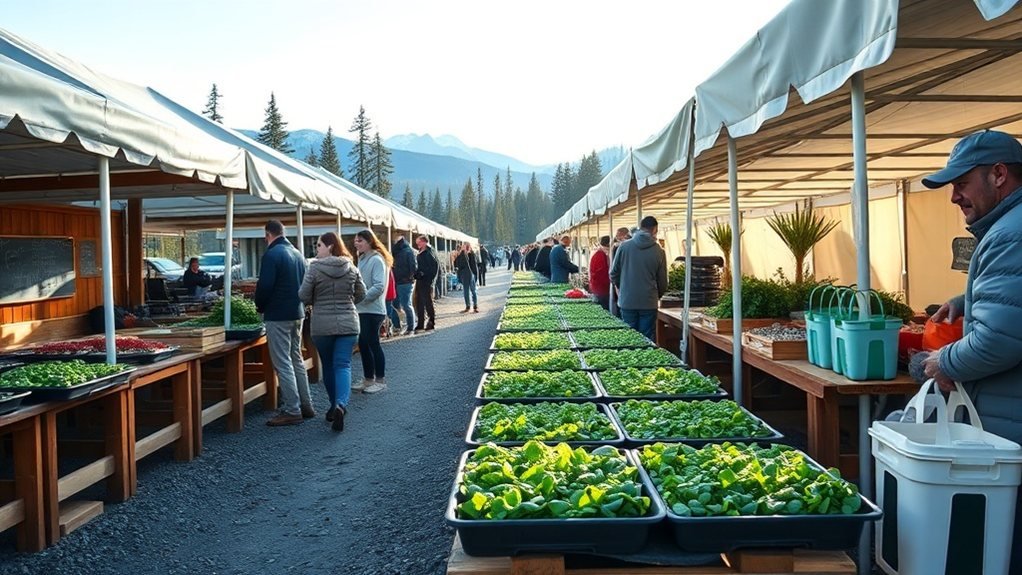
Once you’ve secured a spot, the operational realities of Alaska’s farmers markets become immediately apparent, particularly regarding booth fees, which typically range from modest daily rates at smaller community markets to higher seasonal commitments at established Anchorage venues.
Setup logistics demand attention to Alaska’s variable summer conditions, where morning temperatures and wind exposure can affect how you display and store live trays or cut microgreens.
What actually sells at these markets reflects the regional palate and demographic, with cold-hardy culinary varieties like sunflower, pea shoots, and radish consistently drawing interest from customers who associate fresh greens with nutritional density during a short growing season.
Booth Fees and Setup Basics
Booth fees at Alaska farmers markets tend to run lower than what you’d see in the contiguous states, but they still vary enough to affect how you plan your first season. Understanding how to get a farmers market booth means accounting for these costs before you commit.
| Market Type | Typical Booth Fee Range |
|---|---|
| Seasonal/Weekly | $15 to $35 per day |
| Juried Annual Membership | $150 to $400 per season |
For farmers markets Alaska microgreens vendors navigate through, setup requirements typically include a weighted canopy, a six-foot table, and a state food handler certification. Anchorage markets enforce stricter labeling compliance than smaller Fairbanks venues, so confirm local requirements directly with each market manager before your first setup day.
What Moves at Alaska Markets
Most Alaska farmers market shoppers arrive with a compressed purchasing window, shaped by a short summer season that concentrates foot traffic into a narrow span of weeks rather than spreading demand across a full calendar year.
As a farmers market alaska vendor, you’ll notice buyers move decisively, prioritizing nutrient-dense, locally grown produce they can’t source reliably elsewhere.
Microgreens for sale alaska performs particularly well when positioned as a premium, fresh-cut product distinct from shelf-stable goods.
Sunflower and pea shoots tend to generate consistent repeat interest, given their visual density and familiar flavor profiles.
You’re not educating shoppers here; they already understand value. Your job is maintaining adequate weekly volume to meet the demand that concentrated seasonal attendance reliably generates.
Getting Your Application Ready
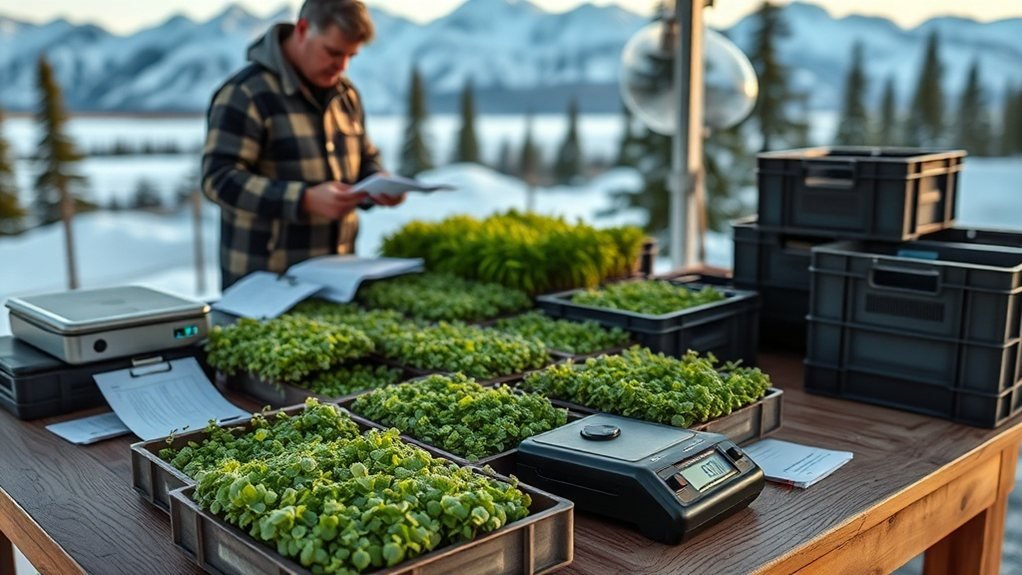
When you submit a market application in Alaska, the manager reviewing it’s evaluating whether your product fits the market’s existing vendor mix, whether your operation meets state cottage food or food handler requirements, and whether you can commit to the schedule reliably.
Most rejections aren’t about the microgreens themselves but about incomplete documentation, vague answers on production volume, or missing proof of liability insurance.
Treat the application as your first sales conversation with the market, because a clear, specific, well-supported submission tells the manager you’re a serious vendor before you’ve set up a single table.
What Market Managers Want to See
Market managers across Alaska’s roughly 43 USDA-listed farmers markets are evaluating your application against a specific set of operational and presentability criteria, not simply filling vendor slots.
When you sell microgreens at farmers market venues in Anchorage or Fairbanks, managers scrutinize your production documentation, food handler certifications, and liability insurance before reviewing anything aesthetic.
Your farmers market vendor application should demonstrate that you understand Alaska’s abbreviated growing season, signaling that your supply chain can sustain consistent weekly inventory despite compressed timelines.
Photograph your display setup, include your cottage food registration if applicable, and attach references from any prior market participation.
Managers want evidence that you’ll show up reliably, present professionally, and not abandon your booth mid-season when the short Alaskan summer compresses your operational window considerably.
Common Mistakes to Avoid
Applying to an Alaskan farmers market without reviewing your documentation against the manager’s checklist is where most vendor applications stall before they’re seriously considered. When you’re learning how to sell microgreens, incomplete submissions signal inexperience, and managers operating short seasonal windows have little patience for follow-up requests.
| Mistake | Why It Hurts | Fix It |
|---|---|---|
| Missing grow documentation | Raises food safety concerns | Attach before submitting |
| Vague product descriptions | Weakens your booth concept | Name specific varieties |
| No handler certification | Disqualifies application immediately | Complete it first |
Selling microgreens locally demands preparation that precedes outreach. Your application represents your operation’s professionalism before the manager ever meets you.
Use the Market Finder to Shortcut Your Search
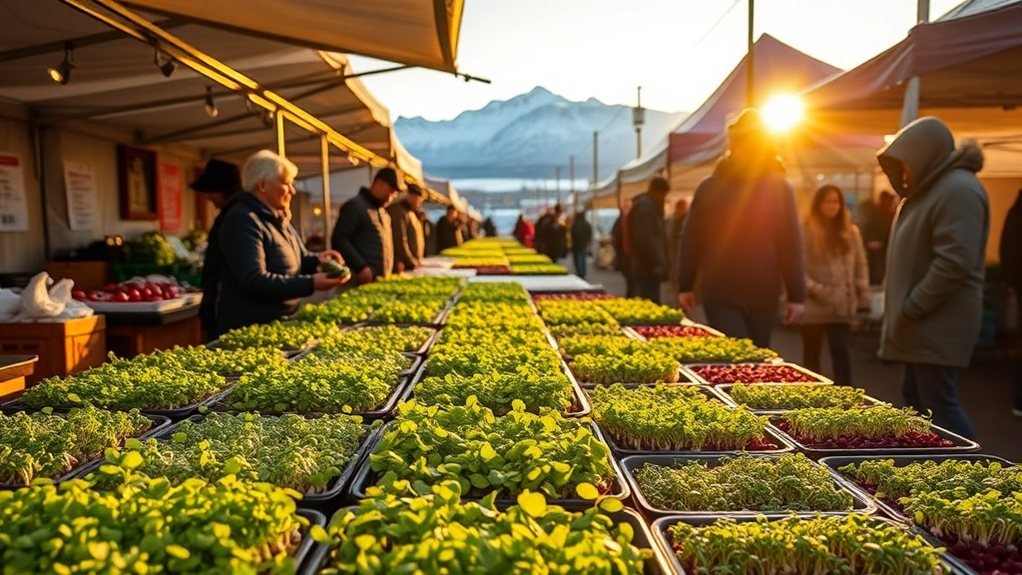
Tracking down viable market opportunities in Alaska doesn’t have to mean sifting through outdated websites and unanswered emails. The MGW Farmers Market Finder at markets.microgreensworld.com pulls directly from USDA data, giving you a consolidated view of approximately 43 Alaska markets without the manual research burden.
As a microgreens grower Alaska, you can filter by region, identifying whether Anchorage, Fairbanks, or Juneau clusters align with your distribution range before committing to applications. This matters because your microgreens market stand requires consistent weekly attendance, so proximity and seasonality determine viability more than enthusiasm does.
The tool compresses what would otherwise take days of scattered research into a focused, actionable list. Start there, cross-reference against the application timing guidance covered earlier, and move into outreach with actual market names in hand. Employ the free Market Finder at markets.microgreensworld.com now.
Frequently Asked Questions
Can You Sell Microgreens at Alaska Farmers Markets Without a Business License?
You can often sell without a business license at smaller Alaska markets, but each market sets its own vendor rules, so you’ll need to confirm directly with the market manager before applying.
Do Alaska Farmers Markets Require Vendors to Grow Products Locally?
Most Alaska farmers markets do require you to grow what you sell locally, but each market sets its own rules, so you’ll need to confirm directly with the market manager before applying.
How Early Should You Arrive to Set up at an Alaska Market?
Arrive at least 90 minutes before opening. Alaska’s summer light can fool you into thinking you’ve got more time than you do, and a rushed setup shows in your display.
Are There Indoor Alaska Farmers Markets That Run Through Winter?
Yes, a few Alaska markets do run indoors through winter, particularly in Anchorage. They’re smaller, less frequent, and highly competitive for vendor spots, so you’ll want to apply early and follow up directly with market managers.
Can You Share a Booth With Another Vendor at Alaska Markets?
Some Alaska markets allow booth sharing, but you’ll need to check each market’s vendor rules directly. Policies vary, and some require all products to be approved separately even when vendors split a single space.
Wrap-up
You’ve got the framework now—Alaska’s market landscape, the seasonal constraints, and what it takes to show up ready. Don’t waste time on markets that don’t fit your production window or location. Employ the tools available, get your application materials in order early, and prioritize markets where consistent vendor relationships matter. The short season rewards vendors who’ve done the groundwork before the first market opens.