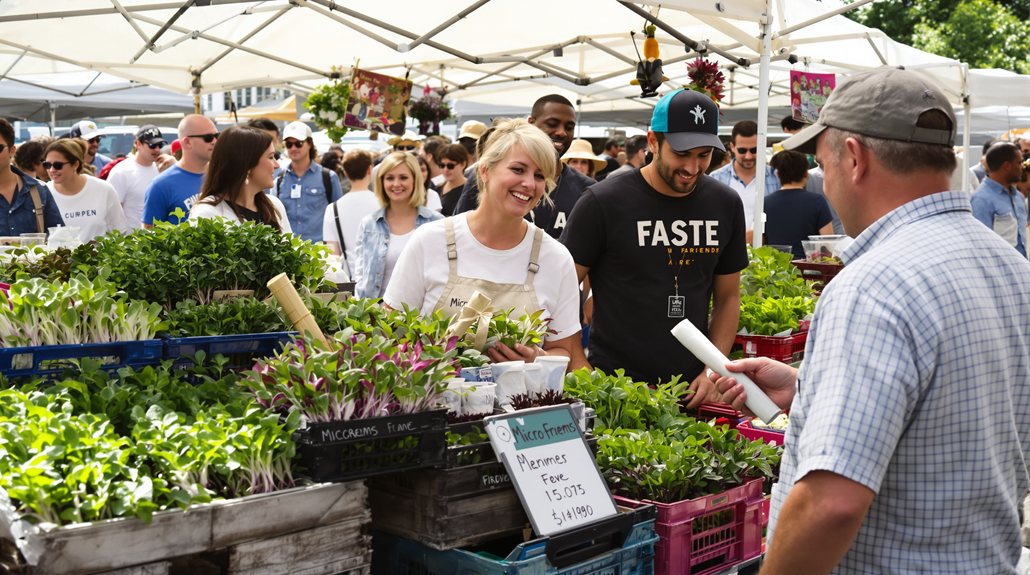
Your most likely buyer is a college-educated woman earning above the median income who already knows what microgreens are. Urban and western markets attract this shopper at the highest rates. Rural and southern markets draw customers who need education before they buy. Matching your booth strategy to the right customer type starts with knowing exactly which market you’re targeting — and the data makes that decision straightforward.
Key Takeaways
- Farmers market shoppers with college degrees or higher household incomes buy specialty crops, including microgreens, at significantly greater rates than other demographics.
- Women purchase specialty produce at higher rates than men, making them a primary target customer segment for microgreens vendors.
- Urban shoppers already recognize microgreens, while rural and southern shoppers need education and sampling before converting to buyers.
- Younger shoppers in their 20s and 30s actively research ingredients, making them more receptive to microgreens without extensive vendor explanation.
- Market location predicts buyer readiness: urban and western markets show higher specialty crop purchase rates than rural or southern markets.
Who actually shops at farmers markets in the United States?
You can’t build a booth strategy around guesses about who shows up.
Lee and Miller (2026, HortTechnology 36(3)) surveyed 229 US farmers market managers and found that specialty crop sales vary sharply by market type.
Urban, year-round, and producers-only markets outperform rural and southern markets by a wide margin.
What the research says about who buys at different market types
Not every farmers market draws the same type of shopper. Farmers market customer demographics shift significantly based on market type and location.
Lee and Miller (2026, HortTechnology 36(3)) surveyed 229 US farmers market managers. The data shows clear patterns.
| Market type | Specialty crop sales reported | Shopper profile |
|---|---|---|
| Year-round markets | 65.2% | High-frequency, educated buyers |
| Urban markets | 60.8% | Food-literate, variety-seeking |
| Producers-only markets | 57.6% | Trust-driven, source-conscious |
| Western markets | 52.1% | Familiar with specialty crops |
| Rural markets | 25.9% | Needs education and sampling |
You’re not selling to a general public. You’re selling to a specific group at a specific market. Know the difference before you apply.
How urban and rural market buyers differ in what they already know
Urban and rural shoppers don’t arrive at the booth with the same knowledge.
Urban farmers market customers already know what microgreens are. Lee and Miller (2026) confirmed this. Urban markets hit 60.8% specialty crop sales. Western markets reached 52.1%. These shoppers want variety names, sourcing details, and growing methods.
Rural shoppers need more from you. Southern markets sat at 25%. Rural markets hit 25.9%. That gap tells you the education work falls on your booth.
A Portland shopper asks which variety pairs with eggs. A shopper in rural Mississippi needs a sample and a plain suggestion.
Same product. Different starting point. Your signage, sampling setup, and talking points have to match who’s actually standing in front of you.
What type of farmers market customer is most likely to buy specialty crops?
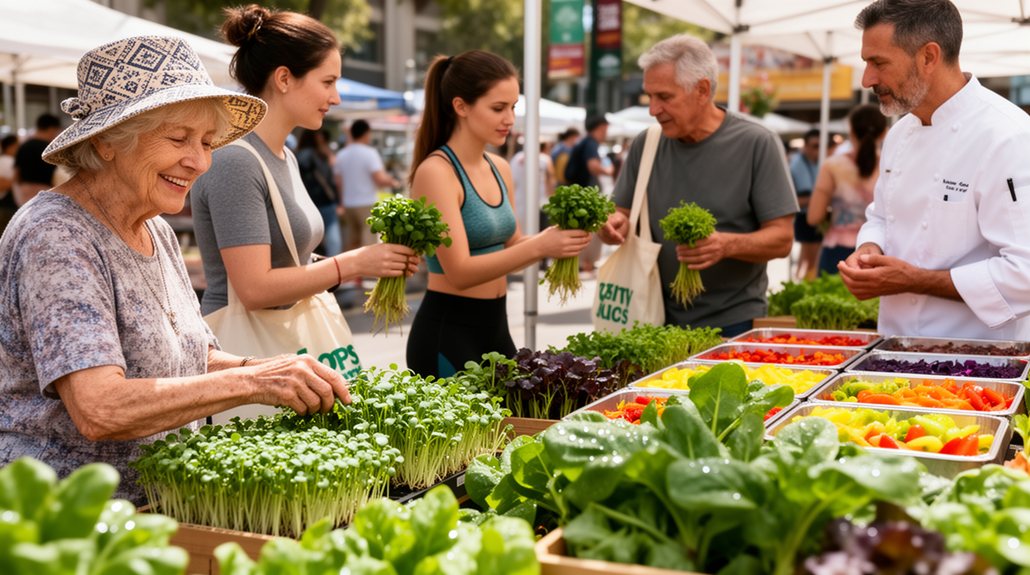
Not every farmers market shopper is ready to buy microgreens. Lee and Miller (2026) found that education level, household income, and market location all predict specialty crop purchases. You need to know which customer type shops your target market before you set up a single tray.
What education level, income, and location data show about specialty crop buyers
Three data points from Kelley et al. (2002) tell you exactly who’s most likely to buy specialty crops: education level, household income, and gender.
Higher-educated shoppers buy specialty produce more often. Higher farmers market shopper income also increases purchase likelihood. Women buy at higher rates than men.
| Factor | Higher likelihood | Lower likelihood |
|---|---|---|
| Education | College degree or higher | No college background |
| Household income | Above median income | Below median income |
| Gender | Women | Men |
| Market location | Urban, western markets | Rural, southern markets |
| Product familiarity | Already knows microgreens | Needs booth education |
You’re not selling to everyone. You’re selling to a specific person. Match your booth to that profile and your conversions improve.
Why the urban and western market advantage is about customer readiness
Knowing the buyer profile matters. Urban and western markets don’t just have more foot traffic. They’ve shoppers who already recognize specialty crops.
Lee and Miller (2026) found 60.8% of urban markets and 52.1% of western markets reported specialty crop sales. That’s your farmers market buyer profile in action.
These shoppers don’t need a basic explanation. They’re looking for variety, sourcing details, and something new.
You fit that picture. Microgreens are specialty by definition.
At a Portland Saturday market, your signage can go deeper. Skip the “what is this” sign. Lead with the variety name and how it was grown.
Customer readiness means less education time. More selling time.
How does knowing your customer change your farmers market booth strategy?
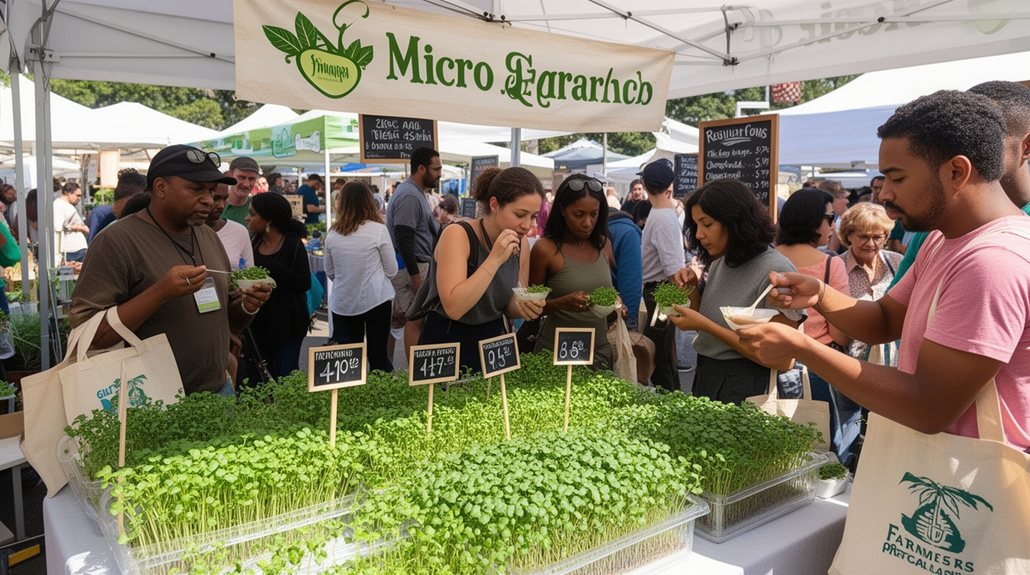
Your booth setup, signage, and sampling strategy should match the buyer standing in front of you.
A Portland shopper and a rural Mississippi shopper both might buy your microgreens, but they need completely different approaches to get there.
Knowing who shops at your target market before you apply is what separates a profitable setup from a wasted weekend.
Why a Portland shopper and a rural Mississippi shopper need different approaches
When the shopper changes, the booth has to change too. Your microgreens customer profile determines everything from signage to sampling.
| Element | Portland (urban/western) | Rural Mississippi |
|---|---|---|
| Signage | Variety names, sourcing story | Simple usage suggestions |
| Sampling | Secondary, not required | Primary conversion tool |
| Pricing | $6–$8 accepted readily | Needs value justification |
| Education level | Already knows microgreens | Needs basic explanation |
Urban western markets show 52.1% specialty crop sales. Rural markets sit at 25.9%.
That gap tells you where the work is. In Mississippi, your sampling station is your sales pitch. In Portland, your label does the talking.
What the sampling station is really solving for different buyer types
The sampling station isn’t decoration. It’s a conversion tool, and who shops at farmers markets determines how you run it.
For a rural shopper in Mississippi, the sample answers a real question: what’s this, and how do I cook it. Place sunflower microgreens on a cracker. Say “try this.” That’s your whole pitch.
For an urban shopper in Portland, the sample confirms a decision they’ve already started making. They want to know the variety. They want to know if you grew it yourself.
Same tray. Different conversation.
Your booth belongs to the shopper in front of it. Know their baseline before you set up. That single adjustment changes how many people walk away buying instead of just tasting.
How do you identify the right customer profile before you apply to a market?
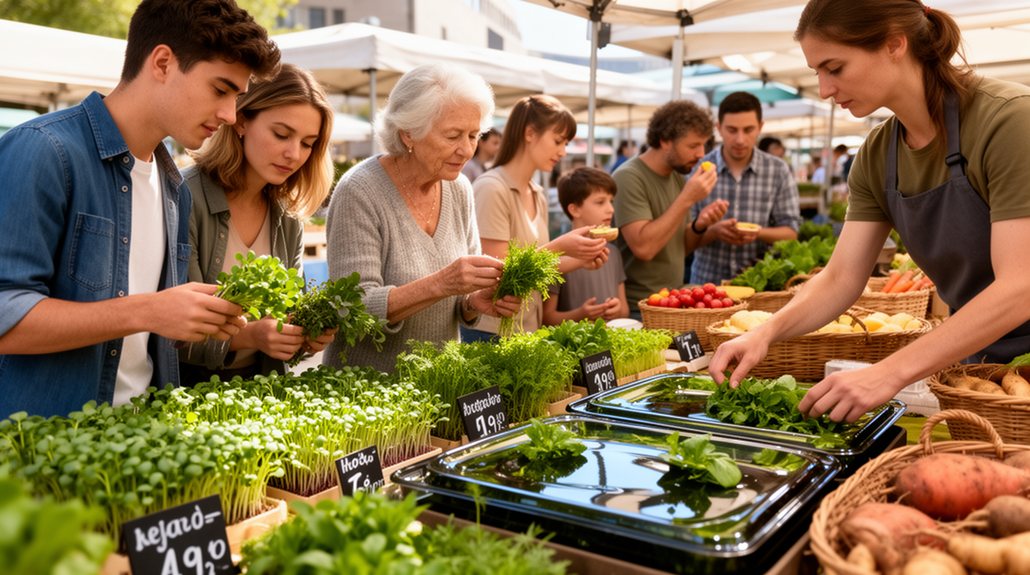
You don’t pick a market based on location alone. You visit first, watch the crowd, and read what the data won’t show you.
A Saturday morning walkthrough tells you who’s buying, how fast they move, and whether your product fits the room.
The pre-application visit method for reading a market’s customer base
Show up at the market before you ever fill out an application. Walk through it like a shopper, not a vendor.
Count the booths. Note what’s missing. If you see no specialty greens, that’s data.
Watch who stops and buys. Are they asking questions or just grabbing and paying? That tells you how much booth education you’ll need.
This is farmers market buyer research done in person. No survey replaces it.
Time your visit to match peak hours. Most markets run heaviest from 9 a.m. to 11 a.m. on Saturdays.
Talk to two or three vendors who aren’t your competition. Ask what sells. Ask who buys it.
You’re building enough repeat buyers to sustain your revenue. Start by knowing exactly who’s already there.
What to watch for on a Saturday morning that the data cannot tell you
Saturday mornings at a market reveal things no spreadsheet can capture. Observe how long shoppers pause at vendor tables. Brief pauses indicate low engagement.
Tally how many people carry reusable bags. That signals a regular, education-aware shopper base.
Note whether vendors explain their products or simply wait. If explanation is common, farmers market education demographics lean toward curious but unfamiliar buyers.
Monitor age ranges. Younger shoppers in their 20s and 30s often research ingredients. Older shoppers may require more direct use suggestions.
Check how many booths offer samples. Heavy sampling suggests the crowd needs convincing.
You’re not just visiting. You’re assessing whether your future customers already belong to this market’s culture or whether you’d have to build that from scratch.
How do you use customer data to find the right market near you?
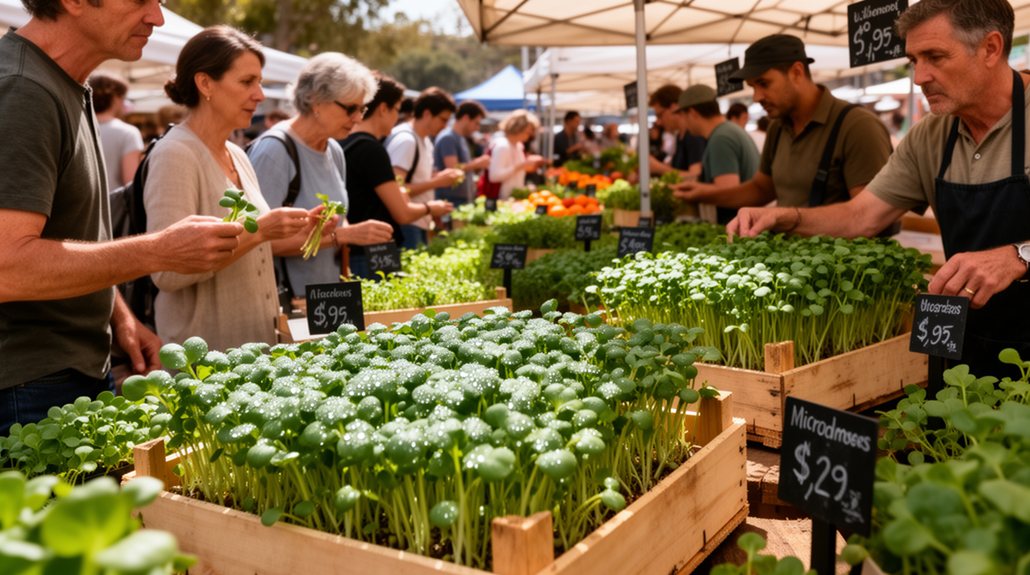
Customer data only helps if you can match it to a real market near you. The MGW Market Finder shows market type, location, and seasonal data for 7,842 USDA-verified markets across all 50 states.
Before you apply anywhere, you need answers to three specific questions about that market.
What the MGW Market Finder shows about market type and location
Before you apply to any market, pull up the MGW Market Finder at markets.microgreensworld.com. It covers 7,842 USDA-verified markets across all 50 states.
Search by zip code, city, or state. The tool shows market type, location, and seasonal data.
That farmers market demographic data tells you what kind of buyer shops there. Urban markets report 60.8% specialty crop sales. Rural markets sit at 25.9%. That gap changes your whole approach.
Employ the market type filter to separate year-round markets from seasonal ones. Year-round markets hit 65.2% specialty crop sales.
The MGW Farmers Market Finder has 7,842 USDA-verified markets searchable by zip code, city, or state. Employ it to find and compare markets near you before you apply – markets.microgreensworld.com.
The Microgreens Growth Path Tool maps your first move using local market data – growthpath.microgreensworld.com.
The three questions to answer about any market before you apply
Picking the wrong market wastes your time and your product. Before you apply anywhere, answer three questions.
First: Is this market urban, rural, or western? That single factor predicts whether your microgreens target customer already knows the product.
Second: Is it year-round or seasonal? Lee and Miller found year-round markets hit 65.2% specialty crop sales. Seasonal markets are riskier for new vendors.
Third: Is it producers-only? Those markets run at 57.6% specialty crop adoption. Your booth fits the culture there.
Pull the market’s location and type from the MGW Market Finder. Match what you see to the three questions. Then apply to the market that fits your buyer profile, not just the closest one.
Frequently Asked Questions
Does Booth Signage Language Need to Change Based on Market Region?
Yes, your signage language needs to change by region. Urban shoppers read variety names and sourcing details. Rural shoppers respond to simple usage suggestions. Match your words to what your buyers already know.
How Many Markets Should a New Microgreens Vendor Apply to at Once?
Start with one market. You can’t read a crowd you’re not standing in front of yet. Get your booth dialed in before you split your attention across multiple applications.
What Time of Year Do Specialty Crop Sales Peak at Farmers Markets?
Specialty crop sales peak at year-round markets, where 65.2% of managers report strong sales. You’ll see your best numbers in spring and early summer when shoppers are actively seeking fresh, local produce.
Can a Single Vendor Sell at Both Urban and Rural Markets Successfully?
Yes, you can. Adjust your booth strategy per market. Urban stops need variety details and sourcing info. Rural stops need sampling and simple utilization suggestions. Same trays, different presentation.
Does Market Size Affect How Quickly Microgreens Vendors Build Repeat Customers?
Yes, it does. Smaller markets build repeat customers faster because you’ll see the same faces weekly. Larger markets bring more foot traffic but slower loyalty. Your consistency at either size drives the repeat cycle.