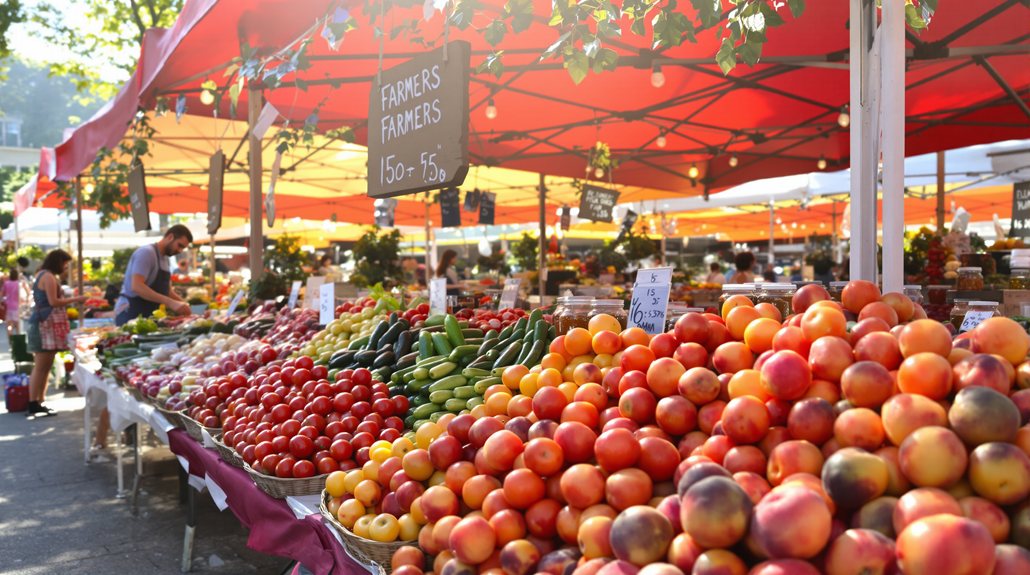
To sell more every week, show up every Saturday without exception and bring the same varieties in the same quantities. Build toward 30–50 committed regulars; 40 buyers spending $15 each puts $600 in your pocket before a single new customer arrives. Use $5 and $10 price points, offer simple bundles, and suggest one quick pairing at checkout. Post one harvest photo Thursday or Friday. The specific tactics that turn browsers into weekly buyers are worth a closer look.
Key Takeaways
- Show up every week without exception; missing a single Saturday risks losing regulars who will permanently shift their habits to other vendors.
- Build a base of 30–50 committed weekly buyers by learning names and tracking usual purchases to turn first-timers into regulars.
- Use round-number pricing like $5 or $10 to speed transactions and offer bundle deals that visibly increase average sale size.
- Boost each transaction with brief verbal pairings at checkout; one well-placed suggestion can prompt an add-on without slowing the line.
- Post one harvest photo Thursday or Friday naming varieties and market details to prime buyers and drive early booth arrivals.
What separates vendors who sell out every Saturday from ones who bring product home?
Most vendors who pack up unsold product make the same mistake. They change what they bring, skip weeks, and treat each Saturday like a fresh start.
The vendors who sell out build a base of repeat buyers who show up because they know exactly what to expect.
The consistency habits that build reliable weekly sales at a farmers market
Vendors who sell out every Saturday aren’t guessing what to bring. They’ve built farmers market vendor consistency into their routine before they leave the house.
Bring the same varieties every week. Bring the same quantities. Customers who found your sunflower microgreens last week will look for them again this week.
When that product isn’t there, they don’t ask why. They move on and don’t come back.
Track what sold and what came home. Write it down after every market. That number tells you exactly what to grow next week.
Your regulars are building a habit around your booth. Your job is to show up the same way every time. That repetition is what turns a first-time buyer into a weekly customer.
Why showing up every week matters as much as what you bring
Consistency in what you bring matters. But showing up every single week matters just as much.
Customers at your market build habits around vendors they can count on. Miss a Saturday, and they find someone else. That someone else becomes their new regular stop.
You’re not just selling microgreens. You’re becoming part of their weekly routine.
Vendors who increase farmers market sales consistently are there every week without exception. Rain, slow days, holidays. They’re at their booth.
Regulars start to expect you. They plan their Saturday around your table. That’s the position you want.
Skipping one week can cost you three customers. They don’t always come back. Show up, and the base you’ve built stays intact.
How do repeat customers change the economics of a farmers market booth?
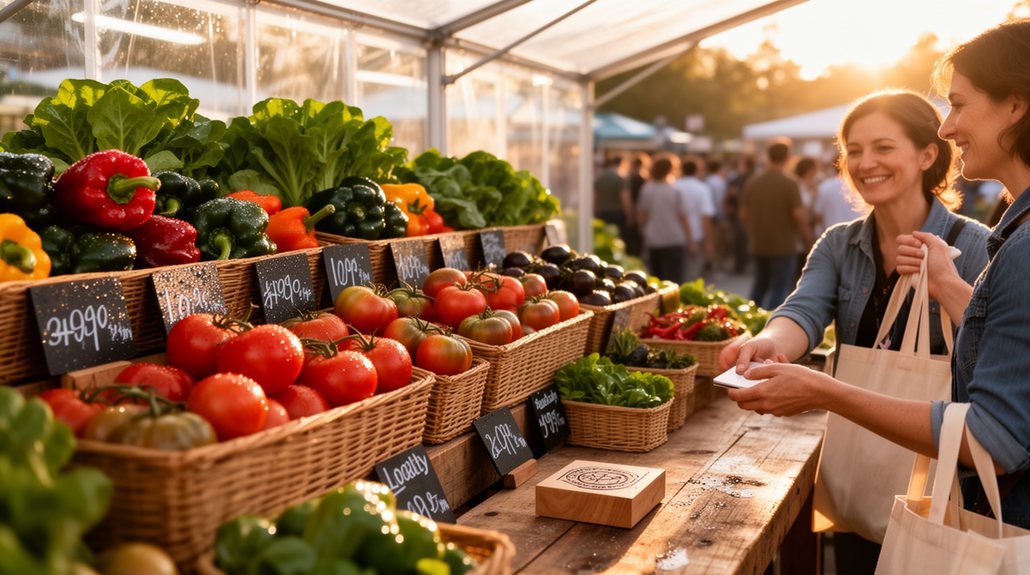
Most vendors spend every Saturday trying to find new buyers. That’s the wrong problem to solve.
Dr. Booker T. Whatley called it Critical Mass of Customers. once you build enough repeat weekly buyers, your cost of acquiring new customers drops near zero.
What Whatley’s Critical Mass of Customers principle means for weekly booth revenue
Every week you skip the market, you reset the relationship with your regulars. Dr. Booker T. Whatley called this the Critical Mass of Customers. You need enough repeat buyers showing up consistently to cover your baseline costs without hunting new customers each Saturday.
Specialty produce like microgreens is under-represented at most markets. That gap is your strategy.
A farmers market repeat customers strategy only works if you’re there every week. Once you hit critical mass, maybe 30 to 50 committed regulars, your acquisition cost drops near zero. Those buyers show up because they expect you to.
Consistency is the product. Your attendance is part of what they’re buying.
How many repeat weekly buyers does a microgreens vendor need to stop searching for new customers
The number that changes your economics is somewhere between 30 and 50 committed weekly buyers.
At 30 regulars spending $15 each, that’s $450 before a single new customer walks up. At 50, you’re at $750. Your booth stops depending on foot traffic luck.
Knowing how to build repeat customers at farmers market level starts with recognition. Learn names. Remember what people buy.
When Linda shows up every Saturday for sunflower trays, have one pulled before she asks.
That habit signals she belongs at your booth. People return to places where they feel known.
Track your regulars in a notes app. Name, usual purchase, frequency.
Twenty entries changes how you run your booth. Fifty entries changes your entire market strategy.
What pricing and bundling strategies increase average transaction size?
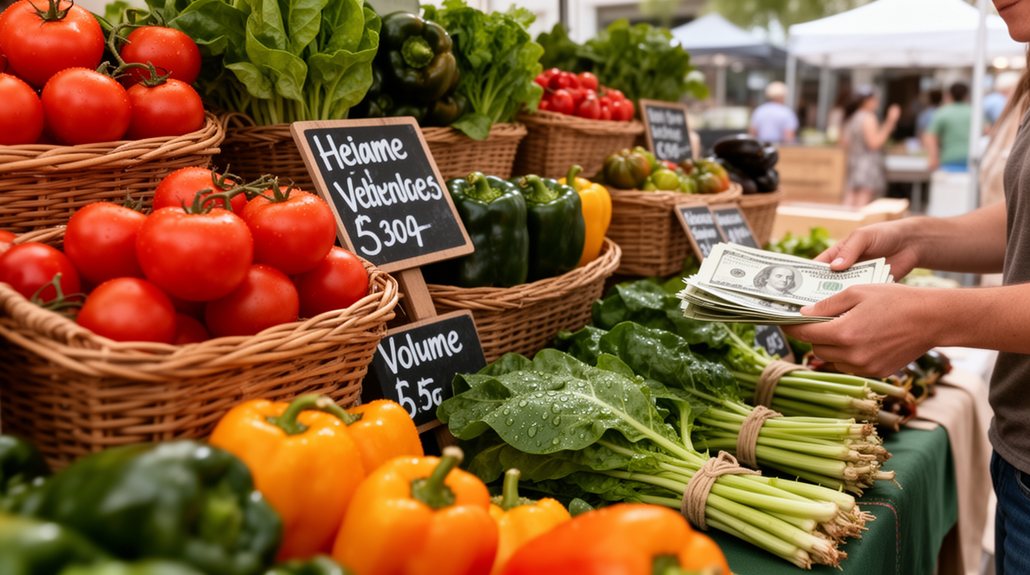
Pricing kills sales before a customer says a word. A price like $4.75 slows the transaction down because buyers have to do mental math.
Round numbers like $5 and $10 move faster and keep the line moving.
How round number pricing processes faster than odd pricing at a market booth
Round number pricing moves faster at a busy booth. When someone hands you $5 and gets a clean exchange, the line keeps moving. Odd pricing like $4.75 creates change problems and slows everything down.
Your farmers market pricing strategy should match how people already think. People carry $5, $10, and $20 bills. Price to meet that.
Set your base unit at $5 or $10. If your cost structure needs $4.75 to work, grow more efficiently instead of adjusting the price down.
Regulars remember your prices. Clean numbers stick. Confused buyers hesitate, and hesitation at a crowded Saturday booth costs you the sale before it starts.
What bundle pricing does for total Saturday revenue without adding customers
Bundle pricing shifts your revenue without requiring a single new customer.
Price sunflower microgreens at $10 each. Then offer two trays for $18. Most regulars take the bundle. Your average transaction just jumped 80%.
Bundle pricing at farmers markets works because regulars already trust you. They’re not deciding whether to buy. They’re deciding how much.
Label the bundle clearly. Write “2 for $18” on a small card at eye level. Don’t make people do the math.
Pair complementary varieties together. Sunflower and pea shoot bundles move faster than single-variety deals. Customers feel like they’re getting a curated selection, not just a discount.
Track your Saturday totals weekly. If bundles aren’t lifting your per-transaction number, adjust the pairing or the price point.
How do you use off-market channels to keep regular customers coming back?
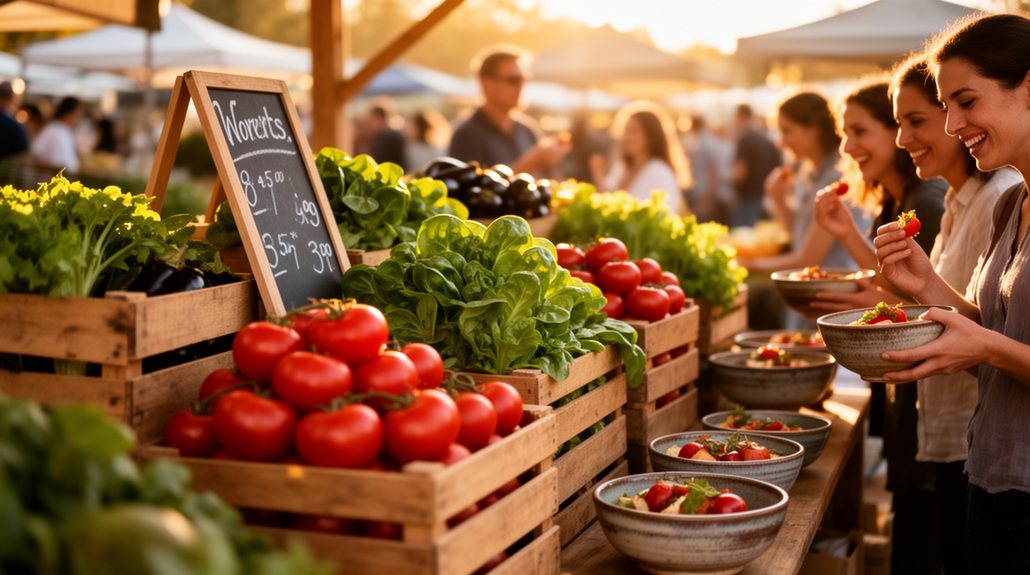
Your booth closes Saturday at noon. Your customer forgets you exist by Tuesday.
A simple Instagram account posting weekly harvests and your next market date keeps you visible without requiring much time.
What a simple social media presence does for a farmers market vendor between Saturdays
Most of your regulars won’t remember to show up unless something reminds them you’ll be there.
Post one photo Thursday or Friday. Show that week’s harvest. Name the varieties. Say which farmers market you’ll be at Saturday and what time you open.
That’s it. You don’t need reels or hashtag strategies.
The post functions as a reminder, not an ad. It tells your people the sunflower trays are ready and you’ll be at the Lincoln Park market at 8 a.m.
Regulars who saw you last week but skipped this week come back when they see that post. You’re not chasing new customers. You’re keeping the ones you already have.
How to build a weekly harvest notification habit that brings customers back
Regulars don’t come back on their own. They need a reason to remember you’re there.
Post one photo every Thursday. Show that week’s harvest. Name the varieties and the quantities available. Keep it under three sentences.
This is a farmers market vendor weekly habit that costs nothing. It works because your regulars want to feel like insiders. Knowing what’s coming Saturday before anyone else gives them that.
Add a line like “Saturday, 8am to noon, Booth 14.” Make the decision easy.
Do this for four straight weeks. You’ll notice familiar faces arriving earlier. They’re not browsing anymore. They’re coming specifically for you.
The MGW Farmers Market Finder has 7,842 USDA-verified markets searchable by zip code, city, or state. Use it to find and compare markets near you before you apply – markets.microgreensworld.com.
The Microgreens Growth Path Tool maps your first move using local market data – growthpath.microgreensworld.com.
What add-on tactics increase what each customer spends at your booth?
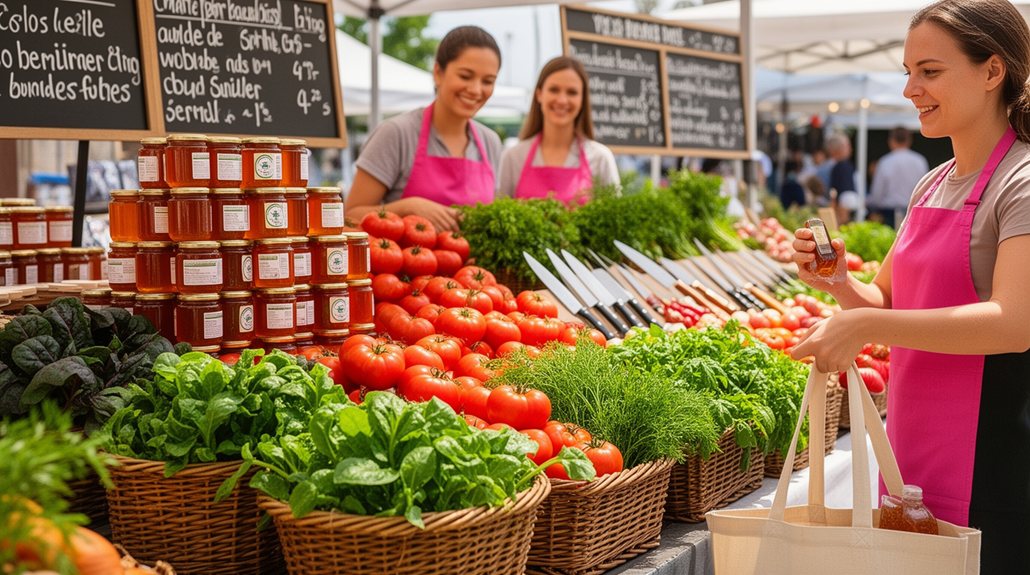
You don’t need more customers to make more money. You need each customer to spend more per visit.
Recipe cards and complementary product pairings are two ways to do that without adding a single new buyer to your list.
How recipe cards and pairing suggestions increase transaction value
At the point of sale, a buyer’s decision is already half-made. A recipe card closes it.
Print a single card showing one use case. Microgreens and avocado toast on whole grain bread is specific enough to work. Put the card face-up at the front of your table.
This is one of the simplest farmers market add-on sales moves available to you. The card gives the buyer a reason to take the product home with confidence.
Pairing suggestions work the same way. “These go well with scrambled eggs” takes two seconds to say. It answers the question the buyer hasn’t asked yet.
Customers who feel informed buy more. They also come back.
What complementary product pairings work for a specialty greens vendor
Pairing a second product next to your microgreens doubles the decision a buyer makes at your table. That second item pulls them deeper into your booth.
Place a local honey jar beside your sunflower microgreens. Price both together at $14 instead of $7 and $8 separate. That’s your microgreens farmers market sales strategy working in real time.
Sourdough from another vendor, small-batch hot sauce, or cold-pressed olive oil all pair naturally. Ask the vendor first. Most say yes.
Keep the pairing tight. One or two options only. Too many choices slow the transaction.
Buyers who grab a bundle feel like they’re getting the smart deal. That feeling brings them back Saturday after Saturday.
Frequently Asked Questions
How Many Markets Should a New Microgreens Vendor Apply to at Once?
Start with one market only. You need to learn your customer before you scale. One booth, done right, builds the repeat base that makes every future market easier.
What Time of Year Do Farmers Market Sales Typically Peak for Microgreens?
Your peak sales hit in late spring through early summer. Secondary bump comes in fall. Plan your heaviest inventory for May, June, and September. Those weeks reward vendors who show up ready.
How Do You Handle Bad Weather Days When Foot Traffic Drops Sharply?
On bad weather days, text your regulars before you pack up. Let them know you’re there. Your core buyers will show up. They’re the reason you came.
What Booth Setup Details Affect How Many People Stop to Look?
Your table height, product visibility, and signage with clear prices stop people. Eye-level displays and a clean, uncluttered layout make shoppers feel welcome and confident enough to approach.
How Do You Respond When a Customer Asks for a Variety You Don’t Grow?
Tell them you don’t carry it yet, but you’re curious why they love it. That answer pulls them into your world, gets you real market data, and makes them feel heard.