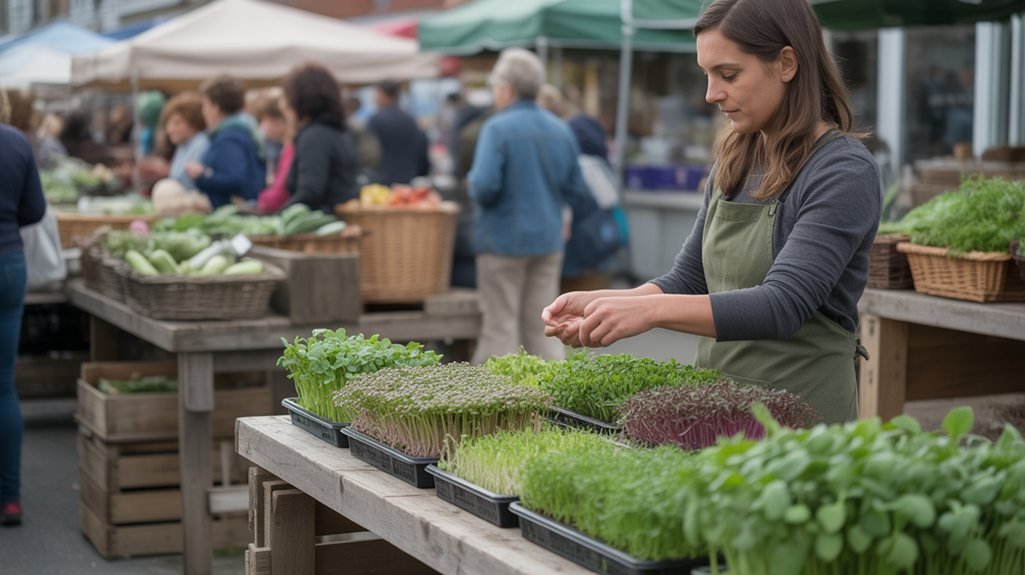
Delaware’s 62 USDA-listed farmers markets span a compact geography, letting you cover Wilmington, Newark, and Rehoboth Beach within a single logistical framework. Each corridor attracts distinct buyer profiles, from Wilmington’s specialty-produce consumers to Rehoboth Beach’s tourism-driven, health-conscious demographic. Most markets open between April and May, with applications closing as early as February, so early planning is critical. The sections ahead break down how to select, apply to, and operate within Delaware’s market landscape effectively.
Key Takeaways
- Delaware has 62 USDA-listed farmers markets, with Wilmington, Newark, and Rehoboth Beach representing the strongest corridors for microgreens vendors.
- Most markets open April through May, with applications closing as early as February, requiring late-winter planning.
- Rehoboth Beach peaks Memorial Day through Labor Day, favoring health-conscious buyers who respond well to sunflower and pea shoots.
- Successful applications require liability insurance, specific product descriptions, and a production schedule confirming consistent seasonal supply.
- Use the MGW Market Finder at markets.microgreensworld.com to identify Delaware markets with current vendor openings quickly.
Farmers Markets in Delaware for Microgreens Vendors
Delaware’s 62 USDA-listed farmers markets represent a concentrated, accessible entry point for microgreens vendors operating in the Mid-Atlantic region, where shorter travel distances between Wilmington, Newark, and Rehoboth Beach reduce the logistical burden of multi-market coverage.
The state’s primary selling season runs spring through fall, which aligns well with peak microgreens production windows and gives you a structured calendar to plan booth applications, seeding schedules, and supply volume.
Understanding both the market density and the seasonal rhythm of Delaware before you submit a single application will sharpen your vendor strategy considerably.
Why Delaware Markets Are Worth Your Attention
Within a compact geography that connects three distinct consumer corridors, Delaware offers microgreens vendors something that larger states often dilute: density of access without the commute burden.
As a microgreens vendor in Delaware, you’re operating inside a state where Wilmington, Newark, and Rehoboth Beach each draw demographically different buyers, yet none sits more than two hours from the others.
Farmers markets in Delaware concentrate that reach into roughly 62 USDA-listed venues, which means you can test multiple markets without rebuilding your logistics from scratch each time.
The seasonal calendar skews spring through fall, aligning precisely with peak microgreens demand.
Delaware’s size works as an operational advantage, not a limitation, and growers who recognize that early position themselves more strategically than those chasing volume in sprawling states.
What the Delaware Market Season Looks Like
Most Delaware farmers markets open sometime between April and May, which means your planning window starts well before that, ideally in late winter when application cycles are already running. As a microgreens farmers market vendor, you’re working against a compressed timeline, since many market managers close vendor applications by February or early March.
Delaware’s season typically extends through October, with some markets running shorter windows depending on location and foot traffic. Coastal markets near Rehoboth Beach often follow summer tourism patterns, while inland and urban markets in Wilmington maintain steadier weekly schedules.
Farmers market Delaware vendors who understand this seasonal architecture can sequence their applications strategically, targeting multiple markets across different run dates rather than concentrating all efforts on a single opening window.
How to Find the Right Market in Delaware
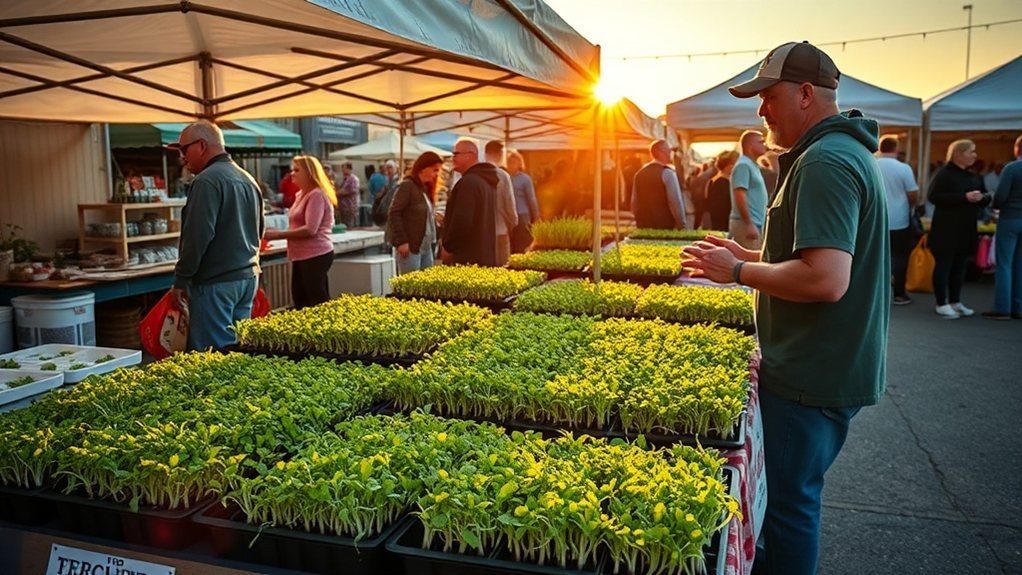
Before you apply to any Delaware market, you need to evaluate foot traffic patterns, vendor composition, and seasonal scheduling to determine whether a given market aligns with your production capacity and target customer base.
Markets near Wilmington, where commercial and residential density support consistent weekly attendance, present different operational dynamics than the tourist-driven summer markets clustered around Rehoboth Beach.
Newark’s proximity to the University of Delaware campus introduces a distinct demographic variable, one that tends to favor specialty produce like microgreens, making it worth serious consideration as part of your expansion strategy.
What to Look for Before You Apply
Finding the right market in Delaware takes more work than simply locating the nearest one with an open vendor spot. Before submitting a Delaware farmers market vendor application, evaluate each market against criteria that directly affect whether you’ll actually move product. You need foot traffic data, not assumptions.
| Factor | What to Assess | Why It Matters |
|---|---|---|
| Customer demographics | Age, income, cooking habits | Drives microgreens sell-through rate |
| Vendor mix | Existing produce sellers | Reveals saturation or opportunity |
| Market tenure | Years operating | Indicates stability and attendance |
| Fee structure | Flat vs. percentage | Affects margin at low volume |
| Season length | Start and end dates | Determines your revenue window |
Scrutinize these variables before you invest time completing any application to sell microgreens at farmers market venues throughout Delaware.
Markets Near Wilmington
Once you’ve evaluated what makes a market worth your time, Wilmington becomes a logical starting point for most Delaware microgreens vendors, given its population density and the concentration of buyers who already shop specialty produce.
As a microgreens grower in Delaware, you’re looking at an urban customer base that understands value-added products and responds well to variety.
The Wilmington farmers market ecosystem includes both established weekend markets and smaller neighborhood venues, each drawing distinct demographics worth analyzing before you commit an application.
Foot traffic patterns, proximity to residential neighborhoods, and competing vendor categories all factor into whether a particular market suits your production volume.
Employ the MGW Market Finder at markets.microgreensworld.com to identify which Wilmington-area markets currently have vendor openings matching your situation.
Markets Near Newark and Rehoboth Beach
Newark and Rehoboth Beach represent two structurally different market environments, and understanding that distinction shapes how you position your microgreens before you ever submit an application.
The Newark farmers market draws a university-adjacent demographic, meaning buyers who recognize specialty crops and ask informed questions about varieties and growing methods. Your microgreens booth farmers market setup there should reflect that sophistication, with clear varietal labeling and growing information readily visible.
Rehoboth Beach operates on a seasonal tourist economy, where foot traffic peaks sharply between Memorial Day and Labor Day, then contracts significantly. Vendors who perform well there front-load their season aggressively.
These two markets reward fundamentally different preparation strategies, and identifying which fits your current production capacity is the smarter starting point before committing resources to either application.
What to Expect When You Get There
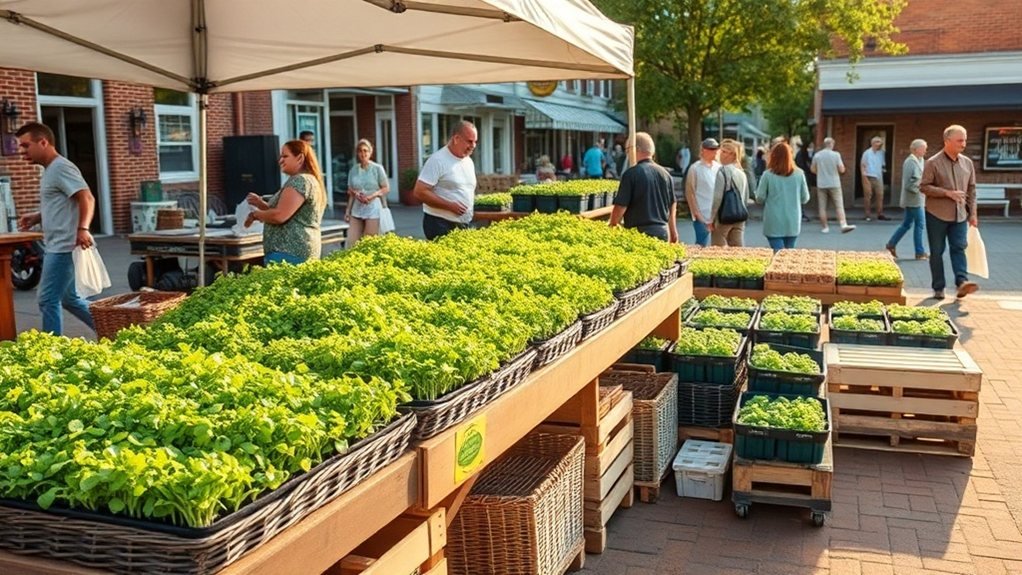
Once you’ve secured a spot, the operational realities of vending in Delaware require immediate attention, particularly regarding booth fees, which typically range from modest flat rates at smaller community markets to percentage-based structures at higher-traffic venues like the Wilmington Farmers Market.
You’ll want to arrive with a setup that’s functional before customers reach you, meaning your table configuration, signage, and product display should be rehearsed and efficient, not improvised on-site.
Delaware shoppers at established markets, especially in coastal areas like Rehoboth Beach, respond consistently to fresh-cut sunflower and pea shoot varieties, so understanding which products align with local demand directly shapes what you bring and how much you grow.
Booth Fees and Setup Basics
When you start contacting Delaware farmers markets about vendor spots, one of the first practical questions you’ll need to answer is what it actually costs to get in and what you’re expected to bring with you. Daily booth fees across Delaware typically range from $15 to $45, depending on market size, location, and foot traffic.
Wilmington’s larger markets tend to sit at the higher end, while smaller community markets in rural counties run considerably less. As a farmers market vendor in Delaware, you’re generally responsible for your own tent, tables, and display materials.
Understanding how to get a farmers market booth means recognizing that applications often require proof of liability insurance, a cottage food registration, or both, before you’re approved.
What Moves at Delaware Markets
Stepping into a Delaware farmers market for the first time as a vendor, rather than a shopper, reframes everything you thought you understood about how customers make purchasing decisions.
At farmers markets Delaware microgreens vendors quickly learn that visual contrast drives initial traffic, meaning your trays need to read from ten feet away. The Rehoboth Beach Farmers Market draws a health-conscious coastal demographic that responds particularly well to sunflower and pea shoots, which carry recognizable flavor profiles that reduce purchase hesitation. Variety depth matters less than product clarity. Customers who understand what they’re buying convert faster than customers who find your table interesting.
Position your signage to answer the most frequent question before anyone asks it: how might they use this at home?
Getting Your Application Ready
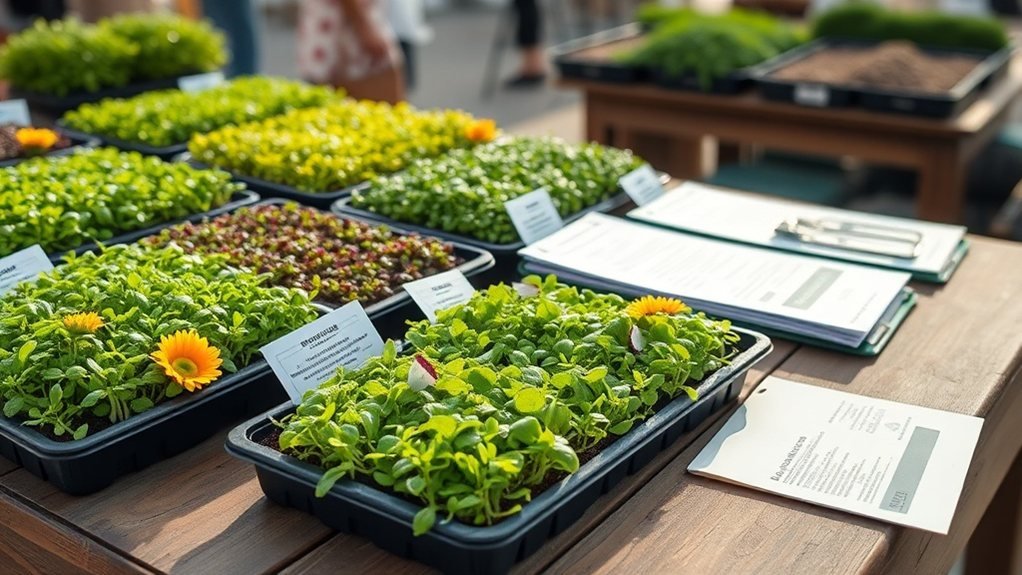
When a market manager opens your application, they’re evaluating whether you fit a specific operational need, not simply whether your product is appealing.
Most Delaware markets, particularly the larger Wilmington and Rehoboth Beach venues, require proof of a valid cottage food registration or commercial kitchen certification, current liability insurance documentation, and a clear product description that distinguishes your microgreens by variety and growing method.
Omitting any of these materials, or submitting vague product descriptions like “assorted greens” rather than specifying “sunflower, pea shoot, and radish microgreens grown hydroponically,” is among the most common reasons applications stall or get rejected outright.
What Market Managers Want to See
Before you fill out a single application, you need to understand that market managers aren’t just evaluating your product, they’re evaluating whether you’ll be a reliable, professional presence in their market week after week.
When you sell microgreens at farmers market venues across Delaware, your farmers market vendor application signals far more than what you grow. Managers assess your food handling certifications, your liability insurance documentation, and whether your setup meets their aesthetic standards.
Bring photographs of your actual display, not aspirational mock-ups. Include your production schedule, because managers want confirmation you can maintain consistent supply through their full season.
Demonstrating operational maturity, specifically your capacity to show up prepared every single week, separates vendors who get accepted from those who get waitlisted indefinitely.
Common Mistakes to Avoid
Most application rejections in Delaware’s farmers markets aren’t about product quality; they’re about preventable procedural oversights that signal operational immaturity to managers reviewing dozens of submissions.
When you’re selling microgreens locally, submitting incomplete insurance documentation is the single fastest way to lose a spot before anyone evaluates your product. Managers in Wilmington and Newark markets specifically flag vendors who list microgreens for sale Delaware-wide without demonstrating location-specific compliance knowledge.
Skipping the waitlist follow-up email, missing the spring application window entirely, or failing to specify your display footprint dimensions are concrete errors that repeatedly surface in rejection patterns.
Treat your application as your first professional interaction with that market community, because managers genuinely remember who submitted carefully and who didn’t.
Use the Market Finder to Shortcut Your Search

Tracking down viable market opportunities in Delaware by hand takes longer than most new vendors expect, given that the state’s roughly 62 USDA-listed markets are spread across distinct regional clusters in Wilmington, Newark, and Rehoboth Beach, each operating on its own seasonal and application timeline.
Rather than contacting markets individually to assess fit for your microgreens market stand, you can utilize the MGW Market Finder to filter results systematically. The tool pulls directly from USDA data, so you’re working from a current, consolidated source instead of piecing together information from scattered websites.
If you’re still working out how to sell microgreens at your first venue, starting with filtered, location-specific results removes significant friction from the research phase. Utilize the free Market Finder at markets.microgreensworld.com to locate your next opportunity.
Frequently Asked Questions
Can I Sell Microgreens at Delaware Farmers Markets Without a License?
You’ll likely need a license. Delaware typically requires food handlers to register with DDOE and obtain a cottage food or commercial license before selling at farmers markets. Check your county requirements before applying.
How Much Does It Typically Cost to Rent a Market Booth?
Delaware booth fees typically run $20–$50 per day at smaller markets and $50–$150 at larger or high-traffic ones. You’ll often pay weekly, though some markets charge seasonal flat rates instead.
Do Delaware Markets Require Vendors to Grow Everything They Sell?
Not always, but many Delaware markets do require it. Check each market’s vendor rules carefully before you apply, since producer-only policies vary widely from one market to the next.
Can I Apply to Multiple Delaware Markets at the Same Time?
Yes, you can apply to multiple Delaware markets at the same time. Most markets run independent applications, so submitting to several simultaneously is smart and common practice among vendors building their booth schedule.
What Happens if Weather Forces a Market to Cancel My First Day?
If weather cancels your first day, you don’t lose your spot. Most Delaware markets reschedule or simply skip that date. Contact your market manager immediately and confirm whether you’re expected the following week.
Wrap-up
Delaware’s roughly 62 farmers markets represent a concentrated, seasonal opportunity that rewards deliberate vendor planning. You’ve got geographic clusters near Wilmington, Newark, and Rehoboth Beach, each serving distinct customer demographics worth analyzing before committing. The spring-through-fall window is narrow, so your grow schedule needs to align precisely with application deadlines and market calendars. If you’re strategic about which markets you target first, you’ll avoid wasted inventory and build a sustainable sales footprint efficiently.