
New Mexico’s roughly 94 USDA-registered farmers markets offer microgreens vendors concentrated opportunity in Albuquerque, Santa Fe, and Las Cruces, where foot traffic, specialty-produce familiarity, and health-conscious demographics align with your product. Albuquerque’s dense market cluster supports consistent weekly sales, Santa Fe’s tourism-driven clientele justifies premium pricing, and Las Cruces rewards accessible pricing with agricultural-community loyalty. Selecting the right market, preparing compliant documentation, and timing your application correctly are what separate vendors who enter successfully from those who wait an entire season — and there’s considerably more to unpack on each front.
Key Takeaways
- New Mexico has approximately 94 USDA-listed farmers markets, with peak vendor activity concentrated between April and October statewide.
- Albuquerque, Santa Fe, and Las Cruces are the strongest market clusters for microgreens vendors due to consistent foot traffic.
- Use the MGW Farmers Market Finder at markets.microgreensworld.com to identify New Mexico markets with openings and appropriate customer profiles.
- Saturday market slots draw the heaviest attendance but are the most contested, making early applications critical for securing a booth.
- Sunflower, pea shoots, and radish microgreens move reliably across New Mexico markets due to strong buyer recognition and familiarity.
Farmers Markets in New Mexico for Microgreens Vendors
New Mexico’s approximately 94 USDA-listed farmers markets represent a meaningful distribution network for microgreens vendors, with established market clusters in Albuquerque, Santa Fe, and Las Cruces providing consistent foot traffic and repeat customer potential.
The state’s market calendar operates primarily across a spring-through-fall window, which means you’ll need to plan your production cycles accordingly, aligning seeding schedules with the months when booth opportunities are actually available.
Understanding both the geographic concentration of markets and the seasonal timing gives you the framework to identify realistic entry points before you commit time and resources to the application process.
Why New Mexico Markets Are Worth Your Attention
Selling microgreens in New Mexico means tapping into a market landscape that’s more developed than most growers initially expect, with roughly 94 USDA-listed farmers markets distributed across a state where culinary culture, health-conscious consumers, and farm-to-table infrastructure converge in cities like Albuquerque, Santa Fe, and Las Cruces.
An Albuquerque farmers market, for instance, draws consistent foot traffic from buyers already familiar with specialty produce, which compresses your customer education curve considerably.
The microgreens farmers market opportunity here isn’t theoretical. New Mexico’s concentrated urban corridors support vendor ecosystems where specialty crops move reliably, and the spring-through-fall calendar gives you a structured window to build repeat customers, hone your pricing, and establish standing before the next season opens.
What the New Mexico Market Season Looks Like
That 94-market footprint across New Mexico doesn’t function as a single, uniform selling season, and understanding its actual shape determines how you’ll structure your grow schedule before you ever set up a table.
Most farmers markets in New Mexico operate spring through fall, with peak activity concentrated between April and October.
Albuquerque markets, including the Railyard and Downtown Growers’ Market, tend to run the longest windows.
Santa Fe and Las Cruces follow comparable patterns, though specific open and close dates shift year to year.
As a microgreens vendor in New Mexico, you’re essentially working a compressed calendar, which means your production timing needs to anticipate application deadlines, not just harvest schedules.
Knowing when each market opens its vendor roster gives you a genuine operational advantage.
How to Find the Right Market in New Mexico

Before you apply anywhere, you need to assess each market’s customer base, vendor density, and product demand to determine whether microgreens can realistically move there.
Albuquerque’s multiple weekly markets, including those in the Northeast Heights and Downtown corridors, offer high foot traffic but often carry established produce vendors who may already stock specialty greens.
Santa Fe and Las Cruces present distinct opportunities, where Santa Fe‘s tourism-driven demographic tends toward premium local products, while Las Cruces anchors a more agricultural-community market culture that rewards consistency and price accessibility.
What to Look for Before You Apply
Not every farmers market in New Mexico is going to be a productive outlet for microgreens, and recognizing that distinction early saves you from wasted application fees, slow Saturdays, and vendor spots that simply don’t convert.
Before you apply anywhere, assess foot traffic patterns, customer demographics, and whether the market already has a saturated produce section. A downtown Albuquerque market pulling consistent weekend crowds is a fundamentally different environment than a small rural market with irregular attendance.
When you’re trying to make microgreens sell at a farmers market, placement context matters considerably. As a farmers market vendor in New Mexico, you want locations where shoppers already demonstrate purchasing behavior around specialty, health-forward products, because that’s where your trays move consistently rather than sitting untouched.
Markets Near Albuquerque
Albuquerque functions as the most densely populated node in New Mexico’s farmers market network, and that concentration creates both opportunity and competition for microgreens vendors entering the market for the first time. The Albuquerque Growers’ Market and the Downtown Growers’ Market represent two established venues where foot traffic and produce-forward customer bases align well with what albuquerque microgreens vendors typically offer.
Saturdays draw the heaviest attendance, making weekend slots the most contested among farmers market new mexico vendors seeking consistent sell-through volume. You’ll want to identify which markets carry existing microgreens representation before applying, since buyer overlap directly affects your positioning. Employ the MGW Market Finder at [markets.microgreensworld.com](https://markets.microgreensworld.com) to map Albuquerque-area options and assess vendor density before committing to an application.
Markets Near Santa Fe and Las Cruces
Santa Fe and Las Cruces anchor the two remaining regional clusters in New Mexico’s farmers market network, and each city presents a distinct operating environment for microgreens vendors assessing where to commit their time.
The microgreens Santa Fe farmers market scene reflects a buyer demographic with higher discretionary spending and strong orientation toward specialty produce, which positions your product favorably if you price accordingly.
Las Cruces farmers market activity concentrates near the historic downtown plaza, drawing consistent foot traffic from a broad cross-section of the regional population.
Both cities reward vendors who research application timelines, booth fee structures, and existing microgreens competition before submitting.
Employ the free Market Finder at markets.microgreensworld.com to identify current listings across both cities and evaluate your best entry point.
What to Expect When You Get There

Once you’ve identified a viable market, the operational realities of vending demand your attention before you ever load the vehicle.
Booth fees across New Mexico markets typically range from modest daily rates at smaller community markets to structured seasonal contracts at higher-traffic venues like the Santa Fe Farmers Market, where competition for space reflects the market’s established customer base.
What you bring to the table, both literally and in terms of product selection, will determine whether your first season generates repeat customers or leaves you hauling unsold trays home.
Booth Fees and Setup Basics
Booth fees across New Mexico’s farmers markets vary considerably, and you’ll want to factor those costs into your planning before you commit to a spot.
Smaller community markets often charge between $15 and $30 per day, while established urban markets in Albuquerque or Santa Fe can run $40 to $75 or higher for a microgreens booth farmers market placement.
Some markets charge seasonal flat rates rather than daily fees, which changes your cost structure significantly.
When you’re figuring out how to get a farmers market booth, ask specifically about table dimensions, whether electricity is available, and what the setup window looks like.
Most New Mexico markets expect vendors to be fully set up 30 minutes before opening, so plan your load-in accordingly.
What Moves at New Mexico Markets
Knowing your costs gets you in the door, but understanding what actually sells keeps you there. At the Santa Fe Farmers Market, shoppers trend toward premium, health-forward products, which positions microgreens favorably when you merchandise them with clear varietal labeling and suggested use cases. Sunflower, pea shoots, and radish consistently move across New Mexico markets because buyers recognize them on sight.
When you vend microgreens at farmers market venues in high-altitude, health-conscious communities like Santa Fe, pricing your trays at the upper range is defensible, provided your presentation supports it. Mild growing seasons extend your sales window, but late summer heat compresses shelf life, so harvest timing tightens considerably. Study what adjacent vendors sell, because basket-builders who pair greens with eggs or bread drive your volume.
Getting Your Application Ready
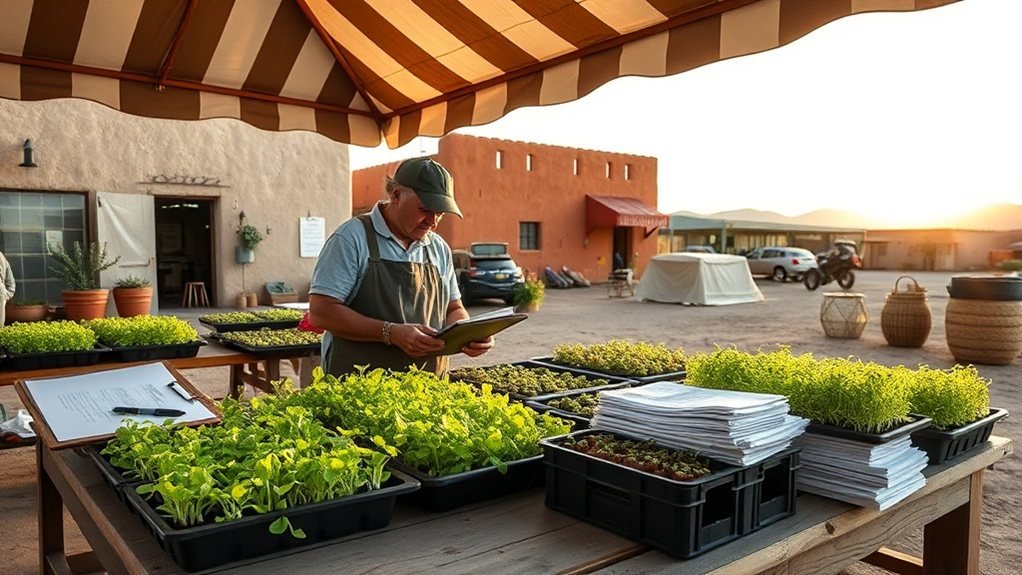
Your application is the market manager‘s first substantive assessment of you as a vendor, so the materials you submit need to reflect operational competence, not merely enthusiasm.
Most New Mexico market managers expect to see proof of your cottage food registration or commercial kitchen certification, a product list with accurate botanical names, and documentation that your growing operation meets basic food safety standards.
Incomplete submissions, particularly those missing liability insurance certificates or submitted after the application window closes, consistently result in disqualification regardless of how strong your product actually is.
What Market Managers Want to See
Market managers in New Mexico are evaluating more than just your product when they review an application, and understanding that distinction changes how you prepare your materials.
They’re assessing operational reliability, regulatory compliance, and whether you’ll represent the market professionally. As a microgreens grower in New Mexico, your farmers market vendor application should demonstrate that you’ve already solved the problems that eliminate most applicants before review: valid food handler certification, documented growing practices, and liability insurance.
Santa Fe and Albuquerque markets, in particular, receive competitive applications and prioritize vendors who present complete documentation on first submission.
Your product photos matter, but your compliance paperwork signals whether you’re a grower who can sustain a weekly commitment, which is ultimately what market managers are selecting for.
Common Mistakes to Avoid
Even experienced growers submit incomplete applications, and that single misstep can delay your entry into a New Mexico market by an entire season. When you’re learning how to sell microgreens at markets like Albuquerque’s Downtown Growers’ Market, missing your liability certificate or omitting your production address often triggers automatic disqualification rather than a follow-up request.
Vendors putting microgreens for sale in New Mexico frequently underestimate the specificity managers expect around growing inputs, particularly when organic claims appear anywhere on your application. Vague language around your substrate sourcing or harvest protocols signals inexperience to a manager who reviews dozens of submissions. Submit documentation that answers questions before they’re asked, because managers rarely circle back to incomplete files.
Use the Market Finder to Shortcut Your Search
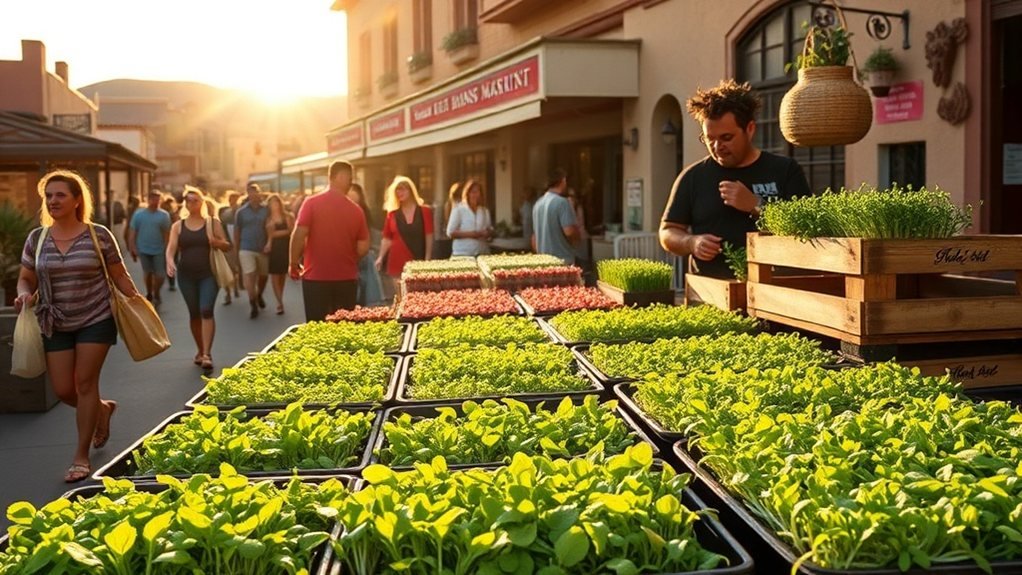
Tracking down viable vendor slots across New Mexico‘s 94 registered markets doesn’t have to mean cold-calling market managers or driving around on Saturday mornings hoping someone has an open table. The MGW Farmers Market Finder at markets.microgreensworld.com aggregates USDA data so you can identify farmers markets in New Mexico where microgreens vendor opportunities realistically exist, filtering by location before you commit time or product.
If you’re building your microgreens market stand presence in Albuquerque, Santa Fe, or Las Cruces, the tool lets you target density clusters where foot traffic justifies your production volume. Stop researching in circles. Employ the free Market Finder at markets.microgreensworld.com to map your next move with accurate, current data already organized for vendors who are ready to sell.
Frequently Asked Questions
Do New Mexico Markets Require a State-Issued Food Handler Certification?
New Mexico doesn’t require a state-issued food handler certification for microgreens vendors, but individual markets set their own rules, so you’ll need to confirm directly with each market manager before applying.
Can You Sell at Multiple New Mexico Markets in One Weekend?
Yes, you can. Many New Mexico growers hit multiple markets on the same weekend, but you’ll need separate vendor applications, fees, and enough product to stock each booth fully.
How Early Should You Arrive Before a New Mexico Market Opens?
Arrive at least 90 minutes before opening. You’ll need time to unload, set up your display, arrange product, and settle in before shoppers arrive. Rushing your setup shows, and it costs you sales.
Do Santa Fe Markets Attract More Tourist Buyers Than Local Regulars?
Yes, Santa Fe markets draw a strong tourist mix, especially summer weekends. That works in your favor since tourists often buy on impulse. But you’ll also build a loyal local base if you show up consistently.
Are There Indoor Winter Markets in Albuquerque Worth Applying To?
Yes, a few Albuquerque indoor winter markets run through the slower months, and they’re worth applying to early since spots fill fast. Microgreens sell well when fresh local produce options shrink.
Wrap-up
You’ve got the information you need to start targeting New Mexico’s market landscape strategically. Don’t waste time and fuel approaching markets blindly—use the state’s directory resources, verify operating schedules, and assess geographic feasibility before committing to any application. New Mexico’s 94 listed markets represent genuine opportunity for microgreens vendors, but only if you’re selective. Identify your strongest regional candidates, prepare a complete application packet, and move forward with the markets that actually make logistical and financial sense for your operation.