Getting into Ferry Plaza Farmers Market means satisfying CUESA’s documentation requirements before you touch the application portal. You’ll need farm location details, proof of sustainable practices, a business license, insurance, and certifications ready in advance. Missing documents can disqualify you outright. CUESA’s committee then votes on fit, and specialty produce vendors like microgreens growers may face a farm visit. Wait times run several weeks. Keep going to see exactly what the vendor mix looks like and where your opening is.
Key Takeaways
- CUESA reviews documentation first, then farm practices; missing documents can delay or disqualify your application before a committee ever sees it.
- Required materials include proof of sustainable farming, business license, insurance, farm location, production scale, and any certifications.
- Selection is multi-step: a completeness check, then a committee vote on whether your operation aligns with CUESA’s mission.
- Specialty produce applicants, including microgreens growers, may face an additional farm visit before final acceptance is granted.
- Declined applicants often receive no feedback; if rejected, contact CUESA directly to ask why and what to improve.
What should you know about Ferry Plaza Farmers Market before you apply?
Ferry Plaza isn’t like other California markets. CUESA manages it with a strict focus on sustainable agriculture, and the application process reflects that.
Before you apply, you need to know who shops there, what they buy, and where the vendor gaps are.
What Makes Ferry Plaza Farmers Market Different From Other California Markets
When you apply to sell at Ferry Plaza Farmers Market, you’re not dealing with a standard city market program. CUESA runs it. That changes everything.
CUESA is a nonprofit with a specific mission: sustainable agriculture education. Every ferry plaza farmers market vendor is selected based on alignment with that mission. Your farming practices get reviewed, not just your product.
The market runs along the Embarcadero in San Francisco, facing the Bay. Saturday is the largest market. Tuesday and Thursday markets also operate.
This isn’t a transactional slot-filling process. CUESA is building a community around a food system it believes in. If your microgreens operation reflects sustainable practices, you belong in that conversation. If it doesn’t, the application won’t move forward.
Who Shops There and What They Actually Buy
CUESA’s mission sets the bar for entry. The shoppers at Ferry Plaza aren’t browsing. They’re buying with intention, and they already know what good produce looks like.
The Saturday market pulls food-focused buyers from across the Bay Area. These are home cooks, chefs, and people who read ingredient labels. They spend money when the product is right.
Microgreens at Ferry Plaza farmers market fit this crowd precisely. These buyers want clean, local, specialty produce. They’re not looking for the cheapest option.
Dr. Booker T. Whatley’s framework is direct: know your customer before you choose your market. Visit Ferry Plaza as a shopper first. Watch what sells on a Saturday. That observation is your application strategy before you write a single word.
What does the vendor mix look like at Ferry Plaza Farmers Market?
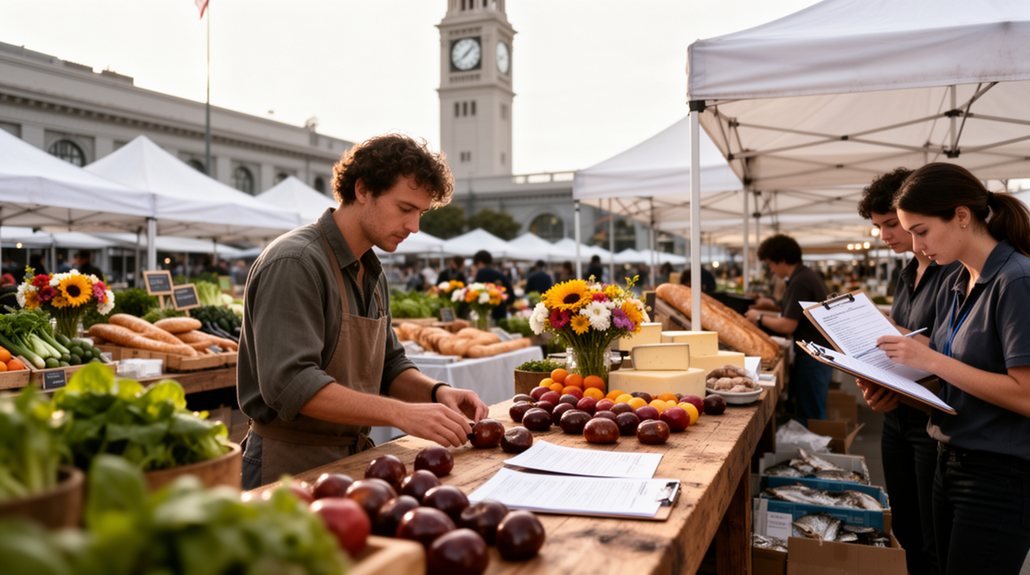
Ferry Plaza runs over 100 vendors on a busy Saturday, and baked goods and prepared foods dominate the floor.
Specialty produce, including microgreens, takes up far less space. That gap is exactly where your application has the most room.
Which categories are overrepresented at Ferry Plaza Farmers Market
Most vendor slots at Ferry Plaza go to baked goods, prepared foods, and fruit. Those categories are packed. Getting in as another jam maker or pastry vendor is a real fight.
Fruit growers from the Central Valley hold long-term spots. Established bakeries renew every season. CUESA’s ferry plaza market vendor requirements favor continuity, so new applicants in crowded categories wait longer.
Specialty produce is different. Microgreens, edible flowers, and niche greens don’t crowd the tables the way bread does. You’re not competing against twenty other vendors in the same lane.
That gap is real and it’s visible. Walk the Saturday market and count the specialty produce tables. You’ll likely find two or three. That number tells you where the opening is.
Where the gap is for specialty produce vendors
The gap isn’t hidden. Specialty produce vendors are under-represented at Ferry Plaza compared to baked goods and prepared foods.
Dr. Booker T. Whatley’s customer-first framework is direct: know your customer before you choose your market. Visit Ferry Plaza as a buyer first. Walk every stall on a Saturday. Count how many vendors sell fresh specialty greens. You’ll find the number is low.
That’s your opening.
CUESA actively looks for vendors who fill category gaps and match its sustainable agriculture mission. Microgreens fit both conditions.
Figuring out how to get into Ferry Plaza Farmers Market gets easier when you apply as a solution, not just another vendor.
You’re not competing against the crowd. You’re stepping into a lane that’s mostly empty.
What does the Ferry Plaza Farmers Market vendor application process involve?

CUESA doesn’t leave the application process vague. You’ll need specific documentation ready before you even open the form.
The selection process is competitive, and knowing what they’re screening for changes how you prepare.
What CUESA requires before you submit an application
Preparation starts well before you open the CUESA vendor application portal. CUESA reviews your farming operation before it reviews your product.
You need documented proof of sustainable farming practices. That means records, not just a statement. Photos of your growing setup, input logs, and a clear description of your methods all matter here.
CUESA also wants to know your farm’s location and production scale. You’re not selling at a swap meet. This market holds vendors to a specific standard, and the documentation requirement filters out applicants who aren’t ready.
Pull together your business license, proof of insurance, and any relevant certifications before you start the cuesa vendor application. Missing one document can delay or disqualify your submission entirely.
What the selection process looks like
Once you submit your application, CUESA moves it through a multi-step review. First, staff checks that your documentation is complete.
After that, a committee reviews your farm’s alignment with their sustainable agriculture mission. They’re looking at your practices, not just your product.
If you pass the document review, CUESA may request a farm visit. This is standard for Ferry Plaza Farmers Market vendors in the specialty produce category.
After the visit, the committee votes on acceptance. Wait times vary, but expect several weeks between submission and a decision.
You won’t always get feedback if you’re declined. If that happens, ask directly what was missing and reapply in the next cycle.
What do microgreens vendors specifically need to know about Ferry Plaza Farmers Market?

Ferry Plaza’s Saturday market pulls serious food buyers who already know what microgreens are.
That customer base is a direct match for specialty greens sold at a premium price point.
What separates vendors who get in from those who don’t comes down to preparation and positioning.
Why Ferry Plaza Farmers Market’s customer base is a strong match for specialty greens
Most shoppers at Ferry Plaza aren’t browsing. They come with a list and a budget for quality. These are home cooks, chefs, and food-focused buyers who already know what microgreens are.
The Saturday market pulls visitors from across the Bay Area. Many drive in specifically for specialty produce. San Francisco market regulars here spend more per visit than typical market shoppers.
This customer base actively looks for items they can’t find at grocery stores. Microgreens fit that gap directly. You’re not educating this crowd from scratch. They’re ready to buy when the product is in front of them.
That buying behavior is what makes your vendor application worth pursuing.
What sets successful vendors apart at Ferry Plaza Farmers Market
CUESA consistently selects vendors who demonstrate a clear commitment to sustainable agriculture. That’s not a soft preference. It’s the filter every Ferry Plaza Farmers market vendor gets measured against.
Your application needs to show how you grow, not just what you grow. Organic inputs, water conservation practices, and soil health methods all matter. Document them before you apply.
Specialty produce vendors, including microgreens growers, face less competition than baked goods or prepared food sellers. That gap works in your favor, but only if your farming practices hold up to CUESA‘s review.
Show alignment with their mission. Visit the CUESA website at cuesa.org and read their vendor criteria before you write a single word of your application.
How do you find Ferry Plaza Farmers Market and locate other markets like it near you?

Ferry Plaza is easy to find. It runs along the Embarcadero in San Francisco near the Ferry Building at One Ferry Building, San Francisco, CA 94111.
If you’re looking for comparable markets in California, the MGW Farmers Market Finder covers 7,842 USDA-verified markets and lets you search by zip code, city, or state.
Using the MGW Market Finder to scout markets in California
California has over 800 active farmers markets, and finding the right one takes more than a Google search. You need verified data, not outdated listings.
The MGW Farmers Market Finder covers 7,842 USDA-verified markets across all 50 states. Search by zip code, city, or state at markets.microgreensworld.com.
Type in San Francisco to pull up Ferry Plaza and nearby markets. You’ll see days, locations, and contact details in one place.
As a prospective ferry plaza farmers market vendor, compare multiple markets before committing. Look at which ones fit your production size and schedule.
Scout two or three options. Apply where the fit is strongest.
What to look for before you apply to any California market
Finding the right market isn’t just about location. It’s about fit.
Before you submit anything as a ferry plaza farmers market vendor, check these five factors at every market you visit.
| Factor | What to look for | Why it matters |
|---|---|---|
| Vendor mix | How many specialty produce sellers? | Fewer means less competition |
| Customer volume | Foot traffic on peak days | More buyers, better sales potential |
| Price tolerance | What are similar products selling for? | Sets your pricing floor |
| Mission alignment | Does the market prioritize sustainable growers? | Affects approval odds |
| Application status | Open, waitlisted, or closed? | Saves wasted effort |
Visit twice before you apply. Watch what moves.
Frequently Asked Questions
Does Ferry Plaza Farmers Market Allow Vendors to Share a Booth?
CUESA doesn’t officially allow booth sharing between separate vendors. You’ll need your own application and approval. If you’re co-producing with a partner, disclose that upfront. They want to know exactly who’s growing and selling what.
What Days Does Ferry Plaza Farmers Market Operate Each Week?
Ferry Plaza runs on Saturdays, Tuesdays, and Thursdays. Saturday’s the biggest market and the one you’ll want to prioritize. Tuesday and Thursday markets are smaller but still draw a loyal, food-focused crowd you can build real roots in.
How Much Does a Vendor Booth Cost at Ferry Plaza Farmers Market?
CUESA doesn’t publish booth fees publicly. You’ll get the cost breakdown after you’re accepted. Fees typically vary by vendor category and market day. Contact CUESA directly through their vendor application portal to get current numbers.
Can Out-Of-State Growers Apply to Ferry Plaza Farmers Market?
You can apply, but CUESA prioritizes California growers. Out-of-state vendors face a much harder path. Your product must clearly align with their sustainable agriculture mission to have any realistic chance of acceptance.
Does CUESA Require Vendors to Carry Liability Insurance?
Yes, CUESA requires you to carry liability insurance. You’ll need to show proof before you’re approved. Most markets set the minimum at $1 million per occurrence.