
Georgia’s approximately 178 USDA-listed farmers markets offer microgreens vendors a substantial entry network, with peak selling concentrated between April and October. Atlanta, Savannah, and Athens represent the strongest regional opportunities, each carrying distinct buyer profiles — from high-traffic urban consumers to tourism-adjacent shoppers with heightened price tolerance. Sunflower, pea shoots, and radish varieties consistently outperform less recognizable options. Understanding market selection, application requirements, and operational standards separates vendors who secure spots from those who don’t, and what follows covers each layer systematically.
Key Takeaways
- Georgia has approximately 178 USDA-listed farmers markets, with the strongest vendor opportunities concentrated in Atlanta, Savannah, and Athens.
- Market season runs primarily April through October, making spring the ideal window to submit vendor applications.
- Sunflower, pea shoots, and radish are the best-selling microgreens varieties, with sampling consistently converting browsers into repeat buyers.
- Applications require liability insurance, grower registration, food safety documentation, and clear product descriptions to meet market manager standards.
- Use the MGW Market Finder at markets.microgreensworld.com to filter Georgia markets by location and identify open vendor opportunities efficiently.
Farmers Markets in Georgia for Microgreens Vendors
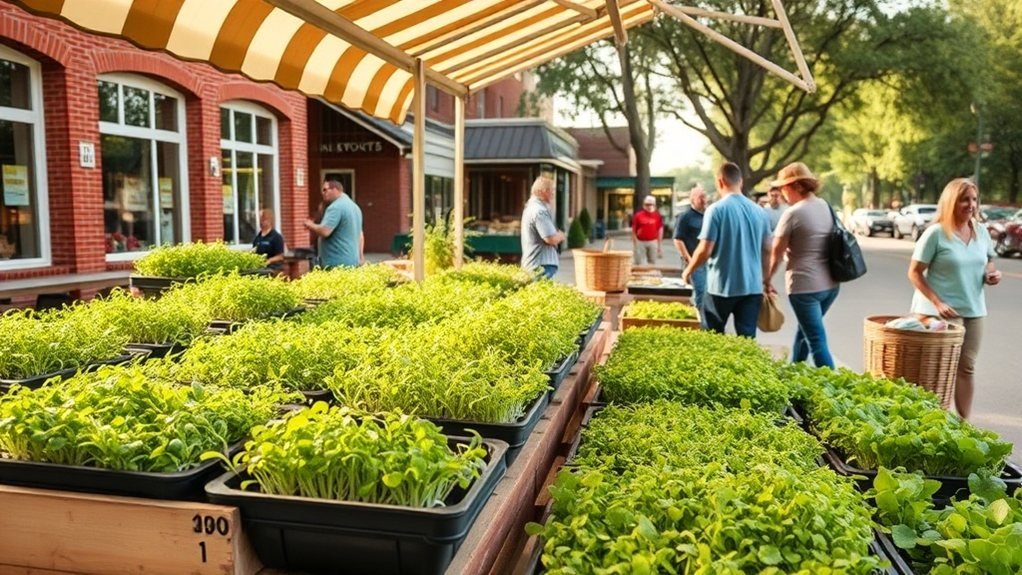
Georgia’s approximately 178 USDA-listed farmers markets represent a substantial and geographically distributed opportunity for microgreens vendors seeking consistent, repeat-customer sales channels.
You’ll find the strongest market density concentrated in Atlanta, Savannah, and Athens, where consumer demand for specialty produce tends to outpace what conventional suppliers can reliably fulfill.
The state’s market calendar, running primarily spring through fall, gives you a defined window to establish vendor relationships, build a customer base, and assess which markets justify the logistical investment of a recurring booth presence.
Why Georgia Markets Are Worth Your Attention
Running a microgreens operation in Georgia puts you within reach of roughly 178 registered farmers markets, a density that gives you real flexibility when you’re deciding where to test your product, build a customer base, or expand into a second location.
Farmers markets Georgia vendors access span everything from high-traffic urban venues in Atlanta to smaller community markets in Athens and Savannah, each carrying distinct buyer profiles and volume expectations. That range matters because your microgreens farmers market strategy doesn’t have to be the same in every location.
Georgia’s extended spring-through-fall calendar also gives you meaningful runway to move product consistently before winter slows foot traffic. The sheer number of options means you’re not locked into one market if the first one isn’t the right fit.
What the Georgia Market Season Looks Like
That density of market options across Georgia only holds practical value if you understand when those markets are actually open and what the seasonal rhythm looks like for vendors working a microgreens operation.
Most farmers markets georgia microgreens vendors target run from spring through fall, with peak activity concentrated between April and October.
Atlanta’s larger markets often extend their calendars further, while rural markets operate on tighter windows.
As a microgreens vendor georgia growers typically enter a favorable position here, because your product’s short production cycle lets you respond quickly to a market’s opening date without the lead time row crops require.
Understanding which markets open early, which run year-round, and which compress into a narrow summer window directly shapes your production scheduling decisions.
How to Find the Right Market in Georgia

Before you apply to any Georgia market, you’ll want to evaluate vendor density, customer demographics, and seasonal schedules with the same rigor you apply to your growing operation.
Atlanta’s metro markets, including Peachtree Road Farmers Market and Grant Park Farmers Market, draw high foot traffic but often maintain competitive vendor waitlists, making early application timing critical.
Savannah and Athens, while operating on smaller scales, offer growers consistent repeat-customer bases that tend to support specialty produce vendors like microgreens more reliably than high-turnover urban markets.
What to Look for Before You Apply
Choosing the right market before you apply is one of the most consequential decisions you’ll make as a microgreens vendor in Georgia, because the wrong fit costs you time, fees, and inventory that you won’t recover.
Before you pursue a farmers market vendor Georgia opportunity, audit each market’s existing vendor roster for produce saturation. If three growers already sell leafy greens, your sunflower and pea shoot trays face an uphill positioning challenge.
Foot traffic data, booth fee structures, and seasonal operating calendars all determine whether how to get a farmers market booth translates into actual sales volume.
Visit the market as a customer first, observe turnover rates at produce tables, and speak directly with the market manager about microgreens demand before submitting a single application.
Markets Near Atlanta
Atlanta’s density works in your favor as a microgreens vendor, because the metro area accounts for a disproportionate share of Georgia’s approximately 178 USDA-listed markets, concentrating foot traffic, culinary demographics, and buyer diversity within a manageable geographic radius.
You’re looking at distinct market tiers here: established anchor markets like Peachtree Road and Grant Park draw consistent weekend volume, while smaller neighborhood markets in Decatur or Marietta attract repeat buyers who shop intentionally.
Running a microgreens booth at an atlanta farmers market inside the perimeter means you’re competing in a more saturated field, but you’re also accessing customers who understand specialty produce, pay accordingly, and return weekly.
Proximity to multiple markets also lets you explore product mix across different buyer profiles without significant travel overhead.
Markets Near Savannah and Athens
Savannah and Athens operate on fundamentally different market dynamics than Atlanta, and understanding that distinction shapes how you position your microgreens before you ever set up a table. The Savannah farmers market draws a tourism-adjacent customer base alongside locals, meaning presentation standards and price tolerance both run higher than average.
Athens, anchored by university culture, attracts buyers who prioritize sourcing transparency and producer relationships over novelty alone. When you’re researching microgreens for sale Georgia opportunities across these two cities, you need to assess foot traffic patterns, seasonal schedules, and vendor category saturation before committing.
Both markets reward vendors who arrive with clear production knowledge and consistent weekly supply. Employ the free Market Finder at markets.microgreensworld.com to identify current openings in Savannah, Athens, and beyond.
What to Expect When You Get There
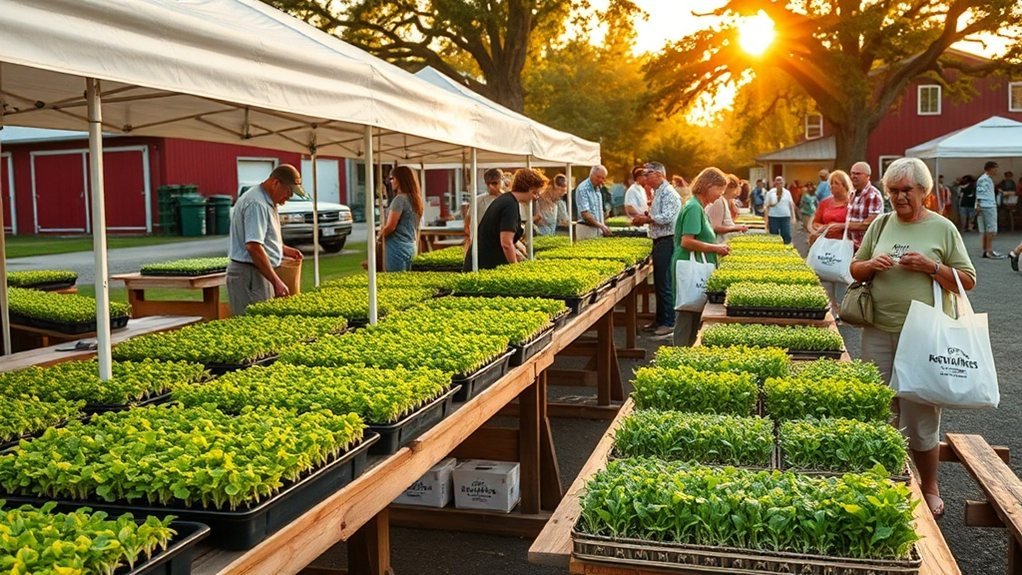
Once you’ve secured a spot, the operational realities of a Georgia farmers market will determine how efficiently you move product and manage overhead. Booth fees across the state’s approximately 178 USDA-listed markets vary considerably, with weekend markets in Atlanta metro areas typically running higher than smaller community markets in rural counties, so you’ll want to factor that cost against your projected volume before committing.
Knowing which microgreens varieties perform well in Georgia’s market culture, particularly sunflower, pea shoots, and radish among health-conscious urban shoppers in Athens and Savannah, helps you allocate tray space and arrive with inventory that actually sells.
Booth Fees and Setup Basics
Before you secure your first vendor spot at a Georgia farmers market, you’ll want to understand the cost structure and physical logistics that govern how these markets actually operate. Booth fees across Georgia typically range from $20 to $50 per day, though established urban markets like the Athens Farmers Market operate on seasonal or annual vendor application cycles, requiring upfront commitments and juried selection processes. Your farmers market vendor application will often request photos of your product display, proof of liability insurance, and a completed Georgia Department of Agriculture cottage food or commercial grower registration. Most markets allocate a 10×10 foot space, expecting you to supply your own canopy, weights, tables, and signage. Budget accordingly before your first market weekend.
What Moves at Georgia Markets
Georgia farmers market shoppers consistently gravitate toward products that feel both novel and functional, and microgreens occupy that intersection well, particularly when you’re positioned near complementary vendors selling prepared foods, artisan breads, or local eggs.
When you’re selling microgreens locally, sunflower and pea shoots tend to move fastest because shoppers recognize them visually and understand the flavor profile without explanation. Radish and broccoli varieties perform well with health-conscious buyers, who represent a significant demographic at urban Georgia markets like Atlanta’s Peachtree Road and Savannah’s Forsyth Park.
To sell microgreens at farmers market venues effectively, you’ll want to bring samples, because trial consistently converts hesitant browsers into repeat customers. Positioning, product familiarity, and sampling protocol collectively determine your weekly sell-through rate more than variety selection alone.
Getting Your Application Ready
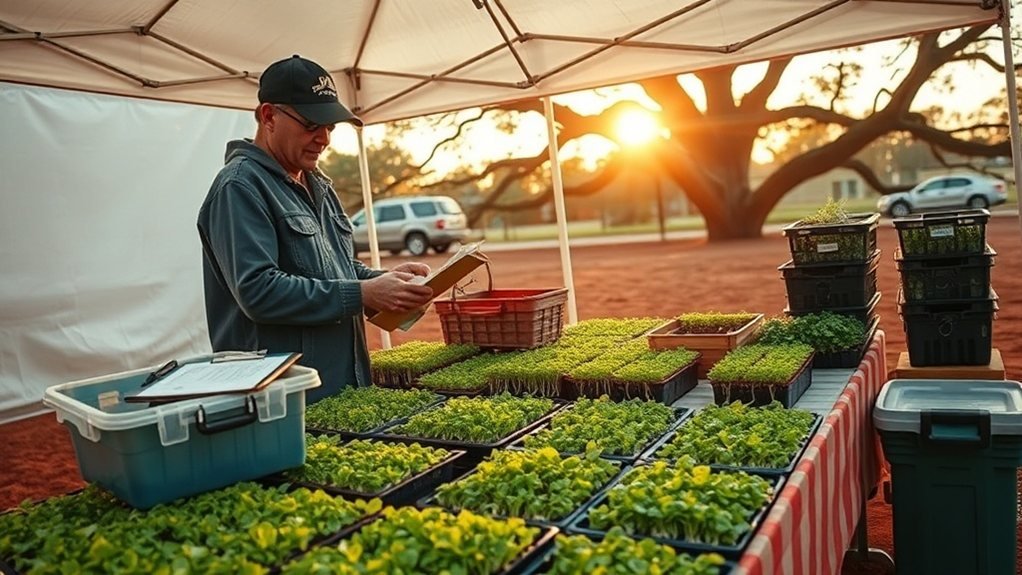
Your application is the first substantive evidence a market manager reviews when assessing whether your operation fits their vendor mix, so treating it as a formal business document rather than a casual inquiry significantly improves your approval odds.
Most Georgia market managers evaluate applications against specific criteria: proof of liability insurance, a cottage food or commercial kitchen compliance record, and a clear product description that distinguishes your microgreens within an already-competitive specialty produce category.
Vendors who submit incomplete paperwork, underestimate the specificity required in product descriptions, or overlook local permitting requirements are the ones most commonly passed over, even when their growing operation is otherwise well-qualified.
What Market Managers Want to See
Getting accepted into a Georgia farmers market requires more than showing up with a folding table and a tray of sunflower shoots, because market managers are evaluating whether you’ll strengthen the market’s overall product mix and operate professionally week after week.
Your microgreens business needs to present documented food safety practices, proof of cottage food registration or commercial kitchen use, and consistent product variety.
Managers want visual evidence of your microgreens market stand, so include photos showing clean labeling, organized display, and professional packaging.
They’re also assessing reliability, meaning your application should communicate that you’ll commit to a full season, not just peak weekends.
Address these specifics directly in your written materials rather than assuming a strong product speaks for itself.
Common Mistakes to Avoid
Most application rejections in Georgia’s farmers market system trace back to a handful of correctable errors that growers make before they ever submit a single document.
| Mistake | Fix |
|---|---|
| Missing food handler certification | Obtain it before applying |
| Vague product descriptions | List specific varieties and formats |
| No proof of growing location | Prepare photos and address documentation |
| Applying off-season | Target spring application windows |
If you’re serious about learning how to sell microgreens through local microgreens Georgia markets, treat your application like a business proposal. Managers review dozens of vendors simultaneously, so incomplete submissions get cut immediately. Verify every document requirement directly with the market before submitting, because requirements vary significantly across Georgia’s 178 listed markets.
Start your search at [markets.microgreensworld.com](https://markets.microgreensworld.com) to find markets actively accepting vendor applications.
Use the Market Finder to Shortcut Your Search

Sorting through 178 farmers markets scattered across Georgia by hand is the kind of task that burns hours you don’t have, especially when you’re already managing trays, germination schedules, and harvest timing. The MGW Market Finder at markets.microgreensworld.com pulls from USDA data, allowing you, as a microgreens grower in Georgia, to filter markets by location rather than scrolling through irrelevant listings.
Farmers market Georgia vendors operate across a wide geographic range, from metro Atlanta corridors to coastal Savannah, and the tool narrows that field quickly. You enter your area, review what’s available, and move directly into outreach. That efficiency matters when market application windows are short and spots fill without announcement. Employ it before your next season opens.
Frequently Asked Questions
Can I Sell Microgreens at Georgia Farmers Markets Without a License?
You can sell microgreens at most Georgia farmers markets without a license, but you’ll need a Cottage Food registration if you’re operating under that exemption. Check each market’s individual vendor requirements too.
How Do Georgia Cottage Food Laws Affect Microgreens Vendors Specifically?
Georgia’s cottage food law doesn’t cover microgreens because they’re a fresh agricultural product, not a processed food. You’re operating under Georgia’s farm sales exemption instead, which has its own separate rules.
Do Georgia Markets Require Liability Insurance Before Approving Vendor Applications?
Most Georgia farmers markets do require liability insurance before approving your vendor application. Coverage amounts vary by market, but you’ll typically see $1 million per occurrence requested. Confirm specifics directly with each market manager during your application process.
Can I Sell at Multiple Georgia Farmers Markets During the Same Season?
Yes, you can sell at multiple Georgia farmers markets during the same season. Most markets operate on different days, so stacking two or three stops weekly is common once you’ve secured your vendor spots.
What Georgia-Specific Produce Regulations Apply to Microgreens Sold Fresh?
Georgia classifies fresh-cut microgreens as a produce item, so you’ll fall under the Georgia Department of Agriculture’s produce safety rules. If your annual sales stay under $25,000, you’re likely exempt from full PSA coverage.
Wrap-up
Georgia’s farmers market landscape offers microgreens vendors a genuinely workable entry point, provided you’ve done the research, prepared your application thoroughly, and aligned your production schedule with seasonal demand. You’re not guessing when you employ structured tools like the MGW Farmers Market Finder at markets.microgreensworld.com, which narrows your options to what’s actually near you. Find your market, secure your spot, and build from there.