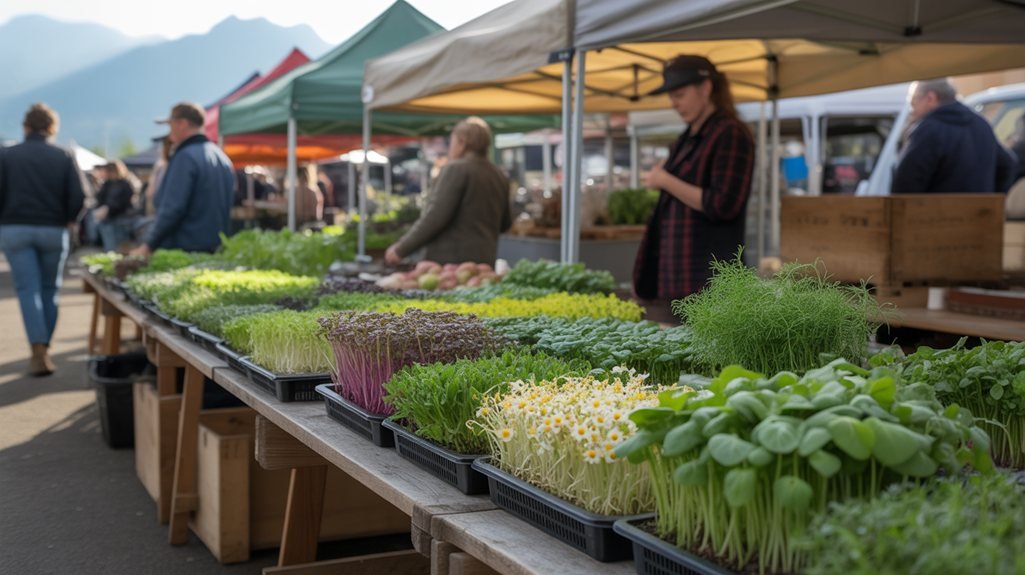
Idaho’s approximately 103 USDA-listed farmers markets provide microgreens vendors with a seasonally structured entry point, running primarily from late April through October. Boise, Twin Falls, and Coeur d’Alene anchor the three major corridors, each with distinct customer profiles: health-conscious urban buyers, value-oriented shoppers, and premium-variety seekers, respectively. You’ll need to assess vendor fees, application timelines, and product saturation before committing. What follows breaks down each corridor, operational requirements, and how to position your application competitively.
Key Takeaways
- Idaho has approximately 103 USDA-listed farmers markets, with Boise, Twin Falls, and Coeur d’Alene serving as the primary regional anchors for microgreens vendors.
- The main market season runs late April through October, though higher-elevation locations shorten the season by four to six weeks.
- Boise attracts health-conscious buyers, Twin Falls responds to value pricing, and Coeur d’Alene shoppers favor specialty varieties and refined presentation.
- Sunflower microgreens and pea shoots show the strongest consistent turnover, while spicy mix performs best when marketed directly toward restaurant buyers.
- The MGW Market Finder at markets.microgreensworld.com indexes Idaho markets by location, reducing time spent researching seasonal schedules and vendor availability.
Farmers Markets in Idaho for Microgreens Vendors
Idaho’s approximately 103 USDA-listed farmers markets represent a substantial distribution network for microgreens vendors seeking consistent, recurring sales channels across the state.
The market calendar runs primarily from spring through fall, concentrating your selling window in the warmer months when foot traffic peaks in hubs like Boise, Twin Falls, and Coeur d’Alene.
Understanding both the seasonal structure and the geographic clustering of these markets lets you plan your production schedule and target applications strategically, rather than scrambling for vendor spots after you’ve already seeded.
Why Idaho Markets Are Worth Your Attention
With roughly 103 farmers markets operating across the state, Idaho offers microgreens vendors a meaningful volume of placement opportunities that many neighboring states simply can’t match at the same density relative to population. The Boise farmers market ecosystem anchors the western corridor, drawing consistent foot traffic from health-conscious buyers who already recognize microgreens as a premium product.
| Region | Market Concentration |
|---|---|
| Boise Area | Highest density |
| Twin Falls | Mid-state anchor |
| Coeur d’Alene | Northern hub |
| Rural Counties | Emerging access |
Every microgreens farmers market slot you secure in Idaho compounds your visibility across a vendor network that talks. Growers who establish themselves in one corridor often find referrals pulling them into adjacent markets faster than cold outreach ever would.
What the Idaho Market Season Looks Like
Typically, the Idaho farmers market season runs from late April or early May through October, though the exact window shifts depending on elevation and region.
Markets in Boise and Twin Falls tend to open earlier and close later, giving you a longer viable selling period. Higher-elevation communities shorten that window considerably, sometimes by four to six weeks on either end.
As a microgreens vendor in Idaho, you’ll want to map your production schedule against the specific markets you’re targeting, not against a generalized statewide calendar.
Some farmers markets in Idaho also run limited winter sessions, which represent an underutilized opportunity for vendors already operating year-round grow spaces. Knowing these distinctions lets you plan booth applications and crop timing with genuine precision rather than guesswork.
How to Find the Right Market in Idaho

Before you apply to any Idaho market, you need to assess the structural fit between your production capacity and the market’s operational demands, including vendor fees, booth requirements, and customer traffic patterns. The Boise metro area offers the highest concentration of markets in the state, giving you multiple options to compare application timelines, foot traffic data, and product category competition before committing. Twin Falls and Coeur d’Alene each support distinct regional customer bases, and understanding those differences helps you prioritize which application to submit first when your inventory is ready.
What to Look for Before You Apply
Choosing the right market before you apply is one of the more consequential decisions you’ll make as a microgreens vendor in Idaho, because not every market is structured to support specialty produce sellers the way you need.
Before you submit any application to sell microgreens at a farmers market, examine the vendor mix carefully. If three other growers already occupy the specialty greens category, your approval odds drop and your sales ceiling lowers simultaneously.
Check whether the market operates under a producer-only policy, which directly affects your sourcing flexibility. Idaho farmers markets vary considerably in foot traffic, fee structures, and application timelines, so reviewing those specifics before committing protects your time and your product inventory from misalignment with the wrong venue.
Markets Near Boise
Because Boise functions as Idaho’s most densely populated metro area, it concentrates the state’s highest volume of farmers market activity within a relatively compact geographic radius, giving microgreens vendors more venue options than anywhere else in the state.
The Capital City Public Market operates downtown on Saturdays, attracting consistent foot traffic from a demographic that actively seeks specialty produce, including microgreens for sale Idaho vendors regularly bring to urban markets.
Smaller neighborhood markets in Meridian and Nampa extend your reach without requiring significant travel.
As a Boise farmers market vendor, you can strategically rotate across multiple venues, testing price points and customer response before committing to a primary location. That flexibility is operationally valuable when you’re still calibrating weekly production volume.
Markets Near Twin Falls and Coeur d Alene
Twin Falls and Coeur d’Alene pull microgreens vendors in distinctly different directions, both geographically and demographically, so treating them as interchangeable options will cost you time and product.
The Twin Falls farmers market draws a practical, value-conscious agricultural community in southern Idaho, where your pricing strategy and product mix need to reflect that regional sensibility. Coeur d’Alene farmers market shoppers, positioned in northern Idaho near the Montana border, skew toward premium buyers who respond to specialty varieties and refined presentation.
Your booth setup, crop selection, and weekly volume commitments should shift accordingly between these two markets. Understand that each location carries distinct competitive dynamics, seasonal timelines, and customer expectations before you commit to either.
Employ the free Market Finder at markets.microgreensworld.com to compare both options side by side.
What to Expect When You Get There
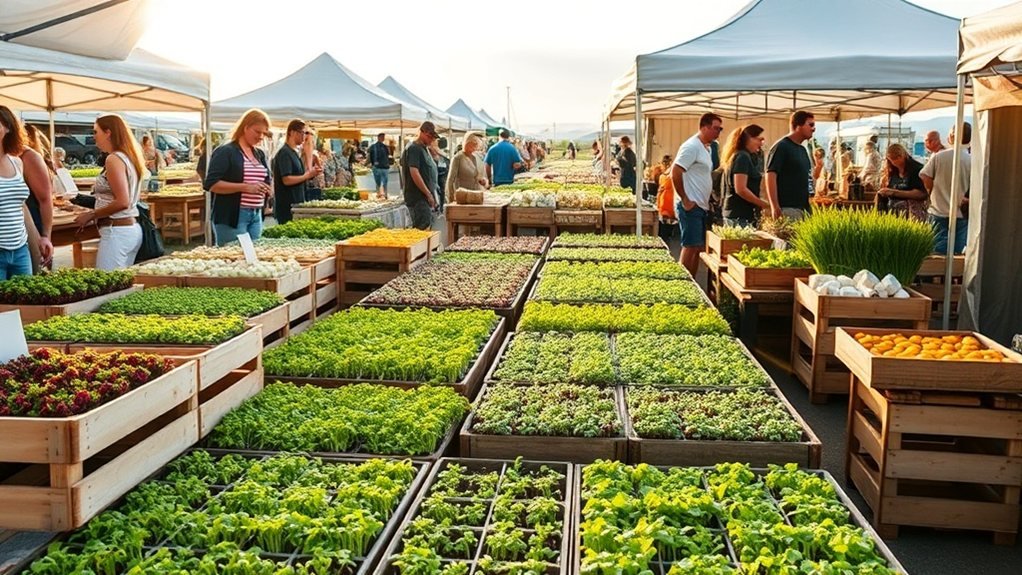
Once you secure a vendor spot, the operational realities of Idaho markets demand immediate attention, particularly regarding booth fees, which typically range from modest daily rates to seasonal contracts depending on the market’s structure and location.
Setup logistics vary considerably across the state’s 103 listed markets, with urban venues like Boise’s Saturday Market imposing more standardized requirements around canopy dimensions, signage, and payment processing than smaller rural operations.
Understanding what product categories actually move in Idaho, specifically which microgreens varieties resonate with local buyers, shapes how you configure your display and manage your weekly harvest cycles.
Booth Fees and Setup Basics
When you’re preparing to vendor at an Idaho farmers market, understanding the financial and logistical baseline before your first setup day matters more than most growers anticipate.
Daily booth fees across Idaho typically range from $15 to $45, depending on market size, location, and whether you’re securing a seasonal contract versus a single-day slot.
As a farmers market vendor Idaho, you’ll generally need a six-foot table, appropriate signage, and a canopy rated for wind load, since Idaho mornings can be unpredictable.
Your microgreens booth farmers market setup should account for refrigeration logistics, because flat trays and cut product both require temperature management during longer market windows.
Confirm electrical access availability before assuming it exists, as most Idaho markets don’t provide it.
What Moves at Idaho Markets
Getting your booth dialed in is only half the equation, because what actually sells at Idaho markets shapes how you grow, what you harvest, and how you pack your cooler the night before. Farmers market Idaho vendors consistently report that familiar varieties move faster than novelty cuts when vending microgreens locally.
| Variety | Market Performance |
|---|---|
| Sunflower | Reliably high turnover |
| Pea shoots | Strong repeat buyers |
| Spicy mix | Moderate, chef-driven demand |
Sunflower and pea shoots attract buyers who already understand how to use them, which shortens the conversation at your table considerably. Spicy mix sells differently, often landing with restaurant buyers rather than home cooks, so positioning your signage toward that segment makes the difference.
Getting Your Application Ready

Your application is the first piece of evidence a market manager employs to evaluate whether you belong in their vendor lineup, so treat it as a professional document rather than a formality.
Most Idaho market managers want to see proof of business legitimacy, a clear product description, and some indication that you understand their customer base, whether that’s a reference to local demand for specialty produce or a brief explanation of your growing practices.
Growers who submit incomplete paperwork, generic product descriptions, or applications that ignore the market’s stated focus tend to get passed over, even when their product is strong.
What Market Managers Want to See
Market managers are gatekeepers, and understanding what they’re evaluating before you submit your application is the difference between getting a vendor spot and sitting on a waitlist. Your farmers market vendor application signals professionalism before you ever set up a booth. Managers assess product category fit first, confirming you won’t duplicate an existing vendor who already holds that niche. They review your cottage food compliance, your liability insurance documentation, and whether your display concept suits the market’s aesthetic.
Knowing how to get a farmers market booth means arriving with those details resolved, not pending. In Idaho markets specifically, managers favor vendors who demonstrate consistent weekly supply, because a half-stocked table damages the market’s reputation alongside yours.
Common Mistakes to Avoid
Most application rejections aren’t random, and the patterns behind them are consistent enough that you can sidestep them before you submit.
Applying without visiting the market first is the most preventable error, because managers notice when vendors demonstrate no familiarity with their customer base or layout.
Submitting vague product descriptions also undermines credibility, so specify your varieties, growing medium, and intended presentation at your microgreens market stand.
Growers learning how to sell microgreens often underestimate the importance of liability insurance documentation, which many Idaho markets require before approval.
Sending incomplete applications, or missing the seasonal submission window entirely, signals disorganization to coordinators who already manage dozens of vendor relationships.
Treat the application as your first operational impression, because managers are evaluating your reliability before they ever see your product.
Use the Market Finder to Shortcut Your Search
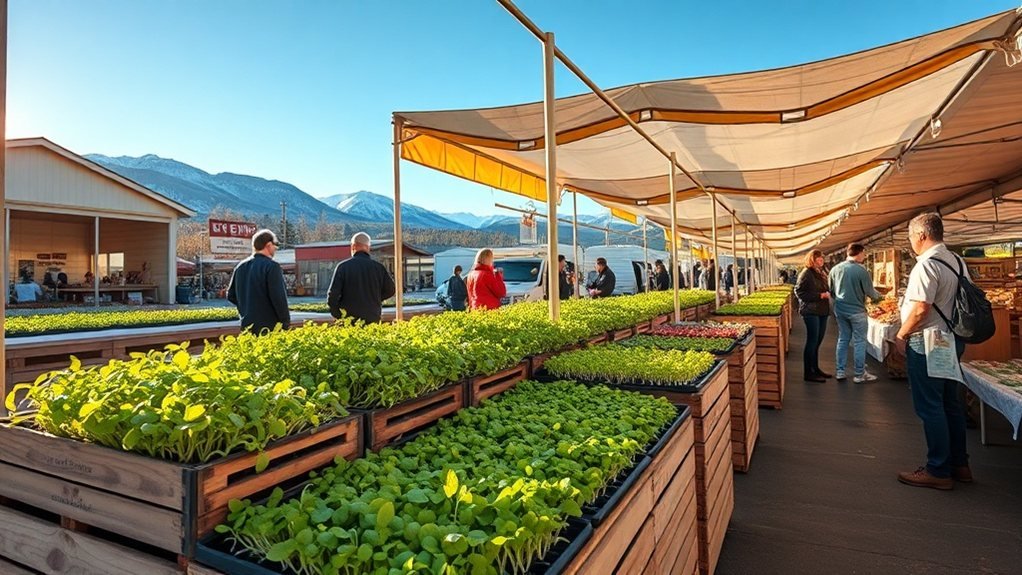
Searching 103 markets manually, cross-referencing seasonal schedules and vendor availability, is the kind of work that eats hours you could spend on trays. The MGW Market Finder at markets.microgreensworld.com pulls from USDA data to filter Idaho markets by location, giving your local microgreens Idaho operation a structured starting point rather than a guesswork-driven one.
You enter your area, review what’s available, and build your outreach list with actual information behind it. For anyone running a microgreens business with limited time between harvest cycles and customer orders, that efficiency matters practically.
Markets near Boise, Twin Falls, and Coeur d’Alene are already indexed. Employ the tool, identify your targets, and move directly into vendor applications rather than spending a week compiling what already exists.
Frequently Asked Questions
Can I Sell Microgreens at Idaho Markets Without a Business License?
You might not need one, but check with your county clerk first. Some Idaho markets require proof of a business license before they’ll approve your vendor application, so confirm locally before you apply.
How Do Idaho Cottage Food Laws Affect Microgreens Sales at Markets?
Idaho’s cottage food laws don’t cover microgreens since they’re a fresh produce item, not a processed food. You’ll operate under produce vendor rules instead, which typically require fewer hoops to jump through.
What Insurance Do Idaho Farmers Market Vendors Typically Need to Carry?
Most Idaho markets require you to carry general liability insurance, typically $1 million per occurrence. You’ll often need to list the market as an additional insured on your policy before they’ll approve your vendor application.
Do Idaho Markets Require Vendors to Grow Everything They Sell Themselves?
Most Idaho markets require you to grow what you sell, but rules vary by market. Always confirm the producer-only policy directly with each market manager before you apply.
How Early Should I Arrive to Set up Before an Idaho Market Opens?
Arrive at least 90 minutes before opening. You’ll need time to unload, position your table, arrange your display, and troubleshoot anything unexpected before customers walk in.
Wrap-up
You’ve got the foundation you need to move forward with confidence. Idaho’s 103 farmers markets represent a substantial distribution network, spanning urban centers like Boise, agricultural corridors near Twin Falls, and northern communities around Coeur d’Alene. Match your current production volume to the right market tier, get your application materials in order, and start with one or two locations before scaling. The infrastructure’s already there—you just need to show up.