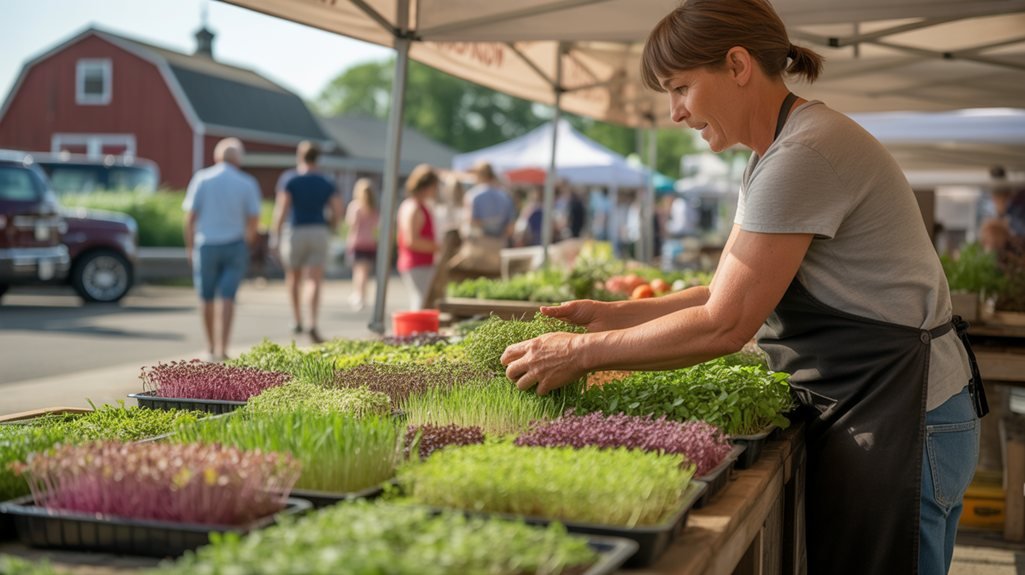
Indiana’s approximately 143 USDA-listed farmers markets give microgreens vendors a structured, seasonally aligned landscape running primarily May through October. You’ll find the strongest consumer bases in Indianapolis, Bloomington, and Fort Wayne, where health-conscious shoppers favor varieties like sunflower, pea shoots, and spicy radish. Shoulder months, particularly May and September, offer lower competition and faster entry points. Smaller regional markets within 30 miles of urban centers let you build sales rhythm without overcommitting production capacity. Continue ahead to sharpen your market selection and application strategy.
Key Takeaways
- Indiana has approximately 143 USDA-listed farmers markets, with concentrations in Indianapolis, Bloomington, and Fort Wayne offering strong microgreens sales opportunities.
- The primary market season runs May through October, with shoulder months offering lower competition and strategic entry points for new vendors.
- Indianapolis customers favor sunflower, pea shoots, and radish, while Bloomington skews toward specialty varieties like amaranth and micro basil.
- Booth fees typically range from $15 to $40 per day; some urban markets charge $50 or more with additional setup requirements.
- Smaller regional markets within 30 miles of Bloomington and Fort Wayne allow faster vendor entry with less competition than larger urban markets.
Farmers Markets in Indiana for Microgreens Vendors
Indiana’s approximately 143 USDA-listed farmers markets represent a substantial distribution network for microgreens vendors looking to move product consistently across the state.
The market calendar runs primarily spring through fall, which aligns well with peak microgreens production cycles and gives you a predictable window to build a customer base, establish pricing, and hone your booth operations.
Concentrations in Indianapolis, Bloomington, and Fort Wayne mean you have genuine options for high-traffic venues, whether you’re positioning for volume or testing a specific regional demographic before committing to a full season.
Why Indiana Markets Are Worth Your Attention
Roughly 143 farmers markets operate across Indiana, according to USDA data, and that concentration alone makes the state a credible target for microgreens vendors looking to establish consistent sales channels.
Indianapolis, Bloomington, and Fort Wayne anchor the densest clusters, giving you geographically distinct entry points depending on where you’re based.
The microgreens farmers market opportunity here isn’t theoretical. Indiana’s spring-through-fall calendar aligns closely with peak microgreens production cycles, which means your supply and market demand can run in genuine parallel.
Farmers markets Indiana vendors negotiate tend to draw health-conscious, ingredient-aware shoppers who already understand what microgreens are, shortening your time spent on product education. That’s a structural advantage worth factoring into your market selection strategy before you commit to an application.
What the Indiana Market Season Looks Like
Understanding the market calendar is what turns a credible production schedule into an actual sales strategy. Indiana’s farmers markets run primarily from May through October, with peak activity concentrated in the summer months, when foot traffic and buyer intent are both highest. As a microgreens vendor Indiana, you’re working within a season that rewards growers who plan their production timelines backward from opening day.
Indianapolis markets tend to open earlier and close later than rural counterparts, giving you a longer operational window. Farmers markets Indiana microgreens vendors who treat the shoulder months, particularly May and September, as strategic entry points often face less competition for vendor spots. Knowing these rhythms before you apply puts you ahead of growers who show up without that context.
How to Find the Right Market in Indiana

Before you apply to any market in Indiana, you need to evaluate foot traffic patterns, vendor fee structures, and whether the existing vendor mix leaves room for a specialty crop like microgreens. Indianapolis-area markets, particularly those operating in Broad Ripple, Carmel, and the Indy Winter Farmers Market circuit, tend to draw consistent consumer bases that support premium-priced produce, making them worth prioritizing if you’re positioned to handle volume. Bloomington and Fort Wayne each anchor regional market ecosystems where smaller surrounding markets, often operating on weekends within a 30-mile radius, can serve as lower-competition entry points while you build your booth presence.
What to Look for Before You Apply
Not every farmers market in Indiana is going to be the right fit for a microgreens vendor, and walking into an application without doing your homework first is how you end up paying booth fees for a market that moves little to no product.
Before you figure out how to get a farmers market booth, assess the market’s foot traffic, its existing vendor mix, and whether the customer base actually buys specialty produce. A microgreens booth at a farmers market saturated with commodity vegetables faces a different challenge than one positioned among prepared food vendors and health-conscious shoppers.
Visit the market as a customer first, observe purchasing behavior, and talk to current vendors. That reconnaissance shapes every decision you make in your application.
Markets Near Indianapolis
Indianapolis sits at the center of Indiana’s most concentrated cluster of farmers markets, which means you have more options to evaluate but also more competition to account for when you’re positioning a microgreens booth.
The Indianapolis farmers market landscape includes established venues like Broad Ripple and Indy Winter Farmer’s Market, each drawing distinct customer demographics and foot traffic patterns.
As a farmers market Indiana vendor, you’ll want to cross-reference attendance data against your current production volume before committing to any single location.
Larger markets generate higher visibility but typically enforce stricter vendor requirements and longer waitlists.
Smaller Indianapolis-area markets often offer faster entry points, letting you build your sales rhythm and customer base before scaling into more competitive venues.
Markets Near Bloomington and Fort Wayne
Moving beyond Indianapolis, the two markets worth mapping first in the rest of Indiana are Bloomington and Fort Wayne, each representing a structurally different selling environment for microgreens vendors. The Bloomington farmers market draws a university-adjacent demographic that skews heavily toward specialty produce, meaning your sunflower shoots and pea tendrils find genuinely receptive buyers there.
Fort Wayne operates differently, with a broader regional customer base, stronger foot traffic on peak summer Saturdays, and vendor competition that tends toward volume crops rather than specialty greens. That gap is where you position your trays strategically. Knowing which structure fits your current production capacity determines which market you pursue first, not which city sounds appealing.
Use the free Market Finder at markets.microgreensworld.com to locate both markets and review their vendor details.
What to Expect When You Get There
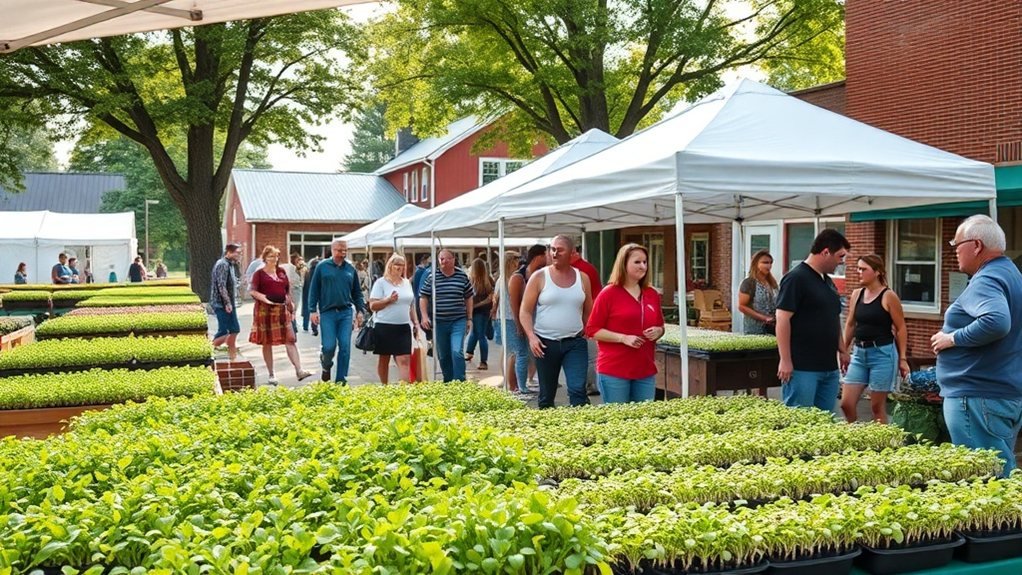
Once you’ve secured a spot, the operational realities of Indiana farmers markets come into sharp focus, and booth fees typically range from $15 to $40 per day depending on the market’s size, location, and whether you’re in Indianapolis versus a smaller regional venue like Bloomington or Muncie.
Your setup needs to be functional before customers arrive, which means a folding table, a canopy rated for wind, and clearly priced signage are non-negotiable baseline requirements at virtually every market in the state.
What actually moves at Indiana markets reflects local buying patterns, and cut sunflower, pea shoots, and spicy radish microgreens tend to draw consistent repeat buyers, particularly at markets where vendors have taken time to offer samples and brief, direct explanations of preparation.
Booth Fees and Setup Basics
Booth fees across Indiana’s farmers markets vary more than most new vendors expect, and understanding that range before you apply saves you from committing to a market that doesn’t fit your margin structure.
As a microgreens grower in Indiana, you’ll encounter daily fees ranging from roughly $15 at smaller community markets to $50 or more at established urban venues. Some markets charge seasonal flat rates instead, which demands careful volume projections on your part.
Setup expectations also shift by location, where some markets require a canopy, a weight system for wind, and a tablecloth meeting specific color standards.
Every farmers market vendor in Indiana should confirm these requirements directly with the market manager before purchasing equipment or submitting an application.
What Moves at Indiana Markets
Selling microgreens at Indiana farmers markets isn’t uniform across the state, and what customers reach for in Indianapolis differs meaningfully from what moves in Bloomington or a smaller agricultural community like Terre Haute.
Urban shoppers, particularly in Indianapolis, tend toward sunflower, pea shoots, and radish, varieties with immediate culinary recognition. Bloomington’s market, shaped by a university population, skews toward experimental cuts like amaranth and micro basil.
When you position microgreens for sale indiana across these distinct contexts, your variety selection becomes a strategic decision, not an afterthought. Smaller markets reward consistency over novelty, where a reliable weekly sunflower tray builds trust faster than rotating specialty cuts.
To sell microgreens at farmers market locations that actually fit your production capacity, start your search at markets.microgreensworld.com using the free Market Finder tool.
Getting Your Application Ready

Your application is the first real signal you send to a market manager, and how it’s assembled tells them whether you understand professional vendor standards before you’ve sold a single tray. Most Indiana markets, particularly those in Indianapolis and Bloomington, require documentation of your production setup, a liability insurance certificate, and product photography that accurately represents what you’ll bring to the booth.
Growers who submit incomplete paperwork, generic product descriptions, or photos that don’t match their actual microgreens frequently get passed over, not because their product is inferior, but because the application itself signals unreliability.
What Market Managers Want to See
Getting accepted into an Indiana farmers market rarely comes down to luck, and most market managers are evaluating your application against a fairly consistent set of criteria before you ever set up a table. Your farmers market vendor application needs to demonstrate compliance first, specifically your business registration, liability insurance, and any applicable Indiana cottage food documentation.
Beyond paperwork, managers assess whether your product fills a gap in their current vendor mix. Selling microgreens locally works in your favor because most Indiana markets carry limited specialty produce, which positions you as an additive rather than a competitive vendor. Bring clear production photos, labeled packaging samples, and a brief description of your growing method. Managers respond to specificity, not vague promises about freshness or quality.
Common Mistakes to Avoid
Most microgreens vendors who get passed over for Indiana market spots don’t fail because their product is weak — they fail because their application signals unpreparedness before a manager ever reads past the first section.
Submitting generic descriptions of your microgreens market stand, without specifying varieties, packaging format, or pricing structure, tells a manager you haven’t thought this through.
Vague language around how to sell microgreens, like “fresh and healthy greens,” carries no weight against a vendor who lists sunflower, pea shoot, and radish with documented sell-through rates.
Missing documentation, incomplete food handler certifications, or ignoring Indiana’s cottage food thresholds are also common elimination factors.
Treat the application as your first sale, because functionally, that’s exactly what it is.
Use the Market Finder to Shortcut Your Search

Tracking down viable farmers markets in Indiana one by one is the kind of work that burns through hours you could spend growing. The MGW Market Finder at markets.microgreensworld.com consolidates USDA data across Indiana’s approximately 143 listed markets, giving your local microgreens indiana search a structured foundation rather than a fragmented one.
Instead of cross-referencing county websites and calling market managers blindly, you work from a centralized database that filters by location and operational status. For anyone building a microgreens business with limited time, that efficiency matters considerably.
You identify target markets faster, prioritize outreach strategically, and move toward your first vendor spot with actual momentum. Employ the free Market Finder tool at markets.microgreensworld.com to start locating Indiana markets that fit your production scale and schedule.
Frequently Asked Questions
Can I Sell Microgreens at Indiana Farmers Markets Without a Business License?
You can often sell without a formal business license, but Indiana markets set their own vendor requirements. Check directly with each market manager before assuming you’re clear to set up.
How Many Weeks in Advance Should I Contact Indiana Market Managers?
Contact Indiana market managers 6 to 8 weeks before the season opens. Most markets fill vendor spots fast, and you’ll need time to submit paperwork, get approved, and handle any last-minute requirements they throw at you.
Do Indiana Farmers Markets Require Vendors to Grow Everything They Sell?
Most Indiana markets follow a producer-only rule, so you’ll need to grow what you sell. Confirm each market’s specific policy when you contact the manager, since requirements vary by location.
What Happens if a Market Already Has a Microgreens Vendor Selling There?
If a market already has a microgreens vendor, you’re not automatically shut out. Some markets cap similar vendors, but others don’t. Ask the market manager directly before assuming there’s no room for you.
Are There Year-Round Indoor Farmers Markets Operating Anywhere in Indiana?
Yes, a few Indiana cities run indoor year-round markets. Indianapolis and Bloomington are your best bets. Search markets.microgreensworld.com to find which ones are actively accepting vendors right now.
Wrap-up
You’ve got the framework now, so the next step is action. Indiana’s 143 markets represent a substantial range of formats, customer demographics, and seasonal structures, and identifying the right fit requires matching your production capacity to market demand. Start with one or two markets, hone your application materials, and build from there. The vendors who succeed aren’t necessarily growing the most, they’re placing their product where it moves consistently.