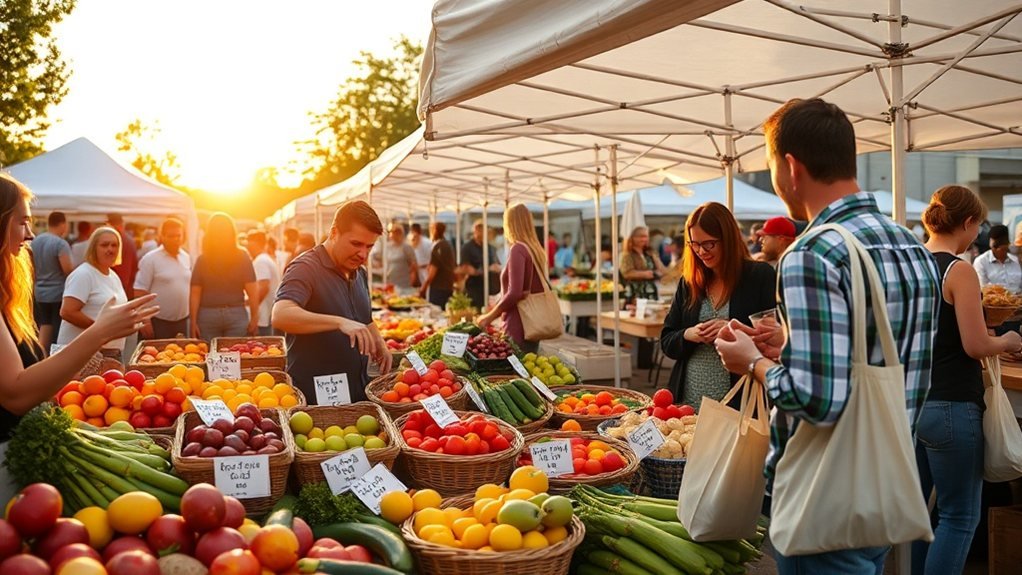
Tag: market application

  • How to Get Into Ferry Plaza Farmers Market: What the Application Really Looks Like

    How to Get Into Ferry Plaza Farmers Market: What the Application Really Looks Like

    Getting into Ferry Plaza Farmers Market means satisfying CUESA’s documentation requirements before you touch the application portal. You’ll need farm location details, proof of sustainable practices, a business license, insurance, and certifications ready in advance. Missing documents can disqualify you outright. CUESA’s committee then votes on fit, and specialty produce vendors like microgreens growers may face a farm visit. Wait times run several weeks. Keep going to see exactly what the vendor mix looks like and where your opening is.

    Key Takeaways

    • CUESA reviews documentation first, then farm practices; missing documents can delay or disqualify your application before a committee ever sees it.
    • Required materials include proof of sustainable farming, business license, insurance, farm location, production scale, and any certifications.
    • Selection is multi-step: a completeness check, then a committee vote on whether your operation aligns with CUESA’s mission.
    • Specialty produce applicants, including microgreens growers, may face an additional farm visit before final acceptance is granted.
    • Declined applicants often receive no feedback; if rejected, contact CUESA directly to ask why and what to improve.

    What should you know about Ferry Plaza Farmers Market before you apply?

    Ferry Plaza isn’t like other California markets. CUESA manages it with a strict focus on sustainable agriculture, and the application process reflects that.

    Before you apply, you need to know who shops there, what they buy, and where the vendor gaps are.

    What Makes Ferry Plaza Farmers Market Different From Other California Markets

    When you apply to sell at Ferry Plaza Farmers Market, you’re not dealing with a standard city market program. CUESA runs it. That changes everything.

    CUESA is a nonprofit with a specific mission: sustainable agriculture education. Every ferry plaza farmers market vendor is selected based on alignment with that mission. Your farming practices get reviewed, not just your product.

    The market runs along the Embarcadero in San Francisco, facing the Bay. Saturday is the largest market. Tuesday and Thursday markets also operate.

    This isn’t a transactional slot-filling process. CUESA is building a community around a food system it believes in. If your microgreens operation reflects sustainable practices, you belong in that conversation. If it doesn’t, the application won’t move forward.

    Who Shops There and What They Actually Buy

    CUESA’s mission sets the bar for entry. The shoppers at Ferry Plaza aren’t browsing. They’re buying with intention, and they already know what good produce looks like.

    The Saturday market pulls food-focused buyers from across the Bay Area. These are home cooks, chefs, and people who read ingredient labels. They spend money when the product is right.

    Microgreens at Ferry Plaza farmers market fit this crowd precisely. These buyers want clean, local, specialty produce. They’re not looking for the cheapest option.

    Dr. Booker T. Whatley’s framework is direct: know your customer before you choose your market. Visit Ferry Plaza as a shopper first. Watch what sells on a Saturday. That observation is your application strategy before you write a single word.

    What does the vendor mix look like at Ferry Plaza Farmers Market?
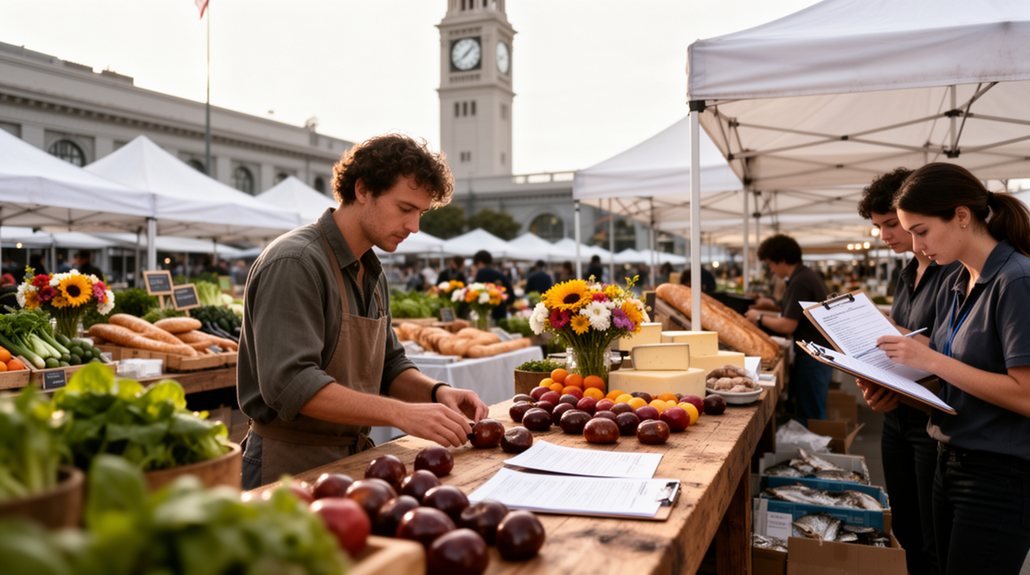
    baked goods dominate market

    Ferry Plaza runs over 100 vendors on a busy Saturday, and baked goods and prepared foods dominate the floor.

    Specialty produce, including microgreens, takes up far less space. That gap is exactly where your application has the most room.

    Which categories are overrepresented at Ferry Plaza Farmers Market

    Most vendor slots at Ferry Plaza go to baked goods, prepared foods, and fruit. Those categories are packed. Getting in as another jam maker or pastry vendor is a real fight.

    Fruit growers from the Central Valley hold long-term spots. Established bakeries renew every season. CUESA’s ferry plaza market vendor requirements favor continuity, so new applicants in crowded categories wait longer.

    Specialty produce is different. Microgreens, edible flowers, and niche greens don’t crowd the tables the way bread does. You’re not competing against twenty other vendors in the same lane.

    That gap is real and it’s visible. Walk the Saturday market and count the specialty produce tables. You’ll likely find two or three. That number tells you where the opening is.

    Where the gap is for specialty produce vendors

    The gap isn’t hidden. Specialty produce vendors are under-represented at Ferry Plaza compared to baked goods and prepared foods.

    Dr. Booker T. Whatley’s customer-first framework is direct: know your customer before you choose your market. Visit Ferry Plaza as a buyer first. Walk every stall on a Saturday. Count how many vendors sell fresh specialty greens. You’ll find the number is low.

    That’s your opening.

    CUESA actively looks for vendors who fill category gaps and match its sustainable agriculture mission. Microgreens fit both conditions.

    Figuring out how to get into Ferry Plaza Farmers Market gets easier when you apply as a solution, not just another vendor.

    You’re not competing against the crowd. You’re stepping into a lane that’s mostly empty.

    What does the Ferry Plaza Farmers Market vendor application process involve?

    prepare detailed vendor documentation

    CUESA doesn’t leave the application process vague. You’ll need specific documentation ready before you even open the form.

    The selection process is competitive, and knowing what they’re screening for changes how you prepare.

    What CUESA requires before you submit an application

    Preparation starts well before you open the CUESA vendor application portal. CUESA reviews your farming operation before it reviews your product.

    You need documented proof of sustainable farming practices. That means records, not just a statement. Photos of your growing setup, input logs, and a clear description of your methods all matter here.

    CUESA also wants to know your farm’s location and production scale. You’re not selling at a swap meet. This market holds vendors to a specific standard, and the documentation requirement filters out applicants who aren’t ready.

    Pull together your business license, proof of insurance, and any relevant certifications before you start the cuesa vendor application. Missing one document can delay or disqualify your submission entirely.

    What the selection process looks like

    Once you submit your application, CUESA moves it through a multi-step review. First, staff checks that your documentation is complete.

    After that, a committee reviews your farm’s alignment with their sustainable agriculture mission. They’re looking at your practices, not just your product.

    If you pass the document review, CUESA may request a farm visit. This is standard for Ferry Plaza Farmers Market vendors in the specialty produce category.

    After the visit, the committee votes on acceptance. Wait times vary, but expect several weeks between submission and a decision.

    You won’t always get feedback if you’re declined. If that happens, ask directly what was missing and reapply in the next cycle.

    What do microgreens vendors specifically need to know about Ferry Plaza Farmers Market?

    prepare position premium buyers

    Ferry Plaza’s Saturday market pulls serious food buyers who already know what microgreens are.

    That customer base is a direct match for specialty greens sold at a premium price point.

    What separates vendors who get in from those who don’t comes down to preparation and positioning.

    Why Ferry Plaza Farmers Market’s customer base is a strong match for specialty greens

    Most shoppers at Ferry Plaza aren’t browsing. They come with a list and a budget for quality. These are home cooks, chefs, and food-focused buyers who already know what microgreens are.

    The Saturday market pulls visitors from across the Bay Area. Many drive in specifically for specialty produce. San Francisco market regulars here spend more per visit than typical market shoppers.

    This customer base actively looks for items they can’t find at grocery stores. Microgreens fit that gap directly. You’re not educating this crowd from scratch. They’re ready to buy when the product is in front of them.

    That buying behavior is what makes your vendor application worth pursuing.

    What sets successful vendors apart at Ferry Plaza Farmers Market

    CUESA consistently selects vendors who demonstrate a clear commitment to sustainable agriculture. That’s not a soft preference. It’s the filter every Ferry Plaza Farmers market vendor gets measured against.

    Your application needs to show how you grow, not just what you grow. Organic inputs, water conservation practices, and soil health methods all matter. Document them before you apply.

    Specialty produce vendors, including microgreens growers, face less competition than baked goods or prepared food sellers. That gap works in your favor, but only if your farming practices hold up to CUESA‘s review.

    Show alignment with their mission. Visit the CUESA website at cuesa.org and read their vendor criteria before you write a single word of your application.

    How do you find Ferry Plaza Farmers Market and locate other markets like it near you?

    ferry plaza location and finder

    Ferry Plaza is easy to find. It runs along the Embarcadero in San Francisco near the Ferry Building at One Ferry Building, San Francisco, CA 94111.

    If you’re looking for comparable markets in California, the MGW Farmers Market Finder covers 7,842 USDA-verified markets and lets you search by zip code, city, or state.

    Using the MGW Market Finder to scout markets in California

    California has over 800 active farmers markets, and finding the right one takes more than a Google search. You need verified data, not outdated listings.

    The MGW Farmers Market Finder covers 7,842 USDA-verified markets across all 50 states. Search by zip code, city, or state at markets.microgreensworld.com.

    Type in San Francisco to pull up Ferry Plaza and nearby markets. You’ll see days, locations, and contact details in one place.

    As a prospective ferry plaza farmers market vendor, compare multiple markets before committing. Look at which ones fit your production size and schedule.

    Scout two or three options. Apply where the fit is strongest.

    What to look for before you apply to any California market

    Finding the right market isn’t just about location. It’s about fit.

    Before you submit anything as a ferry plaza farmers market vendor, check these five factors at every market you visit.

    Factor What to look for Why it matters
    Vendor mix How many specialty produce sellers? Fewer means less competition
    Customer volume Foot traffic on peak days More buyers, better sales potential
    Price tolerance What are similar products selling for? Sets your pricing floor
    Mission alignment Does the market prioritize sustainable growers? Affects approval odds
    Application status Open, waitlisted, or closed? Saves wasted effort

    Visit twice before you apply. Watch what moves.

    Frequently Asked Questions

    Does Ferry Plaza Farmers Market Allow Vendors to Share a Booth?

    CUESA doesn’t officially allow booth sharing between separate vendors. You’ll need your own application and approval. If you’re co-producing with a partner, disclose that upfront. They want to know exactly who’s growing and selling what.

    What Days Does Ferry Plaza Farmers Market Operate Each Week?

    Ferry Plaza runs on Saturdays, Tuesdays, and Thursdays. Saturday’s the biggest market and the one you’ll want to prioritize. Tuesday and Thursday markets are smaller but still draw a loyal, food-focused crowd you can build real roots in.

    How Much Does a Vendor Booth Cost at Ferry Plaza Farmers Market?

    CUESA doesn’t publish booth fees publicly. You’ll get the cost breakdown after you’re accepted. Fees typically vary by vendor category and market day. Contact CUESA directly through their vendor application portal to get current numbers.

    Can Out-Of-State Growers Apply to Ferry Plaza Farmers Market?

    You can apply, but CUESA prioritizes California growers. Out-of-state vendors face a much harder path. Your product must clearly align with their sustainable agriculture mission to have any realistic chance of acceptance.

    Does CUESA Require Vendors to Carry Liability Insurance?

    Yes, CUESA requires you to carry liability insurance. You’ll need to show proof before you’re approved. Most markets set the minimum at $1 million per occurrence.

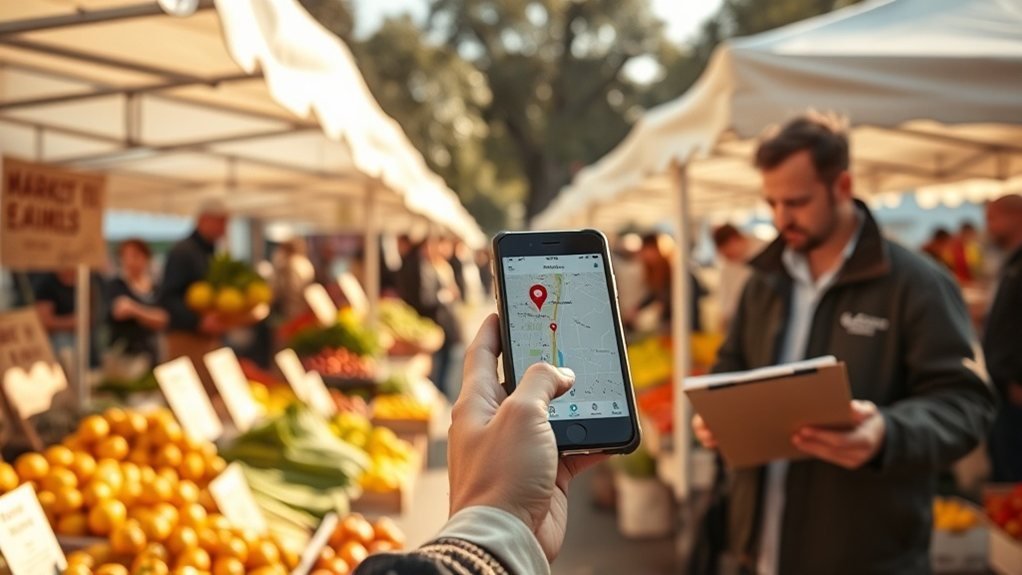
  • How to Find Farmers Markets Open Near You Right Now (And What to Look for Before You Apply)

    How to Find Farmers Markets Open Near You Right Now (And What to Look for Before You Apply)

    To find farmers’ markets open near you right now, skip Google. Llistings go stale fast. Employ the MGW Farmers Market Finder at markets.microgreensworld.com instead. Search by zip code, filter by today’s day and hours, and you’ll see which markets are actually running. Before you visit or apply as a vendor, check seasonal dates, SNAP/EBT acceptance, and vendor mix. The details below will help you find the right market and show up prepared.

    Key Takeaways

    • Use the MGW Farmers Market Finder at markets.microgreensworld.com to search by zip code and filter by today’s day and hours.
    • Google listings go stale; dedicated locators pull from USDA data covering 7,842 markets for more reliable, current information.
    • Before visiting, confirm hours, seasonal dates, and weather cancellations since markets can skip weekends without notice.
    • Scout the market at least twice before applying to assess shopper behavior, price points, and vendor mix.
    • Avoid markets dominated by jewelry and candle vendors; prioritize food-heavy markets with complementary stalls like bread, eggs, and meat.

    How to Find Farmers Markets Open Near You Right Now (And What to Look for Before You Apply)

    When you search “farmers market near me,” Google gives you a snapshot, not the full picture.

    Directory listings go stale, hours change mid-season, and plenty of markets never make it into the top results at all.

    The people running that search right now fall into two groups: consumers looking for fresh food this weekend and growers scouting for a vendor spot to build a business around.

    Why a Quick Google Search Misses Half the Picture

    Google will show you a handful of farmers’ markets near you, but it’s pulling from business listings that market managers may not have updated in months. You might show up on a Tuesday expecting fresh produce and find an empty parking lot. That’s not a great feeling.

    A dedicated farmers market locator pulls from sources that actually track market schedules, seasonal dates, and operating hours. The USDA maintains data on thousands of markets across the country. That’s the backbone of tools built specifically for this search.

    Google is a starting point. It’s not a finishing point. If you want accurate information, you need a source that’s built around market data, not general business listings. The difference matters more than it sounds.

    The Two Types of People Searching for Farmers’ Markets Right Now

    Most people searching “farmers market near me” fall into one of two camps: they’re either a shopper looking for fresh produce on a Saturday morning or a grower trying to figure out where to sell. Both of you belong here.

    If you’re a shopper, you want hours, locations, and whether the market takes SNAP/EBT. Simple.

    If you’re a grower, you’re asking a different question underneath the same search. You’re not just looking for a market. You’re looking for your market. The one where your customers already show up.

    Neither search is wrong. But the information each of you needs is completely different. This guide covers both without making you wade through what doesn’t apply to you.

    How Does the USDA Farmers Market Database Work?

    national directory with variable accuracy

    The USDA maintains a national directory of farmers’ markets called the National Farmers Market Directory, and it’s the biggest public database of its kind in the country.

    Market managers submit their own listings, which means the data quality depends on how often they update them.

    Some listings are current and detailed; others haven’t been touched in years.

    What Data the USDA Collects and How Current It Is

    When you search for a farmers market, you’re usually pulling from the USDA’s Local Food Directories database, which the agency built to connect consumers with local food sources across the country. The USDA farmers market finder pulls from self-reported data. Market managers submit their own listings, including hours, location, season dates, and whether they accept SNAP or EBT benefits.

    Here’s what that means for you: the data is only as fresh as the last time a market updated it.

    Some listings haven’t been touched in years. Others are current and accurate.

    That’s exactly why the MGW Farmers Market Finder at markets.microgreensworld.com cross-references that USDA data across 7,842 markets, so you’re not showing up somewhere that closed two seasons ago.

    How to Search by Location and Filter Results

    Searching by location is straightforward once you know what the tool is actually doing behind the scenes. The MGW Farmers Market Finder pulls from USDA data and lets you search by state, city, or zip code. That last option is the fastest. Type your zip, and the farmers market search tool returns markets within your area ranked by proximity.

    From there, you can filter by days open, operating season, and whether a market accepts SNAP/EBT. Those filters matter. A market that’s only open Tuesday mornings doesn’t work if you’re building a weekly customer base. Pick the filters that match your actual schedule before you get attached to a location. The tool shows you what’s real. You decide what fits.

    How Do You Use the MGW Farmers Market Finder?

    operational hours seasons benefits

    The MGW Farmers Market Finder at markets.microgreensworld.com allows you to search by zip code, city, or state to pull up markets in your area fast.

    What makes it more useful than a quick Google Maps search is the operational detail it surfaces — hours, days open, seasonal schedules, and whether a market accepts SNAP/EBT benefits.

    Google Maps tells you a market exists; this tool tells you whether it’s worth the drive.

    Searching by Zip Code, City, or State

    You’ve got three ways to search the MGW Farmers Market Finder at markets.microgreensworld.com: zip code, city, or state. Most people start with a zip code because it’s the fastest path to markets in your actual neighborhood. Type in your farmers market by zip code, and you’ll see what’s operating closest to you first.

    City search works well if you’re willing to travel a few miles for the right fit. State search is your best move when you’re scoping multiple markets across a region.

    All three options pull from the same database of 7,842 USDA-verified markets. You’re not guessing. You’re looking at real data about real markets where real people are already buying and selling.

    What the Tool Shows You That Google Maps Does Not

    Google Maps will show you a pin and maybe some hours. That’s it.

    The MGW Farmers Market Finder is a proper farmers market directory online that goes deeper. You’ll see the actual season dates, which days of the week the market runs, and whether it accepts SNAP or EBT. That last detail matters a lot if you’re serving or shopping in lower-income communities.

    For vendors, you’ll also see enough operational detail to decide if a market fits your schedule before you ever contact the manager. No guessing. No driving out to find a locked gate.

    The directory pulls from USDA data across 7,842 markets. Google doesn’t have that. This tool does.

    What Should Consumers Look for in a Farmers Market?

    check hours days ebt

    Once you find a market near you, the next step is figuring out whether it actually fits your life.

    Check the hours and days first — a Saturday-only market doesn’t help you if you work weekends.

    If you utilize SNAP or EBT benefits, look specifically for markets that accept them, because not all do.

    Hours, Days, and Seasonal Schedules Explained

    Before you drive across town, check the hours. Farmers market hours near me is one of the most searched phrases — and for good reason. Markets don’t follow a universal schedule. Some run Saturday mornings only. Others operate Wednesday afternoons or year-round on Sundays.

    Seasonal markets close entirely in winter. Year-round markets may shift their hours between summer and winter schedules. These details matter more than people expect.

    The MGW Farmers Market Finder at markets.microgreensworld.com pulls current schedule data from the USDA for 7,842 markets. You can search by zip code and see days, hours, and active seasons before you leave the house.

    No surprises. No wasted trips. You show up when the market is actually open.

    How to Find Markets That Accept SNAP and EBT

    If you’re on SNAP or EBT, not every farmers’ market can process your card. Some markets have the equipment. Many don’t. Showing up without knowing puts you in an awkward spot nobody wants.

    When you search for a farmers’ market open near me, filter specifically for SNAP and EBT acceptance before you go anywhere. The MGW Farmers Market Finder at markets.microgreensworld.com pulls from USDA data covering 7,842 markets and shows you exactly which ones accept benefits.

    Look for markets that also offer SNAP matching programs. These programs double your spending power on fruits and vegetables. Not every market advertises this upfront, so check the market’s page directly or call ahead. That one step saves a wasted trip.

    What Should Vendors Look for Before They Apply?

    confirm customer demand and competition

    Picking the wrong market costs you time, money, and a trunk full of unsold trays.

    Before you fill out any application, you need two things: proof that the customer base buys what you grow, and a clear read on who’s already selling there.

    Those two factors tell you more about your odds than any market brochure will.

    Signs a Market Has the Right Customer Base for Microgreens

    Dr. Whatley said it plainly: know your customer before you choose your market.

    Signal What to look for What it tells you
    Booth variety Specialty produce, artisan food Adventurous buyers are already present
    Shopper behavior Asking questions, reading labels Educated, intentional customers
    Price points $8+ items selling Buyers are willing to pay for quality

    Scout two visits minimum. Then apply.

    What the Vendor Mix Tells You Before You Submit an Application

    Walk the market before you fill out a single form. Count the vendors. Notice who’s already there. If three other booths sell microgreens, that tells you something real about your odds of standing out. Look at the food-to-craft ratio too. Markets heavy on jewelry and candles often draw browsers, not buyers.

    You’re not just finding a farmers market to fill a slot. You’re finding one where you actually fit. Dr. Booker T. Whatley said it plainly: know your customer before you choose your market.

    A strong vendor mix means complementary products, not competing ones. Bread, eggs, meat, and produce vendors nearby? That’s a shopping-trip market. That’s where microgreens sell.

    How Do You Find a Farmers Market Open This Weekend?

    check market status online

    Weekend market searches are last-minute by nature, and hours change more often than most people expect.

    Before you load the car, check the MGW Farmers Market Finder at markets.microgreensworld.com to confirm the market is actually running that day. Seasonal closures, holiday adjustments, and weather cancellations don’t always make it onto a market’s social media page in time.

    Same-Day and Last-Minute Market Searches

    Saturday morning hits, and you still haven’t figured out where to go. It happens to most of us. The good news is that finding a farmers’ market open right now doesn’t require much digging.

    Pull up the MGW Farmers Market Finder at markets.microgreensworld.com. Type your zip code and filter by today’s day and hours. You’ll see which markets are actually running this morning, not just ones that exist somewhere in your county.

    Markets list their seasonal dates too, so you won’t drive somewhere that closed in October.

    If you’re a vendor doing the same search, you’re also getting a first look at who shops there. That tells you something before you ever fill out an application.

    Using the Market Finder to Check Current Hours Before You Leave

    Knowing a market exists and knowing it’s open right now are two different things. A market might run from May through October but skip certain weekends. Hours shift. Seasons end early. Searching “farmers market near me open now” without current data means you could show up at an empty parking lot. Not a great Saturday morning.

    The MGW Farmers Market Finder at markets.microgreensworld.com pulls from USDA data covering 7,842 markets. Before you leave the house, check the listing for that specific market. Look at the days, hours, and season dates. If it shows SNAP/EBT acceptance, that also tells you something about the community showing up there. Verify before you drive.

    Frequently Asked Questions

    Can You Sell Microgreens at a Farmers Market Without a License?

    You’ll need a license in most states, but requirements vary. Check your state’s cottage food or produce vendor laws before you apply — selling without the right permits can get you removed from a market.

    How Many Vendors Does a Typical Farmers’ Market Accept Each Season?

    Most markets accept 20 to 75 vendors per season, and spots fill fast. Scout the market first, so you’re applying where you’ll actually fit in with the existing vendor community.

    Do Farmers’ Markets Charge Vendors a Flat Fee or a Percentage of Sales?

    Most markets charge a flat fee — daily rates run $25–$150, seasonal fees $200–$800. Some larger markets take 6–10% of sales instead. You’ll find the structure listed when you apply.

    What Is the Average Customer Traffic at a Small Farmers Market?

    Small farmers’ markets typically draw 200 to 500 visitors per market day. You’ll find your people there, growers and shoppers who value knowing where their food comes from and who grew it.

    Are Indoor Farmers’ Markets Open Year-Round in Colder States?

    Many indoor farmers’ markets in colder states run year-round, and you’ll find them in community centers, fairgrounds, and church halls. Check the MGW Farmers Market Finder to confirm your local market’s season.

    Wrap-up

    Whether you’re hunting for fresh produce this weekend or scouting your next selling location, you’ve got everything you need to move fast. Utilize the MGW Farmers Market Finder at markets.microgreensworld.com to search by zip code, check hours, and confirm EBT acceptance before you leave the house. Vendors, look at foot traffic and product fit before you apply anywhere. The tool does the heavy lifting. You just have to utilize it.