
Maryland’s approximately 174 USDA-listed farmers markets concentrate heavily around Baltimore, Bethesda, and Annapolis, giving microgreens vendors multiple nearby venues without expanding logistics. You’ll find health-conscious, culinary-aware shoppers who actively seek specialty varieties like sunflower, pea shoots, and braising mixes, with regional disposable income supporting premium pricing. Each corridor carries distinct buyer behavior — Bethesda favors convenience and quality signaling, Annapolis rewards consistent vendor relationships. What follows covers how to evaluate, apply to, and succeed within these markets.
Key Takeaways
- Maryland has approximately 174 USDA-listed farmers markets statewide, with dense concentrations around Baltimore, Bethesda, and Annapolis.
- The primary market season runs April through November, with year-round indoor options available in Baltimore.
- Sunflower microgreens and pea shoots perform well in health-conscious markets like Bethesda, while braising mixes suit Annapolis shoppers.
- Booth fees typically range $25–$75 daily, with some urban markets requiring seasonal contracts and upfront payments.
- Complete applications with liability insurance, product lists, pricing, and professional photos improve approval chances with market managers.
Farmers Markets in Maryland for Microgreens Vendors
Maryland’s approximately 174 USDA-listed farmers markets represent a substantial commercial infrastructure for microgreens vendors seeking consistent, high-volume sales channels.
You’ll find particularly dense market concentrations in Baltimore, Bethesda, and Annapolis, where health-conscious consumer demographics and disposable income levels historically support specialty produce.
The state’s primary market calendar runs spring through fall, which means your production schedule and vendor applications need to align with that seasonal window well in advance.
Why Maryland Markets Are Worth Your Attention
If you’re producing microgreens and looking for your next move, Maryland’s farmers market landscape offers a genuinely concentrated opportunity worth examining. The USDA database lists approximately 174 farmers markets maryland vendors can access, with meaningful density around Baltimore, Bethesda, and Annapolis.
That concentration matters practically, because proximity between markets allows you to run multiple stops without rebuilding your logistics from scratch each time. A microgreens farmers market presence in this region benefits from a customer base that skews educated, health-conscious, and familiar with specialty produce.
Maryland’s spring-through-fall season gives you a defined window to build consistent buyer relationships before winter forces a reassessment. If you’re evaluating where to place your next market application, that density and demographic profile make Maryland a rational starting point.
What the Maryland Market Season Looks Like
Before you commit to a market schedule, you need to understand how Maryland’s season actually structures itself, because the calendar here isn’t uniform across all 174 listed markets.
Most farmers market Maryland vendors operate within a spring-through-fall window, typically April through November, though specific open dates vary considerably by county and venue.
Baltimore’s year-round indoor markets represent an exception worth targeting as a microgreens vendor Maryland, since consistent temperature-controlled environments support steady microgreens demand outside traditional growing seasons.
Annapolis and Bethesda markets tend to run shorter, more concentrated seasonal windows, which affects how you plan production cycles and application timing.
Understanding these structural differences before you apply prevents misaligned harvest schedules and wasted vendor fees, positioning you to enter markets when your product output actually matches their operational calendar.
How to Find the Right Market in Maryland

Before you apply to any market in Maryland, you need to evaluate foot traffic patterns, vendor mix, and whether the market’s customer base actually buys value-added specialty produce. Baltimore’s urban corridor supports several high-volume markets where microgreens move consistently, particularly in neighborhoods with established food culture and repeat weekly shoppers. Bethesda and Annapolis attract demographics with stronger disposable income and familiarity with specialty crops, which changes how you position your product and price your trays.
What to Look for Before You Apply
Not every farmers market in Maryland is going to be the right fit for your microgreens, and recognizing that distinction early will save you significant time and application fees. Before you pursue how to get a farmers market booth, audit each market’s vendor composition first.
If three vendors already sell microgreens at a Baltimore Saturday market, your margin for differentiation narrows considerably. Check foot traffic patterns, seasonal operating calendars, and whether the market draws customers who purchase specialty produce regularly.
Farmers markets Maryland microgreens vendors succeed at tend to attract health-conscious, higher-income shoppers, particularly in corridors like Bethesda and Annapolis. Confirm the application timeline, fee structure, and whether the market manager requires proof of production scale before you invest further effort into any single opportunity.
Markets Near Baltimore
Within the Baltimore metro corridor, you’re working with one of Maryland’s densest concentrations of farmers markets, which means both opportunity and saturation exist simultaneously across neighborhoods like Waverly, Fells Point, and the Inner Harbor periphery.
A microgreens booth at a farmers market in this region competes against established produce vendors who’ve held spots for years, so your differentiation strategy matters before you even submit an application.
The Baltimore farmers market ecosystem rewards vendors who understand customer demographics at the neighborhood level, because a Waverly shopper behaves differently than a Harbor East regular.
Research weekly attendance figures, vendor turnover rates, and product category gaps at each specific market before committing your application materials to any single location.
Markets Near Bethesda and Annapolis
Bethesda and Annapolis represent two distinct market environments that demand different vendor strategies, even though both sit within Maryland’s wealthier suburban corridors. The Bethesda farmers market draws health-conscious, time-pressed professionals who prioritize quality and convenience, meaning your display and packaging need to communicate value instantly. Annapolis farmers market culture skews more community-oriented, where repeat relationships with buyers develop over consecutive weeks, rewarding vendors who show up consistently and engage directly.
You’ll want to research each market’s vendor density, foot traffic patterns, and existing microgreens competition before committing to an application. What works in one corridor won’t automatically translate to the other. Utilize the free Market Finder at markets.microgreensworld.com to pull current Maryland listings and evaluate which opportunity aligns with where you’re right now.
What to Expect When You Get There
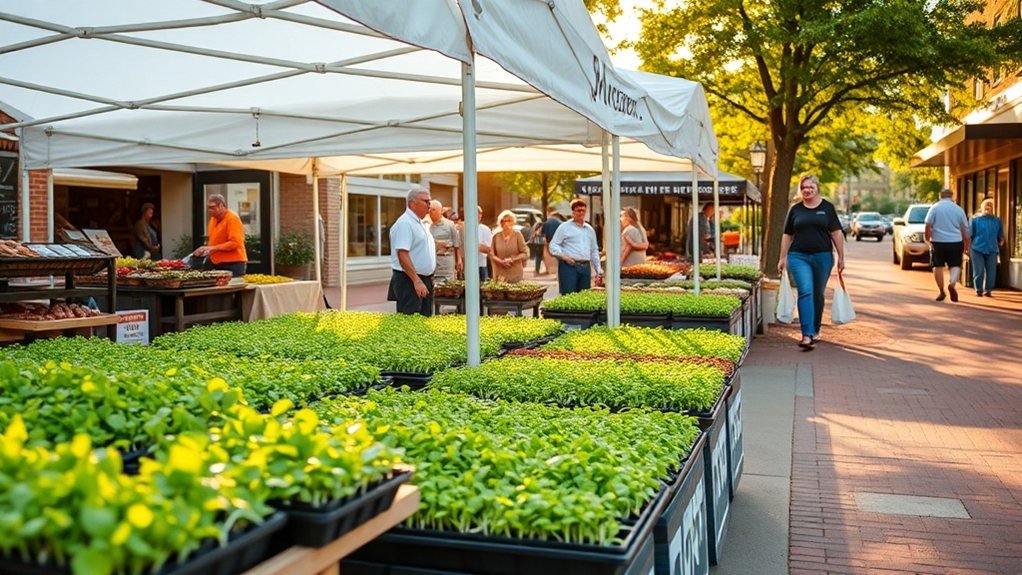
Once you’ve identified a Maryland market worth pursuing, the operational realities of vending will shape your experience more than any other factor. Booth fees across Maryland’s approximately 174 USDA-listed markets typically range from flat daily rates to seasonal contracts, with urban venues like Baltimore’s farmers markets often commanding higher fees than smaller rural operations in outlying counties.
Knowing what varieties of microgreens move well in your specific market context, whether sunflower and pea shoots in health-conscious Bethesda or heartier braising mixes near Annapolis, allows you to calibrate your production before you ever unload your first tray.
Booth Fees and Setup Basics
Before you commit to any Maryland farmers market, get clear on what booth fees actually look like, because the range is wider than most new vendors expect. As a farmers market vendor Maryland, you’ll typically encounter daily fees between $25 and $75, though established urban markets in Baltimore or Bethesda can charge considerably more. Some markets operate on seasonal contracts, requiring upfront payment before you sell microgreens at farmers market for a single day. Setup basics matter likewise: most Maryland markets expect a 10×10 canopy, weighted properly against Chesapeake-region wind, plus a compliant display surface. Arrive during your designated load-in window, because markets enforce those windows strictly. Knowing these operational realities before you apply prevents costly surprises and positions you to negotiate from a place of genuine preparation.
What Moves at Maryland Markets
When you finally step behind your table at a Maryland farmers market, the product mix that actually sells will likely surprise you, because regional buyer behavior here skews toward culinary sophistication in ways that matter for your tray selection. Shoppers at your market stand in Bethesda or Baltimore frequently ask for varieties pairing with specific cuisines. Understanding demand patterns helps you allocate tray space strategically before you put microgreens for sale maryland-wide.
| Variety | Demand Driver | Market Context |
|---|---|---|
| Sunflower | Snacking, salads | High-volume urban markets |
| Pea Shoots | Asian cuisine pairing | Diverse metro neighborhoods |
| Radish | Chef-focused buyers | Annapolis upscale markets |
| Amaranth | Visual presentation | Bethesda premium shoppers |
| Broccoli | Health-conscious buyers | Suburban community markets |
Prioritize your highest-demand varieties first, then expand based on observed sell-through rates across consecutive market days.
Getting Your Application Ready

Your application is the market manager’s first substantive impression of you as a vendor, and it needs to demonstrate operational credibility before you’ve sold a single tray.
Most Maryland markets, particularly those in competitive corridors like Bethesda and Baltimore, evaluate vendors on product differentiation, proof of compliance with state cottage food or commercial kitchen regulations, and evidence of consistent supply capacity.
Submitting an application without your liability insurance certificate, a clear product list with pricing, or documentation of your growing setup are the most common reasons microgreens vendors get passed over, even when the market has open slots.
What Market Managers Want to See
Market managers in Maryland receive dozens of vendor applications each season, and the ones that move forward share a recognizable pattern: they’re complete, professional, and demonstrate that the applicant understands what the market actually needs.
Your farmers market vendor application should reflect an organized microgreens business, not just a grower with product. Managers want your business license, liability insurance certificate, and any required food handling documentation ready before submission.
Beyond paperwork, they’re assessing fit: does your product category serve a gap in their current vendor mix? Markets in Baltimore and Bethesda particularly favor vendors who can demonstrate consistent weekly supply.
Present your growing capacity honestly, specify your variety rotation, and show that you understand seasonal demand. That preparation signals reliability before you’ve sold a single tray.
Common Mistakes to Avoid
Getting your application rejected because of a preventable oversight is more common than most new vendors expect, and Maryland’s competitive market landscape makes the cost of that mistake real.
When you’re pursuing selling microgreens locally, submitting incomplete documentation is the most consistent disqualifier. Market managers in Baltimore and Annapolis report that missing liability certificates alone eliminate a significant portion of applicants before review even begins.
Your product photos matter more than most growers realize, as poorly lit images signal operational immaturity to experienced managers.
For local microgreens Maryland vendors, arriving with a generic pitch rather than tailoring your application to each specific market’s stated vendor needs is a strategic error that communicates insufficient preparation and undermines an otherwise qualified submission.
Search available Maryland markets now at [markets.microgreensworld.com](https://markets.microgreensworld.com).
Use the Market Finder to Shortcut Your Search

Searching for viable vendor slots across Maryland’s 174 listed farmers markets doesn’t have to mean hours of manual research, cold calls, and dead ends. The MGW Market Finder consolidates USDA data into a searchable format, letting you filter by location and market characteristics relevant to how to sell microgreens at scale.
| What You’d Do Manually | What the Tool Does |
|---|---|
| Search county by county | Filter statewide instantly |
| Cross-reference schedules | See market calendars together |
| Cold-call for vendor info | Access structured market data |
As a microgreens grower Maryland, your time is better spent growing than researching. Employ the free Market Finder at [markets.microgreensworld.com](https://markets.microgreensworld.com) to locate your next vendor opportunity today.
Frequently Asked Questions
Can I Sell Microgreens at Maryland Farmers Markets Without a License?
You can sell microgreens at Maryland farmers markets, but you’ll likely need a cottage food registration or grower’s license depending on your county. Check with MDA before your first market day.
How Much Does It Typically Cost to Rent a Maryland Market Stall?
Maryland stall fees typically run $25 to $75 per market day, though some larger markets charge seasonal fees instead. You’ll want to confirm the structure directly with each market manager before applying.
Do Maryland Markets Require Vendors to Carry Liability Insurance?
Most Maryland markets require it. You’ll typically need a general liability policy with $1 million in coverage, and some markets want to be listed as an additional insured on your certificate.
Can I Apply to Multiple Maryland Markets at the Same Time?
Yes, you can apply to multiple Maryland markets simultaneously. Most markets run independent applications, so submit to as many as fit your production capacity and schedule before spots fill up.
What Certifications Do Maryland Microgreens Vendors Actually Need?
You’ll likely need a Maryland Cottage Food registration or a food handler’s permit, depending on your setup. Some markets also require liability insurance. Confirm specifics with each market manager before applying.
Wrap-up
You’ve got the framework now — Maryland’s 174 markets, the application process, and what managers actually expect from vendors. What’s left is execution. Start by identifying two or three markets that match your production volume and location, then submit your applications before the season opens. Don’t wait until slots fill. Microgreens fit this market culture well, but fit alone won’t get you in. Preparation will.