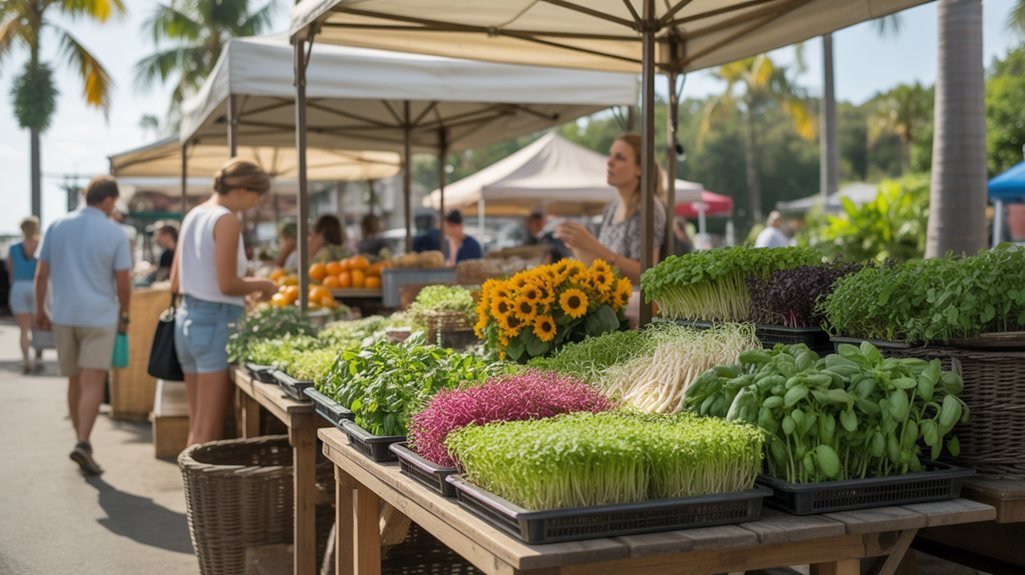
Florida’s approximately 211 USDA-listed farmers markets give microgreens vendors a year-round selling infrastructure unavailable in most northern states. You’ll find concentrated demand in Miami, Tampa, and Orlando, where markets like Coral Gables and Hyde Park attract distinct buyer profiles. Peak seasons vary by region — South Florida runs October through April, while Central Florida extends into May. Sunflower, pea shoots, and radish varieties consistently move well. Continue exploring to understand how market selection, booth operations, and application strategy determine your actual results.
Key Takeaways
- Florida hosts approximately 211 USDA-listed farmers markets, offering microgreens vendors genuine year-round booth availability across major urban corridors.
- Miami, Tampa, and Orlando each present distinct buyer profiles; Miami attracts premium health-conscious shoppers, while Orlando’s tourist traffic complicates repeat customer cultivation.
- Sunflower, pea shoots, and radish microgreens sell most consistently at Florida markets, with lighter varieties preferred during hot summer months.
- Weekly booth fees range from $15 for small community markets to $200 for festival-style events, directly affecting vendor profit margins.
- Successful applications require documented production schedules, pricing structure, and proof of consistent supply to satisfy market manager evaluation criteria.
Farmers Markets in Florida for Microgreens Vendors
Florida’s approximately 211 USDA-listed farmers markets represent one of the most accessible entry points for microgreens vendors operating in the continental United States, given the state’s population density and concentrated urban corridors in Miami, Tampa, and Orlando.
Unlike markets in northern states, where seasonal closures compress your selling window into six or seven months, Florida’s calendar runs predominantly year-round, which means you can build a consistent customer base and hone your booth operations without an annual restart. That structural continuity matters when you’re trying to establish vendor relationships and move product reliably week over week.
Why Florida Markets Are Worth Your Attention
When you’re evaluating where to sell microgreens, the sheer density of Florida’s market infrastructure makes it a serious candidate regardless of where you’re based in the state.
The USDA database lists approximately 211 farmers markets florida vendors can access, a figure that translates directly into genuine slot availability across multiple metro corridors.
Miami, Tampa, and Orlando each sustain concentrated market ecosystems, meaning competition exists but so does volume.
As a microgreens vendor florida, you’re operating in a year-round calendar state, which eliminates the seasonal revenue compression that growers in northern climates absorb. That structural advantage compounds over time.
More market dates mean more opportunities to build a consistent customer base, hone your display, and develop relationships with market managers who control vendor placement decisions.
What the Florida Market Season Looks Like
Understanding that year-round availability is baked into Florida’s market structure is one thing; knowing how that calendar actually behaves across the state’s distinct climate zones is what lets you plan production schedules with any real precision. The florida market calendar shifts meaningfully between regions, and farmers markets florida microgreens vendors who ignore those shifts tend to overproduce in slow windows.
| Region | Peak Vendor Season | Slower Window |
|---|---|---|
| South Florida | October through April | June through August |
| Central Florida | September through May | July through August |
| North Florida | October through May | July through September |
Attendance and buyer volume drive those peaks, not market closures. You’re still operating year-round, but knowing when foot traffic thins helps you calibrate tray counts before it costs you product.
How to Find the Right Market in Florida
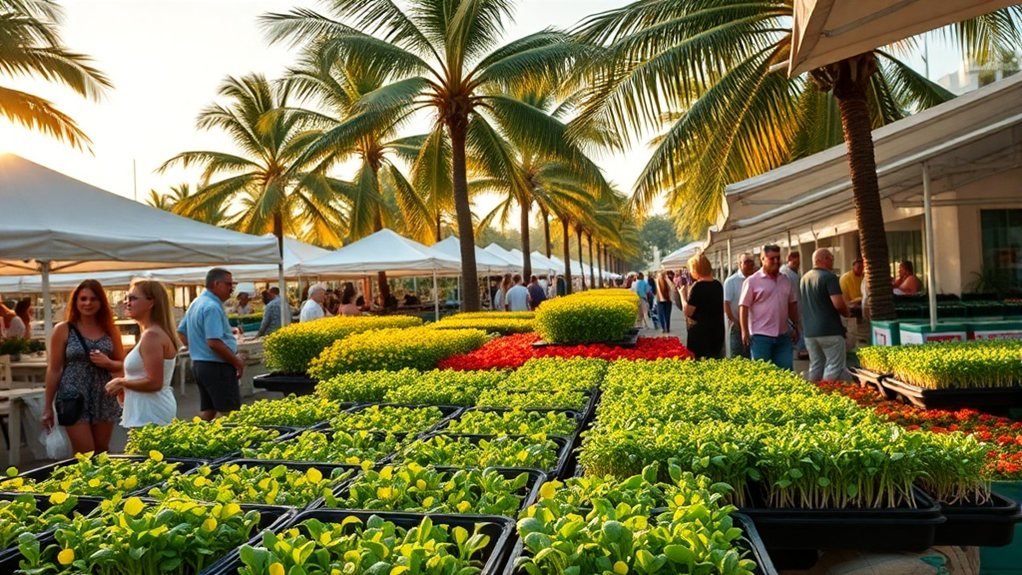
Before you submit a single application, you need to evaluate each market against criteria that directly affect your sell-through rate: foot traffic volume, vendor density, and proximity to demographics that purchase specialty produce. Miami’s year-round markets, particularly those operating in Coral Gables and the Wynwood district, attract health-conscious consumers with consistent weekly attendance, making them viable entry points for vendors with reliable production volume. Tampa and Orlando present a different structural dynamic, where suburban markets in areas like Hyde Park and Winter Park often carry lower competition among specialty growers, giving you a more defensible position on the vendor floor.
What to Look for Before You Apply
Not every farmers market in Florida is going to be the right fit for your microgreens, and applying without doing your homework first can cost you time, money, and a vendor spot you can’t get back. Before you pursue how to get a farmers market booth, evaluate each market on its actual conditions.
| Factor | What to Check | Why It Matters |
|---|---|---|
| Customer traffic | Weekend vs. weekday attendance | Determines sell-through rate |
| Vendor competition | Existing microgreens farmers market presence | Signals saturation risk |
| Fee structure | Application and weekly booth costs | Affects your margin directly |
| Permit requirements | Florida cottage food vs. commercial rules | Determines compliance path |
| Market frequency | Weekly, biweekly, or seasonal schedule | Shapes your production planning |
Matching your capacity to the right market separates sustainable vendors from those who quit after one season.
Markets Near Miami
Miami’s density works in your favor if you’re selling microgreens, because the metro area supports a concentration of farmers markets that few other Florida cities can match. When you search for a miami farmers market, you’ll encounter a range of formats, from weekend neighborhood markets in Coral Gables to larger destination markets near Brickell and Wynwood. Each draws a distinct customer profile, which matters when you’re positioning microgreens for sale florida-wide but refining your pitch locally.
Coral Gables Farmers Market and the Coconut Grove Organic Market both attract buyers already comfortable paying premium prices for specialty produce. Study vendor density before you apply, because a market saturated with greens vendors will compress your margin before you sell your first tray.
Markets Near Tampa and Orlando
Tampa and Orlando represent two distinct market ecosystems, and understanding that distinction before you apply anywhere will save you considerable time.
The tampa farmers market scene skews toward neighborhood-anchored events with loyal, repeat customer bases, where vendors build relationships incrementally across seasons. Orlando operates differently. The orlando farmers market landscape there pulls heavier tourist foot traffic, which means volume can spike unpredictably, but repeat buyers are harder to nurture. Tampa rewards consistency; Orlando rewards adjustability.
Before you submit a single application, map which dynamic aligns with your current production capacity and sales approach. Applying to the wrong market type doesn’t just waste an application fee, it costs you weeks of setup time you won’t recover.
Use the free [MGW Market Finder](https://markets.microgreensworld.com) to locate verified opportunities across both regions.
What to Expect When You Get There
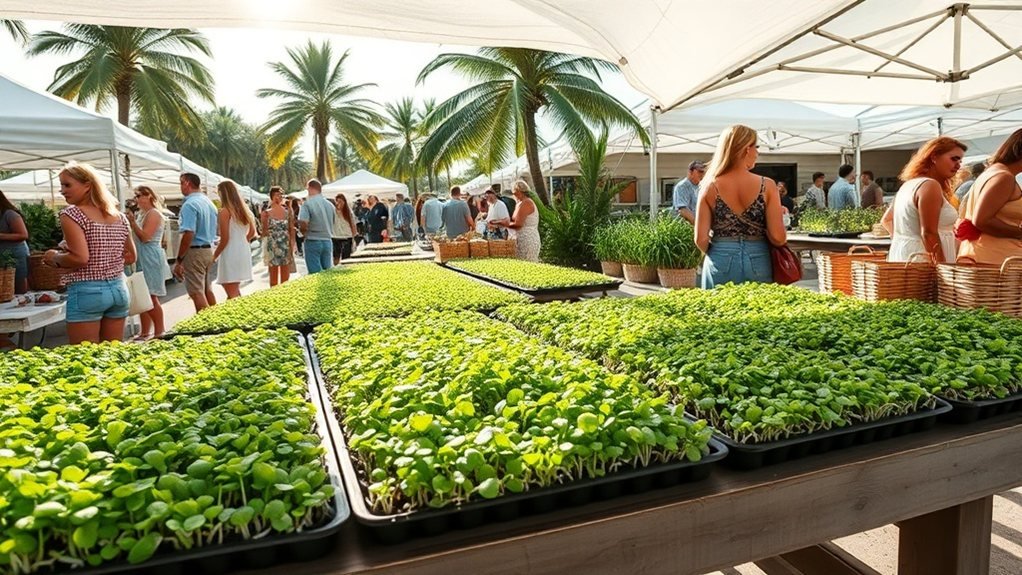
Once you’ve identified a viable market, the practical realities of vending in Florida require your attention before your first setup day. Booth fees across Florida markets typically range from modest daily rates to annual contracts, and understanding that structure upfront determines whether a given market fits your operating margin. What you put on the table matters just as much as showing up, because Florida shoppers at year-round markets have developed specific preferences for fresh, locally grown products like sunflower, pea shoots, and radish microgreens that move consistently in warm-climate growing regions.
Booth Fees and Setup Basics
Before you commit to a market, you need a clear picture of what booth fees actually look like in Florida, because the range is wider than most new vendors expect. As a farmers market vendor Florida, your weekly cost varies significantly by market size, location, and management structure.
| Market Type | Typical Weekly Fee |
|---|---|
| Small community market | $15 – $30 |
| Mid-size suburban market | $35 – $65 |
| Urban/high-traffic market | $70 – $150 |
| Seasonal specialty market | $50 – $90 |
| Festival-style market | $100 – $200 |
Your microgreens booth farmers market setup typically requires a 10×10 canopy, weighted anchors, a folding table, and signage. Florida wind and afternoon rain make proper canopy anchoring non-negotiable, not optional.
What Moves at Florida Markets
Florida markets sort themselves out quickly once you’re behind the table, and what you observe in the first few weeks will shape how you think about your entire product lineup. As a microgreens grower Florida climate conditions influence heavily, you’ll notice that heat-sensitive customers gravitate toward lighter, fresher varieties rather than dense, pungent options during summer months.
Sunflower and pea shoots tend to generate consistent traffic, while radish and spicy mixes attract a narrower but highly loyal customer segment. Selling microgreens locally requires you to read purchasing patterns methodically, tracking which trays return empty versus which ones you haul back home.
Branding your table clearly as locally grown matters here, because Florida shoppers respond measurably to proximity claims supported by visible, well-labeled growing information.
Getting Your Application Ready
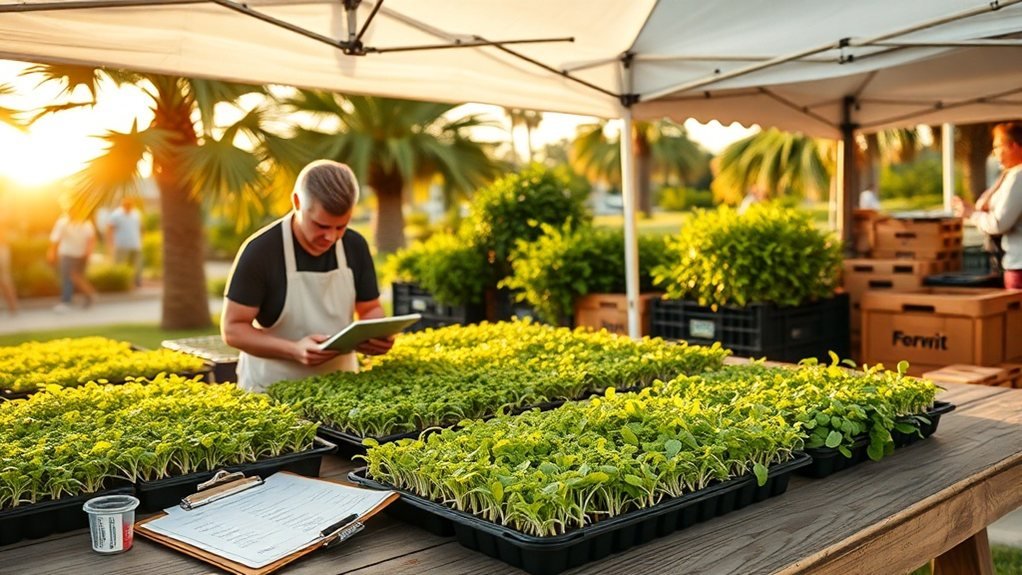
Your application is the market manager’s first substantive assessment of your operation, so presenting it with professional precision directly influences your likelihood of acceptance.
Most managers evaluate vendor submissions against criteria including product category fit, insurance compliance, and demonstrated production capacity, meaning a disorganized or incomplete packet signals operational immaturity before you’ve set up a single display.
You’ll want to review each market’s specific vendor requirements before submitting, since a Tampa weekend market catering to health-conscious consumers may weight certifications and product labeling differently than a smaller Orlando neighborhood market focused on local sourcing.
What Market Managers Want to See
Getting accepted into a Florida farmers market starts well before you fill out the first application form, because market managers are evaluating your operation as much as your product. They want farmers market florida vendors who present a coherent, professional setup, not just someone with trays of sunflower shoots.
Your documentation needs to reflect that you understand how to sell microgreens at a commercial level, meaning a valid cottage food license or food handler certification, depending on county requirements. Managers also scrutinize your booth presentation concept, your pricing structure, and whether you can maintain consistent weekly supply.
Showing up with a clear production schedule and proof of reliable output signals that you’re treating this as a business, which is precisely what they’re screening for.
Common Mistakes to Avoid
Most microgreens vendors who get rejected from Florida markets didn’t fail because of their product. They failed because their farmers market vendor application revealed gaps in preparation that managers couldn’t overlook.
| Mistake | Why It Matters | Fix |
|---|---|---|
| Missing liability insurance | Disqualifies application immediately | Obtain $1M general liability |
| Vague product descriptions | Signals inexperience to managers | List specific varieties and weights |
| No pricing structure submitted | Suggests unpreparedness to sell microgreens at farmers market | Include full price sheet |
Submitting incomplete documentation is the fastest way to get deprioritized, particularly in competitive markets like Miami or Tampa, where vendor slots attract multiple qualified applicants. Review every requirement before submitting.
Find Florida markets accepting vendors at [markets.microgreensworld.com](https://markets.microgreensworld.com).
Use the Market Finder to Shortcut Your Search
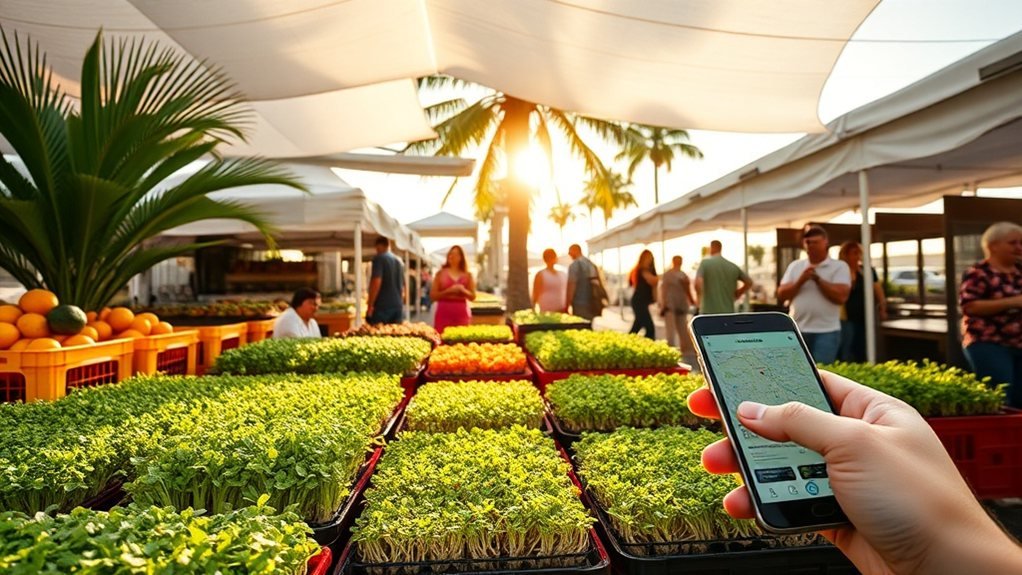
Tracking down viable vendor spots across Florida’s 211 USDA-listed markets takes time that most growers don’t have to spare, which is exactly where the MGW Market Finder cuts through the noise.
Rather than cold-calling market managers or manually cross-referencing outdated directories, you can filter by location and identify active markets aligned with your production schedule.
For a local microgreens florida operation, that precision matters considerably, since entering the wrong market wastes booth fees, travel costs, and harvest cycles.
Building a sustainable microgreens business depends on placing your product where qualified buyers actually shop, not where you simply found an opening.
The tool aggregates USDA data into a searchable format, giving you a clear starting point before you commit resources.
Start your search now at markets.microgreensworld.com.
Frequently Asked Questions
Do Florida Farmers Markets Require a State Food Handler Certification for Microgreens Vendors?
Florida doesn’t require a state food handler certification specifically for microgreens vendors, but individual markets set their own rules, so you’ll need to confirm directly with each market manager before applying.
Can You Share a Booth With Another Vendor at Florida Markets?
Yes, you can share a booth, but both vendors typically need separate market applications and permits. Confirm the policy directly with each market manager before assuming co-vending is allowed.
How Do Florida Markets Handle Vendor Spots During Hurricane Season Disruptions?
Most markets cancel or postpone during active storms, then resume quickly. You’ll keep your spot if you’ve built a reliable attendance record. Always confirm directly with your market manager before each event during hurricane season.
Are There Florida Markets That Specifically Recruit Specialty Produce Vendors?
Yes, some Florida markets actively recruit specialty produce vendors, especially upscale or farm-focused markets in Miami and Tampa. You’ll find those opportunities faster by searching markets.microgreensworld.com before cold-calling market managers directly.
Do Year-Round Florida Markets Charge Higher Annual Fees Than Seasonal Ones?
Year-round markets don’t automatically charge more, but you’ll often pay higher annual totals simply because you’re booking more weeks. Compare the per-day rate, not the annual figure, when you’re evaluating your real cost.
Wrap-up
You’ve got the framework now—how to identify viable markets, what operational realities to anticipate, and how to position your application competitively. Florida’s year-round calendar and 211-market inventory create genuine scalability opportunities that most states can’t match. Start with one well-researched market, establish consistent attendance, and expand methodically from there. The infrastructure’s already in your trays; the revenue channel is simply the next variable to solve.