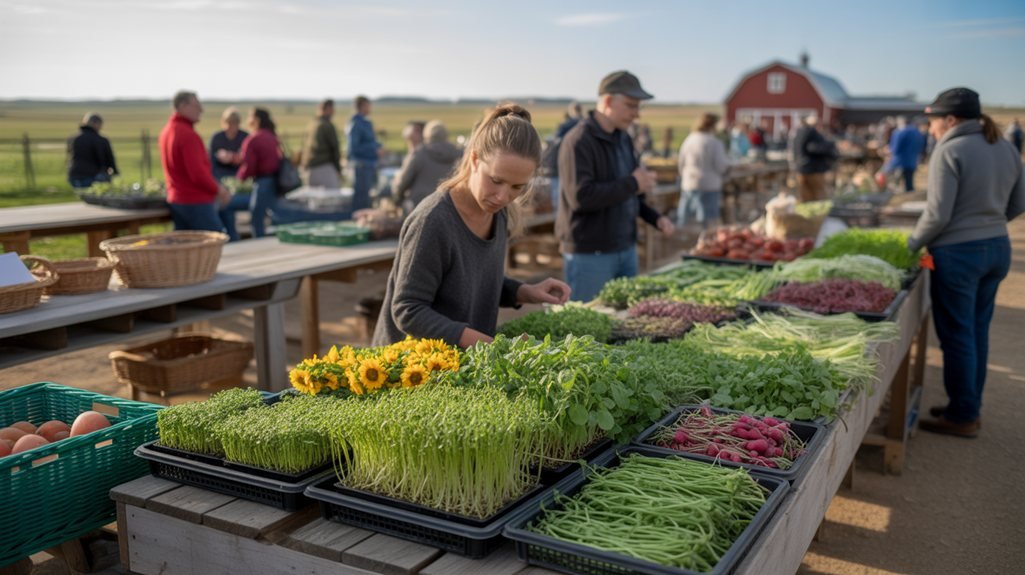
Nebraska’s approximately 87 USDA-listed farmers markets offer microgreens vendors a defined seasonal window, running late April through October, with peak activity concentrated between May and September. You’ll find the strongest buyer volume in Omaha, Lincoln, and Kearney, each market presenting distinct customer profiles and vendor saturation levels. Booth fees typically range $15–$40 daily, and managers prioritize vendors demonstrating consistent seasonal supply over single-day availability. What follows breaks down precisely how to position yourself for success.
Key Takeaways
- Nebraska has approximately 87 USDA-listed farmers markets, with peak vendor activity running from May through September across the state.
- Omaha, Lincoln, and Kearney represent the strongest demand centers, each offering distinct customer profiles and varying levels of vendor competition.
- Market managers prioritize vendors who demonstrate consistent seasonal supply, proper licensing, liability insurance, and complete, detailed applications.
- Best-selling microgreens include sunflower, pea shoots, and radish; mild varieties close sales faster while unusual cuts build repeat customers.
- Booth fees typically range $15–$40 daily or $150–$400 seasonally, requiring vendors to evaluate foot traffic against costs before applying.
Farmers Markets in Nebraska for Microgreens Vendors
Nebraska’s approximately 87 USDA-listed farmers markets represent a measurable distribution network for microgreens vendors, with demand concentrated in Omaha, Lincoln, and Kearney.
You’re working with a market calendar that runs primarily spring through fall, which means your production schedule and your sales window need to align before you commit to a booth.
Understanding both the geographic spread of available markets and the seasonal constraints of that calendar is what separates vendors who sustain consistent sales from those who scramble mid-season.
Why Nebraska Markets Are Worth Your Attention
When you’re looking for a regional market to establish your microgreens operation, Nebraska presents a structurally sound opportunity that’s easy to underestimate.
The USDA database lists approximately 87 farmers markets nebraska vendors can access, with meaningful density across Omaha, Lincoln, and Kearney. That geographic spread matters because it gives you real options when one market reaches capacity or proves a poor fit for your product mix.
As a microgreens vendor nebraska, you’re entering a market calendar that runs primarily spring through fall, which aligns well with production planning cycles. Nebraska’s mid-sized urban centers support consistent foot traffic without the entry barriers common in larger metropolitan markets, where established vendors hold spots for years and application windows close fast.
What the Nebraska Market Season Looks Like
Understanding the Nebraska market landscape gives you a structural foundation, but knowing how the season actually unfolds determines whether your production calendar and your market schedule stay synchronized.
Most farmers market Nebraska vendors operate within a compressed window, typically running from late April through October, with peak activity concentrated between May and September. As a microgreens farmers market grower, you need to align your seeding schedules roughly two weeks ahead of each market date, accounting for variety-specific germination timelines.
Lincoln and Omaha markets tend to open earlier in spring than smaller rural markets, which often launch closer to Memorial Day. Understanding these regional staggered starts lets you phase your production intelligently, avoiding the costly mistake of being either over-stocked or under-prepared when your target market opens.
How to Find the Right Market in Nebraska

Selecting the right market requires you to evaluate several operational factors before you submit a single application, including foot traffic patterns, vendor fee structures, and whether the market already has an established microgreens presence. Nebraska’s approximately 87 USDA-listed markets aren’t uniformly distributed, so your geographic position relative to Omaha, Lincoln, or Kearney will significantly shape which venues offer the most practical access and the strongest buyer volume.
Once you understand what to look for in a market’s profile, you can assess the specific options in each of these regional clusters with considerably more precision and less wasted time.
What to Look for Before You Apply
Not every farmers market in Nebraska will be a good fit for microgreens, and recognizing that distinction before you apply saves you time, money, and the frustration of a slow season at the wrong venue.
As a farmers market vendor Nebraska, you need to assess foot traffic patterns, existing vendor competition, and whether the market’s customer base skews toward value shoppers or specialty produce buyers.
A microgreens booth farmers market presence performs significantly better at markets where customers already purchase artisan bread, pasture-raised eggs, or specialty herbs, because those buyers understand premium pricing.
Check each market’s vendor roster before submitting your application. If three produce vendors already occupy similar space, your margin shrinks before you’ve sold a single tray.
Markets Near Omaha
Omaha concentrates more farmers market activity than any other part of Nebraska, which makes it both an opportunity and a navigational challenge when you’re trying to identify where microgreens will actually move. The Omaha farmers market landscape includes established weekly markets, seasonal pop-ups, and neighborhood-specific venues, each attracting distinct customer profiles and vendor competition levels.
Before you apply anywhere, you need to assess foot traffic patterns, existing produce vendor density, and whether the market coordinator actively recruits specialty growers. When you sell microgreens at farmers market venues in this metro, positioning matters as much as product quality. A market drawing health-conscious urban shoppers will convert your trays into consistent weekly sales far more reliably than a general merchandise market will.
Markets Near Lincoln and Kearney
Moving beyond Omaha’s density, Lincoln and Kearney represent two distinct market environments that require different vendor strategies, each shaped by local demographics, seasonal rhythms, and the competitive landscape of established produce sellers.
The lincoln farmers market draws a university-adjacent customer base, meaning buyers who actively seek specialty crops and are willing to pay accordingly. You’ll face educated competition there, so product presentation and consistency matter considerably.
Kearney operates differently. The kearney farmers market serves a smaller regional population, which reduces foot traffic but also reduces vendor saturation, giving you more visibility per transaction.
Both markets run within Nebraska’s spring-to-fall window, so your production schedule needs to align tightly with their opening dates to secure a spot before applications close.
What to Expect When You Get There

Once you’ve secured a spot, the operational realities of vending at a Nebraska market will shape your approach from the first morning setup.
Booth fees across Nebraska markets typically range from modest daily rates to seasonal contracts, and understanding that structure early helps you calculate whether a given market’s foot traffic justifies the cost.
What consistently moves at Nebraska markets, particularly in Omaha and Lincoln, tends to track with what health-conscious shoppers recognize, meaning sunflower, pea shoots, and radish microgreens often outsell more unfamiliar varieties, especially with newer customers.
Booth Fees and Setup Basics
Most Nebraska farmers markets charge booth fees that fall somewhere between $15 and $40 per day for a standard 10×10 space, though seasonal rates and membership structures vary considerably from one market to the next. Knowing how to get a farmers market booth means understanding what you’re actually paying for before you apply.
| Fee Type | Typical Range |
|---|---|
| Daily Rate | $15 to $40 |
| Seasonal Membership | $150 to $400 |
| Application Fee | $10 to $25 |
| Corner/Premium Space | $10 to $20 added |
For farmers markets nebraska microgreens vendors, your core setup requires a canopy, weighted anchors, a display table, and signage. Many Nebraska markets enforce strict load-in windows, sometimes as short as 30 minutes, so pre-staging your trays the night before isn’t optional.
What Moves at Nebraska Markets
Sell what Nebraska shoppers actually reach for first, and you’ll spend less time explaining what microgreens are. Sunflower, pea shoots, and radish consistently draw hands across the table at Nebraska markets, partly because their visual weight reads as substantial value.
As a microgreens grower Nebraska, you’ll notice that shoppers in smaller markets like Kearney respond differently than Omaha crowds, who tend to arrive with more culinary familiarity and move through variety trays faster.
When you sell microgreens at farmers market settings across the state, positioning sample cups near your signage accelerates decisions considerably. Mild varieties close the first sale; spicier or more unusual cuts build the repeat customer.
Nebraska buyers reward consistency, so arriving weekly with the same core selection builds recognizable vendor identity over time.
Getting Your Application Ready
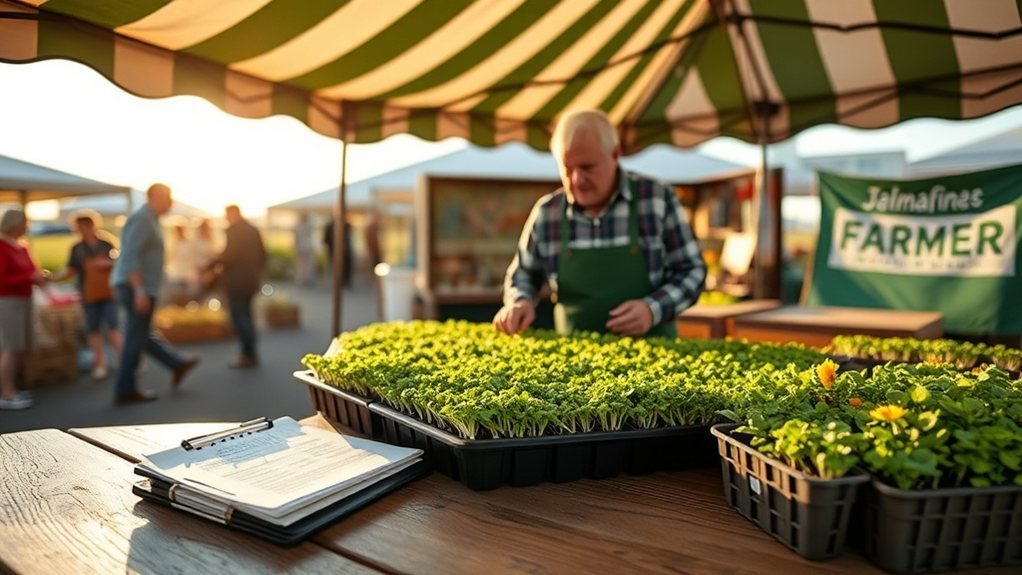
Your application is the first data point a market manager employs to assess whether you’re a viable vendor, so the quality of what you submit signals your operational seriousness before you ever set up a booth.
Most Nebraska market managers are evaluating product category fit, liability insurance documentation, and your ability to maintain consistent supply across a full season, not just a single Saturday.
Growers who submit incomplete applications, omit their cottage food or commercial kitchen compliance details, or fail to specify their microgreens varieties are frequently passed over in favor of vendors who demonstrate they’ve done the administrative groundwork.
What Market Managers Want to See
When a Nebraska market manager opens your application, they’re not just checking whether you grow microgreens — they’re evaluating whether you understand how a functioning market operates. They want confirmation that your microgreens for sale in Nebraska meet licensing requirements, that you carry liability insurance, and that your booth won’t create operational friction.
Demonstrating knowledge of how to sell microgreens at the vendor level, including pricing structure, product rotation, and display consistency, signals that you’re market-ready rather than market-curious. Managers favor applicants who articulate their production capacity relative to anticipated weekly demand.
If you can explain your harvest schedule, your variety selection rationale, and how you handle sellout situations, your application moves from the general pile into serious consideration.
Common Mistakes to Avoid
Most application rejections from Nebraska market managers trace back to the same preventable errors, and recognizing those patterns before you submit saves you weeks of waiting for a response that won’t go your way.
Submitting an incomplete farmers market vendor application is the most consistent disqualifier, particularly when growers omit production location details or liability documentation.
Your microgreens market stand description also needs specificity. Managers reviewing dozens of applications won’t advocate for a booth described vaguely as “fresh greens.” Name your varieties, your growing method, and your harvest-to-market timeline.
Applying to a market that already has a microgreens vendor without acknowledging that directly signals poor market awareness. Nebraska managers notice this. Address it proactively, and your application reads as competent rather than optimistic.
Use the Market Finder to Shortcut Your Search
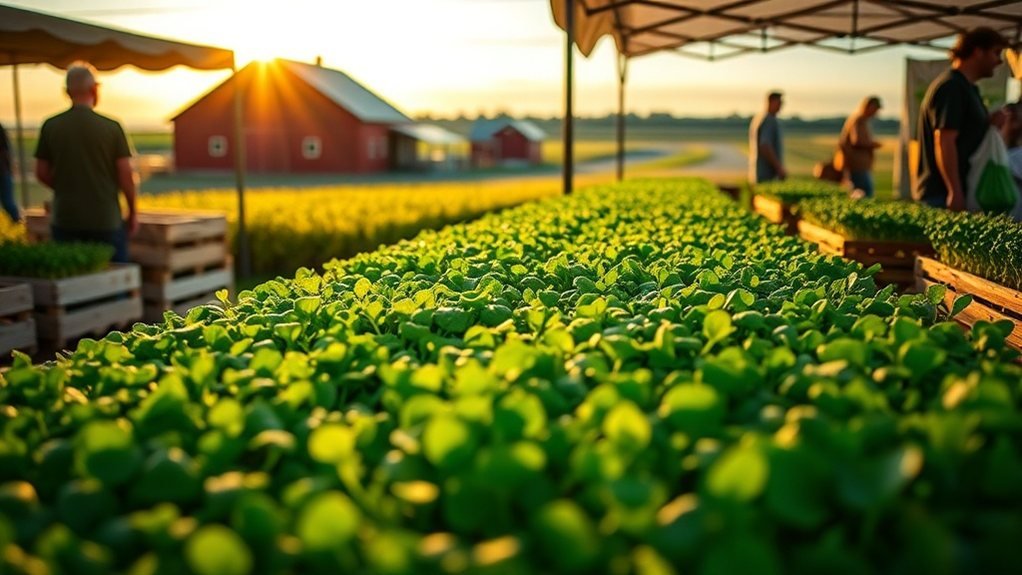
Tracking down viable market opportunities across Nebraska doesn’t have to mean hours of cold-calling market managers or piecing together outdated information from scattered local websites. The MGW Farmers Market Finder at markets.microgreensworld.com pulls directly from USDA data, giving you structured access to roughly 87 Nebraska markets in a single interface.
If you’re building your local microgreens Nebraska presence and need to identify which markets operate in your production radius, this tool filters that process considerably. Your microgreens business depends on accurate, current market intelligence, not guesswork.
Whether you’re targeting Omaha’s competitive urban circuit or smaller regional markets near Kearney, start with verified data before you make contact with any market manager. Employ the free Market Finder at markets.microgreensworld.com to locate your next opportunity.
Frequently Asked Questions
Can I Sell Microgreens at Multiple Nebraska Markets Simultaneously?
You can sell at multiple Nebraska markets simultaneously, but you’ll need enough product, staff, and permits for each location. Most vendors start with one market, then expand once their production and logistics are dialed in.
Do Nebraska Farmers Markets Require Liability Insurance From Microgreens Vendors?
Most Nebraska farmers markets do require liability insurance from vendors. Coverage amounts vary by market, but you’ll typically see $1M per occurrence requested. Confirm specifics directly with each market manager before applying.
How Early Should I Arrive to Set up My Microgreens Booth?
Arrive 90 minutes before the market opens. You’ll need time to unload, set up your display, arrange your trays, and troubleshoot anything unexpected before customers walk in.
Are There Nebraska Markets That Run Indoors During Winter Months?
Yes, a handful of Nebraska markets do run indoors through winter, particularly in Omaha and Lincoln. You’ll want to verify current schedules directly with each market, since winter programming changes year to year.
What Happens if My Microgreens Sell Out Before the Market Ends?
Selling out early is a win, but don’t pack up yet. Display a “sold out” sign, collect contact info, and invite customers to your next market. That list becomes your most valuable sales asset.
Wrap-up
You’ve got the framework now—how to identify markets, what to expect on the ground, and how to position your application competitively. Nebraska’s 87 listed markets represent genuine opportunity, but opportunity that closes quickly as vendor slots fill. Employ the Market Finder to narrow your targets, prioritize markets where microgreens remain underrepresented, and submit your applications before the season accelerates. The vendors who move early capture the best positions.