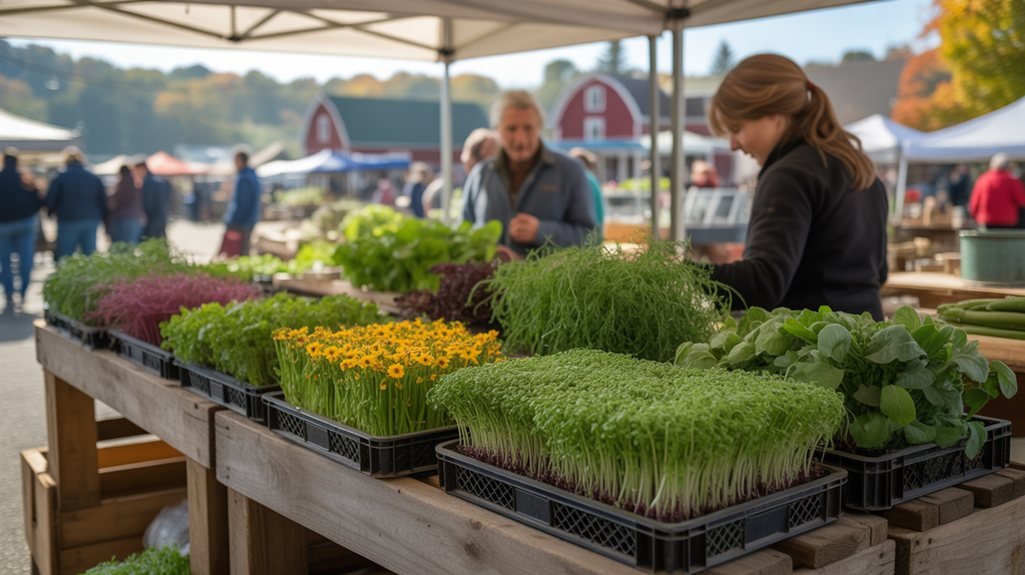
New Hampshire’s approximately 117 USDA-listed farmers markets span urban corridors like Portsmouth and Manchester to smaller rural communities, giving microgreens vendors genuine geographic flexibility. You’ll find that market selection depends on matching your harvest calendar to each venue’s season length, fee structure, and buyer demographics—Portsmouth’s premium-paying shoppers differ sharply from Manchester’s high-volume foot traffic. Narrowing realistic targets before applying saves considerable effort, and the details ahead will sharpen your market strategy considerably.
Key Takeaways
- New Hampshire has approximately 117 USDA-listed farmers markets, offering microgreens vendors multiple geographic options across urban and rural communities.
- The primary market season runs May through October, requiring vendors to scale propagation in March to meet opening dates.
- Portsmouth attracts premium-paying shoppers favoring adventurous varieties; Concord and Manchester suit vendors offering accessible, recognizable microgreens options.
- Most markets require a product list, proof of production origin, and compliance documentation before accepting vendor applications.
- Use the MGW Farmers Market Finder at markets.microgreensworld.com to filter New Hampshire markets and avoid saturated or seasonal-only locations.
Farmers Markets in New Hampshire for Microgreens Vendors
New Hampshire’s approximately 117 USDA-listed farmers markets represent a meaningful distribution network for microgreens vendors, particularly given the state’s concentrated urban demand in Portsmouth, Concord, and Manchester.
You’re working within a market calendar that runs primarily spring through fall, which means your production planning needs to align tightly with that window rather than assume year-round availability.
Understanding both the geographic spread of these markets and their seasonal parameters positions you to make smarter decisions about where and when to apply for vendor spots.
Why New Hampshire Markets Are Worth Your Attention
If you’re growing microgreens and looking for your next market, New Hampshire deserves a serious look. The state supports approximately 117 farmers markets listed in the USDA database, giving microgreens vendors genuine geographic options across urban centers and smaller communities.
New Hampshire farmers markets cluster especially around Portsmouth, Concord, and Manchester, where customer density and disposable income align with premium specialty produce purchasing. When you’re vending a perishable, high-value crop like microgreens, market density matters because it lets you test locations without exhausting your production capacity on a single venue.
The microgreens farmers market landscape here runs primarily spring through fall, which gives you a defined window to build a consistent customer base, hone your variety mix, and establish vendor relationships before the season closes.
What the New Hampshire Market Season Looks Like
Most New Hampshire farmers markets operate on a spring-through-fall calendar, with the bulk of vendor activity concentrated between May and October, though some markets in Portsmouth and Manchester extend into late fall or run limited winter sessions.
As a microgreens vendor in New Hampshire, this seasonality shapes your production planning directly. You’ll want to scale up propagation capacity in March so you’re harvest-ready when May applications open.
Shoulder months like April and November represent lower competition windows, particularly at markets piloting year-round formats. Portsmouth’s multi-season structure gives you a longer selling runway than rural markets, which often run only eight to twelve weeks.
Understanding this calendar isn’t theoretical preparation, it’s operational intelligence that determines when you apply, what you grow, and how you stage your market entry.
How to Find the Right Market in New Hampshire
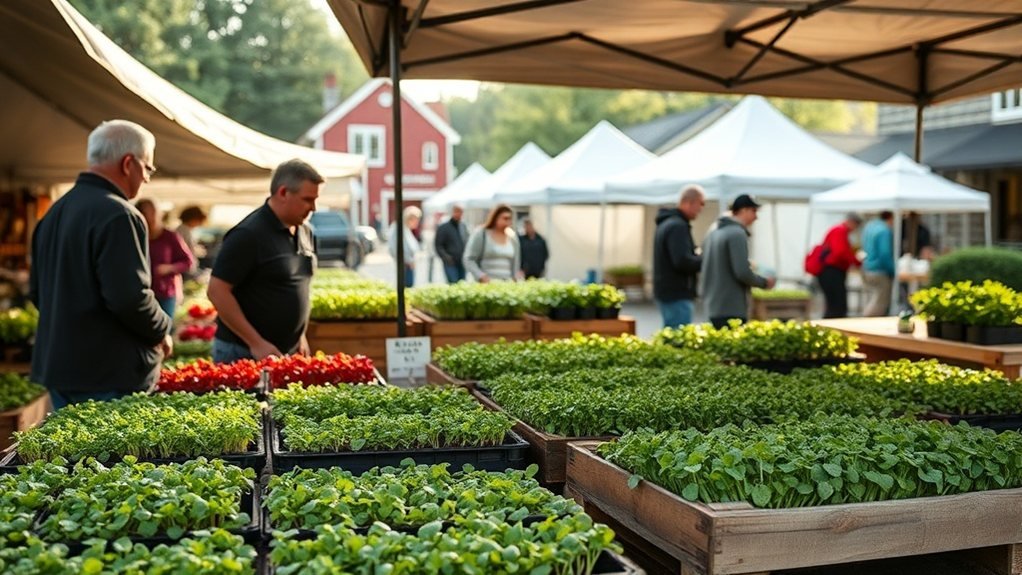
Selecting the right market before you apply saves you time and protects your early revenue from slow starts at poorly matched venues. New Hampshire’s approximately 117 USDA-listed markets vary significantly in foot traffic, vendor density, and customer demographics, so you’ll want to evaluate each option against your current production volume and price tolerance before committing.
Portsmouth’s coastal markets, for instance, attract higher-income shoppers with demonstrated willingness to pay premium prices, while Concord and Manchester offer larger, more consistent foot traffic tied to their roles as the state’s primary population centers.
What to Look for Before You Apply
Before you submit a single application, you need to assess whether a given New Hampshire market is actually a viable fit for microgreens, because not every market operates the same way or draws the same customer base. As a farmers market vendor in New Hampshire, evaluate each market systematically before investing application fees or booth deposits.
| Factor | What to Check | Why It Matters |
|---|---|---|
| Vendor mix | Existing produce sellers | Identifies direct competition |
| Foot traffic | Attendance estimates | Validates sales volume potential |
| Booth requirements | Size and setup rules | Affects your microgreens booth farmers market layout |
| Season length | Start and end dates | Determines revenue window |
| Market fees | Weekly or seasonal costs | Impacts your margin directly |
Scrutinize these variables before committing your time and product inventory to any single market.
Markets Near Portsmouth
Along the Seacoast corridor, Portsmouth functions as one of New Hampshire’s most active commercial hubs, drawing consistent foot traffic from both local residents and seasonal tourists who tend to spend more readily on specialty produce.
If you’re positioning microgreens for sale New Hampshire buyers will actually purchase repeatedly, proximity to Portsmouth gives you meaningful demographic advantages. The Portsmouth farmers market attracts shoppers already conditioned to premium pricing, which matters when you’re moving perishable, value-added product on tight production cycles.
Surrounding towns like Exeter and Hampton also run active markets within a short drive, giving you realistic options if Portsmouth fills its vendor roster before you apply. Scout each location before committing to any application.
Markets Near Concord and Manchester
Concord and Manchester together anchor the central and southern interior of New Hampshire, and the markets operating in and around both cities draw a noticeably different customer base than you’ll find along the Seacoast.
The Concord farmers market attracts state government workers, healthcare professionals, and year-round residents who shop with intention and repeat consistently.
The Manchester farmers market serves a denser, more urban demographic, where foot traffic volume tends to compensate for slightly lower per-unit engagement.
Both environments reward vendors who show up reliably and communicate product value clearly.
If you’re deciding between these two corridors, consider your production volume first, because Manchester’s scale demands consistent supply, while Concord’s environment suits vendors still calibrating their harvest-to-market workflow.
Employ the free Market Finder at markets.microgreensworld.com to identify current vendor opportunities in both cities.
What to Expect When You Get There
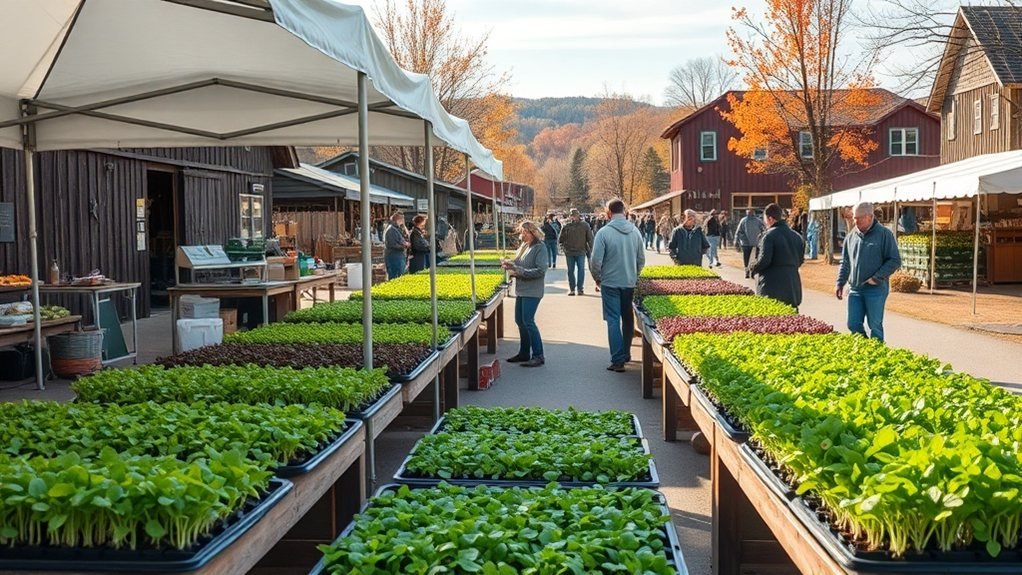
Once you’ve identified a market that fits your production schedule and customer demographic, the operational realities of booth participation will shape your initial profitability calculations. Booth fees at New Hampshire markets vary considerably, ranging from nominal daily rates at smaller community markets to structured seasonal contracts at high-traffic venues in Portsmouth or Manchester, and understanding that cost structure before you commit protects your margins. What you bring to the table matters as much as the fee you pay, because New Hampshire shoppers at established markets tend to respond strongly to specialty crops like sunflower, pea shoots, and radish, particularly when positioned alongside prepared food vendors drawing consistent foot traffic.
Booth Fees and Setup Basics
The booth fee structure at a New Hampshire farmers market varies considerably depending on the market’s size, location, and organizational model, and understanding this variance before you apply will help you budget accurately. Seasonal fees differ from daily rates, and knowing which model a market employs affects how you plan your commitment as a farmers market new hampshire vendors entry point.
| Market Type | Typical Fee Range | Fee Model |
|---|---|---|
| Small rural | $15–$30/day | Daily |
| Mid-size town | $200–$400/season | Seasonal |
| Urban (Portsmouth, Manchester) | $400–$700/season | Seasonal |
| Juried specialty | $50–$100/day | Daily |
| Nonprofit-run | $10–$25/day | Daily |
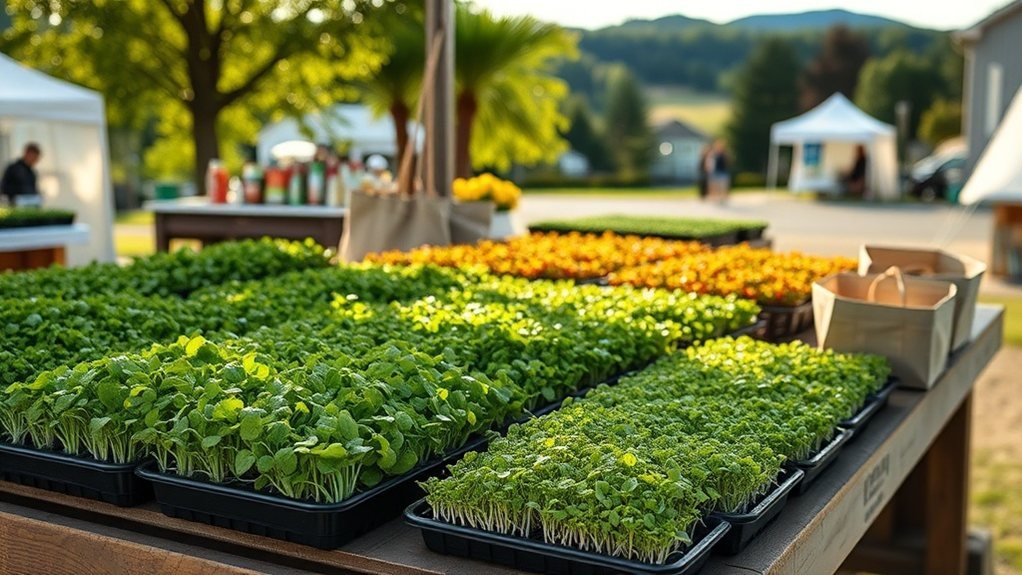
When you sell microgreens at farmers market venues here, your setup typically requires a 10×10 canopy, weights, and a compliant display surface.
What Moves at New Hampshire Markets
Knowing your fees and setup costs gets you through the door, but what actually sells once you’re set up is a separate question worth examining before your first Saturday. New Hampshire shoppers lean toward familiar, culinary-forward varieties, and microgreens growers in New Hampshire consistently report that sunflower, pea shoots, and radish move fastest at high-traffic venues.
Your microgreens market stand benefits from clear signage connecting varieties to specific culinary applications, because shoppers who understand purposes convert faster than those who don’t. Portsmouth markets skew toward adventurous buyers willing to try spicy arugula or mild amaranth, while Concord and Manchester markets tend to favor accessible, recognizable options.
Observing neighboring produce vendors before committing to a variety lineup gives you data that no amount of pre-market research fully replicates.
Getting Your Application Ready
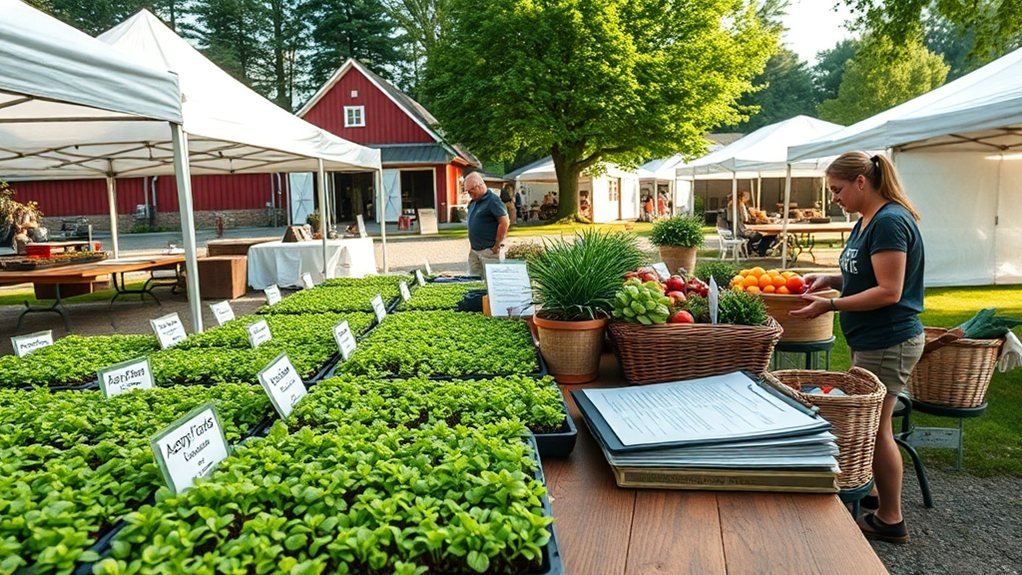
Your application is the first substantive signal you send to a market manager, and the quality of that document shapes their initial assessment of you as a vendor before any conversation occurs.
Most New Hampshire markets request proof of production origin, a product list with basic descriptions, and evidence of compliance with state cottage food or farm vendor regulations, so gathering those materials before you start applying prevents delays across multiple submissions.
The vendors who get rejected most often aren’t growing inferior products, they’re submitting vague applications that leave managers uncertain about what the booth will actually look like, what’s being sold, and whether the operation meets the market’s sourcing standards.
What Market Managers Want to See
When you sit down to fill out a New Hampshire farmers market application, you’re not just providing contact information — you’re making a case for why your booth belongs in that market’s vendor mix. Market managers reviewing applications for farmers markets in New Hampshire prioritize vendors who demonstrate product consistency, food safety compliance, and operational readiness.
Your growing documentation, liability insurance certificate, and any required state licensing should be compiled before you start. Managers want to see that you understand how to get a farmers market booth professionally, not just enthusiastically.
A Portsmouth market coordinator, for instance, will assess whether your microgreens fill a genuine gap in their current vendor lineup, so research each market’s existing vendor roster before submitting.
Common Mistakes to Avoid
Getting your documentation in order is only half the equation — the other half is avoiding the application errors that quietly disqualify growers before a manager ever reads their full submission.
Submitting generic materials that don’t reflect your specific microgreens business is one of the fastest ways to land in the rejection pile. Managers reviewing applications for selling microgreens locally want to see operational specificity, not boilerplate language recycled from a template.
Applying to markets before confirming their vendor category has an opening wastes your effort entirely.
Sending incomplete certificates, missing product lists, or omitting your production address signals disorganization to a manager who already has too many applications to consider.
Review every requirement listed in the application before you submit anything.
Use the Market Finder to Shortcut Your Search
Narrowing down which markets to approach takes real time, especially when New Hampshire’s 117 USDA-listed markets are spread across counties, seasons, and operating formats that don’t always surface through a basic internet search.
New Hampshire has 117 USDA-listed markets. Narrowing down realistic targets takes more time than most growers expect.
The MGW Farmers Market Finder at markets.microgreensworld.com consolidates that USDA data into a searchable format, letting you filter by location before you invest hours cold-calling market managers.
If you’re working out how to sell microgreens consistently, starting with accurate market data matters more than most growers expect.
A farmers market vendor application submitted to the wrong market, one that’s seasonal-only or already saturated with produce vendors, costs you time you won’t recover.
Employ the tool to identify realistic targets first, then pursue those applications with the precision that separates prepared vendors from everyone else.
Frequently Asked Questions
Do New Hampshire Farmers Markets Require Liability Insurance From Microgreens Vendors?
Most New Hampshire farmers markets require it, and you’ll typically need $1M in general liability coverage. Get your certificate before you apply — markets won’t wait for you to sort it out later.
Can You Sell Microgreens at Multiple New Hampshire Markets Simultaneously?
Yes, you can work multiple New Hampshire markets simultaneously, but you’ll need enough product, staff, or trusted help to cover each booth. Most vendors start with two markets before scaling further.
How Early Should You Arrive to Set up Your Microgreens Booth?
Arrive 90 minutes before opening. You’ll need time to unload, arrange your trays, set up signage, and troubleshoot anything unexpected before customers walk in and you’re locked into selling mode.
Do New Hampshire Markets Allow First-Time Vendors to Do Trial Days?
Many New Hampshire markets do allow trial or guest vendor days, but you’ll need to ask each market manager directly since policies vary widely and spots aren’t guaranteed just because you’re new.
What Licenses Do You Need to Sell Microgreens in New Hampshire?
You’ll need a New Hampshire food handler’s license and must register as a homestead food manufacturer if you’re growing at home. Some markets also require proof of liability insurance before approving your vendor application.
Wrap-up
You’ve got the product, the schedule, and now a clear picture of where New Hampshire’s market landscape sits. Don’t apply everywhere at once. Identify two or three markets that match your volume, your customer profile, and your competitive tolerance, then build from there. The research you do before submitting a single application determines whether you’re profitable in year one or still guessing in year two.