
New York’s approximately 647 USDA-listed farmers markets offer microgreens vendors one of the country’s densest vendor opportunity landscapes, with key concentrations in New York City, Buffalo, and Albany. You’ll find year-round options in urban markets, while spring-through-fall seasons dominate elsewhere. Specialty varieties like sunflower shoots and radish move consistently in culinary-conscious urban corridors, whereas suburban markets favor approachable options. Understanding regional saturation, application timing, and manager expectations determines whether you secure a slot or get passed over—and there’s considerably more strategic ground to cover.
Key Takeaways
- New York has approximately 647 USDA-listed farmers markets, with the highest vendor concentrations in New York City, Buffalo, and Albany.
- Microgreens are less saturated in Buffalo and Albany markets, making those regions more accessible entry points for new vendors.
- Some New York City markets operate year-round, while most statewide markets follow a spring-through-fall season opening in May.
- Use the Market Finder at markets.microgreensworld.com to filter markets by location, season, and type using verified USDA data.
- Specialty varieties like sunflower, pea shoots, and radish generate strong turnover, particularly in urban markets with culinary-conscious shoppers.
Farmers Markets in New York for Microgreens Vendors
New York’s approximately 647 USDA-listed farmers markets represent one of the densest vendor opportunity landscapes in the country, with significant market concentrations anchored in New York City, Buffalo, and Albany.
If you’re already producing microgreens and looking to move product consistently, that density matters because it gives you realistic options for testing multiple venues without traveling across the state.
The seasonal calendar runs primarily spring through fall, which means you’ll want to identify your target markets and secure a vendor spot well before the opening weeks of the season.
Why New York Markets Are Worth Your Attention
With roughly 647 farmers markets listed in the USDA database, New York stands as one of the most market-dense states in the country, and that density translates directly into vendor opportunity. As a microgreens vendor in New York, you’re operating in a state where consumer familiarity with specialty produce is already established, particularly in urban corridors like New York City and Buffalo.
Farmers markets in New York attract buyers who recognize value in locally grown, differentiated products, which positions microgreens favorably against commodity produce. That competitive environment rewards vendors who show up consistently and communicate product quality clearly. The sheer volume of available markets also means you can test multiple venues, identify where your product moves fastest, and build a sustainable selling rotation without relocating your operation.
What the New York Market Season Looks Like
That density of available markets only pays off if you know when they’re actually running. Most farmers market New York operations open in May and run through October or November, though some urban markets, particularly in New York City, operate year-round.
You’re working within a spring-through-fall window in most regions, which means your production calendar needs to align precisely with those opening dates. Missing the first few weeks of a market season costs you more than just sales. It costs you positioning. Microgreens farmers market vendors who show up consistently from opening day build customer recognition faster than those who join mid-season. Plan your growing schedule backward from your target market’s start date.
Use the free Market Finder at [markets.microgreensworld.com](https://markets.microgreensworld.com) to confirm exact season dates near you.
How to Find the Right Market in New York

Not every market in New York’s network of roughly 647 USDA-listed venues will suit your product, your schedule, or your current production capacity. You’ll want to evaluate elements such as foot traffic patterns, vendor fee structures, and whether an existing microgreens seller already holds a spot before you submit an application.
Markets near New York City, Buffalo, and Albany each operate within distinct competitive and logistical contexts, so narrowing your search by region gives you a more actionable starting point.
What to Look for Before You Apply
Before you submit a single application, you need to evaluate whether a given market actually fits what you’re selling. Not every venue where microgreens sell at a farmers market is structured to support specialty produce vendors. New York farmers market vendors operate under widely varying rules, foot traffic patterns, and customer demographics, so treating each market as a generic opportunity is a tactical error.
Check whether the market already has an established microgreens presence, since saturation directly affects your viability. Review the vendor fee structure relative to average weekly sales volume at that location. Assess whether the customer base skews toward culinary-conscious buyers or general grocery shoppers, because that distinction shapes your conversion rate considerably. Evaluating these variables before applying saves you from committing time and fees to an incompatible market.
Markets Near New York City
The density of farmers markets in and around New York City creates both opportunity and complexity for microgreens vendors trying to identify viable entry points. New York has roughly 647 USDA-listed markets, and a significant concentration clusters within the five boroughs and surrounding counties.
Before you pursue a microgreens booth farmers market application, you need to distinguish between high-traffic destination markets, like those operating in Brooklyn or Manhattan, and smaller community markets where competition for specialty produce vendors is considerably lighter. A newer vendor often finds faster acceptance at outer-borough or suburban markets, where a new york city farmers market application isn’t filtered through the same volume of competing applicants.
Employ the MGW Market Finder at [markets.microgreensworld.com](https://markets.microgreensworld.com) to map your realistic options.
Markets Near Buffalo and Albany
While New York City dominates the conversation around farmers market density in the state, Buffalo and Albany represent genuinely distinct market ecosystems that operate under different competitive conditions, seasonal rhythms, and vendor acceptance patterns.
The Buffalo farmers market scene, anchored by markets like Elmwood-Bidwell, tends toward tight vendor communities where relationships with market managers carry significant weight during the application process.
Albany farmers market operations, particularly the Troy Waterfront Market, likewise reward vendors who demonstrate consistent product quality and seasonal commitment.
In both cities, microgreens occupy a relatively less saturated niche than in New York City, giving you a realistic opening if your timing and outreach are deliberate.
Employ the free Market Finder tool at markets.microgreensworld.com to identify specific opportunities in both regions.
What to Expect When You Get There

Once you’ve identified a promising New York market and secured your vendor application, the operational realities of booth fees and product selection demand your immediate attention.
Booth fees across New York markets vary considerably, ranging from nominal daily rates at smaller community markets to several hundred dollars per season at high-traffic urban venues like the Union Square Greenmarket, and understanding that cost structure before you commit protects your margin.
What you bring to that booth matters as much as what you pay for it, because New York market customers consistently favor specialty varieties like sunflower, pea shoots, and radish over commodity greens, and aligning your production with that demand is what determines whether your first season builds into a second.
Booth Fees and Setup Basics
Stepping into a farmers market as a vendor for the first time means finding your way through a cost structure that varies considerably from market to market, so understanding the fee landscape before you apply saves you from budget miscalculations down the line.
As a farmers market vendor in New York, you’ll encounter daily fees ranging from $25 to $150, depending on market size and location. Knowing how to get a farmers market booth starts with reviewing each market’s fee schedule during your application process.
Most markets require a standard 10×10 canopy, weights for wind stability, and a compliant display surface. Some markets charge seasonal flat rates, which can benefit vendors with consistent weekly attendance.
What Moves at New York Markets
Getting a read on what actually sells before your first market day puts you ahead of most new vendors, who often show up with an inventory mix that doesn’t align with what New York shoppers are actively seeking.
When you sell microgreens at farmers markets across New York, sunflower, pea shoots, and radish consistently generate strong turnover, particularly in urban settings where culinary sophistication drives purchasing decisions.
Customers shopping microgreens for sale in New York tend to prioritize variety, visual presentation, and freshness verification.
Chefs sourcing directly at markets, especially in New York City, often purchase larger quantities of specialty varieties like amaranth or shiso, whereas suburban markets skew toward approachable, flavor-familiar options.
Understanding these distinctions before you set up protects your inventory investment considerably.
Getting Your Application Ready
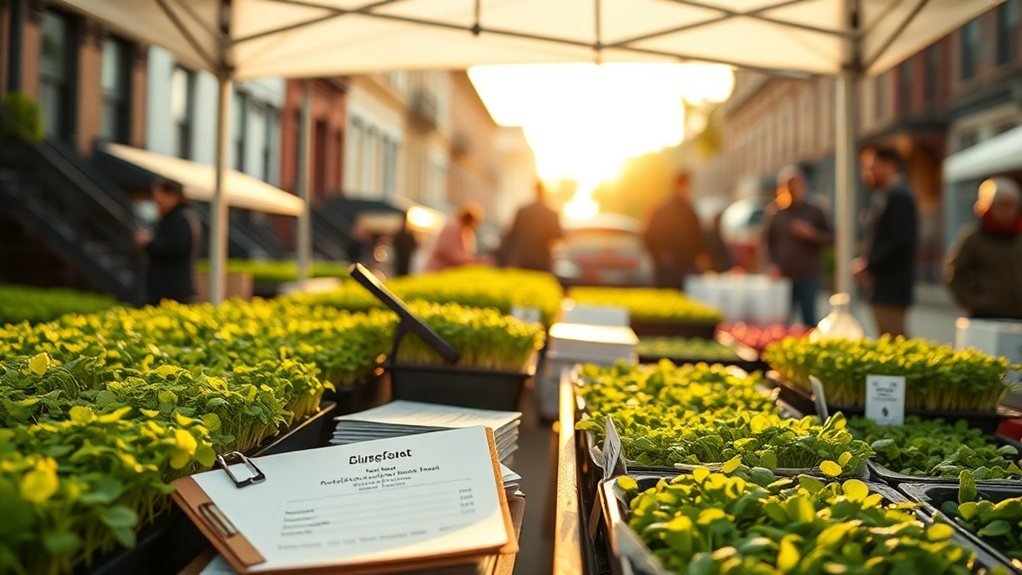
Your application is the first measurable signal a market manager receives about your professionalism, and most vendors underestimate how thoroughly it gets scrutinized before a single conversation takes place.
Market managers typically evaluate applicants against a vendor mix matrix, meaning they’re assessing whether your product category is already saturated, whether your presentation materials reflect operational consistency, and whether your documentation, such as your cottage food license or state-issued grower certification, is current and verifiable.
Getting this wrong at the application stage, by submitting incomplete paperwork or failing to differentiate your microgreens from the two other produce vendors already on the waitlist, effectively disqualifies you before you’ve had any opportunity to demonstrate your product’s quality in person.
What Market Managers Want to See
When a market manager opens your application, they’re looking for signals that you’ll show up consistently, represent the market well, and fill a gap in their vendor mix.
As a microgreens grower in New York, your farmers market vendor application competes against established producers, so specificity matters. List your growing medium, varieties, and production capacity precisely.
Managers assess whether you complement existing vendors, not duplicate them. If the market already has three salad green sellers, position your microgreens as a specialty crop with distinct culinary value.
Include photos of your actual setup, not just product shots. Reference any food handler certifications or applicable New York State cottage food compliance you’ve secured.
Concrete operational details signal professionalism and reduce the manager’s perceived risk in accepting you.
Common Mistakes to Avoid
Most microgreens vendors who get rejected from New York farmers markets aren’t rejected because their product is weak. The application itself is usually where things fall apart. You submit without reading the market’s vendor requirements, or you apply before confirming the market actually accepts specialty produce. Some farmers markets in New York operate under strict category caps, meaning produce slots fill months before the season opens. When learning how to sell microgreens at the vendor level, timing your application to the market’s intake window matters as much as your product quality.
Don’t send a generic pitch to multiple markets simultaneously without customizing each submission. Market managers review dozens of applications, and an unfocused one signals inexperience. Precision in your paperwork reflects the same precision you bring to your trays.
Find your next market at [markets.microgreensworld.com](https://markets.microgreensworld.com).
Use the Market Finder to Shortcut Your Search
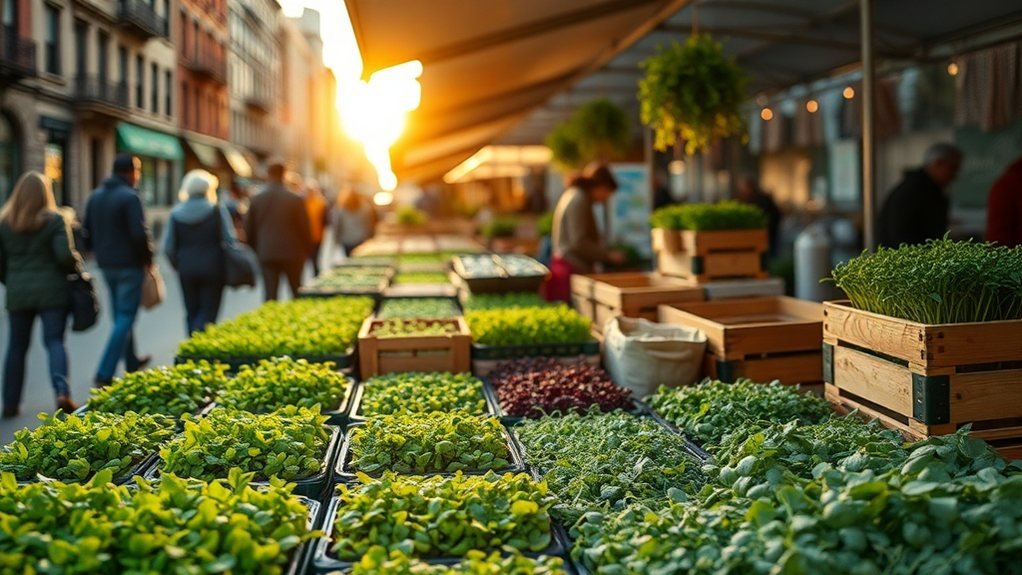
Searching through 647 listings manually is the kind of task that costs you time you don’t have, which is why the MGW Farmers Market Finder at markets.microgreensworld.com exists specifically for growers in your position.
Filter by location, season, and market type to identify where your microgreens market stand fits within New York‘s vendor landscape.
Farmers market New York vendors face a concentrated field, particularly in NYC, Buffalo, and Albany, so precision targeting matters more than broad searching.
Enter your county or zip code, review the results against your production capacity, and cross-reference application deadlines before committing outreach energy.
The tool pulls directly from USDA data, which means you’re working from verified listings rather than outdated directories.
Employ the free Market Finder at markets.microgreensworld.com to start your search today.
Frequently Asked Questions
Can I Sell Microgreens at New York Farmers Markets Without a License?
You’ll likely need a license. New York typically requires a Home Processor or Food Processing Establishment license to sell microgreens commercially. Check with your county’s Department of Agriculture before applying to any market.
How Much Does a Typical New York Farmers Market Vendor Fee Cost?
Fees vary widely, but you’re typically looking at $25 to $75 per day for smaller markets, while larger NYC markets can run $100 or more weekly. Always confirm directly with each market manager.
Do New York Farmers Markets Require Liability Insurance From Microgreens Vendors?
Most New York farmers markets do require liability insurance. You’ll typically need a $1 million general liability policy naming the market as an additional insured before you can set up your booth.
Can I Apply to Multiple New York Farmers Markets at the Same Time?
Yes, you can apply to multiple New York farmers markets simultaneously. Most markets run independent applications, so submitting to several at once improves your odds of landing a spot before the season fills up.
What Labeling Requirements Apply to Microgreens Sold at New York Markets?
New York requires you to label microgreens with the product name, your farm name, and net weight. If you’re selling packaged product, include your address too. Check with your specific market manager, since some add their own requirements.
Wrap-up
You’ve got the framework now, so the next step is acting on it. New York’s market landscape is broad enough to support a focused microgreens operation, but only if you’re selective about where you commit your time and product. Identify two or three markets that align with your output capacity, get your applications submitted before the season opens, and employ the market finder to eliminate guesswork from the process.