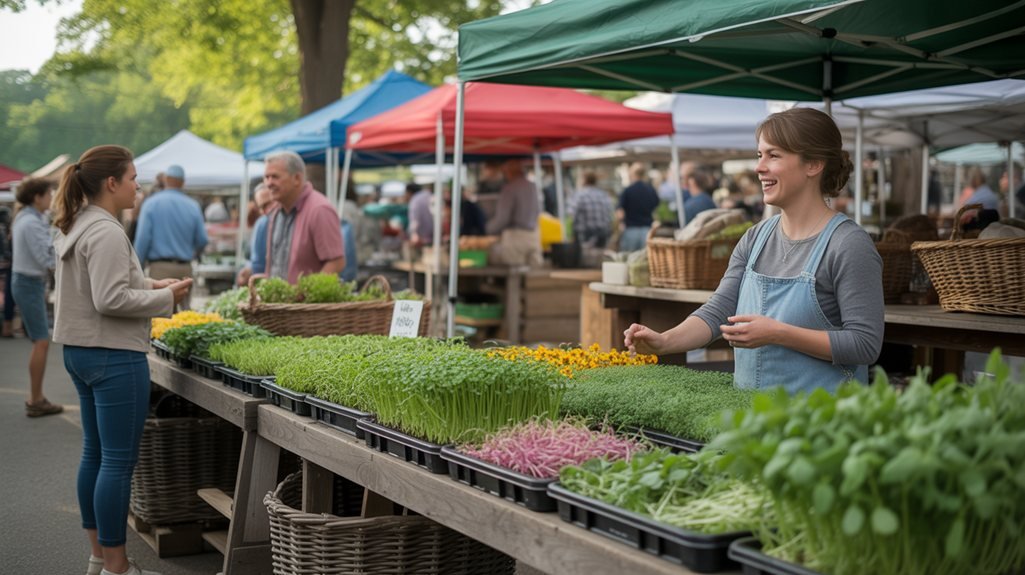
North Carolina’s approximately 223 USDA-listed farmers markets span urban corridors like Raleigh, Charlotte, and Asheville, each operating under distinct seasonal windows, application timelines, and vendor expectations. You’ll find peak activity running April through October, though coastal markets extend slightly longer. Sunflower, pea shoots, radish, and broccoli microgreens perform consistently across most markets, but demand varies by region. Understanding which markets align with your production capacity, location, and product mix determines your commercial viability—and what follows breaks that decision down systematically.
Key Takeaways
- North Carolina has approximately 223 USDA-listed farmers markets, with the highest vendor density concentrated in Raleigh, Charlotte, and Asheville urban corridors.
- The primary sales season runs April through October, though the State Farmers Market on Lake Wheeler Road operates year-round.
- Charlotte markets favor high-volume consistency and early spring applications, while Asheville rewards specialty varieties and relationship-based vendor selection.
- Market managers prioritize complete applications, accurate product descriptions, proof of production capacity, and relevant food safety certifications or cottage food registration.
- The MGW Farmers Market Finder allows vendors to filter all 223 markets by geography, season, and type to identify the best opportunities.
Farmers Markets in North Carolina for Microgreens Vendors
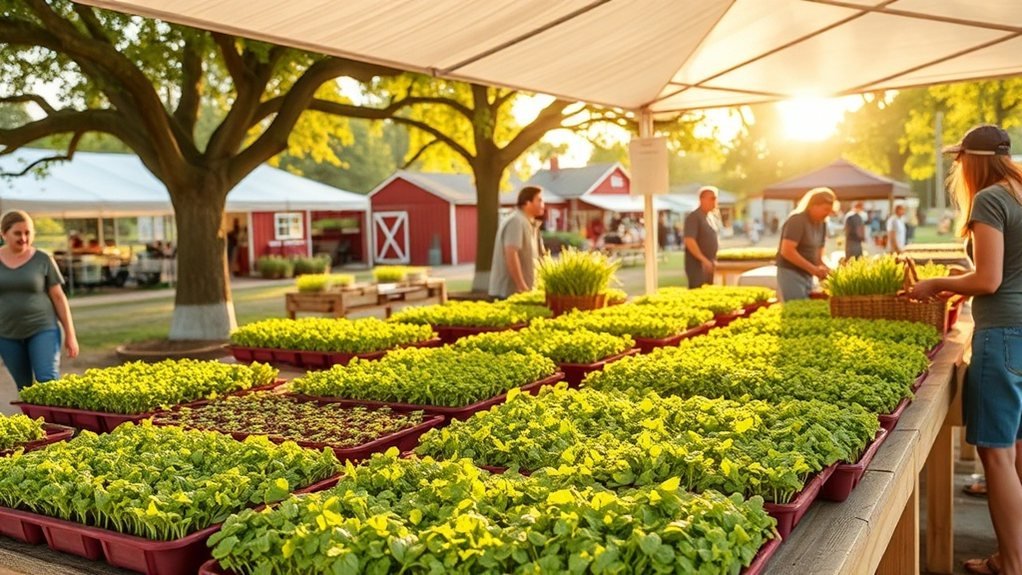
North Carolina’s approximately 223 USDA-listed farmers markets represent a substantial commercial infrastructure for microgreens vendors, with notable market density concentrated in urban corridors like Raleigh, Charlotte, and Asheville.
You’re working with a season that runs primarily spring through fall, which means your production schedule needs to align with market calendars that typically open around April and wind down by October or November.
Understanding both the scale of available venues and the seasonal rhythm of North Carolina markets gives you a concrete framework for deciding when to apply, where to focus your outreach, and how to structure your growing capacity around actual selling windows.
Why North Carolina Markets Are Worth Your Attention
With roughly 223 farmers markets spread across the state, North Carolina gives microgreens vendors a volume of entry points that most states simply can’t match. That density matters when you’re building a vending strategy, because it lets you test multiple formats, from urban destination markets in Raleigh and Charlotte to smaller community markets in mid-sized towns, without committing prematurely to a single location.
As a microgreens vendor in North Carolina, you’re also working within a population that increasingly prioritizes local produce, which creates real transactional demand rather than novelty interest. The spring-through-fall calendar gives you a structured operating window, and the geographic spread across the state means you can identify underserved pockets where competition among specialty crop vendors remains low.
What the North Carolina Market Season Looks Like
Understanding the shape of North Carolina’s market season is what lets you plan production schedules that actually align with vendor demand, rather than growing on a calendar that doesn’t match when markets are operating.
Most farmers markets in North Carolina run spring through fall, with peak activity concentrated between April and October. If you want to sell microgreens at a farmers market in the Piedmont or mountain regions, you’re working within a compressed window where competition for vendor slots intensifies quickly.
Coastal markets sometimes extend slightly longer given milder temperatures. Knowing these regional timing differences means you can target applications before spots fill.
The growers who secure consistent placements in farmers markets north carolina microgreens scenes are the ones who submit applications before the season opens.
How to Find the Right Market in North Carolina

Selecting the right market before you apply saves time, protects your product’s positioning, and significantly improves your odds of building a consistent customer base in a competitive vendor environment. North Carolina’s approximately 223 USDA-listed markets vary considerably in foot traffic, vendor density, and buyer demographics, so markets near Raleigh, Charlotte, and Asheville each present distinct competitive conditions worth evaluating against your current production capacity.
You’ll want to assess application requirements, market frequency, and proximity to your grow operation before committing, since misaligned market selection is one of the more common and avoidable early mistakes microgreens vendors make in this state.
What to Look for Before You Apply
Before you submit a single application, you need to assess whether a given market is actually a viable sales environment for microgreens. Foot traffic patterns, customer demographics, and existing vendor composition all determine whether your microgreens farmers market presence will generate consistent movement. A market in Asheville’s Lexington Avenue corridor draws health-conscious buyers who already understand microgreens; a rural weekly market may require significantly more consumer education before sales stabilize.
When researching how to get a farmers market booth, prioritize markets where prepared food vendors and specialty produce sellers already perform well, since that buyer behavior transfers directly to microgreens. Review vendor directories, visit markets before applying, and note whether premium pricing exists anywhere on the floor. That pricing culture matters considerably.
Markets Near Raleigh
Once you’ve identified what a viable market looks like on the ground, the next step is locating specific opportunities within your target geography, and the Raleigh metro gives microgreens vendors a concentrated cluster of markets worth serious consideration.
The State Farmers Market on Lake Wheeler Road operates year-round, making it structurally different from seasonal community markets that close after October.
Weekly neighborhood markets in Cary, Wake Forest, and Durham expand your options considerably, distributing customer demand across multiple zip codes.
If you’re already producing microgreens for sale in North Carolina, this density means you can test one farmers market in Raleigh while keeping a backup application moving at another location simultaneously, which reduces your exposure to waitlists and last-minute cancellations.
Markets Near Charlotte and Asheville
Charlotte and Asheville operate as distinct market ecosystems, and understanding what makes each one structurally different will determine how you position your microgreens application. Charlotte’s farmers market charlotte infrastructure skews toward volume-driven, suburban weekend markets, where north carolina farmers market vendors compete across established produce categories. Asheville’s markets reward differentiation and regional food identity.
| Market Variable | Charlotte | Asheville |
|---|---|---|
| Buyer Expectation | Consistency, familiar crops | Specialty, unique varieties |
| Application Timing | Early spring cycle | Rolling, relationship-based |
| Vendor Competition | High density | Moderate, curated |
| Microgreens Positioning | Supplement staple vendors | Lead with craft narrative |
Study each market’s existing vendor roster before applying. Your application strengthens considerably when you identify gaps rather than simply expressing general interest.
What to Expect When You Get There
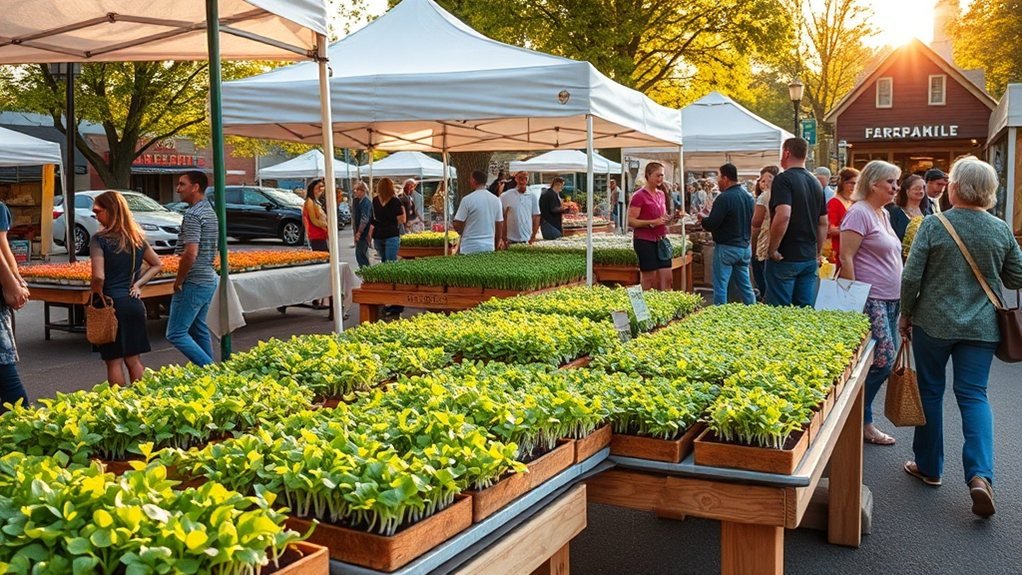
Once you’ve identified a promising North Carolina market, the operational realities of booth fees and product movement will shape your vendor experience more than any other factor.
Booth fees across the state’s approximately 223 USDA-listed markets vary considerably, with urban markets in Raleigh and Charlotte typically commanding higher weekly rates than smaller regional venues in rural counties.
Understanding which microgreens varieties consistently move at North Carolina markets, particularly during the spring-through-fall season when competition among vendors peaks, lets you calibrate your grow schedule and booth presentation before your first setup day.
Booth Fees and Setup Basics
Booth fees across North Carolina’s farmers markets vary considerably depending on the market’s size, location, and organizational structure, so understanding the cost landscape before you apply saves you from financial surprises later.
As a farmers market vendor in North Carolina, you’ll typically encounter daily fees ranging from $20 to $75, with larger urban markets in Raleigh or Charlotte often charging seasonal memberships instead.
Your microgreens booth farmers market setup requires a six-foot table, a canopy rated for wind, and weights securing each leg, because most market managers enforce these standards strictly.
Some markets also require liability insurance certificates before your first setup day.
Knowing these requirements ahead of time lets you budget accurately and arrive prepared, rather than scrambling on opening morning.
What Moves at North Carolina Markets
Selling microgreens at North Carolina farmers markets means understanding which varieties actually turn over consistently, because not every tray you grow will move at the same pace across different market environments.
Sunflower and pea shoots perform reliably across urban and rural markets alike, appealing to shoppers who recognize them visually.
Radish and broccoli move steadily among health-conscious buyers concentrated in Raleigh and Asheville.
Building a sustainable microgreens business requires matching your production schedule to demonstrated local demand, not assumptions. Farmers market North Carolina vendors who track weekly sales by variety quickly identify which SKUs justify bench space and which pull resources without return.
That data shapes your grow calendar more effectively than any general recommendation could.
Getting Your Application Ready
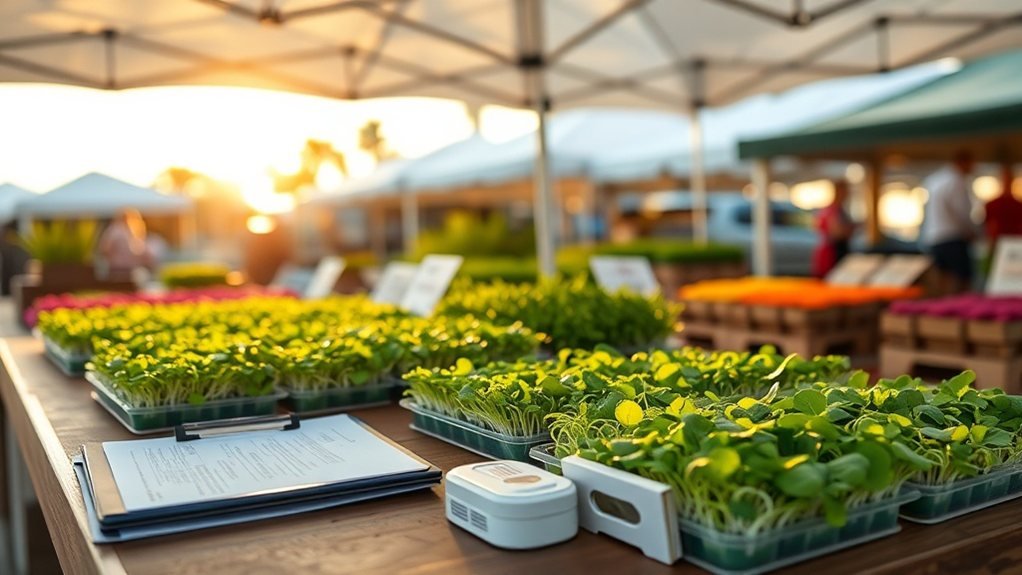
Your application is the first data point a market manager employs to evaluate whether you’re a viable vendor candidate, so treating it as a professional document rather than a casual inquiry significantly improves your odds of acceptance.
Most North Carolina market managers are specifically looking for proof of production capacity, a clear product description, and compliance documentation like your cottage food registration or Department of Agriculture certifications, particularly at larger urban markets in Raleigh and Charlotte where competition for limited vendor slots is measurably higher.
Growers who submit incomplete applications, omit required food safety credentials, or fail to specify their growing method, whether soil-based, hydroponic, or coco coir, consistently see their submissions deprioritized or rejected outright before any personal evaluation occurs.
What Market Managers Want to See
When a market manager opens your farmers market vendor application, they’re making a quick judgment call about whether you’ll be a reliable, professional presence at their market week after week. They’re scanning for clarity, consistency, and evidence that you understand what you’re selling.
For local microgreens north carolina vendors, that means presenting a clean product list with accurate variety names, not vague descriptors. Include your growing medium, whether soil or hydroponic, because managers increasingly ask.
A photo of your actual booth setup, even a simple one, signals operational readiness. References from other markets carry weight, particularly if you’ve vended previously.
Managers at established Raleigh or Asheville markets review dozens of applications, so yours needs to demonstrate that you’ve thought through the logistics before submitting.
Common Mistakes to Avoid
Most application rejections aren’t about your microgreens at all. As a microgreens grower North Carolina markets evaluate, your product quality rarely becomes the deciding factor at the application stage. What disqualifies you is incomplete paperwork, missing your state cottage food registration, or submitting photos that don’t represent your actual setup.
Market managers, particularly at competitive urban venues where selling microgreens locally means traversing waitlists, notice when vendors haven’t read their specific vendor guidelines. Applying to every market simultaneously without tailoring each submission signals inexperience. Your application communicates operational readiness before you ever set up a table. Treat it with the same precision you bring to your grow trays, and your approval odds improve substantially.
Find your next opportunity at [markets.microgreensworld.com](https://markets.microgreensworld.com).
Use the Market Finder to Shortcut Your Search
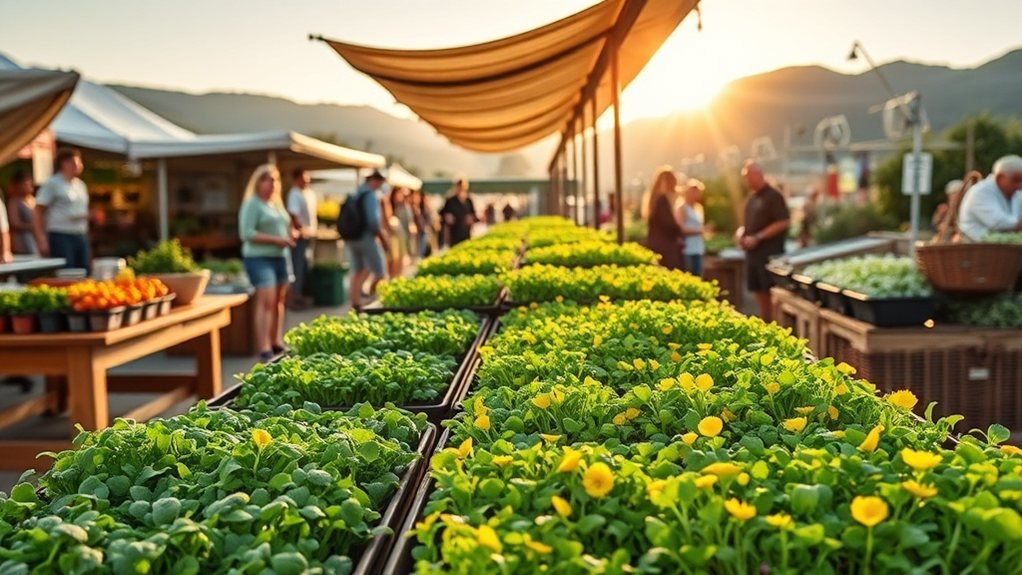
Searching for a vendor spot across North Carolina‘s 223 USDA-listed markets by hand is a slow, inefficient process, particularly when you’re trying to narrow results by location, season, or market type. The MGW Farmers Market Finder at markets.microgreensworld.com consolidates that data into a searchable format, letting you filter by geography and operational calendar rather than parsing spreadsheets manually.
If you’re figuring out how to sell microgreens near a metro hub, you can isolate Raleigh farmers market options specifically, comparing application windows and vendor categories without contacting each market individually. That specificity matters when you’re managing production schedules and need confirmed dates before scaling output.
Employ the tool now at markets.microgreensworld.com to identify your most viable North Carolina market opportunities before the spring season fills available vendor slots.
Frequently Asked Questions
Do North Carolina Farmers Markets Require Microgreens Vendors to Carry Liability Insurance?
Most North Carolina farmers markets require you to carry general liability insurance before you can vend. Coverage amounts vary by market, so confirm requirements directly with each market manager before applying.
Can You Share a Booth With Another Vendor at NC Markets?
Some NC markets allow booth sharing, but you’ll need written approval from the market manager first. Each vendor typically still needs their own application, insurance, and may owe separate fees.
How Early Should You Arrive to Set up Your Microgreens Booth?
Arrive at least 90 minutes before opening. You’ll need time to unload, build your display, and troubleshoot anything that went sideways. Rushing your setup shows, and first impressions matter with market managers watching new vendors.
Are There NC Markets That Operate Exclusively Indoors Year-Round?
A handful of NC markets do run indoors year-round, typically in permanent municipal or community spaces. Check each market’s individual listing to confirm their facility type and winter schedule before committing to applications.
What Happens if Your Microgreens Sell Out Before the Market Ends?
If you sell out early, don’t pack up and leave. Stay at your table, talk to customers, collect contacts, and utilize the time to learn what neighboring vendors are doing right.
Wrap-up
You’ve got the information you need to move forward with confidence. North Carolina‘s market landscape is dense enough to give you real choices, yet structured enough that a methodical approach will separate productive placements from wasted effort. Pick your region, assess the market criteria outlined here, and get your application materials ready before you reach out. The right table is available; you just need to claim it.