
Oklahoma’s roughly 102 USDA-listed farmers markets offer microgreens vendors a structured but competitive entry point, with the densest opportunities concentrated in Oklahoma City, Tulsa, and Norman. You’ll find suburban markets in Edmond, Yukon, and Moore carry thinner microgreens competition, making them strategically viable for newer vendors. The primary selling window runs April through November, with applications due before April for most markets, though Tulsa and Norman begin evaluating vendors earlier. What follows covers everything you need to enter this market confidently.
Key Takeaways
- Oklahoma has roughly 102 USDA-listed farmers markets, with microgreens opportunities concentrated in Oklahoma City, Tulsa, and Norman.
- The primary selling season runs April through November, with applications due before April for most markets.
- Tulsa and Norman markets begin manager planning earlier, making them ideal early-winter application targets.
- Sunflower, pea shoots, and radish microgreens move reliably with Oklahoma shoppers, while spicy varieties suit Southern cooking preferences.
- Suburban markets in Edmond, Yukon, and Moore offer smaller but less competitive entry points for new microgreens vendors.
Farmers Markets in Oklahoma for Microgreens Vendors
Oklahoma’s approximately 102 USDA-listed farmers markets represent a meaningful distribution channel for microgreens vendors, with market density concentrated in Oklahoma City, Tulsa, and Norman, where foot traffic and buyer demographics tend to support specialty produce.
The state’s market calendar runs primarily from spring through fall, which means you’re working within a defined selling window that rewards early preparation, consistent supply, and deliberate booth placement strategy.
Understanding both the scale of this market landscape and its seasonal constraints lets you allocate your production schedule and outreach efforts where they’ll actually convert into vendor opportunities.
Why Oklahoma Markets Are Worth Your Attention
If you’re growing microgreens and looking for your next market opportunity, Oklahoma’s network of roughly 102 USDA-listed farmers markets offers more vendor access points than most growers realize.
The Oklahoma City farmers market scene alone represents multiple distinct venues, each drawing different customer demographics and operating on separate seasonal schedules. That geographic distribution matters, because it means you can identify markets that align with your current production volume rather than overcommitting to a single high-traffic venue before you’re ready.
A microgreens farmers market presence in Oklahoma also benefits from a relatively accessible vendor application process compared to saturated coastal markets. Spring through fall represents your primary operating window, giving you time to establish relationships, polish your display, and build a consistent customer base across multiple locations.
What the Oklahoma Market Season Looks Like
Most Oklahoma farmers markets operate on a spring-through-fall calendar, typically opening between April and May, then closing out somewhere in October or November depending on the specific venue and its host organization’s resources. As a microgreens vendor oklahoma growers compete in, understanding these timing windows determines when you submit applications.
| Season Phase | Typical Months |
|---|---|
| Market Opening | April to May |
| Peak Season | June to August |
| Shoulder Season | September to October |
| Closing Period | October to November |
| Off-Season | December to March |
Farmers markets oklahoma schedules vary by city, so larger venues like Oklahoma City often extend their calendars while smaller rural markets close earlier. Apply before April.
How to Find the Right Market in Oklahoma
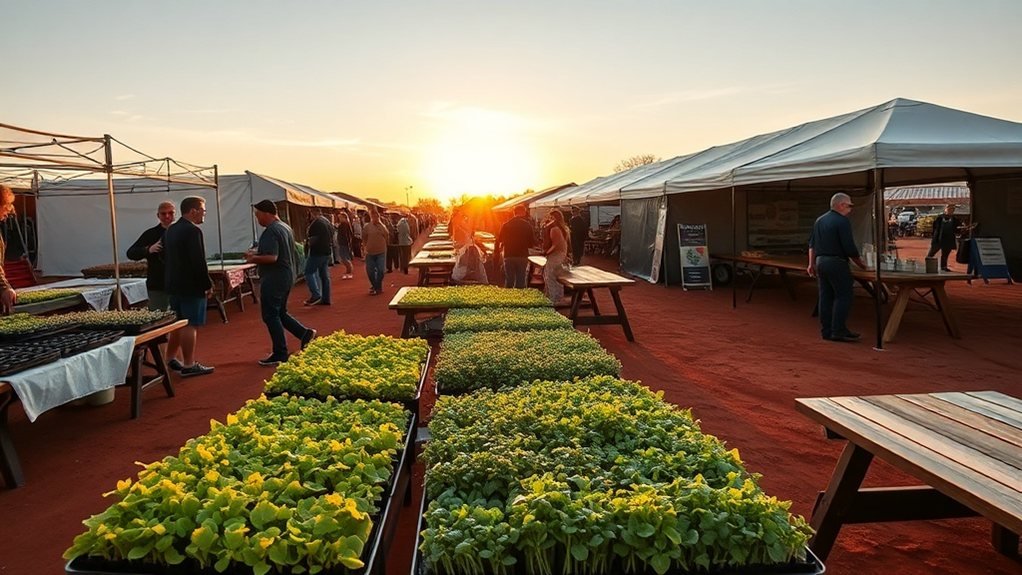
Selecting the right market requires a methodical evaluation of vendor composition, foot traffic patterns, and application requirements before you commit time and product to a single location.
Oklahoma’s approximately 102 USDA-listed markets are distributed unevenly, with the densest clusters concentrated in Oklahoma City, Tulsa, and Norman, meaning your proximity to these corridors significantly shapes which opportunities are realistic.
You’ll want to cross-reference each market’s existing vendor roster against your own product lineup, since a market already saturated with microgreens sellers presents a structurally different challenge than one where you’d be introducing the category entirely.
What to Look for Before You Apply
Before you submit a single application, you need to evaluate whether a given market actually fits what you’re selling. Not every farmers market in Oklahoma draws the customer profile that converts for microgreens, and applying without this analysis wastes your time and application fees.
Examine foot traffic patterns, vendor composition, and whether the market already has a saturated microgreens presence. A well-established Oklahoma City market with consistent Saturday attendance differs substantially from a smaller Norman market still building its vendor base.
When you’re figuring out how to get a farmers market booth, the application is secondary to your pre-selection process. Researching farmers markets Oklahoma microgreens vendors have already tested gives you a comparative baseline before you commit to a single market cycle.
Markets Near Oklahoma City
Once you’ve narrowed your evaluation criteria, the next practical step is mapping where Oklahoma City’s market concentration actually gives you the most viable entry points. The metro area anchors a significant portion of Oklahoma’s approximately 102 USDA-listed farmers markets, giving oklahoma farmers market vendors more geographic options than most regions in the state.
Oklahoma City proper hosts several established weekly markets, while surrounding communities like Edmond, Yukon, and Moore operate smaller-scale venues where competition among microgreens producers is typically thinner. For farmers market oklahoma vendors entering their first season, that reduced competitive density in suburban markets often translates into faster vendor acceptance. Knowing which markets cluster within a reasonable driving radius lets you prioritize applications strategically rather than submitting blindly.
Markets Near Tulsa and Norman
Tulsa and Norman anchor Oklahoma’s two other major market clusters, and understanding how each city’s vendor landscape differs gives you a meaningful advantage when you’re deciding where to allocate your application energy. The tulsa farmers market scene supports higher foot traffic, while the norman farmers market environment skews toward university-adjacent demographics with strong specialty produce demand.
| Factor | Tulsa | Norman |
|---|---|---|
| Primary Customer Base | Urban professionals | University community |
| Market Density | High | Moderate |
| Microgreens Competition | Established vendors present | Emerging category |
| Season Length | Spring through fall | Spring through fall |
| Application Timing | Early winter | Early winter |
Research both markets thoroughly at [markets.microgreensworld.com](https://markets.microgreensworld.com) before committing your application to either cluster.
What to Expect When You Get There

Once you’ve secured a spot, the operational realities of vending at an Oklahoma farmers market become immediately apparent, and understanding booth fees and product movement patterns will determine how efficiently you recoup your early costs.
Most markets in the state charge vendors between $15 and $40 per day, though established urban markets in Oklahoma City and Tulsa can run higher, particularly for premium placement near high-traffic entry points.
Knowing which microgreen varieties consistently move in this region, sunflower, pea shoots, and radish tend to perform well in the Oklahoma heat when positioned correctly, lets you decide wisely about what to grow before your first setup day.
Booth Fees and Setup Basics
Before you commit to any Oklahoma market, it’s worth understanding that booth fees vary considerably depending on the market’s size, location, and operational model. A microgreens booth at a farmers market in a smaller rural town might cost $15 to $25 weekly, while established urban markets in Oklahoma City or Tulsa often run $30 to $75 per day.
| Market Type | Typical Weekly Fee |
|---|---|
| Rural community market | $15 to $25 |
| Mid-size suburban market | $25 to $40 |
| Urban established market | $40 to $75 |
| Seasonal specialty market | $30 to $60 |
| Private-operated market | $50 to $100 |
As a farmers market vendor in Oklahoma, you’ll typically need a 10×10 canopy, weighted anchors, and a table. Bring your own setup because most markets provide nothing beyond the space itself.
What Moves at Oklahoma Markets
Knowing which microgreens consistently sell at Oklahoma markets before you load your vehicle can mean the difference between a productive Saturday and hauling product back home.
When selling microgreens locally, sunflower, radish, and pea shoots tend to move reliably because Oklahoma shoppers respond to recognizable flavors and substantial texture.
Spicy varieties like amaranth and mustard attract buyers already familiar with Southern cooking traditions, where bold greens carry cultural weight.
If you’re offering microgreens for sale oklahoma customers haven’t seen before, bring a sample tray. Unfamiliar crops require a tasting moment before they become a transaction.
Branding your trays with variety names and suggested applications removes hesitation at the table, accelerating decisions without requiring you to explain every crop to every customer individually.
Getting Your Application Ready
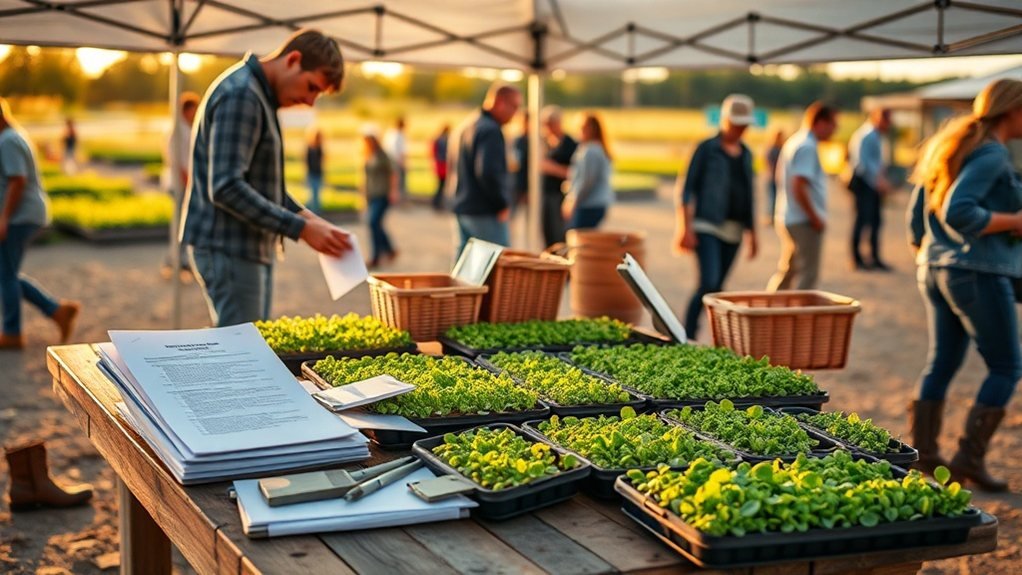
Your application is the market manager‘s first substantive point of contact with you as a vendor, and it signals whether you understand the operational standards their market maintains.
Most managers evaluate applications for completeness, product clarity, and compliance with local cottage food or commercial kitchen requirements, so a vague product description or missing health documentation will disqualify you before you’re considered.
Reviewing several Oklahoma market applications before you submit your own reveals a consistent pattern: managers want specificity, not generalities, and growers who clearly articulate their product range, growing methods, and regulatory standing move to the top of the selection queue.
What Market Managers Want to See
Market managers in Oklahoma are evaluating more than your product when they review an application, and understanding what they’re actually screening for gives you a measurable advantage before you submit a single form. They want operational reliability, not just novelty. As a microgreens grower Oklahoma vendors compete for limited vendor slots, so your farmers market vendor application must signal consistency.
| What They Screen For | Why It Matters |
|---|---|
| Proof of production setup | Confirms you can supply weekly |
| Liability insurance documentation | Required at most Oklahoma markets |
Managers prioritize vendors who demonstrate commitment beyond a single season. Show your grow space, your harvest schedule, and your labeling system. Those specifics tell them you’ve already solved problems they’d otherwise inherit from an unprepared vendor.
Common Mistakes to Avoid
Getting your application in front of a market manager is only half the work, and what you put in that application determines whether you move forward or get quietly passed over.
Growers who want to sell microgreens at farmers market venues in Oklahoma frequently undermine strong products with weak documentation. Submitting without photos, leaving pricing fields vague, or failing to specify your production volume signals unpreparedness to managers who receive dozens of applications.
Local microgreens Oklahoma vendors who succeed typically treat the application as a formal business proposal, not a formality. Match every field to what that specific market prioritizes, whether it’s sourcing transparency, variety diversity, or seasonal consistency.
One incomplete answer can disqualify you before any conversation begins.
Use the Market Finder to Shortcut Your Search

Searching for vendor opportunities across Oklahoma’s roughly 102 registered farmers markets can eat up hours you’d rather spend growing, but the MGW Market Finder at markets.microgreensworld.com consolidates USDA data into a single, navigable interface that cuts that process down considerably.
Instead of contacting markets individually, you filter by location and identify which venues align with your production capacity and your microgreens market stand setup. That efficiency matters when you’re learning how to sell microgreens at scale, because your time between harvests is finite.
Oklahoma City, Tulsa, and Norman each carry a dense cluster of listings, so vendors targeting urban density can pinpoint those corridors quickly. Employ the free Market Finder at markets.microgreensworld.com to start building your vendor shortlist today.
Frequently Asked Questions
Can I Sell Microgreens at Oklahoma Farmers Markets Without a License?
You’ll likely need a food handler’s permit or cottage food registration before selling microgreens at Oklahoma farmers markets. Requirements vary by county, so contact your local health department before applying to any market.
How Early Should I Arrive to Set up My Microgreens Booth?
Arrive at least 90 minutes before opening. You’ll need time to unload, arrange your trays, set up signage, and still have a few minutes to breathe before customers walk in.
Do Oklahoma Markets Require Vendors to Grow Their Own Products?
Most Oklahoma markets do require you to grow what you sell. You’ll confirm this in each market’s vendor application, so read those rules carefully before you apply.
What Insurance Do Microgreens Vendors Typically Need at Oklahoma Markets?
Most Oklahoma markets require you to carry general liability insurance, typically $1 million per occurrence. Some markets want to be listed as additional insureds on your policy before they’ll approve your vendor application.
Can I Sell at Multiple Oklahoma Farmers Markets on the Same Weekend?
Yes, you can. Many Oklahoma vendors run Saturday and Sunday markets back-to-back, or hit an early Saturday market then drive to an afternoon one. You’ll need enough product and packaging to cover both stops.
Wrap-up
You’ve got the information you need to move forward. Oklahoma’s farmers market landscape offers genuine opportunity for microgreens vendors who plan deliberately, apply early, and match their production capacity to the right market environment. Don’t wait until spring to start making calls. Employ the resources outlined here, identify your target markets now, and submit your applications before the competition fills those spots. The growers who prepare in advance are the ones who sell consistently.