
Oregon has approximately 261 USDA-listed farmers markets, concentrated in Portland, Eugene, and Bend, each operating distinct seasonal calendars and vendor policies. You’ll need to match your production capacity to a market’s opening window before applying, since timing misalignment generates costly gaps. Portland supports year-round sales through covered venues, while Eugene and Bend compress activity into spring through fall. Continue exploring this guide to understand selection criteria, application requirements, and the tools that accelerate your search.
Key Takeaways
- Oregon has approximately 261 USDA-listed farmers markets, with the highest density in Portland, Eugene, and Bend.
- Use the MGW Market Finder at markets.microgreensworld.com to locate and filter verified Oregon market listings efficiently.
- Sunflower microgreens, pea shoots, and radish are the fastest-moving, highest-demand varieties at Oregon markets.
- Booth fees range from $15–$30 weekly at small rural markets to $60–$120 at large urban venues.
- An ODA food handler license is required before applying; missing it causes immediate application disqualification.
Farmers Markets in Oregon for Microgreens Vendors

Oregon’s approximately 261 USDA-listed farmers markets represent a substantial commercial landscape for microgreens vendors seeking consistent, high-volume retail exposure.
Portland, Eugene, and Bend anchor the state’s market density, giving you concentrated geographic targets where foot traffic and buyer sophistication tend to support specialty produce.
What further distinguishes Oregon is its year-round market calendar in several regions, meaning you’re not locked into a narrow seasonal window to build and sustain a vendor presence.
Why Oregon Markets Are Worth Your Attention
If you’re growing microgreens at scale and looking for consistent retail exposure, Oregon deserves serious consideration. The state maintains approximately 261 farmers markets listed in the USDA database, giving you a substantial pool of venues to evaluate as a microgreens vendor in Oregon. Portland, Eugene, and Bend anchor the highest-density market corridors, where foot traffic and buyer sophistication tend to reward specialty producers.
Several Oregon markets operate year-round, which matters considerably when you’re managing crop cycles and need predictable weekly sales channels rather than seasonal gaps. Farmers markets in Oregon also reflect a regional food culture that responds well to locally grown specialty produce, positioning microgreens competitively alongside conventional offerings. That market density, combined with calendar depth, makes Oregon a structurally sound environment for building a vendor operation.
What the Oregon Market Season Looks Like
That density of market options only pays off when you understand how the calendar actually distributes across the year. Oregon’s market season doesn’t follow a single statewide rhythm, and that distinction matters considerably for farmer market Oregon vendors planning their production schedules.
Portland supports year-round microgreens farmers market opportunities, where consistent indoor or covered venues keep weekly sales viable through winter. Eugene and Bend operate on compressed seasonal windows, with peak activity running spring through fall, requiring tighter production timing.
If you’re targeting multiple regions simultaneously, you’re managing overlapping calendars with different start dates, application windows, and peak demand periods. Understanding this layered structure before you apply prevents the costly mistake of scaling production for a market that won’t open for another four months.
How to Find the Right Market in Oregon

Before you submit a single application, you need to evaluate each market’s vendor composition, foot traffic patterns, and management responsiveness, because a poorly matched market will cost you time and product with little return.
Portland’s density of year-round markets, particularly those operating in the metro’s eastside neighborhoods, gives you multiple viable entry points where specialty produce vendors like microgreens growers have historically found consistent buyer demand.
Eugene and Bend operate on different rhythms, with Eugene’s market culture skewing toward established agricultural vendors and Bend’s tourist-heavy demographic creating openings for premium, visually distinctive products that microgreens reliably deliver.
What to Look for Before You Apply
Once you’ve got product moving consistently, the next step is finding a market that actually fits what you’re growing, and that process starts well before you submit any application. As a farmers market vendor Oregon requires you to assess foot traffic patterns, vendor density, and existing microgreens representation before committing your time.
A microgreens booth farmers market placement that already hosts two established greens vendors signals oversaturation, reducing your negotiating influence and potential turn rates significantly. Review each market’s vendor policies, seasonal calendars, and application windows, since many Oregon markets close their vendor rolls months before opening day.
Portland’s Saturday Market, for example, maintains a waitlist system that demands early, strategic positioning. Knowing these structural realities before applying separates growers who secure spots from those who repeatedly miss them.
Markets Near Portland
Portland’s metro area gives you more market density than almost anywhere else in Oregon, which means more options but also more competition you’ll need to steer through strategically. As a microgreens grower oregon-based vendors compete within, you’re looking at established portland farmers market locations running weekly across multiple neighborhoods, each with distinct customer demographics and vendor saturation levels.
Inner southeast Portland markets trend toward younger, ingredient-conscious buyers, while suburban markets in Beaverton or Lake Oswego often have more booth availability and less direct competition from specialty greens vendors. Study each market’s current vendor mix before applying. If another grower already holds a microgreens spot, your application faces a steeper path unless you’re offering something demonstrably different in variety or presentation.
Markets Near Eugene and Bend
Moving south to Eugene or east to Bend opens up a fundamentally different market landscape than what Portland offers. The eugene farmers market operates within a university-influenced consumer base, meaning buyers skew younger and prioritize local provenance heavily. The bend farmers market reflects a resort-town demographic, where premium pricing encounters less resistance.
| Market Area | Consumer Profile | Competitive Density |
|---|---|---|
| Eugene | University-adjacent, value-conscious | Moderate |
| Bend | Affluent, tourism-driven | Lower |
| Portland | Urban, high-volume | High |
Understanding these distinctions shapes your vendor strategy before you ever submit an application. Eugene rewards differentiation through variety; Bend rewards clear premium positioning. Both markets reward preparation, consistency, and knowing exactly who you’re selling to when you arrive.
Use the free Market Finder at [markets.microgreensworld.com](https://markets.microgreensworld.com) to locate verified listings across Oregon.
What to Expect When You Get There
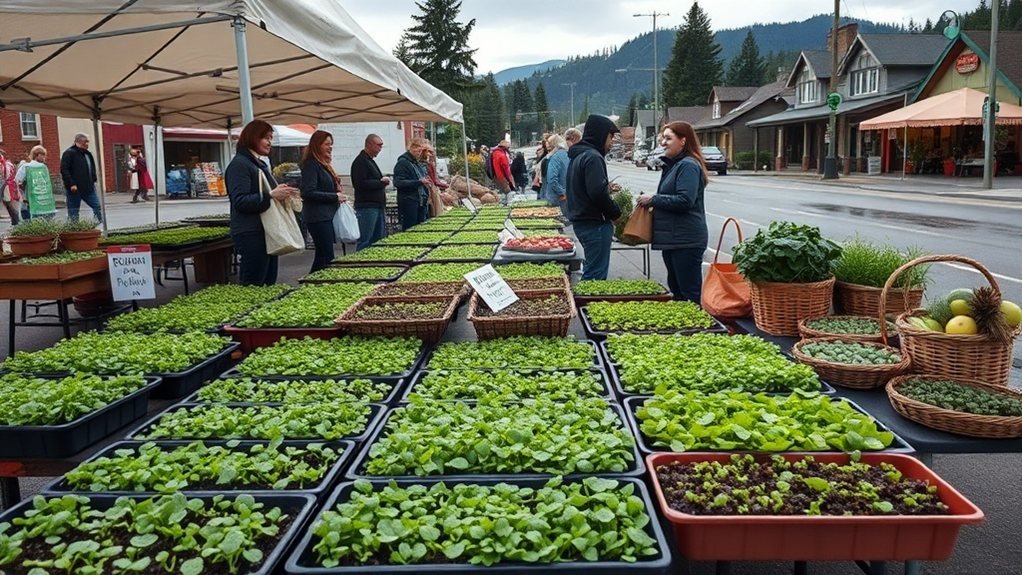
Once you secure a vendor spot, you’ll encounter booth fees that typically range from flat daily rates to seasonal contracts, with Oregon’s larger urban markets like Portland Saturday Market operating under more structured, competitive fee arrangements than smaller rural venues.
Setup expectations vary considerably: most markets require a canopy, signage, and a display table, while high-traffic sites in Eugene or Bend may impose stricter aesthetic standards to maintain visual cohesion across the vendor floor.
What moves consistently at Oregon markets tends toward specialty varieties like sunflower, pea shoots, and radish, particularly among health-conscious shoppers in metro areas, though you’ll want to observe your specific market’s buyer behavior before committing to a fixed production volume.
Booth Fees and Setup Basics
Before you commit to any market in Oregon, you need to understand what booth fees actually look like on the ground, because the range is wider than most new vendors expect. Knowing how to get a farmers market booth starts with budgeting accurately for what each market actually costs you weekly.
| Market Type | Typical Weekly Fee |
|---|---|
| Small rural market | $15 – $30 |
| Mid-size suburban market | $30 – $60 |
| Large urban market | $60 – $120 |
| Seasonal specialty market | $25 – $50 |
| Year-round covered market | $75 – $150 |
For farmers markets Oregon microgreens vendors compete in, a standard 10×10 space is the norm. Bring your own tent, weights, and table, because most markets supply nothing beyond the ground beneath your feet.
What Moves at Oregon Markets
Selling out at an Oregon market doesn’t happen by accident, and understanding what customers there actually reach for gives you a measurable advantage before you’ve unpacked your first tray.
Farmers market Oregon vendors who track weekly sales consistently report that sunflower, pea shoots, and radish move fastest, particularly when positioned near prepared food stalls.
If you sell microgreens at farmers market venues in Portland or Eugene, you’ll notice health-conscious buyers scrutinizing variety labels carefully, which means clear signage on flavor profiles directly accelerates purchasing decisions.
Bend’s markets skew toward outdoor enthusiasts who favor nutrient-dense, portable additions to meals. Pricing relative to perceived freshness matters considerably here, since Oregon shoppers regularly compare your product against grocery store alternatives they encountered that same week.
Getting Your Application Ready
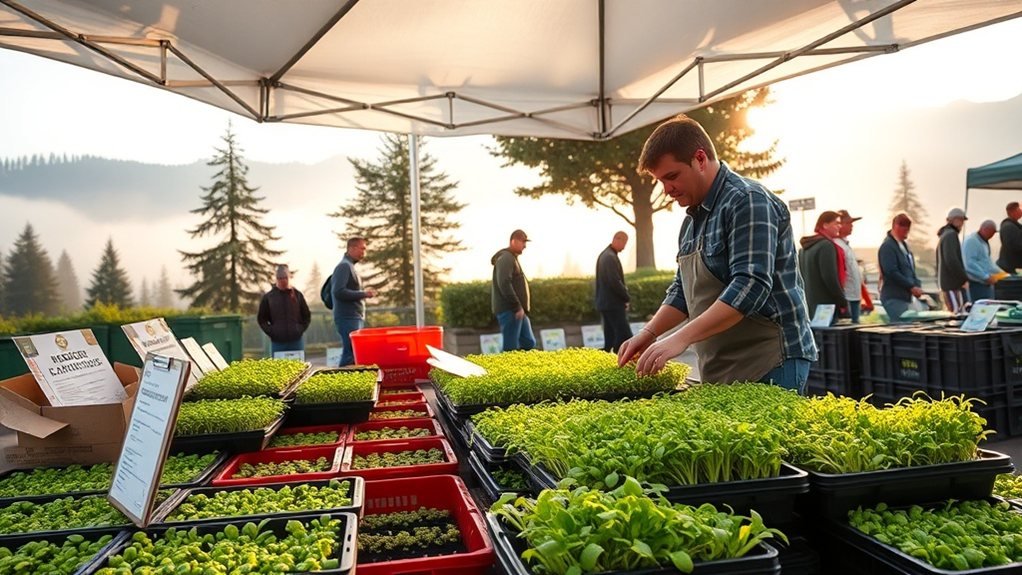
Your application is the market manager‘s first substantive impression of your operation, and most vendors underestimate how much a poorly assembled submission can disqualify them before a single conversation occurs.
Market managers in Oregon typically evaluate vendor applications against a defined set of criteria, including product diversity relative to current vendor mix, proof of food handler certification, and demonstrated production capacity.
If you’re applying to a Portland Saturday Market or a mid-size Eugene operation, understanding what each manager is actively looking for, versus what they’re trying to avoid adding to an already saturated vendor lineup, determines whether your microgreens earn a spot or sit on a waitlist indefinitely.
What Market Managers Want to See
Market managers across Oregon’s 261 USDA-listed markets are evaluating dozens of vendor applications at any given time, and they’re looking for signals that you can operate professionally within their ecosystem. When you’re selling microgreens locally, your application competes against established vendors with documented track records.
| Application Element | What It Signals | Common Mistake |
|---|---|---|
| ODA food handler license | Regulatory compliance | Submitting before obtaining it |
| Product photos | Visual merchandising ability | Low-resolution or cluttered shots |
| Variety list | Harvest planning capability | Generic descriptions like “greens” |
Managers evaluating microgreens for sale oregon vendors prioritize producers who demonstrate operational consistency. Your application should reflect someone who understands the market’s customer base, respects setup protocols, and communicates proactively before problems arise.
Common Mistakes to Avoid
Getting your application rejected once rarely ends your chances at a market permanently, but it does set you back weeks or months while the manager moves on to other candidates.
The most consequential error growers make when submitting a farmers market vendor application is applying before their production operation can reliably supply consistent volume. Managers notice when you can’t answer basic yield questions.
A second critical mistake involves misrepresenting your product category, which creates immediate credibility problems when understanding how to sell microgreens across multiple Oregon markets simultaneously.
Submit only what you can document, photograph clearly, and deliver repeatedly.
If your setup isn’t ready, waiting one additional season and applying with a complete, accurate packet will outperform a premature submission every time.
Use the Market Finder to Shortcut Your Search

Searching for the right market manually, one county website at a time, is the kind of inefficiency that costs growers weeks they don’t have.
The MGW Market Finder at markets.microgreensworld.com pulls from USDA data to surface Oregon’s approximately 261 markets in a single searchable interface, letting you filter by location without combing through fragmented county directories.
For anyone building a microgreens business, that compression of research time is operationally significant. You’re not browsing, you’re qualifying venues against your production capacity and delivery range.
Growers pursuing local microgreens Oregon markets benefit most when they approach the tool with defined criteria already in hand, such as target geography and preferred market size, so each search session produces actionable results rather than raw, unprocessed leads.
Frequently Asked Questions
Can I Sell Microgreens at Oregon Markets Without a Business License?
You can often start without a formal business license, but Oregon’s Cottage Food Law and your county’s environmental health rules will still apply, so check both before you set up your first table.
How Many Varieties Should I Bring to My First Oregon Market?
Bring three to five varieties. You want enough to look like a real operation, but not so many that you run out of product or confuse buyers who are still learning what microgreens are.
Do Oregon Farmers Markets Require Proof of Where You Grow?
Most Oregon markets will ask for your business address or production location when you apply. Some require a site visit or photos of your grow space before they’ll approve your vendor application.
What Happens if My Microgreens Don’t Sell at the Market?
If your microgreens don’t sell, you take them home, you reflect on your pricing and placement, and you show up next week with adjustments. Slow days teach you more than good ones ever will.
Can I Apply to Multiple Oregon Markets at the Same Time?
Yes, you can apply to multiple Oregon markets simultaneously. Most applications are independent, so submit to several at once to improve your odds of landing a spot before the season fills up.
Wrap-up
You’ve got the information, the market landscape, and a tool that cuts the guesswork out of your search. What’s left is making the decision and acting on it. Start with one or two markets that align with your production volume, review the vendor requirements carefully, and submit a complete application. Oregon’s buying communities are active, the infrastructure exists, and microgreens occupy a defensible niche. Leverage that advantage.