Tag: Pennsylvania farmers markets

  • Selling Microgreens at Pennsylvania Farmers Markets: Permits, Fees, and a Conflict Worth Knowing About

    Selling Microgreens at Pennsylvania Farmers Markets: Permits, Fees, and a Conflict Worth Knowing About

    Under 3 Pa.C.S. section 5722, Pennsylvania treats microgreens as a raw agricultural commodity. That means you likely don’t need a retail food facility license to sell them. Washing, cutting, and packing into clamshells won’t cost you that exemption. But farmers market pages often ignore this and say every vendor needs a license—that’s the conflict. Seven counties, including Philadelphia and Allegheny, run their own rules too. Keep going to see what could still trip you up.

    Key Takeaways

    • Under 3 Pa.C.S. §5722, microgreens qualify as raw agricultural commodities, so no retail food license is likely needed.
    • Pennsylvania’s Farmers Markets webpage conflicts with statute, claiming all vendors need a Retail Food License.
    • Statute controls over web guidance; confirm exemption in writing with the Bureau of Food Safety at 717-787-4315.
    • If licensing applies, temporary permits cost $14 but only cover facilities operating 14 days or less annually.
    • Beyond state law, markets often require $1 million liability insurance naming the market as additional insured.

    Do you need a retail food facility license to sell microgreens in Pennsylvania?

    Most likely, no.

    Pennsylvania law treats your microgreens as a raw agricultural commodity, and that comes with a mandatory licensing exemption.

    But the state’s own website contradicts its own guidance, so you need to know which source actually controls before you assume you’re covered.

    What the state statute says about raw agricultural commodities

    Before you sell a single tray, check 3 Pa.C.S. section 5722. This section holds the Pennsylvania raw agricultural commodity definition.

    It covers food in its raw or natural state.

    That includes produce washed, colored, or otherwise treated in unpeeled natural form before marketing. Your microgreens fit this category if you sell them uncut and unprocessed.

    No cooking, no mixing, no packaging with other ingredients.

    Growers who understand this rule join a group who avoid unnecessary licensing costs. Growers who skip it often pay fees they don’t legally owe.

    Section 5722 is short, but it carries real weight at inspection time.

    Next, look at how this definition connects to your license exemption under section 5703.

    Why the state website and the state guidance do not agree

    Checking the Pennsylvania Department of Agriculture’s Farmers Markets page, you’ll hit a wall of confusion. It says every food vendor needs a Retail Food License. No mention of raw agricultural commodities. No mention of any exemption.

    That page doesn’t match the law. The statute at 3 Pa.C.S. section 5703 says the exemption is mandatory. So does 7 Pa. Code section 46.1141(b). The Department’s own Farmers Market Guidelines, revised February 2026, confirm it too.

    Other growers in your area have hit this same wall. Don’t guess which page is right. The statute controls, not the web page.

    Call the Bureau of Food Safety at 717-787-4315. Get your Pennsylvania retail food facility license exemption confirmed in writing before you set up your stand.

    What does a Pennsylvania retail food license cost if you do need one?
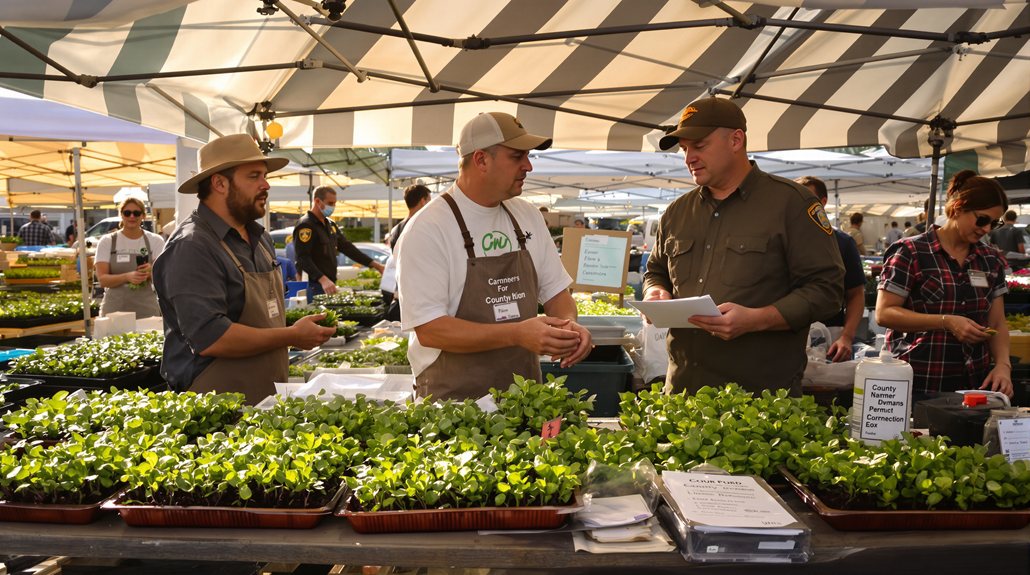
    costs 103 82 14

    Most microgreens sellers don’t need a license, but if you do, plan on paying for it. A new owner-operated license under 50 seats costs $103. Renewal runs $82 a year, and a temporary permit for 14 days or less costs $14.

    The new license and renewal fees

    If your setup triggers a license, the cost depends on your business type. Small owner-operated growers pay less than bigger operations.

    Here’s the breakdown other growers in your position rely on:

    License type Fee Who it applies to
    New license, under 50 seats $103 Owner-operated small stands
    New license, other facilities $241 Larger or non-owner operations
    Annual renewal $82 All licensed vendors, every year

    Temporary vendors get a break too. A 14-day-or-less temporary food facility costs $14.

    These numbers come straight from the Pennsylvania Department of Agriculture’s fee schedule. Know your category before you apply. That’s how other Pennsylvania farmers market vendor requirements get handled correctly, without overpaying or under-filing.

    What a temporary food facility permit covers

    A $14 temporary permit covers a fixed window, not open-ended selling. It applies to a facility operating 14 days a year or less. If you’re selling microgreens at farmers markets in Pennsylvania on a seasonal basis, this can fit your setup.

    But check your math first. If you sell at a weekly market from May through October, you’ll blow past 14 days fast. That means you need the full annual license instead, not the temporary one.

    Don’t guess on this. Call the Bureau of Food Safety at 717-787-4315 before you assume the $14 option applies. Get your actual selling schedule confirmed against the day count. That call saves you a licensing mistake later.

    Does washing or packing microgreens cost you the Pennsylvania exemption?
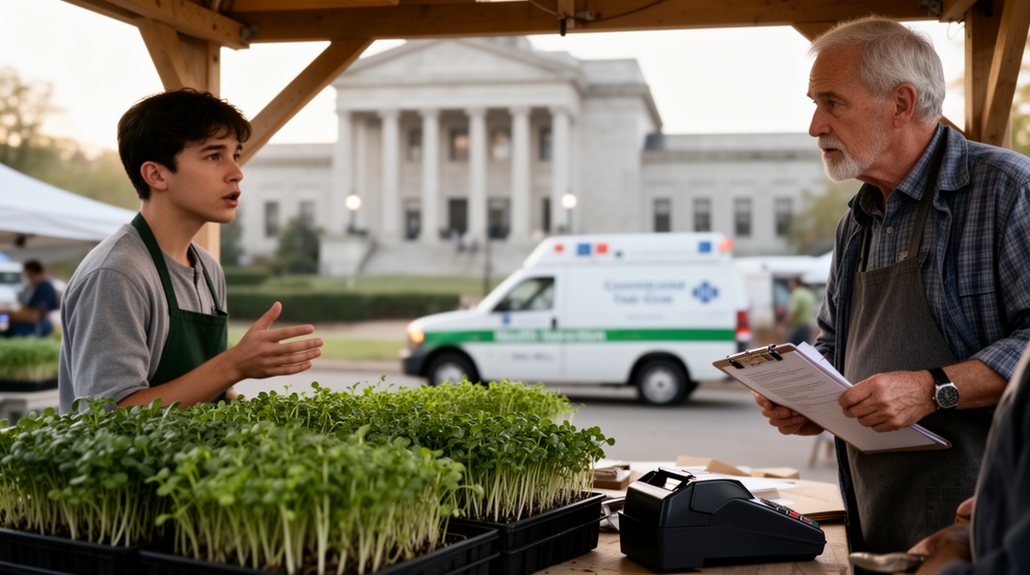
    washing microgreens still exempt

    Washing your microgreens doesn’t cost you the exemption.

    The statute puts washing inside the definition of a raw agricultural commodity.

    Penn State Extension disagrees and lists washing as an activity that requires a license, so you need to know both positions before you argue with an inspector.

    Where the state draws the line between harvest and value-added work

    Once you cut your microgreens, the next question is what you’re allowed to do to them. Harvesting isn’t processing. That fact keeps you inside the raw agricultural commodity definition under 3 Pa.C.S. section 5722.

    Washing your microgreens stays inside that definition too. The statute allows produce washed in its unpeeled natural form.

    Packing them into clamshells for market doesn’t change that status either.

    Value-added work is different. Chopping, cooking, or mixing microgreens into a prepared product triggers licensing. That’s the line the state draws.

    If you sell in Allegheny County, food safety rules follow the same state statute. The produce exemption applies there the same way it applies anywhere in Pennsylvania. County health departments don’t get to override state law.

    Why one widely read source takes a stricter view than the statute

    Penn State Extension doesn’t read the statute the same way. Their July 2025 guidance lists washing as an activity that requires a microgreens business license Pennsylvania growers mightn’t expect to need.

    The statute disagrees. 3 Pa.C.S. section 5722 puts washing inside the definition of a raw agricultural commodity, not outside it.

    Extension is widely read. Other growers quote it at markets across the state. That doesn’t make it the regulator.

    Don’t build your plan on a webpage. Call the Bureau of Food Safety at 717-787-4315.

    Ask them directly if washing your microgreens triggers licensing. Get the answer in writing before you set up your stand.

    What changes if you sell in Philadelphia or Allegheny County?
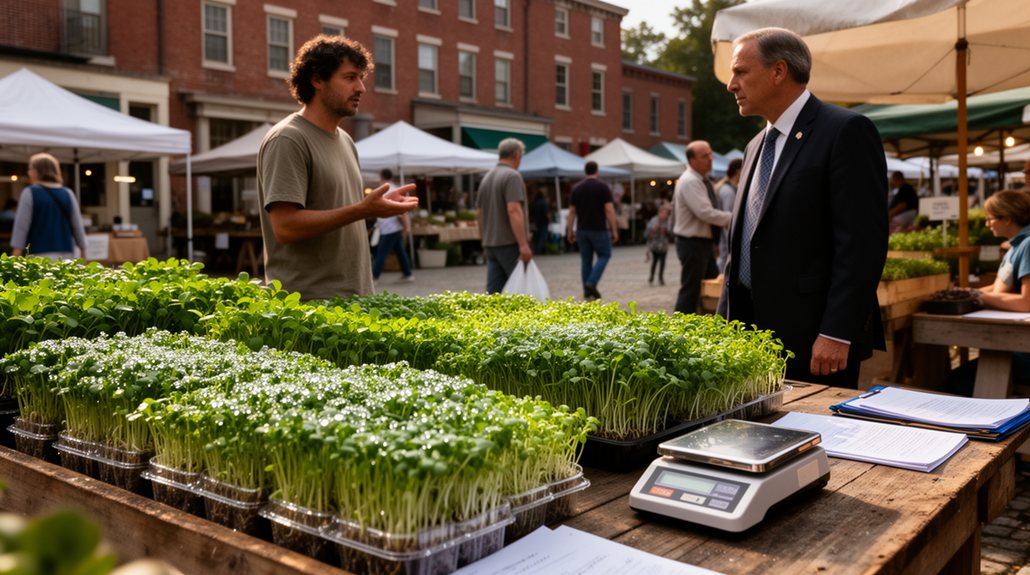
    local licensing differs in pa

    Seven Pennsylvania counties run their own food licensing programs, separate from the state system.

    Philadelphia and Allegheny County are two of them, and they don’t always follow the state’s raw agricultural commodity exemption.

    If you sell there, you need to check local rules before you set up your stand.

    Why seven Pennsylvania counties run their own food licensing

    If you sell in Philadelphia, Allegheny, Bucks, Chester, Montgomery, Delaware, or Erie County, state exemptions don’t automatically apply.

    These seven counties run their own health departments under Pennsylvania’s local health administration law. Each one sets its own food licensing rules, separate from the state Department of Agriculture.

    Philadelphia is the clearest example. A philadelphia farmers market vendor license comes from the Philadelphia Department of Public Health, not Harrisburg.

    The raw agricultural commodity exemption you read about earlier may not carry over here.

    Don’t assume your county follows state rules. Call your local health department before you set up a table.

    Ask directly if raw microgreens need a permit in your county. Get the answer in writing, and keep it with your vendor paperwork.

    The Philadelphia business license that catches growers from out of town

    Growers coming from outside the city often miss one thing: Philadelphia requires a Commercial Activity License on top of any food permit. It doesn’t replace your microgreens license Pennsylvania rules require. It stacks on top of it.

    You get this license through the Department of Revenue, not the Health Department. It costs nothing to apply, but you still need to register before your first sale.

    Allegheny County works differently. It runs its own food safety program through the Allegheny County Health Department, separate from the state.

    If you sell in either place, call ahead. Ask what applies to your specific stand. Don’t guess based on what worked in another county.

    What do Pennsylvania markets require beyond the state?
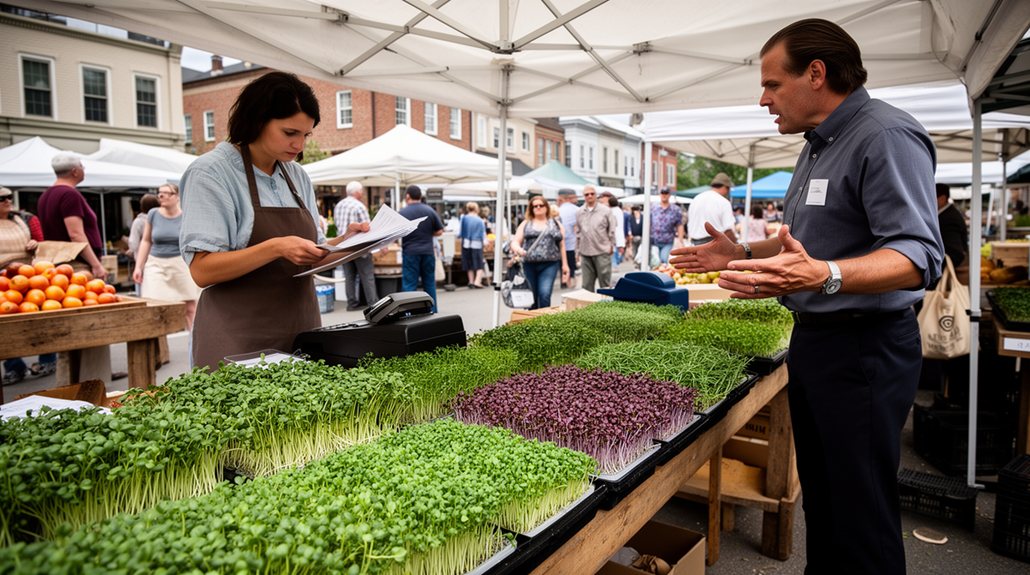
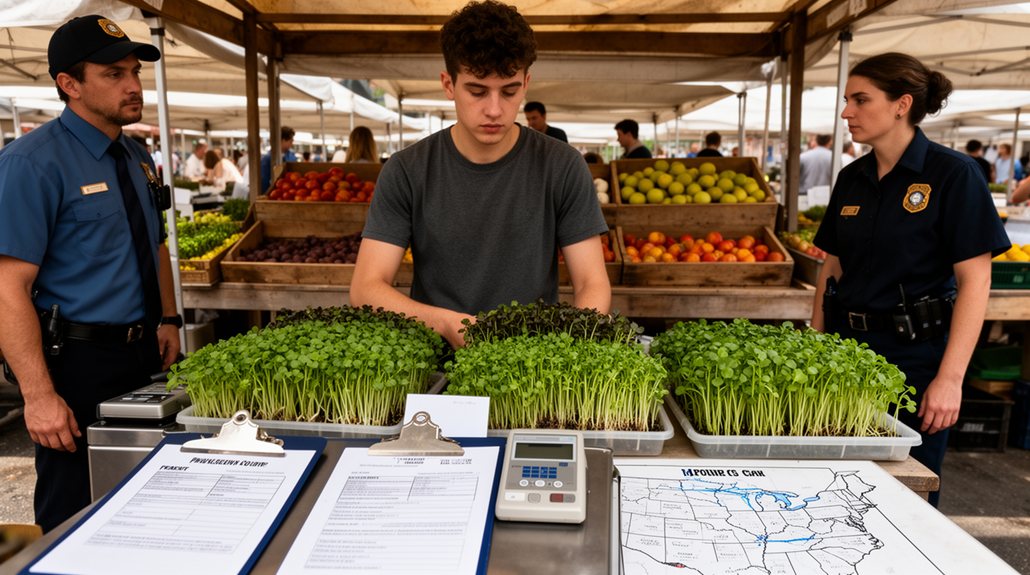
    pennsylvania market insurance requirements

    State law covers licensing, but markets set their own rules on top of it.

    Most Pennsylvania markets require liability insurance, usually $1 million per occurrence, with the market named as additional insured.

    That’s a separate hurdle from the exemption, and it’s the next thing to check before you apply.

    Insurance limits and who gets named on the certificate

    Most Pennsylvania markets ask for general liability insurance before you set up a table. This is standard practice for farmers market vendor insurance Pennsylvania markets require. You’re not alone in this. Every grower at the market carries the same coverage.

    Most markets want at least $1 million in coverage. Some ask for $2 million. Check with your market manager to get the exact number.

    The market itself usually needs to be named as an additional insured on your certificate. This protects the market and puts you in good standing with other vendors.

    Ask your insurance agent for a “certificate holder” listing. Give them the market’s legal name and address. Bring a copy to your first market day.

    How to compare Pennsylvania markets before you apply

    Before you fill out any application, call the market manager directly. Every market runs its own rules on top of state law. Some want your own insurance certificate. Others require a set number of market days per season.

    Learning how to become a farmers market vendor in Pennsylvania means checking each market separately, not just the state code. Dr. Booker T. Whatley taught growers to pick markets based on who shops there, not which one sits closest to home.

    Compare markets before you commit:

    Market factor Why it matters Question to ask
    Vendor fee Cuts into your margin Flat rate or percentage?
    Customer base Matches your product Who shops here weekly?
    Season length Affects planning Year-round or seasonal?
    Stall rules Limits your setup Shared table or own space?

    Frequently Asked Questions

    Do You Need a Business License to Sell Microgreens in Pennsylvania?

    No, you don’t need a Retail Food License if you’re only selling raw, unprocessed microgreens. The exemption’s mandatory under state law. Call the Bureau of Food Safety at 717-787-4315 to confirm your setup qualifies.

    Can You Sell Microgreens From Home in Pennsylvania?

    Yes, you can sell microgreens from home. They’re a raw agricultural commodity, not a Limited Food Establishment product. You’re exempt from Retail Food Facility licensing, but you’re still subject to inspection under state rules.

    Do You Need Insurance to Sell at Pennsylvania Farmers Markets?

    State law doesn’t require insurance to sell microgreens. Most market managers do, though. Check with yours before signing up. Many growers carry basic liability coverage anyway, since it builds trust with vendors and shoppers around you.

    Are Microgreens Profitable to Grow and Sell in Pennsylvania?

    No income promises here. Your profit depends on your market fees, your crop mix, and how well you connect with regular customers. Growers who treat it like a real business tend to do better.

    Do You Need a Scale or Certified Weights to Sell Microgreens?

    If you sell by weight, you need a legal-for-trade scale, certified by Pennsylvania’s Bureau of Weights and Measures. Selling by the bunch or clamshell skips this step. Check with your county office before market day.
  • Farmers Markets in Pennsylvania for Microgreens Vendors

    Farmers Markets in Pennsylvania for Microgreens Vendors

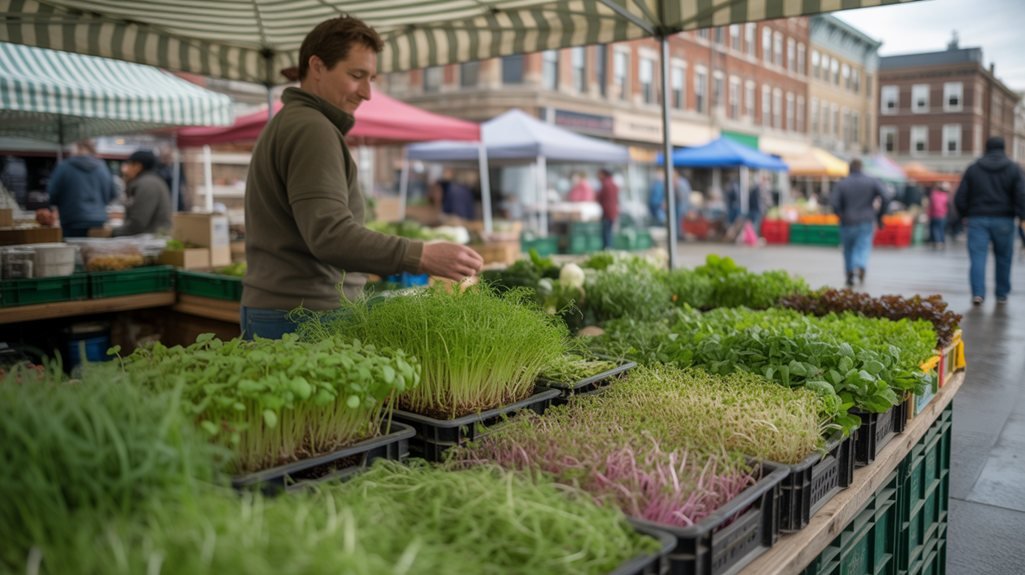
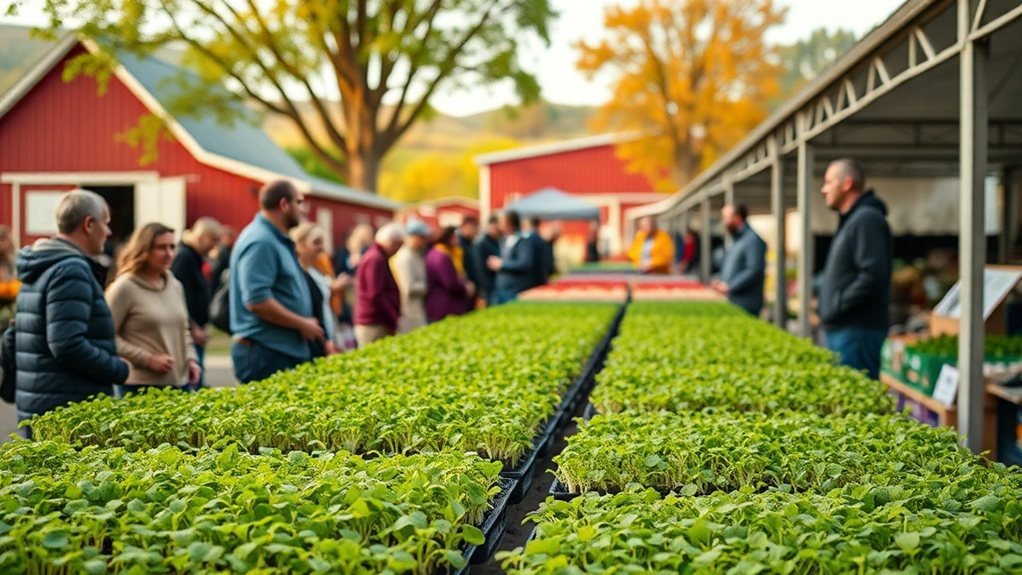
    Pennsylvania’s approximately 312 USDA-listed farmers markets offer microgreens vendors a genuinely viable entry point, though market selection, product fit, and application readiness determine whether that access translates into revenue. Philadelphia, Pittsburgh, and Lancaster represent the highest-density corridors, each serving distinct buyer demographics — from health-conscious urban shoppers to agriculturally literate direct-farm buyers. You’ll need to evaluate vendor composition, booth fees, and varietal demand before committing. What follows breaks down exactly how to negotiate that process strategically.

    Key Takeaways

    • Pennsylvania has approximately 312 USDA-listed farmers markets, with peak selling activity concentrated between May and October each year.
    • Philadelphia, Pittsburgh, and Lancaster are the highest-opportunity regional hubs, each offering distinct customer demographics favorable to microgreens vendors.
    • Sunflower shoots, pea tendrils, and radish are among the strongest-performing microgreen varieties across Pennsylvania markets.
    • Farmers market applications typically open in January or February; booth fees range from nominal daily rates to structured seasonal contracts.
    • Use the Market Finder at markets.microgreensworld.com to identify and evaluate viable Pennsylvania markets before submitting applications.

    Farmers Markets in Pennsylvania for Microgreens Vendors

    Pennsylvania’s roughly 312 USDA-listed farmers markets represent a substantial commercial infrastructure for microgreens vendors, particularly given the dense population corridors anchoring Philadelphia, Pittsburgh, and Lancaster.

    You’ll find that the state’s primary selling season runs spring through fall, which compresses your revenue window but also concentrates customer traffic into predictable, high-demand periods.

    Understanding both the geographic distribution of these markets and the seasonal rhythm they follow will directly shape how you plan production schedules, staffing, and booth applications.

    Why Pennsylvania Markets Are Worth Your Attention

    With roughly 312 farmers markets operating across the state, Pennsylvania offers a vendor density that few regions in the Northeast can match. As a microgreens vendor in Pennsylvania, you’re working within a market infrastructure that already draws consistent foot traffic and educated buyers. Philadelphia’s Clark Park market, Pittsburgh’s Saturday Market on the North Shore, and Lancaster’s Central Market represent distinct consumer demographics, each worth analyzing before you commit to an application.

    The spring-through-fall calendar compresses your selling window, which means positioning yourself early matters. Pennsylvania’s agricultural identity also works in your favor, because buyers here understand fresh, locally grown produce at a functional level. That baseline familiarity shortens the education cycle and puts your product in a stronger opening position at farmers markets Pennsylvania vendors compete within.

    What the Pennsylvania Market Season Looks Like

    Most Pennsylvania farmers markets operate on a spring-through-fall calendar, with the bulk of vendor activity concentrated between May and October, though some urban markets in Philadelphia and Pittsburgh extend into November or push openings as early as April. If you want to sell microgreens at farmers markets in Pennsylvania, your planning horizon needs to align with these windows.

    Lancaster County markets tend to hold traditional schedules, closing firmly before winter, while Philadelphia’s Reading Terminal adjacent outdoor markets demonstrate greater seasonal flexibility. Knowing this distribution matters practically: applications for farmers markets Pennsylvania microgreens vendors typically open in January or February, well before the first tent goes up. Submit late and you lose your spot before the season even begins.

    How to Find the Right Market in Pennsylvania

    assess local market suitability

    Before you apply anywhere, you need to assess each market’s customer demographics, vendor density, and operational requirements, because not every Pennsylvania market suits a microgreens operation of any given scale.

    Philadelphia’s concentrated urban markets, particularly those in Center City and surrounding neighborhoods, attract health-conscious consumers who purchase specialty produce regularly, making them structurally compatible with microgreens vendors.

    Pittsburgh and Lancaster present distinct but comparably viable opportunities, with Lancaster’s agricultural heritage creating a buyer base already accustomed to direct-farm purchasing and Pittsburgh’s revitalized neighborhood markets drawing younger, wellness-oriented demographics.

    What to Look for Before You Apply

    Finding the right farmers market in Pennsylvania isn’t simply about proximity, because a market that’s convenient to reach can still be a poor fit if its vendor mix, foot traffic patterns, or customer demographics don’t align with what you’re growing. Before you pursue how to get a farmers market booth, evaluate each market against criteria that directly affect sell-through rates for a microgreens farmers market setup.

    Factor What to Assess
    Vendor composition Are competing produce vendors already established?
    Customer profile Do shoppers purchase specialty or value-add products?
    Market frequency Weekly markets build repeat-customer relationships faster.

    Proximity matters less than placement within a market where your product category has demonstrated demand.

    Markets Near Philadelphia

    Although the Philadelphia farmers market landscape accounts for a disproportionate share of Pennsylvania’s farmers market activity, the sheer volume of available markets doesn’t simplify your decision, it complicates it. You’re not choosing between good and bad options; you’re distinguishing between markets where microgreens for sale Pennsylvania buyers actively seek specialty produce and markets where your product category simply has no traction yet.

    Rittenhouse Square draws a sophisticated, high-turnover crowd, while smaller neighborhood markets in Chestnut Hill or Germantown operate on tighter vendor budgets and different customer rhythms. Understanding those distinctions before you apply saves you from committing to a season that doesn’t fit your volume. Research each market’s existing vendor mix before submitting anything.

    Markets Near Pittsburgh and Lancaster

    Philadelphia’s market density makes it a logical starting point for new vendors, but the rest of Pennsylvania tells a different story, one where smaller market concentrations demand a sharper geographic focus from the outset.

    Pittsburgh farmers market activity clusters around Allegheny County, where weekend timing and neighborhood demographics vary considerably between locations. Before you commit your microgreens booth farmers market setup to any single Pittsburgh corridor, cross-reference foot traffic patterns against your production capacity.

    Lancaster operates differently, drawing buyers with strong agricultural literacy who already understand specialty crops, which shifts your pitch considerably. Both regions reward vendors who research individual market cultures rather than treating either city as a monolithic opportunity.

    Employ the free Market Finder at markets.microgreensworld.com to map viable options across both regions before you apply anywhere.

    What to Expect When You Get There

    market specific vendor realities

    Once you’ve secured a spot, you’ll encounter a vendor landscape defined by two immediate realities: what the market charges you to be there, and what customers in that specific market will actually buy.

    Booth fees at Pennsylvania markets vary considerably, ranging from nominal daily rates at smaller community markets to structured seasonal contracts at high-traffic urban venues in Philadelphia or Pittsburgh, where demand for specialty produce, including microgreens, tends to run stronger. Understanding which varieties move in a given market, whether that’s sunflower shoots in Lancaster’s agricultural corridor or pea tendrils at a Philadelphia neighborhood market, shapes how you allocate tray space before you ever load the van.

    Booth Fees and Setup Basics

    Booth fees across Pennsylvania’s farmers markets vary more than most new vendors expect, and understanding the fee structures before you apply saves you from committing to a market that doesn’t align with your margins.

    As a farmers market vendor in Pennsylvania, you’ll encounter daily flat fees, seasonal table rentals, and percentage-based arrangements, sometimes within the same region.

    Philadelphia markets frequently charge $25 to $50 per day, while smaller Lancaster County operations may run lower.

    Booth fees and setup basics also include what you’re required to bring, since many markets provide no infrastructure beyond a space. Know your footprint, confirm electrical access if you need it, and verify whether your booth requires liability insurance before your first market day.

    What Moves at Pennsylvania Markets

    Knowing your booth costs is only part of the equation, because understanding what actually sells at Pennsylvania markets shapes how you allocate that budget and structure your table.

    Among farmers market Pennsylvania vendors, sunflower and pea shoots consistently draw repeat buyers, particularly at markets in Philadelphia and Lancaster where customer familiarity with specialty greens runs higher. Your microgreens market stand benefits from leading with recognizable varieties before introducing less familiar options like amaranth or shiso.

    Radish moves well early in the season when local produce options remain limited, giving you a competitive window. Buyers in Pennsylvania tend to prioritize freshness cues, so harvested-that-morning messaging carries measurable weight.

    Position your highest-margin trays at eye level, and watch which varieties deplete fastest across your first three market days.

    Getting Your Application Ready

    demonstrate product safety and readiness

    Your application is the market manager‘s first point of evaluation, and it functions as a professional document that signals whether you understand the market’s vendor standards.

    Most Pennsylvania market managers are specifically assessing product fit, food safety compliance, and operational readiness, so a microgreens vendor who submits a vague application with no mention of grow practices or labeling will frequently be deprioritized over one who addresses those criteria directly.

    You’ll strengthen your submission considerably by anticipating what the manager needs to justify your acceptance, rather than simply listing what you grow.

    What Market Managers Want to See

    Market managers in Pennsylvania are gatekeepers with limited booth space and specific vendor needs, so understanding what they’re evaluating before you submit a farmers market vendor application gives you a meaningful advantage.

    They’re assessing product fit, presentation consistency, and your operational reliability.

    When selling microgreens locally, you’re entering a category that markets may already have covered, so your application needs to distinguish your variety selection, packaging, and production volume from whoever currently holds that spot.

    Managers want documented food safety practices, proof of production scale, and clear communication about what you’ll bring weekly.

    A vague application signals an unreliable vendor.

    Specificity demonstrates competence.

    Reference your growing setup, your harvest schedule, and your commitment to consistent supply across the full market season.

    Common Mistakes to Avoid

    Understanding what managers evaluate is only half the equation, because even well-prepared growers routinely submit applications that undermine their own credibility before a single conversation takes place.

    Mistake Why It Hurts You Fix It
    Generic product description Managers can’t gauge fit Name specific varieties
    Missing food safety docs Instant disqualification Attach before submitting
    No photos of your setup Looks unprepared Include booth and product shots
    Ignoring waitlist protocol Burns the relationship Follow instructions exactly
    Vague pricing structure Signals inexperience State your price points clearly

    At competitive venues like the Lancaster Farmers Market, these errors eliminate you quietly. Learning how to sell microgreens professionally starts with your paperwork, because managers judge operational discipline before they ever taste your product.

    pennsylvania farmers market finder

    Tracking down viable farmers markets in Pennsylvania without a structured tool can consume weeks of cold outreach, website digging, and dead-end phone calls.

    Finding Pennsylvania farmers markets without a structured tool wastes weeks on cold outreach, dead-end calls, and scattered website digging.

    The MGW Farmers Market Finder at markets.microgreensworld.com pulls from verified USDA data, giving your microgreens business immediate access to Pennsylvania’s approximately 312 listed markets.

    Instead of manually cross-referencing county websites or calling market managers who rarely answer, you filter by location and identify realistic targets within your delivery range.

    For growers building local microgreens pennsylvania customer bases, that geographic precision matters considerably.

    You’re not browsing randomly, you’re executing a deliberate prospecting process.

    The tool condenses what would otherwise require significant research time into a focused, actionable shortlist.

    Start your vendor search at markets.microgreensworld.com and move forward with actual intelligence rather than guesswork.

    Frequently Asked Questions

    Can I Sell Microgreens at Multiple Pennsylvania Markets Simultaneously?

    Yes, you can vend at multiple Pennsylvania markets simultaneously, but you’ll need separate booth staff, enough product volume, and to check each market’s exclusivity policies before committing to overlapping schedules.

    Do Pennsylvania Farmers Markets Require Liability Insurance From Microgreens Vendors?

    Most Pennsylvania farmers markets require liability insurance from vendors. You’ll typically need a $1M general liability policy naming the market as additional insured. Confirm exact requirements directly with each market manager before applying.

    How Do Pennsylvania Cottage Food Laws Affect Microgreens Sales Specifically?

    Pennsylvania’s cottage food law doesn’t cover microgreens because they’re fresh produce, not processed food. You’re selling directly under agricultural exemptions instead, which actually gives you more flexibility at markets statewide.

    What Happens if a Market Already Has an Established Microgreens Vendor?

    If a market already has a microgreens vendor, you’ll likely face a waitlist or outright rejection. Some markets cap categories, so target markets without current microgreens vendors using the MGW Market Finder at markets.microgreensworld.com.

    Are There Winter Farmers Markets in Pennsylvania Worth Pursuing?

    Yes, a few exist, mostly indoors in Philadelphia and Pittsburgh. They’re smaller, less competitive, and attract serious buyers. If you’re already producing through winter, they’re worth pursuing before spring crowds return.

    Wrap-up

    Pennsylvania’s farmers market landscape offers microgreens vendors a structured, data-driven path to profitability, provided you’re strategic about market selection, application preparation, and product positioning. You’ve got over 300 markets to evaluate, a vendor community that values specialty crops, and seasonal flexibility that rewards consistent execution. Employ the market finder tool to narrow your options, prioritize markets aligned with your production capacity, and approach each application as a professional business document.