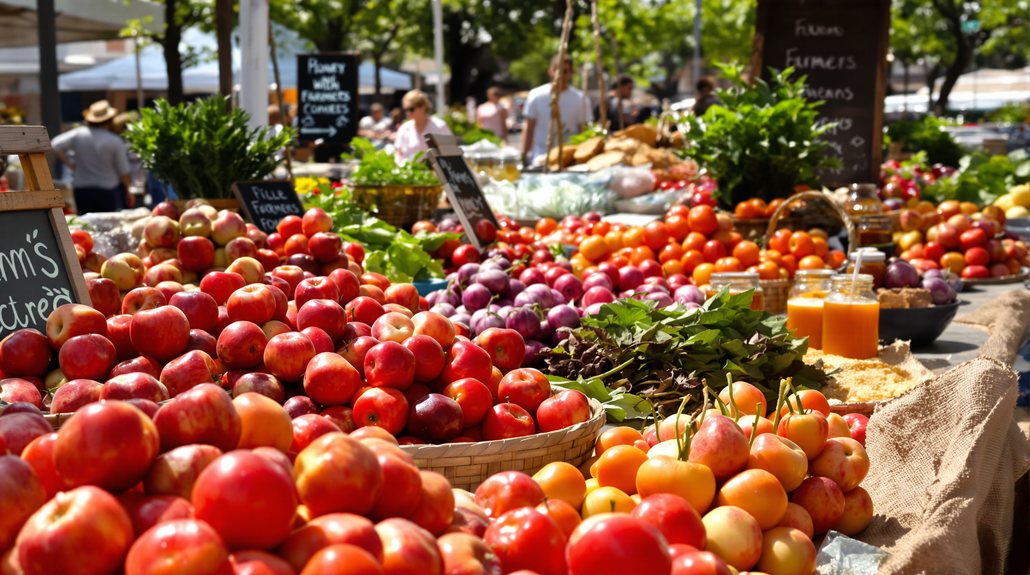
Tomatoes, corn, and squash dominate most vendor tables — and most of it doesn’t sell. A 2026 survey of 229 U.S. farmers markets found only 39.3% carried any specialty crops. Microgreens showed up in just 5 of those markets. That’s a supply gap, not a demand problem. Shoppers can’t buy what they never see. Specialty items like sunflower microgreens and edible flowers face almost zero competition — and what that means for your pricing changes everything.
Key Takeaways
- Tomatoes, corn, berries, and squash dominate most vendor tables, with 6–12 vendors often selling identical commodities at squeezed margins.
- Specialty crops like microgreens and edible flowers appear in fewer than 40% of markets, signaling low supply rather than low demand.
- Shoppers unfamiliar with specialty items like sunflower microgreens often become repeat buyers after sampling and explanation at the booth.
- Commodity-heavy markets create pricing pressure from vendor competition and nearby grocery stores, reducing profitability for standard produce sellers.
- Specialty items absent from grocery stores—like nasturtium blossoms or pea shoots—allow vendors to set their own prices without direct competition.
What does the data say about which produce actually moves at farmers markets?
You don’t have to guess what sells. Lee and Miller surveyed 229 US farmers market managers and published the results in HortTechnology 36(3).
The numbers tell you exactly where the gaps are and where your opportunity sits.
What 229 market managers reported about which categories sell and which do not
Most markets don’t carry what you think they carry.
Lee and Miller surveyed 229 US farmers market managers in 2026. Only 39.3% of those markets reported any specialty crop sales at all.
Microgreens showed up in just 5 responses. That’s out of 229 markets.
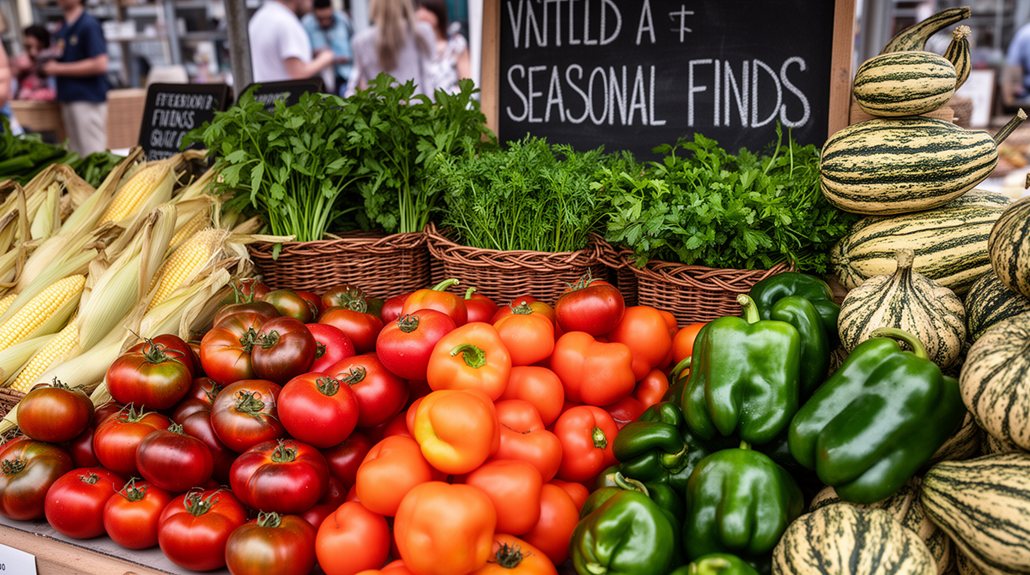
This is what sells at farmers markets in most regions: standard seasonal produce. Tomatoes, corn, berries, squash. High competition, commodity pricing, and a grocery store three miles away selling the same thing.
Specialty crops are almost absent from the data.
That gap tells you something. The vendors missing from most markets are the ones with the most room to grow a repeat customer base. You don’t need to outcompete anyone. You need to show up where others haven’t.
Why only 39% of markets have any specialty crop vendors at all
The 39.3% figure isn’t random. Most markets fill vendor slots with whatever growers show up. That means tomatoes, corn, and squash dominate because those growers already exist.
Specialty crop farmers market opportunity is thin not because demand is low. It’s thin because most growers never enter that space.
Lee and Miller’s 2026 survey of 229 market managers confirms this. Microgreens appeared in only 5 responses. Edible flowers showed up in 90 markets, but mostly nasturtium.
The gap isn’t about what customers want. It’s about who’s showing up to sell. You’re not fighting for shelf space here. You’re filling a slot that’s almost always empty.
What is the difference between what sells and what is available at most markets?
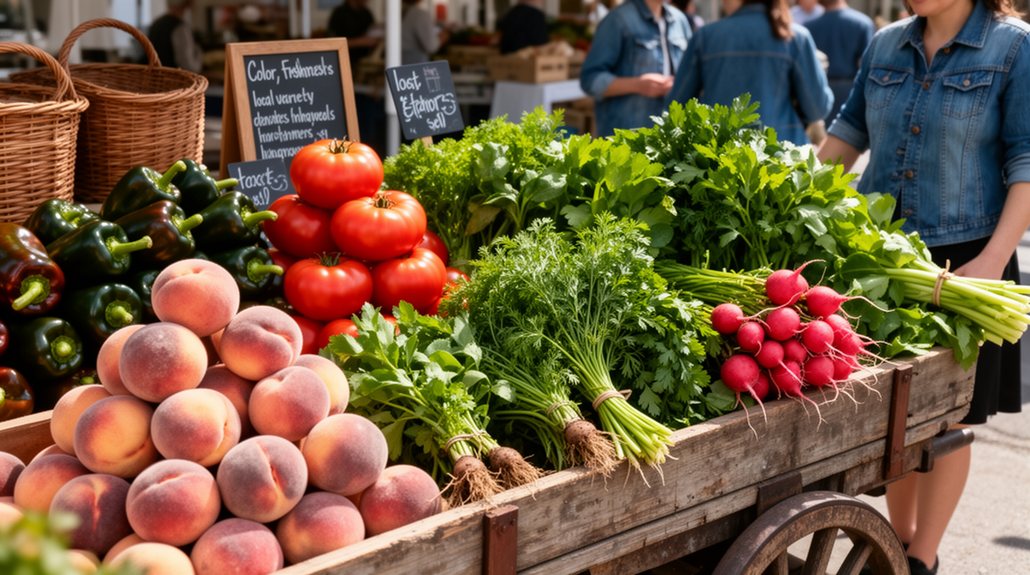
Most markets are full of tomatoes, corn, and berries. That’s supply.
It’s not the same as what buyers actually want but can’t find.
Why low microgreens supply is not the same as low microgreens demand
Microgreens showed up in only 5 of 229 surveyed markets. That’s not a demand problem. That’s a supply problem.
Most shoppers at farmers markets have never seen fresh-cut sunflower microgreens or pea shoots at a booth. They haven’t had the chance to try them. Low microgreens farmers market demand numbers don’t exist because buyers rejected the product. They exist because the product wasn’t there.
Booth observation data backs this up. When microgreens are sampled and explained, first-time buyers come back the next week. They come back because you’re the only source.
That’s the gap you’re stepping into. You’re not fighting for shelf space against 12 tomato vendors. You’re filling a lane that’s almost empty.
What the gap between supply and demand means for a vendor who fills it
Filling that gap changes your pricing position entirely. You’re not competing with the tomato vendor. You’re the only one with what you have.
The microgreens supply gap at farmers markets is real. Lee and Miller (2026) found microgreens in only 5 of 229 surveyed markets. That’s thin coverage across the country.
When you fill that gap, buyers can’t substitute your product. They come back because there’s nowhere else to go. That’s Whatley’s repeat customer principle working for you.
You’re also not setting commodity prices. You set the price because you set the category.
Find a market where microgreens aren’t already sold. Show up consistently. Buyers who find you once will look for you every week.
What types of produce face the most competition at farmers markets?
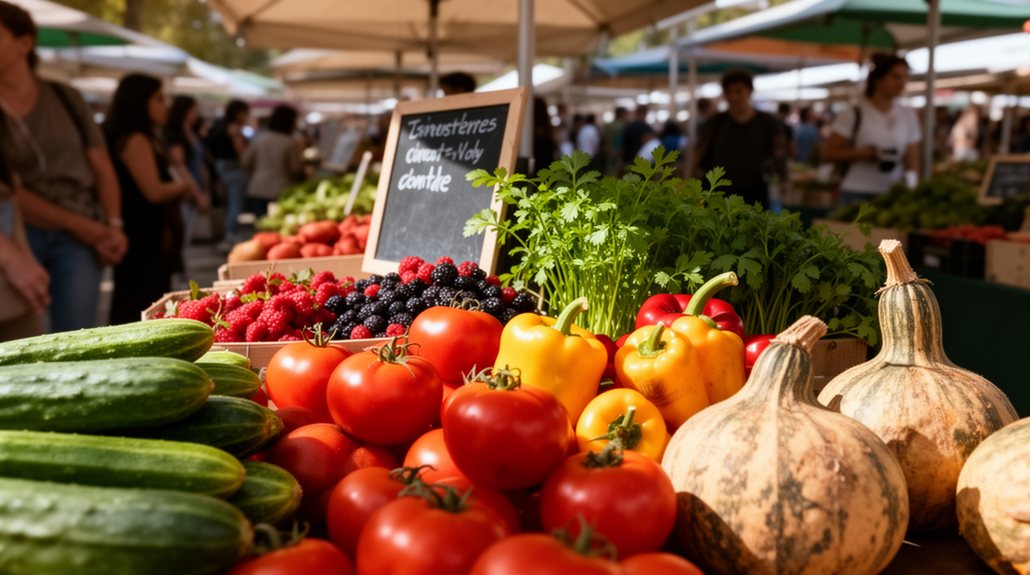
Standard seasonal vegetables are the most crowded category at any farmers market.
Tomatoes, corn, berries, and squash show up on nearly every table, and that volume kills your pricing power.
You’re not setting the price. The market is.
Why standard seasonal vegetables are the hardest category to make money in
Tomatoes, corn, berries, and squash show up at nearly every booth in every market across the country. That’s the farmers market produce competition problem in one sentence.
When ten vendors sell the same thing, price drops fast.
| Crop | Average vendors per market | Buyer leverage |
|---|---|---|
| Tomatoes | 8 to 12 | High |
| Sweet corn | 6 to 10 | High |
| Berries | 5 to 9 | High |
You’re not just competing with other vendors. You’re competing with the grocery store two miles away.
Buyers know the price. They shop down the row. You lose margin every time.
How commodity pricing affects tomatoes and berries at most markets
When a buyer can price-check your tomatoes against Kroger on their phone, you’ve already lost the margin war. Commodity pricing hits tomatoes and berries hardest. These are the items every vendor brings and every shopper already knows the price of.
At a market in Portland or Columbus, six vendors might sell Roma tomatoes on the same Saturday. You’re not selling a unique product. You’re competing on price and volume.
Berries face the same problem. Strawberries at Aldi run $2.49 a pint. Matching that at your booth means working for almost nothing.
Understanding what produce sells at farmers market comes down to one question. Can the shopper buy it at a grocery store this week? If yes, your margin is already squeezed.
Why do specialty and unusual crops outperform standard produce at the right market?
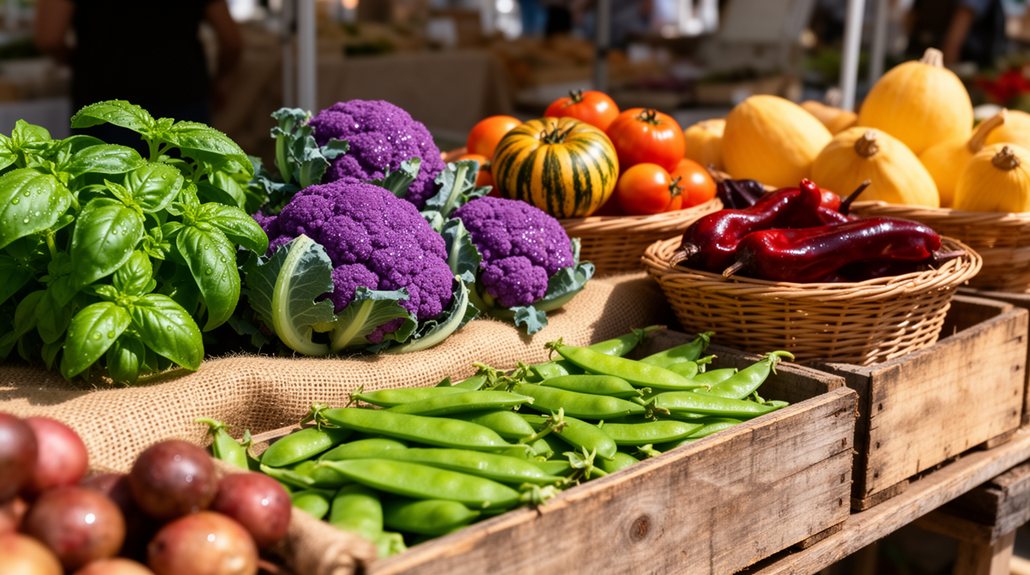
Grocery stores carry standard produce.
They don’t carry fresh-cut sunflower microgreens or nasturtium blossoms.
That gap is where your sales happen.
What happens to sales when a product cannot be bought at the grocery store
Standard produce loses the moment a shopper can grab it cheaper at the grocery store.
Tomatoes, zucchini, and corn sit at your booth while the same items sell for less at Kroger. You can’t win that price fight.
Specialty produce farmers market sales work differently. When your product isn’t available anywhere else locally, the shopper has one option. You.
That’s Whatley’s repeat customer principle. A buyer who can’t replace your sunflower microgreens at any store comes back every week. They bring others in their community.
Lee and Miller (2026) found microgreens appeared in only 5 of 229 surveyed markets. That’s not saturation. That’s a gap you can own.
You become the only source. That’s where consistent sales actually start.
How first-time buyers of specialty greens become repeat weekly customers
First-time buyers almost never return for a product they can find somewhere else. Sunflower microgreens, for example, aren’t at Kroger. That gap is what keeps them coming back.
When a buyer can’t replace your product, you become their only source. That’s farmers market produce that sells week after week.
| Buyer Stage | Product Type | Return Rate |
|---|---|---|
| First visit | Sunflower microgreens | High |
| Week 2 | Radish microgreens | High |
| Week 3+ | Mixed specialty trays | Consistent |
Repeat buyers tell others in the same community. Your booth becomes a known stop.
Sample your product at the first interaction. Explain what it is and how to use it. That one step converts a curious shopper into a weekly regular.
How do you find a market where the specialty produce gap is biggest?
You don’t pick a market randomly. You look for markets where specialty crops are missing and standard produce dominates every booth.
That gap is your opening.
What to look for when you visit a market before applying
Before you apply to any market, visit it in person on a peak day. Saturday mornings between 9 and 11 a.m. are usually the highest-traffic window.
Walk every booth. Count how many vendors sell specialty produce versus standard vegetables. If you see mostly tomatoes, corn, and squash, that gap tells you what to grow for farmers market sales.
Look for microgreens, edible flowers, or unusual herbs. If none are there, that’s your opening.
Talk to shoppers. Notice what they’re holding when they leave a booth. That behavior is more reliable than any survey.
Write down vendor names, crop types, and price points. You need that data before you apply.
How to use the MGW Market Finder to identify market types where specialty crops succeed
The MGW Market Finder narrows this down fast. Search by zip code or city at markets.microgreensworld.com.
You’ll see 7,842 USDA-verified markets listed with vendor mix data. Filter for markets that show low specialty crop representation.
That’s your opening. A market dominated by tomatoes, corn, and squash vendors has no one selling the best produce to sell at farmers market conditions like these. Microgreens and edible flowers have almost no competition there.
Look at vendor count per category. Markets with 20 or more vegetable vendors and zero specialty greens vendors are the ones worth targeting.
The MGW Farmers Market Finder has 7,842 USDA-verified markets searchable by zip code, city, or state. Use it to find and compare markets near you before you apply – markets.microgreensworld.com.
The Microgreens Growth Path Tool maps your first move using local market data – growthpath.microgreensworld.com.
Frequently Asked Questions
How Many Trays Should a First-Time Microgreens Vendor Bring to Market?
Bring 20 to 30 trays your first market day. That’s enough to test demand without over-committing. Most first-timers in your position sell out faster than they expect when sampling is part of the setup.
What Permits Do You Need to Sell Microgreens at a Farmers Market?
You’ll need a cottage food or food handler’s permit, a business license, and your market’s vendor application. Requirements vary by state, so check your local health department first.
How Do You Price Microgreens Compared to Standard Salad Greens?
You’ll price microgreens 3 to 5 times higher than standard salad greens. A 2-ounce clamshell runs $5 to $8. Grocery store greens can’t compete with fresh-cut, locally grown product your customers can only get from you.
What Packaging Works Best for Microgreens at an Outdoor Market Booth?
Clamshell containers seal in freshness and stack cleanly on your table. Use 2 oz or 4 oz clear plastic so buyers see the product without touching it. Label every package with variety and harvest date.
Can You Sell Microgreens at a Farmers Market Year-Round?
Yes, you can sell microgreens year-round. They’re grown indoors, so seasons don’t stop you. Most markets run weekly schedules that fit a consistent indoor grow cycle perfectly.