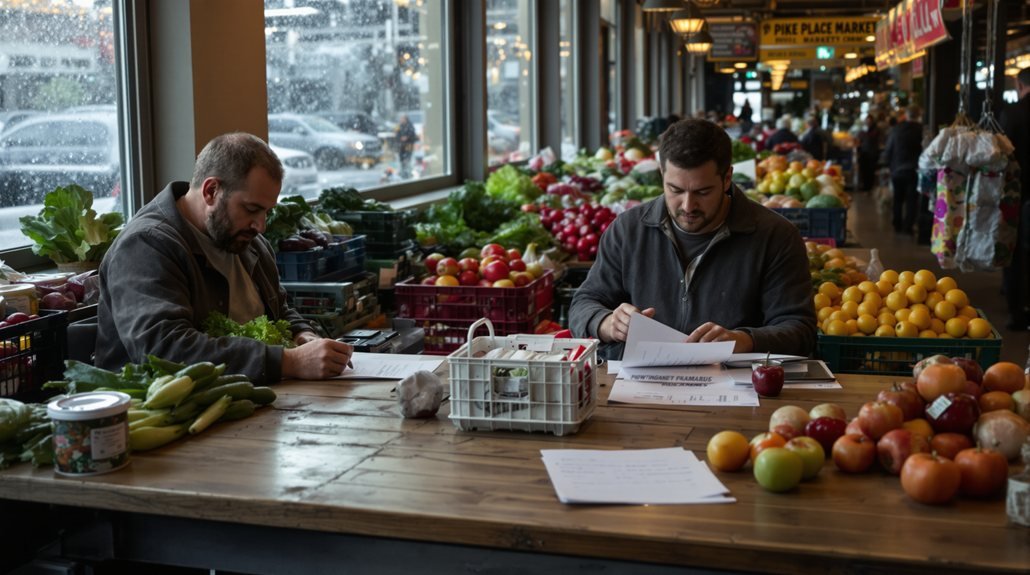
To sell at Pike Place Market, start with the Farmer Inquiry Form — that’s your entry point into the PDA review queue. They’ll check your product type, agricultural certification from the Washington State Department of Agriculture, and your Seattle Business License before moving forward. Produce farmers are currently being accepted, but flower vendors aren’t — the category’s full. What you sell determines whether there’s room for you, and the details ahead will show you exactly how to position your application.
Key Takeaways
- Submit a Farmer Inquiry Form to enter the PDA’s contact queue, which reviews your application against current vendor capacity and market needs.
- Produce farmers are currently being accepted, but the flower category is closed to new applicants.
- Washington State agricultural certification from the WSDA is required before applying.
- A Seattle Business License, registered through the Seattle Office of Economic Development, must be obtained beforehand.
- Emphasize specialty produce gaps in your application, as microgreens and similar items are underrepresented on the floor.
What should you know about Pike Place Market Farm Program before you apply?
Pike Place Market’s Farm Program isn’t like a typical weekend market slot.
You’re looking at a daily, year-round operation with millions of visitors, 80+ farmers, and a vendor structure that separates produce farmers from artisans and food vendors entirely.
Before you fill out the Farmer Inquiry Form, you need to know who shops here and what they’re actually buying.
What Makes Pike Place Market Farm Program Different From Other Washington Markets
If you’re farming in Washington state, most markets give you a weekend slot and a waitlist. Pike Place operates daily, year-round, with over 80 farmers already in the mix.
The pike place market farm program application puts you in front of millions of visitors annually. No other Washington market matches that volume.
| Feature | Typical WA Market | Pike Place |
|---|---|---|
| Operating days | Weekend only | Daily, year-round |
| Annual visitors | Thousands | Millions |
| Vendor count | Varies | 500+ total, 80+ farmers |
Daily rates run $7 off-season to $40 at peak. You’re present as the producer every day you sell. That’s the standard here.
Who Shops There and What They Actually Buy
On any given day at Pike Place, you’re selling to three different crowds. Tourists from out of state, Seattle locals doing weekly grocery runs, and restaurant buyers sourcing direct from farmers.
Each group buys differently. Tourists grab what looks interesting. Locals buy what they trust and come back for. Chefs want consistency and specialty items they can’t get from a distributor.
As a pike place market farmer vendor, microgreens fit the chef and local buyer segments well. Both groups actively look for specialty produce.
Watch the 80-plus farmers already on the floor. Note what’s missing. Specialty greens show up rarely. That gap is real. It’s also your clearest opening before you write a single word on the Farmer Inquiry Form.
What does the vendor mix look like at Pike Place Market Farm Program?

Pike Place’s Farm Program has 80+ farmers and producers, but the mix isn’t even.
Fresh flowers dominate the stalls, and that category is already at capacity.
Specialty produce, including microgreens, is under-represented, and that’s the gap you need to understand before you apply.
Which categories are overrepresented at Pike Place Market Farm Program
Flower vendors fill most of the Farm Program‘s available space. Pike Place Market has confirmed that flower farmers are at capacity. That category is closed to new applicants right now.
What’s still open is produce. That’s where you fit in if you’re growing microgreens.
Beyond flowers, conventional vegetable and fruit growers make up most of the active farmer slots. Standard crops like tomatoes, greens, and root vegetables are well represented.
Specialty produce is not. That’s the gap you’re targeting when you figure out pike place market farm program how to apply for your operation.
You’re not competing against a crowded field in your category. You’re stepping into space other vendors haven’t filled. That’s your opening.
Where the gap is for specialty produce vendors
Specialty produce has room at Pike Place. Most stalls run conventional vegetables and stone fruit. Microgreens show up rarely, if at all.
Dr. Booker T. Whatley’s framework is direct: know your customer before you choose your market. Visit Pike Place as a customer first. Watch what shoppers reach for and what stalls they skip.
You’re looking for a gap, not just an open table. Specialty produce is under-represented. That gap is your application strategy.
Once you’ve done two or three visits and confirmed the gap, the next step is the Pike Place Market Farmer Inquiry Form. Submitting it gets you into the contact queue. You won’t get a table without completing it first.
What does the Pike Place Market Farm Program vendor application process involve?

The Farm Program doesn’t open with an application. You start by completing a Farmer Inquiry Form, and the Pike Place Market PDA contacts you about next steps from there.
What they require from you and how they evaluate candidates determines whether you move forward.
What the Pike Place Market PDA requires before you submit an application
Before you fill out anything, you need two documents in place.
The Pike Place Market PDA requires a Washington state agricultural certification. You also need a Seattle Business License before you apply.
Neither document is optional. If you show up to the pike place farm program how to apply process without both, your inquiry goes nowhere.
Get your agricultural certification through the Washington State Department of Agriculture. Then register for a Seattle Business License through the Seattle Office of Economic Development.
Once both are active, you’re ready for the Farmer Inquiry Form. That form is the official first step. The PDA contacts you after submission to walk through next steps.
What the selection process looks like
Once you submit the Farmer Inquiry Form, the PDA reviews your application against current vendor capacity. Produce farmers are currently being accepted. Flower farmers are not. That distinction matters before you apply.
The PDA contacts you directly after reviewing your form. They’ll confirm your product type, your Washington state agricultural certification, and your Seattle Business License.
Space at Pike Place is limited. The market has 80+ farmers and producers across its vendor roster. The Pike Place Market vendor application process isn’t first-come, first-served. It’s based on what the market needs.
Produce is your entry point right now. If you grow microgreens, you’re applying during a window that’s open.
What do microgreens vendors specifically need to know about Pike Place Market Farm Program?
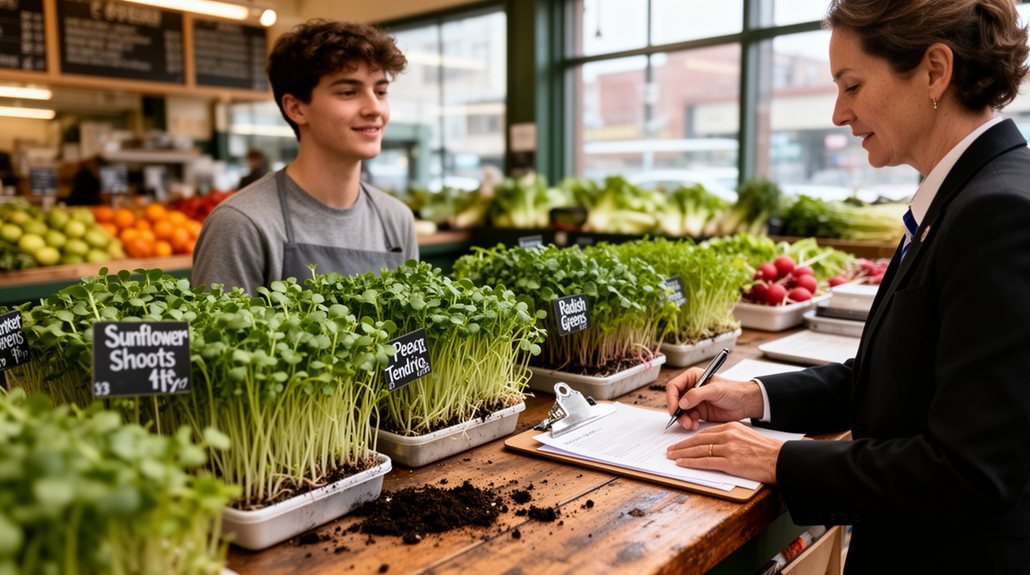
Pike Place’s customer base skews toward food-curious shoppers who pay for quality and novelty.
That’s a direct match for specialty microgreens. But you need to know the vendor mix and the gap before you apply.
Why Pike Place Market Farm Program’s customer base is a strong match for specialty greens
Millions of visitors walk through Pike Place Market every year, and most of them aren’t looking for bulk produce. They want something specific, something they can’t find at Safeway.
Microgreens pike place market vendors fit that demand directly. These buyers already pay premium prices for specialty food.
| Buyer type | What they want | Why microgreens fit |
|---|---|---|
| Home cooks | Small-batch, fresh produce | Ready-to-use portions |
| Restaurant buyers | Consistent specialty greens | High visual quality |
| Tourists | Unique local products | Memorable, packaged well |
The customer base here self-selects. They’re curious and willing to spend.
Specialty produce is under-represented in this market. That gap is exactly where you belong.
What sets successful vendors apart at Pike Place Market Farm Program
Most vendors who last at Pike Place show up prepared before their first sale day. They’ve visited the market as customers. They know the foot traffic patterns and the price points that move product.
Before you submit the pike place farm program application, walk the Farm Program rows on a Tuesday and a Saturday. Note which tables draw lines and which don’t.
Microgreens have a short shelf window. Bring exactly what you can sell that day. Overloading your table signals inexperience to both customers and market staff.
You also need your Washington state agricultural certification and Seattle Business License ready before you’re approved. Don’t wait until after contact to start those steps. Get them done first.
How do you find Pike Place Market Farm Program and locate other markets like it near you?

Pike Place is one option, but Washington has dozens of active farmers markets worth scouting. Employ the MGW Farmers Market Finder at markets.microgreensworld.com to search by zip code, city, or state across 7,842 USDA-verified markets.
Before you apply anywhere, you need to know what the vendor mix looks like and whether a gap exists for specialty produce.
Using the MGW Market Finder to scout markets in Washington
Finding Pike Place on the MGW Farmers Market Finder takes about 30 seconds. Go to markets.microgreensworld.com and search Seattle or your zip code.
The tool pulls from 7,842 USDA-verified markets across all 50 states. Pike Place shows up with program details, season info, and contact links.
If you want to become a pike place produce vendor, you need to know what else is near you. Compare two or three other Washington markets before you commit to one application.
Some growers find a smaller market first. That gives you sales history and proof of demand before you approach Pike Place.
The MGW Farmers Market Finder has 7,842 USDA-verified markets searchable by zip code, city, or state. Employ it to find and compare markets near you before you apply — markets.microgreensworld.com.
The Microgreens Growth Path Tool maps your first move using local market data — growthpath.microgreensworld.com.
What to look for before you apply to any Washington market
Before you apply anywhere, you need to know what you’re walking into. Visit the market as a customer first. Watch what sells, who’s buying, and what’s missing.
Specialty produce is under-represented at most Washington markets. That gap is your entry point.
| What to observe | Why it matters |
|---|---|
| Current vendor mix | Spot where microgreens are absent |
| Customer buying behavior | Confirm demand before you commit |
| Peak traffic days | Match your production schedule to volume |
Dr. Booker T. Whatley’s framework is simple: know your customer before you choose your market. Apply that here. The gap you find on your visit becomes the argument you make in your application.
Frequently Asked Questions
Can You Sell Microgreens at Pike Place Market Year-Round?
Yes, you can. Pike Place operates daily, year-round. If you’re accepted into the Farm Program, you can hold a spot every single day alongside 80+ other farmers who’ve built their presence there.
Does Pike Place Market Farm Program Require Proof of Your Farm Location?
You’ll need to show you’re the actual producer of what you sell. That means confirming your farm location. Washington state agricultural certification is part of the requirement.
How Long Does Pike Place Market Take to Respond After Inquiry?
They don’t publish a set timeline. After you submit the Farmer Inquiry Form, expect to wait. Response times vary. Follow up if you haven’t heard back within two weeks.
Can Two Vendors Share One Pike Place Market Farm Stall?
Two vendors can’t share one farm stall. Pike Place’s Farm Program requires you to be the producer personally present at your own space. You apply as an individual farming operation, not as a shared arrangement.
Are There Income or Sales Volume Requirements for Pike Place Farm Vendors?
There’s no published income or sales volume minimum. You qualify based on what you grow and produce yourself. Your Washington state agricultural certification and ability to sell as the personal producer are what matter most.