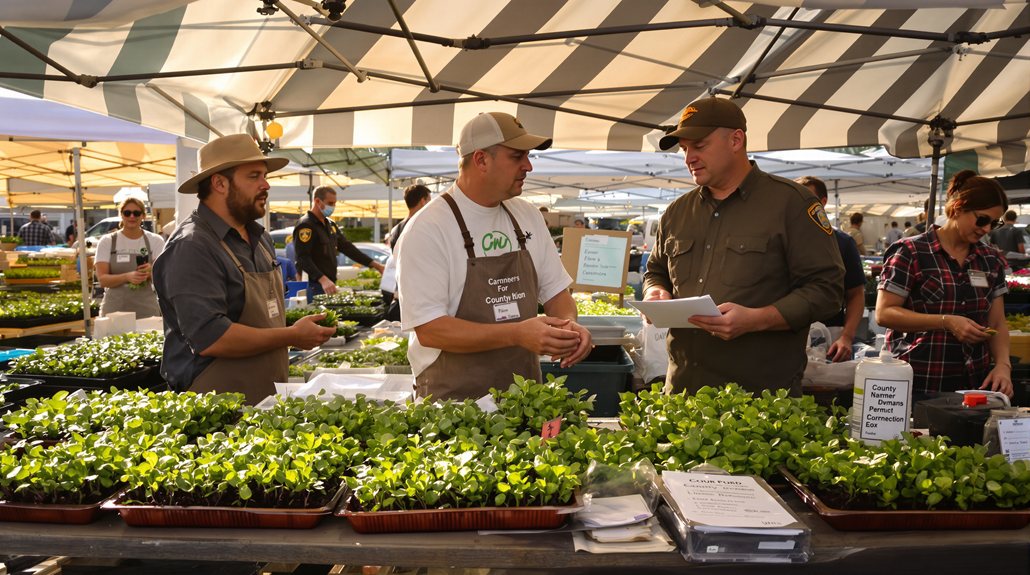
Under 3 Pa.C.S. section 5722, Pennsylvania treats microgreens as a raw agricultural commodity. That means you likely don’t need a retail food facility license to sell them. Washing, cutting, and packing into clamshells won’t cost you that exemption. But farmers market pages often ignore this and say every vendor needs a license—that’s the conflict. Seven counties, including Philadelphia and Allegheny, run their own rules too. Keep going to see what could still trip you up.
Key Takeaways
- Under 3 Pa.C.S. §5722, microgreens qualify as raw agricultural commodities, so no retail food license is likely needed.
- Pennsylvania’s Farmers Markets webpage conflicts with statute, claiming all vendors need a Retail Food License.
- Statute controls over web guidance; confirm exemption in writing with the Bureau of Food Safety at 717-787-4315.
- If licensing applies, temporary permits cost $14 but only cover facilities operating 14 days or less annually.
- Beyond state law, markets often require $1 million liability insurance naming the market as additional insured.
Do you need a retail food facility license to sell microgreens in Pennsylvania?
Most likely, no.
Pennsylvania law treats your microgreens as a raw agricultural commodity, and that comes with a mandatory licensing exemption.
But the state’s own website contradicts its own guidance, so you need to know which source actually controls before you assume you’re covered.
What the state statute says about raw agricultural commodities
Before you sell a single tray, check 3 Pa.C.S. section 5722. This section holds the Pennsylvania raw agricultural commodity definition.
It covers food in its raw or natural state.
That includes produce washed, colored, or otherwise treated in unpeeled natural form before marketing. Your microgreens fit this category if you sell them uncut and unprocessed.
No cooking, no mixing, no packaging with other ingredients.
Growers who understand this rule join a group who avoid unnecessary licensing costs. Growers who skip it often pay fees they don’t legally owe.
Section 5722 is short, but it carries real weight at inspection time.
Next, look at how this definition connects to your license exemption under section 5703.
Why the state website and the state guidance do not agree
Checking the Pennsylvania Department of Agriculture’s Farmers Markets page, you’ll hit a wall of confusion. It says every food vendor needs a Retail Food License. No mention of raw agricultural commodities. No mention of any exemption.
That page doesn’t match the law. The statute at 3 Pa.C.S. section 5703 says the exemption is mandatory. So does 7 Pa. Code section 46.1141(b). The Department’s own Farmers Market Guidelines, revised February 2026, confirm it too.
Other growers in your area have hit this same wall. Don’t guess which page is right. The statute controls, not the web page.
Call the Bureau of Food Safety at 717-787-4315. Get your Pennsylvania retail food facility license exemption confirmed in writing before you set up your stand.
What does a Pennsylvania retail food license cost if you do need one?
Most microgreens sellers don’t need a license, but if you do, plan on paying for it. A new owner-operated license under 50 seats costs $103. Renewal runs $82 a year, and a temporary permit for 14 days or less costs $14.
The new license and renewal fees
If your setup triggers a license, the cost depends on your business type. Small owner-operated growers pay less than bigger operations.
Here’s the breakdown other growers in your position rely on:
| License type | Fee | Who it applies to |
|---|---|---|
| New license, under 50 seats | $103 | Owner-operated small stands |
| New license, other facilities | $241 | Larger or non-owner operations |
| Annual renewal | $82 | All licensed vendors, every year |
Temporary vendors get a break too. A 14-day-or-less temporary food facility costs $14.
These numbers come straight from the Pennsylvania Department of Agriculture’s fee schedule. Know your category before you apply. That’s how other Pennsylvania farmers market vendor requirements get handled correctly, without overpaying or under-filing.
What a temporary food facility permit covers
A $14 temporary permit covers a fixed window, not open-ended selling. It applies to a facility operating 14 days a year or less. If you’re selling microgreens at farmers markets in Pennsylvania on a seasonal basis, this can fit your setup.
But check your math first. If you sell at a weekly market from May through October, you’ll blow past 14 days fast. That means you need the full annual license instead, not the temporary one.
Don’t guess on this. Call the Bureau of Food Safety at 717-787-4315 before you assume the $14 option applies. Get your actual selling schedule confirmed against the day count. That call saves you a licensing mistake later.
Does washing or packing microgreens cost you the Pennsylvania exemption?
Washing your microgreens doesn’t cost you the exemption.
The statute puts washing inside the definition of a raw agricultural commodity.
Penn State Extension disagrees and lists washing as an activity that requires a license, so you need to know both positions before you argue with an inspector.
Where the state draws the line between harvest and value-added work
Once you cut your microgreens, the next question is what you’re allowed to do to them. Harvesting isn’t processing. That fact keeps you inside the raw agricultural commodity definition under 3 Pa.C.S. section 5722.
Washing your microgreens stays inside that definition too. The statute allows produce washed in its unpeeled natural form.
Packing them into clamshells for market doesn’t change that status either.
Value-added work is different. Chopping, cooking, or mixing microgreens into a prepared product triggers licensing. That’s the line the state draws.
If you sell in Allegheny County, food safety rules follow the same state statute. The produce exemption applies there the same way it applies anywhere in Pennsylvania. County health departments don’t get to override state law.
Why one widely read source takes a stricter view than the statute
Penn State Extension doesn’t read the statute the same way. Their July 2025 guidance lists washing as an activity that requires a microgreens business license Pennsylvania growers mightn’t expect to need.
The statute disagrees. 3 Pa.C.S. section 5722 puts washing inside the definition of a raw agricultural commodity, not outside it.
Extension is widely read. Other growers quote it at markets across the state. That doesn’t make it the regulator.
Don’t build your plan on a webpage. Call the Bureau of Food Safety at 717-787-4315.
Ask them directly if washing your microgreens triggers licensing. Get the answer in writing before you set up your stand.
What changes if you sell in Philadelphia or Allegheny County?
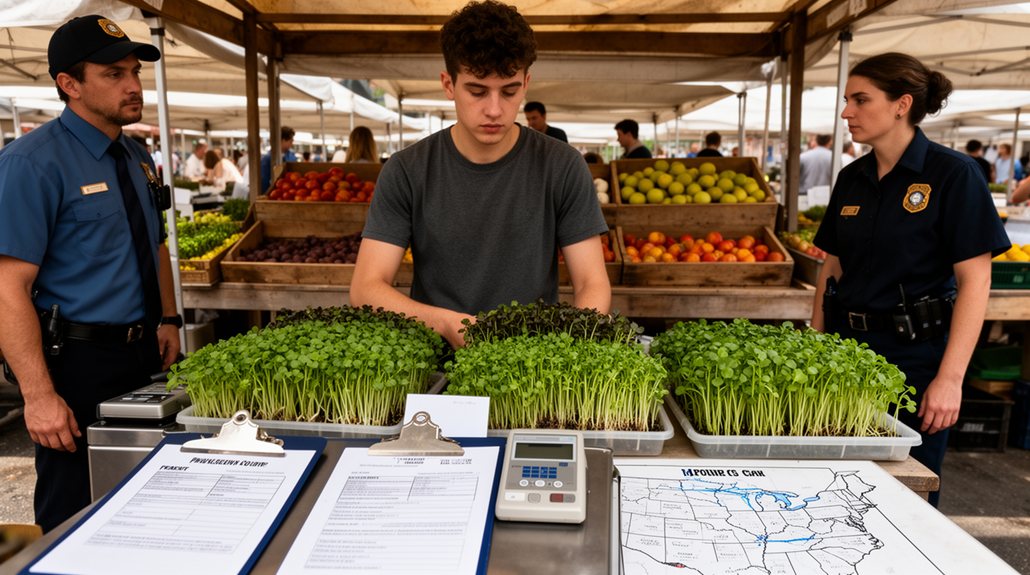
Seven Pennsylvania counties run their own food licensing programs, separate from the state system.
Philadelphia and Allegheny County are two of them, and they don’t always follow the state’s raw agricultural commodity exemption.
If you sell there, you need to check local rules before you set up your stand.
Why seven Pennsylvania counties run their own food licensing
If you sell in Philadelphia, Allegheny, Bucks, Chester, Montgomery, Delaware, or Erie County, state exemptions don’t automatically apply.
These seven counties run their own health departments under Pennsylvania’s local health administration law. Each one sets its own food licensing rules, separate from the state Department of Agriculture.
Philadelphia is the clearest example. A philadelphia farmers market vendor license comes from the Philadelphia Department of Public Health, not Harrisburg.
The raw agricultural commodity exemption you read about earlier may not carry over here.
Don’t assume your county follows state rules. Call your local health department before you set up a table.
Ask directly if raw microgreens need a permit in your county. Get the answer in writing, and keep it with your vendor paperwork.
The Philadelphia business license that catches growers from out of town
Growers coming from outside the city often miss one thing: Philadelphia requires a Commercial Activity License on top of any food permit. It doesn’t replace your microgreens license Pennsylvania rules require. It stacks on top of it.
You get this license through the Department of Revenue, not the Health Department. It costs nothing to apply, but you still need to register before your first sale.
Allegheny County works differently. It runs its own food safety program through the Allegheny County Health Department, separate from the state.
If you sell in either place, call ahead. Ask what applies to your specific stand. Don’t guess based on what worked in another county.
What do Pennsylvania markets require beyond the state?
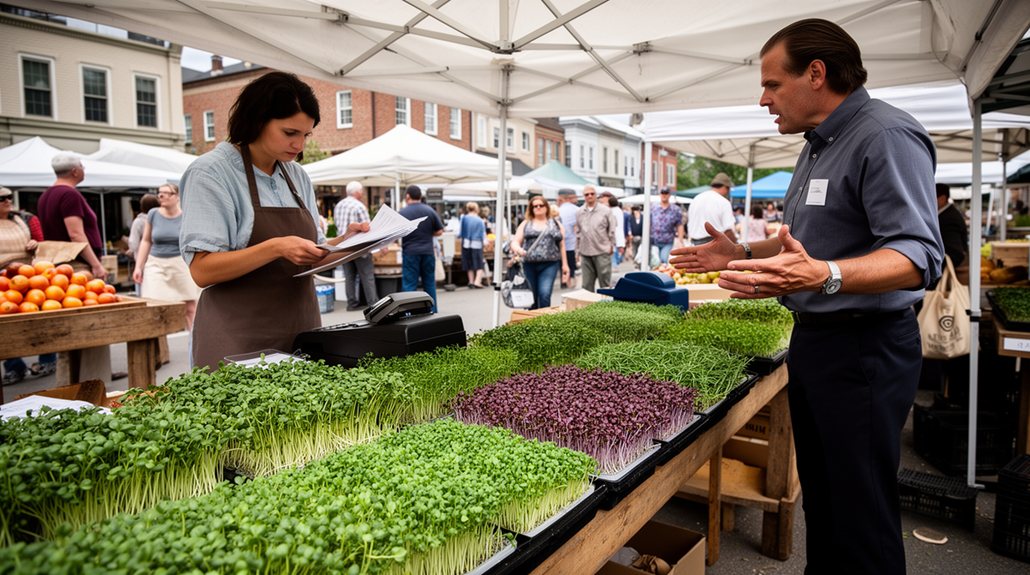
State law covers licensing, but markets set their own rules on top of it.
Most Pennsylvania markets require liability insurance, usually $1 million per occurrence, with the market named as additional insured.
That’s a separate hurdle from the exemption, and it’s the next thing to check before you apply.
Insurance limits and who gets named on the certificate
Most Pennsylvania markets ask for general liability insurance before you set up a table. This is standard practice for farmers market vendor insurance Pennsylvania markets require. You’re not alone in this. Every grower at the market carries the same coverage.
Most markets want at least $1 million in coverage. Some ask for $2 million. Check with your market manager to get the exact number.
The market itself usually needs to be named as an additional insured on your certificate. This protects the market and puts you in good standing with other vendors.
Ask your insurance agent for a “certificate holder” listing. Give them the market’s legal name and address. Bring a copy to your first market day.
How to compare Pennsylvania markets before you apply
Before you fill out any application, call the market manager directly. Every market runs its own rules on top of state law. Some want your own insurance certificate. Others require a set number of market days per season.
Learning how to become a farmers market vendor in Pennsylvania means checking each market separately, not just the state code. Dr. Booker T. Whatley taught growers to pick markets based on who shops there, not which one sits closest to home.
Compare markets before you commit:
| Market factor | Why it matters | Question to ask |
|---|---|---|
| Vendor fee | Cuts into your margin | Flat rate or percentage? |
| Customer base | Matches your product | Who shops here weekly? |
| Season length | Affects planning | Year-round or seasonal? |
| Stall rules | Limits your setup | Shared table or own space? |
Frequently Asked Questions
Do You Need a Business License to Sell Microgreens in Pennsylvania?
No, you don’t need a Retail Food License if you’re only selling raw, unprocessed microgreens. The exemption’s mandatory under state law. Call the Bureau of Food Safety at 717-787-4315 to confirm your setup qualifies.
Can You Sell Microgreens From Home in Pennsylvania?
Yes, you can sell microgreens from home. They’re a raw agricultural commodity, not a Limited Food Establishment product. You’re exempt from Retail Food Facility licensing, but you’re still subject to inspection under state rules.
Do You Need Insurance to Sell at Pennsylvania Farmers Markets?
State law doesn’t require insurance to sell microgreens. Most market managers do, though. Check with yours before signing up. Many growers carry basic liability coverage anyway, since it builds trust with vendors and shoppers around you.
Are Microgreens Profitable to Grow and Sell in Pennsylvania?
No income promises here. Your profit depends on your market fees, your crop mix, and how well you connect with regular customers. Growers who treat it like a real business tend to do better.
Do You Need a Scale or Certified Weights to Sell Microgreens?
If you sell by weight, you need a legal-for-trade scale, certified by Pennsylvania’s Bureau of Weights and Measures. Selling by the bunch or clamshell skips this step. Check with your county office before market day.