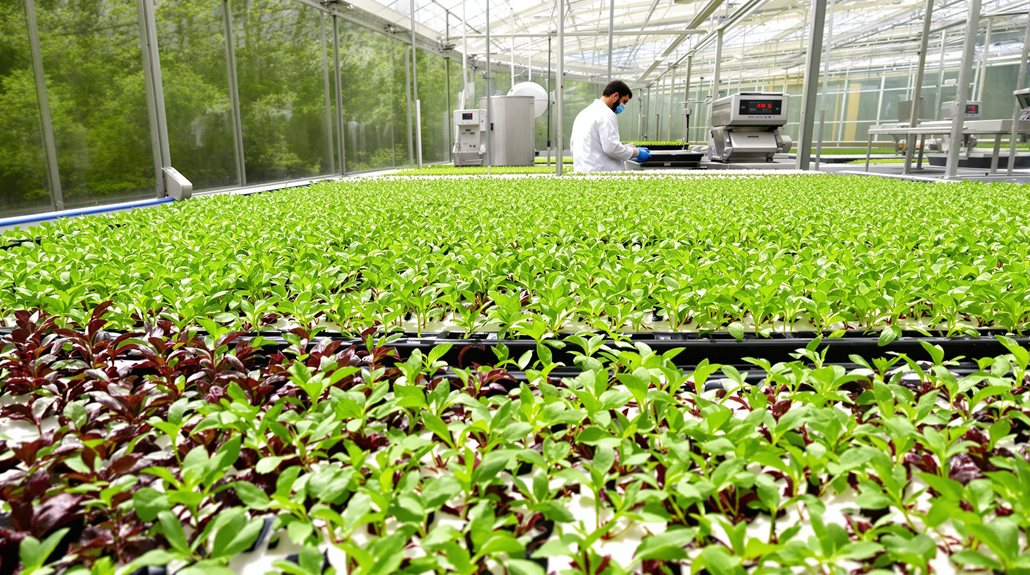
The USDA’s Agricultural Stabilization Assistance for Commercial Farms (ASCF) program launched June 2026 with $1.625 billion for specialty crop growers, and microgreens vendors selling at farmers markets qualify. You need a USDA farm number and 2024–2025 sales and cost records before applying. Submit your application in person at your local FSA office before August 7, 2026. Everything you need to know about eligibility, covered costs, and exactly how to apply is below.
Key Takeaways
- Microgreens growers qualify for ASCF funding as specialty crop producers, but must have a USDA farm number before applying.
- Contact your local FSA office immediately to confirm or obtain your farm number, as processing takes time before August 7.
- Gather 2024–2025 invoices, receipts, and sales logs now, since incomplete records reduce or eliminate your payment amount.
- Submit your application in person at your local FSA office; applications cannot be submitted online or by mail.
- After submission, record your FSA case number and respond promptly to any follow-up requests to avoid disqualification.
What is the USDA ASCF program and who qualifies?
USDA launched the Agricultural Stabilization Assistance for Commercial Farms program in June 2026 with $1.625 billion in total funding.
It’s built for specialty crop growers dealing with rising input costs and market upheavals.
Microgreens qualify as a specialty crop, and if you sell at farmers markets, this program was made for operations like yours.
Which specialty crop operations are eligible for ASCF payments
Commercial specialty crop growers operating in the U.S. are the target for this specialty crop assistance 2026 program. That means you need to be selling, not growing as a hobby.
USDA defines specialty crops to include vegetables, fruits, tree nuts, dried fruits, and horticulture crops. Microgreens fall under that classification.
You also need a registered commercial operation. A USDA farm number is required. If you don’t have one, contact your local FSA office now. Processing takes time, and August 7 is a hard cutoff.
The program offsets rising input costs and market disruptions. That covers exactly what small vendors are dealing with right now. If you’re selling at farmers markets, you’re in the right group.
Why microgreens growers at farmers markets should pay attention
So you qualify. The USDA ASCF program includes microgreens under its specialty crop classification. Most vendors at your market don’t know this program exists.
That’s your opening.
| What it covers | Why it matters |
|---|---|
| Rising input costs | Seeds, trays, lights, soil |
| Market interruptions | Lost sales, reduced foot traffic |
| Specialty crop growers | Microgreens are explicitly included |
| Commercial operations | Farmers’ market vendors qualify |
| $1.625 billion total | Real money, real deadline |
The August 7 cutoff is firm. Missing it means waiting for a program that may not return.
You’re already selling at markets. You’re already commercial. Apply.
How much money is available and what does it cover?
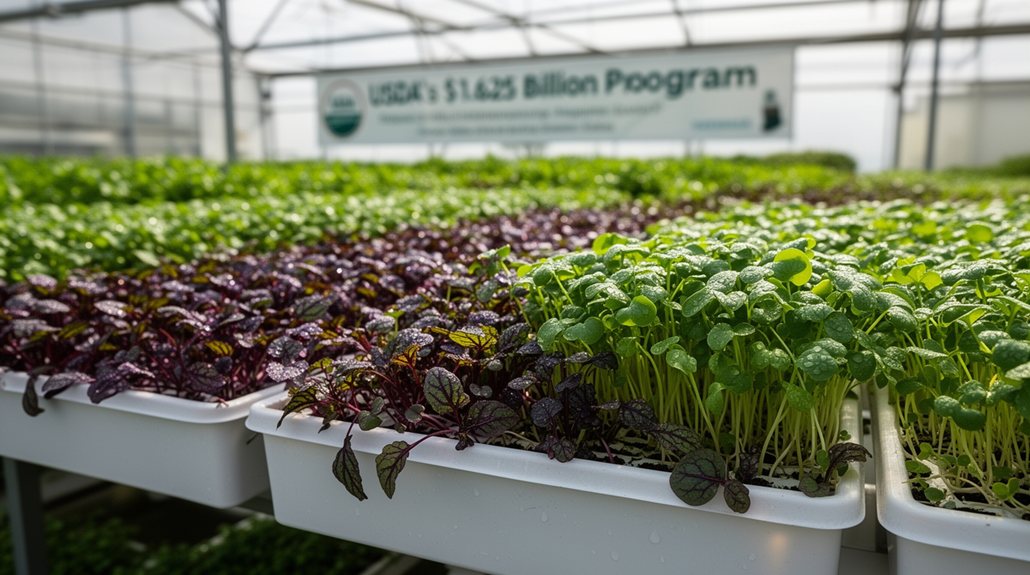
The ASCF program has $1.625 billion set aside for specialty crop growers nationwide.
It covers rising input costs like seeds, growing media, and packaging, plus losses tied to market interruptions.
Payment amounts are calculated based on your operation’s scale and documented expenses, so your records need to be current and specific.
What the $1.625 billion program pays for specifically
$1.625 billion breaks down into direct payments to commercial specialty crop growers. The USDA specialty crop payments target two specific cost areas.
| Payment category | What it covers |
|---|---|
| Input cost offsets | Seeds, growing media, packaging |
| Market interruption relief | Lost revenue from market closures |
| Infrastructure support | Equipment tied to commercial production |
You qualify if your operation is commercial, not a hobby setup.
Microgreens sit inside the same category as vegetables and horticulture crops. That puts you in the same pool as fruit and nut growers who’ve used these programs for years.
Your costs are real. This program acknowledges that directly.
How payments are calculated for small-scale specialty crop operations
Payment size ties directly to your documented costs and gross revenue from specialty crop sales. The ASCF program employs a formula based on your verifiable input expenses and market losses.
Your microgreens USDA payment starts with what you can prove. Seed costs, growing media, trays, lighting, and packaging all count. So does documented revenue loss from market disruptions.
FSA calculates your payment from your records. No records means no payment, or a smaller one. Start pulling invoices, receipts, and sales logs now.
Small-scale growers qualify the same way large farms do. The formula scales to your operation size. What matters is accuracy, not volume.
What do you need to apply for USDA ASCF payments?
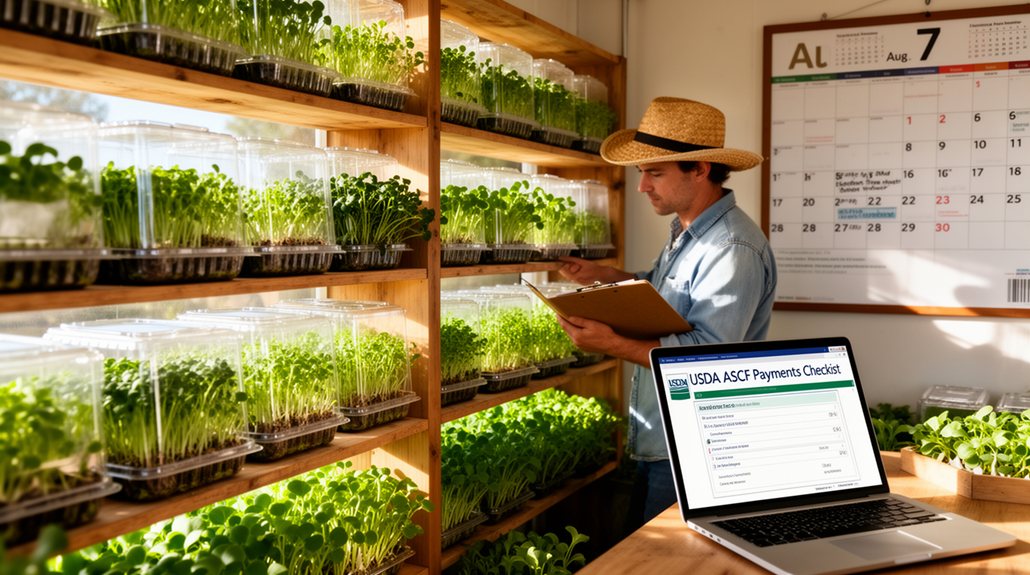
You need two things before you walk into a USDA FSA office: a farm number and your production records.
Most small vendors don’t have a farm number yet, and getting one takes time. Start there first, then pull your cost and sales documents together.
The USDA farm number requirement and how to get one fast
The USDA farm number is the first thing to sort out before you do anything else. Without it, your ASCF application goes nowhere.
Contact your local FSA office now. Processing takes time, and August 7 doesn’t move.
When you call, tell them you grow microgreens as a commercial operation and you need a farm number to apply for USDA FSA specialty crops assistance. They’ll walk you through the registration steps. Bring proof of your growing operation. A lease, utility bill for your grow space, or sales records all help.
Most farmers market vendors in this program have never registered with FSA before. You’re not behind. But you need to move today, not next week.
—
The MGW Farmers Market Finder has 7,842 USDA-verified markets searchable by zip code, city, or state. Employ it to find and compare markets near you before you apply – markets.microgreensworld.com.
The Microgreens Growth Path Tool maps your first move using local market data – growthpath.microgreensworld.com.
Documents and records to gather before August 7
Before you walk into your FSA office, gather your records first. Missing paperwork delays your microgreens grower financial assistance application.
Pull your 2024 and 2025 sales records. Farmers market receipts, invoices, and Square or PayPal transaction reports all count.
Bring proof of input costs. Seed purchases, growing medium receipts, and utility bills tied to production work here.
You’ll also need your USDA farm number. No number means no application.
Prepare a photo ID and your business formation documents if you’re an LLC or sole proprietor.
FSA staff will ask about your acreage or production space. Have that number ready in square feet or acres.
How do you submit a USDA ASCF application?
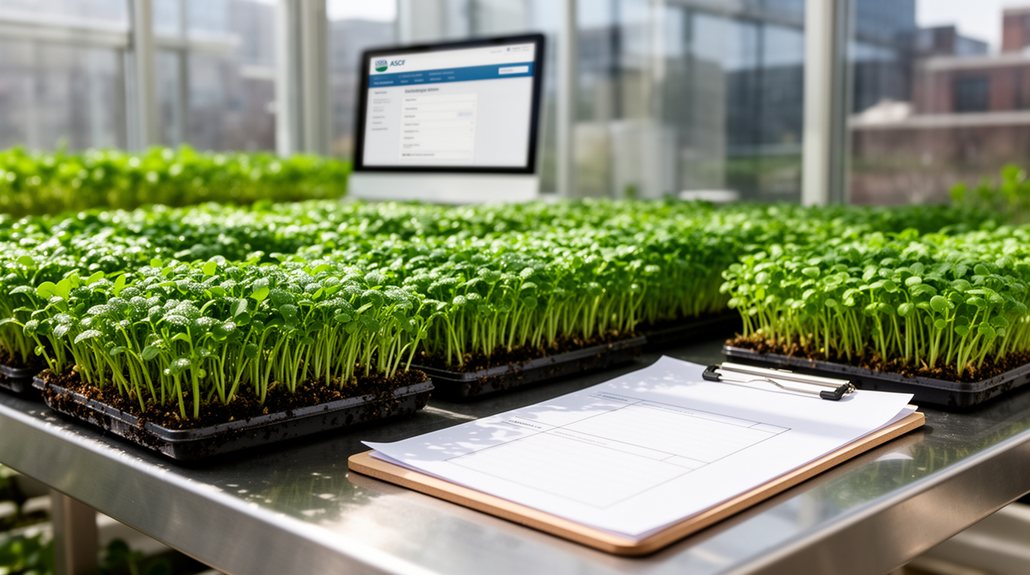
You don’t mail anything in and you don’t apply online.
USDA ASCF applications go through your local Farm Service Agency office in person. Knowing the exact steps before you walk in saves time and reduces the chance of a rejection.
Where to go and what the process looks like
Applications go through your local USDA Farm Service Agency office. Find yours at fsa.usda.gov/contact-fsa.
Walk in or call ahead. Tell them you’re applying for the ASCF program before the usda ascf application deadline of August 7, 2026.
You’ll need your USDA farm number at the appointment. If you don’t have one, contact your FSA office immediately. Processing takes time, and August 7 won’t move.
Bring documentation showing your microgreens operation is commercial. Sales records, vendor permits, and market agreements work. Hobby growers don’t qualify.
The MGW Farmers Market Finder has 7,842 USDA-verified markets searchable by zip code, city, or state. Use it to find and compare markets near you before you apply – markets.microgreensworld.com.
The Microgreens Growth Path Tool maps your first move using local market data – growthpath.microgreensworld.com.
What happens after you submit
Once your FSA office receives your application, they’ll assign it a case number. Track it. Don’t assume silence means approval.
Review timelines vary by office workload. The specialty crop assistance program August 2026 deadline means offices are processing high volume.
| Stage | What happens | Your action |
|---|---|---|
| Submission | Case number assigned | Write it down |
| Review | FSA verifies farm number | Answer calls promptly |
| Decision | Approval or denial issued | Appeal within 30 days |
If FSA contacts you for missing documents, respond same day. Delays on your end can disqualify your application.
Other growers in your region are moving through this same process. Stay responsive and keep copies of everything you submitted.
What should farmers market microgreens vendors do right now?
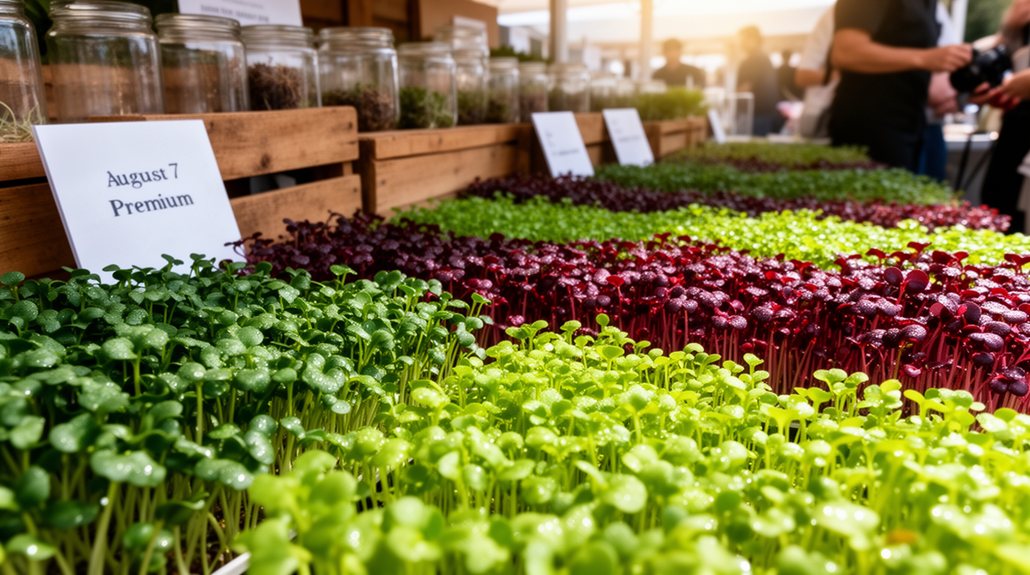
You’ve got two steps to take this week before August 7 closes the window.
First, confirm you have a USDA farm number.
Second, locate your FSA office and call them today.
The two steps to take this week before the window closes
If you sell microgreens at a farmers market, two actions need to happen this week.
First, confirm you have a USDA farm number. Without one, you can’t apply. Call your local FSA office today. Processing takes time, and August 7 doesn’t move.
Second, gather your commercial sales records. The ASCF program targets commercial operations. You’ll need documentation that proves active market sales, not hobby-level output.
A usda farm payment microgreens application without both pieces is a dead end. Other growers in your market are likely missing this window entirely. That’s your advantage if you move now.
The MGW Farmers Market Finder has 7,842 USDA-verified markets searchable by zip code, city, or state. Employ it to find and compare markets near you before you apply – markets.microgreensworld.com.
The Microgreens Growth Path Tool charts your first move using local market data – growthpath.microgreensworld.com.
How to find your local FSA office and what to ask
For most microgreens vendors, the FSA office is less than 30 miles away. Go to fsa.usda.gov and employ the office locator tool.
Call before you go. Tell them you’re a specialty crop grower applying for ASCF funding.
Ask two things. First, do you have a USDA farm number on file? Second, what documents do they need from you to process your application before August 7?
If you don’t have a farm number, say that immediately. Processing takes time you don’t have.
The MGW Farmers Market Finder has 7,842 USDA-verified markets searchable by zip code, city, or state. Employ it to find and compare markets near you before you apply – markets.microgreensworld.com.
The Microgreens Growth Path Tool maps your first move using local market data – growthpath.microgreensworld.com.
Frequently Asked Questions
Can You Apply to USDA ASCF if You Sell at Multiple Markets?
Yes, you can. Selling at multiple markets doesn’t disqualify you. Your eligibility is based on your farm operation, not how many markets you’re in.
Does Selling Online or Through a CSA Affect Your ASCF Eligibility?
Selling online or through a CSA doesn’t disqualify you. ASCF eligibility is based on your crop classification and commercial status, not your sales channel. All revenue streams count toward proving you’re a commercial operation.
What Happens if the August 7 Deadline Passes Before Your Farm Number Arrives?
You’re locked out. The FSA won’t accept late applications. Call your local FSA office today, explain the timeline, and ask if an emergency processing option exists before August 7.
Can a Beginning Farmer With One Growing Season Qualify for ASCF Payments?
You can qualify with one season. The ASCF doesn’t set a minimum years-in-operation requirement. You need a farm number and proof you’re selling commercially, not growing as a hobby.
Is There an Income or Farm Size Limit That Disqualifies Small Microgreens Operations?
There’s no income or farm size minimum listed for ASCF. You qualify if you’re a commercial operation, not a hobby grower. Confirm your status with your local FSA office before August 7.