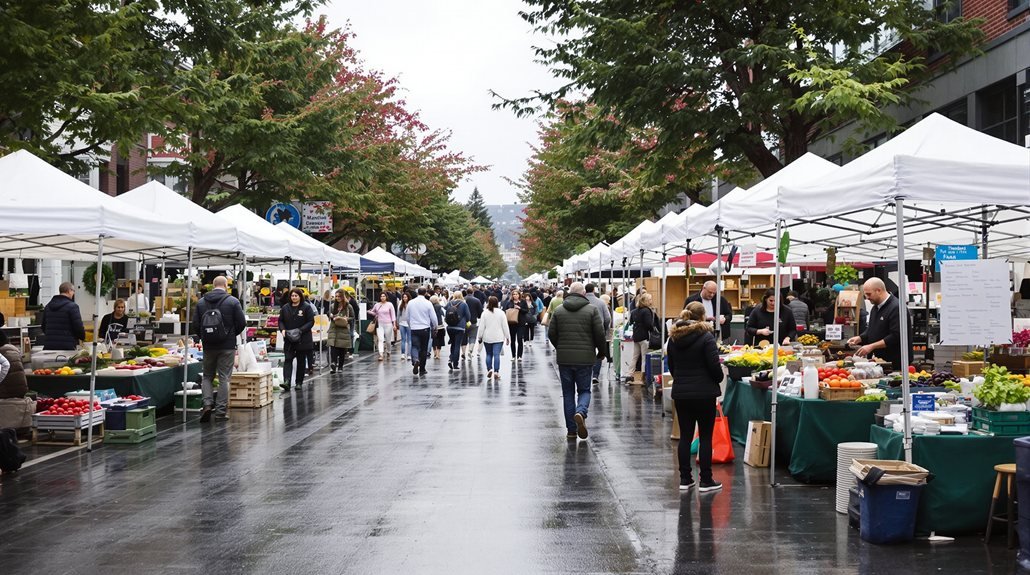
To get a vendor spot at Ballard Farmers Market, apply through the Neighborhood Farmers Market Alliance (NFMA). You’ll need a Washington State business license and proof of product compliance. Cottage food vendors must include kitchen certification. Applications are reviewed seasonally, so missing the window means waiting for the next cycle. Ballard favors vendors who fill gaps in the current mix — specialty produce is underrepresented right now. Keep going to learn exactly how to position your application.
Key Takeaways
- The Neighborhood Farmers Market Alliance (NFMA) manages vendor applications for Ballard Farmers Market and six other Seattle markets.
- Application windows open seasonally, so missing a cycle means waiting until the next available window opens.
- Required documentation includes a Washington State business license, product compliance proof, and cottage food or commercial kitchen certification.
- Selection prioritizes vendors filling current category gaps, making underrepresented specialties like microgreens stronger candidates for approval.
- Complete, accurate applications speed committee review; incomplete submissions stall the process and delay vendor consideration.
What should you know about Ballard Farmers Market before you apply?
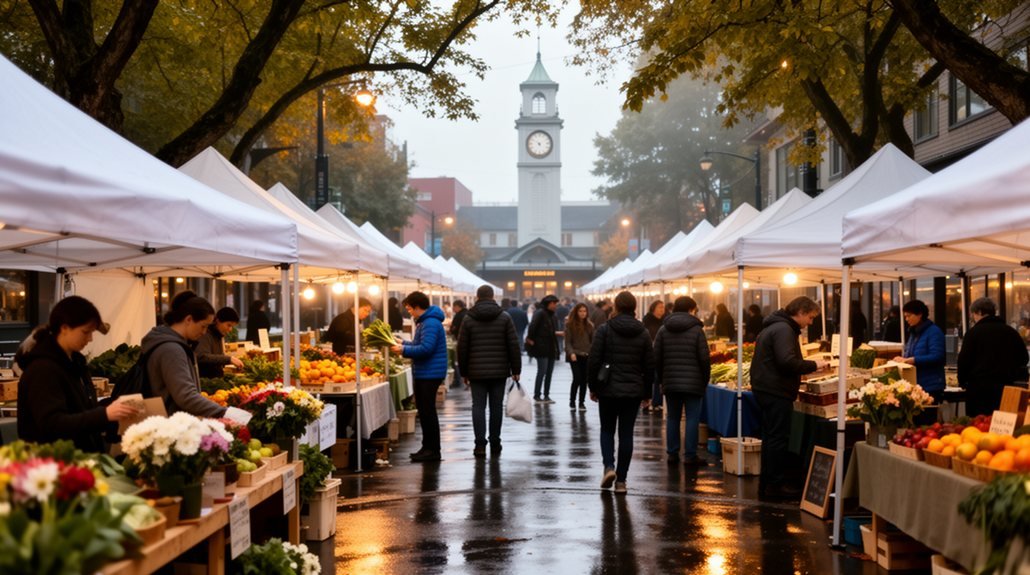
Ballard Farmers Market runs year-round on Sunday mornings in Seattle’s Ballard neighborhood. It’s managed by the Neighborhood Farmers Market Alliance and draws local residents, not tourists. That difference changes everything about who you’re selling to and what they’ll buy.
What Makes Ballard Farmers Market Different From Other Washington Markets
Most Seattle farmers markets run seasonally and close by November. Ballard runs every Sunday, year-round, in the Ballard neighborhood.
That consistency matters for a Ballard farmers market vendor. You’re not rebuilding your customer base each spring. You’re selling to the same local residents week after week.
Pike Place draws tourists. Ballard draws neighbors. That’s a different selling environment with different pricing expectations.
Prices at Ballard run lower than Pike Place, but repeat buyers spend more over time. Locals come back when they trust a product.
The market operates under the Neighborhood Farmers Market Alliance. That structure keeps vendor standards consistent and gives serious growers a stable, community-rooted selling floor.
Who Shops There and What They Actually Buy
The shoppers who come through Ballard on Sunday mornings aren’t browsing. They’re filling their weekly grocery list from vendors they already trust.
This is a repeat-customer market. Residents return every Sunday. That loyalty matters when you’re building a microgreens customer base.
| Shopper type | What they buy | Why it matters |
|---|---|---|
| Home cooks | Specialty produce, herbs | High repeat rate |
| Health-focused buyers | Microgreens, sprouts | Low price resistance |
| Young families | Fresh, local food | Weekly basket builders |
Before you submit a Ballard farmers market vendor application, know this crowd. They want to recognize your face as much as your product. Familiarity builds your sales floor here faster than signage ever will.
What does the vendor mix look like at Ballard Farmers Market?
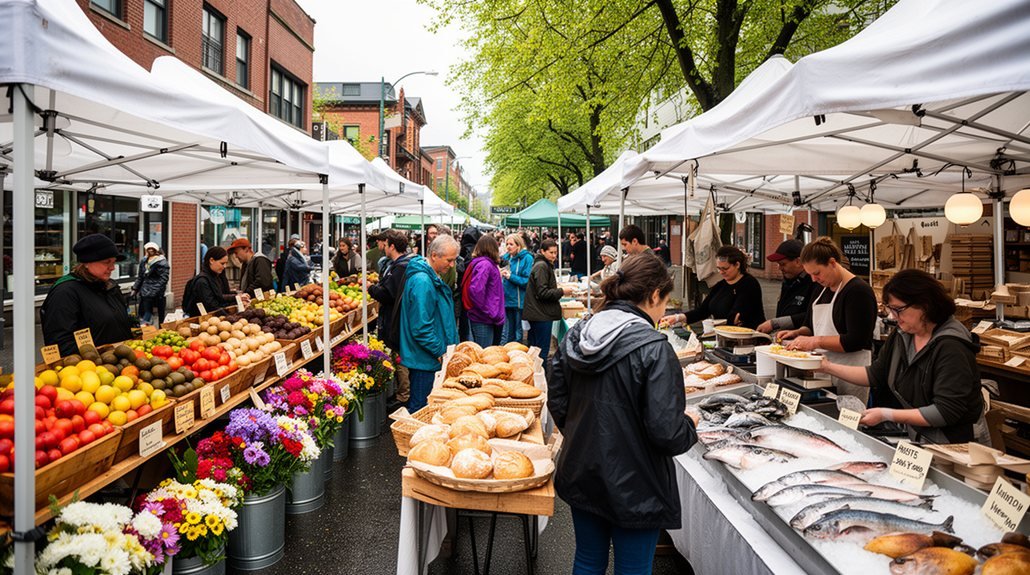
Ballard Farmers Market is heavy on baked goods, prepared foods, and fresh produce from established farms.
Specialty produce vendors, including microgreens growers, are under-represented across most vendor categories. That gap is where your application gets traction.
Which categories are overrepresented at Ballard Farmers Market
Prepared food vendors consistently take up the most space at Ballard Farmers Market. Hot food stalls, baked goods, and packaged preserves fill a large share of available slots.
Baked goods vendors are especially dense. Walk the market on any given Sunday and you’ll count more pastry and bread tables than any other single category.
Flower growers are also well-represented. They move product fast, so the market keeps renewing their spots.
Specialty produce is thin by comparison. That’s where the gap opens for a microgreens vendor. Understanding Ballard market vendor requirements means knowing which categories are already full before you apply.
Don’t compete where the space is already gone. Find the underserved lane and build your application around it.
Where the gap is for specialty produce vendors
Across all vendor categories at Ballard Farmers Market, specialty produce consistently has the fewest active vendors. That’s the gap you’re looking for.
Most booths at Ballard carry baked goods, prepared foods, or protein. Specialty crops like microgreens appear rarely.
Dr. Booker T. Whatley’s framework is direct: know your customer before you choose your market. Visit Ballard as a customer first. Watch what moves, then identify what’s missing.
Microgreens fit Ballard’s food-literate, local buyer base. These customers return weekly and buy with intention.
That vendor gap is your actual strategy for the Ballard Farmers Market application process 2026. Applications with a clearly underrepresented product get noticed. You’re not competing. You’re filling a documented hole.
What does the Ballard Farmers Market vendor application process involve?
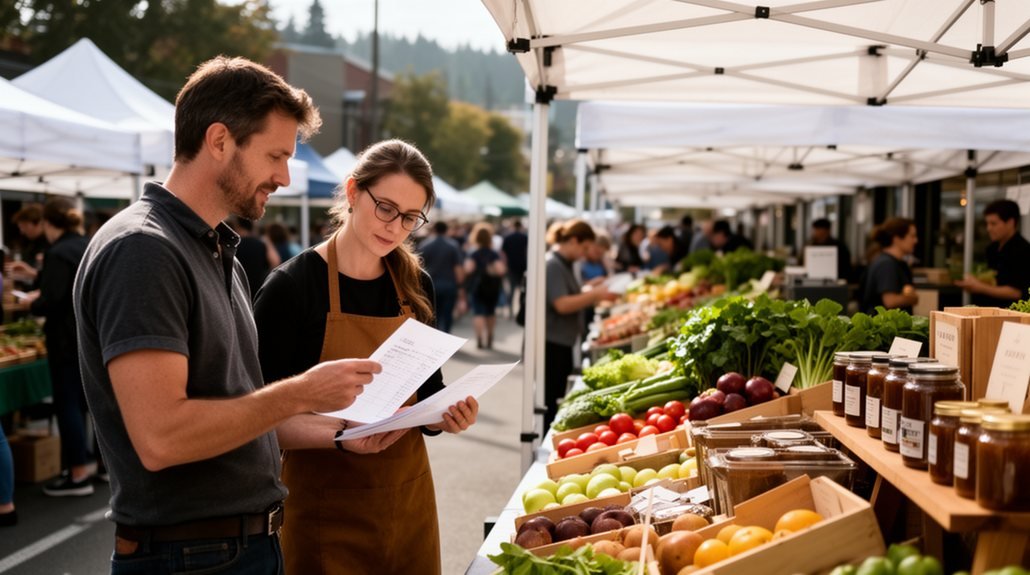
The Neighborhood Farmers Market Alliance runs the application process for Ballard. You’ll need to meet their requirements before you even submit.
The selection process is competitive, and knowing how it works gives you a real advantage.
What the Neighborhood Farmers Market Alliance requires before you submit an application
Before you fill out a single form, you need to understand who’s running this process. The Neighborhood Farmers Market Alliance manages Ballard and six other Seattle markets. They set the rules, review every application, and decide who gets in.
The NFMA prioritizes vendors who fit gaps in the current product mix. That means your product category matters before your application does.
You’ll need a valid Washington State business license and proof of product compliance. If you’re selling food, expect to provide cottage food documentation or a commercial kitchen certificate.
The Neighborhood Farmers Market Alliance application opens seasonally. Missing that window means waiting another full cycle. Know the timeline before you prepare anything else.
What the selection process looks like
Once you submit your application to the Neighborhood Farmers Market Alliance, it moves through a structured review. Staff check that your paperwork is complete before anything else happens.
They look at your product category, your certifications, and whether your offering fits a gap in the current vendor mix. Specialty produce like microgreens gets evaluated against what’s already at the Ballard Sunday market.
If you pass the initial screen, a committee reviews your full application. They prioritize vendors who serve the local resident base, not one-time buyers.
You may wait several weeks for a decision. Incomplete applications stall here. Make sure every document is attached before you submit the Ballard Sunday market vendor application. Approval isn’t guaranteed, but preparation moves you forward.
What do microgreens vendors specifically need to know about Ballard Farmers Market?
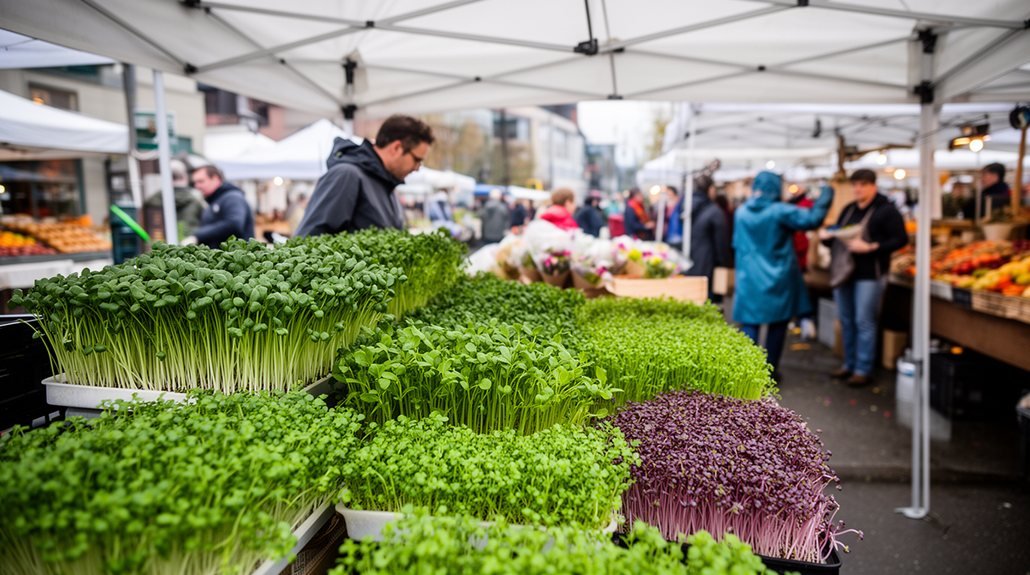
Ballard’s customer base skews local, repeat, and food-literate.
That’s a direct match for a specialty produce vendor selling microgreens.
What you sell there and how you position it will determine whether you build a weekly following or stall out after a few Sundays.
Why Ballard Farmers Market’s customer base is a strong match for specialty greens
What makes Ballard work for specialty greens isn’t foot traffic. It’s the customer type. Ballard draws local residents, not tourists. These are repeat buyers who come back every Sunday.
That repeat behavior matters for microgreens at Ballard Farmers Market. A tourist buys once. A neighbor builds a habit. You’re selling to people who plan their week around the market.
Seattle’s food culture runs deep. Buyers here already know what specialty crops are. You don’t spend time explaining what microgreens are. You spend time building regulars.
Ballard’s customer base shops with intention. They’re looking for local, they recognize quality, and they remember vendors who show up consistently. That’s the environment where a microgreens vendor can build a real weekly customer list.
What sets successful vendors apart at Ballard Farmers Market
Vendors who last at Ballard aren’t just showing up with good product. They know the neighborhood and they show up consistently.
Ballard draws repeat buyers. Those customers remember you by week three. They come back when they recognize your face and your trays.
Your seattle farmers market vendor application needs to reflect that you understand the community dynamic. Don’t submit a generic pitch. Name the neighborhood. Name the crop gap you’ve identified.
Specialty produce vendors face less competition than baked goods stalls. That’s your opening. But you have to own it in writing and at the table.
Learn your customers before you apply. Watch what sells on two or three visits. Then build your application around what’s missing, not just what you grow.
How do you find Ballard Farmers Market and locate other markets like it near you?
Ballard isn’t the only market worth looking at in Washington. The MGW Farmers Market Finder covers 7,842 USDA-verified markets across all 50 states, and you can search by zip code, city, or state to pull up every option near you. Before you apply anywhere, consult that list to compare market size, season length, and vendor category gaps.
Using the MGW Market Finder to scout markets in Washington
For markets in Washington state, the MGW Farmers Market Finder at markets.microgreensworld.com covers 7,842 USDA-verified markets across all 50 states. Search by zip code, city, or state to pull up results fast.
Type in Seattle and you’ll see Ballard alongside other neighborhood markets in the area. Each listing shows operating season, location, and market type.
That data matters before you apply anywhere. You want to compare markets side by side, not guess which ones fit your product.
If you’re serious about becoming a seattle neighborhood farmers market vendor, start here. Ballard may be the right fit. Another market might be closer or less competitive.
Look at what’s available first. Then decide where to apply.
What to look for before you apply to any Washington market
Finding the right market takes more than a zip code search. You need to know who shops there and why.
For a seattle local farmers market vendor, customer type matters more than foot traffic numbers. Ballard draws repeat residents. Pike Place draws tourists. Those are two completely different businesses.
Before you apply anywhere, check three things. Who already sells specialty produce? How many vendors are in your category? Does the market run year-round or seasonally?
Ballard operates every Sunday through the Neighborhood Farmers Market Alliance. That consistency builds a loyal customer base you can count on week after week.
Look at vendor density in your category. Baked goods and prepared food stalls are crowded. Specialty produce has gaps. That gap is where you fit.
Frequently Asked Questions
Does Ballard Farmers Market Charge Vendors a Percentage of Daily Sales?
Ballard Farmers Market doesn’t charge a flat daily fee. Instead, you pay a percentage of your daily sales. That keeps your upfront risk low and ties your costs directly to what you actually earn.
Can a Vendor Hold a Spot at Ballard While Selling at Other Seattle Markets?
You can sell at other Seattle markets while holding a spot at Ballard. Most vendors do. Just confirm your schedule with the Neighborhood Farmers Market Alliance so your booth stays active.
How Far in Advance Does Ballard Farmers Market Open Applications Each Year?
Ballard typically opens vendor applications two to three months before the season starts. Check the Neighborhood Farmers Market Alliance website in late fall so you’re ready when the window opens.
Does Ballard Farmers Market Require Vendors to Carry Liability Insurance?
Yes, you’ll need liability insurance to sell at Ballard. Most markets require at least $1 million in coverage. Get your certificate of insurance ready before you submit your application.
What Happens if a Ballard Vendor Misses a Market Day Without Notice?
If you miss a market day without notice, you risk losing your spot. The Alliance tracks no-shows. Repeated absences without communication can get your vendor agreement terminated.