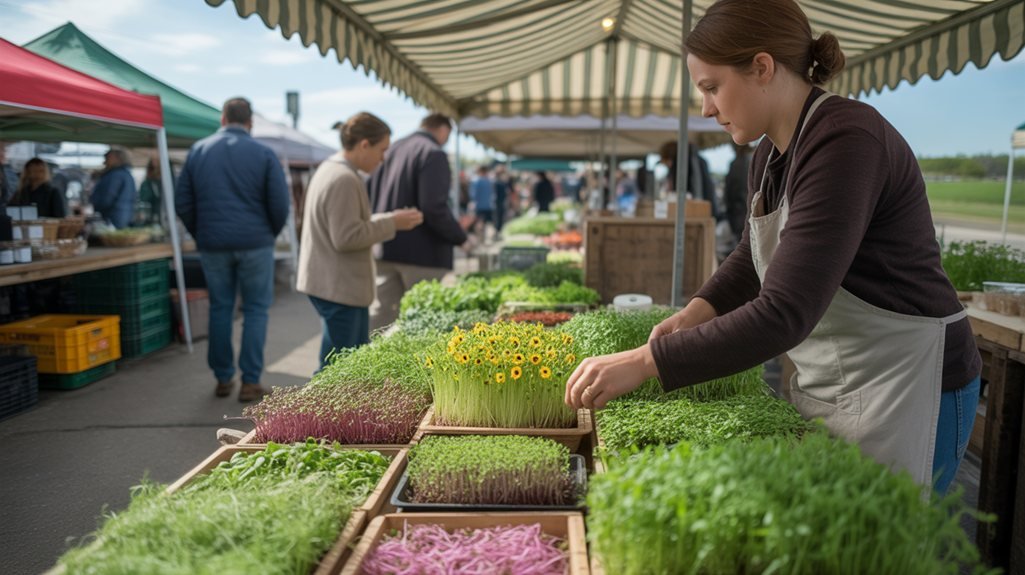
Kansas offers roughly 98 active farmers markets, with Wichita, Lawrence, and Overland Park representing the strongest entry points for microgreens vendors. You’ll encounter distinct corridor dynamics in each city—Lawrence’s university-driven specialty demand, Overland Park’s high-volume suburban buyers, and Wichita’s distributed neighborhood markets. Booth fees range from $15–$25 at rural venues to $40–$75 weekly in urban markets. Sunflower and pea shoots consistently outperform specialty varieties early on, and what follows covers everything you need to compete effectively.
Key Takeaways
- Kansas has approximately 98 USDA-listed farmers markets, with the strongest vendor opportunities concentrated in Wichita, Lawrence, and Overland Park.
- Submit vendor applications in February or March, as market rosters often fill before opening day, especially in Overland Park.
- Sunflower and pea shoots consistently outperform specialty microgreen varieties and should anchor your initial product mix.
- Booth fees range from $15–$25 at rural markets to $40–$75 weekly at urban markets in Wichita or Overland Park.
- Use the MGW Farmers Market Finder at markets.microgreensworld.com to filter Kansas markets by location, fees, and category availability.
Farmers Markets in Kansas for Microgreens Vendors
Kansas sits in the middle of a regional food economy where direct-to-consumer sales have expanded steadily, and with approximately 98 USDA-listed farmers markets statewide, it offers microgreens vendors meaningful access to established buyer traffic.
You’ll find the strongest market density concentrated in Overland Park, Lawrence, and Wichita, where consistent foot traffic and customer familiarity with specialty produce create conditions worth evaluating seriously.
The Kansas market calendar runs primarily spring through fall, which means your production schedule and market entry strategy need to align with that seasonal window from the outset.
Why Kansas Markets Are Worth Your Attention
Across the Great Plains, farmers markets have quietly become reliable distribution points for specialty produce, and Kansas is no exception. The USDA database currently lists approximately 98 farmers markets kansas vendors can access, a figure that reflects genuine regional demand rather than seasonal novelty.
As a microgreens vendor kansas growers compete in a market environment where differentiation matters, and microgreens occupy a niche that most conventional produce vendors simply can’t fill. Strong concentrations exist in Overland Park, Lawrence, and Wichita, each city representing distinct customer demographics and purchasing behaviors worth studying before you commit to a booth fee.
The primary season runs spring through fall, giving you a structured window to build customer relationships, hone your product mix, and establish consistent weekly volume across multiple venues.
What the Kansas Market Season Looks Like
Most Kansas farmers markets operate on a spring-through-fall cycle, with the bulk of activity concentrated between May and October, though some urban markets in Wichita and Overland Park extend their calendars into late November to capture holiday purchasing.
If you’re targeting farmers markets Kansas microgreens opportunities, timing your vendor application around February or March gives you the strongest shot at securing a spot before slots fill. The Overland Park farmers market, one of the state’s higher-traffic venues, typically locks in its vendor roster well before opening day.
Shoulder months like April and November present real strategic value, since competition thins while customer foot traffic remains viable. Understanding this seasonal architecture lets you plan production schedules, manage inventory cycles, and approach market managers with credible, well-timed proposals.
How to Find the Right Market in Kansas
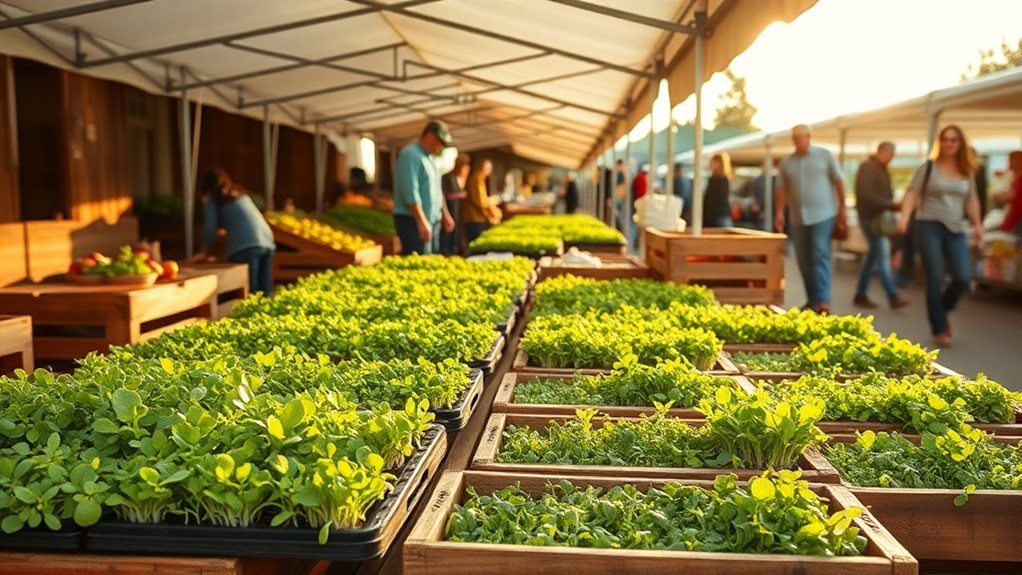
Before you apply to any market in Kansas, you need to assess vendor density, foot traffic patterns, and whether the market’s existing produce mix actually creates demand for microgreens rather than saturating it.
Overland Park’s market infrastructure, particularly along the Johnson County corridor, supports higher-volume vendors who can move product consistently across a longer weekly window.
Lawrence and Wichita each present distinct dynamics worth studying, with Lawrence‘s proximity to the university district shaping a buyer profile that differs considerably from Wichita’s broader, more dispersed customer base.
What to Look for Before You Apply
Finding the right Kansas farmers market isn’t simply a matter of proximity, because a market two miles away with poor foot traffic will outperform a distant one every single time. Before you submit your microgreens booth farmers market application, evaluate each market systematically.
| Factor | Strong Signal | Weak Signal |
|---|---|---|
| Weekly attendance | 500+ consistent shoppers | Under 200, declining |
| Vendor diversity | Balanced food categories | Oversaturated produce |
| Management responsiveness | Replies within 48 hours | Slow or vague communication |
Every farmers market vendor Kansas applicants should study this framework before committing. Market fees, exclusivity clauses, and setup requirements all compound quickly, so understanding what you’re entering protects your margins before your first sell-through.
Use the free Market Finder at [markets.microgreensworld.com](https://markets.microgreensworld.com) to identify qualified Kansas markets now.
Markets Near Overland Park
Overland Park sits within one of Kansas’s densest market corridors, where Johnson County‘s suburban infrastructure supports consistent year-round consumer spending and multiple competing venues within a short radius. This concentration means you’re not locked into a single application cycle. Vendors who’ve exhausted options here often expand toward the lawrence farmers market, where a university-anchored demographic reliably supports specialty produce, or the wichita farmers market, which draws broader regional traffic across Sedgwick County.
Each corridor operates on distinct seasonal rhythms and vendor capacity thresholds. Before committing an application, verify current vendor rosters, booth fee structures, and product category saturation. Microgreens occupy a narrow niche, and understanding where that niche remains underserved gives you a measurable competitive advantage before you ever submit paperwork.
Markets Near Lawrence and Wichita
Lawrence and Wichita represent two structurally different market environments, and that distinction shapes how you’ll approach your vendor applications in each corridor.
Lawrence operates with a university-driven buyer base, where demand for specialty produce, including microgreens for sale kansas shoppers actively seek, runs consistently through the academic calendar. Wichita distributes volume across several neighborhood markets, giving farmers market kansas vendors more entry points but requiring sharper positioning.
| Factor | Lawrence | Wichita |
|---|---|---|
| Market Scale | Concentrated, dense | Distributed, broader |
| Buyer Profile | University community | Suburban households |
| Entry Timing | Spring application | Rolling availability |
Understanding these structural differences before you apply prevents wasted effort and positions your microgreens operation more strategically from the start.
What to Expect When You Get There
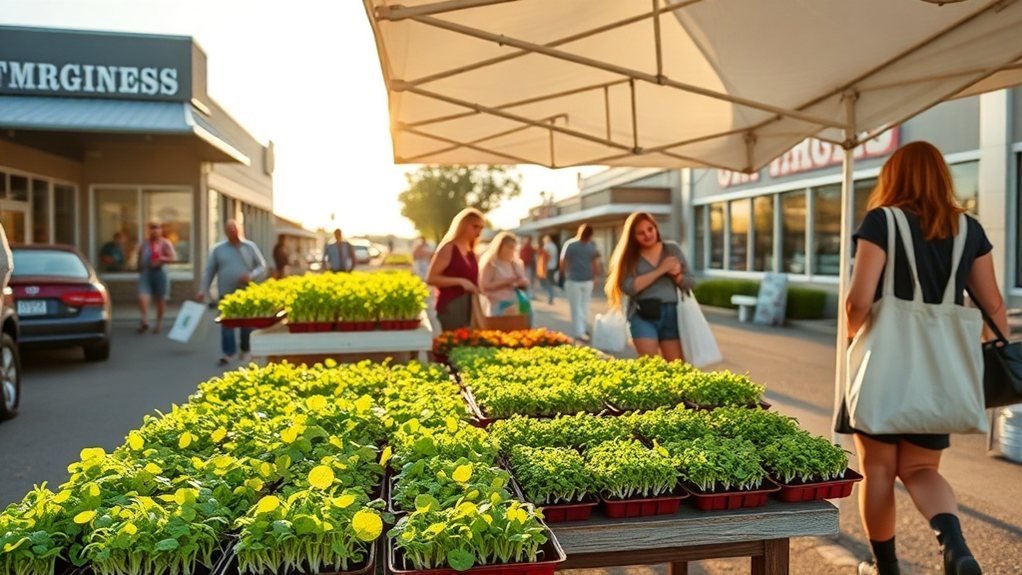
Once you’ve secured a spot at a Kansas market, the operational realities of booth fees and product selection become immediately relevant to your planning.
Most markets in Kansas charge vendors a daily or seasonal fee, and understanding that structure early lets you calculate whether a given market’s foot traffic justifies the cost.
What you bring to the booth matters just as much as showing up, since Kansas shoppers at established markets like those in Overland Park and Lawrence have demonstrated consistent interest in specialty greens, particularly sunflower, pea shoots, and radish varieties.
Booth Fees and Setup Basics
Before you commit to a specific market, you need a clear picture of what booth fees actually look like in Kansas, because the range is wider than most new vendors expect. Smaller rural markets frequently charge between $15 and $25 per day, while established urban markets in Wichita or Overland Park can run $40 to $75 weekly. Understanding how to get a farmers market booth means budgeting accurately before your first application, since fee structures vary by season length, booth size, and market classification.
At a microgreens farmers market booth, your standard 10×10 canopy, a folding table, and a weighted base constitute the functional minimum. Some markets require additional liability insurance documentation, so confirm requirements before your setup date.
What Moves at Kansas Markets
Typically, microgreens move fastest at Kansas markets when shoppers already understand how to employ them, which means your strongest buyers will be home cooks who follow food content online, restaurant sourcing staff doing weekend reconnaissance, and health-focused regulars who return weekly once they trust your product.
When you’re selling microgreens locally, sunflower and pea shoots tend to outperform specialty varieties early in your vendor tenure, because their flavor profiles require minimal explanation.
Sell microgreens at farmers market stalls in Wichita or Lawrence long enough, and you’ll notice that sampler trays accelerate the trust-building cycle considerably.
Radish and amaranth move once customers have a baseline familiarity with your table.
Kansas buyers respond to consistency, so showing up every week matters more than carrying an exhaustive variety selection.
Getting Your Application Ready
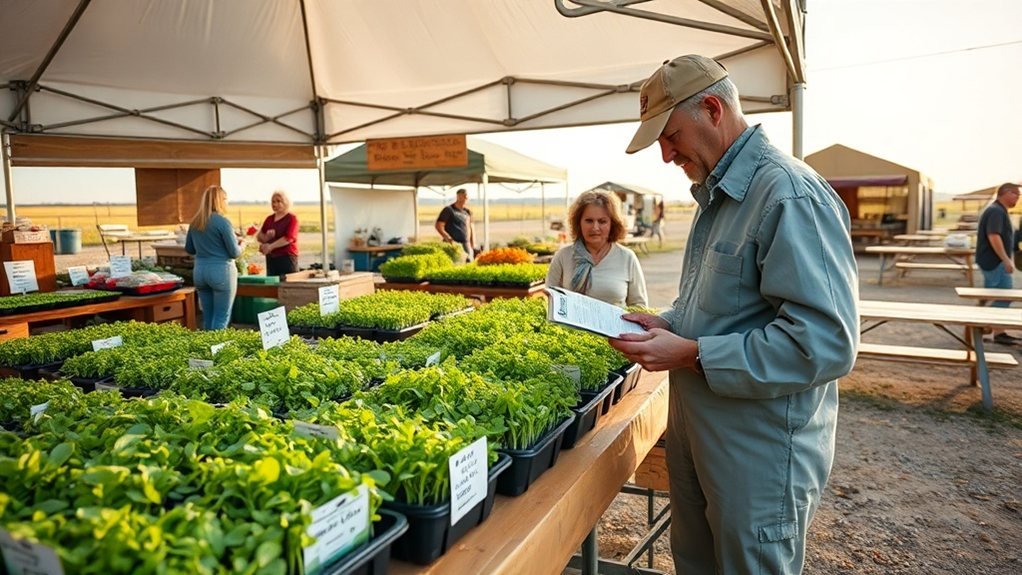
Your application is the market manager‘s first substantive assessment of you as a vendor, so treating it as a professional document rather than a formality will separate you from applicants who submit incomplete or vague materials.
Most Kansas market managers want to see your product list, your food handling certifications, your business structure, and evidence that you understand the operational expectations of their specific market.
Growers who skip the details, submit generic applications to multiple markets without customization, or fail to clarify how microgreens fit their product category often find themselves passed over in favor of vendors who demonstrated they’d done their research beforehand.
What Market Managers Want to See
Market managers field applications from dozens of vendors each season, and the ones that move to the top of the review pile share a common thread: they look prepared before they arrive.
A strong microgreens farmers market vendor application demonstrates operational clarity, meaning you’ve documented your growing medium, sourcing, and food safety practices before anyone asks. Kansas market managers, particularly in Wichita and Lawrence, increasingly prioritize vendors who represent genuine local microgreens Kansas production, so your application should explicitly state where you grow.
Include a product list with realistic availability windows tied to your actual production cycles. Managers read between the lines of vague applications, recognizing growers who haven’t thought through their workflow.
Precision in your application signals the same precision customers will encounter at your table.
Common Mistakes to Avoid
Knowing what managers want to see is only half the equation, because understanding what disqualifies an application carries equal weight in a competitive Kansas market season. As a microgreens grower Kansas applicants must recognize that avoidable errors routinely eliminate otherwise qualified vendors before managers finish reviewing submissions.
| Mistake | Why It Fails | Correction |
|---|---|---|
| Missing insurance documentation | Disqualifies immediately | Secure certificate before applying |
| Vague product descriptions | Signals inexperience | List specific varieties sold |
| No-show at interview | Permanent disqualification | Confirm scheduling in writing |
| Generic booth photos | Weakens credibility | Submit market-ready setup images |
| Late submission | Application discarded | Track all deadlines proactively |
Knowing how to sell microgreens effectively begins before your first market day. Each error above represents a documented pattern among vendors who understand production but underestimate the application process itself.
Use the Market Finder to Shortcut Your Search
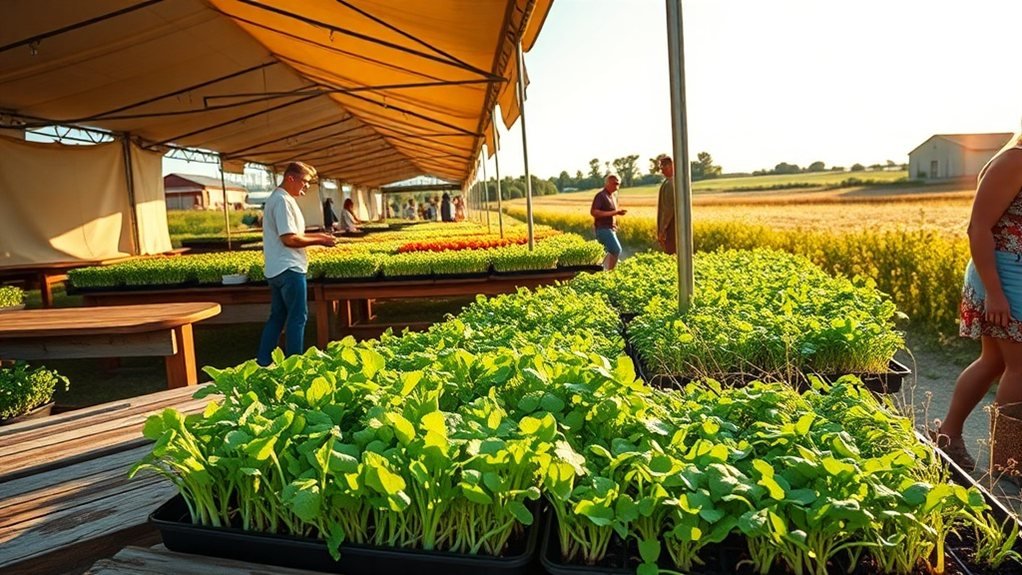
Searching for Kansas farmers markets one by one is a process you can cut through considerably faster with the right tool. The MGW Farmers Market Finder at markets.microgreensworld.com pulls from USDA data, giving you access to roughly 98 Kansas markets without the manual research. You can identify markets by location, which matters significantly when you’re planning your microgreens market stand around realistic drive times and production volume.
Once you’ve spotted viable markets, you move directly into evaluating each farmers market vendor application on its own terms, comparing fees, season length, and category availability. Wichita, Lawrence, and Overland Park all carry enough market density to give you real options. Employ the tool to build your shortlist, then pursue applications with the specifics already in hand.
Frequently Asked Questions
Can I Sell Microgreens at Multiple Kansas Markets Simultaneously?
Yes, you can sell at multiple Kansas markets simultaneously, but you’ll need enough production volume and staff to cover each one. Most vendors start with one market before expanding.
Do Kansas Farmers Markets Require Proof of Commercial Kitchen Use?
Most Kansas markets don’t require commercial kitchen proof for microgreens since you’re selling a raw agricultural product, not a processed food. Confirm this directly with each market manager before you apply.
How Early Should I Arrive to Set up My Microgreens Booth?
Arrive at least 90 minutes before opening. You’ll need time to unload, position your table, set up lighting or signage, and arrange trays so they’re fully presentable before the first customer walks in.
Are There Kansas Markets That Run Indoors During Winter Months?
Yes, some Kansas markets run indoor winter sessions, particularly in Wichita and Lawrence. Check each market’s schedule directly since hours and venues shift seasonally. Employ the free Market Finder at markets.microgreensworld.com to locate current Kansas listings.
What Happens if My Application Gets Rejected by a Market Manager?
Don’t take it personally. Ask the manager what held your application back, fix those gaps, and apply again next season. Meanwhile, find your next target at markets.microgreensworld.com.
Wrap-up
You’ve got the background, the product, and now a clearer picture of Kansas’s farmers market landscape. Don’t wait for the perfect opportunity—identify two or three markets that fit your production volume, submit your applications early, and start building vendor relationships before the season opens. Kansas’s 98 listed markets represent real revenue potential for a consistent microgreens operation, but only if you’re actively pursuing the right ones.
Leave a Reply