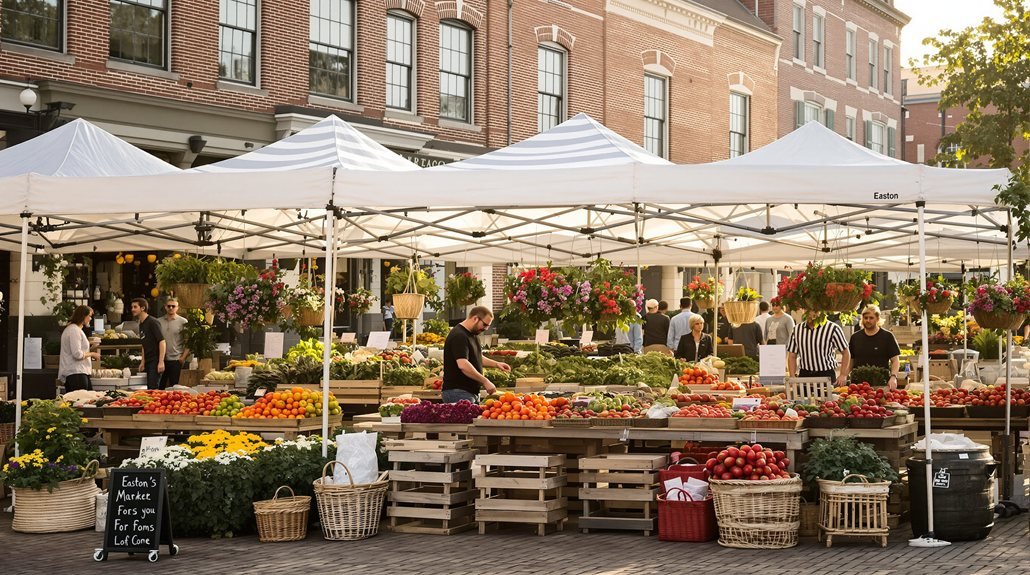
To sell at Easton Farmers Market in downtown Easton, Pennsylvania, you’ll need a completed application, proof of liability insurance, and product documentation submitted directly to the market committee. Approval takes several weeks, so follow up once after 14 days. The market runs every Saturday and has operated since 1752. Specialty produce vendors face almost no direct competition there right now. Keep going and you’ll find exactly where your product fits.
Key Takeaways
- Obtain the current vendor application directly from Easton Farmers Market, as requirements change by season and are not available through third parties.
- Required documentation includes a completed application form, proof of liability insurance, and relevant product documentation supporting your vendor category.
- Depending on growing and packaging methods, microgreens vendors may need a Pennsylvania Department of Agriculture certificate before approval.
- The market committee evaluates product category fit, documentation completeness, and booth alignment with the existing vendor mix before granting approval.
- Approval takes several weeks; follow up once after 14 days and be prepared for waitlisting if your product category is already full.
What should you know about Easton Farmers Market before you apply?
Easton Farmers Market has operated for more than 270 years, making it one of the oldest continuously running outdoor markets in the United States.
It runs on Saturdays in downtown Easton, Pennsylvania, near the Lehigh River.
Knowing who shops there and what’s already selling tells you where you fit before you fill out an application.
What Makes Easton Farmers Market Different From Other Pennsylvania Markets
This market’s been running since 1752. That’s over 270 years of continuous operation. Most Pennsylvania markets can’t come close to that.
It sits in downtown Easton, near the Lehigh River. The location pulls in local families, regional visitors, and serious food shoppers every Saturday.
The vendor mix covers seasonal produce, local cheeses, pasture-raised meats, and handmade goods. As an Easton Farmers Market vendor, you’re joining a market with real consumer trust already built in.
That trust matters. Shoppers here aren’t browsing casually. They come with a list and a purpose.
Specialty produce, including microgreens, has less competition here than baked goods or prepared food. The customer base is food-focused. That’s the environment where a specialty grower can land consistent sales.
Who Shops There and What They Actually Buy
Before you apply, you need to know who’s already spending money at this market.
The Easton Farmers Market draws local families, regional visitors, and food-focused shoppers from the Lehigh Valley and Delaware Valley areas.
These shoppers come specifically for quality.
They buy seasonal produce, local cheeses, pasture-raised meats, and artisan goods.
They’re not looking for cheap.
They’re looking for something they can’t find at a grocery store.
As an Easton Farmers Market vendor, that detail matters.
Specialty produce, including microgreens, is under-represented on the vendor floor.
The gap is real.
Shoppers who prioritize local and specialty food are already there.
You just need a product that fits what they’re already reaching for.
What does the vendor mix look like at Easton Farmers Market?
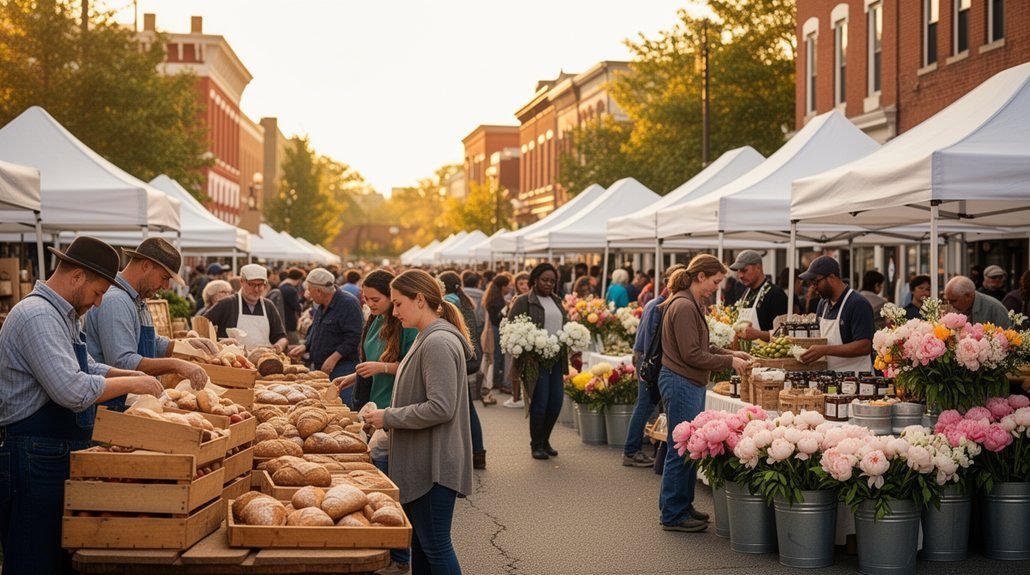
Easton Farmers Market leans heavily toward prepared food, baked goods, and crafts.
Those categories are crowded, and competition for those spots is high.
Specialty produce, including microgreens, is underrepresented, and that gap is your opening.
Which categories are overrepresented at Easton Farmers Market
Walk the Easton Farmers Market on a Saturday morning and you’ll count more baked goods and prepared food vendors than anything else. These two categories dominate the stalls.
| Category | Competition Level | Vendor Density |
|---|---|---|
| Baked goods | High | 8–10 vendors |
| Prepared foods | High | 6–8 vendors |
| Specialty produce | Low | 1–2 vendors |
Artisan goods and handmade items also hold a steady presence. As an easton farmers market vendor, you’re entering a crowded space if you bring bread or hot food.
Specialty produce is thin. That’s the gap. Microgreens sit inside that gap, with almost no direct competition on the floor.
Where the gap is for specialty produce vendors
Specialty produce holds fewer than two stalls on most Saturdays at the Easton Farmers Market. That’s a thin field for a market drawing hundreds of shoppers weekly.
Dr. Booker T. Whatley’s customer-first framework is direct: know your customer before you choose your market. Visit as a shopper first. Watch what sells and where the gaps are.
Microgreens sit in that gap. Baked goods and prepared foods are crowded. Specialty greens are not.
That gap is your application strategy for the easton farmers market application 2026. You’re not entering a saturated category. You’re filling one that buyers are already looking for.
The market wants vendors who serve real demand. Microgreens do that. Your job is to document the gap and present it in your application.
What does the Easton Farmers Market vendor application process involve?
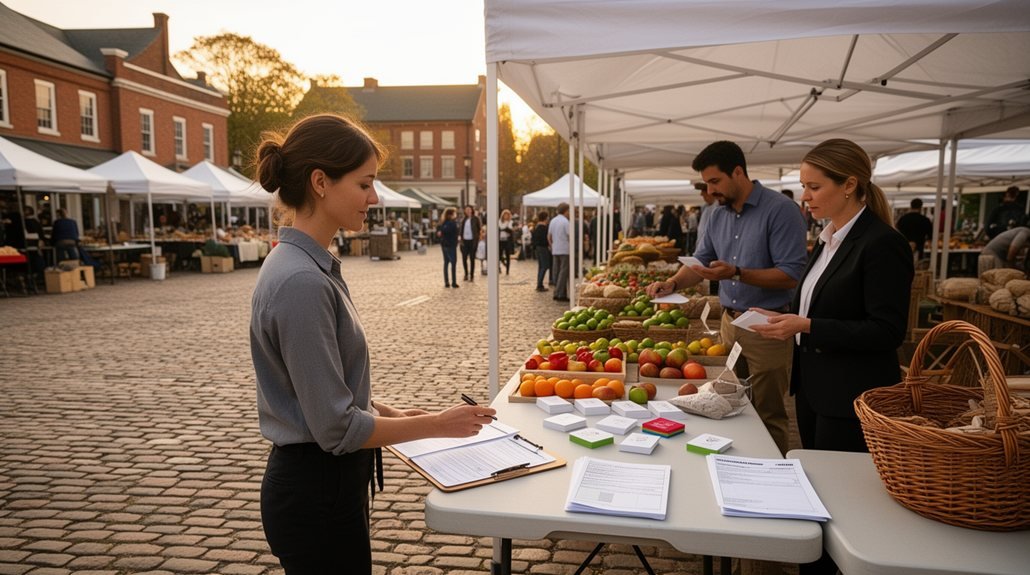
You need to know what the market expects before you submit anything. Easton Farmers Market has specific requirements, and missing one will cost you your spot in the review cycle.
The selection process is competitive, so understanding how vendors get chosen matters as much as the paperwork itself.
What the market requires before you submit an application
Before you fill out anything, get the current vendor application directly from the Easton Farmers Market. Requirements change by season, so don’t rely on last year’s version.
Easton market vendor requirements include proof of liability insurance, a completed application form, and documentation of what you sell. Microgreens vendors may also need a Pennsylvania Department of Agriculture certificate depending on how your product is grown and packaged.
Have your business name, contact information, and product list ready before you start. Incomplete applications get set aside.
The market reviews applications and selects vendors based on product fit and available space. Specialty produce categories like microgreens tend to have fewer applicants. That means your paperwork needs to be clean and your product category clearly stated.
What the selection process looks like
Once the market receives your application, it goes into a review queue. The market committee checks your product category, your documentation, and whether your booth fits a gap in the current vendor mix.
As an Easton Farmers Market vendor, you’re not just filling a space. You’re fitting a need.
If your category is already full, you may be waitlisted. Specialty produce vendors, including microgreens, tend to move through faster because fewer vendors occupy that slot.
Approval can take several weeks. You won’t always get a reason if you’re declined.
Follow up once after 14 days if you haven’t heard back. Ask specifically about your product category status. That question shows you understand how the selection works.
What do microgreens vendors specifically need to know about Easton Farmers Market?
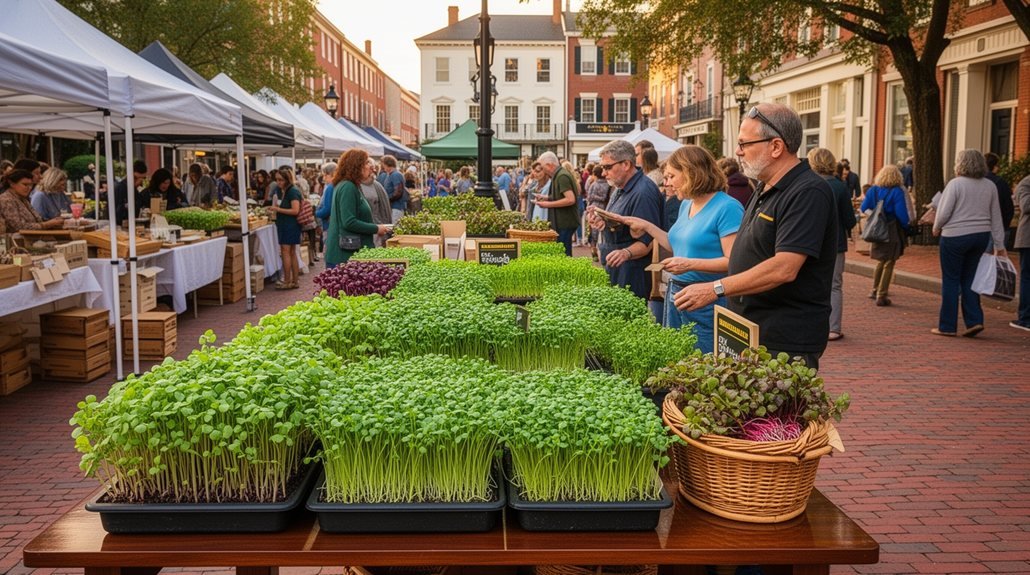
Easton Farmers Market pulls in food-focused shoppers who already spend money on quality.
Specialty produce, including microgreens, has less competition there than baked goods or prepared food.
Knowing who buys and what’s missing gives you a real edge before you even apply.
Why Easton Farmers Market’s customer base is a strong match for specialty greens
Most vendors skip the customer research and go straight to the application. That’s a mistake.
Dr. Booker T. Whatley’s framework is simple: know your customer before you choose your market. The Easton Farmers Market customer is already your customer.
Shoppers here are food-focused. They buy local cheese, pasture-raised meat, and seasonal produce. They read labels and ask questions. That’s exactly who buys microgreens easton farmers market vendors can sell to.
The market draws local Easton families and regional visitors from the Lehigh and Delaware Valley areas. These aren’t impulse buyers. They come with a list and a budget for specialty items.
That customer base creates real demand before you set up your first table.
What sets successful vendors apart at Easton Farmers Market
Fitting in at Easton Farmers Market takes more than a good product. The vendors who last show up consistently, keep their tables clean, and know their customers by name.
Presentation and reliability matter here.
| Factor | Weak vendor | Strong vendor |
|---|---|---|
| Table setup | Folding table, no signage | Branded display, clear pricing |
| Product consistency | Varies week to week | Same quality every Saturday |
| Customer interaction | Passive, waits to be asked | Greets shoppers, explains product |
| Market knowledge | Applied without visiting | Visited first, identified gaps |
| Reliability | Misses dates | Present every scheduled week |
As an Easton Farmers Market vendor, your reputation builds one Saturday at a time. Gaps in your attendance break trust fast.
How do you find Easton Farmers Market and locate other markets like it near you?
The MGW Farmers Market Finder covers 7,842 USDA-verified markets across all 50 states. Search by zip code, city, or state to pull up Easton Farmers Market or any comparable market in Pennsylvania.
Before you apply anywhere, you need to know what to look for so you don’t waste an application on the wrong fit.
Using the MGW Market Finder to scout markets in Pennsylvania
Pull up markets.microgreensworld.com and type in Easton, PA. You’ll see Easton Farmers Market surface alongside nearby options across the Lehigh Valley.
The tool draws from 7,842 USDA-verified markets across all 50 states. You can search by zip code, city, or state.
As a prospective Easton farmers market vendor, employ the results to compare market size, frequency, and product category gaps. Don’t apply blind.
Look at what other Pennsylvania markets list under specialty produce. If that category is thin, that’s your opening.
The finder gives you a side-by-side picture before you commit time or money. Utilize it to build a short list of two or three markets worth visiting in person first.
What to look for before you apply to any Pennsylvania market
Before you apply anywhere, visit the market as a customer first. Walk the full layout at Easton Farmers Market on a Saturday morning. Count the specialty produce vendors. Note what’s missing.
Dr. Booker T. Whatley’s framework is direct: know your customer before you choose your market. Watch what sells. Identify the gap. That gap is your application strategy.
At Easton, specialty produce is under-represented. That’s your opening as a microgreens vendor.
Look for three things at any Pennsylvania market. How many produce vendors are already there? What’s the customer traffic like by 9 a.m.? Does the market run weekly or bi-weekly?
One visit tells you more than any website. Go before you apply.
Frequently Asked Questions
Does Easton Farmers Market Operate Year-Round or Only During Certain Seasons?
The Easton Farmers Market runs seasonally, not year-round. You’ll find it operating on Saturdays from late spring through fall. Check the market’s official site for exact start and end dates before you plan your vendor schedule.
How Much Does It Cost to Rent a Vendor Booth at Easton Farmers Market?
Booth fees aren’t publicly listed, so you’ll need to contact the market directly for current rates. Costs typically vary by space size and season, so ask about both when you reach out.
Can First-Time Vendors Share a Booth Space With Another Vendor?
Yes, you can share a booth with another vendor, but both of you must get approval from market management before your first day. Check the vendor rules together so neither of you gets turned away.
Are There Rules About How Vendors Must Display Their Products?
Yes, there are display rules. You’ll need to keep your setup within your assigned space, maintain a clean presentation, and follow any signage or labeling requirements the market sets for your product category.
How Early Do Vendors Need to Arrive Before the Market Opens?
You’ll want to arrive at least 60 to 90 minutes before the market opens. Most experienced vendors show up earlier. It gives you time to set up, settle in, and feel ready before the first customers arrive.
Leave a Reply