
Illinois hosts approximately 249 farmers markets, with the densest concentrations in Chicago, Naperville, and Evanston — each presenting distinct buyer behaviors and revenue potential for microgreens vendors. You’ll find urban Chicago markets deliver higher foot traffic and culinary engagement, while Naperville’s suburban demographic responds strongly to premium positioning. Application deadlines for high-traffic locations typically close January–February, so aligning production planning with your market search is essential. What follows breaks down exactly how to manage that process strategically.
Key Takeaways
- Illinois has approximately 249 farmers markets listed in the USDA database, with the highest density in Chicago, Naperville, and Evanston.
- The primary selling season runs May through October, with Chicago-area markets sometimes extending from late April through November.
- Urban markets like Lincoln Park and Logan Square offer high foot traffic but attract more competition among microgreens vendors.
- Vendor application deadlines for high-traffic urban markets frequently close in January or February, requiring early preparation.
- Sunflower, pea shoots, and radish are the most consistently moving microgreens varieties across Illinois farmers markets.
Farmers Markets in Illinois for Microgreens Vendors

Illinois offers microgreens vendors a substantial entry point into direct-to-consumer sales, with approximately 249 farmers markets listed in the USDA database spanning urban centers, suburban corridors, and smaller agricultural communities.
If you’re already producing and looking to move product consistently, the state’s market density, particularly in Chicago, Naperville, and Evanston, means you’re rarely more than a short drive from a viable selling opportunity.
The Illinois market calendar runs primarily spring through fall, so you’ll want to identify your target markets early, since vendor applications for the busiest urban locations close well before the first Saturday of the season.
Why Illinois Markets Are Worth Your Attention
With roughly 249 farmers markets listed in the USDA database, Illinois offers microgreens vendors a substantial pool of potential selling locations, concentrated heavily in the Chicago metro area, Naperville, and Evanston.
That density matters because it gives you genuine optionality when you’re deciding where to test your product and pricing. As a microgreens vendor in Illinois, you’re not limited to one seasonal window either, since the spring-through-fall calendar across the state provides enough active market weeks to build consistent revenue patterns.
Chicago’s sheer population base means foot traffic at established markets runs high, which accelerates your ability to gather customer feedback and hone your variety mix. If you’re serious about scaling, Illinois is a competitive but genuinely viable landscape worth entering deliberately.
What the Illinois Market Season Looks Like
Most Illinois farmers markets operate on a spring-through-fall schedule, typically running from May through October, though some Chicago-area markets extend into November or open as early as late April. When you’re planning to sell microgreens at farmers markets, understanding this seasonal window shapes your entire production calendar.
| Season Phase | Months | Vendor Opportunity |
|---|---|---|
| Early Season | April–May | Limited competition, high demand |
| Peak Season | June–August | Maximum foot traffic |
| Late Season | September–November | Dedicated buyer loyalty |
Chicago-area farmers market Illinois schedules tend to compress vendor application deadlines into January and February, meaning your production planning and market applications need to run simultaneously, well before your first tray gets seeded.
How to Find the Right Market in Illinois
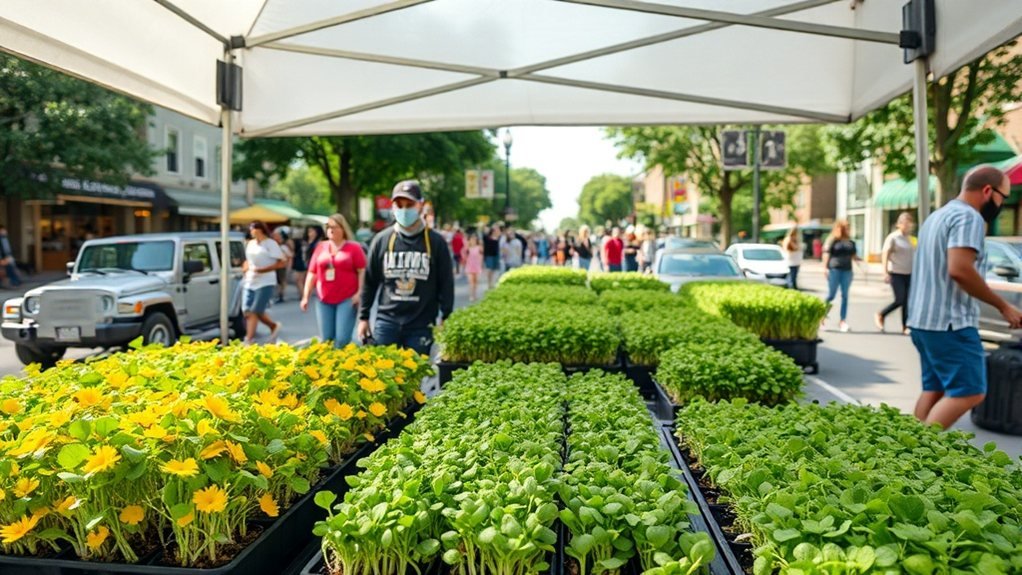
Finding the right Illinois market starts before you ever fill out an application, because the variables you assess early, such as foot traffic patterns, vendor density, and category exclusivity policies, determine whether your microgreens will actually move.
Chicago’s concentration of high-volume markets, including those operating in Lincoln Park, Logan Square, and the broader North Shore corridor, offers competitive but lucrative placement opportunities for vendors who can sustain consistent weekly supply.
Naperville and Evanston each support well-established market ecosystems where buyer demographics skew toward health-conscious households, making them strategically viable entry points if Chicago’s saturation presents barriers.
What to Look for Before You Apply
Before you submit a single application, you need to assess whether a given Illinois market is actually worth your time and effort. Not every microgreens farmers market opportunity translates into productive vendor activity, and Illinois presents enough variety across its 249 USDA-listed markets to demand deliberate selection criteria. Examine foot traffic patterns, vendor density, and whether existing produce sellers already dominate the stall layout.
As a farmers market vendor Illinois operates within a competitive, region-specific ecosystem, where Chicago’s Saturday markets draw substantially different demographics than Naperville’s mid-week formats. Confirm the market’s operating schedule aligns with your production cycles, since microgreens have narrow harvest windows.
Request the vendor agreement before applying, reviewing fee structures, product restrictions, and exclusivity clauses that could limit your positioning against competing specialty growers.
Markets Near Chicago
Chicago’s metropolitan footprint spans enough distinct neighborhoods and suburbs that you’re effectively steering through multiple micro-markets within a single regional context, each carrying its own demographic profile, purchasing behavior, and vendor saturation level.
A microgreens booth at a chicago farmers market in Lincoln Park competes differently than one operating in Evanston or Oak Park, where foot traffic patterns, price tolerance, and buyer familiarity with specialty produce shift considerably.
You need to identify which markets have existing microgreens vendors before applying, because walking into a saturated slot rarely produces the results you want.
Naperville’s suburban markets tend toward consistent weekend attendance, while Chicago’s neighborhood markets reward vendors who understand hyperlocal buyer identity.
Match your production volume and variety selection to the specific market’s demonstrated demand before committing an application.
Markets Near Naperville and Evanston
Naperville and Evanston represent two structurally different market environments, and understanding that distinction shapes how you approach vendor applications in each area.
The Naperville farmers market draws a suburban consumer base with strong disposable income, meaning buyers there respond well to premium positioning and consistent weekly presence.
Evanston operates differently. The Evanston farmers market sits adjacent to a dense urban corridor, attracting shoppers who prioritize sourcing transparency and product variety, which rewards vendors who communicate growing methods clearly.
Both markets carry competitive vendor pools, so your application needs to demonstrate reliability and production capacity, not just product quality.
Employ the free Market Finder at markets.microgreensworld.com to identify current vendor opportunities across both markets and compare application windows before committing to either location.
What to Expect When You Get There
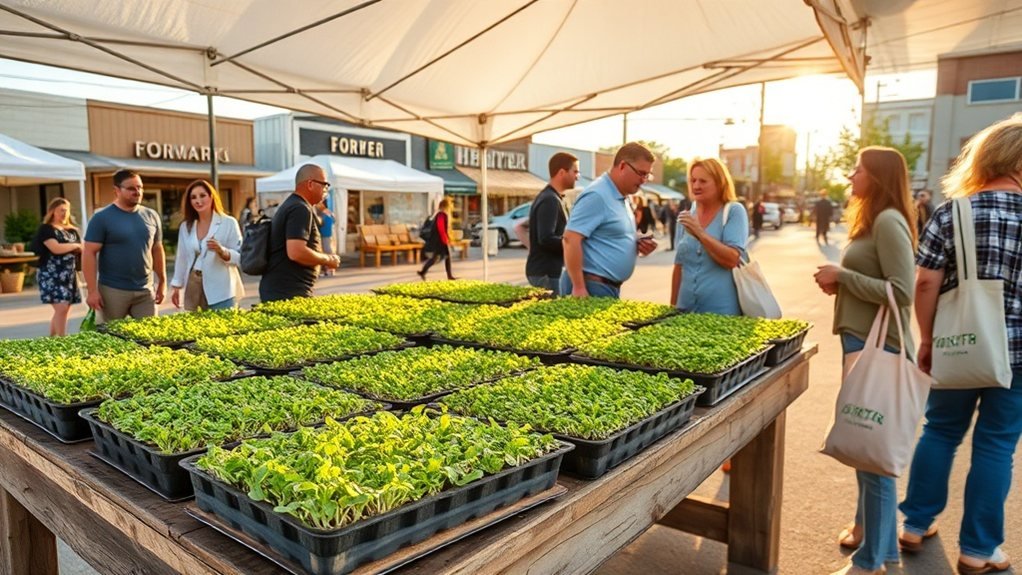
Once you’ve secured a spot, the operational realities of an Illinois farmers market will shape how you allocate your time, capital, and product inventory from the first weekend forward.
Booth fees across the state vary considerably, ranging from modest flat rates at smaller suburban markets to percentage-based structures at high-traffic venues in Chicago and Naperville, so your margin calculations need to account for that variability before you commit.
Knowing which microgreens varieties move consistently at Illinois markets, particularly sunflower, pea shoots, and radish in spring-to-fall conditions, lets you calibrate your grow schedule to actual demand rather than assumption.
Booth Fees and Setup Basics
Expect booth fees at Illinois farmers markets to vary considerably depending on the market’s location, size, and organizational structure, with weekly vendor fees typically ranging from $25 to $75 at mid-sized community markets and climbing well above $100 at high-traffic urban markets in Chicago or Naperville. Knowing how to get a farmers market booth means budgeting accurately before you apply.
| Market Type | Typical Weekly Fee |
|---|---|
| Small community market | $25 to $45 |
| Mid-sized suburban market | $50 to $75 |
| High-traffic urban market | $100 and above |
For farmers markets Illinois microgreens vendors target, most require a six-foot table, a canopy, and liability insurance. Confirm electrical access requirements early, since some markets prohibit extension cords entirely.
What Moves at Illinois Markets
Budgeting your booth fee is only part of what determines whether a market works for you, because the other half is understanding what Illinois shoppers actually buy once you’re set up behind that table.
Farmers market Illinois vendors who track sales consistently report that sunflower and pea shoots move fastest, particularly at urban markets where culinary awareness runs higher.
If you’re putting microgreens for sale Illinois customers haven’t seen before, expect questions before purchases.
Shoppers in Evanston and Naperville tend to engage more deeply than those at smaller rural stops, which affects how you position variety against volume.
You’ll learn more from two markets than from any prep work, so get in front of actual buyers and let the data guide your next decision.
Getting Your Application Ready
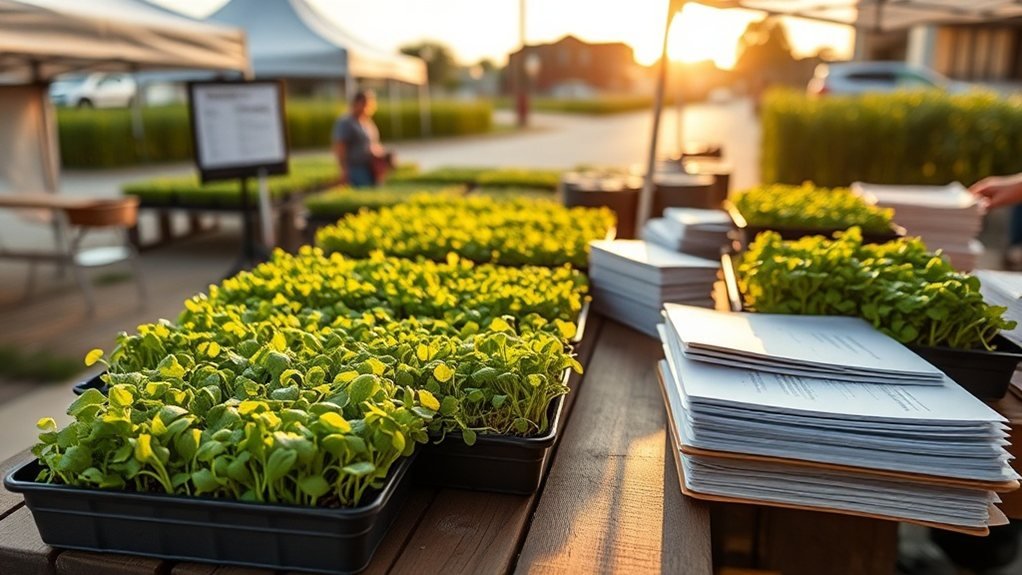
Your application is the market manager‘s first and only impression of you before you ever set up a table, so treating it as a formal business document rather than a casual inquiry significantly improves your odds of acceptance.
Most Illinois market managers are evaluating product fit, vendor reliability, and whether your microgreens complement or duplicate what’s already in their lineup, which means you’ll want to present clean product photography, a clear growing methodology, and any applicable food handler certifications upfront.
Growers who submit incomplete applications, omit their product list, or fail to specify whether they’re selling fresh-cut or living product are routinely passed over, even when the market has open slots.
What Market Managers Want to See
When you submit an application to an Illinois farmers market, the manager reviewing it isn’t looking for enthusiasm — they’re performing a functional audit of whether your operation fits the market’s existing vendor mix, regulatory standing, and logistical capacity. As a microgreens farmers market vendor application, your documentation signals professionalism before you ever set up a table.
| What They Review | Why It Matters |
|---|---|
| Illinois food handler certification | Confirms regulatory compliance |
| Cottage food or processing license | Establishes legal product category |
| Proof of grow location | Validates local microgreens illinois sourcing |
| Liability insurance certificate | Protects market from vendor incidents |
| Product photos or samples | Demonstrates presentation and quality standards |
Submit complete packages only. Incomplete applications get deprioritized, not followed up on.
Common Mistakes to Avoid
Most application rejections don’t come from bad microgreens — they come from incomplete paperwork, misread deadlines, and documentation that doesn’t match what Illinois market managers are actually required to verify.
When you’re pursuing a farmers market vendor application, submit every document requested, not just what seems relevant to you. Your cottage food registration, liability insurance certificate, and grow space photos should arrive together, not piecemeal.
Many growers selling microgreens locally underestimate how seriously managers treat incomplete files; an application missing one attachment gets shelved, not followed up on.
Confirm the application window directly with each market, because USDA listing dates frequently differ from actual submission deadlines. Read the vendor category requirements carefully before applying, since misclassifying your product creates avoidable friction with managers from the first contact.
Use the Market Finder to Shortcut Your Search

Tracking down viable farmers markets in Illinois doesn’t have to mean hours of scattered web searches, cold calls to municipal offices, and half-updated event pages. The MGW Farmers Market Finder at markets.microgreensworld.com consolidates USDA data covering approximately 249 Illinois markets, giving you a structured starting point rather than a fragmented one.
If you’re still figuring out how to vend microgreens at your first market, filtering by region narrows the field immediately. Chicago, Naperville, and Evanston show the densest concentrations, which matters when you’re evaluating whether your microgreens market stand can realistically serve a location without unsustainable travel.
Employ the tool to identify markets aligned with your production capacity and season, then move directly into outreach. Start your search at markets.microgreensworld.com.
Frequently Asked Questions
Can I Sell Microgreens at Multiple Illinois Markets Simultaneously?
You can sell at multiple Illinois markets simultaneously by assigning different team members or trusted reps to each location. Just confirm each market’s exclusivity clauses first, since some prohibit vendors from working competing nearby markets.
Do Illinois Farmers Markets Require Product Liability Insurance for Microgreens Vendors?
Most Illinois farmers markets require product liability insurance, and you’ll typically need $1M per occurrence. Get your certificate before applying because market managers ask for it upfront during the vendor approval process.
How Early Should I Arrive to Set up My Microgreens Booth?
Arrive 90 minutes before opening. You’ll need time to unload, position your table, set up your display, and still have a few minutes to breathe before customers walk in.
Are There Illinois Markets That Run Indoors During Winter Months?
Yes, some Illinois markets do run indoors during winter, particularly in Chicago and surrounding suburbs. You’ll want to verify each market’s season dates directly, since indoor winter schedules vary widely by location and venue availability.
What Licenses Do Illinois Microgreens Growers Need Before Selling?
You’ll need an Illinois Food Handler certificate and must register as a cottage food operation or obtain a food business license depending on your annual sales volume and where you’re selling.
Wrap-up
You’ve got the information you need to move forward. Illinois markets are competitive, but they’re also accessible if you approach the process systematically—researching vendor requirements early, preparing compliant documentation, and targeting markets where foot traffic justifies your setup costs. Don’t wait until spring to start your outreach. Vendor rosters close before the season opens, and the microgreens category fills quickly. Employ the market finder, identify your targets, and submit your applications now.
Leave a Reply