
Ohio’s approximately 286 USDA-listed farmers markets give you a substantial network to enter as a microgreens vendor, spanning urban anchors like Columbus, Cleveland, and Cincinnati down to smaller community venues. Each city supports distinct buyer profiles, with health-conscious, food-literate demographics that reduce your educational burden considerably. You’ll need to assess vendor density, booth fees ranging from $25 to $75+, and seasonal scheduling before applying. The sections ahead break down exactly how to negotiate each step strategically.
Key Takeaways
- Ohio has approximately 286 USDA-listed farmers markets, concentrated in Columbus, Cleveland, and Cincinnati, offering microgreens vendors numerous venue options.
- Market season runs late April through early November, with peak microgreens demand occurring mid-July through August.
- Urban markets attract health-conscious, food-literate buyers, reducing the educational burden when selling specialty produce like microgreens.
- Use the MGW Farmers Market Finder at markets.microgreensworld.com to filter Ohio markets by location and identify realistic delivery radii.
- Before applying, visit markets on peak days to assess vendor density, existing greens categories, and potential saturation.
Farmers Markets in Ohio for Microgreens Vendors
Ohio’s approximately 286 USDA-listed farmers markets represent a substantial commercial infrastructure for microgreens vendors seeking consistent, repeat-customer sales channels.
The state’s primary urban corridors, Columbus, Cleveland, and Cincinnati, concentrate significant market density, giving you multiple venue options within a manageable driving radius.
Your market season runs predominantly spring through fall, which aligns naturally with peak microgreens production cycles and consumer demand for fresh, locally grown product.
Why Ohio Markets Are Worth Your Attention
When you’re evaluating where to sell microgreens, the scale and distribution of Ohio’s farmers market infrastructure makes it a genuinely competitive option. The USDA database lists approximately 286 farmers markets ohio vendors can access, with market density concentrated in Columbus, Cleveland, and Cincinnati. That concentration matters because it gives you real geographic flexibility when you’re mapping your vendor strategy.
As a microgreens vendor ohio has enough active markets that you can test multiple venues without exhausting your options quickly. The spring-through-fall calendar aligns well with microgreens production cycles, giving you a sustained selling window rather than a narrow one.
Ohio’s urban corridors also support health-conscious buyer demographics that consistently respond well to specialty produce, which positions microgreens favorably against conventional market offerings.
What the Ohio Market Season Looks Like
The Ohio market season typically runs from late April through early November, giving microgreens vendors a sustained operational window of roughly six to seven months across the state’s primary urban corridors. Columbus markets tend to open earlier in spring, while Cleveland’s lakefront locations often extend into October given their consistent weekend foot traffic.
If you’re planning to sell microgreens at farmers markets in Ohio, you need to account for mid-July through August as your peak demand window, when competition increases but so does buyer volume. Understanding this seasonal arc matters because your production schedule, variety selection, and booth application timing all connect directly to it. Farmers markets Ohio microgreens vendors who ignore seasonal pacing often find themselves unprepared during the highest-value weeks of the calendar.
How to Find the Right Market in Ohio

Before you apply to any Ohio market, you need to evaluate vendor density, customer traffic patterns, and seasonal scheduling to determine whether a given market can realistically support a specialty crop like microgreens.
Columbus-area markets, particularly those operating through the North Market network, tend to attract health-conscious urban buyers who are already familiar with microgreens as a product category, which reduces your educational burden at the table.
Cleveland and Cincinnati each host distinct market ecosystems, with Cleveland’s West Side Market drawing high foot traffic in a competitive, established vendor environment, while Cincinnati’s Findlay Market offers a comparably dense commercial atmosphere that rewards vendors who come prepared with consistent weekly supply.
What to Look for Before You Apply
Finding the right Ohio farmers market isn’t simply a matter of proximity, and applying to the nearest option rarely yields the best outcome for a microgreens vendor. Before you pursue how to get a farmers market booth, you need to assess each market’s customer demographics, foot traffic patterns, and existing vendor composition. A Columbus neighborhood market drawing health-conscious professionals will convert microgreens sales far more efficiently than a rural flea-style market where commodity produce dominates.
As a farmers market vendor in Ohio, you should request current vendor lists, visit on peak days before applying, and identify whether a saturated greens category already exists. That pre-application research separates vendors who build sustainable weekly revenue from those who abandon markets after a single unproductive season.
Markets Near Columbus
Columbus gives microgreens vendors a meaningful advantage that most Ohio metros can’t match: a dense, geographically concentrated population of food-literate buyers distributed across distinct neighborhood markets. The North Market Downtown anchor draws consistent foot traffic from buyers already accustomed to premium specialty produce.
Smaller satellite markets in Clintonville, Bexley, and Dublin serve hyperlocal clientele with demonstrated spending habits around fresh, locally grown food. When you position your microgreens booth at a Columbus farmers market strategically, you’re not guessing at demand, you’re entering an ecosystem where that demand already exists.
Employ USDA-listed data to cross-reference which Columbus farmers market locations have the shortest vendor waitlists and the highest weekly attendance, then apply accordingly.
Find Columbus markets and beyond at [markets.microgreensworld.com](https://markets.microgreensworld.com).
Markets Near Cleveland and Cincinnati
When you shift focus from Columbus to Cleveland and Cincinnati, you’re entering two distinct market ecosystems, each shaped by its own demographic pressures, neighborhood geography, and buyer behavior.
| Factor | Cleveland Farmers Market | Cincinnati Farmers Market |
|---|---|---|
| Market Culture | Working-class roots, growing foodie corridor | Health-conscious, strong urban core demand |
| Vendor Competition | Moderate, concentrated near West Side Market | Higher saturation in premium neighborhoods |
| Buyer Behavior | Value-driven with emerging premium interest | Willing to spend on specialty crops |
| Best Entry Points | Suburban satellite markets | Hyde Park, Findlay Market adjacents |
Both cities reward vendors who study neighborhood income patterns before applying. Employ the free Market Finder at [markets.microgreensworld.com](https://markets.microgreensworld.com) to filter Ohio listings by region.
What to Expect When You Get There

Once you’ve secured a spot, the operational realities of Ohio markets will shape nearly every decision you make, from how you price your trays to how you structure your production schedule. Booth fees across the state’s 286 USDA-listed markets vary considerably, with urban Columbus and Cleveland venues often running higher than rural or seasonal markets, so your cost-per-market calculation needs to account for that variance before you commit.
Understanding which microgreens varieties actually move in your specific market, whether that’s sunflower in a health-focused neighborhood market or specialty mixes at a high-traffic urban venue, determines whether you leave with empty trays or haul product back home.
Booth Fees and Setup Basics
Booth fees across Ohio’s farmers markets vary more than most new vendors expect, and understanding that variance before you apply saves you from committing to a market that quietly eats into your margins.
As a microgreens farmers market vendor in Ohio, you’ll encounter daily fees ranging from roughly $25 at smaller community markets to $75 or more at established urban venues. Some farmers market Ohio vendors pay seasonal flat rates instead, which rewards consistent attendance but demands upfront capital.
Beyond fees, most markets require a six-foot table, a canopy with weighted legs, and your applicable Ohio cottage food or produce vendor permits. Know these requirements before your first setup day, not after you’ve already loaded the van.
What Moves at Ohio Markets
Knowing your fees and setup requirements gets you through the gate, but what actually sells once you’re behind the table is a separate education entirely. As a microgreens grower Ohio markets have trained, you’ll notice buyers respond to visual contrast and variability across your spread.
| What Shoppers Notice | What Converts to Sales |
|---|---|
| Dense, colorful trays | Sunflower and pea shoots |
| Familiar names | Radish and broccoli |
| Sample availability | Repeat purchases |
| Professional labeling | Perceived value increase |
| Consistent weekly presence | Customer loyalty |
Positioning microgreens for sale Ohio-wide means understanding that Columbus weekend markets move volume differently than rural county markets. Expertise here requires tracking what sells by location, not assumptions.
Find your next Ohio market at [markets.microgreensworld.com](https://markets.microgreensworld.com).
Getting Your Application Ready
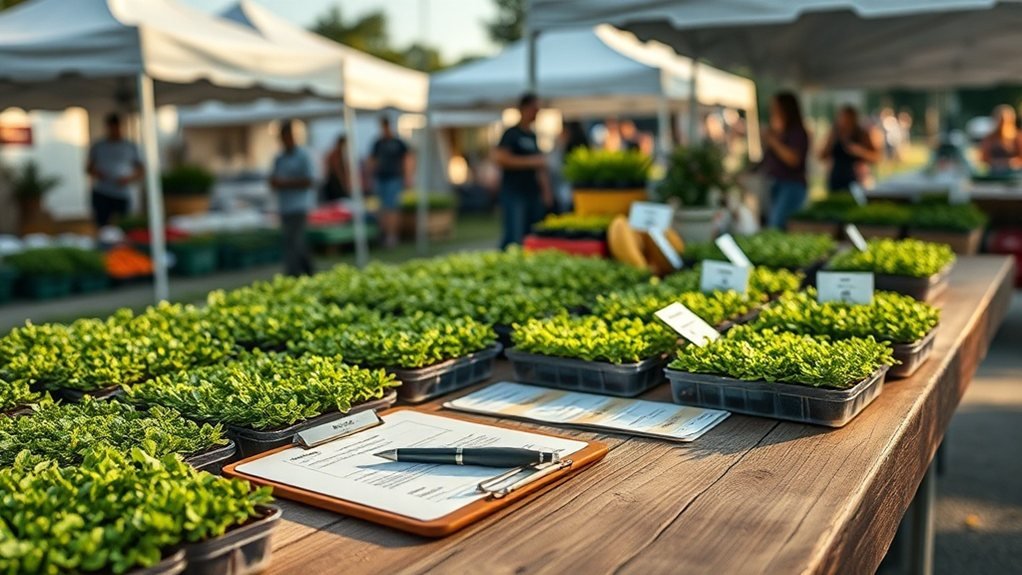
Your application is the market manager’s first point of evaluation, and it needs to demonstrate that you’re a serious, prepared vendor before you’ve ever set up a table.
Most Ohio market managers are reviewing multiple applicants simultaneously, so your submission has to clearly communicate what you grow, how you handle food safety compliance, and why your product fits their existing vendor mix.
Growers who treat the application as a formality, submitting vague product descriptions or missing liability insurance documentation, typically get passed over in favor of applicants who’ve addressed every requirement with specificity.
What Market Managers Want to See
Market managers in Ohio are gatekeepers with limited booth space and consistent pressure to maintain product diversity, so understanding what they’re assessing before you submit your application will save you from easily avoidable rejections.
Your farmers market vendor application signals whether your microgreens business operates with professionalism or improvisation.
Managers evaluate proof of liability insurance, your Ohio cottage food registration or commercial kitchen documentation, and evidence that your product fills a gap rather than duplicating an existing vendor.
Columbus markets, for instance, often already carry one microgreens vendor, making differentiation through specialty varieties or value-added products strategically crucial.
Present clean product photography, a clear pricing structure, and a defined growing practice.
Applications lacking these elements get deprioritized, regardless of product quality.
Common Mistakes to Avoid
Understanding what managers evaluate is only part of the equation; the other part is recognizing where growers consistently undermine their own applications before a manager ever reads them carefully.
| Mistake | Why It Costs You |
|---|---|
| Vague product descriptions | Managers can’t assess your market fit |
| No proof of compliance | Applications get deprioritized immediately |
| Generic cover letters | Shows no knowledge of that specific market |
| Late submissions | Spots fill before you’re even considered |
When you’re selling microgreens locally in Ohio, these errors signal inexperience to managers who review dozens of applications. Local microgreens ohio vendors who research each market’s specific vendor demographics, customer base, and product gaps before applying consistently outperform those who submit identical packets everywhere.
Use the Market Finder to Shortcut Your Search

Searching for a viable market slot in Ohio doesn’t have to mean driving across counties on a hunch or cold-calling market managers who may not have openings. The MGW Farmers Market Finder at markets.microgreensworld.com pulls from USDA data across Ohio’s approximately 286 listed markets, letting you filter by location before you commit a single hour of outreach. If you’re figuring out how to sell microgreens systematically rather than reactively, this tool compresses weeks of manual research into a focused, actionable shortlist.
You can identify which microgreens market stand opportunities exist within a realistic delivery radius, cross-reference market schedules against your production timeline, and approach managers with precision. Try the free Market Finder at markets.microgreensworld.com to start building your Ohio vendor strategy today.
Frequently Asked Questions
Can I Sell Microgreens at Ohio Farmers Markets Without a License?
You can sell microgreens at Ohio farmers markets without a license in most cases, but you’ll need to verify each market’s specific vendor requirements, since individual markets sometimes add their own rules beyond state regulations.
How Much Does a Typical Ohio Farmers Market Vendor Booth Cost?
Ohio farmers market booth fees typically run $20 to $50 per day, though seasonal spots can cost $200 to $800 upfront. Find markets that fit your budget at markets.microgreensworld.com.
Do Ohio Markets Require Liability Insurance From Microgreens Vendors?
Most Ohio markets require it. You’ll typically need a general liability policy with $1 million coverage and the market listed as an additional insured. Budget around $300 to $500 annually.
Can I Sell at Multiple Ohio Farmers Markets on the Same Weekend?
Yes, you can, but you’ll need separate vendor applications and fees for each market. Scheduling conflicts and staffing your tables simultaneously are the real barriers most Ohio microgreens vendors hit first.
What Ohio Cottage Food Laws Apply to Packaged Microgreens Sales?
Ohio’s cottage food law doesn’t cover microgreens because they’re considered produce, not processed food. You’ll sell them as fresh agricultural products, so standard food handler requirements and market rules apply instead.
Wrap-up
Ohio’s farmers market landscape offers microgreens growers genuine, scalable entry points, from high-volume Columbus markets to lower-competition regional venues. You’ve got the production side covered; now it’s about matching your output to the right venue, submitting a complete application, and arriving prepared. Don’t wait until the season opens to start researching. Employ the Market Finder at markets.microgreensworld.com to identify Ohio markets near you and begin the vendor process before available spots disappear.
Leave a Reply