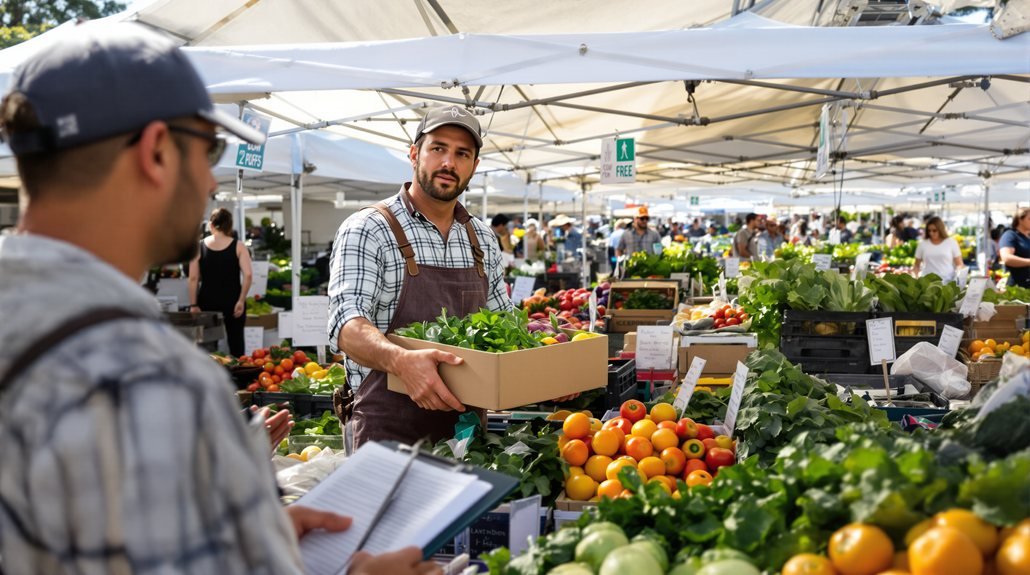
Santa Monica Farmers Market has run since 1981 and is managed directly by the City of Santa Monica — not a private operator. That changes who reviews your application and what they look for. You’ll need a Certified Producer Certificate from your county agricultural department before you apply. Your product list must match that certificate exactly. The sections ahead cover vendor mix, application steps, and how to find comparable California markets worth targeting.
Key Takeaways
- Santa Monica Farmers Market is city-managed, not privately operated, and has run continuously since 1981, giving it unusual institutional stability.
- Before applying, obtain a Certified Producer Certificate from your county agricultural department; your submitted product list must match it exactly.
- The city evaluates applications based on product category, market need, and certified producer status, so product-market fit determines approval.
- Wednesday attracts professional restaurant buyers prioritizing quality; Saturday draws high-income, food-literate households who shop with lists and budgets.
- Specialty produce faces under 10 competing vendors, creating a clear entry opportunity for microgreens, edible flowers, and uncommon greens.
What should you know about Santa Monica Farmers Market before you apply?
Santa Monica Farmers Market has been running since 1981, and it’s not a typical California market.
The Wednesday and Saturday Downtown markets draw top LA restaurant buyers and food-literate shoppers who know exactly what they’re looking for.
Before you apply, you need to understand who shops there and what they’re already buying.
What Makes Santa Monica Farmers Market Different From Other California Markets
Founded in 1981, this market’s been running longer than most California growers have been farming. That history means something. The standards are set, the buyers know what they want, and the community around it’s tight.
The City of Santa Monica manages the program directly. This isn’t a private operator running a pop-up. It’s a city-run institution with real accountability.
The Wednesday and Saturday Downtown markets draw top LA restaurant buyers every week. Alice Waters and Wolfgang Puck helped shape what this market became. Becoming a Santa Monica farmers market vendor means you’re entering that same space.
The customer base is high-income and food-literate. These shoppers actively look for specialty and unusual crops. That’s the opening a microgreens grower should be paying attention to.
Who Shops There and What They Actually Buy
Most shoppers here aren’t browsing. They come with a list and a budget.
Wednesday regulars include buyers from top LA restaurants. They’re sourcing directly from vendors they trust.
Saturday draws high-income households who cook seriously. These aren’t impulse buyers. They recognize specialty crops and pay for quality without hesitation.
Both crowds actively seek unusual produce. Microgreens fit that profile. Sunflower, pea shoots, and radish move well when displayed clearly with variety names and uses.
Before you begin the santa monica farmers market vendor application process, visit as a customer first. Watch what sells out before 10 a.m. That gap in the specialty produce section is your entry point.
What does the vendor mix look like at Santa Monica Farmers Market?
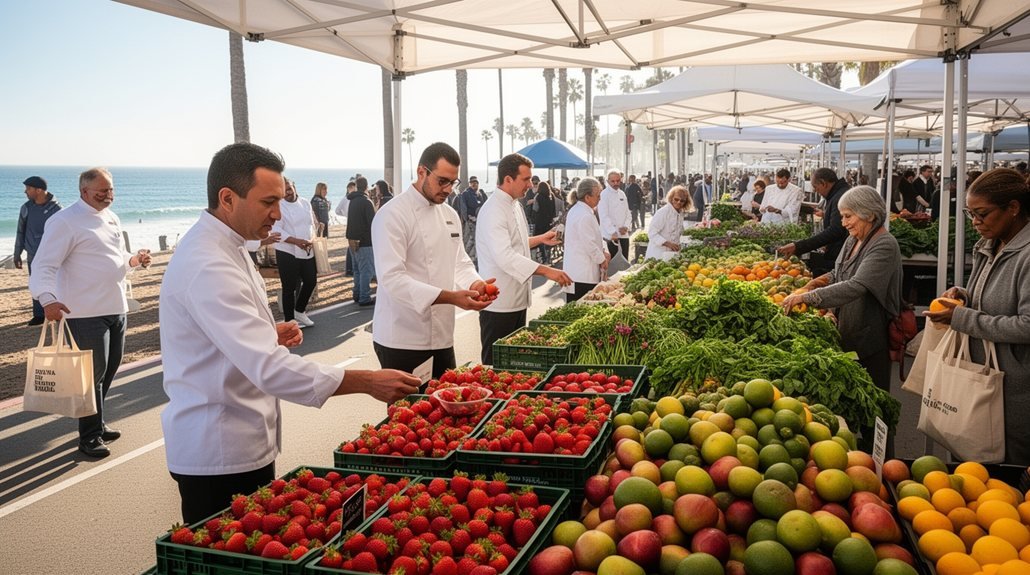
Most vendor slots at Santa Monica Farmers Market go to fruit, vegetable, and prepared food sellers.
Specialty produce is under-represented, and that gap is real.
That’s where a microgreens vendor has the clearest opening.
Which categories are overrepresented at Santa Monica Farmers Market
When you walk the Wednesday market on Arizona Avenue, you’ll see the same pattern repeat: stone fruit, citrus, and root vegetables dominate nearly every other stall.
Conventional produce vendors are the majority here. Most have long-standing relationships with the city’s market program and meet all Santa Monica market vendor requirements through certified producer status.
Prepared food vendors are the second-largest group. Competition in that category is steep, and approval is slower.
Specialty produce is the gap. Very few vendors carry microgreens, edible flowers, or uncommon greens. That imbalance works in your favor if you’re applying as a specialty agricultural vendor.
The overrepresentation of conventional produce tells you exactly where not to compete. Position yourself in the category with open space.
Where the gap is for specialty produce vendors
Specialty produce vendors make up a small fraction of the Santa Monica market. That gap is real, and it’s where microgreens fit.
Dr. Booker T. Whatley taught this directly: know your customer before you choose your market. Visit first. Watch what sells. Find the hole.
| Category | Vendor Count | Competition Level |
|---|---|---|
| Prepared food | 40+ vendors | High |
| Stone fruit / vegetables | 30+ vendors | High |
| Specialty produce | Under 10 vendors | Low |
Microgreens at Santa Monica Farmers Market land in that third row. Chefs shopping the Wednesday market want unusual crops. Very few vendors deliver them. You’re not fighting a crowd here. You’re filling a gap the market already needs.
What does the Santa Monica Farmers Market vendor application process involve?

The city runs the application process, and you’ll need certified producer status before you can submit anything. That certification comes from the California Department of Food and Agriculture and confirms you grew what you’re selling.
The selection process is competitive, and the city reviews your product category against current vendor gaps before making a decision.
What the city’s market program requires before you submit an application
Because Santa Monica’s market is city-run, you’re not applying to a private vendor. You’re applying to the City of Santa Monica’s market program directly.
That changes everything about how you prepare.
| Requirement | Detail |
|---|---|
| Certified Producer Certificate | Issued by your county ag department |
| Product list | Must match your certificate exactly |
| Proof of compliance | Pesticide use records if applicable |
As a santa monica wednesday market vendor, you need all three before you contact the program. Missing one document delays your review.
Get your county certificate first. Everything else follows from that single document.
What the selection process looks like
Once your documents are in order, you’re ready to face the next reality: the city doesn’t just accept everyone who applies. The Santa Monica Farmers Market vendor program reviews applications based on product category, market need, and certified producer status.
The city controls the vendor mix intentionally. If your category is full, you wait.
Specialty produce vendors have an advantage here. That segment is under-represented, which means less competition and a stronger case for approval.
Submit your application through the city’s market program office. Staff will review your CDFA certification, your product list, and whether a gap exists at the market. Approval isn’t guaranteed, but a clear product-market fit improves your position significantly.
What do microgreens vendors specifically need to know about Santa Monica Farmers Market?
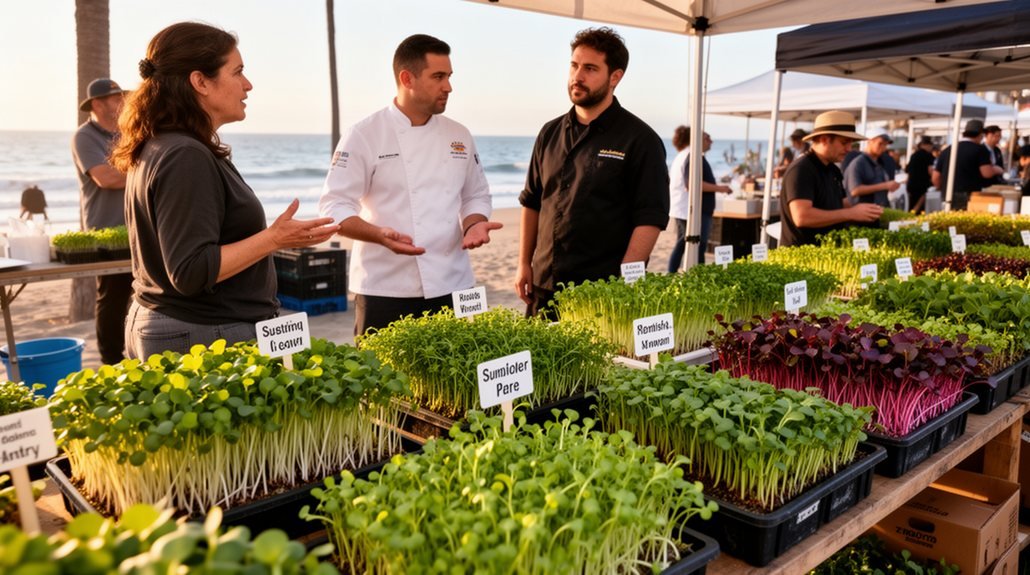
Santa Monica Farmers Market draws high-income, food-literate buyers who actively seek specialty and unusual crops. That’s a strong match for microgreens.
What sets successful vendors apart here isn’t volume. It’s knowing the customer before you ever show up with a canopy.
Why Santa Monica Farmers Market’s customer base is a strong match for specialty greens
Knowing your customer before you pick your market is the core of Dr. Booker T. Whatley’s framework in *How to Make $100,000 Farming 25 Acres*. Santa Monica’s customer base fits that test.
Shoppers here are high-income and food-literate. They already know what microgreens are, and they’re looking for specialty produce Santa Monica vendors rarely stock consistently.
These aren’t casual browsers. They read labels, ask sourcing questions, and come back weekly when they find something they trust.
The Wednesday market draws professional restaurant buyers from across LA. Those buyers are looking for quality and consistency, not the lowest price.
That customer profile removes most of the education barrier. You’re selling to people already sold on specialty greens.
What sets successful vendors apart at Santa Monica Farmers Market
Vendors who last at this market share one habit: they visit before they apply. Walk the Wednesday market first. Watch which booths draw the longest lines and what the chef buyers are picking up.
Look at the specialty produce section specifically. Count how many vendors are selling microgreens or unusual greens. That number is almost always low.
That gap is your entry point. A Santa Monica farmers market vendor who fills an unmet need gets noticed faster than one competing in a crowded category.
Know your product, your price point, and your customer before you submit anything. The application reviewers can tell the difference between a vendor who’s done the work and one who hasn’t.
How do you find Santa Monica Farmers Market and locate other markets like it near you?

Santa Monica Farmers Market is one of 7,842 USDA-verified markets tracked by the MGW Farmers Market Finder at markets.microgreensworld.com. You can search by zip code, city, or state to pull up markets in California and compare them side by side.
Before you apply anywhere, you need to know what other options exist in your area and how each market stacks up.
Using the MGW Market Finder to scout markets in California
Before you employ anywhere, pull up the MGW Farmers Market Finder at markets.microgreensworld.com. It runs on USDA data and covers 7,842 markets across all 50 states.
Search by zip code, city, or state. Type in Santa Monica or 90401 and you’ll see the market details pulled directly from verified data.
This matters because becoming a Santa Monica Farmers Market vendor isn’t your only option. California has dozens of comparable high-income markets worth evaluating.
Compare days, size, and vendor categories before you commit to one application. The Finder shows you what’s nearby and what fits your product. Employ it to build a short list, not just confirm one market.
What to look for before you apply to any California market
Once you’ve built your short list, the next step is knowing what to look for on it.
Check operating days first. The Santa Monica Farmers Market runs Wednesday and Saturday year-round. Wednesday is chef-driven. Saturday draws high-income retail buyers. Those are two different sales environments.
Next, check vendor category density. Count how many specialty produce vendors are already approved. Fewer competitors means a clearer path in.
Look at customer income level and food literacy. Santa Monica buyers actively seek unusual crops. That matters for microgreens pricing and volume expectations.
Finally, check certification requirements. California requires Certified Producer status for agricultural vendors. Confirm you qualify before you spend time on an application.
You want to sell where you already fit. That’s how you find your market community.
Frequently Asked Questions
Does Santa Monica Farmers Market Run Year-Round or Only Seasonally?
You’re in luck. The Santa Monica Farmers Market runs year-round, so you’ll never lose your spot to a seasonal shutdown. Plan your application and schedule without worrying about off-season closures.
How Much Does a Vendor Booth Space Cost at Santa Monica Farmers Market?
Booth fees aren’t publicly listed. You’ll need to contact the City of Santa Monica’s market program directly. Fees vary by vendor type, product category, and space size. Request the current fee schedule when you inquire about applying.
Can Out-Of-County Growers Apply to Sell at Santa Monica Farmers Market?
You can’t. Santa Monica Farmers Market requires certified producer status, and California’s CFM rules tie certification to your county. If you’re farming outside LA County, you’ll need to verify eligibility before applying.
How Long Does the Santa Monica Farmers Market Application Review Take?
You’re looking at four to eight weeks for a decision. The city reviews applications in batches, so submit early and follow up after 30 days if you haven’t heard back.
Are There Waitlists for New Vendors at Santa Monica Farmers Market?
Yes, waitlists exist for most vendor categories. Submit your application anyway. The city tracks qualified producers, and spots open when vendors leave. Certified producer status keeps you eligible when your category moves.
Leave a Reply