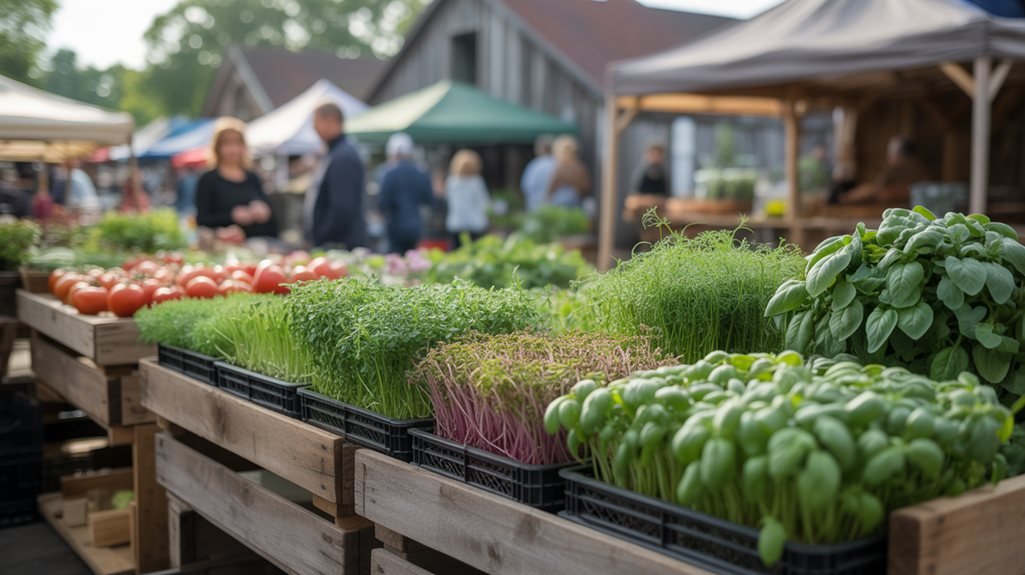
Michigan’s 241 USDA-listed farmers markets span community, regional, and established urban venues, each carrying distinct fee structures, buyer demographics, and competitive dynamics you’ll need to evaluate carefully. Detroit’s Eastern Market operates year-round, while most markets run May through October, making production timing critical. Sunflower shoots, radish, and accessible mixes consistently convert buyers, but vendor density varies significantly by location. Matching your volume to the right market profile—rather than chasing reputation—determines whether you recover booth costs and build sustainable revenue.
Key Takeaways
- Michigan has approximately 241 USDA-listed farmers markets, with density concentrated in Detroit, Ann Arbor, and Grand Rapids for microgreens vendors.
- Sunflower shoots, pea shoots, radish, and broccoli microgreens sell consistently at Michigan markets among health-conscious buyers.
- Booth fees range from $15–$25 at small markets to $50+ at established urban venues like Eastern Market.
- Apply early, include exact variety names, product photos, liability insurance, and a valid cottage food license to avoid rejection.
- The free Market Finder at markets.microgreensworld.com filters all 241 Michigan markets by geography and season for vendor planning.
Farmers Markets in Michigan for Microgreens Vendors
Michigan’s approximately 241 USDA-listed farmers markets represent a substantial commercial infrastructure for microgreens vendors seeking consistent, direct-to-consumer sales channels, with notable market density concentrated in Detroit, Ann Arbor, and Grand Rapids.
You’re working within a defined seasonal window here, as the Michigan market calendar operates primarily spring through fall, which shapes how you’ll plan your production cycles, manage inventory, and time your vendor applications.
Understanding both the scale of available market opportunities and the seasonal constraints specific to Michigan gives you a strategic foundation before you commit booth fees, adjust grow schedules, or submit a single application.
Why Michigan Markets Are Worth Your Attention
The scale of opportunity in Michigan’s farmers market ecosystem is something most microgreens growers underestimate until they start mapping it out. With approximately 241 farmers markets michigan vendors can access through the USDA database, the state presents a genuinely substantial landscape for building consistent sales channels. Markets in Detroit, Ann Arbor, and Grand Rapids operate with meaningful foot traffic and customer bases already familiar with specialty produce.
When you’re positioning microgreens farmers market inventory across these urban corridors, you’re working within an established buyer culture, not creating demand from scratch. Michigan’s spring-through-fall calendar gives you a defined selling window with predictable planning parameters. That structure actually helps you allocate production capacity more deliberately than year-round markets in warmer states typically allow.
What the Michigan Market Season Looks Like
Once you understand the rhythm of Michigan’s agricultural calendar, planning your microgreens production schedule around it becomes considerably more straightforward.
Most farmers markets michigan microgreens vendors target open between May and October, with peak activity concentrated in summer months when foot traffic justifies higher production volumes.
Detroit’s Eastern Market operates year-round, offering a rare winter opportunity for the microgreens vendor michigan growers often overlook when first mapping their season.
Ann Arbor and Grand Rapids markets follow tighter seasonal windows, typically closing by late October.
Your grow cycles need to align with these opening and closing dates, not the other way around. Build your production calendar backward from your target market start date, accounting for germination and harvest timelines specific to each variety you’re running.
How to Find the Right Market in Michigan

Before you apply to any market, you need to evaluate vendor density, customer foot traffic patterns, and whether competing microgreens sellers are already established there. Michigan’s 241 USDA-listed markets vary significantly in scale and audience, from Detroit’s Eastern Market, which draws tens of thousands of visitors weekly, to smaller community markets in Ann Arbor and Grand Rapids that offer tighter vendor communities and more consistent repeat customers. Matching your current production volume to a market’s actual demand profile, rather than its reputation alone, determines whether you can sustain a vendor spot through Michigan’s spring-to-fall season.
What to Look for Before You Apply
Applying to the wrong market wastes time you could spend growing, so evaluating fit before you submit an application is a non-negotiable step in your vendor strategy.
Before you pursue how to get a farmers market booth, confirm the market already attracts buyers who purchase specialty produce, since microgreens for sale Michigan vendors move consistently in markets where customers prioritize local, nutrient-dense food.
Review the vendor mix carefully. If three other greens vendors already hold spots, your margin for differentiation narrows considerably.
Check application fees, annual versus seasonal structures, and whether the market requires liability insurance minimums that affect your operating costs.
A market in Ann Arbor‘s dense food-culture corridor performs differently than a rural weekend market, and that distinction shapes your entire sales approach.
Markets Near Detroit
Detroit’s market ecosystem is dense enough that choosing the wrong entry point can set your vendor trajectory back by a full season.
The Eastern Market district operates year-round with Saturday markets drawing substantial foot traffic, making it a competitive but high-visibility environment for any microgreens vendor in Michigan.
Smaller neighborhood markets in Ferndale and Royal Oak attract buyers who already understand specialty produce, which reduces your education burden at the table considerably.
As a detroit farmers market applicant, you’re competing against established vendors who’ve held spots for years, so timing your application early, understanding each market’s vendor composition, and identifying gaps in current microgreens coverage will sharpen your positioning before you ever submit paperwork.
Find markets near Detroit at [markets.microgreensworld.com](https://markets.microgreensworld.com).
Markets Near Ann Arbor and Grand Rapids
Moving west from the Detroit metro, the vendor landscape shifts in ways that matter for how you position your microgreens. The ann arbor farmers market operates under city management, attracting a buyer demographic that consistently responds to specialty produce with strong provenance. You’re competing alongside established growers there, so product differentiation isn’t optional.
Grand Rapids presents a different dynamic. The grand rapids farmers market draws both wholesale-adjacent buyers and direct consumers, giving you two distinct conversion opportunities within a single selling session. Michigan’s 241 USDA-listed markets mean neither city exhausts your options, and surrounding communities often have shorter waitlists with buyers just as motivated to spend. Employ the free Market Finder at markets.microgreensworld.com to identify which specific markets currently have vendor openings near you.
What to Expect When You Get There
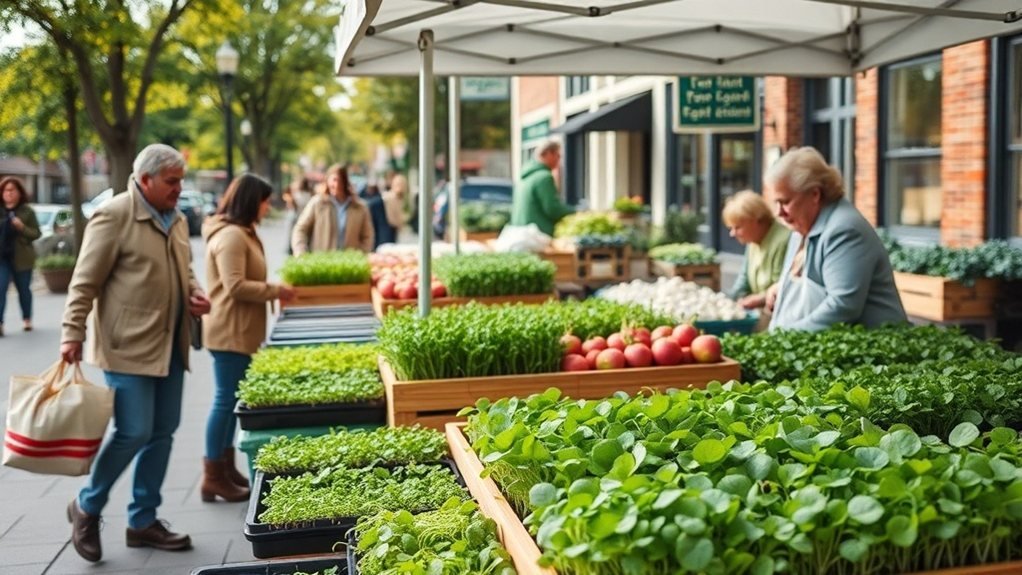
Once you secure a vendor spot, the operational realities of a Michigan farmers market will shape how you price, pack, and present your microgreens from the first Saturday morning onward.
Booth fees across Michigan markets typically range from modest daily rates at smaller community markets to higher seasonal contracts at established venues like the Ann Arbor Farmers Market, where consistent foot traffic justifies the premium. Understanding what actually moves at Michigan markets, particularly which varieties and pack sizes generate consistent turnover, determines whether you recover your costs or simply practice your sales pitch.
Booth Fees and Setup Basics
Booth fees across Michigan’s farmers markets vary more than most new vendors anticipate, ranging from roughly $15 per day at smaller community markets to $50 or more at established urban venues like Eastern Market in Detroit or the Ann Arbor Farmers Market, where foot traffic and vendor competition drive costs upward.
| Market Type | Typical Fee Range | Setup Expectation |
|---|---|---|
| Small community | $15–$25/day | Minimal infrastructure |
| Mid-size regional | $25–$40/day | Designated stall spacing |
| Urban established | $50+/day | Strict layout compliance |
As a farmers market vendor michigan, you’ll need a canopy, folding table, and weights. Your microgreens booth farmers market setup should communicate freshness immediately, because buyers form judgments within seconds of approaching your space.
What Moves at Michigan Markets
Veteran microgreens vendors at Michigan markets will tell you that not every variety sells at the same pace, and understanding those patterns before your first market day saves you from packing out product you thought would fly.
Sunflower and pea shoots consistently draw farmers market michigan vendors toward high-volume production because buyers recognize them immediately. Radish and broccoli move steadily among health-conscious shoppers who already seek out local microgreens michigan growers. Mixes priced accessibly tend to convert first-time buyers faster than single-variety trays, which sell better to returning customers who’ve developed preferences.
What stalls are you bringing those trays to, though? Start identifying your best Michigan market options at [markets.microgreensworld.com](https://markets.microgreensworld.com) using the free Market Finder tool before your next grow cycle finishes.
Getting Your Application Ready

Your application is the first filter market managers employ to assess whether your product fits their vendor mix, so treating it as a formal business document rather than a casual inquiry significantly improves your acceptance rate.
Most Michigan market managers evaluate applications on product category alignment, food safety compliance, and table presentation consistency, meaning a microgreens vendor who submits clear product photos, a valid cottage food or processor license, and a defined price list stands out from the majority of incomplete submissions.
The most common mistake growers make is applying without researching whether the market already has a microgreens vendor, since many markets cap category representation to maintain product diversity across their vendor roster.
What Market Managers Want to See
When a market manager opens your application, they’re making a judgment call within the first few minutes, often before they’ve finished reading the second page. Your farmers market vendor application signals whether you understand professional market culture or whether you’ll create administrative friction later.
To successfully sell microgreens at farmers market venues across Michigan, you need documentation that reflects operational clarity: current cottage food or commercial kitchen certification, liability insurance meeting the market’s minimum threshold, and product photos showing clean, labeled packaging. Managers reviewing dozens of applications will prioritize vendors who demonstrate they’ve already solved compliance problems independently. If your application reads like you’re still figuring out your setup, they’ll move to the next file. Precision and completeness in your submission communicate vendor maturity before you’ve spoken a single word.
Common Mistakes to Avoid
Most application rejections aren’t random, and if you study the pattern, a handful of consistent errors account for the majority of declined submissions across Michigan markets.
Submitting without a complete product list is the first critical failure, because managers evaluating how to sell microgreens need exact variety names, not vague descriptions.
Sending applications outside the acceptance window signals poor research, particularly at high-traffic Detroit and Ann Arbor markets where timing matters considerably.
When you’re selling microgreens locally, arriving without liability insurance documentation or cottage food compliance materials eliminates you immediately, regardless of product quality.
Many growers also underestimate the value of professional photography, submitting blurry booth images that undercut an otherwise strong application.
Each of these errors is preventable through disciplined preparation before you submit anything.
Use the Market Finder to Shortcut Your Search
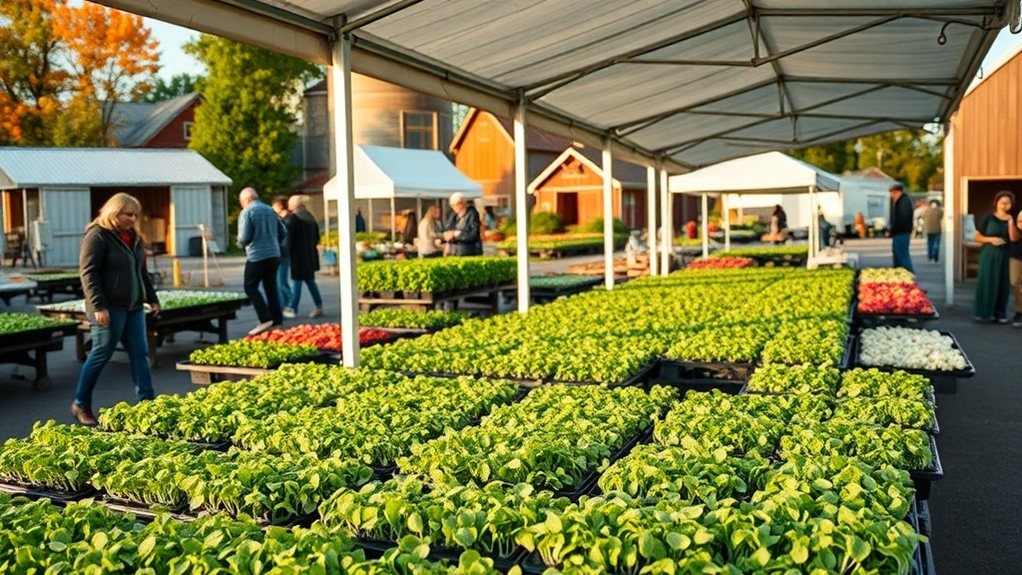
Searching for available vendor spots across Michigan’s 241 USDA-listed farmers markets can eat up hours of manual research, but the MGW Market Finder at markets.microgreensworld.com consolidates that database into a single, searchable interface built specifically for growers.
Michigan has 241 USDA-listed farmers markets. The MGW Market Finder puts them all in one place.
As a microgreens grower Michigan-based or otherwise, you filter by geography and season, eliminating markets that don’t align with your production schedule before you’ve made a single call.
The tool surfaces market contacts, locations, and operational details that would otherwise require individual site visits or phone inquiries.
Rather than assembling a patchwork of county extension websites and local directories, you work from one structured source.
When you’re ready to position your microgreens market stand in front of consistent foot traffic, start your search at markets.microgreensworld.com.
Frequently Asked Questions
Can I Sell Microgreens at Multiple Michigan Markets Simultaneously?
You can absolutely run multiple Michigan markets simultaneously. Most vendors stack weekend markets strategically, covering Saturday and Sunday slots across different cities to move more product before your harvest window closes.
Do Michigan Farmers Markets Require Proof of Commercial Kitchen Use?
Most don’t, but some do. You’ll need to contact each market manager directly to confirm their specific requirements before you apply. Utilize the Market Finder at markets.microgreensworld.com to locate Michigan markets fast.
How Early Should I Arrive to Set up My Microgreens Booth?
Arrive at least 90 minutes before opening. You’ll need time to unload, find your assigned spot, set up your display, and arrange your trays before shoppers walk in. Early arrival also lets you connect with neighboring vendors.
What Happens if My Microgreens Sell Out Before the Market Ends?
Selling out early is a win, but don’t pack up yet. Put out a sign-up sheet for pre-orders, chat up browsers, and note what sold fastest so you’re better stocked next week.
Are There Michigan Markets That Run Indoors During Winter Months?
Yes, several Michigan markets run indoors through winter, including year-round venues in Detroit, Ann Arbor, and Grand Rapids. Search your target area at markets.microgreensworld.com to find markets listing winter or indoor operating schedules.
Wrap-up
You’ve got the framework now—finding the right Michigan market, steering applications, and showing up prepared. The state’s 241 listed markets represent real selling opportunities, particularly in Detroit, Ann Arbor, and Grand Rapids, where specialty produce demand remains consistently strong. Work within the seasonal window rather than against it, target markets matching your production volume, and submit complete applications early. Your next step is straightforward: employ the market finder and identify three viable locations within your region.
Leave a Reply