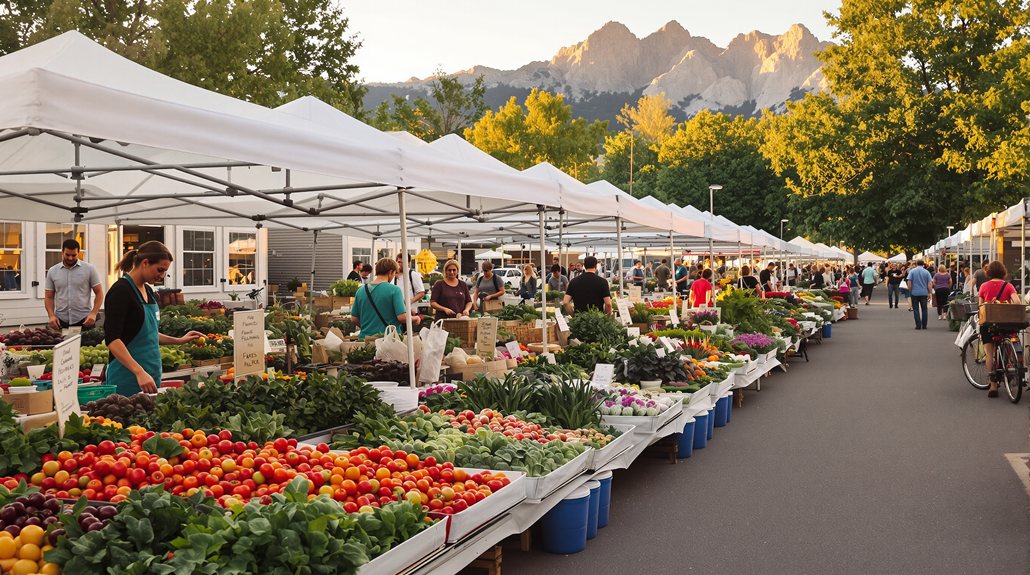
To get a vendor spot at Boulder Farmers Market, visit the Saturday or Wednesday market on 13th Street first. Watch what sells, note empty vendor spots, and confirm specialty produce is under-represented. Gather proof of local production and sustainable practices before the application window opens. The committee filters duplicate categories, so positioning matters before you apply. There’s more to know about timing, documentation, and how microgreens fit this market specifically.
Key Takeaways
- Visit the Boulder Farmers Market as a paying customer before applying to observe vendor gaps, foot traffic, and what products actually sell.
- Specialty produce, including microgreens, is under-represented at Boulder, giving new vendors a competitive edge over crowded baked goods and prepared food categories.
- Gather proof of local production and documentation of sustainable practices before the application portal opens, as these separate accepted from rejected vendors.
- Application review runs in stages over 6–10 weeks, so prepare all materials early and submit promptly when the window opens.
- Use the MGW Farmers Market Finder at markets.microgreensworld.com to compare Boulder against nearby Colorado markets before committing to a single application.
What should you know about Boulder Farmers Market before you apply?
Boulder Farmers Market isn’t a generic weekend market. It runs on 13th Street in Boulder, Colorado, every Saturday and Wednesday from April through November, with a winter market at the Boulder County Fairgrounds.
The customer base is high-income, health-conscious, and willing to pay for specialty produce like microgreens.
What Makes Boulder Farmers Market Different From Other Colorado Markets
Few markets in Colorado carry the weight that this one does.
Boulder Farmers Market runs on Saturdays and Wednesdays along 13th Street from April through November. A winter market at the Boulder County Fairgrounds runs year-round.
The customer base is high-income and health-conscious. Shoppers here prioritize organic, sustainable, and locally sourced products. They read labels and ask questions.
Becoming a boulder farmers market vendor puts you in front of one of the most engaged produce audiences in the state. That’s not common at most Colorado markets.
Specialty produce vendors face less competition here than baked goods or prepared food vendors do. That gap matters when you’re building your application strategy. Know it before you apply.
Who Shops There and What They Actually Buy
Shoppers here almost always arrive knowing what they want. They’re high-income, health-conscious, and they read labels. Organic certification and local sourcing matter to them.
They’re not browsing. They’re buying with purpose.
This crowd spends money on specialty produce without hesitation. Microgreens fit exactly what they’re looking for. You’re not convincing them. You’re just showing up with the right product.
Understanding this customer before you apply is the move. Dr. Booker T. Whatley built his entire farming framework around knowing your customer before you choose your market. That principle applies directly here.
Boulder farmers market vendor requirements ask you to prove local production and sustainable practices. That matches what shoppers already expect. Meet the requirement on paper and you’re already speaking their language.
What does the vendor mix look like at Boulder Farmers Market?
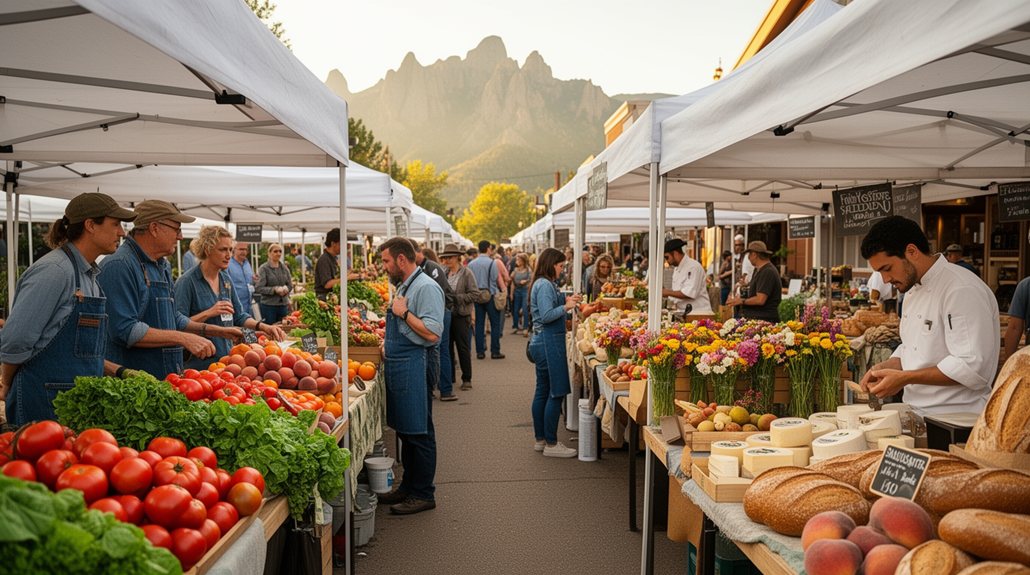
Boulder Farmers Market fills up fast with baked goods, prepared foods, and fresh produce from established farms.
Those categories are competitive and often capped.
Specialty produce, including microgreens, is under-represented, and that gap is where your application has room to stand.
Which categories are overrepresented at Boulder Farmers Market
Most markets fill up fast with baked goods, prepared foods, and fresh-cut flowers. Boulder Farmers Market is no different. Those categories are crowded, and competition for those spots is high.
Jam makers, bread vendors, and flower growers apply every season. The market already has them.
Specialty produce is different. Vendors selling microgreens at Boulder Farmers Market face far less competition than vendors in those saturated categories. The gap is real and it’s documented in the vendor mix.
Dr. Booker T. Whatley’s customer-first framework says to know the gap before you apply. Watch what’s missing, then position yourself to fill it.
Microgreens fit that gap at Boulder. Health-conscious shoppers show up every Saturday looking for exactly what most vendors aren’t selling.
Where the gap is for specialty produce vendors
When you walk the Saturday market on 13th Street, you’ll count more bread tables than produce tables. That pattern repeats every week.
Baked goods, prepared foods, and beverages fill most of the vendor slots. Specialty produce at Boulder market is consistently under-represented.
Dr. Booker T. Whatley’s framework is simple: know your customer before you choose your market. Boulder shoppers are health-conscious, high-income, and already looking for exactly what microgreens offer.
The gap isn’t hidden. It’s visible the moment you walk the market as a customer first.
Watch what sells on a Wednesday in May. Count the specialty produce vendors. That number tells you where you fit and what your application needs to say.
What does the Boulder Farmers Market vendor application process involve?
Boulder Farmers Market’s application isn’t open year-round. The Boulder Farmers Market organization sets specific windows, and missing them means waiting another season. You’ll need proof of local production and documented sustainable practices before you even open the form.
What Boulder Farmers Market organization requires before you submit an application
Every vendor applicant at Boulder Farmers Market goes through a formal review process before getting a spot. The Boulder Farmers Market organization reviews each boulder farmers market application 2026 for product fit, production location, and farming practices.
You’ll need proof that you produce locally. Sustainable practices documentation is also required before they review your file.
The market runs on 13th Street in Boulder, Colorado. Applications are evaluated against existing vendor categories, so the committee checks whether your product fills a gap or duplicates what’s already there.
Specialty produce vendors face less competition in that review process than bakers or prepared food sellers do. That gap works in your favor.
Get your production records and practice documentation ready before you open the application portal.
What the selection process looks like
The selection process at Boulder Farmers Market runs in stages, not all at once. Each stage filters out vendors who aren’t ready.
| Stage | What happens | Timeline |
|---|---|---|
| Application opens | Online form goes live | January to February |
| Document review | Staff checks licenses and proof of production | 2 to 4 weeks |
| Committee review | Vendor mix and category need assessed | 3 to 6 weeks |
| Notification | Accepted or waitlisted by email | March to April |
| Onboarding | Fee payment and space assignment | Before April market opens |
As a boulder farmers market vendor applicant, you won’t hear back immediately. Plan for a 6 to 10 week window from submission to decision.
Have your documents ready before the application opens.
What do microgreens vendors specifically need to know about Boulder Farmers Market?
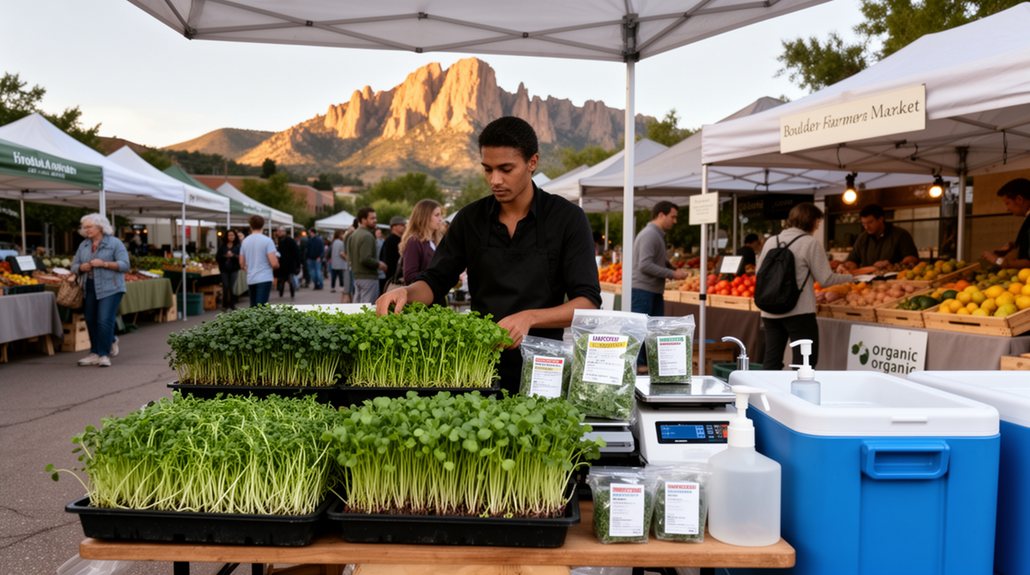
Boulder Farmers Market draws high-income, health-conscious shoppers who already look for specialty produce. Microgreens fit that demand directly.
Knowing what sets successful vendors apart here is the difference between a strong application and a rejected one.
Why Boulder Farmers Market’s customer base is a strong match for specialty greens
Who shops at Boulder Farmers Market matters more than where it’s located.
Boulder’s customer base is high-income, health-conscious, and environmentally motivated. These shoppers already know what microgreens are. You’re not educating them from scratch.
This is a boulder health conscious market vendor’s best-case scenario. Shoppers here read labels, ask about growing methods, and pay premium prices for specialty produce. They’re not looking for the cheapest option.
Organic and sustainably grown products move well here. If your trays are grown without synthetic inputs, that’s a selling point you should lead with.
Specialty greens are under-represented in Boulder’s vendor mix. That gap means you’re filling a real need. Shoppers looking for microgreens have few options. You become the obvious choice.
What sets successful vendors apart at Boulder Farmers Market
Most vendors who struggle at Boulder Farmers Market skip one step. They apply before they observe.
Visit the market as a customer first. Walk 13th Street on a Saturday. Watch which booths draw lines and which sit quiet.
| What weak vendors do | What strong vendors do |
|---|---|
| Apply without visiting | Observe vendor gaps first |
| Ignore customer behavior | Track what shoppers buy |
| Submit generic applications | Show local proof and sustainable practices |
Specialty produce is under-represented. That gap is your entry point as a boulder market vendor.
Your application needs to show local production and sustainable methods. Those two things separate accepted vendors from rejected ones.
Document your grow setup before you write a single sentence of your application.
How do you find Boulder Farmers Market and locate other markets like it near you?
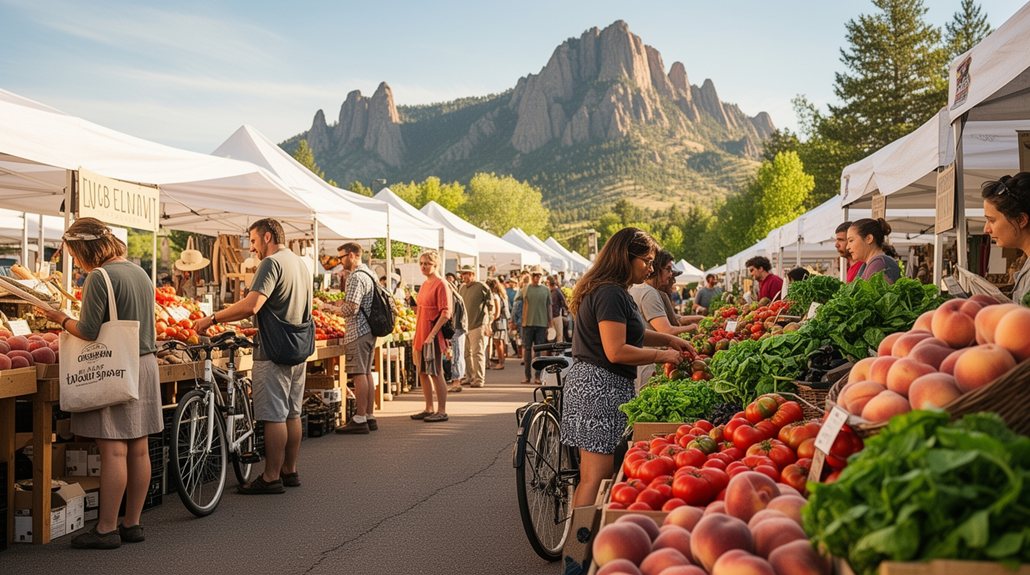
Boulder Farmers Market is one option, but it’s not the only strong market in Colorado.
The MGW Farmers Market Finder at markets.microgreensworld.com covers 7,842 USDA-verified markets across all 50 states, searchable by zip code, city, or state.
Before you apply anywhere, utilize it to see what’s near you and compare your options.
Using the MGW Market Finder to scout markets in Colorado
For any grower scouting Colorado markets, the MGW Farmers Market Finder at markets.microgreensworld.com is your first stop. It pulls from 7,842 USDA-verified markets across all 50 states.
Search by zip code, city, or state. Boulder Farmers Market shows up with location and schedule details you can act on immediately.
You’re not just looking for one market. You’re building a list of options before you commit as a boulder farmers market vendor.
Compare markets by size, frequency, and proximity. Some Colorado growers find strong secondary markets in Fort Collins, Denver, or Longmont.
The tool provides you the same data that experienced vendors use before they apply. Start there before you fill out a single application.
What to look for before you apply to any Colorado market
Before you apply anywhere, visit the market as a paying customer at least once. Watch what sells. Notice which vendor spots are empty.
As a boulder farmers market vendor, your goal is to spot the gap before you apply. Specialty produce is almost always under-represented.
| What to observe | What it tells you | What to do with it |
|---|---|---|
| Vendor mix | Who’s already there | Find the open category |
| Customer behavior | What they buy | Match your product to demand |
| Foot traffic by time | When buyers peak | Plan your setup schedule |
Map the gap first. Then build your application around it.
Frequently Asked Questions
How Much Does a Boulder Farmers Market Vendor Booth Cost?
You’ll pay a percentage of your daily sales as your booth fee. Boulder Farmers Market employs a commission-based model rather than flat fees, so your cost scales directly with what you earn.
Can Vendors Sell at Both the Summer and Winter Boulder Markets?
You can sell at both. The summer market runs along 13th Street, and the winter market runs at the Boulder County Fairgrounds. Apply separately for each season.
How Long Does Boulder Farmers Market Take to Review Vendor Applications?
They don’t publish a fixed timeline, but expect four to six weeks after the application window closes. Check your email and the Boulder Farmers Market website for updates on your status.
Does Boulder Farmers Market Accept Vendors Who Grow in Greenhouses?
Yes, they do. Greenhouse growing counts as local production if your operation is based nearby. You’ll need to document your setup and show your growing practices meet their sustainability standards.
How Many Vendor Spots Does Boulder Farmers Market Open Each Season?
Boulder Farmers Market doesn’t publish an exact number of open spots each season. Your best move is to apply early. Competition is high, and specialty produce vendors like microgreens growers have a real edge in the application process.
Leave a Reply