Tag: vendor application

  • How to Get Into a Farmers Market (And What to Do If It Is Already Full)

    How to Get Into a Farmers Market (And What to Do If It Is Already Full)

    To get into a farmers market, apply between September and January for the following season. Have your business name, product list, proof of production, liability insurance, and vendor fee ready before you start. Lead your application with specific varieties like sunflower or pea shoots, not vague terms. If your target market is full, ask directly about fill-in slots or apply to a sister market first—there’s a faster path than the waitlist, and it starts with knowing exactly where to look.

    Key Takeaways

    • Apply between September and January, as most markets open applications during this window for the following season.
    • Prepare six essentials before applying: business name, product list, proof of production, licenses, liability insurance, and vendor fee.
    • Lead applications with specific variety names and weekly supply capacity rather than vague descriptions to stand out.
    • If a market is full, directly ask the manager about fill-in vendor slots, which most applicants never request.
    • Apply to affiliated sister markets first; acceptance there builds an internal track record supporting entry into your primary target market.

    What should you know about farmers market vendor applications before you start?

    Most farmers markets open applications between September and January for the following season. By the time spring arrives, the slots are already filled.

    You’re not late to a process. You’re likely starting one cycle behind.

    Why spring 2026 applications are more competitive than most vendors expect

    Before you apply anywhere, know that spring 2026 slots are already gone at several major markets.

    Baltimore Farmers Market closed applications on January 9. Knoxville Market Square is waitlist-only for agricultural vendors. Chicago’s 61st Street Farmers Market reported unprecedented interest this cycle.

    These aren’t exceptions. This is the pattern across most major metro areas.

    Most markets open applications between September and January for the following season. If you missed that window, you’re already behind.

    The best farmers market application tips 2026 growers are passing around right now focus on timing and track record. Markets prioritize returning vendors first, then vendors from sister markets.

    Microgreens are less saturated than baked goods or honey. That gap gives you a real edge if you apply to the right market at the right time.

    What most markets require before they will consider your application

    Nearly every market wants the same six things before they’ll even read your application.

    Business name, product list, proof of production, applicable licenses, liability insurance, and a vendor fee. Have all six ready before you open any application portal.

    Proof of production is where most new vendors get stuck. Producer-only markets require you to show you grew what you’re selling. Photos of your grow setup, a lease for your space, or a signed affidavit can work depending on the market.

    Liability insurance trips up a lot of applicants too. Most markets require a $1 million general liability policy. You can get a basic policy through Farm Bureau or a specialty ag insurer.

    Meeting farmers market vendor requirements upfront puts you ahead of applicants who show up unprepared.

    How do you find farmers markets that are accepting new vendors?
    filter markets by status

    Finding a market that’s actually open to new vendors takes more than a Google search.

    Most listings don’t show application status, deadlines, or whether a waitlist exists.

    You need to know what to look for in a listing before you contact anyone, and you need a faster way to filter markets by location and status.

    What to look for in a market listing before you contact anyone

    Most market listings tell you what you need to know if you read them carefully. Check the vendor category section first. Microgreens usually fall under specialty produce.

    What to check Why it matters
    Vendor category Confirms microgreens are accepted
    Application status Shows open, closed, or waitlist
    Producer-only policy Requires proof you grew it

    Look for language like “producer-only” or “grower-verified.” Those markets need documentation before they’ll accept you.

    If the listing shows a waitlist, that’s still a real entry point. Markets pull from waitlists when vendors drop out.

    Read the fee structure too. Some markets charge a flat rate. Others take a percentage of sales.

    How to use the MGW Market Finder to identify open markets near you

    Narrow your search before you waste time on dead ends.

    The MGW farmers market finder covers 7,842 USDA-verified markets across all 50 states.

    Search by zip code, city, or state. You’ll see market names, locations, and contact details in one place.

    Filter results to your metro area first.

    Then cross-check each listing against what you learned in the previous step about application windows and vendor categories.

    Microgreens fall under specialty produce. That category has less competition than baked goods or honey at most markets.

    Pull a short list of five to eight markets. Rank them by proximity and application status.

    Then move to direct contact with each market manager.

    What should you do before you fill out a single application?
    conduct market visit identify gap

    Most vendors fill out the application first. That’s the wrong order.

    You need two things before you touch a form: a market visit and a gap in the vendor lineup you can fill.

    Why visiting the market as a customer first changes your odds

    Vendors who visit first almost always write stronger applications. Walking the market tells you what’s already there, who runs it, and where microgreens fit.

    Count the produce vendors. Note any gaps in specialty greens. That gap is your entry point when you explain your product in the application.

    Talk to the market manager if they’re available. Introduce yourself as someone interested in how to get into a farmers market as a vendor. Managers remember faces.

    Watch how customers shop. See which booths draw lines and which don’t. That information shapes how you present your product and price point later.

    Go at least twice before you apply. Once on opening day, once mid-season. You’ll write a sharper application because you actually know the market.

    How to identify the specialty produce gap that is your application strategy

    Specialty produce gaps don’t find you. You have to look for them deliberately before you fill out a single application.

    Walk the market and write down every vendor category. Count how many sell baked goods, honey, or crafts. Then count specialty produce vendors.

    That number is almost always lower. Microgreens specifically appear at fewer than one in five markets surveyed by USDA data.

    Dr. Booker T. Whatley’s framework applies here. Know your customer before you choose your market. The farm serves the market, not the other way around.

    Your specialty produce farmers market application gets stronger when you name the gap directly. Show the market manager what’s missing. That’s your entry point.

    How do you write a farmers market vendor application that gets noticed?
    clear product details proof

    Most market managers read dozens of applications at once.

    They’re looking for specific information, not your backstory.

    Product details and production proof move you forward faster than personal narrative.

    What market managers are actually looking for in new produce vendors

    Market managers rarely have time to chase down incomplete farmers market vendor applications. If yours is missing a document, they move on.

    They want proof you grew what you’re selling. That means photos of your grow space, your address, and a production log if you have one.

    They also look for product fit. Microgreens fill a gap most markets have. Baked goods and honey slots fill fast. Produce vendors, especially specialty growers, get more consideration.

    Your application needs a clean product list with variety names. Write “sunflower, pea shoot, radish” not “various microgreens.”

    Show up as someone already part of the market community. Attend first. Talk to the manager before you apply.

    Why product specificity beats personal story every time

    Two sentences in your application matter more than any other. What you grow and how much of it you can bring each week.

    Don’t open with your backstory. Open with your product list and your weekly volume.

    Write it like this: “I grow 14 varieties of microgreens and can supply 80 to 120 units per market day.” That one line tells the manager you’re a serious microgreens farmers market vendor, not a hobbyist testing the water.

    Managers skim dozens of applications. Specificity stops the scroll.

    Name your top three varieties. Include a realistic unit count. Add whether you’re producer-only compliant.

    Your story can live in a bio section. Keep it out of your lead. The numbers earn your spot.

    What happens if the market you want is already full?
    alternate routes into markets

    A full market isn’t a dead end.

    Two paths move faster than sitting on a waitlist: the fill-in vendor slot and the sister market route.

    Most applicants never ask about either one.

    The fill-in vendor slot that most applicants never ask about

    When a market tells you it’s full, most vendors accept that and move on. Don’t. Ask the market manager directly about fill-in or substitute vendor slots.

    These slots open when a regular vendor cancels last minute. Managers need someone reliable on short notice. That someone can be you.

    Email the manager and say you’re available for fill-in dates. Keep your setup fast and your product list ready.

    Action What to say Why it works
    Email manager “I’m available for fill-in dates” Gets you on their radar
    Stay ready Have product and setup prepared Managers call fast
    Show up well Arrive early, sell clean Builds your track record

    Getting accepted at a farmers market often starts with one fill-in day.

    The sister market path that is faster than the waitlist

    Fill-in slots get you in the door, but they don’t guarantee a regular spot.

    Many market organizations run more than one location. Nashville Farmers Market operates multiple sites across the metro. If you apply to a sister market and get accepted there, you build a track record inside that organization.

    That track record matters. Nashville Richland Park requires vendors to already be active at a sister market before they can apply. You’re not waiting on luck. You’re earning your way in through a side door that exists for exactly this reason.

    Search the market’s website for affiliated locations. Apply to a sister market with lower competition first. Get your name on their vendor list. Then employ that acceptance to move toward your primary target.

    Frequently Asked Questions

    Can You Sell at More Than One Farmers Market at the Same Time?

    Yes, you can sell at more than one farmers market at the same time. Many vendors do it. It’s a smart way to build your customer base and test which markets perform best for you.

    How Much Does a Typical Farmers Market Vendor Booth Cost per Week?

    You’ll typically pay $25 to $50 per day at smaller markets. Larger urban markets run $50 to $150 weekly. Fees vary by booth size, location within the market, and seasonal structure.

    Do You Need a Business License Before Applying to a Farmers Market?

    You don’t always need one before applying, but most markets require proof before your first day. Check your state’s cottage food laws and your county clerk’s office first.

    What Liability Insurance Amount Do Most Farmers Markets Require From Vendors?

    Most markets require $1 million per occurrence and $2 million aggregate. You’ll list the market as an additional insured. Get a certificate of insurance before you apply.

    Can You Share a Booth With Another Grower at a Farmers Market?

    Yes, you can share a booth with another grower, but the market manager must approve it first. Check the rules before you commit. Some markets charge both vendors separately.
  • How to Get a Vendor Spot at Boulder Farmers Market — Colorado’s Most Respected Produce Market

    How to Get a Vendor Spot at Boulder Farmers Market — Colorado’s Most Respected Produce Market

    To get a vendor spot at Boulder Farmers Market, visit the Saturday or Wednesday market on 13th Street first. Watch what sells, note empty vendor spots, and confirm specialty produce is under-represented. Gather proof of local production and sustainable practices before the application window opens. The committee filters duplicate categories, so positioning matters before you apply. There’s more to know about timing, documentation, and how microgreens fit this market specifically.

    Key Takeaways

    • Visit the Boulder Farmers Market as a paying customer before applying to observe vendor gaps, foot traffic, and what products actually sell.
    • Specialty produce, including microgreens, is under-represented at Boulder, giving new vendors a competitive edge over crowded baked goods and prepared food categories.
    • Gather proof of local production and documentation of sustainable practices before the application portal opens, as these separate accepted from rejected vendors.
    • Application review runs in stages over 6–10 weeks, so prepare all materials early and submit promptly when the window opens.
    • Use the MGW Farmers Market Finder at markets.microgreensworld.com to compare Boulder against nearby Colorado markets before committing to a single application.

    What should you know about Boulder Farmers Market before you apply?

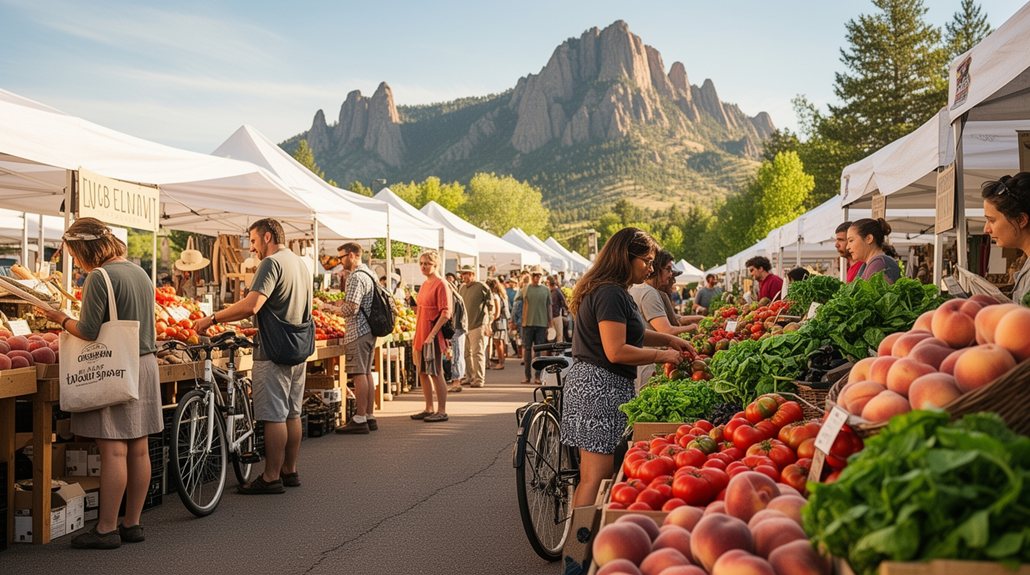
    Boulder Farmers Market isn’t a generic weekend market. It runs on 13th Street in Boulder, Colorado, every Saturday and Wednesday from April through November, with a winter market at the Boulder County Fairgrounds.

    The customer base is high-income, health-conscious, and willing to pay for specialty produce like microgreens.

    What Makes Boulder Farmers Market Different From Other Colorado Markets

    Few markets in Colorado carry the weight that this one does.

    Boulder Farmers Market runs on Saturdays and Wednesdays along 13th Street from April through November. A winter market at the Boulder County Fairgrounds runs year-round.

    The customer base is high-income and health-conscious. Shoppers here prioritize organic, sustainable, and locally sourced products. They read labels and ask questions.

    Becoming a boulder farmers market vendor puts you in front of one of the most engaged produce audiences in the state. That’s not common at most Colorado markets.

    Specialty produce vendors face less competition here than baked goods or prepared food vendors do. That gap matters when you’re building your application strategy. Know it before you apply.

    Who Shops There and What They Actually Buy

    Shoppers here almost always arrive knowing what they want. They’re high-income, health-conscious, and they read labels. Organic certification and local sourcing matter to them.

    They’re not browsing. They’re buying with purpose.

    This crowd spends money on specialty produce without hesitation. Microgreens fit exactly what they’re looking for. You’re not convincing them. You’re just showing up with the right product.

    Understanding this customer before you apply is the move. Dr. Booker T. Whatley built his entire farming framework around knowing your customer before you choose your market. That principle applies directly here.

    Boulder farmers market vendor requirements ask you to prove local production and sustainable practices. That matches what shoppers already expect. Meet the requirement on paper and you’re already speaking their language.

    What does the vendor mix look like at Boulder Farmers Market?

    underrepresented specialty produce opportunity

    Boulder Farmers Market fills up fast with baked goods, prepared foods, and fresh produce from established farms.

    Those categories are competitive and often capped.

    Specialty produce, including microgreens, is under-represented, and that gap is where your application has room to stand.

    Which categories are overrepresented at Boulder Farmers Market

    Most markets fill up fast with baked goods, prepared foods, and fresh-cut flowers. Boulder Farmers Market is no different. Those categories are crowded, and competition for those spots is high.

    Jam makers, bread vendors, and flower growers apply every season. The market already has them.

    Specialty produce is different. Vendors selling microgreens at Boulder Farmers Market face far less competition than vendors in those saturated categories. The gap is real and it’s documented in the vendor mix.

    Dr. Booker T. Whatley’s customer-first framework says to know the gap before you apply. Watch what’s missing, then position yourself to fill it.

    Microgreens fit that gap at Boulder. Health-conscious shoppers show up every Saturday looking for exactly what most vendors aren’t selling.

    Where the gap is for specialty produce vendors

    When you walk the Saturday market on 13th Street, you’ll count more bread tables than produce tables. That pattern repeats every week.

    Baked goods, prepared foods, and beverages fill most of the vendor slots. Specialty produce at Boulder market is consistently under-represented.

    Dr. Booker T. Whatley’s framework is simple: know your customer before you choose your market. Boulder shoppers are health-conscious, high-income, and already looking for exactly what microgreens offer.

    The gap isn’t hidden. It’s visible the moment you walk the market as a customer first.

    Watch what sells on a Wednesday in May. Count the specialty produce vendors. That number tells you where you fit and what your application needs to say.

    What does the Boulder Farmers Market vendor application process involve?

    seasonal application local proof

    Boulder Farmers Market’s application isn’t open year-round. The Boulder Farmers Market organization sets specific windows, and missing them means waiting another season. You’ll need proof of local production and documented sustainable practices before you even open the form.

    What Boulder Farmers Market organization requires before you submit an application

    Every vendor applicant at Boulder Farmers Market goes through a formal review process before getting a spot. The Boulder Farmers Market organization reviews each boulder farmers market application 2026 for product fit, production location, and farming practices.

    You’ll need proof that you produce locally. Sustainable practices documentation is also required before they review your file.

    The market runs on 13th Street in Boulder, Colorado. Applications are evaluated against existing vendor categories, so the committee checks whether your product fills a gap or duplicates what’s already there.

    Specialty produce vendors face less competition in that review process than bakers or prepared food sellers do. That gap works in your favor.

    Get your production records and practice documentation ready before you open the application portal.

    What the selection process looks like

    The selection process at Boulder Farmers Market runs in stages, not all at once. Each stage filters out vendors who aren’t ready.

    Stage What happens Timeline
    Application opens Online form goes live January to February
    Document review Staff checks licenses and proof of production 2 to 4 weeks
    Committee review Vendor mix and category need assessed 3 to 6 weeks
    Notification Accepted or waitlisted by email March to April
    Onboarding Fee payment and space assignment Before April market opens

    As a boulder farmers market vendor applicant, you won’t hear back immediately. Plan for a 6 to 10 week window from submission to decision.

    Have your documents ready before the application opens.

    What do microgreens vendors specifically need to know about Boulder Farmers Market?

    high income specialty produce demand

    Boulder Farmers Market draws high-income, health-conscious shoppers who already look for specialty produce. Microgreens fit that demand directly.

    Knowing what sets successful vendors apart here is the difference between a strong application and a rejected one.

    Why Boulder Farmers Market’s customer base is a strong match for specialty greens

    Who shops at Boulder Farmers Market matters more than where it’s located.

    Boulder’s customer base is high-income, health-conscious, and environmentally motivated. These shoppers already know what microgreens are. You’re not educating them from scratch.

    This is a boulder health conscious market vendor’s best-case scenario. Shoppers here read labels, ask about growing methods, and pay premium prices for specialty produce. They’re not looking for the cheapest option.

    Organic and sustainably grown products move well here. If your trays are grown without synthetic inputs, that’s a selling point you should lead with.

    Specialty greens are under-represented in Boulder’s vendor mix. That gap means you’re filling a real need. Shoppers looking for microgreens have few options. You become the obvious choice.

    What sets successful vendors apart at Boulder Farmers Market

    Most vendors who struggle at Boulder Farmers Market skip one step. They apply before they observe.

    Visit the market as a customer first. Walk 13th Street on a Saturday. Watch which booths draw lines and which sit quiet.

    What weak vendors do What strong vendors do
    Apply without visiting Observe vendor gaps first
    Ignore customer behavior Track what shoppers buy
    Submit generic applications Show local proof and sustainable practices

    Specialty produce is under-represented. That gap is your entry point as a boulder market vendor.

    Your application needs to show local production and sustainable methods. Those two things separate accepted vendors from rejected ones.

    Document your grow setup before you write a single sentence of your application.

    How do you find Boulder Farmers Market and locate other markets like it near you?

    find nearby verified farmers markets

    Boulder Farmers Market is one option, but it’s not the only strong market in Colorado.

    The MGW Farmers Market Finder at markets.microgreensworld.com covers 7,842 USDA-verified markets across all 50 states, searchable by zip code, city, or state.

    Before you apply anywhere, utilize it to see what’s near you and compare your options.

    Using the MGW Market Finder to scout markets in Colorado

    For any grower scouting Colorado markets, the MGW Farmers Market Finder at markets.microgreensworld.com is your first stop. It pulls from 7,842 USDA-verified markets across all 50 states.

    Search by zip code, city, or state. Boulder Farmers Market shows up with location and schedule details you can act on immediately.

    You’re not just looking for one market. You’re building a list of options before you commit as a boulder farmers market vendor.

    Compare markets by size, frequency, and proximity. Some Colorado growers find strong secondary markets in Fort Collins, Denver, or Longmont.

    The tool provides you the same data that experienced vendors use before they apply. Start there before you fill out a single application.

    What to look for before you apply to any Colorado market

    Before you apply anywhere, visit the market as a paying customer at least once. Watch what sells. Notice which vendor spots are empty.

    As a boulder farmers market vendor, your goal is to spot the gap before you apply. Specialty produce is almost always under-represented.

    What to observe What it tells you What to do with it
    Vendor mix Who’s already there Find the open category
    Customer behavior What they buy Match your product to demand
    Foot traffic by time When buyers peak Plan your setup schedule

    Map the gap first. Then build your application around it.

    Frequently Asked Questions

    How Much Does a Boulder Farmers Market Vendor Booth Cost?

    You’ll pay a percentage of your daily sales as your booth fee. Boulder Farmers Market employs a commission-based model rather than flat fees, so your cost scales directly with what you earn.

    Can Vendors Sell at Both the Summer and Winter Boulder Markets?

    You can sell at both. The summer market runs along 13th Street, and the winter market runs at the Boulder County Fairgrounds. Apply separately for each season.

    How Long Does Boulder Farmers Market Take to Review Vendor Applications?

    They don’t publish a fixed timeline, but expect four to six weeks after the application window closes. Check your email and the Boulder Farmers Market website for updates on your status.

    Does Boulder Farmers Market Accept Vendors Who Grow in Greenhouses?

    Yes, they do. Greenhouse growing counts as local production if your operation is based nearby. You’ll need to document your setup and show your growing practices meet their sustainability standards.

    How Many Vendor Spots Does Boulder Farmers Market Open Each Season?

    Boulder Farmers Market doesn’t publish an exact number of open spots each season. Your best move is to apply early. Competition is high, and specialty produce vendors like microgreens growers have a real edge in the application process.

  • How to Get Into Yellow Green Farmers Market: What Vendors Need to Know About South Florida’s Biggest Indoor Market

    How to Get Into Yellow Green Farmers Market: What Vendors Need to Know About South Florida’s Biggest Indoor Market

    Yellow Green Farmers Market runs every Saturday and Sunday inside a permanent indoor structure in Hollywood, Florida. To get in, contact the market office at 1940 N 30th Rd, Hollywood, FL 33021. You’ll likely need a Florida business license, liability insurance, and food handler certifications. Management fills gaps, not duplicates, so knowing the vendor mix before you apply matters — and there’s a lot more to the process worth understanding.

    Key Takeaways

    • Yellow Green Farmers Market operates indoors every Saturday and Sunday, eliminating weather cancellations and requiring vendors to commit to consistent weekly attendance.
    • Contact the market office at 1940 N 30th Rd, Hollywood, FL 33021 to begin the vendor application process.
    • Required documentation likely includes a Florida business license, liability insurance proof, and applicable food handler certifications.
    • Management prioritizes vendors who fill category gaps, so documenting the absence of competing vendors strengthens your application.
    • Respond quickly to any management requests for photos or samples, and follow up politely after ten business days if unanswered.

    What should you know about Yellow Green Farmers Market before you apply?

    Yellow Green Farmers Market in Hollywood, Florida runs every Saturday and Sunday inside a permanent indoor structure. That format changes how vendors plan and how customers shop.

    Before you apply, you need to know who’s already there and what the customer base is actually buying.

    What Makes Yellow Green Farmers Market Different From Other Florida Markets

    If you’re selling microgreens in South Florida, this market belongs on your short list. Yellow Green Farmers Market runs every Saturday and Sunday in Hollywood, Broward County.

    It’s fully indoors. Weather doesn’t cancel your day or kill your product.

    The customer base is diverse and health-conscious. They’re already looking for specialty produce. That’s your entry point.

    Most Florida markets skew heavily toward prepared food and crafts. Yellow Green follows that pattern. Specialty produce vendors, including microgreens, are under-represented in the mix.

    That gap matters when you’re sizing up yellow green market vendor requirements and building your application strategy. You’re not fighting for shelf space in a crowded category. You’re plunging into one.

    Who Shops There and What They Actually Buy

    Broward County pulls a mixed crowd. You’ve got Caribbean, Latin American, and Haitian families alongside transplants from the Northeast and longtime Florida residents.

    Health-conscious buyers dominate the customer base. They’re reading labels, asking about growing methods, and spending more per visit than a typical grocery shopper.

    As a yellow green farmers market vendor, your customer already understands microgreens. You don’t have to explain sunflower shoots or pea tendrils from scratch.

    The gap is supply, not education. Prepared food vendors outnumber specialty produce vendors significantly. That imbalance works in your favor.

    Watch what people carry out. Shoppers here move toward high-quality, fresh, specialty items. Your product fits that behavior directly.

    What does the vendor mix look like at Yellow Green Farmers Market?

    heavy prepared food lacking microgreens

    Yellow Green Farmers Market runs heavy on prepared food, crafts, and international cuisine vendors.

    Specialty produce, including microgreens, is under-represented in that mix. That gap is exactly where your application has the most room.

    Which categories are overrepresented at Yellow Green Farmers Market

    Prepared food and international cuisine dominate the floor. You’ll see vendors selling Ethiopian dishes, Japanese food, Caribbean plates, and dozens of other cuisines side by side.

    Crafts and handmade goods take up another large share of the vendor mix. These two categories pull most of the foot traffic on Saturday and Sunday.

    Specialty produce at Yellow Green market is a different story. That category is thin. Most shoppers who want microgreens, shoots, or niche greens aren’t finding them there consistently.

    That gap is real information. It tells you where demand exists without competition. Before you apply, walk the floor as a customer and count how many specialty produce vendors are actually set up.

    Where the gap is for specialty produce vendors

    That gap in specialty produce doesn’t appear by accident. Most vendors at Yellow Green Farmers Market are selling prepared food, crafts, or imported goods. Fresh specialty produce, including microgreens, is consistently under-represented.

    That’s your opening.

    Dr. Booker T. Whatley’s framework says it plainly: know your customer before you choose your market. Walk Yellow Green as a customer first. Watch what the Broward County crowd picks up and what they can’t find.

    Microgreens at Yellow Green Farmers Market sit in a category with almost no direct competition. The customer base is health-conscious and diverse. They’re already buying specialty items.

    You’re not fighting for shelf space here. You’re filling a visible gap. That’s not just opportunity. That’s your application strategy.

    What does the Yellow Green Farmers Market vendor application process involve?

    selective vendor application preparation

    Yellow Green Farmers Market doesn’t post a simple sign-up form and wait for replies. The market reviews vendors selectively, and you need to show up prepared before you submit anything.

    Know what they require and what the selection process looks like before you write a single word of your application.

    What the market requires before you submit an application

    Before you fill out anything, contact the market office directly at Yellow Green Farmers Market, located at 1940 N 30th Rd, Hollywood, FL 33021. That first call tells you what category your product falls under and whether space is currently open.

    Knowing how to get into Yellow Green Farmers Market starts with understanding their vendor categories. Produce and specialty food vendors are reviewed separately from crafts and prepared foods.

    Have your business documentation ready. You’ll likely need a Florida business license, proof of liability insurance, and any required food handler certifications before they’ll move your application forward.

    Ask specifically about booth fees, Saturday versus Sunday placement, and whether a waiting list applies to your product category.

    What the selection process looks like

    Once you submit your application, the market management reviews your product category against their current vendor mix. They’re looking for gaps, not duplicates.

    If they already have three microgreens vendors, your timing matters. Specialty produce is under-represented at Yellow Green, so your odds are better than most categories.

    Approval isn’t automatic. Management may contact you for photos, samples, or a follow-up conversation. Respond fast. Delays signal low commitment.

    There’s no published timeline. Some vendors hear back in two weeks. Others wait longer. Follow up politely after 10 business days if you’ve heard nothing.

    One yellow green market vendor tip that holds: position your product as filling a gap, not adding to a crowd.

    What do microgreens vendors specifically need to know about Yellow Green Farmers Market?

    health focused buyers seek organic

    Yellow Green Farmers Market in Hollywood, Florida plunges a diverse, health-conscious crowd from across Broward County.

    That customer base actively looks for specialty and organic produce. Knowing who shops there and what’s missing from the vendor mix is what separates vendors who get approved from those who don’t.

    Why Yellow Green Farmers Market’s customer base is a strong match for specialty greens

    Broward County has one of the most diverse populations in Florida, and that diversity shows up at this market every weekend. Shoppers here come from Caribbean, Latin American, African, and Asian communities. They already cook with a wide range of greens and know what specialty produce is worth.

    As a Hollywood Florida market vendor, you’re not educating a skeptical crowd. You’re meeting people who actively seek out ingredients outside the mainstream.

    The market draws health-conscious buyers who read labels and ask questions. That’s your customer. They compare quality, not just price.

    Specialty greens are under-represented in this vendor mix. The demand is there. The supply gap is your opening.

    What sets successful vendors apart at Yellow Green Farmers Market

    Vendors who last at this market know the floor before they rent it. Visit on a Saturday first. Walk every aisle and count the specialty produce tables.

    You’ll find prepared food and crafts dominate the mix. Microgreens and living greens are under-represented. That gap is your entry point.

    Before you submit the yellow green farmers market vendor application, know exactly which customer you’re targeting. Watch who stops at produce tables. Note what questions they ask.

    Successful vendors come in with a clear product focus and consistent supply. They show up every weekend. The indoor format means no weather excuses.

    Your reliability and product clarity matter more here than anywhere else on your application.

    How do you find Yellow Green Farmers Market and locate other markets like it near you?

    location specific farmer s market guidance

    Yellow Green Farmers Market is at 3291 W Sheridan St, Hollywood, FL 33021.

    If you’re looking for comparable markets in Broward County or anywhere else in Florida, the MGW Farmers Market Finder at markets.microgreensworld.com covers 7,842 USDA-verified markets searchable by zip code, city, or state.

    Before you apply anywhere, there are specific things to check about each market’s vendor mix and customer base.

    Using the MGW Market Finder to scout markets in Florida

    For South Florida growers, the MGW Farmers Market Finder at markets.microgreensworld.com covers 7,842 USDA-verified markets across all 50 states.

    Search by zip code, city, or state. You’ll see Yellow Green Farmers Market in Hollywood, Florida alongside every comparable market in Broward County.

    This matters before you submit a hollywood florida farmers market vendor application. You need to know what other markets exist nearby, how often they run, and whether Yellow Green fits your schedule and product category.

    The tool pulls from USDA data. It’s not a compiled list. It’s the full picture.

    If you’re scouting South Florida, start with a 10 to 15 mile radius around Hollywood. Compare market size, frequency, and vendor categories before you commit to anything.

    What to look for before you apply to any Florida market

    Before you apply anywhere, visit the market as a customer first. Walk Yellow Green Farmers Market on a Saturday. Watch what moves.

    Look for these five things during your visit:

    What to observe Why it matters
    Specialty produce vendors Fewer means more room for you
    Customer demographics Shows who buys what
    Foot traffic by hour Tells you peak selling windows
    Competing microgreens vendors Confirms your gap
    Price points on similar products Sets your baseline

    Specialty produce is under-represented at most markets. That gap is your entry point.

    If you see no microgreens vendor at Yellow Green, that’s your signal. Document it. Employ that observation in your application.

    Frequently Asked Questions

    Does Yellow Green Farmers Market Charge Vendors a Daily Booth Fee?

    Yes, Yellow Green charges vendors a daily booth fee. You’ll pay per market day rather than a flat monthly rate, so your costs scale directly with how often you set up.

    How Many Vendors Does Yellow Green Farmers Market Allow Each Weekend?

    Yellow Green hosts up to 200 vendors each weekend. That’s a large pool, but it also means you’re competing for customer attention. Know what’s already there before you apply.

    Can Vendors at Yellow Green Farmers Market Sell Online Between Market Days?

    Yellow Green doesn’t limit your off-days. You can vend online between markets. Most vendors utilize their own website, Etsy, or Instagram shop to move product when the market isn’t open.

    Does Yellow Green Farmers Market Require Vendors to Carry Liability Insurance?

    Yes, you’ll need liability insurance to vendor at Yellow Green Farmers Market. Most markets require a minimum of $1 million in general liability coverage. Get your certificate of insurance before you submit your application.

    What Are the Booth Size Options Available at Yellow Green Farmers Market?

    You’ll typically find 10×10 and 10×20 booth options at Yellow Green Farmers Market. Confirm current sizing and pricing directly with market management before applying, as availability shifts seasonally.

  • How to Get a Vendor Spot at Clark Park Farmers Market — Philadelphia’s Neighborhood Produce Market

    How to Get a Vendor Spot at Clark Park Farmers Market — Philadelphia’s Neighborhood Produce Market

    Clark Park Farmers Market runs Saturday mornings at 4300 Chester Avenue in West Philadelphia. To get a vendor spot, contact the market manager directly through the Clark Park market contact page or the Mariposa Food Co-op network. Have your business name, product list, and certifications ready before you reach out. Apply in late winter for a spring start. Spots open intermittently, and the committee reviews vendor mix carefully — so knowing the gap you fill matters more than you’d expect.

    Key Takeaways

    • Clark Park Farmers Market runs Saturday mornings at 4300 Chester Avenue, Spruce Hill, West Philadelphia, drawing health-conscious, food-literate neighborhood shoppers.
    • Confirm the market is accepting new vendors, then contact the market manager through the Clark Park market contact page or Mariposa Food Co-op network.
    • Prepare your business name, full product list, and required certifications before reaching out to avoid delays in the application process.
    • Specialty produce, including microgreens, faces low competition in the vendor mix, making it a strong category angle for a new application.
    • Timing your application in late winter improves your chances of securing a spot for the spring season market schedule.

    What should you know about Clark Park Farmers Market before you apply?

    Clark Park Farmers Market runs Saturday mornings in Spruce Hill, West Philadelphia. It draws a younger, health-conscious crowd that already knows what microgreens are.

    The vendor mix and customer base here are different from most Pennsylvania markets, and that difference matters before you apply.

    What Makes Clark Park Farmers Market Different From Other Pennsylvania Markets

    Situated in Spruce Hill, one of West Philadelphia’s most food-engaged neighborhoods, Clark Park Farmers Market runs on Saturday mornings in Clark Park itself. This isn’t a generic suburban market.

    The customer base is younger, food-literate, and actively looking for specialty produce. West Philly has some of Philadelphia’s highest rates of food co-op membership and farmers market engagement.

    That means a clark park farmers market vendor enters a crowd that already knows what microgreens are.

    Factor Clark Park vs. Typical PA Market
    Customer profile Food-literate, health-conscious
    Produce competition Lower than prepared food vendors
    Neighborhood engagement Among highest in Philadelphia

    Specialty produce is under-represented here. That gap exists right now. Your application strategy starts with understanding that gap.

    Who Shops There and What They Actually Buy

    Before you apply, you need to know exactly who’s walking through that market on a Saturday morning.

    Clark Park draws younger, health-conscious shoppers from Spruce Hill and surrounding West Philadelphia neighborhoods. These buyers read labels. They ask questions. They already know what microgreens are.

    This community has some of Philadelphia’s highest rates of food co-op membership and farmers market engagement. These shoppers aren’t uncovering specialty produce. They’re looking for it.

    That matters when you’re reviewing clark park farmers market vendor requirements. The market rewards vendors who match what the customer base already wants.

    Specialty produce is under-represented here compared to prepared food and baked goods. That gap is real. It’s your entry point.

    What does the vendor mix look like at Clark Park Farmers Market?

    prepared foods and produce gap

    Clark Park skews heavy toward prepared food, baked goods, and general produce.

    Specialty produce vendors, including microgreens, are under-represented. That gap is exactly where your application has room to land.

    Which categories are overrepresented at Clark Park Farmers Market

    When you walk Clark Park on a Saturday morning, you’ll see a heavy concentration of produce vendors. The clark park market produce vendor presence is strong, especially for seasonal vegetables and fruit.

    Baked goods and prepared food stalls fill in the gaps. These two categories consistently take up vendor space across Philadelphia neighborhood markets.

    Category Competition Level
    Seasonal produce High
    Baked goods High
    Prepared food High
    Specialty produce Low

    Microgreens fall into that last row. Most vendors aren’t covering it.

    That gap is real. If you show up in a saturated category, you’re fighting for the same customers. If you show up in an open one, you’re the only option.

    Where the gap is for specialty produce vendors

    That low-competition row isn’t just a table entry. It’s your entry point.

    Microgreens at Clark Park Farmers Market sit in the specialty produce category. That category has fewer vendors than baked goods or prepared food. The customer base already buys specialty produce. They just don’t have many options for it.

    Dr. Booker T. Whatley’s framework is direct: know your customer before you pick your market. Clark Park’s customer already shops this way. You’re not convincing anyone. You’re showing up where demand already exists.

    West Philadelphia has some of Philadelphia’s highest farmers market engagement rates. That community wants what you’re growing. The gap is real and it’s open right now.

    What does the Clark Park Farmers Market vendor application process involve?

    required documents and selection

    Clark Park’s application process has two parts: what you prepare before you submit, and how the market selects vendors.

    You need to have the right documents and product information ready before you apply.

    The selection process is competitive, so knowing what reviewers look for gives you a real edge.

    What the market requires before you submit an application

    Before you fill out anything, check whether the market is even accepting new vendors. Clark Park runs a managed vendor list. Spots don’t open constantly.

    Contact the market manager directly through the Mariposa Food Co-op network or the Clark Park market’s official contact page. Ask about open categories before you invest time in paperwork.

    If you’re figuring out how to get into Clark Park Farmers Market, category fit matters. They need to know what you’re selling and whether that category has room.

    For microgreens, you’d likely fall under specialty produce. That category sees less competition than baked goods or prepared food.

    Have your business name, product list, and proof of any required certifications ready before you reach out. Don’t show up empty-handed to that first conversation.

    What the selection process looks like

    Once you confirm your category has an opening, the application itself moves in stages. You submit the form, then the market reviews your fit against current clark park market vendor requirements.

    The review looks at product type, vendor mix, and whether your offering fills a gap. Microgreens often qualify as specialty produce, which faces less competition than baked goods or prepared food.

    After review, you may get a follow-up request for samples or more documentation. Some vendors are asked to attend a trial Saturday before they’re approved.

    Approval isn’t automatic. The market committee decides based on what the market needs that season. If your category is full, you go on a waitlist. Timing your application for late winter improves your chances for a spring start.

    What do microgreens vendors specifically need to know about Clark Park Farmers Market?

    young health focused microgreen demand

    Clark Park’s customer base skews younger, health-conscious, and food-literate.

    That’s a direct match for microgreens. Knowing what that customer buys and what’s missing from the vendor mix is how you build a strong application.

    Why Clark Park Farmers Market’s customer base is a strong match for specialty greens

    Most farmers markets attract casual shoppers. Clark Park draws a different crowd.

    The Spruce Hill neighborhood has some of Philadelphia’s highest rates of food co-op membership and farmers market engagement. These shoppers already know what microgreens are. You don’t have to explain them.

    The customer base skews younger, health-conscious, and food-literate. They read labels. They ask questions. They come back when the product is consistent.

    Specialty produce at Clark Park Market faces far less competition than baked goods or prepared food. That gap is real. It’s where you fit.

    Dr. Booker T. Whatley said it plainly: know your customer before you choose your market. Clark Park’s customer already wants what you’re selling.

    What sets successful vendors apart at Clark Park Farmers Market

    Show up to Clark Park before you apply. Walk the market on a Saturday morning. Watch what moves, what sits, and where the gaps are.

    Specialty produce is under-represented. That gap is your opening for the clark park farmers market application 2026.

    Vendors who get in know the room. They match their product to what this customer base already wants. At Clark Park, that’s local, fresh, and different.

    Talk to vendors. Count the tables. Note which categories are crowded and which aren’t.

    You’ll see that microgreens have almost no competition here. That observation is your application strategy. Show the market that you fill a real gap, not just add another table.

    How do you find Clark Park Farmers Market and locate other markets like it near you?

    find verified nearby farmers markets

    Clark Park is at 4300 Chester Avenue in West Philadelphia. If you’re looking for markets like it across Pennsylvania, the MGW Farmers Market Finder at markets.microgreensworld.com covers 7,842 USDA-verified markets searchable by zip code, city, or state. Before you apply anywhere, you need to know what to look for so you don’t waste your time or your application fee.

    Using the MGW Market Finder to scout markets in Pennsylvania

    Scouting markets in Pennsylvania starts at markets.microgreensworld.com. The MGW Farmers Market Finder covers 7,842 USDA-verified markets across all 50 states.

    Search by zip code, city, or state. Type in 19143 or “West Philadelphia” and Clark Park pulls up alongside nearby options.

    This matters before you submit a philadelphia farmers market vendor application. You want to compare multiple markets at once, not just apply to the first one you find.

    Look at vendor mix, location, and operating days for each result. Some markets have gaps in specialty produce. Others are already saturated.

    Find the right fit first. Then apply.

    What to look for before you apply to any Pennsylvania market

    Before you apply anywhere, you need to know what you’re comparing Clark Park against. Most west Philadelphia farmers market vendor applicants skip this step. That’s a mistake.

    Check these three factors at every market before you apply.

    Factor What to look for Why it matters
    Vendor mix Count produce stalls vs. prepared food Gaps show your opening
    Customer type Age, cart size, product questions Tells you what moves
    Specialty produce presence Any microgreens visible? Low count means less competition
    Fee structure Application and weekly fees Affects your margin
    Foot traffic Count shoppers per hour Predicts your volume

    Low specialty produce numbers at a market mean your application has a real angle.

    Frequently Asked Questions

    Does Clark Park Farmers Market Run Year-Round or Only Seasonally?

    Clark Park Farmers Market runs seasonally, not year-round. It operates on Saturday mornings during the warmer months. Check the market’s current schedule directly before you plan your vendor application or first visit.

    How Many Vendor Spots Are Typically Available at Clark Park?

    You’re looking at a small, tight vendor lineup. Clark Park typically runs around 20 to 30 vendors on any given Saturday. Spots don’t open often, so timing your application matters.

    Can You Sell at Clark Park and Other Philadelphia Markets Simultaneously?

    Yes, you can sell at Clark Park and other Philadelphia markets simultaneously. Most markets don’t require exclusivity. Check each market’s vendor agreement carefully, as some restrict selling the same products at competing nearby markets.

    What Are the Average Weekly Sales Volumes for Produce Vendors There?

    Clark Park doesn’t publish vendor sales data. You’ll get real numbers by visiting the market, talking to vendors directly, and watching transaction volume across a full Saturday morning.

    Does Clark Park Farmers Market Require Vendors to Carry Liability Insurance?

    You’ll need liability insurance to vend at Clark Park. Most Philadelphia farmers markets require at least $1 million in general liability coverage. Confirm the exact requirement directly with Clark Park’s market manager before you apply.

  • How to Get a Vendor Spot at Lakewood Ranch Farmers Market — Florida’s Most Popular Market

    How to Get a Vendor Spot at Lakewood Ranch Farmers Market — Florida’s Most Popular Market

    To get a vendor spot at Lakewood Ranch Farmers Market, contact the market office directly and request the current application. Have your business license, liability insurance, product photos, and food handler permit ready before you submit. The committee checks category fit first, so know where your product fits. Prepared foods and baked goods are saturated — specialty produce has room. Incomplete applications get rejected fast. There’s more to know before you apply.

    Key Takeaways

    • Contact the market office directly to obtain the current application, then prepare your business license, insurance certificate, and product photos before submitting.
    • Applications are reviewed by a committee that prioritizes category fit, so apply with a product that fills an identified gap in vendor offerings.
    • Specialty produce, including microgreens, is under-represented at Lakewood Ranch, making it a strong entry point for new vendor applicants.
    • Visit the market twice as a customer before applying to observe foot traffic, booth performance, and vendor category saturation firsthand.
    • Have backup market options ready using markets.microgreensworld.com in case Lakewood Ranch shows a waitlist upon application.

    What should you know about Lakewood Ranch Farmers Market before you apply?

    Lakewood Ranch Farmers Market pulled 3,936 votes in the 2025 America’s Farmers Market Celebration. That makes it the most community-voted market in Florida. Before you apply for a vendor spot, you need to know who shops there and what the vendor mix actually looks like.

    What Makes Lakewood Ranch Farmers Market Different From Other Florida Markets

    Most Florida farmers markets run seasonally and draw mixed foot traffic. Lakewood Ranch Farmers Market runs year-round and pulls from one of the country’s best-selling flagship-planned communities.

    That community base matters. Residents here skew health-conscious, affluent, and older. They buy premium products consistently, not just occasionally.

    The market earned 3,936 votes in the 2025 America’s Farmers Market Celebration. That made it the most community-voted market in Florida. That level of engagement reflects a loyal, returning customer base.

    Seasonal visitors add to the volume. Sarasota draws snowbirds every winter, and many of them shop this market weekly.

    As a Lakewood Ranch Farmers Market vendor, you’re not just getting a table. You’re getting access to a customer base that already shows up ready to buy specialty products.

    Who Shops There and What They Actually Buy

    The community profile tells you who’s walking through that market.

    Lakewood Ranch is one of the country’s best-selling planned communities. The shopper base skews toward health-conscious retirees and seasonal residents with disposable income.

    These buyers already seek out specialty produce. They read labels, ask questions, and pay premium prices without hesitation. That behavior matters before you start the Lakewood Ranch farmers market application process.

    Seasonal visitors stack on top of year-round residents. That keeps foot traffic consistent even in slower months. You’re not guessing about demand here.

    This customer base wants products that fit an intentional lifestyle. Microgreens fit that profile directly. Knowing who shops there tells you exactly what to bring and how to price it.

    What does the vendor mix look like at Lakewood Ranch Farmers Market?

    mostly baked goods crafts

    Most vendor spots at Lakewood Ranch go to baked goods, prepared food, and artisan crafts.

    Specialty produce, including microgreens, is under-represented in the vendor mix. That gap is exactly where your application has the most room.

    Which categories are overrepresented at Lakewood Ranch Farmers Market

    Prepared food vendors and baked goods booths dominate most farmers market lineups, and Lakewood Ranch is no different. These two categories fill fast and stay full.

    Jewelry, candles, and artisan crafts also run deep here. Before you review the Lakewood Ranch market vendor requirements, check what’s already saturated.

    Category Saturation Level Vendor Count (Est.)
    Prepared foods High 15+ booths
    Baked goods High 10+ booths
    Artisan crafts Moderate-High 8+ booths

    Knowing what’s overcrowded tells you where the gaps are. Specialty produce, including microgreens, doesn’t show up in those numbers. That’s the opening you’re looking for.

    Where the gap is for specialty produce vendors

    Across the vendor lineup at Lakewood Ranch, specialty produce is nearly invisible. Most vendor slots go to baked goods, prepared foods, and artisan crafts. Microgreens at Lakewood Ranch Farmers Market represent one of the clearest unmet needs on the floor.

    The customer base here is health-conscious and affluent. Retirees and seasonal residents are already looking for premium produce. They’re not finding it in enough variety.

    Dr. Booker T. Whatley’s framework is direct: know your customer before you choose your market. Visit as a customer first. Watch what sells and identify what’s missing.

    That gap is your application strategy. Specialty produce is under-represented. That’s not a problem for you. That’s your opening.

    What does the Lakewood Ranch Farmers Market vendor application process involve?

    formal screened vendor application

    You can’t walk up to the Lakewood Ranch Farmers Market and claim a spot. The market has a formal application process, and they screen vendors before approving anyone.

    Know what they require before you submit, so you’re not disqualified on a technicality.

    What the market requires before you submit an application

    Before you fill out anything, contact the market office directly to get the current application and requirements. Details change between seasons, and the Lakewood Ranch market application 2026 cycle may have different deadlines or categories than previous years.

    Have your business license, liability insurance certificate, and product photos ready before you ask for the form. Most markets reject incomplete submissions.

    You’ll also need a cottage food registration or state food handler permit if you’re selling any edible product. Microgreens fall under specialty produce, so confirm your product category before submitting.

    Know your booth size preference and whether you need electricity. The market office expects you to arrive prepared. Vendors who show up organized get taken more seriously than those who figure it out after they apply.

    What the selection process looks like

    Once the market office receives your application, it goes to a review committee. They check vendor category fit first.

    Lakewood Ranch limits how many vendors sell the same product. If that slot is full, you wait or reapply when it opens.

    If your category has room, the committee reviews your application for completeness and product quality. Gaps in paperwork slow this down.

    You may get a follow-up call or email asking for more details. Respond quickly. Delayed responses can move you to the back of the queue.

    Knowing how to get into Lakewood Ranch Farmers Market means understanding this is a selective process. Vendors who match an open category and submit clean paperwork move faster.

    What do microgreens vendors specifically need to know about Lakewood Ranch Farmers Market?

    health focused retirees buy premium

    Lakewood Ranch pulls a specific kind of buyer: health-conscious retirees and seasonal residents who spend on premium food.

    That customer profile lines up directly with what microgreens vendors sell. Knowing that gap before you apply is what separates a strong application from a wasted one.

    Why Lakewood Ranch Farmers Market’s customer base is a strong match for specialty greens

    The customer base here isn’t random foot traffic.

    Lakewood Ranch draws health-conscious retirees, seasonal residents, and high-income households who already buy specialty produce.

    These buyers know what microgreens are.

    They read labels.

    They pay premium prices without needing a hard sell.

    The Sarasota specialty produce market scene skews toward quality over discount.

    That works in your favor as a microgreens vendor.

    This community is one of the best-selling planned-community neighborhoods in the country.

    Residents are invested in where they shop and what they eat.

    You’re not educating a cold crowd here.

    You’re selling to people already looking for what you grow.

    That’s a different conversation, and it starts before you even set up your first tray.

    What sets successful vendors apart at Lakewood Ranch Farmers Market

    Selling here means competing with vendors who’ve already figured out what this crowd wants. Presentation, consistency, and product knowledge separate the vendors who stay from the ones who don’t renew.

    Factor Weak vendors Strong vendors
    Display Folding table, no signage Branded setup, clear labels
    Product knowledge Can’t explain benefits Answers questions with confidence
    Consistency Miss dates, low stock Same spot, same supply, every week

    Before you submit your Sarasota farmers market vendor application, visit the market twice as a customer. Watch which booths draw lines. Specialty produce like microgreens has few competitors here. That gap is your opening.

    How do you find Lakewood Ranch Farmers Market and locate other markets like it near you?

    find nearby usda markets

    You’ve already looked at what Lakewood Ranch Farmers Market offers a microgreens vendor. Now you need a way to find it and compare it against other Florida markets before you commit. The MGW Farmers Market Finder covers 7,842 USDA-verified markets across all 50 states, and you can search by zip code, city, or state in seconds.

    Using the MGW Market Finder to scout markets in Florida

    Here’s how to find Lakewood Ranch Farmers Market and markets like it in Florida.

    Go to markets.microgreensworld.com. Type in your zip code, city, or state. The MGW Farmers Market Finder pulls from 7,842 USDA-verified markets across all 50 states.

    Search “Sarasota” or employ the 34202 zip code. Lakewood Ranch Farmers Market pulls up with location details, operation schedule, and vendor category data.

    This matters before you start your sarasota farmers market application. You need to know what other markets are nearby. If Lakewood Ranch has a waitlist, you have backup options ready.

    Most growers skip this step. They apply to one market and wait. Searching first gives you a list, not a gamble.

    What to look for before you apply to any Florida market

    Finding a market is step one. But finding the right market takes more work.

    Before you apply to Lakewood Ranch Farmers Market or any Florida market, check three things. Who’s already selling there, what’s missing, and who’s buying.

    Walk the market as a customer first. Count the vendor categories. Note the gaps. Specialty produce like microgreens is under-represented at most Florida markets.

    Check the customer base. Lakewood Ranch draws affluent, health-conscious residents and seasonal visitors. That’s your buyer profile.

    Look at foot traffic patterns. Visit on a peak day, not a slow one.

    You want a market where your product fills a visible gap. That gap is your entry point. Apply where the demand exists and the competition doesn’t.

    Frequently Asked Questions

    Does Lakewood Ranch Farmers Market Charge Vendors a Flat Fee or Commission?

    Lakewood Ranch Farmers Market charges vendors a flat weekly booth fee. You won’t pay a percentage of your sales. Contact market management directly to confirm the current rate before you apply.

    Can Microgreens Vendors Share a Booth With Another Grower at This Market?

    You can share a booth, but both vendors must apply and get approved separately. The market controls who’s in each space. Confirm the co-vendor policy directly with management before you plan anything.
    How Many Vendor Spots Does Lakewood Ranch Farmers Market Have Total?

    The exact number of vendor spots isn’t publicly listed. Contact the market manager directly to ask about current capacity and availability before you apply.

    Does the Market Require Vendors to Carry Liability Insurance Before Selling?

    Yes, you’ll need liability insurance before you can sell. Most markets like Lakewood Ranch require at least $1 million in general liability coverage. Get your certificate of insurance ready before submitting your application.

    Are There Restrictions on How Microgreens Must Be Labeled or Packaged There?

    You’ll need to follow Florida’s cottage food labeling rules. That means your product name, net weight, your name, and your address must appear on every package you sell.

  • How to Get a Vendor Table at Pearl Farmers Market in San Antonio

    How to Get a Vendor Table at Pearl Farmers Market in San Antonio

    To get a vendor table at Pearl Farmers Market at 303 Pearl Pkwy, you’ll need to contact the market directly since there’s no public application online. The process isn’t first-come, first-served — it goes through a selection queue that reviews both product quality and vendor mix fit. Response timelines vary. Have product photos and setup images ready before you reach out. Keep scrolling to understand exactly what the selection process involves and what gives certain vendors a clear advantage.

    Key Takeaways

    • Pearl Farmers Market does not post a public application; you must contact the market directly to request vendor information.
    • Applications are reviewed through a selection queue, not first-come, first-served, so response timelines vary.
    • Approval covers placement, fees, and schedule; rejection often results from vendor mix crowding, not poor product quality.
    • Submit photos of your product and setup, and include a clear explanation of your growing or production methods.
    • Specialty produce, including microgreens, faces low competition at Pearl, improving your odds of approval in that category.

    What should you know about Pearl Farmers Market before you apply?

    Pearl Farmers Market isn’t like most weekend markets in Texas. It sits in the Pearl District along the San Antonio River, next to the Hotel Emma and the CIA Cafe, and it draws a customer base that spends money on quality food.

    Knowing who shops there and what they already buy is the first thing you need to figure out before you apply.

    What Makes Pearl Farmers Market Different From Other Texas Markets

    If you’re comparing Texas farmers markets, Pearl sits in a different category than most. It’s not a community swap meet. It operates inside the Pearl District, a mixed-use development along the San Antonio River, next to Hotel Emma and the CIA Cafe.

    That location shapes everything. The customer base is upscale, food-literate, and health-conscious. They’re not browsing. They’re buying with purpose.

    Pearl District farmers market vendor requirements reflect that standard. The application process reviews product quality and vendor mix fit. You’re not just filling a table. You’re being evaluated for whether you belong in that lineup.

    Most Texas markets don’t screen that carefully. Pearl does. That’s why getting in means something, and why the competition for specialty produce space is still surprisingly thin.

    Who Shops There and What They Actually Buy

    The shoppers here don’t fit the typical Saturday market crowd. They’re food-literate, health-conscious, and they spend money on quality without hesitation.

    This is the Pearl District. The customer base includes culinary professionals, hotel guests from Hotel Emma, and locals who already know what microgreens are.

    They’re not buying on impulse. They’re buying because they recognize value. That’s a different conversation than most markets require.

    As a pearl farmers market vendor, you’re not educating skeptics. You’re confirming what buyers already believe about specialty produce.

    They buy what they can’t find in a grocery store. That’s your opening. Sunflower, pea shoots, radish, and amaranth move well here because the customer base knows how to utilize them.

    What does the vendor mix look like at Pearl Farmers Market?

    prepared foods baked goods crafts

    Pearl Farmers Market runs a heavy mix of prepared food, baked goods, and craft vendors.

    Specialty produce, including microgreens, is thin on the ground.

    That gap is where your application has room to land.

    Which categories are overrepresented at Pearl Farmers Market

    Most vendor slots at Pearl go to prepared food, baked goods, and craft items. Those categories fill fast and stay full.

    Walk the market on a Saturday morning. You’ll count multiple tamale vendors, several pastry tables, and a row of handmade goods before you reach a single produce vendor.

    That saturation matters when you’re reading the Pearl District market vendor requirements. The application asks about product type and vendor mix fit. Crowded categories face harder scrutiny.

    Prepared food vendors compete for the same approval lane. Craft vendors do too.

    Specialty produce doesn’t. That gap is real and documented. Microgreens sit in a category with thin competition and strong customer demand at this market.

    Where the gap is for specialty produce vendors

    Specialty produce has one or two vendors on a busy Saturday. That’s the gap you’re looking at.

    Most tables at Pearl are taken by prepared food and crafts. Microgreens barely show up.

    Category Vendor Count Competition Level
    Prepared food 15+ High
    Crafts and goods 10+ High
    Specialty produce 1-2 Low

    Dr. Booker T. Whatley’s framework is direct: know your customer before you choose your market. Visit Pearl as a customer first. Watch what sells and where the shelves are thin.

    Specialty produce is under-represented. That’s your pearl farmers market vendor tip. Employ that gap in your application. Name it directly when you describe your product.

    What does the Pearl Farmers Market vendor application process involve?

    contact to request vendor info

    Pearl Farmers Market doesn’t post a rolling open application. You need to contact the market directly to request vendor information and confirm whether your product category has an opening.

    The selection process reviews product quality and vendor mix fit, so what you sell matters as much as how you present it.

    What the market requires before you submit an application

    Before you fill out anything, know that the Pearl Farmers Market application isn’t a formality. They review vendor mix and product quality. Both matter equally.

    You need to show what you’re selling and how it fits the market’s identity. Photos of your product and your setup are standard asks. Have those ready before you open the form.

    The Pearl Farmers Market application process also asks about your production method. For microgreens, that means explaining how you grow, not just what you grow. Be specific.

    They’re looking for vendors who belong in that space. The Pearl District draws food-literate buyers who expect quality. Your application needs to reflect that standard from the first line.

    What the selection process looks like

    Once your application goes in, it enters a review queue. The Pearl Farmers Market vendor application isn’t first-come, first-served.

    The market team reviews for two things: product quality and vendor mix fit. They’re asking whether you fill a gap, not just whether you’re qualified.

    For microgreens, that gap is real. Specialty produce is under-represented at Pearl. That works in your favor if your application makes it obvious.

    You may not hear back immediately. Response timelines vary and aren’t published.

    If you’re approved, you’ll get details on placement, fees, and schedule. If you’re not, the rejection is usually about vendor mix, not your product.

    Apply when the gap is clear. Your application should name it directly.

    What do microgreens vendors specifically need to know about Pearl Farmers Market?

    upscale knowledgeable buyers presentation

    Pearl Farmers Market isn’t a general crowd. The customer base skews upscale, food-literate, and health-conscious, and they already know what microgreens are.

    That’s your starting advantage, but knowing the customer is only half the picture. what sets successful vendors apart comes down to product presentation and market fit.

    Why Pearl Farmers Market’s customer base is a strong match for specialty greens

    The Pearl District draws a customer base that’s already looking for what you’re selling. These shoppers are food-literate, health-conscious, and willing to pay for quality.

    This isn’t a bargain-hunting crowd. They eat at the CIA Cafe next door and stay at the Hotel Emma. They know what microgreens are and they buy them.

    Specialty produce is under-represented at this market. That gap works in your favor on a Pearl District farmers market vendor application. You’re not competing against ten other microgreens tables.

    The customer base here fits the product. Your job is to show up with clean trays, clear pricing, and product they recognize as premium.

    What sets successful vendors apart at Pearl Farmers Market

    Vendors who do well at Pearl aren’t winging it. They show up with consistent product, clean branding, and a clear story. Microgreens Pearl Farmers Market shoppers expect that.

    Your table needs to look like it belongs.

    What works What doesn’t
    Labeled varieties with flavor notes Unlabeled trays with no context
    Clean, consistent packaging Mixed bag of containers
    Knowing your grow process Vague answers to customer questions
    Priced for an upscale buyer Underpricing without confidence
    Returning every week Sporadic attendance

    Consistency builds trust. Trust builds repeat buyers. That’s how you become part of this market’s fabric.

    How do you find Pearl Farmers Market and locate other markets like it near you?

    pearl farmers market location details

    Finding Pearl Farmers Market is straightforward. It’s in the Pearl District at 303 Pearl Pkwy, San Antonio, TX 78215, open Saturday and Sunday mornings. If you want to find comparable markets across Texas, the MGW Farmers Market Finder at markets.microgreensworld.com covers 7,842 USDA-verified markets and lets you search by zip code, city, or state.

    Using the MGW Market Finder to scout markets in Texas

    Most Texas growers don’t know how many markets are within driving distance. The MGW Farmers Market Finder covers 7,842 USDA-verified markets across all 50 states.

    Search by zip code, city, or state to pull up every option near you.

    Search input What you find
    San Antonio, TX Pearl and nearby markets
    78205 zip code Downtown-area market list
    Bexar County County-wide market options
    Austin, TX Central Texas alternatives
    Houston, TX High-volume metro markets

    Figuring out how to get into Pearl Farmers Market starts with knowing what else is available. Comparison shopping markets before you apply puts you ahead.

    Use it at markets.microgreensworld.com.

    What to look for before you apply to any Texas market

    Before you apply anywhere, pull up the MGW Farmers Market Finder at markets.microgreensworld.com. Search by zip code or city. Filter for San Antonio farmers market vendor opportunities and compare what’s active near you.

    Look at each market’s listed categories. You want to know if specialty produce is already represented.

    Check operating days and seasons. Pearl runs Saturday and Sunday mornings year-round. Smaller markets may only run spring through fall.

    Note vendor mix gaps. If a market has 12 prepared food vendors and two produce vendors, that gap is your opening.

    Visit before you apply. Walk the floor as a customer. Watch what moves and what doesn’t.

    You’re not just picking a market. You’re picking the right room to walk into.

    Frequently Asked Questions

    Does Pearl Farmers Market Allow First-Time Vendors With No Market History?

    Yes, Pearl accepts first-time vendors, but your product quality has to stand on its own. They’re evaluating what you bring, not your résumé. Show up with strong samples and a clear product focus.

    Can You Share a Table With Another Microgreens Vendor at Pearl?

    Pearl doesn’t officially support shared vendor tables. If you’re partnering with another microgreens grower, apply separately. Sharing space without approval risks both vendors losing their spots permanently.
    What Days and Hours Does Pearl Farmers Market Actually Operate?

    You’ll find Pearl Farmers Market open Saturday and Sunday mornings. Hours run 9 a.m. to 1 p.m. both days, every week, in the Pearl District along the San Antonio River.

    Is There a Waitlist for Specialty Produce Vendors at Pearl Farmers Market?

    There’s no public waitlist listed for specialty produce vendors. You apply directly, and the review process considers product quality and vendor mix. Specialty produce has less competition there, so your odds are better than most categories.

    Does Pearl Farmers Market Require Vendors to Carry Liability Insurance?

    Yes, you’ll need liability insurance to vend at Pearl Farmers Market. Most markets require at least $1 million in general liability coverage. Get a certificate of insurance before your application is approved.

  • How to Become a Vendor at Easton Farmers Market — One of America’s Oldest Outdoor Markets

    How to Become a Vendor at Easton Farmers Market — One of America’s Oldest Outdoor Markets

    To sell at Easton Farmers Market in downtown Easton, Pennsylvania, you’ll need a completed application, proof of liability insurance, and product documentation submitted directly to the market committee. Approval takes several weeks, so follow up once after 14 days. The market runs every Saturday and has operated since 1752. Specialty produce vendors face almost no direct competition there right now. Keep going and you’ll find exactly where your product fits.

    Key Takeaways

    • Obtain the current vendor application directly from Easton Farmers Market, as requirements change by season and are not available through third parties.
    • Required documentation includes a completed application form, proof of liability insurance, and relevant product documentation supporting your vendor category.
    • Depending on growing and packaging methods, microgreens vendors may need a Pennsylvania Department of Agriculture certificate before approval.
    • The market committee evaluates product category fit, documentation completeness, and booth alignment with the existing vendor mix before granting approval.
    • Approval takes several weeks; follow up once after 14 days and be prepared for waitlisting if your product category is already full.

    What should you know about Easton Farmers Market before you apply?

    Easton Farmers Market has operated for more than 270 years, making it one of the oldest continuously running outdoor markets in the United States.

    It runs on Saturdays in downtown Easton, Pennsylvania, near the Lehigh River.

    Knowing who shops there and what’s already selling tells you where you fit before you fill out an application.

    What Makes Easton Farmers Market Different From Other Pennsylvania Markets

    This market’s been running since 1752. That’s over 270 years of continuous operation. Most Pennsylvania markets can’t come close to that.

    It sits in downtown Easton, near the Lehigh River. The location pulls in local families, regional visitors, and serious food shoppers every Saturday.

    The vendor mix covers seasonal produce, local cheeses, pasture-raised meats, and handmade goods. As an Easton Farmers Market vendor, you’re joining a market with real consumer trust already built in.

    That trust matters. Shoppers here aren’t browsing casually. They come with a list and a purpose.

    Specialty produce, including microgreens, has less competition here than baked goods or prepared food. The customer base is food-focused. That’s the environment where a specialty grower can land consistent sales.

    Who Shops There and What They Actually Buy

    Before you apply, you need to know who’s already spending money at this market.

    The Easton Farmers Market draws local families, regional visitors, and food-focused shoppers from the Lehigh Valley and Delaware Valley areas.

    These shoppers come specifically for quality.

    They buy seasonal produce, local cheeses, pasture-raised meats, and artisan goods.

    They’re not looking for cheap.

    They’re looking for something they can’t find at a grocery store.

    As an Easton Farmers Market vendor, that detail matters.

    Specialty produce, including microgreens, is under-represented on the vendor floor.

    The gap is real.

    Shoppers who prioritize local and specialty food are already there.

    You just need a product that fits what they’re already reaching for.

    What does the vendor mix look like at Easton Farmers Market?

    crowded prepared food and crafts

    Easton Farmers Market leans heavily toward prepared food, baked goods, and crafts.

    Those categories are crowded, and competition for those spots is high.

    Specialty produce, including microgreens, is underrepresented, and that gap is your opening.

    Which categories are overrepresented at Easton Farmers Market

    Walk the Easton Farmers Market on a Saturday morning and you’ll count more baked goods and prepared food vendors than anything else. These two categories dominate the stalls.

    Category Competition Level Vendor Density
    Baked goods High 8–10 vendors
    Prepared foods High 6–8 vendors
    Specialty produce Low 1–2 vendors

    Artisan goods and handmade items also hold a steady presence. As an easton farmers market vendor, you’re entering a crowded space if you bring bread or hot food.

    Specialty produce is thin. That’s the gap. Microgreens sit inside that gap, with almost no direct competition on the floor.

    Where the gap is for specialty produce vendors

    Specialty produce holds fewer than two stalls on most Saturdays at the Easton Farmers Market. That’s a thin field for a market drawing hundreds of shoppers weekly.

    Dr. Booker T. Whatley’s customer-first framework is direct: know your customer before you choose your market. Visit as a shopper first. Watch what sells and where the gaps are.

    Microgreens sit in that gap. Baked goods and prepared foods are crowded. Specialty greens are not.

    That gap is your application strategy for the easton farmers market application 2026. You’re not entering a saturated category. You’re filling one that buyers are already looking for.

    The market wants vendors who serve real demand. Microgreens do that. Your job is to document the gap and present it in your application.

    What does the Easton Farmers Market vendor application process involve?

    know requirements complete application

    You need to know what the market expects before you submit anything. Easton Farmers Market has specific requirements, and missing one will cost you your spot in the review cycle.

    The selection process is competitive, so understanding how vendors get chosen matters as much as the paperwork itself.

    What the market requires before you submit an application

    Before you fill out anything, get the current vendor application directly from the Easton Farmers Market. Requirements change by season, so don’t rely on last year’s version.

    Easton market vendor requirements include proof of liability insurance, a completed application form, and documentation of what you sell. Microgreens vendors may also need a Pennsylvania Department of Agriculture certificate depending on how your product is grown and packaged.

    Have your business name, contact information, and product list ready before you start. Incomplete applications get set aside.

    The market reviews applications and selects vendors based on product fit and available space. Specialty produce categories like microgreens tend to have fewer applicants. That means your paperwork needs to be clean and your product category clearly stated.

    What the selection process looks like

    Once the market receives your application, it goes into a review queue. The market committee checks your product category, your documentation, and whether your booth fits a gap in the current vendor mix.

    As an Easton Farmers Market vendor, you’re not just filling a space. You’re fitting a need.

    If your category is already full, you may be waitlisted. Specialty produce vendors, including microgreens, tend to move through faster because fewer vendors occupy that slot.

    Approval can take several weeks. You won’t always get a reason if you’re declined.

    Follow up once after 14 days if you haven’t heard back. Ask specifically about your product category status. That question shows you understand how the selection works.

    What do microgreens vendors specifically need to know about Easton Farmers Market?

    microgreens niche high demand

    Easton Farmers Market pulls in food-focused shoppers who already spend money on quality.

    Specialty produce, including microgreens, has less competition there than baked goods or prepared food.

    Knowing who buys and what’s missing gives you a real edge before you even apply.

    Why Easton Farmers Market’s customer base is a strong match for specialty greens

    Most vendors skip the customer research and go straight to the application. That’s a mistake.

    Dr. Booker T. Whatley’s framework is simple: know your customer before you choose your market. The Easton Farmers Market customer is already your customer.

    Shoppers here are food-focused. They buy local cheese, pasture-raised meat, and seasonal produce. They read labels and ask questions. That’s exactly who buys microgreens easton farmers market vendors can sell to.

    The market draws local Easton families and regional visitors from the Lehigh and Delaware Valley areas. These aren’t impulse buyers. They come with a list and a budget for specialty items.

    That customer base creates real demand before you set up your first table.

    What sets successful vendors apart at Easton Farmers Market

    Fitting in at Easton Farmers Market takes more than a good product. The vendors who last show up consistently, keep their tables clean, and know their customers by name.

    Presentation and reliability matter here.

    Factor Weak vendor Strong vendor
    Table setup Folding table, no signage Branded display, clear pricing
    Product consistency Varies week to week Same quality every Saturday
    Customer interaction Passive, waits to be asked Greets shoppers, explains product
    Market knowledge Applied without visiting Visited first, identified gaps
    Reliability Misses dates Present every scheduled week

    As an Easton Farmers Market vendor, your reputation builds one Saturday at a time. Gaps in your attendance break trust fast.

    How do you find Easton Farmers Market and locate other markets like it near you?

    find verified nearby farmers markets

    The MGW Farmers Market Finder covers 7,842 USDA-verified markets across all 50 states. Search by zip code, city, or state to pull up Easton Farmers Market or any comparable market in Pennsylvania.

    Before you apply anywhere, you need to know what to look for so you don’t waste an application on the wrong fit.

    Using the MGW Market Finder to scout markets in Pennsylvania

    Pull up markets.microgreensworld.com and type in Easton, PA. You’ll see Easton Farmers Market surface alongside nearby options across the Lehigh Valley.

    The tool draws from 7,842 USDA-verified markets across all 50 states. You can search by zip code, city, or state.

    As a prospective Easton farmers market vendor, employ the results to compare market size, frequency, and product category gaps. Don’t apply blind.

    Look at what other Pennsylvania markets list under specialty produce. If that category is thin, that’s your opening.

    The finder gives you a side-by-side picture before you commit time or money. Utilize it to build a short list of two or three markets worth visiting in person first.

    What to look for before you apply to any Pennsylvania market

    Before you apply anywhere, visit the market as a customer first. Walk the full layout at Easton Farmers Market on a Saturday morning. Count the specialty produce vendors. Note what’s missing.

    Dr. Booker T. Whatley’s framework is direct: know your customer before you choose your market. Watch what sells. Identify the gap. That gap is your application strategy.

    At Easton, specialty produce is under-represented. That’s your opening as a microgreens vendor.

    Look for three things at any Pennsylvania market. How many produce vendors are already there? What’s the customer traffic like by 9 a.m.? Does the market run weekly or bi-weekly?

    One visit tells you more than any website. Go before you apply.

    Frequently Asked Questions

    Does Easton Farmers Market Operate Year-Round or Only During Certain Seasons?

    The Easton Farmers Market runs seasonally, not year-round. You’ll find it operating on Saturdays from late spring through fall. Check the market’s official site for exact start and end dates before you plan your vendor schedule.

    How Much Does It Cost to Rent a Vendor Booth at Easton Farmers Market?

    Booth fees aren’t publicly listed, so you’ll need to contact the market directly for current rates. Costs typically vary by space size and season, so ask about both when you reach out.

    Can First-Time Vendors Share a Booth Space With Another Vendor?

    Yes, you can share a booth with another vendor, but both of you must get approval from market management before your first day. Check the vendor rules together so neither of you gets turned away.

    Are There Rules About How Vendors Must Display Their Products?

    Yes, there are display rules. You’ll need to keep your setup within your assigned space, maintain a clean presentation, and follow any signage or labeling requirements the market sets for your product category.

    How Early Do Vendors Need to Arrive Before the Market Opens?

    You’ll want to arrive at least 60 to 90 minutes before the market opens. Most experienced vendors show up earlier. It gives you time to set up, settle in, and feel ready before the first customers arrive.

  • How to Get a Vendor Spot at Copley Square Farmers Market — Boston’s Most Central Market

    How to Get a Vendor Spot at Copley Square Farmers Market — Boston’s Most Central Market

    To get a vendor spot at Copley Square Farmers Market, you apply through Mass Farmers Markets. Before you submit, visit the market on a Tuesday or Friday and observe the vendor mix. Specialty produce tables are under-represented — fewer than three are commonly seen. That gap is your angle. Your application needs a business certificate, liability insurance, product photos, and clear descriptions. Get those documents ready first, then keep going — there’s more to cover before you apply.

    Key Takeaways

    • Copley Square Farmers Market is managed by Mass Farmers Markets; submit your vendor application through that organization to be considered.
    • Required documents include a business certificate, liability insurance, food handler certification, product photos, and clear product descriptions.
    • Visit the market as a shopper first to observe buyer patterns, product gaps, and which vendor categories are underrepresented.
    • Specialty produce and microgreens are underrepresented at Copley Square; highlighting this gap in your application improves selection committee approval chances.
    • The market runs Tuesday and Friday from late May through November, drawing office workers and residents with targeted purchase intent.

    What should you know about Copley Square Farmers Market before you apply?

    Copley Square Farmers Market runs Tuesday and Friday in Boston’s Back Bay from late May through November.

    It’s a weekday market, and that changes everything about who shows up and what they buy.

    You need to understand that buyer profile before you fill out a single application form.

    What Makes Copley Square Farmers Market Different From Other Massachusetts Markets

    This market runs on Tuesday and Friday from late May through November in Boston’s Back Bay neighborhood. That weekday schedule changes everything about who shops there.

    You’re not selling to weekend browsers. You’re selling to office workers, Back Bay residents, and city shoppers making quick lunch or dinner decisions.

    That buyer profile matters if you want to become a Copley Square Farmers Market vendor. People here shop fast and shop with purpose.

    Specialty produce fits that pattern. Microgreens are a targeted buy for health-conscious urban shoppers who already know what they want.

    Mass Farmers Markets manages this location. That’s the organization you’ll work with through the application process.

    Who Shops There and What They Actually Buy

    The buyer profile at this market isn’t random. You’re selling to Back Bay office workers, local residents, and city shoppers who stop by Tuesday and Friday during lunch or after work.

    These aren’t weekend browsers. They make fast, targeted purchases. They know what they want before they arrive.

    Microgreens fit this buyer directly. Health-conscious urban shoppers look for specialty produce they can’t get at a standard grocery store. That’s your opening.

    Watch what moves on a Tuesday versus a Friday. The after-work crowd on Friday tends to buy for weekend meals. The midday Tuesday crowd buys for that same night.

    Being a vendor here means knowing these patterns before your first market day. Visit before you apply.

    What does the vendor mix look like at Copley Square Farmers Market?

    prepared foods dominate produce sparse

    Prepared food vendors dominate most urban farmers markets, and Copley Square is no different.

    Baked goods, hot food, and packaged snacks take up the most table space.

    Specialty produce, including microgreens, is under-represented in that mix.

    Which categories are overrepresented at Copley Square Farmers Market

    Most vendor spots at Copley Square go to prepared food sellers. Baked goods, hot food, and beverages fill a large share of the vendor mix.

    Specialty produce, including microgreens, stays underrepresented. That’s where you fit in.

    Category Competition Level Meets Copley Square Market Vendor Requirements
    Prepared food High Yes
    Baked goods High Yes
    Beverages Medium Yes
    Specialty produce Low Yes
    Microgreens Very low Yes

    The gap in specialty produce is real. Fewer vendors means less crowding in your category.

    That gap is your entry point. Knowing it before you apply puts you ahead of most applicants.

    Where the gap is for specialty produce vendors

    Specialty produce has a short vendor list at Copley Square. That’s your opening.

    Most slots go to prepared food vendors and baked goods. Microgreens at Copley Square Farmers Market sit in a category with almost no direct competition.

    Dr. Booker T. Whatley’s framework is clear: know your customer before you choose your market. Visit the market first. Watch what the Back Bay lunch crowd buys. Notice what’s missing from the produce tables.

    You’ll see the gap fast. Health-conscious office workers and residents shop here on Tuesday and Friday. They want fresh, quick, targeted ingredients. Microgreens fit that exactly.

    Specialty produce is under-represented. That’s not a problem for you. That’s your application strategy. Name the gap in your vendor application and own it.

    What does the Copley Square Farmers Market vendor application process involve?

    meet mass farmers markets criteria

    Mass Farmers Markets manages the application for Copley Square. You’ll need to meet their vendor requirements before you submit anything.

    The selection process is competitive, so knowing what they look for gives you a real advantage.

    What Mass Farmers Markets requires before you submit an application

    Before you open the Mass Farmers Markets application portal, you’ll need several documents ready.

    Get your business certificate first. Most Massachusetts towns issue these at the city clerk’s office for under $50.

    You’ll also need proof of liability insurance. Most markets require at least $1 million in general liability coverage. List Mass Farmers Markets as an additional insured.

    If you’re selling food, have your food handler certification and any relevant state licenses ready before you start the form.

    As a mass farmers markets vendor, you’ll also submit product photos and a description of what you grow or make.

    Pull these documents together before the portal opens. Applications move fast, and incomplete submissions don’t get a second look.

    What the selection process looks like

    Once you submit to Mass Farmers Markets, a review committee evaluates your application against the current vendor mix at Copley Square. They’re checking for gaps, not just qualifications.

    The committee looks at what categories are already filled. If three produce vendors are already in, a fourth faces a harder review.

    Specialty produce like microgreens has less competition in the current vendor mix. That gap works in your favor during evaluation.

    You won’t get real-time updates during the review. Mass Farmers Markets contacts applicants directly once decisions are made.

    Your Copley Square farmers market vendor application stands a better chance when your product fills a visible gap. Know the mix before you apply.

    What do microgreens vendors specifically need to know about Copley Square Farmers Market?

    ideal lunchtime microgreens market

    Copley Square draws office workers and Back Bay residents shopping fast for lunch or dinner. That buyer profile fits microgreens better than most weekend markets do.

    Knowing who’s buying and what’s missing from the vendor mix is what separates a strong application from a rejected one.

    Why Copley Square Farmers Market’s customer base is a strong match for specialty greens

    Most vendors skip the research step and pay for it later.

    Copley Square draws office workers, Back Bay residents, and cross-city shoppers. They’re buying for lunch or dinner, not browsing. That’s a different buyer than you’d find at a weekend market.

    As a boston specialty produce market vendor, you’re selling to people who already read labels. They know what microgreens are. They’re not a hard sell.

    The market runs Tuesday and Friday from late May through November. Midday and after-work foot traffic means quick, targeted purchases. People want something specific and they move fast.

    Dr. Booker T. Whatley said to know your customer before you choose your market. Copley’s buyer profile matches specialty greens better than most Boston locations.

    What sets successful vendors apart at Copley Square Farmers Market

    Specialty produce vendors face less competition here than prepared food vendors do. That gap is real, and it works in your favor.

    Microgreens fit this market because the buyer base is health-focused and time-pressed. They’re not browsing. They’re buying with a purpose.

    If you want to know how to sell at Copley Square Farmers Market, visit first as a customer. Watch what moves on a Tuesday. Count the specialty produce tables. You’ll likely see fewer than three.

    That’s your entry point.

    Come with clean packaging, clear labels, and consistent supply. Weekday shoppers return when they trust a vendor. Reliability is what keeps you in the mix week after week.

    How do you find Copley Square Farmers Market and locate other markets like it near you?

    locate copley square and beyond

    Finding Copley Square on a map is easy.

    Finding every other market in Massachusetts that fits the same buyer profile takes more work. The MGW Farmers Market Finder covers 7,842 USDA-verified markets and lets you search by zip code, city, or state so you can compare options before you apply.

    Using the MGW Market Finder to scout markets in Massachusetts

    Before you apply anywhere, pull up the MGW Farmers Market Finder at markets.microgreensworld.com. It covers 7,842 USDA-verified markets across all 50 states.

    Search by zip code, city, or state. You’ll see what’s operating near you fast.

    Here’s what the finder shows for key Massachusetts markets:

    Market Location Schedule
    Copley Square Farmers Market Boston, Back Bay Tue & Fri, May–Nov
    Dewey Square Farmers Market Boston, South End Thu, Season varies
    Central Square Farmers Market Cambridge Mon, June–Oct

    Use this data before filing any boston farmers market vendor application. Know exactly where you’re applying before you commit.

    What to look for before you apply to any Massachusetts market

    Knowing which markets exist is only step one.

    You also need to know what each market wants. Copley Square Farmers Market draws health-conscious urban buyers on weekdays. That buyer profile is specific, and it matches microgreens well.

    Before you apply anywhere, check three things. First, confirm the market accepts specialty produce vendors. Second, look at the current vendor mix for gaps. Third, check how many days per week the market runs.

    Dr. Booker T. Whatley’s framework is direct: know your customer before you choose your market. Visit Copley Square as a shopper first. Watch what sells and where the gaps are. That observation is your application strategy.

    Specialty produce is under-represented at most Massachusetts markets. That gap is your opening.

    Frequently Asked Questions

    Does Copley Square Farmers Market Require Vendors to Be Massachusetts-Based?

    Yes, you’ll need to be Massachusetts-based to sell at Copley Square. Mass Farmers Markets manages the program and prioritizes local producers. Out-of-state vendors don’t fit the vendor profile here.

    Can You Sell at Copley Square and Other Massachusetts Markets Simultaneously?

    You can sell at Copley Square and other Massachusetts markets at the same time. Mass Farmers Markets manages multiple locations, so one application relationship can open doors across their whole network.

    What Insurance Coverage Do Copley Square Vendors Need to Carry?

    You’ll need general liability insurance with at least $1 million per occurrence. Mass Farmers Markets requires proof before your first market day. Add them as an additional insured on your certificate.

    How Much Does a Vendor Booth Space Cost at Copley Square?

    Booth fees aren’t publicly listed by Mass Farmers Markets. You’ll get exact pricing after your application is reviewed. Contact them directly at massfarmermarkets.org to ask before you apply.

    Does Mass Farmers Markets Notify Rejected Applicants With a Reason?

    Mass Farmers Markets doesn’t typically provide rejection reasons. You won’t get detailed feedback. If you’re declined, follow up directly by email and ask. Most program managers will respond to a polite, specific request.

  • How to Apply to Sell at Urban Harvest Farmers Market in Houston

    How to Apply to Sell at Urban Harvest Farmers Market in Houston

    To apply at Urban Harvest Farmers Market in Houston, visit the market first on a Saturday morning. Count the produce vendors and note what’s missing. Then go to urbanharvest.org and complete the vendor application fully. The cooperative reviews applications based on how well your product fills gaps in the existing vendor mix. If you don’t hear back within two weeks, follow up by email. There’s more to know before you submit.

    Key Takeaways

    • Visit Urban Harvest’s market in person first, documenting gaps in specialty produce before submitting your vendor application.
    • Start your application at urbanharvest.org and complete the vendor form fully to avoid disqualification during cooperative review.
    • Frame your application around an under-represented niche, such as microgreens, to align with cooperative selection standards.
    • Emphasize consistent weekly attendance in your application, as Urban Harvest prioritizes vendors committed to long-term presence.
    • Follow up by email if no response arrives within two weeks of submitting your completed application.

    What should you know about Urban Harvest Farmers Market before you apply?

    Urban Harvest Farmers Market isn’t a typical weekend pop-up. It runs year-round on an 18-acre site in Houston’s Heights neighborhood, with more than 80 vendors and over 40,000 square feet of open-air space.

    The customer base and the vendor mix both shape your odds before you write a single word of your application.

    What Makes Urban Harvest Farmers Market Different From Other Texas Markets

    What you’re walking into here isn’t a typical weekend pop-up. Urban Harvest sits on 18 acres in Houston’s Heights neighborhood. It has over 40,000 square feet of open-air space and more than 80 vendors.

    This market has been running since cooperating Houston-area farmers purchased the site in the early 1940s. Some vendor families have sold here for generations. That history shapes how applications get reviewed.

    The customer base skews health-conscious and high-income. As an urban harvest houston vendor, you’re selling to buyers who read labels and spend more.

    Feature Urban Harvest Typical Texas Market
    Site size 18 acres Under 2 acres
    Vendor count 80+ 20 to 40
    Operation Year-round Seasonal
    Structure Cooperative Private management
    Customer profile High-income, health-focused General public

    Who Shops There and What They Actually Buy

    Knowing the site specs is one thing. Knowing who walks through the gate is another.

    The Heights neighborhood skews health-conscious and high-income. These shoppers read labels, ask questions, and return to vendors they trust.

    They’re not bargain hunting. They’re looking for something specific, something they can’t get at a grocery store.

    That’s where specialty produce houston market demand comes in. Microgreens fit exactly what this customer base wants. But they’re under-represented in the current vendor mix.

    Dr. Booker T. Whatley’s framework is direct: know your customer before you choose your market. Visit Urban Harvest as a shopper first. Watch what sells. Find the gap.

    That gap is your application strategy.

    What does the vendor mix look like at Urban Harvest Farmers Market?

    underrepresented microgreens and specialty produce

    Urban Harvest runs more than 80 vendors, and most of that space goes to prepared food, baked goods, and general produce.

    Specialty produce, including microgreens, is under-represented relative to the overall vendor mix.

    That gap is your opening.

    Which categories are overrepresented at Urban Harvest Farmers Market

    Before you apply, you need to know what’s already there. Urban Harvest Farmers Market has over 80 vendors. Several categories are well-covered.

    Prepared foods, baked goods, and packaged specialty items take up a large share of the vendor mix. Meat and egg vendors are represented too. These are the categories where you’ll face the most competition under the urban harvest vendor requirements review process.

    Conventional produce also shows up consistently. Multiple vendors sell standard fruits and vegetables week after week.

    What’s thin is specialty produce. Microgreens, edible flowers, and similar niche items don’t appear in proportion to customer demand. The Heights customer base is health-conscious and high-income. That gap between what shoppers want and what vendors offer is exactly where you fit.

    Where the gap is for specialty produce vendors

    Most of the 80-plus vendors at Urban Harvest sell prepared food, baked goods, or conventional produce.

    Specialty produce, including microgreens, is thin across the whole vendor mix.

    That’s the gap.

    Houston’s Heights neighborhood draws health-conscious, higher-income shoppers.

    These buyers actively look for specialty items they can’t find at a standard grocery store.

    Microgreens urban harvest houston searches reflect real local demand, but the supply side hasn’t caught up.

    Dr. Booker T. Whatley’s customer-first framework applies directly here.

    Visit the market before you apply.

    Watch what’s missing.

    Identify where shoppers slow down and find nothing to buy.

    That observation becomes your application strategy.

    You’re not guessing at fit.

    You’re showing the cooperative exactly where you fill a gap they already have.

    What does the Urban Harvest Farmers Market vendor application process involve?

    review vendor fit gaps

    Urban Harvest runs on a cooperative structure, so your application gets reviewed for fit against the existing vendor mix.

    Before you submit anything, you need to know what’s already there and where the gaps are.

    Specialty produce is under-represented, and that gap is your entry point.

    What the market cooperative requires before you submit an application

    Because Urban Harvest runs as a cooperative, the application process isn’t just a form. The members review each Urban Harvest Farmers Market vendor application for how well you fit the existing mix.

    That means your product category matters before you apply. If another vendor already covers your niche, your application faces a harder review.

    Specialty produce like microgreens is under-represented in the current vendor mix. That gap works in your favor, but you need to document it.

    Visit the market first as a customer. Walk the 80-plus vendor stalls on the 18-acre site in Houston’s Heights neighborhood. Take notes on what’s missing. That observation becomes your application argument.

    What the selection process looks like

    Once you’re ready to apply, the process starts on Urban Harvest’s vendor application page at urbanharvest.org. Fill out the form completely. Incomplete applications don’t move forward.

    The cooperative reviews applications for fit within the existing vendor mix. That’s how to get into Urban Harvest Farmers Market. You’re not just applying for a spot. You’re applying to join an 80-vendor community with a specific balance.

    Specialty produce like microgreens is under-represented at this market. That gap works in your favor if you frame your application around it. Show them what’s missing, then show them you fill it.

    Approval timelines vary. Follow up by email if you haven’t heard back within two weeks of submitting.

    What do microgreens vendors specifically need to know about Urban Harvest Farmers Market?

    high income health conscious buyers

    Urban Harvest’s Heights customer base is health-conscious and high-income.

    That’s the exact profile that buys specialty greens.

    Knowing what’s already on the floor, and what’s missing, is what separates vendors who get approved from vendors who don’t.

    Why Urban Harvest Farmers Market’s customer base is a strong match for specialty greens

    The Heights neighborhood consistently draws health-conscious, high-income shoppers. These buyers already know what microgreens are. They’re looking for vendors who sell them.

    Urban Harvest Farmers Market sits on an 18-acre site with over 80 vendors. The overall vendor mix skews toward produce and prepared foods. Specialty greens are under-represented in that mix.

    That gap works in your favor for the urban harvest farmers market application 2026 cycle. You’re not competing against a crowded category. You’re filling one.

    The customer base here spends money on quality. They come back weekly. If your product is consistent, they’ll build a habit around buying from you specifically.

    What sets successful vendors apart at Urban Harvest Farmers Market

    Most vendors who succeed at Urban Harvest stay for years. Some have sold at this Houston Heights farmers market vendor location for generations. That kind of longevity signals a community, not just a sales event.

    The cooperative reviews applications for fit. That means your product needs to fill a gap, not duplicate what’s already there.

    Specialty produce like microgreens is under-represented in the current vendor mix. That’s your opening. Show up knowing what’s missing and explain how you fill it.

    Consistency matters here. Customers return weekly and expect the same vendors. If you can’t commit to regular attendance, this market isn’t the right fit yet.

    Know your product, know your schedule, and come prepared to stay.

    How do you find Urban Harvest Farmers Market and locate other markets like it near you?

    find nearby verified farmers markets

    Urban Harvest isn’t the only market worth your time in Texas. The MGW Farmers Market Finder covers 7,842 USDA-verified markets across all 50 states, and you can search by zip code, city, or state to pull up every option near you.

    Before you apply anywhere, you need to know what each market looks like from the inside.

    Using the MGW Market Finder to scout markets in Texas

    Pull up markets.microgreensworld.com and type in your Houston zip code. The tool pulls from 7,842 USDA-verified markets across all 50 states. You’ll see Urban Harvest and every other active market near you.

    Filter by location to compare vendor mix, open dates, and market size. Urban Harvest runs year-round with 80-plus vendors on an 18-acre site. That context matters before you submit a houston farmers market vendor application anywhere.

    You’re not guessing anymore. You’re looking at real data next to real options.

    Check two or three nearby markets at the same time. Some growers start at a smaller market first. That track record helps when you apply to a competitive spot like Urban Harvest.

    What to look for before you apply to any Texas market

    Before you apply anywhere, you need to know what you’re walking into. Vendor mix, customer base, and product gaps tell you more than any application form.

    At Urban Harvest, the customer base in Houston’s Heights neighborhood skews health-conscious and high-income. Specialty produce is under-represented across the vendor mix. That’s your opening as a houston agricultural market vendor.

    Dr. Booker T. Whatley’s framework is direct: know your customer before you choose your market. Visit first. Watch what sells. Identify the gap.

    Go on a Saturday morning. Count the produce vendors. Note what’s missing. Microgreens fit this market, but you need to confirm that yourself before you fill out one form.

    That observation trip is step one. The application is step two.

    Frequently Asked Questions

    Does Urban Harvest Farmers Market Charge Vendors a Booth Fee?

    Yes, Urban Harvest charges vendors a booth fee. Check their current fee schedule directly on their website or contact the market manager before you budget for your first season.

    Can Vendors Sell at Urban Harvest Year-Round From Day One?

    You can, but you won’t start that way. Urban Harvest reviews applications for fit within the existing vendor mix. You’ll likely begin with a seasonal or trial arrangement before earning a permanent year-round spot.

    How Long Does the Urban Harvest Application Review Process Take?

    You’ll typically wait four to six weeks after submitting. The cooperative reviews applications for vendor mix fit, so incomplete submissions slow things down. Have your product list and photos ready before you apply.

    Are There Size Restrictions for Vendor Booths at Urban Harvest?

    Urban Harvest doesn’t publish fixed booth size limits online. Contact the market office directly to confirm current space dimensions before you plan your setup or buy display equipment.

    Can Two Vendors at Urban Harvest Sell the Same Product?

    Yes, two vendors can sell the same product. But Urban Harvest’s cooperative review process checks the existing vendor mix. If a category is already filled, your application may not move forward.

  • How to Become a Vendor at Texas Farmers Market — Austin’s Most Consistently Voted Market

    How to Become a Vendor at Texas Farmers Market — Austin’s Most Consistently Voted Market

    To become a vendor at Texas Farmers Market, your farm must sit within 150 miles of Austin and qualify as a sustainable fruit or vegetable operation. They run two locations — Mueller and Cedar Park — and select vendors based on product fit and category gaps. Microgreens currently show low saturation, which means a real opening exists. Scout Mueller first, then apply where your product fills the clearest gap. There’s more ground to cover before your application is ready.

    Key Takeaways

    • Texas Farmers Market operates year-round at Mueller and Cedar Park, running rain-or-shine with nearly 20,000 square feet of covered market space.
    • Vendor eligibility requires operating a sustainable fruit or vegetable farm located within 150 miles of Austin.
    • Specialty produce, including microgreens, shows low vendor saturation, creating a clear category opening at both locations.
    • Applications are reviewed for farm location, product type, and how well the vendor fills gaps in the current vendor mix.
    • Scout Mueller on Saturdays before applying, counting specialty produce vendors and observing buyer behavior to strengthen your application.

    What should you know about Texas Farmers Market before you apply?

    Before you apply to Texas Farmers Market, you need to know what makes it different from other Austin-area markets. It runs year-round at two locations. Mueller and Cedar Park both draw specific customer types who spend money on specific products.

    What Makes Texas Farmers Market Different From Other Texas Markets

    If you’ve seen farmers market listings in Austin, Texas Farmers Market stands apart for one reason: it screens for sustainability.

    Most markets take any vendor. This one doesn’t.

    Feature Texas Farmers Market
    Locations Mueller and Cedar Park
    Schedule Year-round, rain-or-shine
    Coverage Nearly 20,000 sq ft covered
    Applicant requirement Within 150 miles of Austin

    The Texas Farmers Market Mueller vendor application is only open to sustainable fruit and vegetable farmers. That filter shapes everything, including who shops there.

    Customers at Mueller are food-literate. They read labels. They ask questions. They return to vendors they trust.

    That’s the community you’re entering when you apply.

    Who Shops There and What They Actually Buy

    Mueller draws from Austin’s tech and food-professional communities every Saturday and Sunday. These shoppers read labels, ask questions, and pay for quality.

    They’re not looking for the cheapest option. They’re looking for the right one.

    This customer base already understands specialty produce. As an austin farmers market vendor, that works in your favor. You don’t have to explain what microgreens are or why they cost more than grocery store greens.

    Cedar Park draws similar buyers. Families and food-conscious residents who shop intentionally and return weekly.

    Both locations have regulars. Regulars build your revenue base faster than one-time buyers.

    These shoppers buy what they recognize and trust. Your job is to show up consistently and give them a reason to find your table first.

    What does the vendor mix look like at Texas Farmers Market?

    established produce baked goods

    Before you apply, you need to know what’s already at this market. Texas Farmers Market skews heavily toward established produce farms, baked goods, and prepared food vendors.

    Specialty produce, including microgreens, is underrepresented, and that gap is your opening.

    Which categories are overrepresented at Texas Farmers Market

    Most vendor slots at Texas Farmers Market go to produce farmers, baked goods sellers, and prepared food vendors. These three categories fill up fast at both Mueller and Cedar Park locations.

    Category Saturation Level
    Baked goods High
    Prepared food High
    Specialty produce Low

    As a texas farmers market vendor, knowing this matters before you apply. Oversaturated categories mean longer wait times and tougher competition for space.

    Specialty produce, including microgreens, sits in the low-saturation column. That gap is real. The market’s food-literate customer base actively looks for products they can’t find at a grocery store. If your grow fits that gap, your application stands out from the start.

    Where the gap is for specialty produce vendors

    That low-saturation gap doesn’t just mean less competition. It means the market actually needs you.

    Specialty produce, including microgreens, is under-represented at Texas Farmers Market. Mueller’s food-literate customer base already buys premium ingredients. They know what microgreens are. They’re looking for them.

    Dr. Booker T. Whatley’s framework is direct: know your customer before you choose your market. Visit Mueller as a customer first. Watch what sells on a Saturday morning. Count how many vendors carry specialty greens. That number is usually zero or one.

    That’s your application strategy. You’re not competing for a slot. You’re filling a documented gap.

    When you apply as a microgreens Texas farmers market vendor, you’re giving the market something it’s missing.

    What does the Texas Farmers Market vendor application process involve?

    no walk ins competitive selection

    Texas Farmers Market doesn’t accept walk-in vendors. You’ll need to meet specific requirements before you can even submit.

    The selection process is competitive, so knowing what they’re looking for gives you a real advantage.

    What Texas Farmers Market requires before you submit an application

    Before you fill out anything, check the eligibility rules. Texas farmers market vendor requirements are specific, and missing one disqualifies your application.

    You must be a sustainable fruit or vegetable farmer. Your farm must be within 150 miles of Austin.

    Texas Farmers Market operates at two locations. Mueller is at Branch Park Pavilion in Austin. Cedar Park is the second site. Both are year-round, rain-or-shine markets.

    Microgreens qualify as specialty produce. They align with the market’s sustainable agriculture mission.

    If you’re a beginning farmer who identifies as BIPOC, check the scholarship program before applying. It’s designed to lower barriers for farmers at the start.

    Gather your farm documentation first. Know your growing practices and your distance from Austin before you open the application.

    What the selection process looks like

    Once you meet the eligibility requirements, the application moves through a review process. Texas Farmers Market staff evaluate each submission before granting a spot.

    They look at your farm location, what you’re growing, and how it fits the market’s mix. Specialty produce like microgreens gets reviewed against current vendor gaps.

    If your product fills a need, you move forward. If the category is already covered, you may wait or be declined.

    The Texas Farmers Market application process is competitive. Mueller and Cedar Park each have their own vendor makeup, so what’s missing at one location may already exist at the other.

    Apply to the location where your product has the clearest opening. That’s your best path to getting accepted.

    What do microgreens vendors specifically need to know about Texas Farmers Market?

    know buyers inventory gaps

    Microgreens fit this market’s mission, but knowing that isn’t enough.

    You need to understand who’s buying, what’s already on the floor, and where the gap is.

    That gap is your application strategy.

    Why Texas Farmers Market’s customer base is a strong match for specialty greens

    Texas Farmers Market pulls its heaviest foot traffic from Mueller, an urban Austin neighborhood packed with tech workers and food professionals. These buyers know food. They ask questions, read labels, and spend more per visit than average market shoppers.

    That’s the customer you want standing in front of your tray of sunflower or pea shoots.

    Specialty produce Austin market shoppers actively look for things they can’t find at a grocery store. Microgreens fit that gap exactly. This crowd supports sustainable agriculture, and they’re comfortable paying premium prices for specialty items.

    You’re not selling to bargain hunters here. You’re selling to people who already understand the value of what you’re growing. That alignment is rare. This market has it.

    What sets successful vendors apart at Texas Farmers Market

    Walk the Mueller market before you apply. Watch which stalls draw lines and which don’t.

    Dr. Booker T. Whatley’s core rule: know your customer before you choose your market. Specialty produce has a gap here. That gap is your entry point as a Mueller farmers market vendor.

    Factor Weak approach Strong approach
    Product fit Generic greens Named varieties with signage
    Customer knowledge No pre-visit Two or more scouting visits
    Application timing Apply immediately Apply after identifying gaps
    Display setup Basic table Branded, story-driven booth

    Visit on both Saturday and Sunday. Traffic patterns differ by day.

    Show the market you already understand their customer.

    How do you find Texas Farmers Market and locate other markets like it near you?

    find usda verified nearby markets

    Texas Farmers Market is in Austin, but it’s not the only strong market for microgreens in Texas.

    The MGW Farmers Market Finder at markets.microgreensworld.com covers 7,842 USDA-verified markets across all 50 states, searchable by zip code, city, or state.

    Before you apply anywhere, you need to know what to look for so you don’t waste time on the wrong market.

    Using the MGW Market Finder to scout markets in Texas

    Pull up markets.microgreensworld.com and search your zip code. The tool covers 7,842 USDA-verified markets across all 50 states.

    Filter results to compare markets before you apply. Here’s what the finder shows you for each market:

    Data point Why it matters
    Location and address Confirms distance from your operation
    Market schedule Shows year-round vs. seasonal availability
    Vendor category mix Reveals gaps like specialty produce
    Contact information Gets you directly to the application

    Texas Farmers Market in Austin runs two locations. Mueller and Cedar Park are both searchable by zip code inside the tool.

    Knowing how to sell at Texas Farmers Market Austin starts with knowing where you fit.

    What to look for before you apply to any Texas market

    Before you apply anywhere, visit the market as a customer first. Walk the Mueller location at Branch Park Pavilion on a Saturday or Sunday. Watch what sells.

    Count the specialty produce vendors. At most Austin markets, that category is thin. That gap is your entry point for your austin farmers market application 2026.

    Notice who buys microgreens. At Mueller, you’re selling to Austin’s tech and food-professional communities. These buyers know what they want.

    Dr. Booker T. Whatley’s framework is simple: know your customer before you choose your market. Visit first. Apply second.

    Look at vendor density in your category. If no one is selling microgreens, that’s not a warning. That’s an opening. Identify it before you submit anything.

    Frequently Asked Questions

    Does Texas Farmers Market Charge Vendors a Percentage of Sales?

    Texas Farmers Market doesn’t charge a percentage of your sales. You pay a flat booth fee. That keeps your pricing simple and your earnings predictable.

    Can You Sell at Both Mueller and Cedar Park Locations Simultaneously?

    You can sell at both Mueller and Cedar Park locations simultaneously. Apply to each site separately. Being active at both puts you in front of two distinct Austin communities every week.
    What Booth Sizes Does Texas Farmers Market Offer to New Vendors?

    Texas Farmers Market doesn’t publish standard booth size tiers on their vendor application page. Contact their market manager directly to confirm what’s available for new vendors before you apply.
    Does Texas Farmers Market Allow Shared Vendor Booths Between Two Growers?

    Texas Farmers Market doesn’t publicly list a shared booth policy. Contact their vendor coordinator directly to ask. Some markets allow it with prior approval, so get a clear answer before you plan your setup.
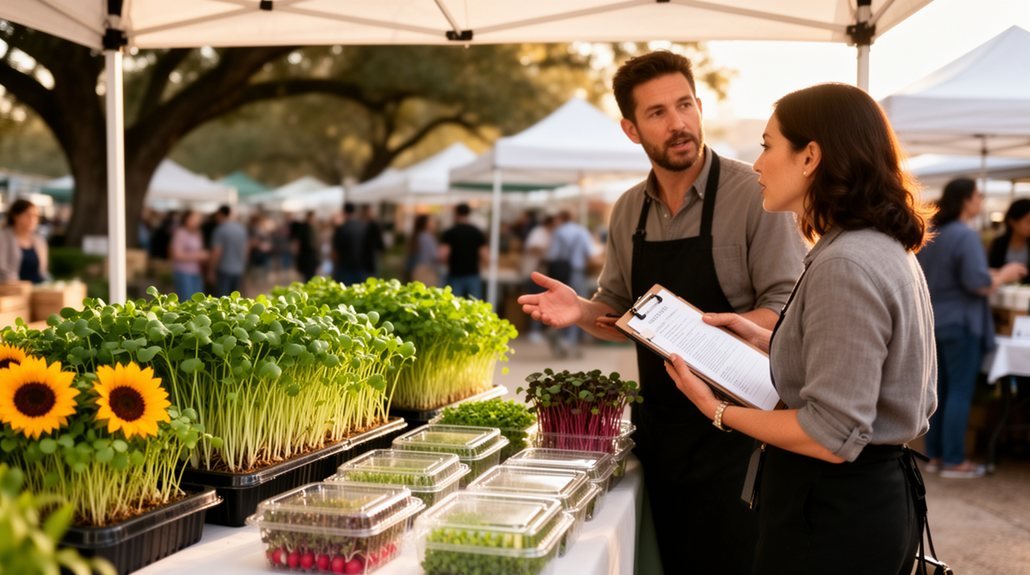
    How Long Does It Take to Get Approved After Submitting Your Application?

    They don’t publish a fixed timeline. Expect a few weeks after submission. Check your email and respond fast if they follow up. Slow replies can delay or cost you the spot.