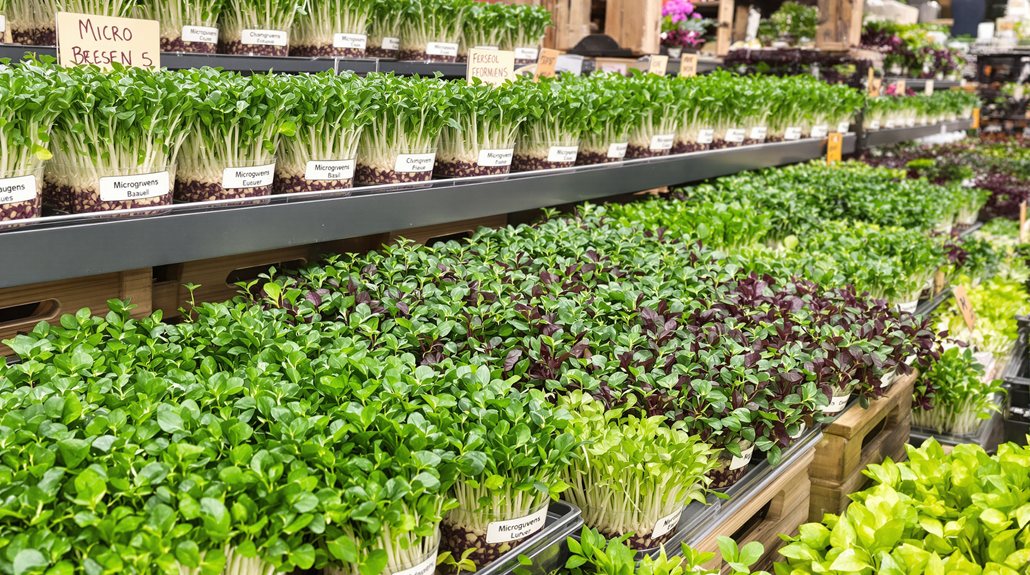
Sunswell Greens just stocked Publix and Winn-Dixie shelves across the Southeast, and that’s your opening. Retail proves customers already want microgreens, so you’re not educating a cold crowd anymore. But retail can’t match what you cut this morning. Your booth sets the price — $8 or $12 — without freight, brokers, or retailer margins cutting your take. Keep going to see exactly how to turn Sunswell’s shelf space into weekly loyal buyers at your booth.
Key Takeaways
- Retail microgreens expansion proves real consumer demand exists, meaning buyers already recognize the product before reaching your booth.
- Sunswell Greens’ Publix presence educates shoppers for free, eliminating the need to convince a cold audience at market.
- Retail builds awareness but cannot build loyalty; that relationship belongs exclusively to the farmers market vendor.
- Your product cut this morning beats any retail pack cut days earlier—freshness is measurable, smellable, and closes sales.
- Retail sparks curiosity; your booth converts that curiosity into repeat weekly buyers retail can never capture.
What did Sunswell Greens just do in the Southeast?
Sunswell Greens, formerly Green Life Farms, rebranded in late 2025 and expanded into 300+ retail stores across the Southeast. You’ll find their products in Publix and Winn-Dixie locations as far north as Virginia.
That kind of footprint tells you the demand for microgreens in this region is real and growing fast.
The retail expansion and what it signals about microgreens demand
A Florida hydroponic grower just made a move worth paying attention to. Sunswell Greens, formerly Green Life Farms, rebranded in late 2025 and pushed into 300+ retail stores across the Southeast.
Director of Sales John Halle Jr. confirmed the expansion. Products like Micro Broccoli, Micro Arugula, and Spicy Mix now reach Publix and Winn-Dixie locations as far north as Virginia.
That’s not a small test. That’s a category signal.
When a commercial operation scales retail microgreens Southeast-wide, it means consumer demand is real enough to support mass distribution. Buyers already know what microgreens are. They’ve seen them on shelves. You’re not educating a cold audience at your booth. You’re meeting people who are already looking.
Why Southeast markets are seeing more microgreens on store shelves
One Florida grower just changed the shelf landscape across the entire Southeast. Sunswell Greens, formerly Green Life Farms, rebranded in late 2025 and pushed into 300+ retail stores by early 2026.
Director of sales John Halle Jr. confirmed the Sunswell Greens Southeast expansion. Products like Micro Broccoli, Micro Arugula, and Spicy Mix now sit in Publix and Winn-Dixie locations from Florida to Virginia.
Two hydroponic greenhouses in Lake Worth and Punta Gorda are driving that volume. The company holds Non-GMO Project Verified status and Fresh from Florida membership.
That kind of retail reach doesn’t happen unless buyers are already asking for microgreens. The category demand is confirmed. You’re not introducing a new concept anymore.
Why does retail expansion actually mean opportunity for farmers market vendors?
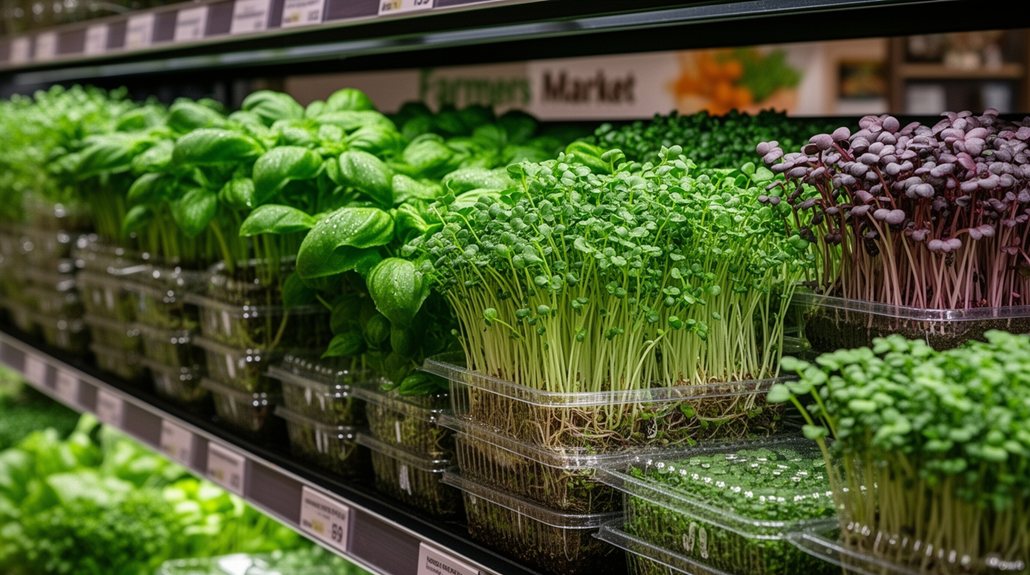
Sunswell Greens now stocks microgreens in 300+ stores across the Southeast, and that number tells you something.
Buyers in your region already know what microgreens are and they’re already spending money on them.
Retail proved the demand, but it didn’t lock it up.
Rising demand is real and documented
When a company like Sunswell Greens expands to 300+ retail stores across the Southeast, that’s not a threat to you. It’s proof that buyers in your region already want microgreens.
Publix and Winn-Dixie don’t stock new categories unless the demand is there. They’ve done the market research. You get the benefit of that signal for free.
Retail confirms the category. It doesn’t own your customer.
The shopper grabbing a clamshell at Publix and the buyer stopping at your booth on Saturday are different people making different decisions. One wants convenience. The other wants freshness and a face they recognize.
That second buyer is yours. Retail can’t compete there.
Retail proves the market but does not own it
Retail and farmers markets don’t compete for the same buyer. Publix shoppers grab retail microgreens vs fresh market microgreens for convenience. Your booth buyer comes for freshness and the person growing it.
Sunswell Greens ships to 300+ Southeast stores. That product sits in a cooler for days before purchase. You harvest Thursday and sell Saturday. That gap is your advantage.
Retail expands the category. More people learn what microgreens are. Some of those people start looking for a local grower they can trust.
Retail is a price taker environment. You’re a price setter at your booth. Sunswell takes distributor terms. You set your own.
What is the one thing retail microgreens cannot do?
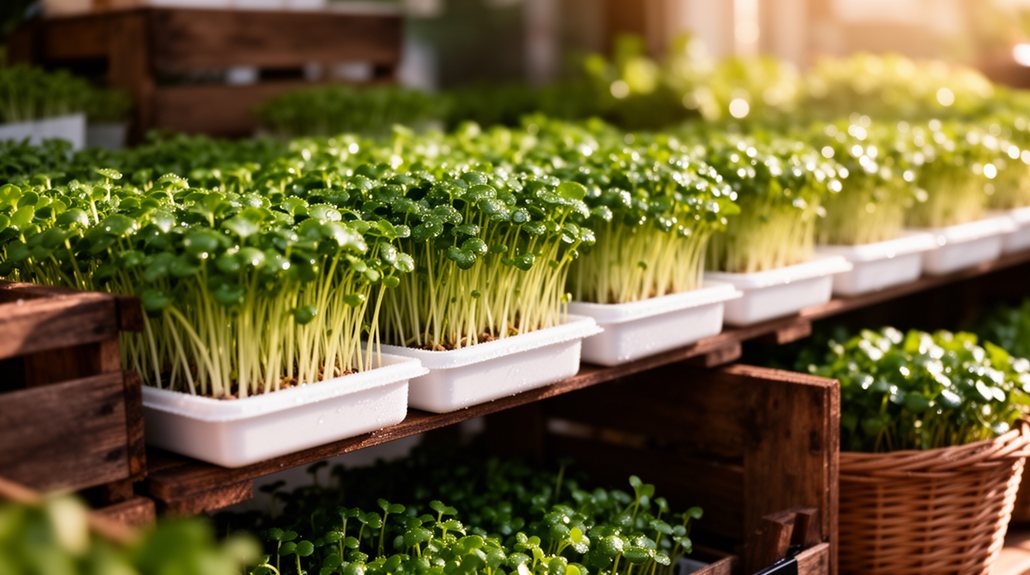
Retail microgreens sit in a cooler for days before you buy them.
You can hand a customer a tray cut that morning.
That’s something no distribution chain can copy.
Freshness that a distribution chain cannot match
A box of Sunswell Greens Micro Broccoli sitting on a Publix shelf was cut, packed, and shipped days before you picked it up.
Your tray gets harvested the morning of market day. That gap is your entire advantage.
Farmers market microgreens freshness is measurable. A customer can taste the difference between a three-day-old retail pack and something cut six hours ago.
Sunswell ships from Lake Worth or Punta Gorda through a distributor network reaching Virginia. That chain adds time. You subtract it.
Retail buyers accept that lag. They’ve no other option.
Your buyers do. They found you. That’s why farmers market shoppers come back to the same booth every week. They’re buying something the shelf can’t offer.
The vendor relationship retail will never have
Freshness gets customers to your booth. Relationship keeps them coming back every week.
A Publix shopper doesn’t know who grew their Micro Broccoli. You do. That gap is your advantage as a farmers market microgreens vendor in the Southeast.
| Retail buyer | Farmers market buyer |
|---|---|
| Buys from a brand | Buys from a person |
| No grower contact | Asks questions directly |
| Fixed SKUs only | Requests custom varieties |
| One-time transaction | Repeats weekly |
Name your regulars. Remember what they bought last Saturday. That’s something Sunswell Greens and any distributor chain physically cannot do at scale.
You’re not just selling greens. You’re the grower they trust.
Why does the price maker versus price taker distinction matter at your booth?
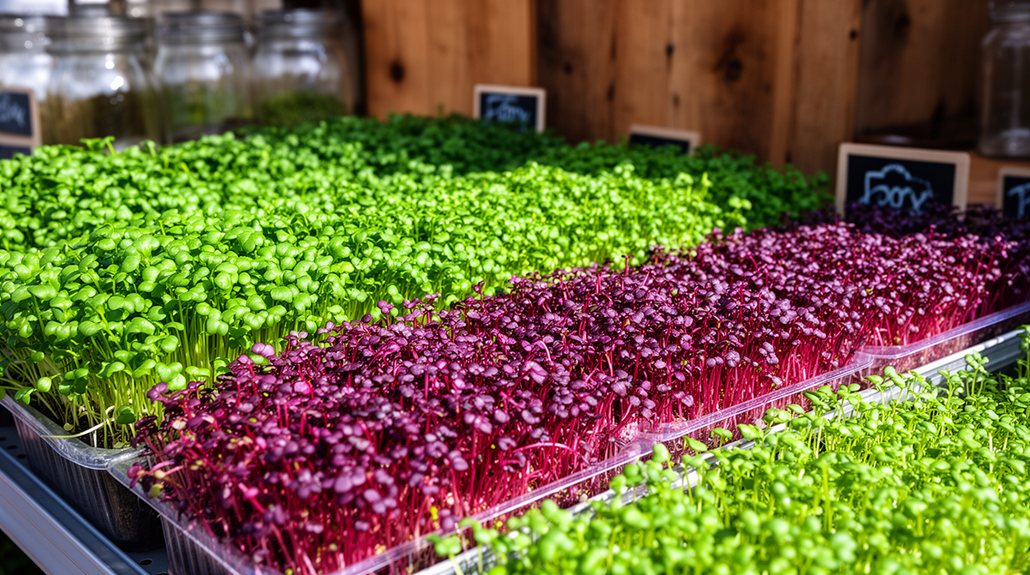
When a distributor is in the middle, they take a cut. That cut comes out of your margin, not theirs.
At a farmers market booth, you set the price and keep the difference.
What happens to your margin when a distributor is involved
Distributors take a cut. For Sunswell Greens, that means Publix and Winn-Dixie set the shelf price. Sunswell takes what the distributor offers.
That’s the price taker side of microgreens price maker price taker math.
Your farmers market booth works differently. You set $8 for a 2 oz clamshell of micro broccoli. Nobody negotiates it down. A customer either buys it or moves on.
That’s the price maker position.
Retail growers shipping into Southeast distributors are absorbing freight, broker fees, and retailer margins. Those costs compress what they keep per unit.
You have none of those layers. Your margin stays closer to full because the transaction is direct. The person handing you money is the end buyer.
Why farmers market vendors set their own price
Setting your own price isn’t a perk. It’s the core microgreens vendor advantage over retail.
Sunswell Greens ships to Publix and Winn-Dixie. The distributor sets the margin. Sunswell takes what’s offered.
You don’t do that. You stand at your booth in Sarasota or Raleigh and name your number. Customers who buy from you aren’t comparing shelf tags. They’re buying from someone they recognize.
That relationship holds your price. A $12 clamshell of Micro Broccoli at your booth doesn’t compete with the $6 retail version. Different buyer. Different reason to purchase.
Your community of repeat customers is what keeps that price stable week after week.
How do you use this moment at a Southeast farmers market?
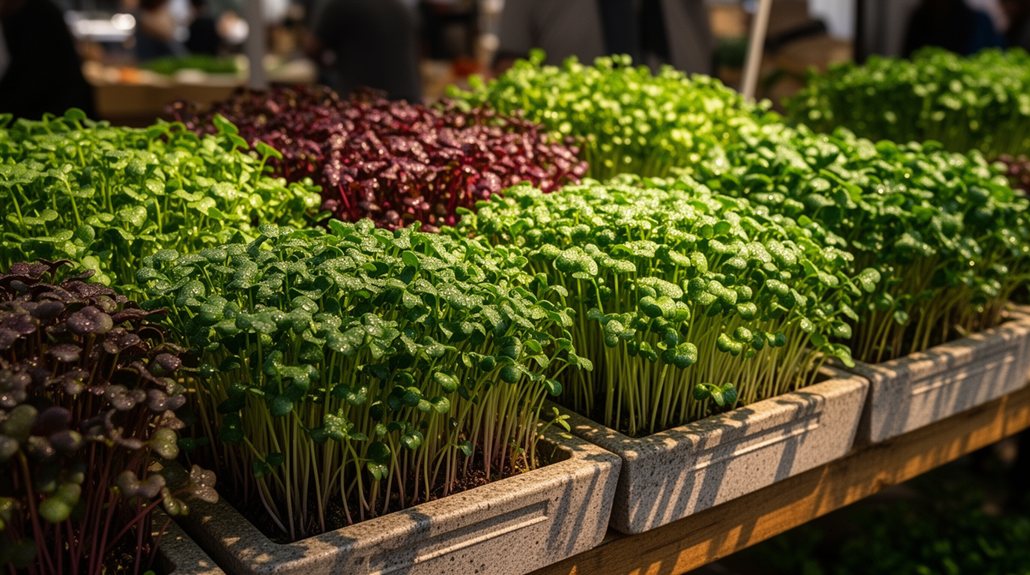
Sunswell Greens is now on shelves at Publix and Winn-Dixie across the Southeast. That puts their name in front of your future customers before you ever meet them.
You can utilize that exposure to your advantage at the booth and find the right markets where those customers are already shopping.
What to say when customers mention store-bought Sunswell products
When a customer says they’ve seen Sunswell at Publix, that’s your opening.
Don’t get defensive. Say: “That’s us at a different level. What you’re holding here was cut this morning.“
That one line does the work. It separates you from the microgreens retail expansion southeast shoppers are seeing on store shelves. Sunswell ships product days ahead of sale. You don’t.
Ask the customer when they bought the store pack. Then ask them to smell what’s in your hand. That comparison closes itself.
You’re not competing with Sunswell. You’re showing the customer what fresh actually means. Retail gets them curious. You get them loyal.
Loyal buyers come back every week. That’s the relationship retail can’t build. You can.
How to find Southeast markets where the right customers are already shopping
Finding the right market comes down to one thing: who’s already buying specialty produce there.
Look for southeast farmers market microgreens vendors already operating. Their presence means buyers exist. That’s your baseline.
Check foot traffic numbers and vendor mix before you apply. A market with a kombucha booth, an artisan cheese table, and a mushroom grower already has your customer.
Dr. Booker T. Whatley called this building a Critical Mass of Customers. Know the buyer before you pick the location.
The MGW Farmers Market Finder has 7,842 USDA-verified markets searchable by zip code, city, or state. Employ it to find and compare markets near you before you apply – markets.microgreensworld.com.
The Microgreens Growth Path Tool maps your first move using local market data – growthpath.microgreensworld.com.
Frequently Asked Questions
How Many Trays Should a First-Time Farmers Market Vendor Bring Each Week?
Bring 20 to 30 trays your first week. You’ll sell out faster than you expect. That sellout signals demand. Track what moves, then scale up the next week based on real buyer patterns.
Do You Need a Business License to Sell Microgreens at a Farmers Market?
You’ll likely need one, but it depends on your state and county. Check with your local clerk’s office first. Most markets also require a vendor permit. Get both before your first day.
Which Microgreen Varieties Sell Fastest at Southeast Farmers Markets?
Sunflower, pea shoots, and radish move fastest at Southeast farmers markets. Broccoli and spicy mixes sell well too. You’ll clear trays quicker when you’re set up near produce vendors with high foot traffic.
How Do You Store Microgreens so They Stay Fresh at an Outdoor Booth?
Keep your microgreens in a cooler with ice packs, never in direct sun. Harvest day-of, mist lightly before display, and utilize shallow trays so air circulates. Your customers notice the difference immediately.
What Should a Farmers Market Table Setup Look Like for Microgreens?
Your table needs a clean riser setup, labeled trays at eye level, and a small chalkboard with prices. Keep samples front and center. Shoppers buy what they can see and touch first.
Leave a Reply