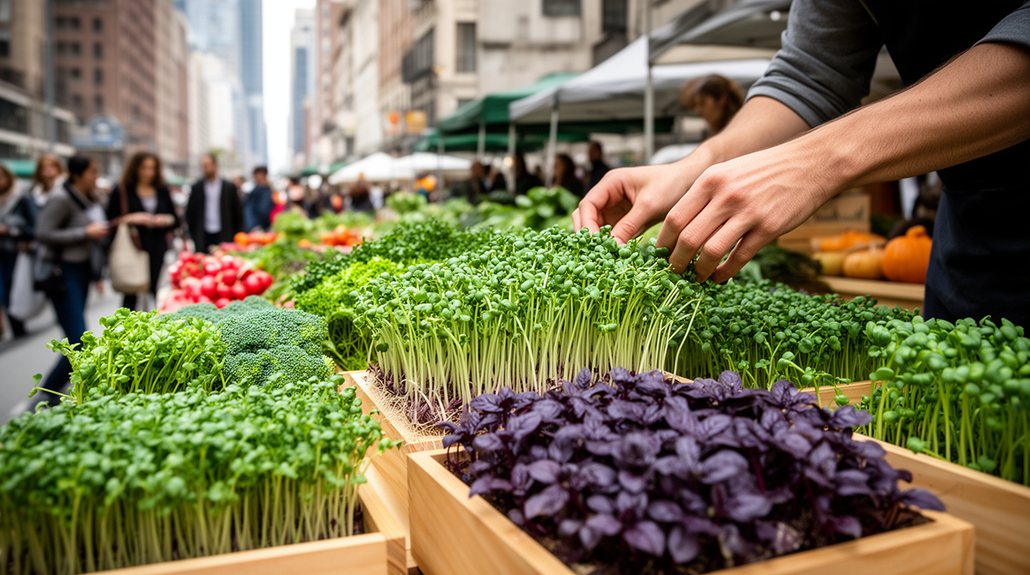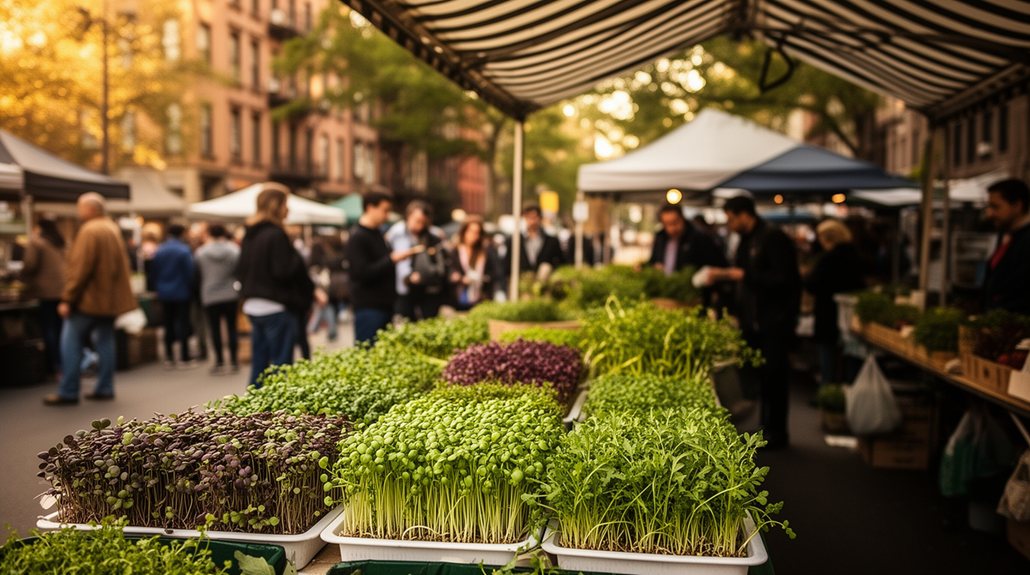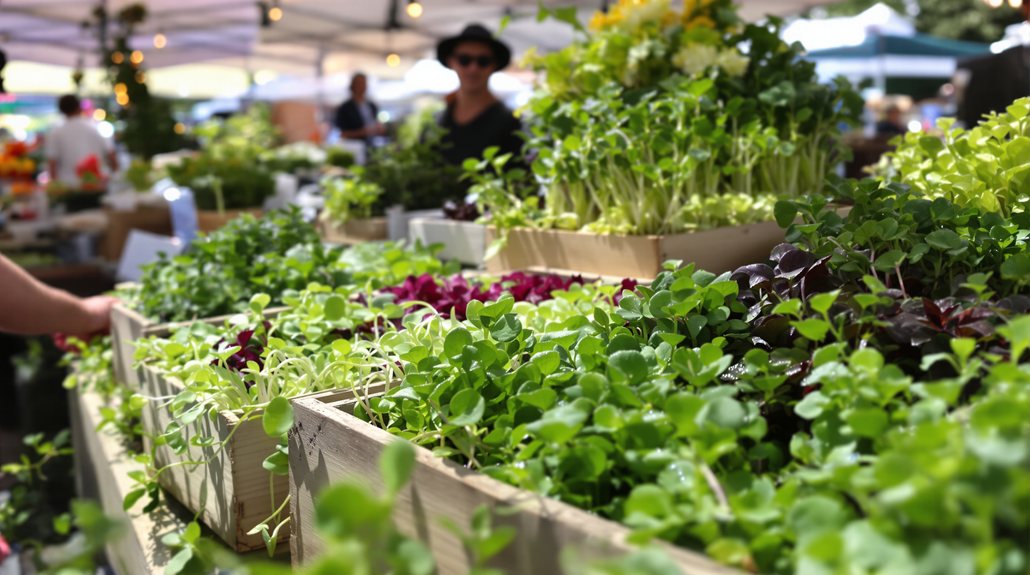
Category: Consumer Guides

  • Where to Find Fresh Microgreens at Farmers Markets in Seattle

    Where to Find Fresh Microgreens at Farmers Markets in Seattle

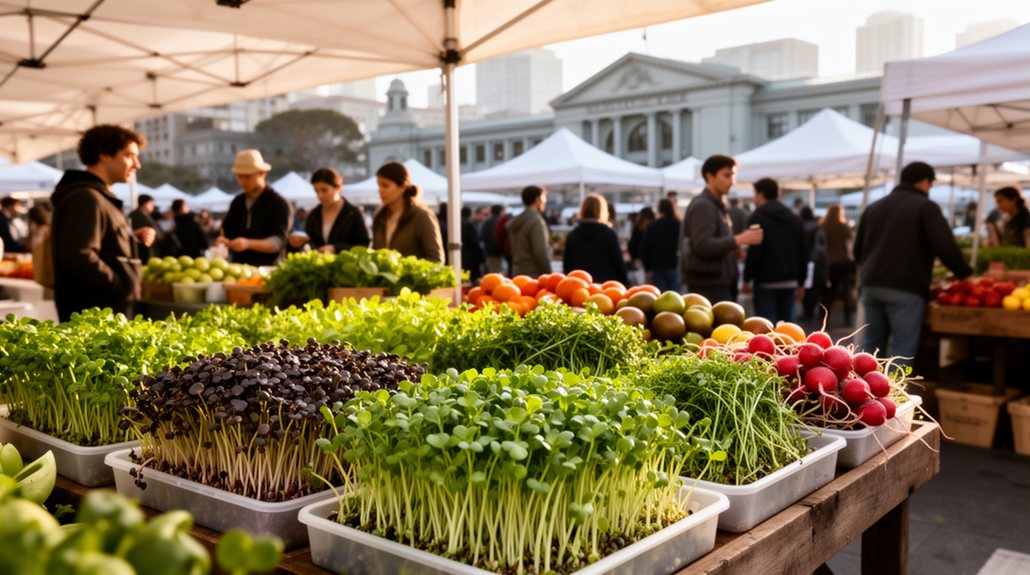
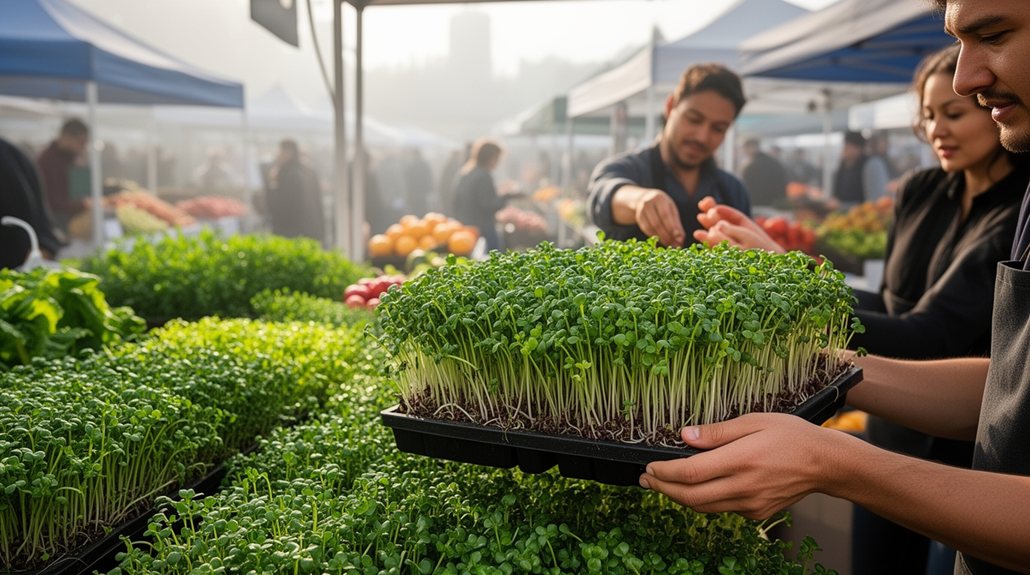
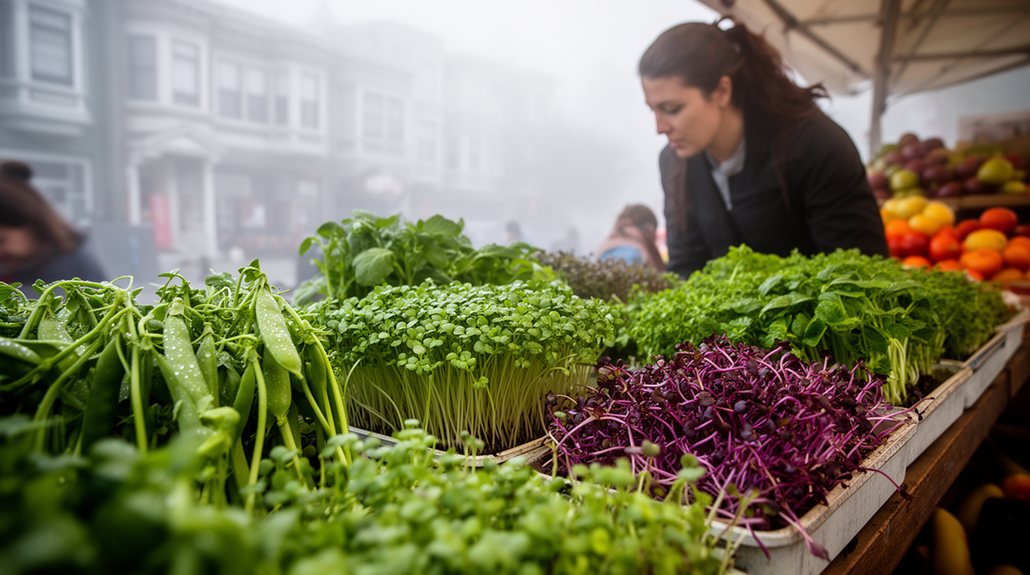
    Pike Place Market, Ballard Farmers Market, and the University District Farmers Market are Seattle’s three year-round options for fresh microgreens. Ballard runs Sundays, University District runs Saturdays, and Pike Place operates daily. Vendors at these markets often harvest the same day or the day before. Arrive before noon at Ballard or Pike Place to beat sellouts. Keep reading to find out exactly which vendors to target and what to ask them.

    Key Takeaways

    • Pike Place Market operates daily year-round, offering flexible timing to find fresh microgreens directly from local growers in the North Arcade.
    • Ballard Farmers Market runs every Sunday year-round at Ballard Commons Park, regularly featuring Skagit Valley growers who harvest same-day.
    • Arrive before noon at Pike Place or Ballard to avoid specialty microgreen vendors selling out early.
    • Ask vendors directly when harvest occurred; same-day or previous-day answers confirm optimal freshness and longer shelf life.
    • Use the MGW Market Finder at markets.microgreensworld.com to filter Seattle markets by season dates, hours, and location before traveling.

    Why does buying microgreens at a Seattle farmers market matter?

    The microgreens at your grocery store were likely harvested 3 to 7 days ago.

    At a Seattle farmers market, you’re often getting greens cut that same morning.

    That gap changes everything about flavor, texture, and how long they’ll last in your fridge.

    What same-day harvest means for flavor and shelf life

    When a farmer harvests microgreens the morning of a market, you’re getting them within hours of the cut. That timing changes everything about what you taste.

    Grocery store microgreens travel through distribution chains that take 3 to 7 days from harvest to shelf. By then, the leaves are softer and the flavor is flatter.

    Same-day microgreens have a clean snap and a concentrated taste you’ll notice immediately. The shelf life in your refrigerator is also longer because the greens haven’t already aged in transit.

    When you pick up fresh microgreens at Pike Place Market or Ballard, you’re getting what grocery stores can’t match. The difference isn’t subtle.

    Why farmers market microgreens differ from what you find at the grocery store

    Most grocery store microgreens are 3 to 7 days old by the time they reach your hands. That’s distribution time. The flavor and texture you’re missing are real.

    Farmers market growers harvest the same day or the day before. You’re getting something genuinely different, not a fresher version of the same product.

    When you search for fresh microgreens near me Seattle, you’re looking for that gap to close. Ballard Farmers Market on Sundays and Pike Place Market daily are where that gap closes consistently.

    The growers selling there are local. They don’t ship through a warehouse. What they cut yesterday is what you’re buying today.

    Which Seattle farmers markets are most likely to have microgreens vendors?
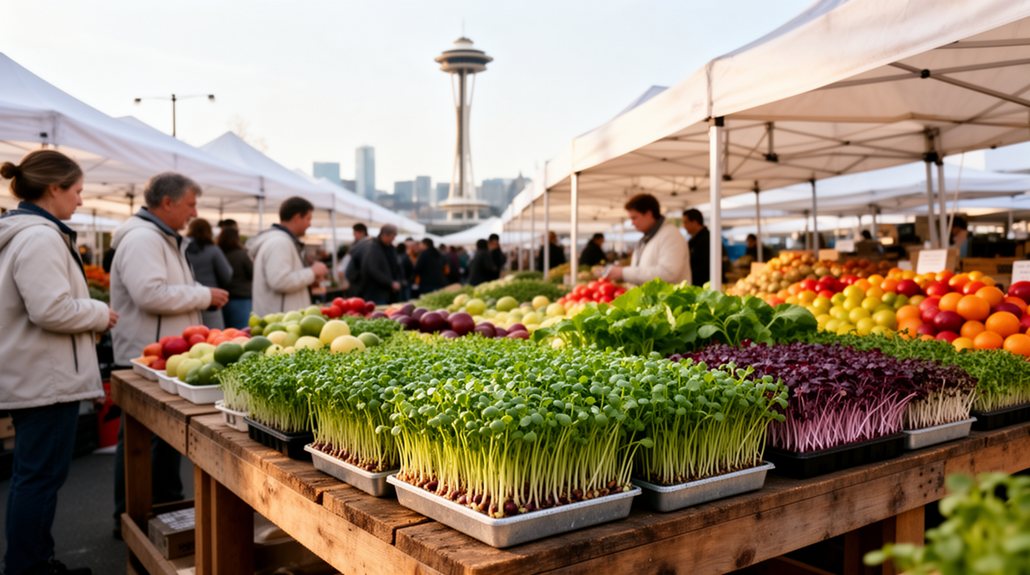
    pike place and ballard markets

    Two Seattle markets give you the best shot at finding fresh microgreens.

    Pike Place Market runs daily and year-round, so you can show up almost any day and walk the Farm Program stalls.

    Ballard Farmers Market runs Sunday mornings and draws local specialty produce vendors who come back week after week.

    Pike Place Market Farm Program and what to expect there

    Pike Place Market runs seven days a week, every week of the year. The Farm Program puts you directly in front of local produce growers, not resellers.

    Look for pike place farmers market microgreens vendors in the North Arcade.

    Detail Information Tip
    Hours 9 AM to 6 PM daily Go before noon
    Location North Arcade stalls Ask for the Farm Program
    Harvest timing Same day or day prior Ask when they cut

    Vendors rotate stalls, so the same grower may not be in the same spot each visit. Ask any farmer directly where the microgreens are.

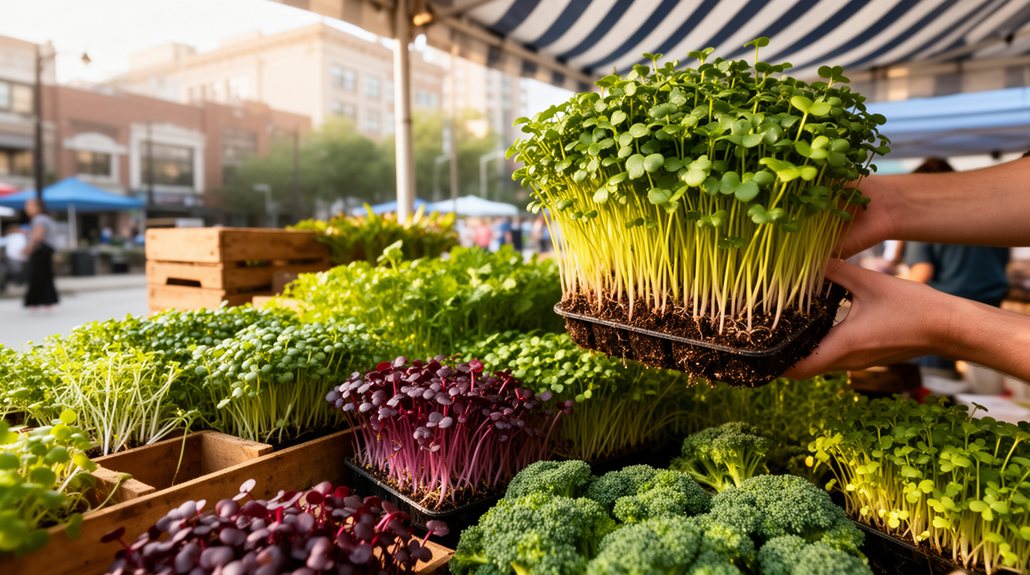
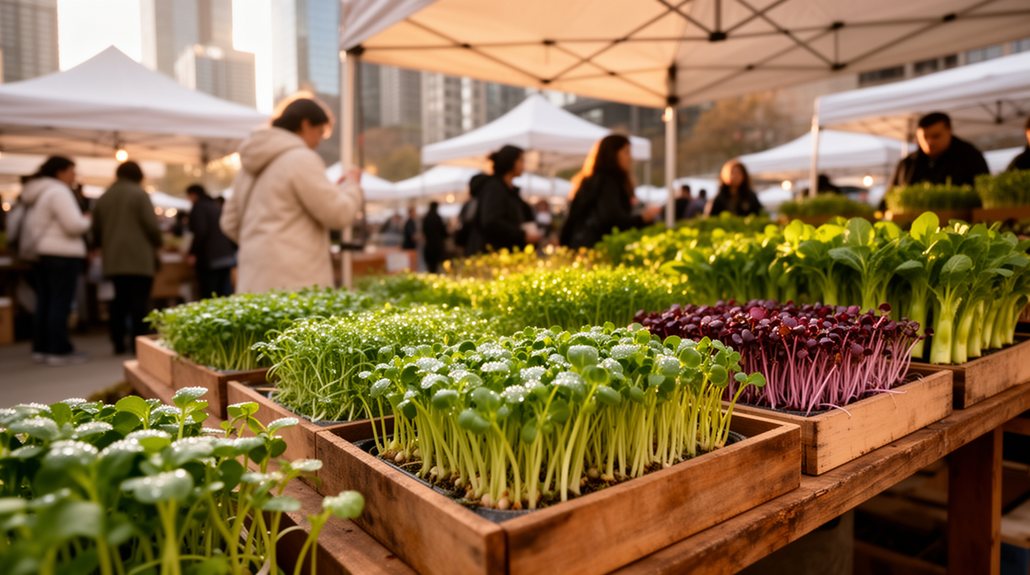
    Expect small-batch trays and cut selections.

    Ballard Farmers Market and its specialty produce vendor presence

    The Ballard Farmers Market runs every Sunday from 10 AM to 3 PM year-round at the Ballard Commons Park on NW 58th Street. This is a neighborhood market, not a tourist stop.

    The regulars here show up weekly. Vendors know their customers by name, and specialty growers bring exactly what those customers ask for. That repeat-customer culture makes Ballard Farmers Market microgreens vendors more likely to carry niche varieties you won’t find elsewhere.

    Arrive before noon. The specialty produce sellers sell out fast, and microgreens go first.

    Ballard draws farms from the Skagit Valley, just 30 minutes north. Those growers harvest the morning of market day. You’re getting product that’s hours old, not days old.

    What should you look for when you find a microgreens booth at a Seattle market?
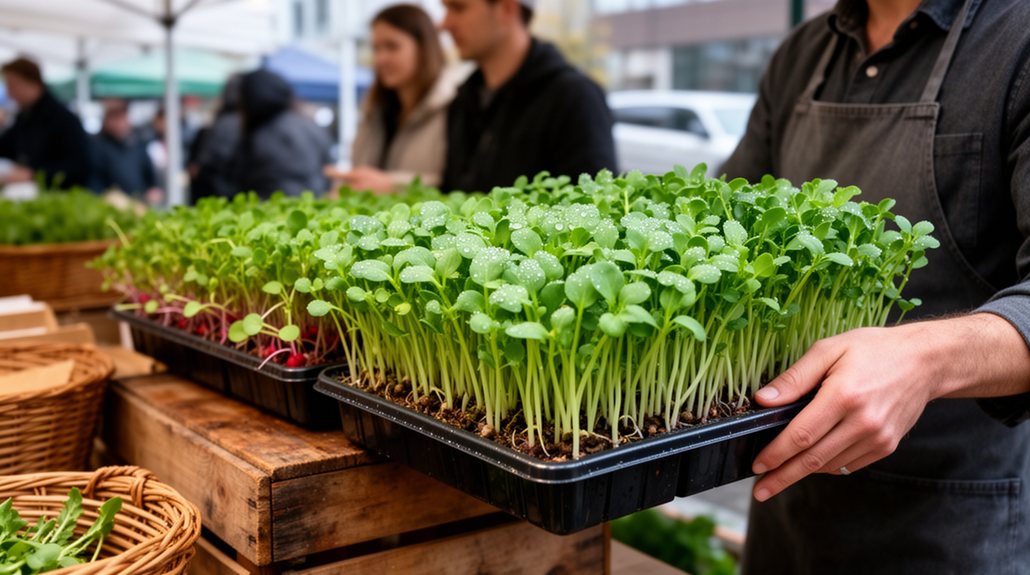
    check trays ask questions

    Finding a booth is the easy part. Knowing what to check before you hand over money takes a little more attention.

    Look at the trays and ask a few direct questions before you buy.

    How to tell if the microgreens were harvested recently

    Once you spot a microgreens booth, check the stems first. Fresh-cut stems look moist at the base. Dry or brown stem ends mean they were cut days ago.

    Next, look at the leaves. They should stand upright and hold their shape. Wilted or matted leaves signal age.

    Ask the vendor directly when they harvested. Most sellers at places like Ballard Farmers Market or Pike Place cut the same morning or the day before. That’s the standard for where to buy microgreens Seattle locals trust.

    Finally, smell the tray. Fresh microgreens have a clean, green scent. A sour or damp smell means moisture has been sitting too long.

    If anything looks off, move to the next booth.

    What to ask the vendor before you buy

    When you find a microgreens booth, start with one question: when did you harvest these?

    If the answer is today or yesterday, you’re in good shape. Anything older than two days means you’re getting close to grocery store quality.

    Next, ask where the farm is located. Most vendors selling microgreens in Seattle source locally. Skagit Valley farms sit 30 minutes north and harvest same-day for weekend markets.

    Ask if they’ll be at the same market next week. Regulars at Ballard or University District build relationships with repeat buyers. You want that.

    When you buy microgreens in Seattle this way, you skip the guesswork. You know exactly what you’re getting before you hand over your money.

    What microgreens varieties can you find at Seattle farmers markets?
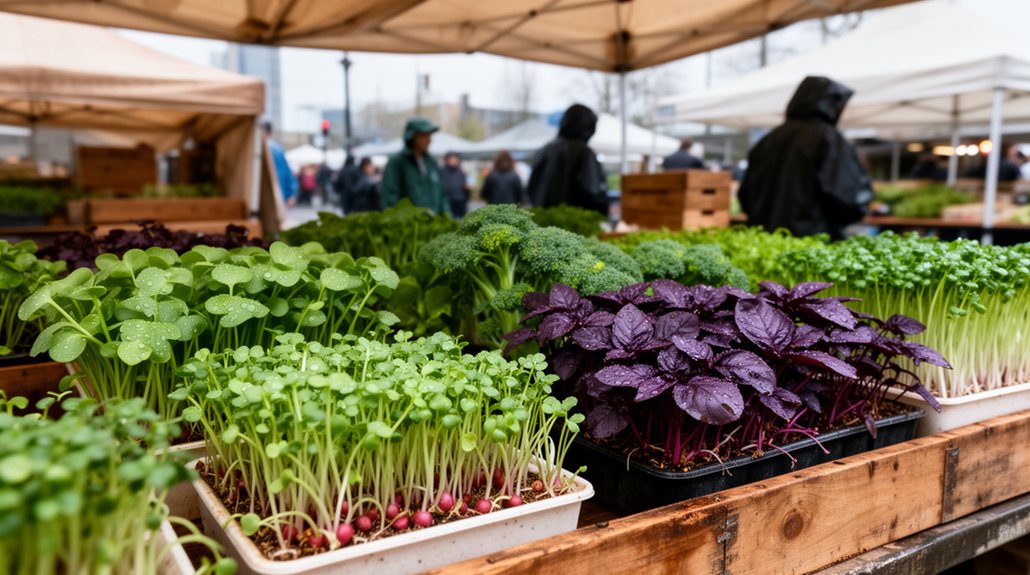
    sunflower pea radish broccoli

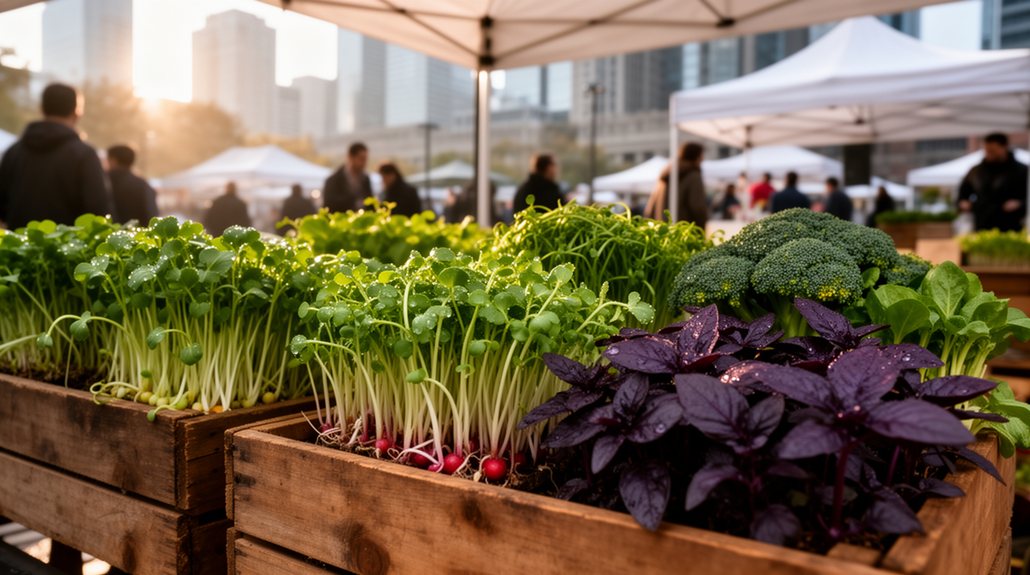
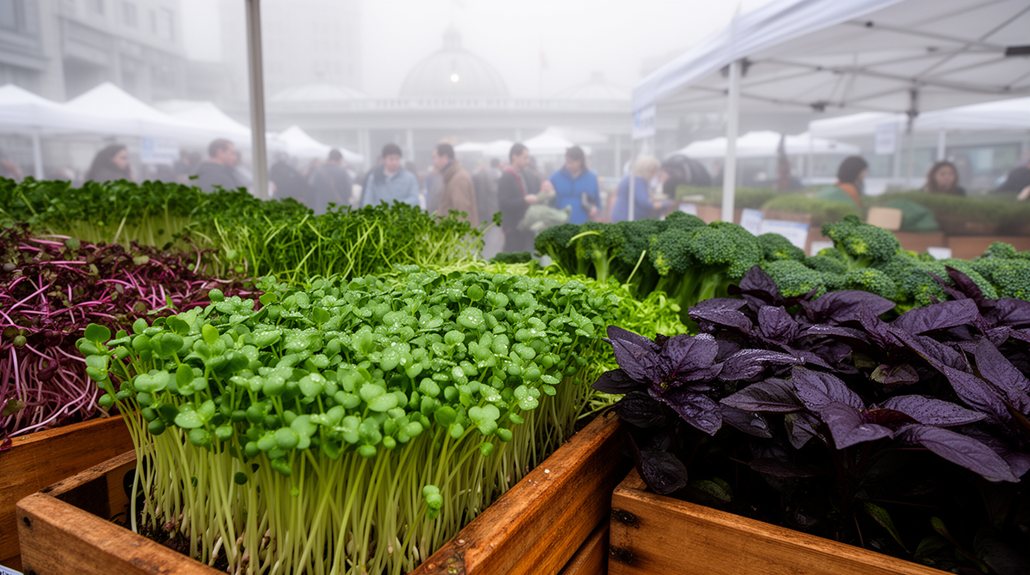
    Seattle market vendors carry more variety than most grocery stores stock. Sunflower, pea shoots, radish, broccoli, amaranth, and wheatgrass show up regularly at Ballard and Pike Place booths. Knowing which varieties suit your cooking style helps you pick the right trays before you reach the booth.

    The most common varieties at Washington markets and their flavors

    Pea shoots show up at nearly every Washington farmers market stall. They taste mild and slightly sweet, and they’re a good starting point if you’re new to microgreens.

    Sunflower microgreens are the next most common. They’ve a nutty, satisfying flavor that most people like right away.

    Radish microgreens bring noticeable heat. Microgreens vendors in Seattle often carry at least one radish variety, from daikon to purple radish.

    Broccoli microgreens taste mildly bitter and earthy. Regular buyers know to grab them early.

    Amaranth and basil show up less often but are worth watching for. Ask vendors what’s coming in next week. Most appreciate the question, and it puts you on their radar as a serious buyer.

    Which varieties work best for salads, sandwiches, and cooking

    Knowing which variety to buy saves you from a disappointing plate.

    For salads, grab sunflower or pea shoots. They’re mild, filling, and hold up under dressing without wilting fast.

    For sandwiches, radish or mustard microgreens cut through rich spreads like mayo or hummus. One small handful does the work.

    For cooking, use beet or amaranth microgreens. Add them at the end of a warm dish. Heat kills delicate greens fast.

    Spicy varieties like arugula and wasabi go on top of pizza or eggs right before serving.

    People buying local microgreens Seattle vendors grow tend to ask growers directly which batch came in that morning. Do that. You’ll get the freshest pick and the right variety for what you’re making.

    How do you find a Seattle farmers market with microgreens near you?
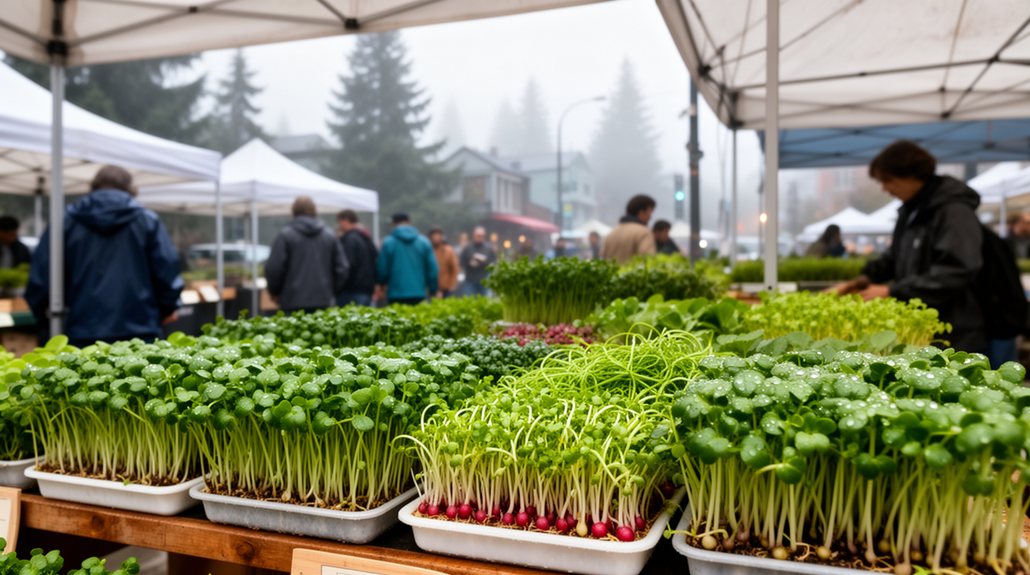
    search mgw market finder

    Not every farmers market in Washington carries microgreens. Year-round markets and those with strong specialty produce programs are your best bet.

    Use the MGW Market Finder at markets.microgreensworld.com to search by zip code before you make the trip.

    What market types are most likely to carry specialty greens in Washington

    Year-round markets beat seasonal ones if you want microgreens consistently.

    Ballard Farmers Market runs Sundays year-round, and University District runs Saturdays year-round. Both draw growers who commit to specialty produce, including microgreens.

    At a microgreens farmers market Seattle search, filter for “year-round” first.

    Seasonal markets open in May and close in October. That’s too inconsistent for a regular microgreens habit.

    Daily markets like Pike Place give you the most flexibility on timing.

    Neighborhood markets like Ballard tend to have growers who come back every week with the same products.

    If you find a vendor you like, ask what day they harvest. Most microgreens at these markets were cut the day before.

    How to use the MGW Market Finder before you make the trip

    Before you drive to any market, check the MGW Market Finder at markets.microgreensworld.com. Search by zip code or city to filter Seattle specialty produce farmers market options fast.

    The tool shows hours, season dates, and SNAP/EBT acceptance upfront.

    What to check Why it matters
    Season dates Some markets close October through April
    Hours Most Saturday markets close by 1 p.m.
    SNAP/EBT Confirms payment options before you go
    Location Confirms neighborhood, not just city

    Use those four filters before leaving home. You’ll find the right market on the first try.

    The MGW Farmers Market Finder covers 7,842 USDA-verified markets across all 50 states. Search by zip code or city to find markets near you with hours, season dates, and SNAP/EBT acceptance before you leave home – markets.microgreensworld.com.

    Frequently Asked Questions

    Can You Freeze Fresh Microgreens You Buy at a Seattle Farmers Market?

    You can freeze them, but you’ll lose the texture. Fresh microgreens go limp after freezing. Most Seattle market vendors recommend buying smaller amounts weekly instead.

    Are Seattle Farmers Market Microgreens Safe to Eat Without Washing?

    Most are safe, but you should still rinse them. Farmers harvest them fresh, often the same morning, but soil and handling happen. A quick cold rinse before eating protects you without hurting texture.

    How Much Do Microgreens Typically Cost at Seattle Farmers Markets?

    You’ll typically pay $4 to $8 for a small clamshell at Seattle farmers markets. Specialty mixes or microgreens from Skagit Valley farms sometimes run closer to $10.

    Can You Use SNAP or EBT to Buy Microgreens at Seattle Markets?

    Yes, you can use SNAP/EBT at several Seattle farmers markets. Ballard, University District, and West Seattle markets accept EBT. Check with each vendor directly, since not every individual stall participates even when the market does.

    What Is the Best Way to Store Microgreens After Buying Them?

    Keep them in the container they came in. Store them dry in your fridge. Don’t rinse until you’re ready to eat. They’ll stay fresh for five to seven days that way.
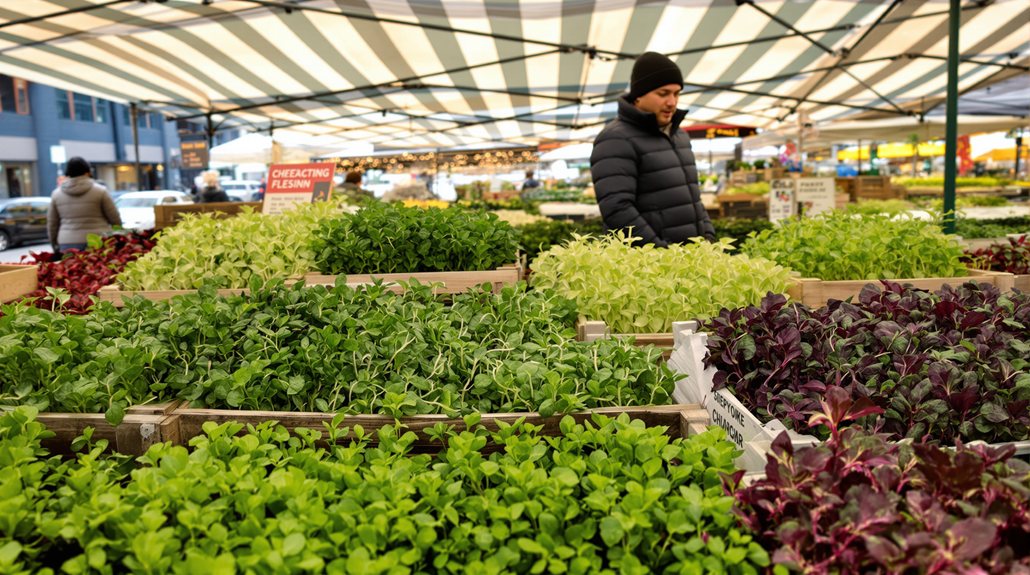
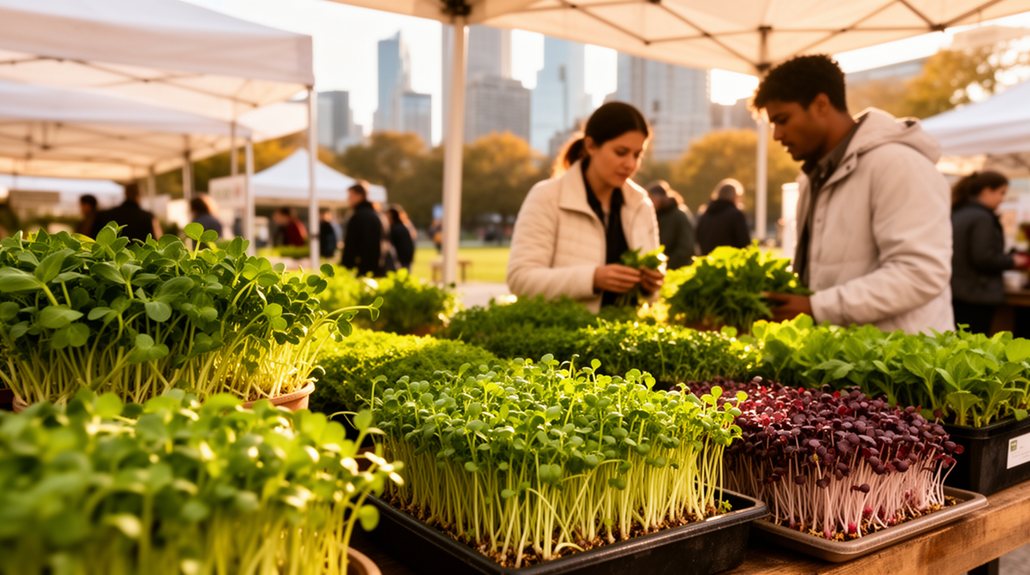
  • Where to Find Fresh Microgreens at Farmers Markets in Chicago

    Where to Find Fresh Microgreens at Farmers Markets in Chicago

    Green City Market is your best starting point for fresh microgreens in Chicago. It runs Wednesdays and Saturdays in Lincoln Park and stays open year-round. Logan Square Farmers Market runs Sundays from May through October and draws independent growers focused on specialty crops. Both markets sell out before noon, so arrive early. Vendors often cut greens the same morning, which means better flavor and a longer shelf life once you get home. Keep going to learn exactly what to look for.

    Key Takeaways

    • Green City Market (Lincoln Park, Wed & Sat) is Chicago’s top microgreens destination, operating year-round with vendors following strict sustainable sourcing rules.
    • Logan Square Farmers Market (Sundays, May–October) attracts independent specialty growers who often focus on crops like microgreens.
    • Arrive early at both Green City Market and Logan Square, as microgreens vendors frequently sell out before noon.
    • Look for sunflower, pea shoots, radish, broccoli, and amaranth varieties; ask vendors if greens were harvested same-day or yesterday.
    • Use the MGW Market Finder at markets.microgreensworld.com to locate Chicago-area markets by zip code, including hours and season dates.

    Why does buying microgreens at a Chicago farmers market matter?

    Grocery store microgreens travel through distribution chains that take 3 to 7 days from harvest to shelf.

    At a Chicago farmers market, you’re often getting microgreens cut the same morning.

    That gap in time changes the flavor, texture, and how long they last once you get them home.

    What same-day harvest means for flavor and shelf life

    Most microgreens at the grocery store were cut 3 to 7 days before you picked them up. That gap costs you flavor, texture, and shelf life before you even get home.

    Farmers market growers harvest the same day or the day before. That’s the difference you’ll taste.

    Factor Grocery store
    Days since harvest 3 to 7 days
    Texture Soft, wilted
    Shelf life remaining 1 to 2 days

    When you search for fresh microgreens near me Chicago, you’re looking for that same-day cut. Green City Market vendors meet that standard.

    Buy on Wednesday or Saturday at Lincoln Park and use them within three days.

    Why farmers market microgreens differ from what you find at the grocery store

    When you buy microgreens at a grocery store, you’re getting a product that’s already 3 to 7 days old. That’s time spent in distribution centers, trucks, and cold storage before it reaches the shelf.

    Farmers market microgreens are cut the same day or the day before market. The difference shows up immediately in taste and texture.

    When you buy microgreens in Chicago at Green City Market or the 61st Street Farmers Market, you’re getting what serious home cooks and restaurant chefs actually want. Alinea’s chefs shop Green City Market for a reason.

    Fresher microgreens also last longer in your refrigerator. You’re not starting the clock at day four.

    Which Chicago farmers markets are most likely to have microgreens vendors?

    best chances green city logan

    Two markets give you the best shot at finding microgreens in Chicago.

    Green City Market runs Wednesdays and Saturdays in Lincoln Park from May through October, then moves indoors to the Peggy Notebaert Nature Museum from November through April.

    Logan Square Farmers Market runs Sundays from May through October and draws specialty produce vendors worth checking.

    Green City Market and what to expect there

    Green City Market is consistently your best starting point for fresh microgreens in Chicago.

    It runs Wednesday and Saturday from May through October in Lincoln Park. November through April, it moves indoors to the Peggy Notebaert Nature Museum.

    This is the only year-round market in Illinois. That matters because you don’t lose access to green city market microgreens in winter.

    Vendors must source within 250 miles of Chicago and follow sustainable practices. That filter keeps specialty produce vendors, including microgreens growers, in the mix consistently.

    Arrive early on Saturday. The best microgreens vendors sell out before noon.

    Chefs from Alinea and Girl and the Goat shop here. You’re buying from the same vendors feeding those kitchens.

    Logan Square Farmers Market and its specialty produce vendor presence

    Logan Square Farmers Market runs every Sunday from May through October at Logan Boulevard and Milwaukee Avenue.

    The market draws a steady crowd of specialty produce buyers.

    If you’re looking for logan square farmers market microgreens, go early.

    Vendors with limited crops sell out before noon.

    This market skews toward independent growers who focus on one or two crops.

    That’s exactly where microgreens vendors tend to show up.

    They’re not selling bulk produce.

    They’re selling what they grew that week.

    Walk the full loop before you buy.

    You might find two or three vendors with microgreens, and the varieties differ.

    Sunflower, pea shoots, and radish are common finds.

    Bring cash.

    Not every vendor here takes cards.

    What should you look for when you find a microgreens booth at a Chicago market?

    check freshness and harvest info

    Finding a microgreens booth is only half the job. You still need to check what’s in front of you and ask the right questions.

    Two things matter most: how fresh the greens actually are and what the vendor can tell you about the harvest.

    How to tell if the microgreens were harvested recently

    Once you spot a microgreens booth, look at the trays or clamshells first. The greens should stand upright, not slump.

    Wilting means age. So does yellowing at the tips.

    Sign Fresh Old
    Stems Firm, upright Limp, bent
    Color Deep, even green Yellowing edges
    Smell Clean, grassy Sour or musty

    Ask the vendor directly: “When did you cut these?” Most people who know where to buy microgreens chicago end up returning to vendors who answer that question without hesitation.

    Same-day or yesterday harvests are what you want. Anything beyond 48 hours matters.

    Touch the greens lightly. They should feel crisp, not soft.

    What to ask the vendor before you buy

    When you find a microgreens booth, ask three questions before you reach for your wallet.

    First, ask when they harvested. Same day or yesterday is good. Anything older than two days isn’t worth full price.

    Second, ask where they grow. Most microgreens vendors in Chicago source locally or grow on-site. You want to know they’re not reselling.

    Third, ask how they store the trays. Cool and dry is the answer you want.

    These three questions separate the serious vendors from everyone else. Regulars at Green City Market and the 61st Street Farmers Market already know to ask. Now you do too.

    What microgreens varieties can you find at Chicago farmers markets?

    common microgreens at chicago markets

    Chicago market vendors carry more variety than most people expect.

    Sunflower, pea shoots, radish, broccoli, and amaranth show up regularly at Green City Market and the 61st Street Farmers Market.

    Knowing which variety fits your meal before you arrive saves time at the booth.

    The most common varieties at Illinois markets and their flavors

    Sunflower, pea shoots, radish, and spicy mustard show up at most Chicago-area markets. These are the varieties most growers bring consistently.

    Sunflower microgreens taste nutty and mild. Pea shoots are sweet and tender. Radish runs sharp and peppery. Spicy mustard is the boldest of the four.

    You’ll also find arugula, broccoli, and amaranth at larger markets. Fresh microgreens at Green City Market often include less common varieties like shiso or cabbage. Vendors there follow sustainable sourcing rules, so the quality is reliable.

    Bring a tote and plan to buy same-day-harvested greens. That’s what separates market microgreens from grocery store versions, which can be 3 to 7 days old by the time you open the package.

    Which varieties work best for salads, sandwiches, and cooking

    Knowing what each variety tastes like helps you shop with a plan.

    Match the green to how you’ll eat it.

    Use Best variety
    Salads Sunflower, pea shoots
    Sandwiches Radish, mustard
    Cooking Beet, amaranth

    Sunflower and pea shoots add mild, nutty sweetness to a salad. They hold up without wilting fast.

    Radish and mustard bring sharp heat to sandwiches. A small handful goes a long way.

    Beet and amaranth handle light heat without losing texture. Fold them into eggs or grain bowls.

    Local microgreens Chicago vendors grow are picked the same day or the day before market. That freshness changes everything about how these varieties perform on your plate.

    How do you find a Chicago farmers market with microgreens near you?

    find nearby microgreens markets

    Not every farmers market in Illinois carries microgreens. Specialty produce vendors are more common at sustainability-focused markets like Green City Market and the 61st Street Farmers Market in Hyde Park.

    Use the MGW Market Finder at markets.microgreensworld.com to check which markets near you’re open before you make the trip.

    What market types are most likely to carry specialty greens in Illinois

    If you want microgreens, skip general produce markets and go straight to specialty-focused ones. Sustainability-mission markets carry them most often.

    Green City Market is your best starting point for microgreens farmers market Chicago searches. Its vendor rules require sustainable practices, which attracts specialty growers directly.

    The 61st Street Farmers Market in Hyde Park runs Saturdays from June through November. Specialty produce vendors show up there consistently.

    Logan Square Farmers Market, open Sundays from May through October, also draws vendors who grow beyond standard produce.

    General neighborhood markets rarely carry microgreens. Chefs and experienced home cooks already know this. That’s how you know which markets are worth your Saturday morning.

    How to use the MGW Market Finder before you make the trip

    Before you drive anywhere, pull up markets.microgreensworld.com on your phone. Enter your Chicago zip code or neighborhood name.

    The finder shows illinois microgreens farmers market options with hours, season dates, and SNAP/EBT status.

    Search input What you’ll see
    Zip code Nearest markets with hours
    City name All active markets in range

    Check the season dates column first. Some markets run June through November only.

    If a market shows Thursday hours, that’s likely Daley Plaza. Saturday results often include Green City Market or the 61st Street market in Hyde Park.

    The MGW Farmers Market Finder covers 7,842 USDA-verified markets across all 50 states. Search by zip code or city to find markets near you with hours, season dates, and SNAP/EBT acceptance before you leave home – markets.microgreensworld.com.

    Frequently Asked Questions

    Can You Freeze Microgreens Bought at a Chicago Farmers Market?

    You can freeze them, but you’ll lose the crisp texture. Blanch briefly, pat dry, and freeze flat. They work best in smoothies or cooked dishes after freezing, not fresh salads.

    Are Chicago Farmers Market Microgreens Safe to Eat Without Washing?

    Most are safe to eat without washing, but you should rinse them quickly under cold water anyway. It removes dust, debris, and any handling residue from market day. Pat them dry before eating.

    How Much Do Microgreens Typically Cost at Chicago Farmers Markets?

    You’ll typically pay $4 to $8 for a small clamshell at Chicago farmers markets. Specialty or mixed varieties can run $10 to $12. Most vendors offer samples so you can try before you buy.

    Do Chicago Farmers Market Vendors Accept SNAP or EBT Payments?

    Many Chicago farmers market vendors accept SNAP/EBT. Green City Market and Daley Plaza both participate. Check with individual microgreens vendors at the market, since not every stand accepts it, even when the market does.

    How Should You Store Microgreens After Buying Them at a Market?

    Keep microgreens in their original container or a loosely covered bowl. Store them dry in your fridge. Don’t wash them until you’re ready to eat. They’ll stay fresh for five to seven days this way.

  • Where to Find Fresh Microgreens at Farmers Markets in San Francisco

    Where to Find Fresh Microgreens at Farmers Markets in San Francisco

    Ferry Plaza Farmers Market on Embarcadero is your best bet — go on Saturday and arrive before 10 a.m. Heart of the City at UN Plaza runs Wednesday and Sunday and draws solid small-farm vendors too. Both markets are certified, carry 40-plus vendors, and let you talk directly to growers. Grocery-store microgreens are already 3 to 7 days old when you buy them. Market microgreens are harvested the same day or the day before, which means better flavor and a longer shelf life at home. There’s more to know before you go.

    Key Takeaways

    • Ferry Plaza Farmers Market (Embarcadero) on Saturdays offers the most reliable microgreens selection; arrive before 10 a.m. to beat chefs and early shoppers.
    • Heart of the City Farmers Market (UN Plaza) runs Wednesdays and Sundays year-round, with Sundays drawing more vendors and microgreens options.
    • Alemany Farmers Market on Saturdays meets the 40-vendor threshold, giving it a solid chance of carrying microgreens.
    • Certified farmers markets with 40 or more vendors provide the most consistent access to specialty microgreens growers selling direct.
    • Common varieties found at Bay Area markets include sunflower, pea shoots, radish, broccoli, and amaranth, sold individually or in blends.

    Why does buying microgreens at a San Francisco farmers market matter?

    You’re not buying the same product at a grocery store.

    Those microgreens sat in a distribution chain for 3 to 7 days before they hit the shelf.

    At a San Francisco farmers market, you’re getting cuts from the day before or the morning of market day.

    What same-day harvest means for flavor and shelf life

    When you grab microgreens at a grocery store, they’re already 3 to 7 days out from harvest. The cells are breaking down. The flavor is fading.

    Vendors at Ferry Plaza Farmers Market harvest their microgreens the same day or the day before. That gap matters more than most people realize.

    Same-day harvest means the sugars haven’t broken down yet. You taste the actual crop, not a dulled version of it.

    Fresh microgreens from Ferry Plaza also last longer once you get them home. You’re starting the clock at day one, not day five.

    Chefs who shop Ferry Plaza weekly know this. They won’t buy microgreens any other way. Once you taste the difference, you’ll understand why.

    Why farmers market microgreens differ from what you find at the grocery store

    The flavor difference is real, but the supply chain gap explains it. Grocery store microgreens travel 3 to 7 days through distribution before you touch them. Fresh microgreens SF growers harvest the same day or the night before market.

    That gap changes everything on your plate.

    Factor Farmers market Grocery store
    Days since harvest 0 to 1 3 to 7
    Texture Crisp, upright Limp, compressed
    Shelf life remaining 5 to 7 days 1 to 3 days

    You’re buying closer to the source. That’s what people who shop Ferry Plaza or Alemany already know. Now you do too.

    Which San Francisco farmers markets are most likely to have microgreens vendors?

    ferry plaza and heart

    Two markets give you the best odds of finding fresh microgreens in San Francisco.

    Ferry Plaza Farmers Market on the Embarcadero runs Saturday, Tuesday, and Thursday, with Saturday drawing the most specialty produce vendors.

    Heart of the City Farmers Market at UN Plaza operates Wednesday and Sunday year-round and carries a strong mix of small-farm growers.

    Ferry Plaza Farmers Market and what to expect there

    If you’re looking for the best shot at finding fresh microgreens in San Francisco, Ferry Plaza Farmers Market is your first stop. It runs Saturday, Tuesday, and Thursday on the Embarcadero. Saturday is the largest market.

    Ferry Plaza farmers market microgreens vendors show up most consistently on Saturdays. Arrive before 10 a.m. Serious shoppers and Bay Area chefs clear out specialty produce early.

    Vendors here must follow sustainable farming practices. That standard filters out low-quality growers. What you find is usually harvested the day before or the morning of market day.

    That matters. Grocery store microgreens travel three to seven days through distribution before you touch them. Ferry Plaza cuts that gap. The flavor difference is immediate and obvious.

    Heart of the City Farmers Market and its specialty produce vendor presence

    Heart of the City Farmers Market runs Wednesday and Sunday at UN Plaza year-round. Hours are 7 a.m. to 5:30 p.m. on Wednesdays and 7 a.m. to 5 p.m. on Sundays.

    This market draws specialty produce vendors who serve the neighborhood regularly. You’ll find the same growers week after week. That consistency matters when you’re looking for microgreens.

    Talk to vendors directly. Ask if they grow microgreens and which varieties they bring each week. Some growers rotate what they harvest based on demand.

    Sunday draws a larger crowd and more vendor options. Wednesday is quieter and easier to browse.

    Heart of the City Farmers Market is a reliable stop for fresh specialty produce. Go early for the best selection.

    What should you look for when you find a microgreens booth at a San Francisco market?

    check freshness and knowledge

    Finding a microgreens booth is the easy part.

    Knowing what to look at before you hand over your money takes a little more work.

    Two things matter most: how fresh the greens actually are and what the vendor can tell you about them.

    How to tell if the microgreens were harvested recently

    Four things tell you whether microgreens were harvested recently. These checks take seconds and separate same-day cuts from three-day-old stock.

    Look at the stems. Fresh stems stand upright and hold tension. Limp or bent stems mean age.

    Check the cut ends. A clean, moist cut end is recent. A dry or browned end means the tray sat before harvest.

    Feel the leaves. Crisp leaves mean water is still in the cells. Soft or translucent leaves have already started to break down.

    Smell the tray. Fresh microgreens near me San Francisco buyers learn this fast. A bright, green scent means recent harvest. A flat or sour smell means skip it.

    What to ask the vendor before you buy

    When you walk up to a microgreens booth, don’t just look. Ask when they harvested.

    Most vendors at Ferry Plaza or Heart of the City will tell you same-day or yesterday. That’s the answer you want. If they pause or say “this week,” keep walking.

    Ask what variety they’re selling. Sunflower, pea shoots, and radish are common. Knowing the name helps you compare vendors and find your preference.

    Ask if they grow indoors or outdoors. Both are fine. You’re just building the habit of talking to the people who know where to buy microgreens San Francisco has at its best.

    Vendors who answer fast and clearly know their product. That matters.

    What microgreens varieties can you find at San Francisco farmers markets?

    sunflower pea radish broccoli

    San Francisco market vendors carry more variety than most cities. You’ll spot sunflower, pea shoots, radish, broccoli, amaranth, and specialty blends regularly.

    Each variety has a specific use, and knowing which one fits your plate saves you time at the booth.

    The most common varieties at California markets and their flavors

    Most Bay Area vendors carry four or five core varieties at any given market day. At the microgreens Embarcadero market, you’ll typically see sunflower, pea shoots, radish, broccoli, and amaranth.

    Sunflower microgreens taste nutty and mild. They’re the easiest starting point if you’re new.

    Pea shoots are sweet and tender. They work well raw on salads or stirred into soup.

    Radish microgreens are spicy and sharp. A small handful adds heat without any prep.

    Broccoli microgreens taste mild and slightly earthy. They’re among the most requested by regular shoppers.

    Amaranth runs vibrant magenta and tastes mildly beet-like. It shows up more at California markets than most other states.

    Ask the vendor what came in that morning. The freshest cut is always the best choice.

    Which varieties work best for salads, sandwiches, and cooking

    Knowing what each variety tastes like is only half the job. You also need to match the variety to how you’re eating it.

    For salads, use sunflower or pea shoots. They’re mild, filling, and hold up to dressing without wilting fast.

    For sandwiches, radish or mustard microgreens cut through rich spreads like mayo or avocado. One layer goes a long way.

    For cooking, broccoli microgreens handle light heat better than most. Add them at the very end.

    When you’re searching where to buy microgreens bay area, think about your weekly meals first. Then buy what fits your actual plate.

    Most Ferry Plaza vendors on Saturday carry at least three varieties. Ask which was harvested that morning.

    How do you find a San Francisco farmers market with microgreens near you?

    check microgreens market locations

    Not every farmers market carries microgreens.

    Larger markets with specialty produce vendors, like Ferry Plaza on Saturdays or Alemany on Saturdays, are your best starting points.

    Check the MGW Farmers Market Finder at markets.microgreensworld.com before you go so you know hours and SNAP/EBT acceptance ahead of time.

    What market types are most likely to carry specialty greens in California

    San Francisco’s certified farmers markets are your best starting point. California certifies markets through county agricultural commissioners, which means vendors have verified growing operations.

    Certified markets attract specialty growers. That’s where you’ll find local microgreens Bay Area farms selling direct. Non-certified swap meets and pop-up events rarely carry them.

    Look for markets with 40 or more vendors. Larger markets have room for specialty producers who can’t compete on volume crops.

    Ferry Plaza on the Embarcadero and Heart of the City at UN Plaza both meet this threshold. Alemany on Saturdays does too.

    Smaller neighborhood markets sometimes carry microgreens, but stock is inconsistent. Certified and large-format markets give you the most reliable shot.

    How to use the MGW Market Finder before you make the trip

    Pull up markets.microgreensworld.com before you leave the house. Type in your San Francisco zip code or neighborhood name.

    The tool covers 7,842 USDA-verified markets. Filter results by SNAP/EBT acceptance, season dates, and hours.

    Look for Saturday markets first. Ferry Plaza runs the largest CUESA farmers market. Microgreens vendors are common there. Tuesday and Thursday options also appear in the results.

    Check the hours listed before you plan your trip. Some markets run only four hours. Arriving late means missing specialty vendors who sell out early.

    The MGW Farmers Market Finder covers 7,842 USDA-verified markets across all 50 states. Search by zip code or city to find markets near you with hours, season dates, and SNAP/EBT acceptance before you leave home – markets.microgreensworld.com.

    Frequently Asked Questions

    Can You Buy Microgreens With SNAP or EBT at San Francisco Markets?

    Yes, you can use SNAP/EBT at several San Francisco farmers markets. Heart of the City and Alemany both accept EBT. Check each vendor, as not every stand participates.

    How Should You Store Microgreens After Buying Them at a Farmers Market?

    Keep microgreens in their original container or a loosely covered bowl. Store them in the fridge. Don’t wash them until you’re ready to eat. They’ll stay fresh for five to seven days.

    Are San Francisco Farmers Market Microgreens More Expensive Than Grocery Store Microgreens?

    Yes, they usually cost more. But you’re getting same-day-harvested greens, not week-old ones. The flavor and shelf life make the difference real. Most shoppers find it’s worth it.

    Can You Ask a Vendor to Set Aside Microgreens for Next Week?

    Yes, you can ask. Most vendors love regulars. Walk up, introduce yourself, and ask if they’ll hold a flat for you next week. Many will say yes.

    What Is the Best Time to Arrive Before Microgreens Sell Out?

    Arrive by 8:00 a.m. The serious shoppers know to get there early. Most microgreens vendors sell out by 10:00 a.m., especially on Saturdays at Ferry Plaza.

  • Where to Find Fresh Microgreens at Farmers Markets in Los Angeles

    Where to Find Fresh Microgreens at Farmers Markets in Los Angeles

    The Hollywood Farmers Market runs every Sunday on Ivar Avenue, and Santa Monica’s market runs Wednesdays and Saturdays. Vendors at certified markets cut their trays the same morning, so you’re getting microgreens hours old, not days old. Show up before 9 a.m. because the best trays sell fast. California’s certified producer rules mean vendors grew what they’re selling. Keep going and you’ll know exactly what to ask, what to avoid, and which varieties to grab first.

    Key Takeaways

    • Hollywood Farmers Market runs every Sunday on Ivar Avenue year-round, with vendors harvesting microgreens before dawn for same-day freshness.
    • Santa Monica Farmers Market operates Wednesday and Saturday in downtown Santa Monica, attracting serious specialty-produce growers and restaurant chefs.
    • Arrive before 9–10 a.m. at any LA market; the best microgreen trays sell out early.
    • Use the MGW Market Finder at markets.microgreensworld.com to check hours, season dates, and SNAP/EBT acceptance before traveling.
    • Stick to certified producer markets, which require vendors to sell only what they grew, eliminating resellers.

    Why does buying microgreens at a Los Angeles farmers market matter?

    You’re not just choosing between vendors when you pick a farmers market over a grocery store.

    Microgreens at the grocery store traveled through a distribution chain that took 3 to 7 days from harvest to your hand.

    At a Los Angeles farmers market, what you’re buying was likely cut that morning.

    What same-day harvest means for flavor and shelf life

    Buying microgreens at an LA farmers market the same morning they were cut changes everything about the product.

    Grocery store microgreens travel through distribution chains. That process takes three to seven days from harvest to shelf. By the time you open the package, flavor and texture are already fading.

    Same-day-cut microgreens taste sharper and more concentrated. The leaves hold their structure. They last longer in your fridge because the clock started hours ago, not days ago.

    When you pick up fresh microgreens Hollywood vendors harvest before dawn on Sunday, you’re getting a different product entirely. Most regulars at the Hollywood Farmers Market on Ivar Avenue know this. That’s why they show up before 9 a.m. The best trays go fast.

    Why farmers market microgreens differ from what you find at the grocery store

    The gap between those two products goes beyond freshness dates. Grocery store microgreens move through a distribution chain that takes 3 to 7 days from harvest to your hands.

    That delay costs you flavor and texture. The leaves lose structure. The taste flattens.

    When you buy microgreens Los Angeles farmers markets carry, you’re getting product cut that morning or the night before. That’s the difference between a sharp, clean bite and something that’s already declining.

    California’s certified producer rules mean every agricultural vendor at an LA market grew what they’re selling. No middlemen. No warehouses.

    That standard doesn’t exist at the grocery store. You don’t know when those microgreens were cut or where they sat.

    Which Los Angeles farmers markets are most likely to have microgreens vendors?

    hollywood and santa monica markets

    Two markets give you the best odds of finding microgreens in LA.

    Hollywood Farmers Market runs every Sunday on Ivar Avenue in Hollywood, year-round.

    Santa Monica Farmers Market operates Wednesday and Saturday in downtown Santa Monica, and both locations draw specialty produce vendors who grow what they sell.

    Hollywood Farmers Market and what to expect there

    Hollywood Farmers Market runs every Sunday on Ivar Avenue, year-round.

    It starts at 8 a.m. and wraps up by 1 p.m. Show up before 10 a.m. if you want the best selection.

    Hollywood Farmers Market microgreens vendors sell out early. Sunflower, pea shoots, and radish are the most common varieties you’ll find.

    California’s certified producer rules mean every agricultural vendor grew what they’re selling. You’re not getting repackaged product from a warehouse.

    Parking on Ivar fills fast. Use the surrounding side streets or the Metro Red Line Hollywood/Vine stop one block away.

    Walk the full market before you buy. Some Sundays bring two or three microgreens vendors. Comparing cuts and freshness takes less than five minutes.

    Santa Monica Farmers Market and its specialty produce vendor presence

    Santa Monica Farmers Market runs Wednesday and Saturday in downtown Santa Monica.

    The Wednesday market draws serious buyers. Top LA restaurant chefs shop here weekly, which pushes vendors to bring their best specialty produce. If you’re looking for santa monica farmers market microgreens, Wednesday is your best shot.

    California’s certified producer rules matter here. Vendors must grow what they sell. That means the microgreens you find came from the grower standing in front of you.

    The market has run since 1981. It helped shape California’s farm-to-table food culture. Specialty produce vendors show up consistently because the buyer base expects it.

    Go early on Wednesday. The chef crowd moves through fast, and small-batch items like microgreens sell out before mid-morning.

    What should you look for when you find a microgreens booth at a Los Angeles market?

    check freshness upright fragrant recent

    You found a booth. Now check the trays before you buy anything.

    Fresh microgreens stand upright, show bright color, and smell clean. Ask the vendor when they harvested the batch you’re looking at.

    How to tell if the microgreens were harvested recently

    Most microgreens vendors at LA markets will have their trays or clamshells set out on the table. Look at the stems first. They should stand upright, not lean or droop.

    Press gently on the greens. Fresh ones feel firm and slightly springy. Limp or wet greens mean they’ve been sitting too long.

    Check the cut ends at the base. A clean, dry cut is good. A slimy or darkened base means the harvest wasn’t recent.

    Smell the tray. Fresh microgreens have a clean, sometimes grassy scent. An off or musty smell is a red flag.

    If you’re searching for fresh microgreens near me Los Angeles, these checks take ten seconds and tell you everything before you buy.

    What to ask the vendor before you buy

    When you find a microgreens booth, ask the vendor one question first: when did you harvest this?

    Same day or yesterday is the answer you want. Anything beyond two days means you’re getting close to grocery store quality.

    Next, ask where the farm is located. Vendors at certified California markets must grow what they sell. A local farm address confirms you’re getting produce that didn’t travel through a warehouse.

    If you’re figuring out where to buy microgreens LA has to offer, these two questions filter out the weak options fast.

    Ask what varieties are available that week. Supply changes with the season, and knowing your options helps you plan before your next visit.

    What microgreens varieties can you find at Los Angeles farmers markets?

    sunflower pea radish broccoli

    Los Angeles farmers market vendors carry more variety than most grocery stores ever stock.

    You’ll commonly find sunflower, pea shoots, radish, broccoli, amaranth, and specialty mixes like spicy or Asian blends.

    Knowing which varieties match your cooking style helps you pick the right ones fast.

    The most common varieties at California markets and their flavors

    Sunflower, pea shoot, and radish microgreens show up at nearly every LA market.

    Sunflower tastes nutty and mild. Pea shoots are sweet with a clean finish. Radish runs spicy and sharp.

    Beyond those, look for broccoli, arugula, and amaranth.

    Broccoli microgreens taste earthy with a slight bitterness. Arugula hits with a peppery punch. Amaranth is mild and slightly sweet, with a soft texture.

    At a microgreens farmers market LA stop, you’ll also find specialty trays like cilantro, basil, and beet microgreens.

    These show up less often but reward patient shoppers.

    Knowing the flavor profile before you buy helps you pair smarter.

    Ask the vendor how each variety was grown.

    California certified producers grew it themselves, so they’ll know exactly what to say.

    Which varieties work best for salads, sandwiches, and cooking

    Picking the right variety starts before you reach the market stall.

    For salads, choose sunflower or pea shoots. They’re mild, tender, and hold their texture without wilting fast.

    For sandwiches, radish or mustard microgreens work better. They add heat and structure without going soggy under pressure.

    For cooking, beet microgreens handle light heat well. Add them at the end of a warm dish.

    When you search microgreens near me LA, you’ll find vendors at Silver Lake on Saturday and Culver City on Tuesday carrying all three types.

    Tell the vendor how you plan to use them. They’ll point you to the right flat.

    That’s how regulars shop. Now you’re one of them.

    How do you find a Los Angeles farmers market with microgreens near you?

    certified producer markets nearby

    Not every LA farmers market carries microgreens. Certified producer markets are your best bet because vendors must grow what they sell.

    Use the MGW Market Finder to check specific markets near you before you make the trip.

    What market types are most likely to carry specialty greens in California

    California’s certified producer requirement is your best filter. Vendors at certified farmers markets must grow what they sell. That pushes out resellers and keeps specialty growers like local microgreens LA farms front and center.

    Chef-driven markets attract the most serious growers. The Santa Monica Wednesday market draws top restaurant buyers weekly. Vendors there grow for quality, not volume.

    Year-round markets matter too. Hollywood Farmers Market runs every Sunday on Ivar Avenue. Consistent weekly schedules mean growers invest in steady crops, including microgreens.

    Avoid swap meets and uncertified pop-up markets. They don’t carry the same producer rules. Stick to USDA-listed, certified markets and your odds of finding fresh specialty greens go up markedly.

    How to use the MGW Market Finder before you make the trip

    Before you drive anywhere, check the MGW Farmers Market Finder at markets.microgreensworld.com. It covers 7,842 USDA-verified markets across all 50 states.

    Type your Los Angeles zip code or neighborhood name. The results show market hours, season dates, and SNAP/EBT acceptance.

    Use the filters to narrow your search. Saturday and Sunday markets in LA give you the most options for farmers market microgreens Los Angeles shoppers actually want.

    Check the hours before you leave. The Hollywood Farmers Market runs Sunday mornings. The Santa Monica Wednesday market opens early and moves fast.

    The MGW Farmers Market Finder covers 7,842 USDA-verified markets across all 50 states. Search by zip code or city to find markets near you with hours, season dates, and SNAP/EBT acceptance before you leave home – markets.microgreensworld.com.

    Frequently Asked Questions

    Can You Buy Microgreens Year-Round at Los Angeles Farmers Markets?

    Yes, you can. Los Angeles farmers markets run year-round, and microgreens vendors show up consistently. Hollywood Farmers Market on Ivar Avenue operates every Sunday, so you’ll always have a reliable spot to shop.

    Do Los Angeles Farmers Markets Accept SNAP or EBT for Microgreens?

    Yes, many Los Angeles farmers markets accept SNAP/EBT. Hollywood Farmers Market and Santa Monica Farmers Market both participate. Look for the EBT sign at the market info booth before you shop the microgreens vendors.

    How Much Do Microgreens Typically Cost at an LA Farmers Market?

    You’ll typically pay $5 to $8 for a small tray or clamshell of microgreens at an LA farmers market. Larger portions run $10 to $14. Prices vary by grower and variety.

    Can You Request Specific Microgreens Varieties From a Market Vendor?

    Yes, you can. Ask your vendor directly at the market. Many growers take special requests for next week’s harvest. It helps to become a regular. They’ll often grow what their loyal customers want.

    Are Los Angeles Farmers Market Microgreens Certified Organic?

    Some are, but not all. Ask each vendor directly. California’s certified producer rules mean they grew it themselves, but organic certification is separate and costs growers extra to maintain.

  • Where to Find Fresh Microgreens at Farmers Markets in New York City

    Where to Find Fresh Microgreens at Farmers Markets in New York City

    For the freshest microgreens in New York City, head to a GrowNYC Greenmarket. Union Square Greenmarket runs Monday, Wednesday, Friday, and Saturday. Grand Army Plaza Greenmarket runs every Saturday in Brooklyn. Both consistently draw specialty greens vendors. Microgreens here are often harvested the same day, giving you five to seven days of shelf life. Ask “When were these harvested?” before you buy. There’s more to know about picking the right booth and varieties.

    Key Takeaways

    • Union Square Greenmarket (Monday, Wednesday, Friday, Saturday) and Grand Army Plaza Greenmarket (Saturday) consistently attract specialty greens vendors in New York City.
    • GrowNYC-managed Greenmarkets enforce producer-only rules, meaning every vendor grows what they sell, increasing the likelihood of same-day-harvested microgreens.
    • Saturday market days draw the largest vendor counts, but specialty microgreens sell out faster, so arriving early is advisable.
    • Use the MGW Farmers Market Finder at markets.microgreensworld.com to search by NYC zip code, borough, hours, and season dates before visiting.
    • Ask vendors “When were these harvested?” — same-day or previous-day harvests yield crisper texture, sharper flavor, and 5 to 7 days of shelf life.

    Why does buying microgreens at a New York City farmers market matter?

    The microgreens at your grocery store were likely harvested 3 to 7 days ago.

    Farmers market growers cut them the same day or the day before. That gap changes the flavor, texture, and how long they’ll last in your fridge.

    What same-day harvest means for flavor and shelf life

    Grab microgreens at a farmers market and you’re getting something cut that morning or the night before. Grocery store microgreens travel 3 to 7 days through distribution before you touch them.

    That gap changes everything.

    Factor Farmers market microgreens
    Harvest to hand Same day or 24 hours
    Flavor intensity Sharp, concentrated, fresh
    Texture Crisp stems, firm leaves
    Shelf life at home 5 to 7 days
    Grocery store shelf life 1 to 3 days remaining

    Fresh microgreens Brooklyn shoppers find at producer-only markets are cut closer than anything in a retail cooler.

    You taste the difference immediately. That’s why regulars show up every week.

    Why farmers market microgreens differ from what you find at the grocery store

    Most grocery store microgreens were cut 3 to 7 days before you see them. They traveled through a distribution chain before landing on that shelf.

    Farmers market microgreens are different. Vendors at Union Square Greenmarket and Grand Army Plaza Greenmarket typically harvest the day before or the morning of market day.

    That gap matters. You get sharper flavor, better texture, and a longer window before they wilt at home.

    If you’re searching for where to buy microgreens NYC, skip the grocery aisle. Go to a producer-only Greenmarket instead.

    Every vendor there grew what they’re selling. That’s the standard GrowNYC holds across all 50+ Greenmarket locations in the five boroughs.

    Which New York City farmers markets are most likely to have microgreens vendors?

    union square and grand army

    Two markets give you the best shot at finding microgreens in New York City. Union Square Greenmarket runs year-round on Monday, Wednesday, Friday, and Saturday at 17th Street and Union Square West. Grand Army Plaza Greenmarket in Brooklyn operates Saturdays at the entrance to Prospect Park and requires every vendor to grow what they sell.

    Union Square Greenmarket and what to expect there

    If you want the best shot at finding fresh microgreens in New York City, Union Square Greenmarket is your starting point.

    It runs year-round on Monday, Wednesday, Friday, and Saturday at 17th Street and Union Square West. Saturday draws the largest vendor count, which improves your odds of finding specialty greens.

    GrowNYC manages this market with 140+ regional producers. Because vendors must grow what they sell, you’re buying from the source. Union Square Greenmarket microgreens are typically harvested the day before or the morning of market day.

    Get there early. Popular specialty vendors sell out by midmorning. Bring a bag and plan to walk the full perimeter before buying.

    Grand Army Plaza Greenmarket and its specialty produce vendor presence

    Grand Army Plaza Greenmarket runs every Saturday at the main entrance to Prospect Park in Brooklyn. It’s a producer-only market, which means every vendor grows what they sell.

    That rule matters. It’s your best signal that grand army plaza microgreens come harvested within 24 hours of market day.

    What to look for Where on the market floor Why it matters
    Living trays Near the entrance Harvested same morning
    Cut microgreens Center vendor rows Check harvest date
    Specialty greens mix Corner stalls Often sunflower or pea shoots
    Labeled varieties Any booth Shows vendor knowledge
    SNAP/EBT signage Vendor table front Confirms payment options

    Arrive before 10 a.m. Selection drops fast.

    What should you look for when you find a microgreens booth at a New York City market?

    check freshness ask questions

    Finding a microgreens booth is only half the job. You still need to check whether what’s in front of you is actually fresh.

    Ask the right questions and look for specific signs before you hand over your money.

    How to tell if the microgreens were harvested recently

    Once you spot a microgreens booth, check the trays or containers first. Fresh microgreens stand upright. They don’t droop or lean sideways.

    Look at the color. Bright, saturated greens mean recent harvest. Yellowing or pale edges mean the greens have been sitting too long.

    Touch is your next test. Fresh microgreens feel firm and slightly moist. They shouldn’t feel slimy or dry.

    Ask the vendor when they harvested. Most growers at NYC Greenmarket locations cut their trays the day before or the morning of market. That’s the standard you’re looking for when searching for fresh microgreens near me new york.

    Smell them if you can. Fresh microgreens have a clean, green scent. Any sour or musty smell means skip that booth.

    What to ask the vendor before you buy

    Knowing the greens look fresh gets you to the booth. Now you need a few direct questions.

    Ask when they harvested. Same day or yesterday is the answer you want.

    Ask if they grew the greens themselves. At producer-only markets like Grand Army Plaza, they must. At mixed markets, confirm it.

    Question Good answer
    When were these harvested? Today or yesterday
    Did you grow these yourself? Yes, on our farm
    How should I store them? Sealed, refrigerated, use within 5 days
    Do you come every week? Yes, consistent schedule
    What varieties do you carry? Specific names like pea shoots or sunflower

    Knowing where to buy microgreens Manhattan means knowing which vendors to return to.

    What microgreens varieties can you find at New York City farmers markets?

    sunflower pea radish broccoli

    NYC Greenmarket vendors carry a solid range of microgreens varieties, and knowing what to expect helps you shop faster.

    Sunflower, pea shoots, radish, and broccoli show up most often.

    Spicy varieties like radish and arugula work well in sandwiches, while mild ones like sunflower and pea shoots suit salads and light cooking.

    The most common varieties at New York markets and their flavors

    Most vendors at NYC Greenmarkets carry a rotating selection depending on the season. At any microgreens farmers market NYC stop, you’ll see sunflower, pea shoots, and radish most often.

    Sunflower microgreens taste nutty and mild. Pea shoots are sweet with a light crunch. Radish runs sharp and peppery.

    More specialty options show up in spring and fall. Look for amaranth, broccoli, and basil microgreens at markets like Union Square or Grand Army Plaza.

    Broccoli tastes earthy and slightly bitter. Basil microgreens carry real intensity. Amaranth adds a mild, grassy note to salads.

    Ask the vendor what came in that morning. They’ll tell you exactly what’s freshest. That’s how you find the best tray at the table.

    Which varieties work best for salads, sandwiches, and cooking

    Once you know the flavor of each variety, matching it to a dish gets easier.

    For salads, use sunflower or pea shoot microgreens. They’re mild, tender, and hold up under a light dressing.

    Sandwiches work well with radish or mustard microgreens. The pepper and heat balance rich ingredients like avocado or smoked meat.

    For cooking, add broccoli or cabbage microgreens at the end. Heat kills texture, so stir them in after the pan comes off the burner.

    Most microgreens vendors NYC shoppers trust will label varieties clearly. Ask which harvest day applies to what you’re buying.

    Knowing what works where means you stop guessing and start buying with a plan.

    How do you find a New York City farmers market with microgreens near you?

    producer only markets checkfinder

    Not every NYC market carries microgreens, so knowing which type to target saves you a wasted trip.

    Producer-only markets like Union Square Greenmarket and Grand Army Plaza Greenmarket have the highest odds because every vendor grows what they sell.

    Use the MGW Farmers Market Finder at markets.microgreensworld.com to check hours, season dates, and SNAP/EBT acceptance before you leave home.

    What market types are most likely to carry specialty greens in New York

    Producer-only markets are where you start your search. Every vendor at these markets grows what they sell. That rule pushes out resellers and keeps quality high.

    GrowNYC runs 50+ Greenmarket locations across all five boroughs. All of them are producer-only. That’s your best network for finding local microgreens New York City shoppers actually trust.

    Union Square Greenmarket runs Monday, Wednesday, Friday, and Saturday. Grand Army Plaza Greenmarket runs every Saturday at Prospect Park. Both consistently draw vendors growing specialty greens.

    Skip general flea-style markets for microgreens. Smorgasburg is food-forward but vendor types vary. Stick with GrowNYC-managed locations when specialty produce is the goal.

    How to use the MGW Market Finder before you make the trip

    Pull up markets.microgreensworld.com before you leave home. Type your NYC zip code or neighborhood name into the search bar.

    The finder covers 7,842 USDA-verified markets across all 50 states. Every listing includes hours, season dates, and SNAP/EBT acceptance.

    Filter by your borough. Manhattan, Brooklyn, Queens, the Bronx, and Staten Island all return results.

    Check the market hours before you commit. Some markets run Saturday only. Others, like Union Square Greenmarket, run four days a week.

    When you buy microgreens New York City shoppers agree on one thing. Showing up informed saves you a wasted trip.

    The MGW Farmers Market Finder covers 7,842 USDA-verified markets across all 50 states. Search by zip code or city to find markets near you with hours, season dates, and SNAP/EBT acceptance before you leave home – markets.microgreensworld.com.

    Frequently Asked Questions

    Can You Buy Microgreens at NYC Farmers Markets With SNAP or EBT?

    Yes, you can use SNAP/EBT at many NYC Greenmarkets, including Union Square. Check each market before you go since not every vendor accepts it at every location.

    Are Microgreens at NYC Farmers Markets Sold in Standard Sizes or Weights?

    There’s no standard. NYC Greenmarket vendors set their own sizes and prices. You’ll usually find clamshells or bags ranging from 2 to 4 ounces. Ask the grower what they’ve got.

    Do NYC Farmers Market Microgreens Vendors Sell the Same Product Every Week?

    Not always. Vendors rotate crops based on what’s ready to harvest that week. You’ll see regulars like sunflower and pea shoots, but showing up consistently means you’ll catch seasonal varieties before they’re gone.

    Is It Safe to Eat Farmers Market Microgreens Without Washing Them First?

    Most vendors pre-wash microgreens before harvest. You can eat them straight from the container. If you’re cautious, a quick rinse won’t hurt, but it’s usually not necessary with a trusted market grower.

    Can You Request Specific Microgreens Varieties Directly From a Market Vendor?

    Yes, you can. Most vendors welcome special requests. Ask at the end of market day. They’ll often grow your variety for next week if they have the seeds.