Category: Consumer Guides

  • Where to Find Fresh Microgreens at Farmers Markets in Madison, Wisconsin

    Where to Find Fresh Microgreens at Farmers Markets in Madison, Wisconsin

    Your best shot at same-day-harvest microgreens in Madison is the Dane County Farmers Market on Capitol Square, open Saturdays from late April through early November with 275-plus vendors. Vendors there follow a producer-only rule, so you’re buying from growers, not resellers. Winter options continue at Monona Terrace on select Saturdays. Knowing exactly what to look for once you’re there — and what to ask — makes the difference between fresh and a waste of money.

    Key Takeaways

    • Dane County Farmers Market on Capitol Square (Saturdays, late April–early November) is Madison’s best option, with over 275 vendors and a producer-only policy.
    • The Winter Farmers Market at Monona Terrace runs select Saturdays from November through April, where vendors often carry microgreens indoors.
    • Producer-only markets like Dane County report 57.6% specialty crop sales rates, significantly outperforming mixed markets at 39.3%.
    • Confirm harvested stems stand upright, cut ends appear moist, and vendors answer that harvest occurred yesterday or this morning.
    • Use the MGW Farmers Market Finder at markets.microgreensworld.com to verify hours, season dates, and SNAP/EBT status before visiting.

    Why does buying microgreens at a Madison farmers market matter?

    The microgreens you find at a Madison farmers market were likely cut that same morning.

    Grocery store microgreens travel through distribution for 3 to 7 days before they reach the shelf. That gap changes the flavor, the texture, and how long they’ll last once you get them home.

    What same-day harvest means for flavor and shelf life

    Microgreens cut that morning taste sharper and hold their texture longer than ones sitting in a grocery store cooler. Grocery store microgreens travel 3 to 7 days through a distribution chain before you touch them.

    That timeline costs you flavor and shelf life before you even get home.

    Fresh microgreens at Dane County Farmers Market come from growers who harvested that morning or the night before. You’re getting days of extra freshness built in.

    That matters when you’re cooking with them or eating them raw. Wilted microgreens lose both texture and concentration of flavor.

    Buying fresh microgreens at Dane County Farmers Market means you start the clock from Saturday morning, not from a warehouse loading dock.

    Why farmers market microgreens differ from what you find at the grocery store

    Grocery store microgreens aren’t fresh in the way farmers market microgreens are. Distribution chains add 3 to 7 days between harvest and shelf.

    That gap changes everything you taste and feel.

    Factor Farmers market
    Harvest timing Same day or day before
    Flavor Sharp, distinct, full
    Texture Crisp, not wilted
    Shelf life left 5 to 7 days

    When you buy fresh microgreens Wisconsin growers bring to Dane County Farmers Market, you’re getting what was cut that morning.

    The people shopping alongside you already know this. That’s why the market draws over 20,000 buyers every Saturday.

    Which Madison farmers markets are most likely to have microgreens vendors?
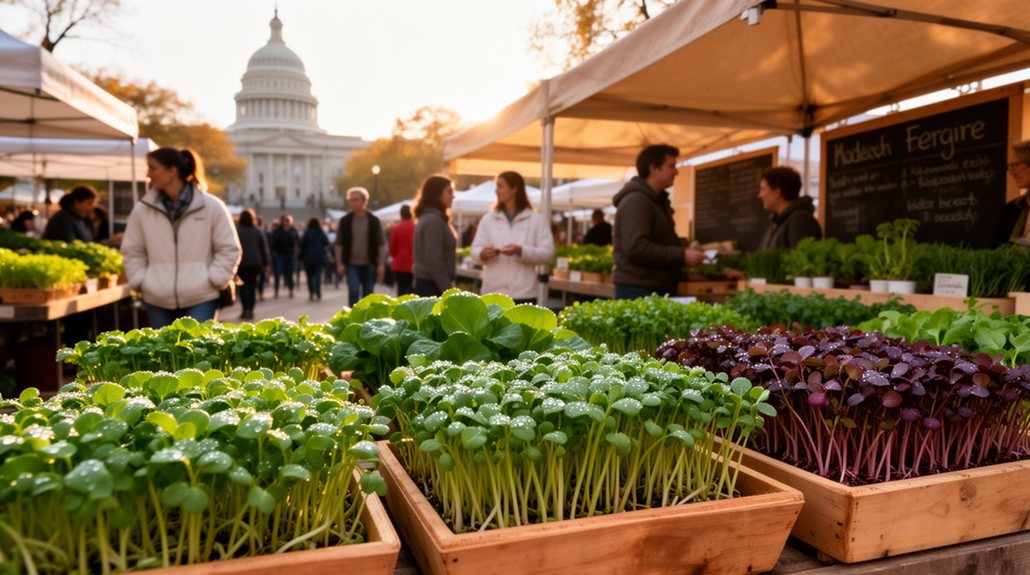
    capitol square then monona

    Two Madison markets give you the best shot at finding microgreens vendors.

    Start with the Dane County Farmers Market on Capitol Square, running Saturdays from late April through early November with over 275 vendors.

    When that market closes for the season, shift to the Winter Farmers Market at Monona Terrace, which runs select Saturdays from November through April.

    Dane County Farmers Market and what to expect there

    If you’re looking for the best shot at finding fresh microgreens in Madison, start at the Dane County Farmers Market on Capitol Square.

    It runs Saturdays from late April through early November. The market circles the Wisconsin State Capitol with over 275 vendors at peak season.

    Every vendor grows what they sell. That producer-only rule means the greens you buy were likely harvested the day before or the morning of market. Grocery store microgreens travel 3 to 7 days through distribution before they reach the shelf. The difference in flavor and texture is real.

    Dane County Farmers Market microgreens vendors show up consistently here because the format attracts serious growers. Arrive early. Popular specialty produce vendors sell out before 10 a.m.

    Winter Farmers Market at Monona Terrace and its specialty produce vendor presence

    Once the outdoor season ends, the Winter Farmers Market at Monona Terrace picks up the gap. It runs on select Saturdays from November through April.

    The location is 1 John Nolen Drive in Madison. Hours vary by date, so check before you go.

    Specialty produce vendors show up here regularly. Microgreens travel well indoors, and growers who sell at the winter farmers market Monona Terrace events often carry them consistently through the cold months.

    You’re shopping with people who prioritize local food year-round. That shared habit keeps specialty vendors coming back each week.

    If you want microgreens in Madison during winter, this market is your best option. Don’t assume the off-season means fewer choices for greens specifically.

    What should you look for when you find a microgreens booth at a Madison market?
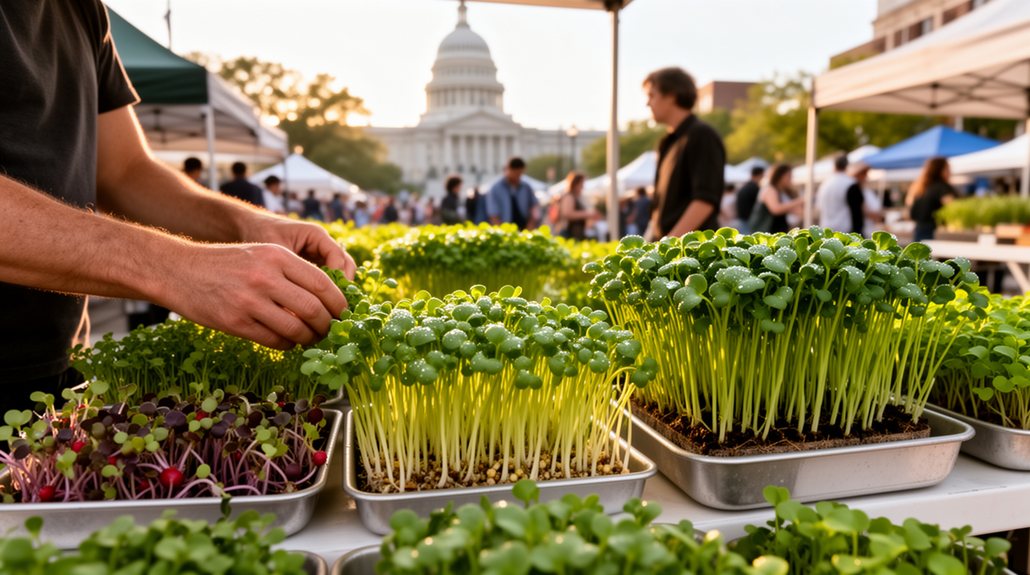
    check freshness and knowledge

    Finding a booth is only half the job.

    You still need to check the greens before you hand over your money. Look for two things: signs of a recent harvest and a vendor who can answer basic questions about their grow.

    How to tell if the microgreens were harvested recently

    When you reach a microgreens booth, look at the stems first. Fresh stems stand upright and hold their shape. Limp or bent stems mean the greens have been sitting too long.

    Next, check the cut ends. A clean, moist cut means recent harvest. Dry or browned ends are a warning sign.

    At capitol square farmers market microgreens vendors, you’re shopping alongside people who know exactly what to ask. Ask the grower when they harvested. Most Dane County vendors cut same-day or the night before.

    Finally, smell the tray. Fresh microgreens have a clean, green scent. A sour or flat smell means age. Trust your nose and move to the next booth if something’s off.

    What to ask the vendor before you buy

    Before you hand over any money, ask two questions. When did you harvest this? And how long will it last once I get it home?

    A good vendor answers both without hesitation.

    Question Good answer Walk away if
    When was this harvested? Yesterday or this morning “A few days ago”
    How long will it keep? 5 to 7 days Vague or no answer
    Do you grow it yourself? Yes, on my farm “We source it”

    Knowing where to buy microgreens in Madison starts with knowing who grew them.

    Dane County Farmers Market vendors must grow what they sell. That rule removes the guesswork before you even ask.

    What microgreens varieties can you find at Madison farmers markets?
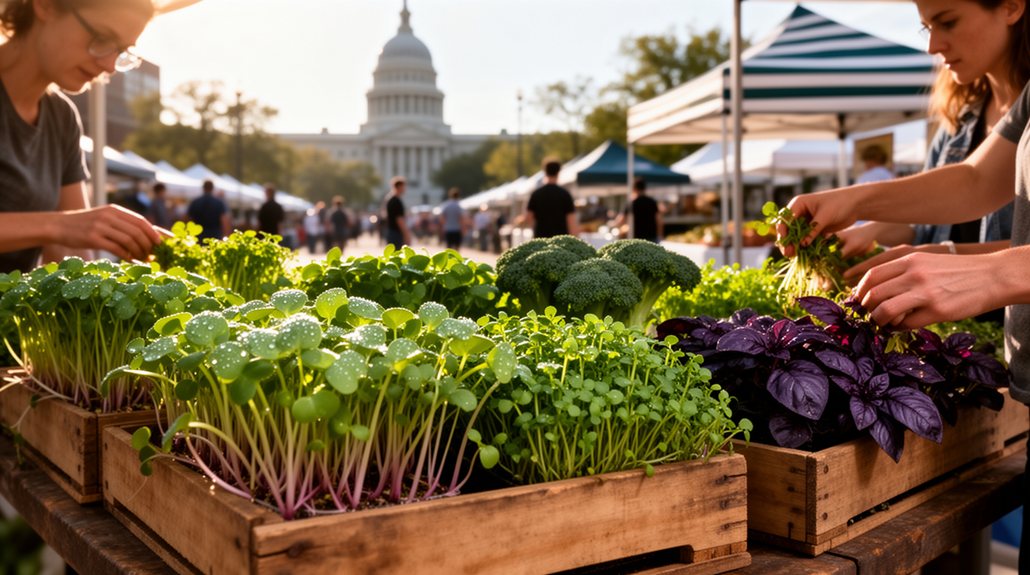
    sunflower pea radish broccoli

    Madison market growers typically bring four to six varieties on any given Saturday. You’ll see sunflower, pea shoots, radish, broccoli, and sometimes amaranth or basil microgreens at peak season.

    Each one behaves differently on a plate, so knowing the flavor profiles helps you pick faster.

    The most common varieties at Wisconsin markets and their flavors

    Sunflower, pea shoots, and radish show up most often at Dane County market stalls. Sunflower is mild and nutty. Pea shoots taste sweet and fresh. Radish brings heat.

    Beyond those three, you’ll also find broccoli, amaranth, and wheatgrass at peak season. Broccoli microgreens taste slightly bitter and earthy. Amaranth runs mild with a soft texture.

    When you search for fresh microgreens near me Madison, these are the varieties you’ll actually encounter. Knowing what each one tastes like helps you buy with confidence instead of guessing.

    Brassica types like broccoli and kale suit people who prefer savory and bold. Sunflower and pea shoots work well for anyone new to microgreens. Start there if you’re unsure.

    Which varieties work best for salads, sandwiches, and cooking

    Knowing which variety to buy saves you from guessing at the stall.

    For salads, grab sunflower or pea shoots. They’re mild, filling, and hold up under dressing without going limp.

    For sandwiches, radish or mustard microgreens work well. They add a sharp bite that replaces the need for extra condiments.

    For cooking, use brassica blends or broccoli microgreens. Add them at the end of cooking, not the beginning, so they don’t wilt completely.

    People buying microgreens madison wisconsin markets regularly know to ask the grower how fresh the cut is. At Dane County, most are cut that morning.

    Match the variety to what you’re already making. That’s the fastest way to get consistent results every week.

    How do you find a Madison farmers market with microgreens near you?
    check mgw market finder

    Not every farmers market in Wisconsin carries microgreens. Producer-only markets, like Dane County Farmers Market, are your best bet because every vendor grows what they sell.

    Before you make the trip, check the MGW Market Finder to confirm hours, season dates, and what’s available near you.

    What market types are most likely to carry specialty greens in Wisconsin

    Producer-only markets are your best bet for finding microgreens in Wisconsin. Every vendor at these markets grew what they’re selling. That rule filters out resellers and keeps specialty crops like microgreens madison wisconsin shoppers want actually available.

    Dane County Farmers Market runs under a strict producer-only policy. Over 275 vendors show up at peak season. That volume means more growers competing for your attention, including specialty greens vendors.

    Open markets with mixed vendors are less reliable. You’ll find produce resellers there, not growers.

    Wisconsin has over 280 USDA-listed markets. Producer-only formats report 57.6% specialty crop sales rates versus 39.3% at standard markets. Your odds of finding fresh microgreens go up sharply when you stick to producer-only.

    How to use the MGW Market Finder before you make the trip

    Finding the right market still doesn’t guarantee you’ll find microgreens there. Use the MGW Market Finder before you leave home.

    Search by Madison zip code. Filter results by season dates and SNAP/EBT status.

    Feature What it shows Why it matters
    Season dates Open and close dates Avoid a wasted trip
    Hours Start and end times Arrive before sellout
    SNAP/EBT Payment accepted Know before you go

    Check whether the market is producer-only. Madison producer only farmers market microgreens vendors are growers, not resellers.

    That distinction matters. Producer-only markets report specialty crop sales at 57.6%, compared to 39.3% at mixed markets.

    The MGW Farmers Market Finder covers 7,842 USDA-verified markets across all 50 states. Search by zip code or city to find markets near you with hours, season dates, and SNAP/EBT acceptance before you leave home – markets.microgreensworld.com.

    Frequently Asked Questions

    Can You Buy Microgreens at Madison Farmers Markets With SNAP or EBT?

    Yes, you can use SNAP/EBT at several Madison farmers markets. The Dane County Farmers Market accepts EBT. Check individual vendors, as not every seller participates. Confirm before you shop.

    Are Madison Farmers Market Microgreens Safe to Eat Without Washing?

    Most are safe to eat without washing, but it’s your call. Ask your vendor how they’re grown. If they use clean water and food-safe trays, you’re good to go straight from the container.

    How Much Do Microgreens Typically Cost at Madison Farmers Markets?

    You’ll typically pay $4 to $8 for a small tray or clamshell at Madison farmers markets. Specialty varieties like sunflower or pea shoots can run closer to $10 depending on the grower.

    Can You Request Specific Microgreens Varieties From Madison Market Vendors?

    Yes, you can. Talk directly to the vendor at the Dane County Farmers Market. Many growers take custom requests for next week’s harvest. Bring cash and ask early in the season.

    Do Madison Farmers Market Vendors Sell Microgreens Seeds or Growing Kits?

    Some vendors do sell seeds or growing kits, but it’s inconsistent. Ask at the Dane County Farmers Market on Saturdays. Microgreens growers occasionally carry starter kits when customer demand is strong.
  • Where to Find Fresh Microgreens at Farmers Markets in Denver and Boulder

    Where to Find Fresh Microgreens at Farmers Markets in Denver and Boulder

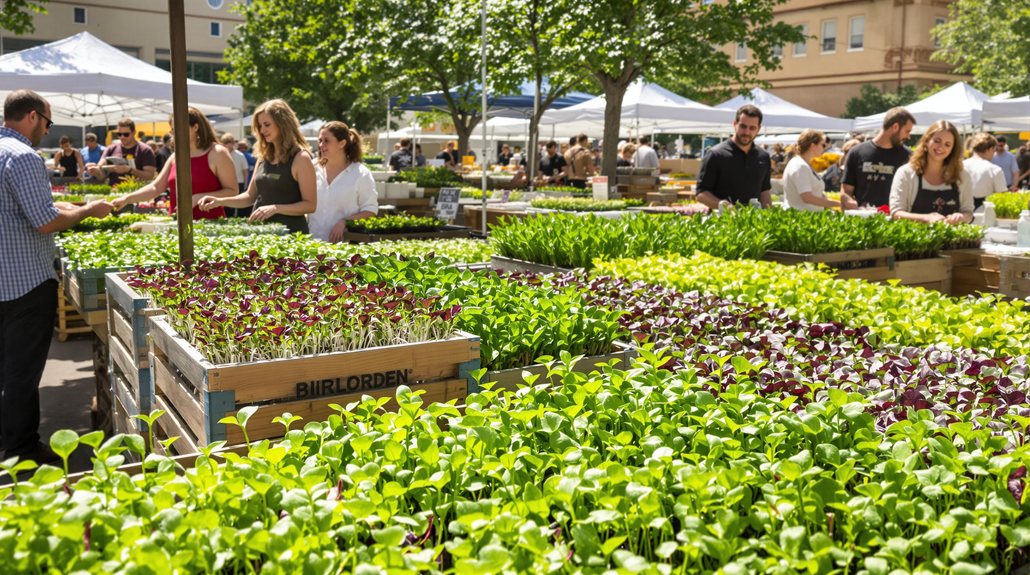
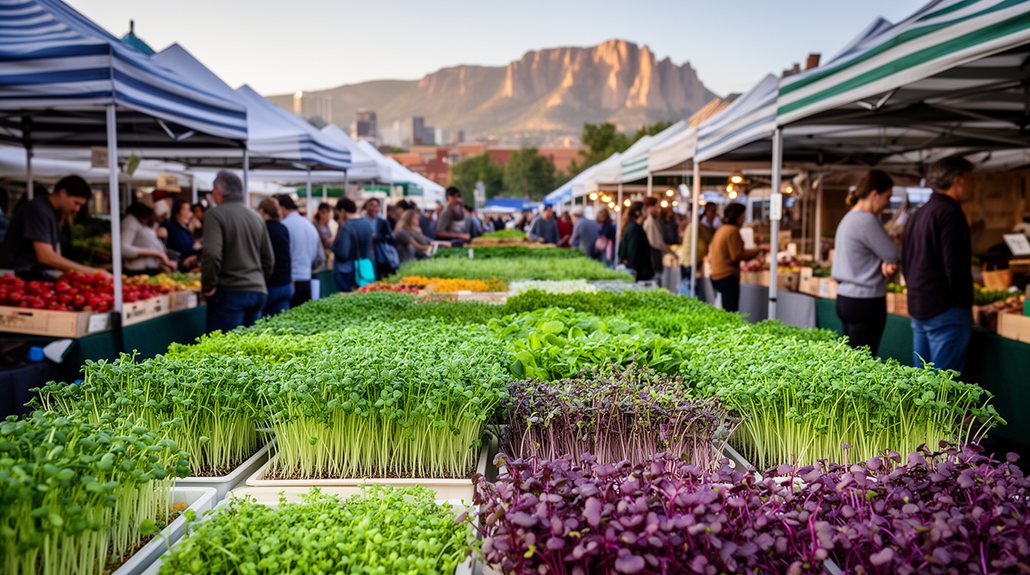
    You’ll find fresh microgreens at Cherry Creek Fresh Market on Saturdays and Wednesdays at 1st Avenue and University Boulevard, and at Boulder Farmers Market along 13th Street on Saturdays and Wednesdays. Saturday markets draw the most vendors. Microgreens here are often cut the same morning, unlike grocery versions that travel three to seven days through distribution. Stick to certified producer-only markets for the best odds. There’s more to know about picking the right booth and variety.

    Key Takeaways

    • Cherry Creek Fresh Market (Saturdays and Wednesdays, May–October) and South Pearl Street are reliable Denver locations for finding microgreens vendors.
    • Boulder Farmers Market runs Saturdays and Wednesdays along 13th Street from April through November, with Saturday markets offering the most vendor variety.
    • Certified producer-only markets provide the best odds of finding microgreens, as vendors are required to grow what they sell.
    • The Boulder County Fairgrounds winter market runs year-round and attracts controlled-environment growers who can supply microgreens even in January.
    • Use the MGW Farmers Market Finder at markets.microgreensworld.com to confirm microgreens availability by zip code before visiting any market.

    Why does buying microgreens at a Denver and Boulder farmers market matter?

    The microgreens you find at a Denver or Boulder farmers market were likely cut that morning.

    Grocery store microgreens travel 3 to 7 days through distribution before they reach the shelf. That gap changes the flavor, the texture, and how long they’ll last in your fridge.

    What same-day harvest means for flavor and shelf life

    Most microgreens at grocery stores are 3 to 7 days old by the time you buy them. That travel time through distribution chains dulls flavor and softens texture.

    Farmers market vendors harvest the day before or the morning of market. You’re getting the crop at its peak.

    The difference shows up immediately. Fresh microgreens boulder shoppers pick up on Saturday morning taste sharper and hold their texture longer in the fridge.

    A just-harvested tray typically lasts 7 to 10 days after you bring it home. A grocery store tray, already days old, might give you 3 or 4.

    That gap is why people who’ve tried both don’t go back to the grocery store option.

    Why farmers market microgreens differ from what you find at the grocery store

    Shelf life tells part of the story. Grocery store microgreens travel 3 to 7 days through distribution before you touch them. That gap costs you flavor and texture.

    When you search for fresh microgreens near me Denver, you’re looking for the real difference: harvest timing.

    Factor Farmers market
    Harvest timing Same day or day before
    Transit time Hours
    Texture Crisp, upright
    Flavor Peak intensity
    Shelf life after purchase 5 to 7 days

    Grocery microgreens are already days into decline when you buy them.

    Markets like Cherry Creek Fresh Market give you produce that still belongs to today. That matters when you’re building a habit around fresh food.

    Which Denver and Boulder farmers markets are most likely to have microgreens vendors?

    boulder and cherry creek

    Two markets give you the best odds of finding microgreens vendors in this area. Boulder Farmers Market runs Saturdays and Wednesdays along 13th Street from April through November, and its vendor base skews heavily toward specialty produce. Cherry Creek Fresh Market runs Saturdays and Wednesdays from May through October and draws a consistent lineup of small-scale growers selling perishables like microgreens.

    Boulder Farmers Market and what to expect there

    Saturday is your best bet at Boulder Farmers Market. It runs along 13th Street from April through November, and Saturday draws the most vendors.

    Get there early. Microgreens sell out fast, and the serious shoppers arrive at opening.

    Wednesday is a lighter market. Fewer vendors show up, and microgreens aren’t guaranteed. Saturday is worth planning around.

    Look for boulder farmers market microgreens vendors near the north end of the market. Ask each vendor when they harvested. Same-day or next-day harvest is the standard you want.

    The winter market moves to the Boulder County Fairgrounds and runs year-round. Selection drops in winter, but committed local growers still show up. Call ahead or check the market’s vendor list before making the trip.

    Cherry Creek Fresh Market and its specialty produce vendor presence

    Cherry Creek Fresh Market runs on Saturdays and Wednesdays from May through October in Denver.

    It draws serious specialty produce vendors, and microgreens growers show up regularly here. The market runs at 1st Avenue and University Boulevard.

    Wednesday markets tend to be smaller. Saturday is when the full vendor lineup appears. Go Saturday if you want the best shot at finding microgreens.

    Cherry Creek Fresh Market Denver attracts health-focused shoppers, so vendors bring premium products to match. Microgreens fit that crowd well, which keeps growers coming back.

    Arrive before 10 a.m. Vendors sell out of specialty items fast. If you see a microgreens tray you want, don’t wait to circle back. It may be gone.

    What should you look for when you find a microgreens booth at a Denver and Boulder market?

    inspect trays ask questions

    Finding a booth is the easy part. Knowing what to buy takes a closer look.

    Check the trays and ask two or three direct questions before you hand over any money.

    How to tell if the microgreens were harvested recently

    Once you find a microgreens booth, look at the stems first. Fresh microgreens stand upright. Stems that lean or mat together have been sitting too long.
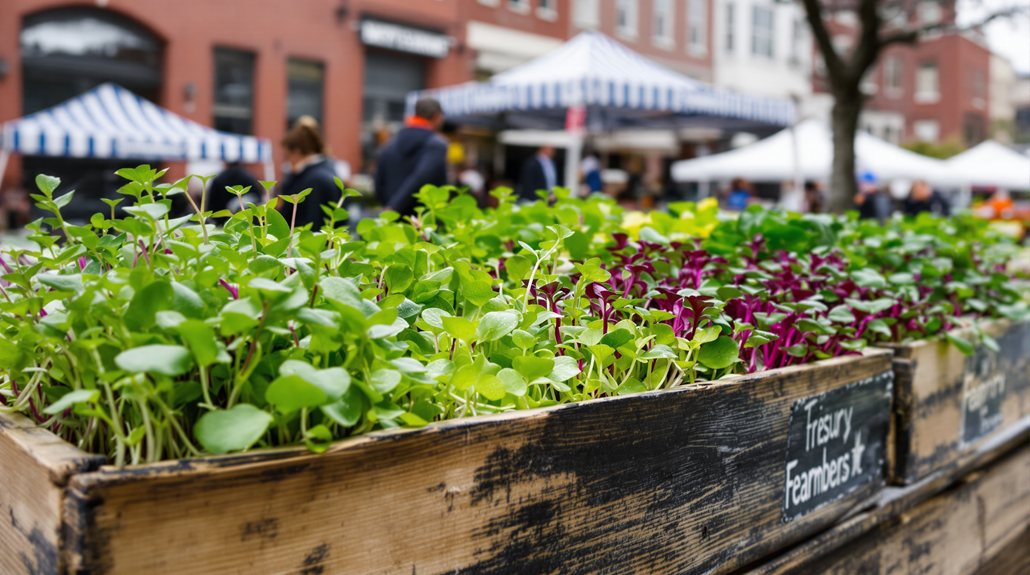
    Next, check the color. Leaves should be bright and even with no yellowing at the edges.

    Then touch the tray lightly. Fresh cuts feel slightly cool and firm. If the leaves feel soft or wet, pass on them.

    Ask the vendor directly: “When did you harvest these?” Most growers selling at Denver farmers markets, including spots like the Golden Farmers Market, cut the same morning or the night before.

    That answer tells you everything. It’s also the fastest way to know if where to buy microgreens denver leads you to a grower worth returning to.
    What to ask the vendor before you buy

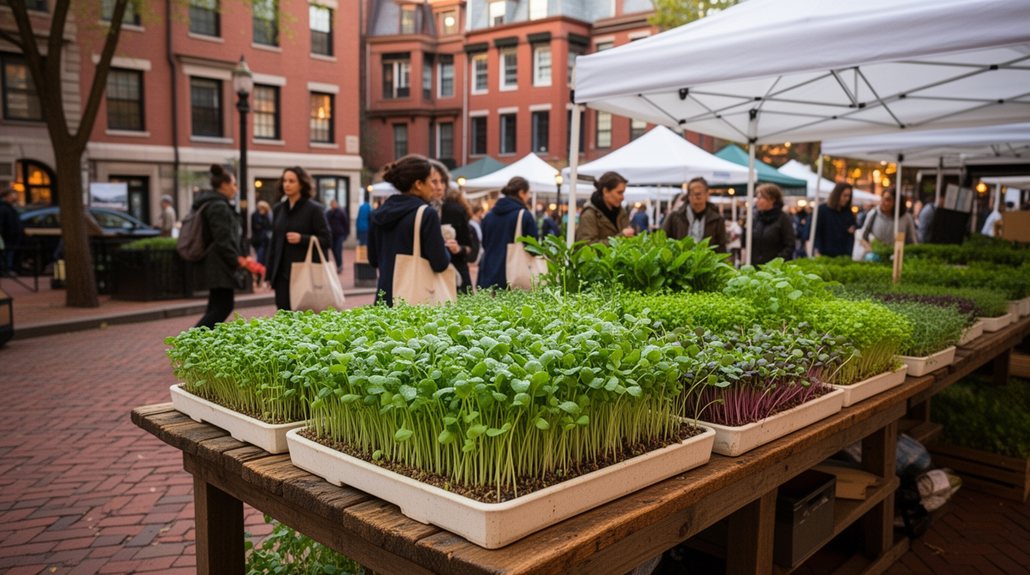
    When you reach a microgreens booth, skip the display and talk to the vendor first.

    Ask one question: “When did you harvest these?”

    Same-day or yesterday means you’re good. Anything beyond two days, move on.

    Next, ask where they grow. Local farms growing in Colorado soil or controlled indoor facilities near Denver know their product. Vendors who can’t answer don’t grow it themselves.

    At a microgreens farmers market Denver stop like Cherry Creek or South Pearl Street, most vendors are growers. That’s normal here.

    Finally, ask if they offer samples. Good growers expect the question. A sample tells you flavor and texture before you commit to a purchase.

    What microgreens varieties can you find at Denver and Boulder farmers markets?

    sunflower pea radish amaranth

    Denver and Boulder market vendors typically carry sunflower, pea shoots, radish, broccoli, and amaranth.

    Sunflower and pea shoots are mild and work well in salads and sandwiches.

    Radish runs spicy, so use it on tacos or grain bowls where you want heat.

    The most common varieties at Colorado markets and their flavors

    Most vendors at these markets carry a core set of varieties you’ll see again and again.

    Sunflower microgreens are the most common. They’re mild, slightly nutty, and easy to eat raw. Pea shoots are close behind. They taste like fresh peas and work well in salads or on eggs.

    Radish microgreens show up at nearly every booth. They’re spicy and crisp. Broccoli and kale microgreens are popular with the health-focused crowd that tends to buy microgreens in Denver.

    Amaranth adds color. Beet microgreens have an earthy flavor with deep red stems. Cilantro and basil microgreens appear seasonally.

    If you want something specific, ask the vendor before you commit. Most growers at Colorado markets can tell you exactly what’s coming the following week.

    Which varieties work best for salads, sandwiches, and cooking

    Picking the right variety comes down to how you plan to eat it.

    For salads, go with sunflower or pea shoots. They’re mild, filling, and hold up well against dressing. Radish adds a peppery bite if you want contrast.
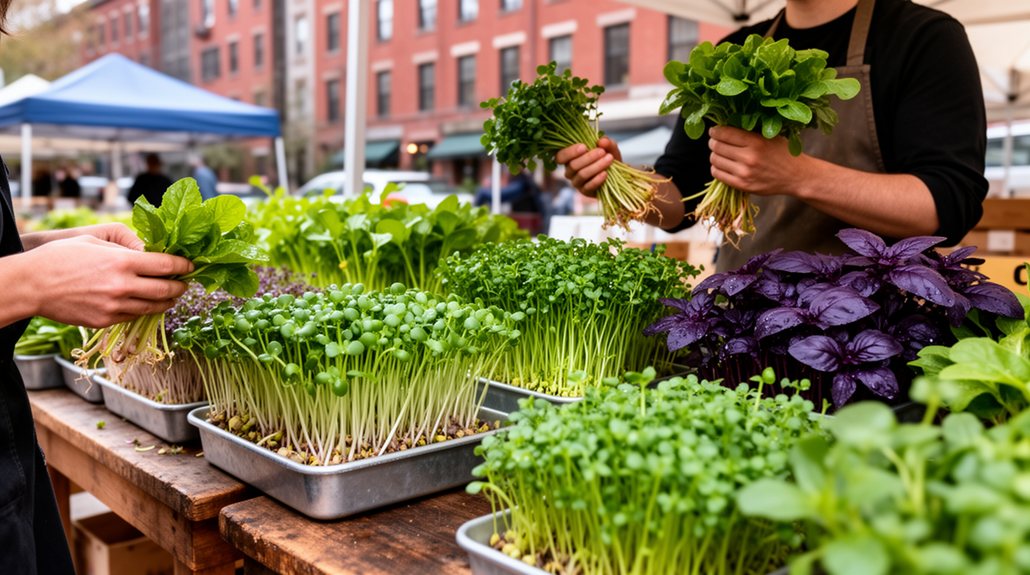
    Sandwiches do best with broccoli or clover. Both stay flat under pressure and don’t overpower other flavors.

    For cooking, use amaranth or beet microgreens. Add them at the very end. Heat kills their texture fast, so a few seconds is enough.

    The fresh microgreens Colorado growers bring to market are harvested recently. That freshness makes every variety perform better than what you’d find packaged at a grocery store.

    Match the variety to the dish before you shop.

    How do you find a Denver and Boulder farmers market with microgreens near you?

    check microgreens market locations

    Not every farmers market in Colorado carries microgreens. Larger, year-round markets and those with a health-conscious customer base are your best starting point.

    Use the MGW Market Finder to check specific markets before you make the drive.

    What market types are most likely to carry specialty greens in Colorado

    Year-round indoor markets and certified producer-only markets are your best shot at finding microgreens in Colorado.

    Certified producer-only markets require vendors to grow what they sell. That rule filters out resellers and keeps specialty growers, including microgreens vendors Denver shoppers rely on, at the table consistently.

    The Boulder County Fairgrounds winter market runs year-round and draws producers who grow in controlled environments. Those growers can supply microgreens even in January.

    Seasonal outdoor markets are less reliable for specialty greens. Vendor rosters shift week to week.

    Look for markets that list “specialty produce” or “greens” in their vendor categories. That detail tells you a grower committed to the season before you made the drive.

    How to use the MGW Market Finder before you make the trip

    Once you know what market types to target, the next step is confirming a specific market has microgreens before you go.

    Use the MGW Farmers Market Finder at markets.microgreensworld.com. It covers 7,842 USDA-verified markets across all 50 states.

    Search by zip code or city. You’ll see hours, season dates, and SNAP/EBT acceptance for each result.

    Colorado has over 200 listed markets. That includes Denver and Boulder options where to find microgreens Denver shoppers actually visit, like Cherry Creek, South Pearl Street, and the Boulder Saturday market on 13th Street.

    Filter your results before leaving home. Showing up without checking first wastes a trip.

    Frequently Asked Questions

    Can You Buy Microgreens at Denver and Boulder Markets With SNAP or EBT?

    Yes, some Denver and Boulder farmers markets accept SNAP and EBT. Check before you go. Use the MGW Farmers Market Finder at markets.microgreensworld.com to see which markets near you accept benefits.

    Are Denver and Boulder Microgreens Vendors at Markets Usually Certified Organic?

    Most aren’t certified organic, but many use organic practices. Ask the vendor directly. Boulder growers especially tend to avoid synthetic inputs, even without the official certification label.

    How Much Do Microgreens Typically Cost at Denver and Boulder Farmers Markets?

    You’ll typically pay $5 to $12 per tray or clamshell at Denver and Boulder farmers markets. Specialty blends or certified organic varieties often run closer to $10 to $15.

    Can You Special-Order Microgreens From a Vendor You Meet at a Market?

    Yes, you can. Ask your vendor directly at the market. Most small growers welcome special orders. You’ll get fresher cuts, custom variety mixes, and better pricing when you buy in bulk regularly.

    Do Denver and Boulder Microgreens Vendors Sell at Markets Year-Round?

    Most don’t. Outdoor markets like Cherry Creek and South Pearl Street close by October. But Boulder’s winter market at the Boulder County Fairgrounds runs year-round, so you’ll find vendors there through the off-season.

  • Where to Find Fresh Microgreens at Farmers Markets in San Antonio

    Where to Find Fresh Microgreens at Farmers Markets in San Antonio

    Your best shot at same-day-harvested microgreens in San Antonio is the Pearl Farmers Market, open Saturday and Sunday mornings in the Pearl District, or the Quarry Farmers and Ranchers Market, open every Sunday on Basse Road. Both draw specialty growers who often harvest the same day. Arrive before 10 a.m. — top vendors sell out fast. Keep scrolling to find out which varieties to look for and how to spot the freshest trays.

    Key Takeaways

    • Pearl Farmers Market in the Pearl District runs Saturday and Sunday mornings and regularly attracts specialty microgreens vendors with high-quality produce.
    • Quarry Farmers and Ranchers Market operates every Sunday year-round on Basse Road and consistently features specialty-produce vendors selling microgreens.
    • Arrive before 10 a.m. at either market, as top microgreens vendors commonly sell out early.
    • Use MGW Market Finder at markets.microgreensworld.com to search by San Antonio zip code, filter by day, and confirm hours before leaving.
    • Choose vendors who harvested same-day or the prior day for the freshest flavor, firmest stems, and longest refrigerator life.

    Why does buying microgreens at a San Antonio farmers market matter?

    The microgreens you pick up at a San Antonio grocery store were likely harvested 3 to 7 days ago.

    A farmers market grower cuts them the same day or the day before. That gap changes the flavor, the texture, and how long they last in your fridge.

    What same-day harvest means for flavor and shelf life

    Most grocery store microgreens are 3 to 7 days old by the time you pick them up. That travel time costs you flavor, texture, and shelf life.

    Farmers market microgreens are different. Growers typically harvest the same day or the night before the market opens.

    That timing matters. You get microgreens at peak flavor, with firm stems and clean, sharp taste. They’ll also last longer in your refrigerator.

    The fresh microgreens at Pearl Farmers Market reflect this directly. Vendors there serve a food-literate crowd that notices quality. That keeps standards high.

    When you buy at the source, you’re getting what the grocery store can’t offer. Proximity between harvest and purchase is the difference you’ll taste immediately.

    Why farmers market microgreens differ from what you find at the grocery store

    Grocery store microgreens don’t come from anywhere near San Antonio. They move through a distribution chain that takes 3 to 7 days from harvest to shelf.

    By the time you open that clamshell, the greens have already lost texture and flavor.

    At a San Antonio farmers market, growers harvest the same day or the day before. What you’re buying is genuinely fresh.

    That difference matters when you’re searching for fresh microgreens near me San Antonio and actually want quality, not just convenience.

    People who shop the Pearl Farmers Market or Quarry Farmers and Ranchers Market already know this. They’ve made the switch and don’t go back to grocery store versions.

    Which San Antonio farmers markets are most likely to have microgreens vendors?

    pearl and quarry markets

    Two markets give you the best shot at finding microgreens vendors in San Antonio.

    Pearl Farmers Market runs Saturday and Sunday mornings in the Pearl District, and its upscale, food-literate crowd keeps specialty produce vendors coming back.

    Quarry Farmers and Ranchers Market operates every Sunday year-round and has a steady presence of specialty produce sellers worth checking.

    Pearl Farmers Market and what to expect there

    If you want the best shot at finding fresh microgreens in San Antonio, start at the Pearl Farmers Market. It runs Saturday and Sunday mornings in the Pearl District along the San Antonio River.

    The crowd here knows food. Vendors who sell specialty produce, including pearl district farmers market microgreens, show up here because buyers actually buy them.

    Get there early. The best microgreens vendors sell out before 10 a.m. most weekends.

    The market sits next to Hotel Emma and the CIA Cafe. That location draws serious food buyers, which keeps vendor quality high.

    You will find more microgreens variety here than at most other San Antonio markets. Bring a cooler bag to keep your greens fresh on the drive home.

    Quarry Farmers and Ranchers Market and its specialty produce vendor presence

    The Quarry Farmers and Ranchers Market runs every Sunday, year-round, making it your most reliable backup to Pearl.

    It sits near the old Quarry Golf Club on Basse Road. The year-round schedule matters because most seasonal markets go dark in summer and winter.

    Specialty produce vendors follow consistent foot traffic. A market open 52 Sundays a year attracts growers who can commit to regular harvests. That’s where you find quarry farmers market microgreens san antonio regulars, not one-time vendors.

    Get there before 10 a.m. Microgreens sell fast at any San Antonio market.

    Ask the vendor when they harvested. Same-day or prior-day harvest means better flavor and longer fridge life than anything you’d find at a grocery store.

    What should you look for when you find a microgreens booth at a San Antonio market?

    inspect trays ask questions

    Finding a microgreens booth is the easy part. Knowing what you’re actually looking at takes a few seconds of practice.

    Check the trays and ask the right questions before you hand over your money.

    How to tell if the microgreens were harvested recently

    Once you find a microgreens booth, check the trays or clamshells before you buy anything. The stems should stand upright. Limp or bent stems mean the greens are already losing moisture.

    Look at the color next. Yellowing at the tips is a sign of age. Fresh microgreens hold a deep, consistent color from stem to leaf.

    Smell the tray if you can. Fresh microgreens smell clean and slightly grassy. A sour or flat smell means they’ve been sitting too long.

    If you’re searching for where to buy microgreens San Antonio, the growers who show up with tight, upright trays are the ones worth buying from. Ask when they harvested. A good vendor answers without hesitation.

    What to ask the vendor before you buy

    When you spot a microgreens booth, lead with one question: when did you harvest these?

    At any microgreens farmers market San Antonio visit, same-day or yesterday means good. Anything over two days old loses texture fast.

    Next, ask where they’re grown. Local growers in San Antonio often harvest the morning of the market. That’s the freshness you’re paying for.

    Then ask if they grow to order. Some vendors at Pearl Farmers Market and Quarry Farmers and Ranchers Market will hold a weekly batch for repeat customers. That gets you first pick.

    Finally, ask what varieties they carry. Sunflower, radish, and pea shoots handle San Antonio’s heat well and tend to move fast.

    What microgreens varieties can you find at San Antonio farmers markets?

    sunflower radish pea shoots

    San Antonio market growers typically carry sunflower, radish, pea shoots, broccoli, and amaranth.

    Each variety has a distinct flavor profile that matches certain foods better than others. Knowing which ones to grab saves you time at the booth.

    The most common varieties at Texas markets and their flavors

    Most San Antonio vendors carry sunflower, pea shoots, and radish microgreens as their core lineup. Sunflower microgreens taste nutty and mild. Pea shoots are sweet and tender. Radish brings heat.

    Beyond those three, look for broccoli, arugula, and amaranth. Broccoli microgreens taste earthy and slightly bitter. Arugula is peppery and sharp. Amaranth adds color and a mild, grassy flavor.

    If you want to buy microgreens San Antonio vendors grow locally, ask which varieties were harvested that morning. Same-day harvests taste noticeably different from older cuts.

    Specialty vendors at Pearl Farmers Market sometimes carry sunflower blends or mild mixes designed for people new to microgreens. Those are a good starting point if you’re unsure what you’ll like.

    Which varieties work best for salads, sandwiches, and cooking

    Knowing what each variety tastes like is only half the work. You also need to match the variety to how you’re cooking or eating.

    For salads, use sunflower or pea shoots. They’re mild and hold up without wilting fast.

    For sandwiches, radish microgreens add a sharp bite. Broccoli works too if you want something gentler.

    For cooked dishes, add microgreens after the heat is off. Basil microgreens work well on pasta or soup.

    When you shop for local microgreens San Antonio TX vendors carry, ask what was harvested that morning. Same-day cuts taste cleaner and last longer at home.

    Matching variety to use makes the difference between a garnish and an ingredient people actually notice.

    How do you find a San Antonio farmers market with microgreens near you?

    check mgw market finder

    Not every San Antonio market carries microgreens. Specialty and artisan produce shows up most at larger, year-round markets like Pearl Farmers Market and Quarry Farmers and Ranchers Market.

    Check the MGW Market Finder before you go so you’re not driving across town to an empty table.

    What market types are most likely to carry specialty greens in Texas

    Some markets carry microgreens regularly. Others rarely do. Knowing the difference saves you a wasted trip.

    Year-round markets with upscale or food-literate customer bases are your best bet. Pearl Farmers Market fits that profile. So does Quarry Farmers and Ranchers Market, open every Sunday.

    Seasonal neighborhood markets like Leon Valley or Castle Hills are less consistent. Specialty vendors follow demand. They show up where food-conscious shoppers show up.

    For microgreens San Antonio shoppers, focus on markets near culinary districts or health-focused communities. Those markets attract the growers who harvest same-day and bring limited quantities.

    Texas has over 460 USDA-listed markets. Not all carry specialty greens. Targeting the right market type matters before you leave home.

    How to use the MGW Market Finder before you make the trip

    Pull up markets.microgreensworld.com before you head out. Type in your San Antonio zip code or neighborhood name.

    The MGW Market Finder covers 7,842 USDA-verified markets across all 50 states. It shows hours, season dates, and SNAP/EBT acceptance for each location.

    Filter your results by day of week. Saturday and Sunday markets near the Pearl District are a good starting point for finding microgreens farmers market San Antonio vendors.

    Check the hours listed before you leave. Some markets close by noon.

    The MGW Farmers Market Finder covers 7,842 USDA-verified markets across all 50 states. Search by zip code or city to find markets near you with hours, season dates, and SNAP/EBT acceptance before you leave home – markets.microgreensworld.com.

    Frequently Asked Questions

    Can You Freeze Fresh Microgreens Bought at a San Antonio Farmers Market?

    You can freeze them, but you’ll lose the texture. Blanch briefly, dry thoroughly, then freeze flat. They work best in smoothies or cooked dishes after freezing, not fresh salads.

    How Much Do Microgreens Typically Cost at San Antonio Farmers Markets?

    You’ll typically pay $5 to $12 per tray or clamshell at San Antonio farmers markets. Pearl Farmers Market vendors often price toward the higher end for specialty varieties like sunflower or pea shoots.

    Do San Antonio Farmers Market Microgreens Vendors Accept SNAP or EBT?

    Some do, but not all. Check each vendor directly before you go. The MGW Farmers Market Finder shows SNAP/EBT acceptance by market at markets.microgreensworld.com so you’ll know ahead of time.

    How Should You Store Microgreens After Buying Them at a Market?

    Keep microgreens in their original container or a loosely covered bowl. Store them in the fridge’s crisper drawer. Don’t wash them until you’re ready to eat. They’ll stay fresh for five to seven days.

    Are San Antonio Farmers Market Microgreens Grown Locally in Texas?

    Yes, most are. San Antonio’s warm climate lets local growers produce microgreens year-round. You’re buying from Texas farmers who harvested just before market day, not from a distant distribution center.

  • Where to Find Fresh Microgreens at Farmers Markets in Nashville

    Where to Find Fresh Microgreens at Farmers Markets in Nashville

    Nashville Farmers Market, East Nashville Farmers Market, and Richland Park Farmers Market are your best starting points. Nashville Farmers Market runs year-round and has a permanent indoor Market House that keeps specialty vendors selling through winter. Arrive early on weekends — microgreens often sell out before mid-morning. Greens cut that same day last 5 to 7 days at home, far longer than grocery store options. Keep going and you’ll know exactly what to look for once you’re there.

    Key Takeaways

    • Nashville Farmers Market runs year-round and consistently supports specialty growers, making it a reliable starting point for finding microgreens.
    • East Nashville Farmers Market and Richland Park Farmers Market are both strong options for locating specialty produce vendors.
    • Arrive early on weekends, as microgreens often sell out before mid-morning due to high vendor turnout.
    • Ask vendors directly when greens were harvested; same-day or next-day cuts indicate peak freshness and flavor.
    • Use markets.microgreensworld.com to check hours, season dates, and vendor details before making the trip.

    Why does buying microgreens at a Nashville farmers market matter?

    You can taste the difference between a microgreen harvested this morning and one that sat in a distribution center for five days.

    Grocery store microgreens often travel 3 to 7 days from harvest to shelf, losing flavor and texture along the way.

    Nashville’s farmers markets change that equation entirely.

    What same-day harvest means for flavor and shelf life

    Most grocery store microgreens are 3 to 7 days old before they reach the shelf. At a fresh microgreens Nashville farmers market, growers harvest the morning of market day.

    That gap changes everything you taste.

    Factor Farmers Market Grocery Store
    Days since harvest 0 to 1 3 to 7
    Flavor intensity Sharp, defined Faded, mild
    Texture Crisp, firm stems Soft, wilting
    Home shelf life 5 to 7 days 1 to 3 days
    Who harvested them The grower at your table Unknown distributor

    You’re not just buying fresher greens. You’re buying time. More days at home means more meals, less waste, and better flavor in every bite.

    Why farmers market microgreens differ from what you find at the grocery store

    When you pick up microgreens at Kroger or Whole Foods, those greens left the farm 3 to 7 days ago. Distribution takes time. By the time they hit the shelf, you’re already losing flavor and texture.

    Nashville farmers market vendors harvest the same day or the night before. That gap matters more than most people realize.

    At markets like Nashville Farmers Market or 12 South, the microgreens you’re buying are still at peak cell moisture. They taste sharper, hold up longer in your fridge, and look better on a plate.

    If you’re searching for fresh microgreens near me Nashville, the grocery store isn’t your answer. A local market is where you find the real difference.

    Which Nashville farmers markets are most likely to have microgreens vendors?

    nashville markets likely microgreens

    Two Nashville markets give you the best shot at finding fresh microgreens.

    Start with Nashville Farmers Market near downtown. It runs year-round and has enough vendor volume to support specialty growers consistently.

    East Nashville Farmers Market draws food-literate shoppers, which keeps specialty produce vendors coming back.

    Nashville Farmers Market and what to expect there

    Four Nashville markets stand out if you’re looking for fresh microgreens.

    Nashville Farmers Market is the most consistent option. It runs year-round near downtown Nashville.

    The indoor Market House keeps vendors selling even in winter, which matters when other markets close.

    You’ll find both produce vendors and specialty growers there.

    Nashville farmers market microgreens show up most reliably from vendors who grow locally and harvest close to market day.

    Go early. The best specialty produce moves fast, and microgreens sell out before noon at busy markets.

    The market runs Tuesday through Sunday.

    Check vendor availability before you go, because not every vendor appears every day.

    Weekends pull the largest vendor turnout and give you the best shot at finding what you need.

    East Nashville Farmers Market and its specialty produce vendor presence

    On Nashville’s East Side, the East Nashville Farmers Market draws a food-literate crowd that actively looks for specialty produce. That demand keeps microgreen vendors coming back week after week.

    Shoppers here know what local microgreens Nashville TN growers are producing. They ask questions, compare varieties, and buy regularly.

    That steady demand means specialty vendors compete for their business. You’ll find more growers offering sunflower, pea shoot, and radish microgreens here than at larger, more tourist-facing markets.

    Arrive early. Specialty items like microgreens sell out before mid-morning.

    Talk to the vendor directly. Ask when they harvested. Fresh microgreens cut the same morning taste sharper and last longer in your fridge than anything from a grocery shelf.

    What should you look for when you find a microgreens booth at a Nashville market?

    ask harvest and storage details

    Finding a microgreens booth is only half the job. You still need to check freshness and ask the right questions before you hand over your money.

    Two things tell you almost everything: when the greens were cut and how the vendor stores them at the booth.

    How to tell if the microgreens were harvested recently

    Most microgreens vendors at Nashville markets will display their trays or clamshells right on the table. Look at the stems first.

    Fresh-cut microgreens stand upright. They don’t lean or collapse against the container. If you’re where to buy microgreens nashville searches bring you, this check takes five seconds.

    Look at the cut ends next. A clean, moist cut means recent harvest. A dried or brown base means it’s been sitting.

    Smell the tray if you can. Fresh microgreens have a sharp, green scent. Neutral or slightly sour means age.

    Ask the vendor directly when they harvested. Growers who cut that morning or the night before will say so without hesitation.

    What to ask the vendor before you buy

    When you spot a microgreens booth, don’t just look. Ask questions. The microgreens farmers market Nashville scene has grown enough that vendors expect informed buyers.

    Start with harvest day. Ask: “When were these cut?” Same day or yesterday means peak flavor. Anything beyond two days, pass.

    Next, ask where they’re grown. Local growers usually name a farm or a county. Vague answers like “nearby” are a flag.

    Then ask about growing medium. Soil-grown microgreens have more complex flavor than hydroponic versions. Knowing this helps you choose.

    You belong in this conversation. Regular market shoppers ask these questions every week. Do the same, and you’ll consistently leave with the best tray on the table.

    What microgreens varieties can you find at Nashville farmers markets?

    sunflower radish pea mustard

    Nashville microgreens vendors typically carry sunflower, radish, pea shoots, broccoli, and spicy mustard.

    Sunflower and pea shoots are mild and work well in salads and sandwiches.

    Radish and mustard bring heat and hold up better when you add them to warm dishes right before serving.

    The most common varieties at Tennessee markets and their flavors

    Sunflower, pea shoots, radish, and broccoli show up at Nashville markets more than anything else.

    Sunflower is mild and nutty. Pea shoots taste sweet and fresh.

    Radish microgreens hit with a sharp, peppery bite. If you like heat, radish is your go-to. Broccoli is earthy and slightly bitter, and it pairs well with almost anything.

    When you buy microgreens Nashville vendors grow locally, you’re getting cuts from that morning or the day before. That’s flavor grocery shelves can’t match.

    Beyond the basics, watch for amaranth, mustard, and sunflower blends at East Nashville and Richland Park. These rotate by season.

    Ask the grower what was cut that day. That one question tells you everything about freshness.

    Which varieties work best for salads, sandwiches, and cooking

    Salads need something mild. Sunflower and pea shoot microgreens work well here. They’re tender, slightly sweet, and don’t fight other ingredients.

    For sandwiches, go spicier. Radish and mustard microgreens add a sharp bite that replaces the need for extra condiments. Most microgreens vendors Nashville-wide carry both.

    Cooking changes things. Heat kills the delicate texture fast. Broccoli and kale microgreens hold up better than others when added at the last minute to warm dishes.

    Match the variety to the job. Don’t buy spicy mustard for a mild grain bowl. Don’t buy sunflower for a dish that needs heat.

    Ask the vendor directly what harvested that morning. That question tells them you know what you’re doing.

    How do you find a Nashville farmers market with microgreens near you?

    find nearby microgreens markets

    Not every Nashville market carries microgreens. Specialty and community-focused markets like East Nashville Farmers Market and Richland Park Farmers Market are your best starting points. Use the MGW Market Finder at markets.microgreensworld.com to check hours, season dates, and vendor details before you drive.

    What market types are most likely to carry specialty greens in Tennessee

    Most Nashville farmers markets carry some specialty produce, but not all of them carry microgreens consistently.

    Year-round markets with permanent vendor spaces are your best bet. Nashville Farmers Market downtown operates every day and has stable vendor rosters. That consistency makes it easier to find a microgreens seller week after week.

    Competitive Saturday markets attract specialty vendors. Richland Park Farmers Market and the Franklin Farmers Market both draw vendors who need to stand out. Microgreens fit that niche.

    Smaller neighborhood markets are less reliable. 12 South and East Nashville run seasonally and vendor lineups shift.

    When you’re searching a Tennessee microgreens farmers market, look for year-round or high-traffic Saturday markets first. Those formats support the specialty vendors most likely to grow and sell fresh microgreens regularly.

    How to use the MGW Market Finder before you make the trip

    Knowing which market types carry microgreens gets you close. The MGW Market Finder gets you there.

    Go to markets.microgreensworld.com and search your Nashville zip code. You’ll see hours, season dates, and SNAP/EBT info before you leave home.

    Search input What you get
    Zip code Markets within your area
    City name All Nashville-area listings
    State 300+ Tennessee markets

    This matters when you’re trying to find where to find microgreens Nashville without wasting a Saturday trip.

    Check the season dates. Some markets run April through October only. Confirm hours too. Showing up at the right place at the wrong time means leaving empty-handed.

    The MGW Farmers Market Finder covers 7,842 USDA-verified markets across all 50 states. Search by zip code or city to find markets near you with hours, season dates, and SNAP/EBT acceptance before you leave home – markets.microgreensworld.com.

    Frequently Asked Questions

    Can You Freeze Fresh Microgreens Bought at a Nashville Farmers Market?

    You can freeze them, but you’ll lose the texture that makes them worth buying. Eat Nashville market microgreens fresh within five days instead.

    Are Nashville Farmers Market Microgreens Safe to Eat Without Washing?

    Most are safe to eat as-is, but a quick rinse is smart. Nashville market growers follow good practices, yet a fast wash keeps you confident and connected to your food.

    How Much Do Microgreens Typically Cost at Nashville Area Markets?

    You’ll typically pay $4 to $8 for a small clamshell and $10 to $14 for a larger tray. Franklin and Richland Park vendors often price higher than Nashville Farmers Market vendors.

    Do Nashville Farmers Market Vendors Accept SNAP or EBT Payments?

    Many Nashville farmers markets accept SNAP/EBT, including Nashville Farmers Market year-round. Vendor acceptance varies, so check with individual microgreens sellers when you arrive. The MGW Farmers Market Finder shows SNAP/EBT data before you leave home.

    What Is the Best Way to Store Microgreens After Buying Them?

    Keep microgreens in their original container or a sealed bag. Store them in your fridge’s crisper drawer. Don’t wash them until you’re ready to eat. They’ll stay fresh for five to seven days this way.

  • Where to Find Fresh Microgreens at Farmers Markets in Austin, Texas

    Where to Find Fresh Microgreens at Farmers Markets in Austin, Texas

    For fresh same-day microgreens in Austin, head to Barton Creek Farmers Market on Saturdays or HOPE Farmers Market on Sundays. Eat Your Greens Organic Farm sells at Barton Creek and Pedernales Farmers Market in Spicewood. Market microgreens are cut hours before you buy them, not days like grocery store greens. Use the MGW Market Finder at markets.microgreensworld.com to confirm hours before you go. Keep scrolling to get everything else you need before your next market trip.

    Key Takeaways

    • Texas Farmers Market at Mueller runs year-round on Saturdays and Sundays under a covered pavilion, with vendors sourced within 150 miles.
    • Barton Creek Farmers Market hosts Eat Your Greens Organic Farm every Saturday from 9am–1pm at 2901 S Capital of Texas Hwy.
    • Eat Your Greens Organic Farm also sells microgreens Sundays 10am–2pm at Pedernales Farmers Market in Spicewood.
    • HOPE Farmers Market in East Austin runs Sundays year-round and consistently attracts specialty produce growers including microgreens vendors.
    • Use the MGW Market Finder at markets.microgreensworld.com to search Austin zip codes and confirm hours before visiting.

    Why does buying microgreens at a Austin farmers market matter?

    The microgreens you pick up at a grocery store were likely harvested 3 to 7 days ago.

    Farmers market microgreens are usually cut the same day or the day before.

    That gap changes the flavor, the texture, and how long they’ll last in your fridge.

    What same-day harvest means for flavor and shelf life

    Most grocery store microgreens were harvested 3 to 7 days before you picked them up.

    That time in transit flattens the flavor and shortens what’s left of their shelf life.

    Market growers cut to order. Eat Your Greens Organic Farm harvests before Saturday morning at Barton Creek Farmers Market. You’re getting microgreens that are hours old, not days.

    The difference shows up fast. Same-day greens are crisp, concentrated, and last several more days at home.

    This is why people who eat fresh microgreens in Austin year-round skip the grocery aisle. The market is the better source, every time.

    Barton Creek runs Saturdays 9am to 1pm. That’s your first stop for what same-day harvest actually tastes like.

    Why farmers market microgreens differ from what you find at the grocery store

    Grocery store microgreens went through a distribution chain before they reached you. That chain takes 3 to 7 days from harvest to shelf.

    By the time you open that plastic clamshell, you’ve already lost most of the texture and peak flavor. The greens are surviving, not thriving.

    Farmers market microgreens are different. Vendors like Eat Your Greens Organic Farm harvest the same day or the day before market.

    When you search for fresh microgreens near me Austin, that timing is what you’re actually looking for. You want greens cut close to when you eat them.

    That’s exactly what Austin’s Saturday and Sunday markets deliver.

    Which Austin farmers markets are most likely to have microgreens vendors?

    mueller and barton creek

    Two markets give you the best shot at finding microgreens in Austin.

    Texas Farmers Market at Mueller runs year-round, Saturday and Sunday, under a covered 20,000-square-foot pavilion at Branch Park.

    Barton Creek Farmers Market runs Saturdays from 9am to 1pm at 2901 S Capital of Texas Hwy and has confirmed specialty produce vendors worth knowing about.

    Texas Farmers Market at Mueller and what to expect there

    Branch Park Pavilion is your best starting point for microgreens in Austin. Texas Farmers Market at Mueller runs Saturday and Sunday, year-round, rain or shine.

    The covered space is nearly 20,000 square feet with overhead fans. You won’t be stuck in heat or dealing with a rained-out market.

    Mueller pulls vendors from within 150 miles of Austin. That means fresh microgreens at Texas Farmers Market Mueller are often harvested the same day or the day before. Grocery store microgreens travel 3 to 7 days through distribution. The difference in flavor and texture is immediate.

    Go early. Popular produce vendors sell out before noon. Walk the full pavilion before you buy. Microgreens vendors are typically clustered near the specialty produce section.

    Barton Creek Farmers Market and its specialty produce vendor presence

    If you want a confirmed microgreens vendor, Barton Creek Farmers Market is your next stop.

    Eat Your Greens Organic Farm sells there every Saturday. The market runs 9am to 1pm at 2901 S Capital of Texas Hwy.

    Knowing a specific vendor is there before you go saves you a wasted trip. Barton Creek Farmers Market microgreens from Eat Your Greens are harvested close to market day. That means you’re getting greens that are one to two days old, not seven.

    Get there before 11am. Popular specialty vendors sell out.

    If Saturday doesn’t work, Eat Your Greens also sets up at Pedernales Farmers Market on Sundays, 10am to 2pm, at 23526 W State Hwy 71 in Spicewood.

    What should you look for when you find a microgreens booth at a Austin market?

    trays appearance harvest day

    Finding a good booth takes about 30 seconds if you know what to check. Look at the trays or clamshells first, then ask one direct question before you hand over your money. Two things tell you almost everything: how the greens look and what the vendor says about harvest day.

    How to tell if the microgreens were harvested recently

    Look for stems that stand straight up. Limp or bent stems mean the greens are already losing moisture.

    The leaves should look firm and flat, not curled or yellowing at the edges. Any yellowing means the cut happened days ago.

    Run a finger along the top of the tray. Fresh microgreens feel slightly cool and damp at the base.

    Ask the vendor directly. If you’re shopping for where to buy microgreens Austin has to offer, any grower worth buying from will tell you the harvest date without hesitation.

    Same-day or previous-day harvests are the standard at Eat Your Greens Organic Farm. That’s the bar. Hold every booth to it.

    What to ask the vendor before you buy

    Spotting good stems and firm leaves gets you to the booth. Now ask the right questions.

    Ask microgreens vendors Austin-wide the same three things. When were these harvested? What’s your growing medium. And do you use any sprays?

    Same-day or yesterday means you’re getting peak flavor. Anything older than two days is a pass.

    Soil-grown microgreens generally have more developed flavor than hydroponics. That’s not a rule, but it’s worth knowing what you’re buying.

    No sprays is common with small growers. But ask anyway. You want to know who grew it, not just who’s selling it.

    Most vendors here know their product well. They expect these questions. Asking them puts you in the right crowd.

    What microgreens varieties can you find at Austin farmers markets?

    sunflower pea radish broccoli

    Austin market vendors carry more variety than most grocery stores stock.

    Sunflower, pea shoots, radish, broccoli, amaranth, and wheatgrass show up regularly at booths like Eat Your Greens Organic Farm at Barton Creek on Saturdays.

    Knowing which variety fits your meal before you arrive saves time at the booth.

    The most common varieties at Texas markets and their flavors

    Sunflower is the one you’ll see most often at Austin markets. It’s mild, slightly nutty, and easy to eat straight from the container. Most people buying microgreens Austin Texas for the first time start here.

    Radish comes next. It’s sharp and peppery, and it adds heat to anything you put it on. Pea shoots are sweeter and work well in salads or grain bowls.

    Broccoli is popular with buyers who want something neutral. It blends into almost any dish without changing the flavor much.

    Beyond those four, you’ll find sunflower, amaranth, and sometimes specialty blends at vendors like Eat Your Greens Organic Farm at Barton Creek on Saturdays. The growers there know what sells, and the selection reflects it.

    Which varieties work best for salads, sandwiches, and cooking

    Knowing what you like is one thing. Knowing what works is another.

    For salads, go with sunflower or pea shoots. They’re mild, substantial, and hold up under dressing without wilting fast.

    For sandwiches, radish microgreens add a sharp bite that replaces pepper. Broccoli works if you want something milder but still peppery.

    For cooking, avoid most microgreens. Heat kills their texture. If you’re adding them to warm dishes, stir them in at the very end.

    When you shop for local microgreens Austin TX vendors carry on Saturdays, ask what was harvested that morning. That’s the one to buy.

    Knowing the right variety for your meal means you stop wasting money on greens that don’t perform.

    How do you find a Austin farmers market with microgreens near you?

    producer only markets list

    Not every farmers market in Texas carries microgreens. Specialty organic produce shows up most often at producer-only markets, where vendors grow what they sell. Use the MGW Market Finder at markets.microgreensworld.com to check hours, vendors, and SNAP/EBT acceptance before you make the trip.

    What market types are most likely to carry specialty greens in Texas

    Specialty farmers markets pull in more microgreens vendors than general produce markets do. In Austin, markets with organic and sustainability requirements attract growers who focus on specialty crops like microgreens.

    Texas Farmers Market at Mueller runs year-round and draws vendors within 150 miles of Austin. That sourcing range includes small-scale microgreens operations. Barton Creek Farmers Market is another strong option. Eat Your Greens Organic Farm sells microgreens there every Saturday from 9am to 1pm at 2901 S Capital of Texas Hwy.

    When you search for a microgreens farmers market Austin option, filter for markets with organic vendor standards. Those markets consistently attract the growers you want.

    HOPE Farmers Market in East Austin runs Sundays year-round and draws the same type of specialty producer.

    How to use the MGW Market Finder before you make the trip

    Before you drive anywhere, check the MGW Farmers Market Finder at markets.microgreensworld.com. Type in your Austin zip code or neighborhood name.

    The tool shows USDA-verified markets with hours, season dates, and SNAP/EBT acceptance. You see exactly what’s operating before you leave.

    If you’re looking for Eat Your Greens microgreens Austin shoppers already know, that vendor runs Barton Creek Farmers Market on Saturdays and Pedernales Farmers Market on Sundays. Knowing that ahead saves a wasted trip.

    The MGW Farmers Market Finder covers 7,842 USDA-verified markets across all 50 states. Search by zip code or city to find markets near you with hours, season dates, and SNAP/EBT acceptance before you leave home – markets.microgreensworld.com.

    Frequently Asked Questions

    Can You Buy Microgreens With SNAP or EBT at Austin Markets?

    Yes, some Austin markets accept SNAP/EBT. Check before you go. Use the MGW Farmers Market Finder at markets.microgreensworld.com to see which markets near you accept SNAP/EBT.

    How Should You Store Microgreens After Buying Them at a Market?

    Keep microgreens in their original container or a loosely covered bowl in your fridge. Don’t wash them until you’re ready to eat. They’ll stay fresh for five to seven days.

    Are Austin Farmers Market Microgreens More Expensive Than Grocery Store Ones?

    Yes, they’re often a bit pricier. But you’re getting greens harvested that morning, not days ago. That freshness means better flavor and longer life in your fridge. Most buyers think it’s worth it.

    Can You Request Specific Microgreens Varieties From a Market Vendor?

    Yes, you can ask vendors directly. Many growers at Austin markets will take requests for specific varieties. Talk to Eat Your Greens Organic Farm at Barton Creek on Saturdays.

    What Is the Best Time to Arrive for the Freshest Microgreens Selection?

    Arrive in the first 30 minutes after opening. Vendors sell out of popular varieties fast. At Barton Creek, that means being there by 9:15am on Saturday.

  • Where to Find Fresh Microgreens at Farmers Markets in Houston

    Where to Find Fresh Microgreens at Farmers Markets in Houston

    Urban Harvest Farmers Market in the Heights and Rice University Farmers Market in Rice Village are your best starting points. Both run year-round and regularly carry specialty vendors selling same-day or prior-day harvests. Kingwood Farmers Market is another reliable Saturday option. Skip seasonal or pop-up markets — they’re hit or miss. Arrive before noon because popular vendors sell out fast. Keep going and you’ll know exactly what to look for once you get there.

    Key Takeaways

    • Urban Harvest Farmers Market in the Heights runs year-round with 80+ vendors and regularly features microgreens from local specialty growers.
    • Rice University Farmers Market operates Tuesday and Saturday in Rice Village, drawing specialty vendors who often rotate from Urban Harvest locations.
    • Kingwood Farmers Market runs Saturdays year-round, attracting committed growers who consistently offer specialty crops including microgreens.
    • Arrive early since popular microgreens vendors frequently sell out before noon, especially sunflower, pea shoots, and radish varieties.
    • Use the MGW Farmers Market Finder at markets.microgreensworld.com to locate Houston markets by zip code, day, and hours before visiting.

    Why does buying microgreens at a Houston farmers market matter?

    Microgreens at a grocery store travel through a distribution chain that takes 3 to 7 days from harvest to shelf.

    By the time you buy them, you’re already losing flavor and texture.

    At a Houston farmers market, the grower typically harvests the same day or the day before, so what you take home is a different product entirely.

    What same-day harvest means for flavor and shelf life

    Most Houston farmers market vendors harvest their microgreens the same morning or the day before market day. That’s a gap of 12 to 24 hours from cut to your hands.

    Grocery store microgreens don’t work that way. Distribution chains add 3 to 7 days between harvest and shelf. By the time you buy them, they’re already losing texture and flavor.

    The difference shows up immediately. Fresh microgreens houston shoppers pick up at market are firm, bright-tasting, and last longer in your fridge.

    Same-day harvest also means higher nutrient density. Microgreens start degrading after cutting. Less time between farm and table means more of what you’re buying for.

    That timing gap is the main reason serious buyers skip the grocery aisle entirely.

    Why farmers market microgreens differ from what you find at the grocery store

    The gap between a farmers market stand and a grocery shelf isn’t just distance. It’s time. Grocery store microgreens travel 3 to 7 days through distribution before you touch them.

    Farmers market growers harvest the same day or the day before. You’re getting a completely different product.

    That difference shows up in texture, flavor, and how long they last at home. Wilted edges and muted taste are signs of age, not variety.

    When you search for fresh microgreens near me Houston, you’re looking for this. You want what the Heights crowd already knows. Urban Harvest Farmers Market vendors bring product that left the farm that morning.

    That’s the standard worth chasing.

    Which Houston farmers markets are most likely to have microgreens vendors?

    heights and rice village

    Two Houston markets give you the best shot at finding fresh microgreens. Urban Harvest Farmers Market in the Heights runs year-round with over 80 vendors, making specialty produce a regular presence.

    Rice University Farmers Market, also managed by Urban Harvest, operates Tuesday and Saturday in the Rice Village area and draws similar specialty vendors.

    Urban Harvest Farmers Market and what to expect there

    Urban Harvest Farmers Market pulls in over 80 vendors on its 18-acre site in the Heights neighborhood. It runs year-round, so you’re not waiting for a season window.

    Look for microgreens vendors in the specialty produce section. Urban Harvest Farmers Market microgreens Houston shoppers find here are typically cut the same morning.

    Detail Info Why it matters
    Location Heights neighborhood Easy access from central Houston
    Schedule Year-round No seasonal gap
    Vendor count 80+ More specialty options
    Harvest timing Same day or prior day Peak flavor and texture
    Management Urban Harvest co-op Consistent vendor standards

    Arrive early. Popular microgreens vendors sell out before noon.

    Rice University Farmers Market and its specialty produce vendor presence

    Rice University Farmers Market runs twice a week. Tuesday and Saturday, it operates in the Rice Village area. Urban Harvest manages this location, just like the Heights market.

    That shared management matters. Vendors who sell at Urban Harvest often rotate to Rice Village too. If you miss a microgreens vendor on Saturday at the Heights, check Rice University Farmers Market on Tuesday.

    The Rice Village customer base expects specialty produce. That demand keeps vendors coming back with rice university farmers market microgreens and other short-shelf items.

    Arrive early. Microgreens sell fast at smaller markets because supply is limited. Vendors harvest the day before or the morning of market day. That freshness is something grocery store microgreens, sitting in distribution for up to seven days, can’t match.

    What should you look for when you find a microgreens booth at a Houston market?

    check freshness and knowledge

    Finding a good microgreens vendor takes more than spotting a pretty display.

    You need to check two things fast: how fresh the greens actually are and whether the vendor can answer basic questions about their harvest.

    Those two checks will tell you everything about whether it’s worth buying.

    How to tell if the microgreens were harvested recently

    When you spot a microgreens booth, check the trays before you ask a single question.

    Fresh microgreens houston shoppers know to look for upright stems. If they’re leaning or matted down, they’ve been sitting too long.

    Look at the color next. Bright, even color across the tray means recent harvest. Yellow edges or browning tips mean age.

    Touch the leaves gently. They should feel firm and slightly crisp. Limp or soggy texture means moisture has broken down the cell structure.

    Smell the tray. Fresh cuts have a clean, green scent. A sour or fermented smell is a hard pass.

    Ask the vendor when they harvested. A good grower knows the exact day.

    What to ask the vendor before you buy

    Once you’ve checked the tray, talk to the vendor. Ask one question: when did you harvest this?

    Most vendors selling fresh microgreens in Houston cut within 24 hours of market day. If they pause or give a vague answer, that tells you something.

    Ask if they grow locally. Soil-grown or hydroponic matters less than distance. Local means faster from cut to your hands.

    Ask what varieties they’ve beyond sunflower and pea shoots. Vendors with depth know their product.

    If you’re at Urban Harvest or Rice University Farmers Market, vendors there field these questions often. They expect it.

    People who buy fresh microgreens in Houston regularly ask these questions every time. You should too.

    What microgreens varieties can you find at Houston farmers markets?

    sunflower pea radish broccoli

    Houston market vendors carry more variety than most grocery stores ever stock. Sunflower, pea shoots, radish, broccoli, amaranth, and wheatgrass show up regularly at Urban Harvest and Rice University markets.

    Knowing which variety fits your meal before you shop saves time at the booth.

    The most common varieties at Texas markets and their flavors

    Most Houston farmers market vendors carry sunflower, pea shoots, and radish microgreens as their base lineup. These three move fast, so arrive early.

    Sunflower microgreens taste nutty and mild. Pea shoots are sweet with a fresh snap. Radish runs spicy and sharp.

    Beyond the base three, look for broccoli, amaranth, and cilantro microgreens. Broccoli tastes grassy and clean. Amaranth adds color and a mild, earthy bite. Cilantro microgreens taste exactly like the herb.

    If you’re searching where to buy microgreens houston, Urban Harvest Farmers Market gives you the widest selection. More than 80 vendors means more growers competing on variety and freshness.

    Ask vendors which varieties they cut that morning. Same-day harvest is the standard you want.

    Which varieties work best for salads, sandwiches, and cooking

    Now that you know what’s available, match each variety to how you actually cook.

    Fresh microgreens Houston buyers pick up work best when paired correctly. The wrong match dulls flavor.

    Variety Best use Why it works
    Sunflower Salads Mild, nutty, holds dressing
    Radish Sandwiches Peppery bite cuts rich fillings
    Pea shoots Light cooking Stays tender under low heat

    Use sunflower and pea shoots raw to keep their texture intact.

    Radish microgreens lose heat fast. Add them after cooking, not during.

    You’re buying what people in the know already choose. Match the variety to the dish first.

    How do you find a Houston farmers market with microgreens near you?

    houston farmers markets microgreens

    Not every farmers market in Houston carries microgreens.

    Year-round markets like Urban Harvest Farmers Market and Kingwood Farmers Market are your best starting points for specialty greens.

    Check the MGW Farmers Market Finder at markets.microgreensworld.com before you drive anywhere.

    What market types are most likely to carry specialty greens in Texas

    Year-round markets carry microgreens more often than seasonal ones. Vendors invest in growing specialty crops when they know the market runs consistently.

    Use this table to match market type with likelihood when searching where to find microgreens houston.

    Market type Season Microgreens likelihood
    Year-round indoor/outdoor 52 weeks High
    Seasonal (May–October) 26 weeks Medium
    Occasional/pop-up Varies Low

    Urban Harvest locations run year-round and attract vendors who grow specialty crops.

    Kingwood Farmers Market also runs Saturdays year-round. That consistency brings committed growers.

    Seasonal markets like Midtown and Discovery Green are worth checking, but your odds drop. Start with year-round markets first.

    How to use the MGW Market Finder before you make the trip

    Before you drive anywhere, pull up markets.microgreensworld.com. Type in your Houston zip code or neighborhood name.

    The MGW Farmers Market Finder covers 7,842 USDA-verified markets. It shows hours, season dates, and SNAP/EBT acceptance for each location.

    Filter results by day of week. If you want a Saturday microgreens farmers market in Houston, set that filter first. You’ll see what’s open before you leave.

    Check the season dates carefully. Some Houston markets run year-round. Others close between October and May.

    The MGW Farmers Market Finder covers 7,842 USDA-verified markets across all 50 states. Search by zip code or city to find markets near you with hours, season dates, and SNAP/EBT acceptance before you leave home – markets.microgreensworld.com.

    Frequently Asked Questions

    Can You Buy Microgreens at Houston Farmers Markets With SNAP or EBT?

    Yes, you can use SNAP/EBT at several Houston farmers markets. Urban Harvest Farmers Market and Rice University Farmers Market both accept EBT. Check individual vendors, as not every booth participates.

    How Much Do Microgreens Typically Cost at Houston Farmers Markets?

    You’ll usually pay $4 to $8 for a small clamshell and $10 to $15 for a larger tray. Urban Harvest vendors tend to price toward the higher end.

    Do Houston Farmers Market Microgreens Vendors Sell Grow Kits Too?

    Some do. Ask your vendor directly. Many microgreens sellers bring grow kits alongside their fresh trays. It’s common at Urban Harvest and Rice University markets, where customers like you want to grow at home.

    Are Houston Farmers Markets Open Year-Round or Only in Certain Seasons?

    Some run year-round, and some don’t. Urban Harvest Farmers Market and Kingwood Farmers Market stay open all year. Midtown, Discovery Green, and Texas Medical Center markets run seasonally. Check before you go so you don’t miss out.

    How Do You Store Microgreens After Buying Them at a Market?

    Keep them in the clamshell or a breathable container. Store them dry in your fridge. Don’t rinse until you’re ready to eat. They’ll stay fresh three to seven days this way.

  • Where to Find Fresh Microgreens at Farmers Markets in Portland, Oregon

    Where to Find Fresh Microgreens at Farmers Markets in Portland, Oregon

    Portland’s Saturday PSU Farmers Market (SW Park Ave & Montgomery) is your best starting point. It draws 150+ vendors and up to 12,000 shoppers, and Modern Living Kitchen sells microgreens there regularly. Vendors often harvest same-day, meaning crunchier stems, stronger flavor, and longer fridge life than grocery store product. Arrive early since fresh microgreens move fast. Keep going to learn which varieties to grab first, what questions to ask vendors, and how to spot the freshest trays.

    Key Takeaways

    • The Portland Farmers Market at PSU (Saturdays, SW Park Ave & Montgomery) is the best starting point, hosting 150+ vendors including Modern Living Kitchen.
    • Use the MGW Farmers Market Finder at markets.microgreensworld.com to search by zip code and confirm vendor presence before visiting.
    • Hillsdale Farmers Market runs every Sunday year-round, offering off-season access when other markets close.
    • Ask vendors “When were these cut?”—same-day or yesterday harvests yield better crunch, flavor, and refrigerator shelf life.
    • Look for upright stems, bright open leaves, and a clean green scent to confirm freshness before purchasing.

    Why does buying microgreens at a Portland farmers market matter?

    The microgreens at your grocery store were likely harvested 3 to 7 days ago.

    At a Portland farmers market, you’re often getting same-day or next-day harvest. That gap changes the flavor, texture, and how long they last in your fridge.

    What same-day harvest means for flavor and shelf life

    Buying microgreens at a Portland farmers market the same morning they were cut makes a real difference in what you taste. Grocery store microgreens travel through distribution chains that take 3 to 7 days from harvest to shelf.

    By the time you open that clamshell at home, the greens have already lost moisture and sharpness.

    Fresh microgreens at PSU Farmers Market arrive the morning of or the day before the Saturday market. That gap matters. You get crunch, concentrated flavor, and a shelf life of several more days instead of one or two.

    Most people who try same-day-harvest microgreens once don’t go back to the grocery store version. The difference is that obvious.

    Why farmers market microgreens differ from what you find at the grocery store

    Most grocery store microgreens were cut 3 to 7 days before you open them. Distribution chains add transit time, warehouse time, and shelf time before the package reaches you.

    That gap changes everything. Flavor fades. Texture softens. Shelf life at home shrinks to almost nothing.

    At Portland Farmers Market, vendors like Modern Living Kitchen harvest the day of or the day before market. You’re getting something the grocery store can’t offer.

    People searching for fresh microgreens near me Portland are often surprised by the difference after their first market purchase. The taste isn’t close.

    That’s the reason regulars at PSU’s Saturday market keep coming back every week.

    Which Portland farmers markets are most likely to have microgreens vendors?

    portland psu and south waterfront

    Two Portland markets give you the best shot at finding microgreens vendors. The Portland Farmers Market at PSU runs Saturdays and draws over 150 vendors, including Modern Living Kitchen, which sells microgreens directly. Start there before checking the South Waterfront Farmers Market, which runs Sunday afternoons from June through December 14 and attracts specialty produce sellers.

    Portland Farmers Market at PSU and what to expect there

    The Portland Farmers Market at PSU is your best starting point. It runs every Saturday at Park Blocks, SW Park Avenue and Montgomery Street. The season opened in March 2026.

    Expect 150-plus vendors and 10,000 to 12,000 shoppers at peak weeks. Modern Living Kitchen is one vendor to look for when you want to buy microgreens in Portland, Oregon.

    Arrive early. Specialty greens sell out before midday.

    A Wednesday market also runs at the same PSU location. Hours are shorter, and vendor count is lower, but it’s a real option if Saturday doesn’t work.

    Check the PSU market website before you go. Vendor lineups shift week to week, and confirming ahead saves a wasted trip.

    South Waterfront Farmers Market and its specialty produce vendor presence

    If Saturday doesn’t work, South Waterfront Farmers Market runs on Sundays. It operates June through December 14, in the afternoon.

    The market is smaller than PSU but draws vendors focused on specialty produce. That smaller scale means vendors know their products well. You can ask direct questions and get real answers.

    Look for specialty greens vendors when you arrive. Modern Living Kitchen has a presence at Portland Farmers Market locations and is worth searching for here.

    The crowd at South Waterfront skews toward food-focused shoppers. You’ll fit right in asking about harvest dates and growing methods. These vendors expect that kind of question.

    Check current vendor lists before you go. Hours and vendor presence can shift week to week.

    What should you look for when you find a microgreens booth at a Portland market?

    recently cut responsibly grown

    Finding a booth is only half the job. You still need to check whether the microgreens are actually fresh and ask the right questions before you hand over your money.

    Two things matter most: how recently the greens were cut and how the vendor grows them.

    How to tell if the microgreens were harvested recently

    Once you spot a microgreens booth, look at the stems first. Firm, upright stems mean recent harvest. Limp or bent stems mean age.

    Sign Fresh Old
    Stems Upright and firm Bent or soft
    Leaves Bright, open Yellowing or wilted
    Smell Clean, green Sour or musty
    Moisture Slightly damp Dry or slimy
    Roots White and intact Brown or broken

    Ask the vendor when they cut. Portland State University Farmers Market microgreens vendors typically harvest the morning before or the day of market.

    Same-day harvest is the standard you’re looking for. If they can’t answer, that tells you something.

    What to ask the vendor before you buy

    When you find a microgreens booth, lead with one question: when did you cut these?

    Same day or yesterday is the answer you want. Anything older, keep walking.

    Next, ask where they’re grown. Most microgreens vendors Portland shoppers trust grow within the metro area or Willamette Valley. Local means shorter transit time and fresher product.

    Ask if they grow without synthetic pesticides. Many vendors do. You want to hear a direct yes or a specific method, not a vague answer.

    Finally, ask which variety is their freshest cut that day. Vendors know. They’ll point you to what arrived that morning.

    That one extra question gets you the best tray on the table.

    What microgreens varieties can you find at Portland farmers markets?

    sunflower pea radish broccoli

    Portland market vendors typically carry sunflower, pea shoots, radish, broccoli, and amaranth.

    Each variety has a distinct flavor profile that matches specific uses.

    Knowing which ones to grab saves you time at the booth.

    The most common varieties at Oregon markets and their flavors

    Sunflower microgreens show up at nearly every Portland market stall. They’re thick, nutty, and easy to eat straight from the container.

    Radish microgreens come next. They’re spicy and thin, good for people who want heat without hot sauce.

    Pea shoots are mild and sweet. Most first-time buyers gravitate toward them.

    If you’re looking for where to buy microgreens Portland vendors carry regularly, watch for broccoli and amaranth.

    Broccoli tastes like a mild, concentrated green.

    Amaranth is earthy with a slight crunch.

    Cilantro and basil microgreens appear seasonally. They taste exactly like the herb, just more concentrated.

    Modern Living Kitchen brings several of these varieties to Portland Farmers Market locations. Ask the vendor which ones they harvested that morning.

    Which varieties work best for salads, sandwiches, and cooking

    Once you know what’s available, matching the right variety to the right dish saves you from buying something that won’t work.

    At a microgreens farmers market Portland vendor, most growers can tell you exactly what holds up to heat and what doesn’t.

    Variety Best use Why it works
    Sunflower Salads Mild, sturdy leaves hold dressing
    Radish Sandwiches Peppery bite cuts through fat
    Pea shoots Stir-fry Stays firm under brief heat
    Amaranth Grain bowls Earthy flavor pairs with roasted vegetables

    Ask your vendor before you buy. They harvested that morning and know exactly what’s in peak condition.

    How do you find a Portland farmers market with microgreens near you?

    check mgw market finder

    Not every farmers market in Portland carries microgreens.

    Year-round markets like Hillsdale Farmers Market and large Saturday markets like Portland Farmers Market at PSU are your best starting points.

    Before you drive anywhere, check the MGW Farmers Market Finder to confirm hours, season dates, and vendor details for markets near your zip code.

    What market types are most likely to carry specialty greens in Oregon

    If you want microgreens at a Portland market, start with the Saturday PSU location. It’s the largest and most consistent. Modern Living Kitchen microgreens Portland shoppers already know to look for them there first.

    Year-round markets are your best option for steady availability. Hillsdale Farmers Market runs every Sunday and gives you access outside the May-November window most markets follow.

    Larger Saturday markets attract more specialty vendors than weekday or seasonal pop-ups. Hollywood Farmers Market runs Saturdays from May through November and draws Willamette Valley growers who often bring specialty greens.

    Smaller neighborhood markets carry microgreens less often. Your odds go up at markets with 50 or more vendors.

    How to use the MGW Market Finder before you make the trip

    Knowing which markets carry microgreens saves you a wasted trip. The MGW Farmers Market Finder covers 7,842 USDA-verified markets across all 50 states, including Portland and the broader Pacific Northwest.

    Go to markets.microgreensworld.com. Enter your zip code or a Portland neighborhood name. The results show hours, season dates, and SNAP/EBT acceptance.

    Filter by what matters to you before you leave home. Fresh microgreens move fast at busy markets. Knowing a vendor like Modern Living Kitchen is there on Saturday means you arrive with a plan.

    The MGW Farmers Market Finder covers 7,842 USDA-verified markets across all 50 states. Search by zip code or city to find markets near you with hours, season dates, and SNAP/EBT acceptance before you leave home – markets.microgreensworld.com.

    Frequently Asked Questions

    Can You Eat Portland Farmers Market Microgreens if You Are Immunocompromised?

    You can, but check with your doctor first. Raw microgreens carry a small bacterial risk. If cleared, choose vendors like Modern Living Kitchen who follow safe growing practices and can answer your questions directly.

    How Should You Store Microgreens After Buying Them at a Portland Market?

    Keep your microgreens unwashed in an open container lined with a dry paper towel. Store them in the fridge. They’ll stay fresh for five to seven days when you bring them home the same day you buy them.

    Are Portland Farmers Market Microgreens Safe for Young Children to Eat?

    Yes, they’re safe for most young children. Wash them first under cool water. Skip sprouts, which carry more risk. If your child has health concerns, check with their pediatrician before introducing any new food.

    Do Portland Microgreens Vendors Accept SNAP or EBT Payments?

    Some Portland microgreens vendors do accept SNAP/EBT, but it varies by seller. Check with Modern Living Kitchen directly. You can also confirm EBT acceptance at specific markets before you go at markets.microgreensworld.com.

    How Much Do Microgreens Typically Cost at Portland Farmers Markets?

    You’ll typically pay $4 to $8 for a small clamshell at Portland farmers markets. Larger portions run $10 to $14. Modern Living Kitchen prices fall within that range at Portland Farmers Market locations.

  • Where to Find Fresh Microgreens at Farmers Markets in Atlanta

    Where to Find Fresh Microgreens at Farmers Markets in Atlanta

    Freedom Farmers Market and Peachtree Road Farmers Market are your best bets for fresh microgreens in Atlanta. Both follow producer-first rules, so vendors grow what they sell. Most growers cut trays the morning of market, which means same-day freshness — but also fast sell-outs. Arrive before 10 a.m. to get the best selection. If you want to know which varieties to grab and how to spot truly fresh greens at the booth, keep going.

    Key Takeaways

    • Freedom Farmers Market at the Carter Center and Peachtree Road Farmers Market at the Cathedral of St. Philip both carry microgreens on Saturdays.
    • Intown Atlanta Thursday and Saturday markets attract the most microgreen vendors; Wednesday markets like Decatur draw specialty growers during peak season.
    • Arrive before 10 a.m., as vendors often harvest microgreens the morning of market and sell out early.
    • Use the MGW Market Finder at markets.microgreensworld.com to confirm vendor presence, hours, and season dates before making the trip.
    • Peak season for microgreen vendors runs June through September; some Atlanta markets only operate April through November.

    Why does buying microgreens at a Atlanta farmers market matter?

    The microgreens at your grocery store were likely harvested 3 to 7 days ago.

    Atlanta farmers market growers harvest the same day or the day before, and that gap changes the flavor, texture, and how long they last at home.

    That difference is the reason to skip the store and head to a Saturday market instead.

    What same-day harvest means for flavor and shelf life

    Buying microgreens at a farmers market like Freedom Farmers Market or Peachtree Road Farmers Market puts same-day or next-day harvested greens in your hands.

    Grocery store microgreens travel through distribution chains. That process takes 3 to 7 days from harvest to shelf.

    By the time you open that plastic clamshell, you’ve already lost most of the flavor and texture.

    Freedom Farmers Market microgreens Atlanta shoppers pick up on Saturday mornings are often cut that same morning. You taste the difference immediately.

    The greens hold longer in your fridge too. You get more meals out of one purchase.

    That’s the practical reason regulars keep coming back. Fresh means better flavor, better texture, and less waste.

    Why farmers market microgreens differ from what you find at the grocery store

    Most grocery store microgreens sat in a distribution chain for 3 to 7 days before you picked them up.

    That gap costs you flavor and shelf life.

    The greens you buy at a store are already aging.

    Atlanta farmers market growers harvest the same day or the day before.

    You get microgreens at their peak.

    People searching for fresh microgreens near me Atlanta find this difference fast once they taste both side by side.

    There’s no comparison.

    Markets like Freedom Farmers Market and Peachtree Road Farmers Market connect you directly to the grower.

    No middleman.

    No cold chain delays.

    That direct connection is the whole point.

    Which Atlanta farmers markets are most likely to have microgreens vendors?

    best microgreens freedom peachtree

    Two Atlanta markets give you the best shot at finding fresh microgreens. Freedom Farmers Market at the Carter Center runs Saturday mornings and focuses on direct producer sales.

    Peachtree Road Farmers Market in Buckhead runs Saturday mornings year-round and draws specialty produce vendors consistently.

    Freedom Farmers Market and what to expect there

    At Freedom Farmers Market on Freedom Parkway, microgreens show up regularly because the market runs on a producer-first model. That means every vendor grew what they’re selling. You’re not getting product that passed through a warehouse.

    The market runs Saturday mornings at the Carter Center. Shoppers come from Poncey-Highland, Virginia-Highland, and Little Five Points. That crowd expects specialty produce, and growers respond to it.

    Fresh microgreens at Freedom Farmers Market are typically cut the day before or the morning of market day. Grocery store microgreens can sit in distribution for three to seven days before you touch them. The difference in flavor is immediate.

    Get there early. Microgreens sell out. Vendors don’t always restock mid-morning.

    Peachtree Road Farmers Market and its specialty produce vendor presence

    Peachtree Road Farmers Market runs year-round, and that consistency matters when you’re hunting specialty produce. Most seasonal markets shut down in winter, so you lose your vendor relationships for months.

    This market operates Saturday mornings at the Cathedral of St. Philip in Buckhead. It moves indoors November through March and outdoors April through October.

    That indoor season keeps specialty vendors selling through cold months. Peachtree Road Farmers Market microgreens vendors stay active longer than at markets with hard close dates.

    Get there before 10 a.m. The best specialty produce sells out early, and microgreens go fast because the shelf life is short and regulars know it.

    Ask vendors directly which day they harvested. Same-day or next-day harvest is what you’re looking for.

    What should you look for when you find a microgreens booth at a Atlanta market?

    freshness and growing transparency

    Finding a microgreens booth is the easy part. Knowing what to look at before you hand over money takes a little more. Two things matter most: how recently the greens were cut, and what the vendor can tell you about their grow process.

    How to tell if the microgreens were harvested recently

    Once you spot a microgreens vendor at a market like Freedom Farmers Market or Peachtree Road, look at the trays or clamshells before you buy anything.

    The stems should stand upright. If they’re leaning or matted together, the harvest wasn’t recent.

    Check the leaves. They should look firm and bright, not yellowed or translucent at the edges.

    Smell the tray if you can. Fresh microgreens intown Atlanta buyers know this trick. A clean, grassy scent means recent harvest. A sour or musty smell means they’ve been sitting too long.

    Ask the vendor when they cut. Most serious growers harvested that morning or the night before. If they hesitate, that’s your answer.

    What to ask the vendor before you buy

    Knowing what to look for gets you halfway there. The right questions close the gap when you’re searching for where to buy microgreens Atlanta has to offer.

    Ask the vendor when they harvested. Same-day or yesterday is what you want to hear.

    Ask if they grew the greens themselves. A grower who harvested that morning knows their product exactly.

    Ask which varieties they have. Sunflower, pea shoots, and radish are common. Rarer options like amaranth or basil tell you the grower is serious.

    Ask about soil versus hydroponic growing. Both are fine, but knowing helps you understand flavor differences.

    Vendors who answer these questions without hesitation are the ones worth buying from. That confidence comes from knowing their crop.

    What microgreens varieties can you find at Atlanta farmers markets?

    common microgreens at atlanta markets

    Atlanta market vendors carry more variety than most shoppers expect. You’ll typically see sunflower, pea shoots, radish, broccoli, amaranth, and wheatgrass at booths across Freedom Farmers Market and Peachtree Road. Knowing what each variety tastes like helps you pick the right one before you’re standing at the table.

    The most common varieties at Georgia markets and their flavors

    Most Atlanta vendors carry sunflower, pea shoots, radish, and broccoli microgreens as their base varieties. Sunflower tastes nutty. Pea shoots taste sweet. Radish brings heat.

    Local microgreens Atlanta shoppers tend to favor depend on the season.

    Variety Flavor Best market season
    Sunflower Nutty, mild Year-round
    Radish Spicy, sharp Spring, fall
    Pea shoots Sweet, fresh Winter, spring

    Broccoli is the mildest option and the most consistent across vendors.

    If you want something different, ask vendors about amaranth, basil, or cilantro microgreens. These rotate by season. Not every grower brings them every week.

    Check with your specific vendor before you drive to the market.

    Which varieties work best for salads, sandwiches, and cooking

    Picking the right variety saves you from wasting money on microgreens that don’t match how you cook.

    For salads, grab sunflower or pea shoots. They’re mild, tender, and hold up without wilting fast.

    For sandwiches, radish microgreens add a sharp bite. Broccoli works too if you want something lighter.

    For cooking, use amaranth or beet microgreens. They handle brief heat better than delicate varieties.

    When you shop for local microgreens Atlanta GA growers bring to market, ask the vendor how they were harvested. Same-day or next-day harvest means better texture in every dish.

    Match the green to the job first. Then buy only what you’ll use in three to four days.

    How do you find a Atlanta farmers market with microgreens near you?

    check atlanta market vendors

    Not every farmers market in Georgia carries microgreens.

    Urban markets in Atlanta are your best bet.

    Then use the MGW Market Finder to confirm a vendor is there before you make the trip.

    What market types are most likely to carry specialty greens in Georgia

    Georgia has over 300 USDA-listed farmers markets, but not all of them carry microgreens.

    Urban markets attract specialty growers. If you’re searching for a microgreens farmers market in Atlanta, focus on producer-only and producer-first markets. These require vendors to grow what they sell.

    Freedom Farmers Market and Peachtree Road Farmers Market both follow producer-first rules. That policy brings in growers who focus on specialty crops like microgreens.

    Rural Georgia markets lean toward commodity produce. You’ll find corn, tomatoes, and pecans before you’ll find sunflower shoots.

    Thursday and Saturday markets in Intown Atlanta neighborhoods pull the most microgreen vendors. Wednesday markets like Decatur also attract specialty growers during peak season, June through September.

    How to use the MGW Market Finder before you make the trip

    Pull up markets.microgreensworld.com before you leave the house. Type your Atlanta zip code or neighborhood name into the search bar.

    The results show hours, season dates, and SNAP/EBT acceptance for each market.

    Search input What you find Why it matters
    Zip code Nearest verified markets Saves a wasted trip
    City name All Atlanta-area options Compare days and hours
    “SNAP/EBT” filter Payment-accepted markets Plan your budget ahead

    Check the season dates column. Some markets run April through November only.

    If you want to buy microgreens in Atlanta, confirm the market is currently open before you go.

    The MGW Farmers Market Finder covers 7,842 USDA-verified markets across all 50 states. Search by zip code or city to find markets near you with hours, season dates, and SNAP/EBT acceptance before you leave home – markets.microgreensworld.com.

    Frequently Asked Questions

    Can You Freeze Fresh Microgreens Bought at an Atlanta Farmers Market?

    You can freeze them, but you’ll lose the texture. Fresh microgreens from Atlanta markets are best eaten within a few days. Freezing works for smoothies, not salads.

    How Much Do Microgreens Typically Cost at Atlanta Farmers Markets?

    You’ll typically pay $5 to $8 for a small clamshell at Atlanta farmers markets. Specialty varieties like sunflower or pea shoots can run $10 to $12. Prices reflect same-day harvest quality.

    Are Atlanta Farmers Market Microgreens Safe to Eat Without Washing?

    Most Atlanta farmers market microgreens are safe to eat without washing. Growers use clean growing media and harvest carefully. A quick rinse never hurts, but you won’t ruin anything by eating them straight from the container.

    How Long Will Farmers Market Microgreens Stay Fresh at Home?

    Most farmers market microgreens stay fresh five to seven days when you refrigerate them unwashed in their original container. Buy them the day of market for the longest shelf life at home.

    Do Atlanta Farmers Market Vendors Accept SNAP or EBT Payments?

    Some do, but not all. Check each market before you go. The MGW Farmers Market Finder shows SNAP/EBT acceptance by location at markets.microgreensworld.com so you know what to bring.

  • Where to Find Fresh Microgreens at Farmers Markets in Boston

    Where to Find Fresh Microgreens at Farmers Markets in Boston

    Boston Public Market at 100 Hanover Street carries microgreens year-round, seven days a week. Copley Square Farmers Market runs Tuesdays and Fridays from late May through November—vendors sell out fast, so arrive within the first hour. Market microgreens are harvested same-day, giving you five to seven days of shelf life versus grocery options already days old. Use markets.microgreensworld.com to verify vendor schedules before you go. Keep reading to get everything else you need.

    Key Takeaways

    • Boston Public Market at 100 Hanover Street is open daily year-round and hosts New England farms selling microgreens, including during winter months.
    • Copley Square Farmers Market in Back Bay runs Tuesdays and Fridays from late May through November, with microgreens harvested same morning.
    • We Grow Microgreens LLC, a Hyde Park farm, appears at Wayland and Roslindale Winter Farmers Markets during the winter season.
    • Arrive within the first hour at Copley Square, as specialty produce vendors sell out quickly on market days.
    • Use markets.microgreensworld.com to search Boston zip codes, filter by day, and confirm vendor availability before visiting any market.

    Why does buying microgreens at a Boston farmers market matter?

    Microgreens at a grocery store can sit 3 to 7 days in a distribution chain before you buy them.

    At a Boston farmers market, they’re usually harvested the same day or the day before.

    That gap changes the flavor, texture, and how long they’ll last in your fridge.

    What same-day harvest means for flavor and shelf life

    Timing is everything with microgreens. Grocery store microgreens travel 3 to 7 days through distribution before you touch them. That cuts shelf life and flattens flavor before you even get home.

    Farmers market microgreens are different. Most growers harvest the same day or the day before market. You’re getting them at peak flavor and texture.

    Fresh microgreens at Copley Square arrive Tuesday and Friday from late May through November. The growers at those stalls picked them that morning.

    That matters when you eat them. The difference in taste is sharp and immediate. Limp, faded greens from a grocery shelf don’t compete.

    Buy at the market and you get days more shelf life. Buy at the store and that window is already half gone.

    Why farmers market microgreens differ from what you find at the grocery store

    What you find at a grocery store isn’t the same product. Most packaged microgreens travel 3 to 7 days through distribution before they reach the shelf.

    Factor Farmers market
    Harvest to hand Same day or day before
    Flavor Sharp, bright, full
    Shelf life after purchase 5 to 7 days

    When you search for fresh microgreens near me Boston, you’re looking for that difference. Markets like Copley Square and Boston Public Market connect you directly to the grower.

    You’re buying what everyone else in the know is already buying. That’s the gap between a grocery run and a real find.

    Which Boston farmers markets are most likely to have microgreens vendors?

    copley and boston public

    Two markets give you the best shot at finding microgreens in Boston.

    Copley Square Farmers Market runs Tuesday and Friday in Back Bay from late May through November, drawing specialty produce vendors.

    Boston Public Market at 100 Hanover Street is open daily year-round and features New England farmers who often carry greens and microgreens alongside other specialty produce.

    Copley Square Farmers Market and what to expect there

    If you’re near Back Bay, Copley Square Farmers Market is your best starting point. It runs Tuesday and Friday from late May through November.

    Hours are midday and after-work friendly. That timing works well if you’re coming from an office or running errands in the area.

    Look for microgreens vendors early. Copley Square farmers market microgreens sell out faster than most produce. Get there within the first hour of opening.

    The market draws regulars who know their vendors. You’ll fit right in by asking sellers directly when they harvested. Same-day or previous-day harvest is the standard you’re looking for.

    Mass Farmers Markets manages this location. That means vendor accountability and consistent seasonal scheduling you can plan around.

    Boston Public Market and its specialty produce vendor presence

    Boston Public Market at 100 Hanover Street runs daily and stays open year-round. That’s the biggest advantage it has over outdoor markets.

    The indoor format means New England farmers and producers show up every day, not just once a week. You’re not locked into a Tuesday or Saturday schedule.

    Boston public market microgreens vendors fall under the specialty produce category. Walk the main floor and look for small-farm booths selling fresh greens. Ask vendors directly when they harvested. Same-day or next-day harvest is what you want.

    Year-round access matters in winter when outdoor markets close. If you can’t make Copley Square or Roslindale work, this is your backup. It’s at Haymarket station, so getting there’s straightforward.

    What should you look for when you find a microgreens booth at a Boston market?

    inspect freshness and ask origin

    Finding a booth is the easy part. Knowing what to look for once you’re there’s what matters.

    Check the greens and ask the vendor two specific things before you hand over any money.

    How to tell if the microgreens were harvested recently

    Stand the tray up and look at the stems. Fresh microgreens in New England markets stand upright on their own. If they slump or mat together, they’re old.

    Sign Fresh Not fresh
    Stems Upright, firm Bent, slimy
    Leaves Bright, dry Yellowing, wet
    Smell Clean, green Sour, musty

    Pinch a stem between two fingers. It should snap back, not fold.

    Ask the vendor directly when they harvested. Most growers at Boston-area markets cut the same morning. If they hesitate or don’t know, that tells you something.

    Trust what you see and smell. Your senses are the best tool you have at the booth.

    What to ask the vendor before you buy

    When you spot a microgreens booth, start with one question: when did you harvest these?

    Same-day or yesterday means you’re getting peak flavor. Anything beyond two days, pass.

    Next, ask where they’re grown. Local farms in the Boston area, like We Grow Microgreens LLC in Hyde Park, harvest close to market day. That matters.

    Then ask about growing medium. Soil-grown microgreens typically have more nutrients than those grown on mats.

    If you’re searching where to buy microgreens Boston has real options. But knowing what to ask separates a good purchase from a wasted one.

    Don’t skip these questions. Other buyers at Copley Square or Boston Public Market already know to ask them.

    What microgreens varieties can you find at Boston farmers markets?

    sunflower pea radish broccoli

    Most Boston market vendors carry sunflower, pea shoots, radish, and broccoli microgreens.

    Sunflower tastes nutty and mild. Radish is sharp and peppery, while pea shoots are sweet and tender.

    The most common varieties at Massachusetts markets and their flavors

    Sunflower microgreens show up at nearly every Boston-area market stand that carries microgreens. They’re mild, nutty, and thick-stemmed. Most people new to local microgreens Boston MA start here.

    Variety Flavor
    Sunflower Mild, nutty
    Radish Peppery, sharp
    Pea shoots Sweet, fresh
    Broccoli Mild, slightly bitter
    Amaranth Earthy, mild

    Radish microgreens are the opposite of sunflower. They hit fast and sharp. If you like spice, grab these.

    Pea shoots run sweet and work well in salads. Broccoli microgreens stay mild enough for anyone to eat daily. Amaranth shows up less often but stands out visually and in flavor. Ask vendors what came in that morning.

    Which varieties work best for salads, sandwiches, and cooking

    Each variety you pick at the market has a job to do in your kitchen.

    Sunflower microgreens are thick and mild. They hold up in sandwiches without going limp.

    Pea shoots stay crisp in salads. Toss them with a simple vinaigrette and they carry it well.

    Radish microgreens bring sharp heat. Use them on avocado toast or grain bowls where you want a kick.

    Mild varieties like broccoli and cabbage work in cooked dishes. Add them right before serving so they don’t wilt out.

    When you buy microgreens in Boston, ask the vendor which varieties came in that morning. Same-day harvest makes a real difference in texture.

    The people who shop these markets already know this. Now you do too.

    How do you find a Boston farmers market with microgreens near you?

    check mgw market listings

    Not every farmers market in Boston carries microgreens.

    Year-round indoor markets like Boston Public Market and specialty winter markets are your best starting points.

    Check the MGW Farmers Market Finder at markets.microgreensworld.com before you go so you know exactly which markets stock them and when they’re open.

    What market types are most likely to carry specialty greens in Massachusetts

    Year-round indoor markets are your best starting point.

    Boston Public Market at 100 Hanover Street runs daily and hosts New England farms that grow specialty crops including microgreens.

    Seasonal outdoor markets are less reliable for microgreens. They run shorter windows, and not every vendor shows up every week.

    Winter markets fill the gap.

    Wayland Winter Farmers Market and Roslindale Winter Farmers Market both carry We Grow Microgreens LLC, a Hyde Park farm focused on exactly this crop.

    For warm-weather options, check Copley Square Farmers Market on Tuesdays and Fridays in Back Bay.

    It runs late May through November and draws specialty produce vendors.

    Searching “microgreens farmers market Boston” online pulls general results.

    The section below shows you how to filter for verified markets only.

    How to use the MGW Market Finder before you make the trip

    Pull up markets.microgreensworld.com before you leave home. Type in your Boston zip code or neighborhood name.

    The MGW Farmers Market Finder covers 7,842 USDA-verified markets. It shows hours, season dates, and SNAP/EBT acceptance for each location.

    Filter results by day of week. If you’re near Back Bay on a Tuesday or Friday, Copley Square Farmers Market comes up. If you want year-round access, Boston Public Market at 100 Hanover Street runs daily.

    Check the vendor details before you go. Not every market lists microgreens, but knowing where to find microgreens in Boston starts with confirming a specialty grower is scheduled that day.

    Frequently Asked Questions

    Can You Buy Microgreens at Boston Farmers Markets With SNAP or EBT?

    Yes, you can use SNAP/EBT at several Boston farmers markets, including Boston Public Market. Check each market before you go, since not every vendor accepts it.

    How Much Do Microgreens Typically Cost at Boston Farmers Markets?

    You’ll typically pay $5 to $10 for a small tray or clamshell of microgreens at Boston farmers markets. Larger trays run $12 to $18. Prices vary by variety and grower.

    Do Boston Farmers Market Microgreens Vendors Sell Growing Kits Too?

    Some do. Ask your vendor directly. We Grow Microgreens LLC sometimes offers kits alongside their fresh trays. It’s worth checking before your visit since kit availability changes by season and market location.

    Are Boston Farmers Markets Open in Winter for Buying Fresh Microgreens?

    Most Boston farmers markets close for winter, but you’re not out of options. Boston Public Market runs daily year-round at 100 Hanover Street, and Wayland and Roslindale both host winter markets.

    Can You Pre-Order Microgreens From Boston Farmers Market Vendors Online?

    Some Boston vendors do offer pre-orders online. We Grow Microgreens LLC lets you order ahead before market days. Check their site directly. It’s the easiest way to guarantee your batch before others grab it.

  • Where to Find Fresh Microgreens at Farmers Markets in Miami

    Where to Find Fresh Microgreens at Farmers Markets in Miami

    You’ll find fresh microgreens at the Coconut Grove Organic Farmers Market, 3300 Grand Ave, every Saturday from 10am to 6:30pm, and at Yellow Green Farmers Market in Hollywood, open both Saturday and Sunday year-round. Arrive before noon — vendors sell out fast. Ask each vendor when they harvested; same-day or day-before is what you want. Grocery-store microgreens are typically cut three to seven days before you buy them. Keep going to learn exactly what to look for once you’re there.

    Key Takeaways

    • The Coconut Grove Organic Farmers Market at 3300 Grand Ave runs every Saturday from 10am to 6:30pm and regularly features microgreen vendors.
    • Yellow Green Farmers Market in Hollywood operates both Saturday and Sunday year-round indoors, offering consistent access to specialty produce vendors.
    • Arrive before noon on Saturdays, as the best microgreen vendors frequently sell out early.
    • Ask vendors when their trays were harvested; same-day or prior-day harvests deliver the freshest flavor and texture.
    • Use the MGW Farmers Market Finder at markets.microgreensworld.com to search Miami zip codes and verify hours before visiting.

    Why does buying microgreens at a Miami farmers market matter?

    The microgreens at your grocery store were likely harvested 3 to 7 days ago.

    At a Miami farmers market, you’re often getting same-day or next-day harvest. That gap changes the flavor, the texture, and how long they’ll last in your fridge.

    What same-day harvest means for flavor and shelf life

    Bite into a sunflower microgreen harvested this morning and it snaps. Grocery store versions traveled 3 to 7 days through a distribution chain. You taste that difference immediately.

    Factor Farmers market
    Harvest to hand Same day or prior day
    Shelf life remaining 5 to 7 days
    Flavor intensity Peak

    Growers selling fresh microgreens in Coconut Grove cut their trays before Saturday market. You’re getting the product at its best moment.

    That window closes fast. Once microgreens sit, cellular moisture drops and the snap disappears.

    People who know this don’t go back to grocery store options. Now you know it too.

    Why farmers market microgreens differ from what you find at the grocery store

    Most grocery store microgreens were cut 3 to 7 days before you touch them. That’s after packing, cold storage, and distribution. The texture suffers. The flavor fades.

    Miami farmers market growers cut the same day or the day before. You’re getting something alive, not something that survived a supply chain.

    People who search for fresh microgreens near me Miami and end up at a grocery store are solving the wrong problem. The product looks similar. It isn’t.

    At Coconut Grove Organic Farmers Market or Yellow Green Farmers Market, you can ask the grower directly when the tray was cut. That answer matters. It’s the difference between microgreens that last four days at home and ones that last one.

    Which Miami farmers markets are most likely to have microgreens vendors?

    coconut grove and yellow green

    Two Miami-area markets give you the best shot at finding fresh microgreens.

    Start with the Coconut Grove Organic Farmers Market at 3300 Grand Ave, open every Saturday from 10am to 6:30pm.

    Then check Yellow Green Farmers Market in Hollywood, which runs both Saturday and Sunday and draws a wide range of specialty produce vendors.

    Coconut Grove Organic Farmers Market and what to expect there

    Of the Miami-area markets, Coconut Grove Organic Farmers Market is your best starting point for microgreens.

    It’s at 3300 Grand Ave in Coconut Grove. The market runs every Saturday from 10am to 6:30pm, rain or shine, year-round.

    Coconut Grove Organic Farmers Market has been around since the early 1980s. It won New Times Best Farmers Market 2025. The crowd here knows food. They ask questions, read labels, and expect quality.

    That culture pulls in serious vendors. Coconut grove farmers market microgreens vendors show up here because the buyers are ready for specialty produce.

    Sampling is common at this market. If a vendor has microgreens out, ask to try them. That’s the fastest way to find the right one.

    Yellow Green Farmers Market and its specialty produce vendor presence

    Yellow Green Farmers Market is your next stop after Coconut Grove. It runs Saturday and Sunday year-round in Hollywood, Florida.

    It’s one of the largest indoor markets in the state. That size means more specialty produce vendors, including yellow green farmers market microgreens growers.

    Detail Saturday Sunday
    Hours Open Open
    Location 1940 N 30th Rd, Hollywood Same address
    Best for Produce vendors Global food stalls

    Arrive early on Saturday for the best microgreens selection. Vendors sell out fast.

    You’re shopping alongside people who know good food. That shared standard pushes vendors to bring better product every week.

    What should you look for when you find a microgreens booth at a Miami market?

    freshness and vendor knowledge

    Finding a microgreens booth is the easy part. Knowing what to look at before you hand over your money takes a little more focus.

    Two things matter most: how recently the greens were cut and what the vendor can tell you about them.

    How to tell if the microgreens were harvested recently

    When you spot a microgreens vendor at a market like Coconut Grove or Yellow Green, look at the stems first. They should stand straight, not lean or bend.

    The leaves should look bright and hold their shape. If the edges are translucent or the tray smells sour, those microgreens are past their best.

    Ask the vendor when they harvested. At a microgreens farmers market Miami visit, same-day or day-before harvest is the standard you’re looking for. Most serious growers will tell you without hesitation.

    Touch the soil base if it’s visible. It should feel moist, not dry or pulling away from the tray edges.

    Knowing these signs puts you in the same group as the regulars who never take home a bad tray.

    What to ask the vendor before you buy

    Once you’re at the booth, ask two questions before you touch anything: when did they harvest, and where did they grow it?

    Same-day or yesterday means fresh. Anything over two days old loses flavor fast.

    Local growers in Miami often harvest the morning of market day. That’s the standard worth knowing when you buy microgreens Miami markets offer at their best.

    If they can’t answer either question, move on. Good vendors know their harvest schedule.

    Ask if they grow indoors or outdoors too. Both work, but it tells you they understand their own product.

    Vendors who answer quickly and specifically are the ones worth trusting week after week.

    What microgreens varieties can you find at Miami farmers markets?

    sunflower pea radish broccoli

    Miami vendors carry more variety than most people expect. Sunflower, pea shoots, radish, broccoli, arugula, and amaranth show up regularly at booths across Coconut Grove and Yellow Green.

    Each one tastes and performs differently depending on how you plan to use it.

    The most common varieties at Florida markets and their flavors

    Florida’s climate lets growers harvest microgreens year-round, so Miami market vendors carry a wider range than most cities see. At a florida microgreens farmers market, you’ll find varieties that grocery stores rarely stock.

    Variety Flavor Profile Best Use
    Sunflower Nutty, slightly sweet Salads, wraps
    Radish Peppery, sharp Tacos, grain bowls
    Pea shoots Mild, fresh Soups, sandwiches

    These three show up most often at Coconut Grove and Yellow Green.

    Knowing the flavor before you buy helps you skip bad pairings. Ask vendors for a sample. Most Miami markets encourage it, especially at Coconut Grove Organic Farmers Market on Saturdays.

    Pick the variety that matches what you’re already cooking this week.

    Which varieties work best for salads, sandwiches, and cooking

    Most varieties at Miami markets fall into two jobs: raw or cooked.

    For salads, grab sunflower or pea shoots. They’re mild, hearty, and hold up under dressing without wilting fast.

    For sandwiches, radish microgreens add a clean bite. Broccoli works too. Both stay crisp between bread longer than lettuce does.

    For cooking, amaranth and beet microgreens handle brief heat well. Stir them in at the end. They soften fast, so don’t overcook.

    The fresh microgreens south Florida markets carry are cut close to market day. That matters for cooking. Older greens break down too fast in heat.

    If you’re new to this, start with sunflower. It fits everything and it’s forgiving.

    How do you find a Miami farmers market with microgreens near you?

    check mgw farmers finder

    Not every farmers market carries microgreens.

    Specialty greens show up most reliably at organic-focused markets and large indoor markets like Yellow Green Farmers Market in Hollywood.

    Check the MGW Farmers Market Finder at markets.microgreensworld.com before you go so you’re not making the trip blind.

    What market types are most likely to carry specialty greens in Florida

    Specialty markets draw the most reliable microgreen vendors in the Miami area. Organic-focused markets and year-round indoor markets are your best options.

    The Coconut Grove Organic Farmers Market at 3300 Grand Ave runs every Saturday, 10am to 6:30pm. Its customer base expects specialty produce, so vendors selling local microgreens Miami FL show up consistently.

    Yellow Green Farmers Market in Hollywood operates both Saturday and Sunday indoors year-round. Indoor markets protect vendors from weather, which means more consistent attendance.

    Avoid seasonal or pop-up markets if you want a reliable microgreen source. Year-round markets keep the same vendors week after week. You’ll learn which growers harvest the same day and build from there.

    How to use the MGW Market Finder before you make the trip

    Before you drive anywhere, check the MGW Farmers Market Finder at markets.microgreensworld.com. It covers 7,842 USDA-verified markets across all 50 states.

    Type your Miami zip code or neighborhood name into the search bar. The results show hours, season dates, and SNAP/EBT acceptance.

    Florida lists 300+ markets in the database. That narrows your options fast.

    Once you see a market near you, check the listed days and hours before you go. Microgreens vendors in Miami often sell out early.

    If a market shows Saturday hours, plan to arrive before noon. The best specialty vendors don’t restock mid-market.

    The MGW Farmers Market Finder covers 7,842 USDA-verified markets across all 50 states. Search by zip code or city to find markets near you with hours, season dates, and SNAP/EBT acceptance before you leave home – markets.microgreensworld.com.

    Frequently Asked Questions

    Can You Buy Microgreens With SNAP or EBT at Miami Markets?

    Yes, you can use SNAP/EBT at several Miami-area farmers markets. Check each market before you go, since not every vendor accepts it. The MGW Farmers Market Finder shows EBT acceptance by location.

    How Much Do Fresh Microgreens Typically Cost at a Farmers Market?

    You’ll typically pay $5 to $12 per tray or clamshell at a farmers market. Most vendors price by size. Smaller 2-ounce portions run cheaper. Sunflower and pea shoots often cost less than specialty mixes.

    Do Miami Microgreens Vendors Sell Growing Kits or Seeds Too?

    Some do. At Coconut Grove and Yellow Green, you’ll occasionally find vendors selling seed packets or grow kits alongside their fresh cuts. Ask at the table. Not every vendor carries them, so check before you go.

    How Should You Store Microgreens After Buying Them at a Market?

    Keep them in the fridge, unwashed, in a breathable container or loosely wrapped in a paper towel. They’ll stay fresh for five to seven days. Wash them right before you eat them.

    Are Miami Farmers Market Microgreens Certified Organic?

    Not all of them, but some are. Ask the vendor directly. Coconut Grove Organic Farmers Market attracts certified growers. Look for USDA Organic signage at the stand or ask to see their certification card.