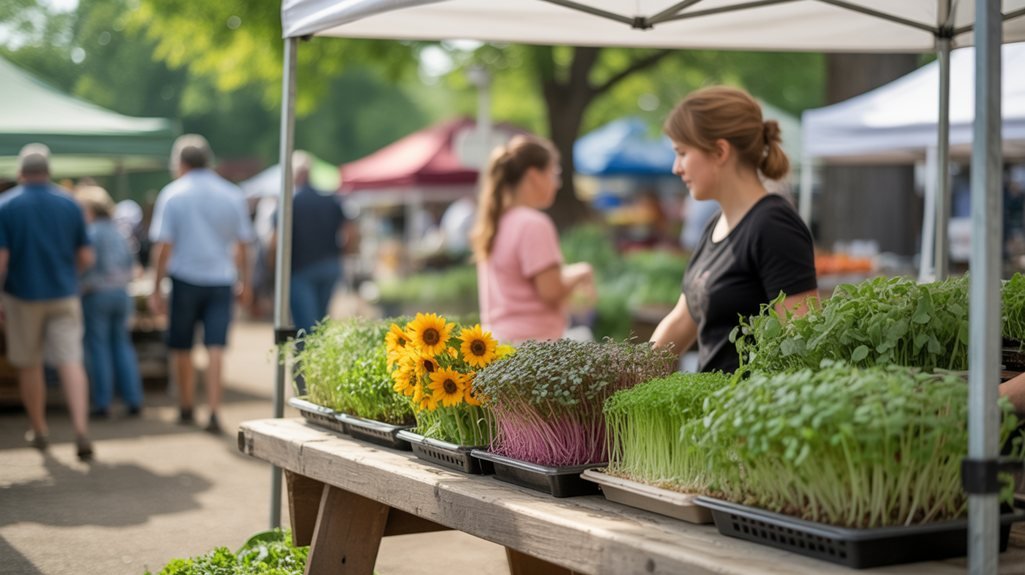
Arkansas lists roughly 89 farmers markets in the USDA database, with primary selling seasons running April through October and concentrated activity in Little Rock, Fayetteville, and Bentonville. You’ll find health-conscious, culinary-focused buyers along the Fayetteville-Bentonville corridor, making it particularly well-suited for microgreens. Before applying, evaluate vendor density, booth fees ranging from $15 to $75 daily, and application deadlines carefully—arriving late risks losing an entire season. The sections ahead break down exactly how to move forward strategically.
Key Takeaways
- Arkansas has approximately 89 farmers markets listed in the USDA database, with peak selling season running April through October.
- Little Rock has the highest market concentration; Fayetteville and Bentonville attract health-conscious buyers with stronger specialty-produce demand.
- Target markets with no existing microgreens vendor, weekly frequency, and health-oriented customer demographics for best sales results.
- Top-selling microgreen varieties at markets include sunflower, pea shoots, and radish, which convert browsers into buyers quickly.
- Use the MGW Market Finder at markets.microgreensworld.com to filter Arkansas markets by location and identify viable vendor opportunities.
Farmers Markets in Arkansas for Microgreens Vendors
Arkansas has roughly 89 farmers markets listed in the USDA database, which means you’re working with a meaningful number of potential venues before you even make a single call.
The season runs primarily spring through fall, concentrated in metropolitan corridors like Little Rock, Fayetteville, and Bentonville, where foot traffic and consumer purchasing frequency tend to support specialty produce vendors more reliably than rural satellite markets.
Understanding both the density of available markets and the seasonal window they operate within lets you build a realistic entry strategy rather than showing up unprepared.
Why Arkansas Markets Are Worth Your Attention
Roughly 89 farmers markets operate across Arkansas, and that number carries real weight for a microgreens vendor who’s still building a customer base. Farmers markets Arkansas operates span urban corridors like Little Rock and Fayetteville as well as smaller regional stops, giving you genuine geographic flexibility when you’re deciding where to test your product and pricing. That distribution matters because it lets you move strategically rather than committing everything to one saturated location.
The microgreens farmers market landscape here runs primarily spring through fall, which aligns well with production cycles for most cool and warm-season varieties. Arkansas shoppers in these markets skew toward health-conscious buyers who already understand specialty produce, which shortens the education gap you’d otherwise face when introducing microgreens to an unfamiliar audience.
What the Arkansas Market Season Looks Like
Before you commit to a production schedule, you need a clear picture of when Arkansas markets actually run, because the season shapes everything from your seeding calendar to your cash flow timing.
Most farmers markets in Arkansas open between April and May, running through October, with some urban markets in Little Rock and Fayetteville extending into November. A microgreens farmers market vendor operating in this window has roughly six months of consistent selling opportunity. Bentonville markets tend to draw strong summer traffic, which rewards vendors who maintain steady production through July heat. Winter markets exist but remain limited, so plan your slower months accordingly.
Understanding this cycle lets you align your grow room output precisely with peak demand rather than producing speculatively outside active selling periods.
How to Find the Right Market in Arkansas

Selecting the right market requires you to evaluate several operational factors before you submit a single application, including customer traffic patterns, vendor fee structures, and whether the market’s existing product mix leaves genuine demand for fresh microgreens.
Arkansas concentrates much of its market activity around Little Rock, where established urban markets draw consistent weekly foot traffic, and around Fayetteville and Bentonville, where the northwest corridor’s growth has produced a competitive but high-volume vendor environment.
You’ll save considerable time by mapping these regional clusters against your production capacity and delivery range before committing to an application.
What to Look for Before You Apply
Not every farmers market in Arkansas is the right fit for a microgreens vendor, and applying to the wrong one wastes your time, your application fee, and often a full season of opportunity. Before you submit anything, evaluate each market against criteria that actually affect your sell-through rate.
| Factor | Strong Market | Weak Market |
|---|---|---|
| Customer Demographics | Health-conscious, culinary buyers | General discount shoppers |
| Vendor Competition | No current microgreens vendor | Multiple produce competitors |
| Market Frequency | Weekly operation | Monthly or seasonal only |
Knowing how to get a farmers market booth starts with this kind of pre-application audit. As a microgreens vendor in Arkansas, your positioning depends entirely on choosing markets where your product has genuine demand before you ever pay a fee.
Markets Near Little Rock
Little Rock concentrates more farmers market activity than any other metro area in Arkansas, which makes it both an attractive target and a competitive one for a new microgreens vendor. The River Market Farmers Market operates weekly downtown and draws consistent foot traffic from a health-conscious demographic, the kind of buyer already searching for microgreens for sale Arkansas before they ever reach your table.
Hillcrest Farmers Market runs a tighter, curated vendor list, meaning your application needs to demonstrate clear product differentiation. If you’re positioning yourself at any little rock farmers market, research vendor density before you apply. Knowing which markets already carry microgreens tells you where you face saturation and where you have genuine room to establish a presence.
Markets Near Fayetteville and Bentonville
The Fayetteville and Bentonville corridor consistently draws microgreens vendors for good reason, given that northwest Arkansas carries one of the highest concentrations of health-oriented consumers in the state, a demographic that correlates directly with stronger microgreens demand.
The Fayetteville farmers market operates on the Fayetteville square and maintains a competitive vendor application process, so you’ll want to apply early and document your production capacity clearly.
The Bentonville farmers market reflects similar demand patterns, influenced partly by the area’s transplant population from larger metro regions already familiar with specialty produce.
Both markets reward vendors who show up consistently and position their product with clear growing method transparency. Employ the free Market Finder at [markets.microgreensworld.com](https://markets.microgreensworld.com) to identify current openings in this corridor.
What to Expect When You Get There

Once you’ve secured a vendor spot, the operational realities of Arkansas farmers markets become immediately apparent, particularly around booth fees, which typically range from modest flat-rate daily fees to seasonal contracts that vary significantly between a small community market in Jonesboro and an established metro market in Little Rock or Fayetteville.
Your setup decisions, including table configuration, signage visibility, and product display height, directly influence how quickly your microgreens move during peak foot traffic hours, which in Arkansas markets tends to concentrate in the early morning window.
Understanding which product varieties perform consistently well at Arkansas markets, such as sunflower, pea shoots, and radish, versus those requiring more customer education, shapes both your grow schedule and the inventory you commit to hauling each market day.
Booth Fees and Setup Basics
Booth fees across Arkansas farmers markets vary more than most new vendors anticipate, and understanding that range before you commit to a market saves you from budget surprises that can undermine an otherwise solid launch.
At smaller community markets, daily fees typically run $15 to $25, while established farmers markets in Arkansas cities like Little Rock or Bentonville charge $30 to $75 per market day. Some markets require annual membership fees alongside daily rates.
For your microgreens booth at a farmers market, you’ll need a six-foot table, a canopy rated for wind, weights securing each leg, and signage displaying your business name.
Health department rules in Arkansas may also require a cottage food registration or handler’s permit depending on how you’re processing your product before sale.
What Moves at Arkansas Markets
Knowing your booth costs and permit requirements gets you through the gate, but what actually sells at Arkansas farmers markets shapes whether you cover those costs or struggle to.
Farmers market Arkansas vendors consistently report that familiar greens, specifically sunflower and pea shoots, convert browsers into buyers faster than exotic varieties.
As you work to sell microgreens at farmers market settings across Little Rock or Fayetteville, lead with recognizable product names and visible taste samples where regulations permit.
Arkansas shoppers respond to practical utility, so positioning your microgreens as cooking ingredients rather than novelty items drives repeat purchases.
Radish and broccoli microgreens perform steadily across seasons, while specialty varieties attract chefs and wholesale buyers who visit markets specifically sourcing differentiated product.
Getting Your Application Ready
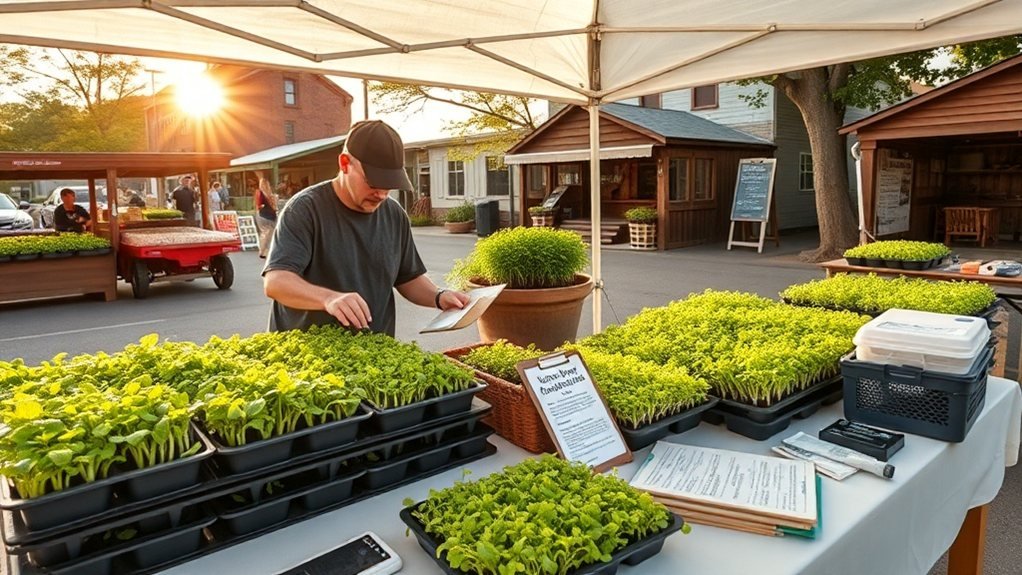
When you submit a market application, the manager reviewing it’s evaluating whether your product fits their vendor mix, your operation meets basic food safety standards, and your presentation will hold up under scrutiny.
Most rejections stem not from poor product quality but from incomplete documentation, vague product descriptions, or missing proof of compliance with Arkansas cottage food or commercial kitchen requirements.
Treat your application as a professional case for your business, assembling your liability insurance certificate, product list with accurate weights and pricing, and any relevant certifications before you write a single word on the form.
What Market Managers Want to See
Market managers in Arkansas are evaluating your application before they’ve ever seen your product, which means the paperwork you submit is your first real pitch.
As a microgreens grower Arkansas applicants compete in a curated vendor pool, so your application must demonstrate operational legitimacy and market readiness simultaneously.
Managers typically want proof of your cottage food registration or commercial kitchen certification, a complete product list with pricing, and your insurance documentation.
A farmers market vendor Arkansas coordinators respect is one who submits clean, complete paperwork on the first attempt, without follow-up emails requesting missing items.
Include a brief sourcing statement explaining that you grow your product locally, because managers use this to justify your spot to customers who ask about farm origin.
Common Mistakes to Avoid
Even experienced growers lose vendor spots in Arkansas not because their product is weak, but because their application signals disorganization before a manager ever evaluates what they’re growing. When you’re focused on selling microgreens locally, procedural errors carry disproportionate weight.
| Mistake | Why It Matters | Fix |
|---|---|---|
| Missing insurance documentation | Disqualifies instantly | Secure before applying |
| Vague product descriptions | Signals inexperience | List specific varieties |
| Ignoring market theme fit | Shows poor research | Review vendor rosters first |
Knowing how to sell microgreens successfully means treating your application as your first product sample. Arkansas market managers evaluate professionalism before they evaluate produce, so your paperwork should reflect the same precision your growing operation does.
Use the Market Finder to Shortcut Your Search

Searching for vendor opportunities across Arkansas’s 89 USDA-listed farmers markets doesn’t have to mean hours of cold calls and dead-end website searches. The MGW Market Finder at markets.microgreensworld.com consolidates that data into a searchable format, letting you filter by location and identify viable markets before you invest time in a farmers market vendor application.
If you’re building a microgreens market stand in Northwest Arkansas, for instance, you can isolate Bentonville and Fayetteville markets specifically, rather than sorting through statewide results manually. This targeted approach matters because each application window is finite, and arriving late to a market’s vendor process typically means waiting an entire season.
Employ the tool now, identify your top targets, and get your application submitted while spots remain open.
Frequently Asked Questions
Can I Sell Microgreens at Arkansas Farmers Markets Year-Round?
You can’t count on year-round markets in Arkansas. Most run spring through fall, so you’ll need to scout carefully for the few winter options or plan your production schedule around the seasonal gaps.
Do Arkansas Markets Require Me to Grow What I Sell?
Most Arkansas markets require you to grow what you sell. You’ll typically sign a producer-only agreement when you apply, and some markets carry out farm inspections to verify compliance before approving your vendor spot.
How Much Does a Vendor Booth Space Typically Cost in Arkansas?
You’ll typically pay $15 to $40 per day at most Arkansas markets, though established markets in Bentonville or Little Rock can run higher. Confirm exact fees directly with each market manager before applying.
Are There Arkansas Markets That Accept Online or Advance Orders?
Some Arkansas markets do accept advance or online orders, but you’ll need to confirm directly with each market manager since policies vary widely and change seasonally.
Can Two Microgreens Vendors Sell at the Same Arkansas Market?
Yes, two microgreens vendors can sell at the same Arkansas market. Market managers decide vendor mix, so you’ll want to ask directly about their current vendor roster before applying.
Wrap-up
You’ve got the information you need to move forward. Arkansas’s market landscape is active, regionally varied, and open to specialty producers like microgreens vendors who show up prepared. Whether you’re targeting Fayetteville’s high-traffic circuit or a smaller community market closer to home, your next step is straightforward: identify your best options, prepare your application materials, and submit before slots close. The market’s there. Now you need to be.
Leave a Reply