
Colorado offers roughly 198 USDA-listed farmers markets, with the Front Range corridor—Denver, Boulder, and Fort Collins—concentrating the strongest microgreens demand, premium price tolerance, and repeat customer behavior in the state. You’ll find peak attendance in July and August, though shoulder months like May and September present lower vendor competition. Sunflower, pea shoots, and radish consistently perform well across these urban markets. The details ahead will sharpen your approach considerably.
Key Takeaways
- Colorado has approximately 198 USDA-listed farmers markets, with Denver metro alone hosting 60–70 active markets across multiple municipalities.
- Top-selling microgreens varieties for Colorado Front Range markets include sunflower, pea shoots, and radish, which generate strong repeat buyers.
- Most established Denver and Boulder markets require liability insurance certificates, food safety compliance documentation, and a specified product variety list.
- Booth fees range from $15–$30 daily at smaller community markets to $50–$150 weekly at established Denver and Boulder markets.
- Shoulder months like May and September offer lower vendor competition, while peak attendance concentrates in July and August.
Farmers Markets in Colorado for Microgreens Vendors
Colorado’s approximately 198 USDA-listed farmers markets represent a substantive commercial opportunity for microgreens vendors, particularly given the state’s concentrated demand in urban corridors like Denver, Boulder, and Fort Collins.
You’re working within a market calendar that runs primarily spring through fall, which means your production schedule and vendor applications need to align with seasonal opening windows that most market managers post months in advance.
Understanding both the scale of available venues and the rhythms of Colorado’s selling season gives you a practical foundation for targeting the right markets before spots fill.
Why Colorado Markets Are Worth Your Attention
Farmers markets across Colorado have consistently demonstrated strong consumer demand for specialty produce, and microgreens occupy a particularly advantageous position within that landscape.
As a microgreens vendor in Colorado, you’re entering a market ecosystem where health-conscious buyers actively seek nutrient-dense, locally grown products. The denver farmers market circuit alone draws hundreds of thousands of visitors annually, creating substantial vendor opportunities across multiple operating days.
Colorado’s broader demographic profile, characterized by high educational attainment and above-average disposable income in urban corridors, correlates directly with willingness to pay premium prices for specialty crops. Boulder’s Saturday markets, for instance, regularly sustain vendors selling value-added produce at competitive price points.
Understanding this regional consumer behavior gives you a meaningful strategic advantage before you’ve even submitted your first vendor application.
What the Colorado Market Season Looks Like
Knowing where Colorado consumers spend their dollars is only part of the equation; understanding *when* they show up at markets shapes everything about how you plan your growing calendar.
Most farmers markets in Colorado operate from late May through early October, with peak attendance concentrated in July and August. Denver’s larger markets, including the Cherry Creek Farmers Market, run nearly year-round, giving you extended selling windows that most Colorado vendors can’t access elsewhere.
Fort Collins and Boulder markets follow tighter seasonal schedules, typically wrapping by late September. If you’re targeting a microgreens farmers market debut, plan your production schedule backward from opening weekend.
Colorado’s shoulder months, particularly May and September, often have lower vendor competition, which makes them strategically useful entry points.
How to Find the Right Market in Colorado

Before you submit a single application, you need to evaluate each market against criteria that directly affect your viability as a vendor: customer foot traffic, competing microgreens sellers already established in the stall lineup, and the market’s operational season relative to your production capacity.
Denver’s density of markets, including well-established venues like the Cherry Creek Farmers Market and the South Pearl Street Farmers Market, gives you multiple entry points across different customer demographics and price tolerances.
Boulder and Fort Collins present a distinct strategic profile, where health-conscious, higher-income consumer bases have historically demonstrated strong receptivity to specialty produce like microgreens, making those markets particularly worth prioritizing if you’re still building your initial customer base.
What to Look for Before You Apply
Applying to the wrong market wastes your time, your application fee, and sometimes months on a waitlist that leads nowhere. Before you submit anything as a farmers market vendor in Colorado, pull the market’s vendor category data. Some Colorado markets cap specialty produce vendors at two or three slots total, meaning your microgreens booth at a farmers market competes directly against established growers who’ve held those spots for years.
Check average weekly attendance, not just the market’s claimed numbers. A Fort Collins market drawing 400 shoppers consistently outperforms a Denver market that peaks once seasonally. Verify whether the market requires liability insurance before approval, because Colorado’s larger markets almost universally do. Knowing these details before applying separates vendors who get accepted from those who keep reapplying indefinitely.
Markets Near Denver
Denver’s metro area concentrates more farmers market opportunities than any other region in Colorado, with roughly 60 to 70 active markets operating across the city proper, its suburbs, and surrounding municipalities like Aurora, Lakewood, and Englewood.
For farmers markets colorado microgreens vendors, this density creates meaningful options for testing different customer bases and price points. Denver farmers market vendors who work the Cherry Creek market encounter a high-income demographic with demonstrated interest in specialty produce, while suburban markets in Lakewood tend toward regulars who prioritize consistency over novelty.
Understanding these distinctions before you apply saves you from placing yourself in the wrong environment entirely. Each market carries its own vendor culture, application timeline, and competitive landscape worth analyzing before you commit.
Markets Near Boulder and Fort Collins
Along the Front Range corridor north of Denver, Boulder and Fort Collins each support distinct market ecosystems that reward microgreens vendors who understand their structural differences before plunging in.
The boulder farmers market operates under a selective juried model, meaning your application competes against established vendors, and product presentation standards run high. Boulder shoppers have sophisticated palates, which raises the baseline expectation for variety and quality.
The fort collins farmers market draws a different demographic, blending university-adjacent consumers with longtime residents who prioritize local sourcing. Fort Collins also hosts multiple market locations across the season, giving you more than one entry point if your first application doesn’t land.
Research each market’s vendor guidelines carefully before submitting, because requirements between these two cities diverge more than proximity suggests.
What to Expect When You Get There
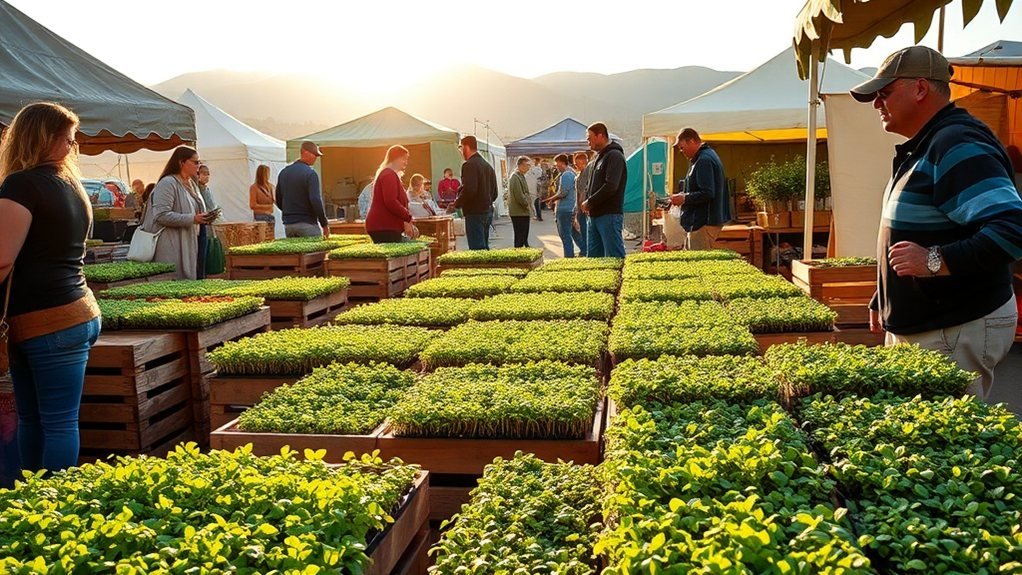
Once you secure a spot at a Colorado farmers market, you’ll encounter booth fees that typically range from a flat daily rate to seasonal contracts, with urban markets in Denver or Boulder often commanding higher fees than smaller community markets in rural areas.
Setup requirements vary by market, but most expect a professional presentation: a canopy, signage, and organized product displays that meet the aesthetic standards other vendors have already established.
Understanding what actually sells in Colorado markets matters as much as showing up, because microgreens varieties like sunflower, pea shoots, and radish tend to perform well with health-conscious Front Range shoppers who frequent these markets specifically for fresh, locally grown produce.
Booth Fees and Setup Basics
When you finally secure a vendor spot at a Colorado farmers market, one of the first practical realities you’ll face is the booth fee structure, which varies considerably depending on the market’s size, location, and organizational model. Smaller community markets often charge $15 to $30 per day, while established Denver or Boulder markets can run $50 to $150 weekly. Your farmers market vendor application typically discloses the fee schedule upfront, so review it carefully before committing.
Most markets require a standard 10×10 canopy, weights for wind stability, and a visible price display. If you’re selling microgreens for sale colorado customers expect variety, so bring sufficient inventory. Colorado’s wind and afternoon sun make a weighted, shaded setup non-negotiable rather than optional.
What Moves at Colorado Markets
Microgreens consistently perform well at Colorado farmers markets, but performance isn’t uniform across all varieties or market contexts.
When you sell microgreens at farmers market settings in Denver or Boulder, sunflower and pea shoots tend to generate repeat buyers quickly, largely because customers recognize them from restaurant menus and health-focused media. Radish and broccoli move steadily in Fort Collins, where the demographic skews toward nutrition-literate shoppers who ask direct questions about growing methods.
Local microgreens Colorado customers prioritize tend to be varieties with visible texture and vivid color, which photographs well and draws booth traffic organically.
Clamshell packaging at consistent gram weights also reduces transaction friction significantly, allowing you to move volume without extended negotiation at each sale.
Getting Your Application Ready

Your application is the market manager‘s first and often only basis for evaluating whether you’re a credible vendor, so it functions less as a formality and more as a professional case file.
Most Colorado market managers want documented proof of your production setup, a clear product list with varietals specified, and evidence that you understand basic food safety compliance, including whether your state cottage food exemption covers your specific microgreens offerings.
Vendors who submit vague descriptions, inconsistent pricing structures, or incomplete insurance certificates are routinely passed over, even when their product quality is strong enough to compete.
What Market Managers Want to See
Getting into a Colorado farmers market takes more preparation than most new vendors expect, and market managers are evaluating your application against a competitive field of established sellers. Knowing how to get a farmers market booth means understanding exactly what managers prioritize before you submit anything.
| What Managers Evaluate | What You Need Ready |
|---|---|
| Product category fit | Microgreens variety list |
| Food safety compliance | Colorado cottage food or commercial license |
| Visual booth presentation | Photos of your setup |
| Vendor reliability signals | References or prior market history |
For farmers market Colorado vendors, presenting incomplete documentation is the most common reason applications stall. Your application package should read like a business case, not a hobbyist inquiry.
Common Mistakes to Avoid
Even experienced producers stumble at the application stage, not because their microgreens aren’t market-ready, but because they treat the submission as a formality rather than a structured argument for why they belong at that market.
When you’re focused on selling microgreens locally, incomplete documentation is the most common disqualifier, particularly missing cottage food permits or unverified grow logs.
Many vendors pursuing how to sell microgreens for the first time underestimate how thoroughly Colorado market managers cross-reference submitted materials against stated production capacity.
Submitting a generic application to multiple Denver or Boulder markets simultaneously, without tailoring your variety list or production volume to each market’s specific vendor gaps, signals inexperience that managers recognize immediately and penalize accordingly.
Use the Market Finder to Shortcut Your Search

Searching through 198 markets one by one would cost you time that’s better spent growing, and that’s precisely where the MGW Market Finder cuts through the noise. As a microgreens grower colorado vendors compete in, you need geographic precision, not guesswork.
| What You Enter | What You Get |
|---|---|
| Your zip code | Nearby markets ranked by proximity |
| State filter | Colorado-specific listings only |
Use these results to cross-reference your microgreens market stand capacity against each market’s vendor density. A market running fifteen produce vendors already may not need another. The Finder surfaces that context quickly, letting you prioritize applications strategically rather than reactively.
Start your search now at [markets.microgreensworld.com](https://markets.microgreensworld.com).
Frequently Asked Questions
Can I Sell Microgreens at Colorado Markets Without a Commercial Kitchen?
You can sell microgreens at Colorado farmers markets without a commercial kitchen because they’re classified as an exempt cottage food product, but verify your specific market’s rules since individual managers sometimes set stricter requirements.
How Early Should I Arrive to Set up My Microgreens Booth?
Arrive 90 minutes before opening. You’ll need time to unload, arrange your trays, set up signage, and troubleshoot anything unexpected before customers walk in. Rushed setups cost you sales.
Do Colorado Farmers Markets Require Vendors to Grow Everything Themselves?
Most Colorado markets require a producer-only pledge, meaning you’ve grown what you’re selling. Verify each market’s specific rules before applying, since enforcement and definitions vary by market manager.
What Happens if My Application Gets Rejected the First Time?
A rejection isn’t final. Ask the market manager for specific feedback, fix whatever they flagged, and reapply next season. Most Colorado markets accept new vendors annually, so you’ve got another shot coming.
Can I Vend at Multiple Colorado Markets on the Same Weekend?
Yes, you can vend at multiple Colorado markets on the same weekend, but you’ll need enough product, reliable help, and schedules that don’t overlap. Most growers start with one market before splitting weekends.
Wrap-up
You’ve got the product and now you need the right venue to move it. Colorado’s market landscape rewards vendors who research before they apply, choose markets aligned with their current capacity, and approach managers with a complete, professional application. Utilize the market finder at markets.microgreensworld.com to identify your best-fit options, narrow your list strategically, and get into a market where your microgreens can build consistent, repeat demand.
Leave a Reply