
South Dakota’s approximately 61 USDA-listed farmers markets offer microgreens vendors a structured entry point into direct sales, with the densest activity concentrated in Sioux Falls, Rapid City, and Aberdeen. You’ll find limited microgreens competition across most markets, making fresh specialty greens a strategically underrepresented category worth targeting. The season runs predominantly late May through October, compressing your production and application timelines considerably. The sections ahead break down exactly how to negotiate each stage of the process.
Key Takeaways
- South Dakota has approximately 61 USDA-listed farmers markets, with dense activity clustered in Sioux Falls, Rapid City, and Aberdeen.
- Fresh specialty greens are significantly underrepresented at most markets, giving microgreens vendors a competitive advantage over other produce sellers.
- Market season runs primarily late May through October, requiring production schedules planned several weeks before opening day.
- Vendor slots in competitive markets like Sioux Falls fill early, making timely applications across multiple markets essential.
- Use the MGW Market Finder at markets.microgreensworld.com to efficiently filter and compare available vendor opportunities statewide.
Farmers Markets in South Dakota for Microgreens Vendors
South Dakota’s approximately 61 USDA-listed farmers markets represent a concentrated, underserved opportunity for microgreens vendors operating in a state where fresh, specialty produce vendors remain relatively scarce.
You’ll find the densest market activity clustered in Sioux Falls, Rapid City, and Aberdeen, which function as the primary commercial hubs where consumer foot traffic justifies a consistent vendor presence.
The state’s market calendar runs predominantly through the summer season, meaning your planning window is defined and your competition for available vendor slots tends to compress into a predictable annual cycle.
Why South Dakota Markets Are Worth Your Attention
If you’re growing microgreens and looking for markets worth your time, South Dakota presents a more substantial opportunity than its population density might suggest. The USDA database lists approximately 61 farmers markets south dakota vendors can access, concentrated in Sioux Falls, Rapid City, and Aberdeen, where foot traffic and repeat customer density justify the operational investment.
At a microgreens farmers market booth, you’re typically competing against conventional produce vendors who can’t match your product’s visual appeal or shelf differentiation. South Dakota’s compressed summer season creates concentrated buying windows, meaning customers who find your booth return consistently rather than spreading purchases across a longer calendar.
That regularity, combined with limited microgreens competition in most of these markets, makes the state worth serious evaluation before you dismiss it on demographics alone.
What the South Dakota Market Season Looks Like
Knowing that 61 markets exist across the state tells you where opportunity sits, but the seasonal structure of those markets determines whether your growing calendar can actually support them.
South Dakota farmers markets microgreens vendors target operate predominantly from late May through October, with peak activity concentrated in June, July, and August. The compressed growing window matters because your production schedule must anticipate market start dates by several weeks, not days.
Sioux Falls and Rapid City markets typically anchor the season with the most consistent weekly schedules, making them reliable anchors for a microgreens vendor South Dakota strategy.
Smaller regional markets often run bi-weekly or monthly, which affects how you allocate harvest volume and manage shelf life across multiple simultaneous commitments.
How to Find the Right Market in South Dakota

Before you apply to any market in South Dakota, you need to assess vendor density, customer traffic patterns, and whether the market’s existing product mix leaves genuine space for microgreens. Sioux Falls supports multiple active markets across different neighborhoods, which means you can often find one underserved by fresh specialty produce even if a closer option is already saturated. Rapid City and Aberdeen each anchor smaller but consistent regional markets where microgreens remain a relatively uncommon offering, giving you a measurable entry advantage if you approach the application process with documented production capacity and clear pricing.
What to Look for Before You Apply
Choosing the right farmers market in South Dakota isn’t simply a matter of finding the nearest one with an open vendor slot. Before you pursue how to get a farmers market booth, evaluate each market against criteria that directly affect your sell-through rate.
| Factor | Why It Matters |
|---|---|
| Foot traffic volume | Determines your realistic sales ceiling |
| Vendor category mix | Reveals whether you’ll face direct competition |
| Market frequency | Weekly markets build customer loyalty faster |
| Application requirements | Some markets require proof of production |
| Fee structure | Affects your break-even calculation |
As a farmers market vendor in South Dakota, you’re operating inside a compressed summer season, so every market selection decision carries real weight. Choose strategically, not conveniently.
Markets Near Sioux Falls
Once you’ve assessed what makes a market worth pursuing, geography becomes your next filter, and the Sioux Falls metro area gives you more options to evaluate than almost anywhere else in South Dakota.
The Sioux Falls farmers market ecosystem includes multiple weekly venues operating through the summer season, which means you can test one location while keeping alternatives in reserve.
Vendors offering microgreens for sale in South Dakota consistently find that Sioux Falls supports higher customer familiarity with specialty produce than smaller regional markets. That familiarity translates into shorter education cycles at the table.
If you’re mapping your outreach, start with the highest-traffic Sioux Falls venues first, then work outward systematically. Employ the MGW Market Finder at markets.microgreensworld.com to pull the full current list before you contact anyone.
Markets Near Rapid City and Aberdeen
Rapid City and Aberdeen represent two distinct market environments that reward different vendor approaches, and understanding that distinction before you make contact saves you from misaligned pitches. The rapid city farmers market draws a tourism-adjacent crowd alongside locals, which means your presentation and product variety carry more weight than in purely residential markets.
Aberdeen operates differently. The aberdeen farmers market serves a tighter regional community where repeat customer relationships develop faster, and vendors who commit consistently tend to build loyalty more quickly.
Before you approach either market, verify current vendor availability through the USDA database, since application windows and available booth inventory shift annually. Employ the free Market Finder at [markets.microgreensworld.com](https://markets.microgreensworld.com) to pull current listings for both cities before reaching out.
What to Expect When You Get There

Once you’ve identified a South Dakota market that fits your production schedule, the operational realities of vending will shape how you prepare your booth, price your product, and decide whether to return. Booth fees at South Dakota markets typically range from modest daily rates at smaller community markets to higher seasonal commitments at established venues in Sioux Falls or Rapid City, so understanding that cost structure before you commit protects your margins.
What actually moves at these markets tends to skew toward familiar, visually compelling varieties like sunflower and pea shoots, particularly with shoppers who already buy local produce regularly and respond to a vendor who can speak to how the product was grown.
Booth Fees and Setup Basics
Before you secure a vendor spot at any South Dakota farmers market, you need a clear picture of what the financial and logistical baseline actually looks like.
Booth fees for farmers market South Dakota vendors typically range from $15 to $40 per market day, with seasonal contracts often discounting that rate. Your microgreens booth farmers market setup should include a six-foot table, a canopy rated for wind, and product signage that communicates variety and freshness quickly.
South Dakota’s open-air venues expose you to temperature swings that affect shelf life, so insulated trays or a cooler positioned under the table matters operationally.
Confirm whether your market requires a state cottage food registration or a certified grower designation before your first setup day.
What Moves at South Dakota Markets
When you pull up to a South Dakota farmers market for the first time, the product mix you see on surrounding tables will tell you more about your competitive position than any market research report can. Most vendors carry root vegetables, preserved goods, and baked items, leaving fresh specialty greens significantly underrepresented. This gap is precisely where local microgreens south dakota growers find their footing, because shoppers encounter your product with genuine curiosity rather than comparison fatigue.
When you sell microgreens at farmers market events in Sioux Falls or Rapid City, sunflower and pea shoots tend to draw immediate tactile interest, prompting questions that convert into sales. Understanding what surrounds your table helps you position your variety selection before the season begins.
Getting Your Application Ready
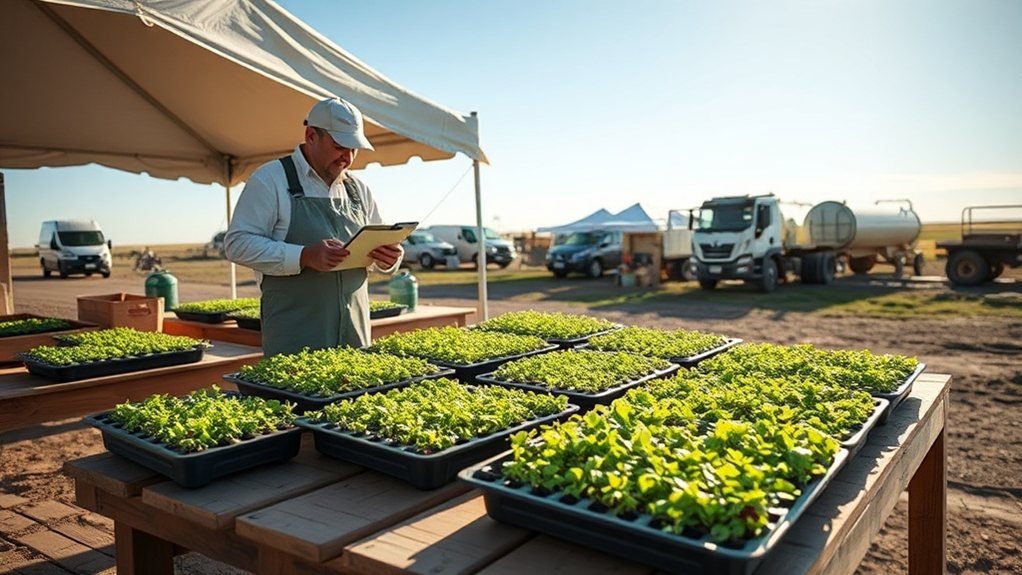
Most South Dakota market managers review applications with the same core criteria in mind: proof of production, a clear product description, and evidence that you understand basic food safety compliance.
Your application is, functionally, your first pitch, so the way you present your microgreens operation, including your growing inputs, variety offerings, and packaging approach, signals whether you’re a low-maintenance vendor or a liability.
Growers who submit incomplete applications, omit their production location, or fail to address liability insurance requirements are routinely passed over, even when the product itself is competitive.
What Market Managers Want to See
Market managers in South Dakota are evaluating more than your product when they review an application; they’re assessing whether you’ll be a reliable, professional presence at their market week after week.
Your farmers market vendor application should demonstrate operational consistency, not just growing capability. Include your production schedule, showing you can supply product across the summer season without significant gaps.
When selling microgreens locally, specificity matters: list your varieties, your growing medium, and whether you employ certified organic inputs.
Managers reviewing applications from Sioux Falls to Aberdeen have seen vague submissions before, and yours needs to stand apart. A clear, complete application signals that you understand the commitment market participation requires, which is ultimately what secures your spot.
Common Mistakes to Avoid
Preparing a farmers market application without understanding where other growers commonly fail puts you at an immediate disadvantage, particularly in competitive South Dakota markets like Sioux Falls, where vendor slots fill early in the season.
Many microgreens growers submit incomplete applications, omitting proof of liability insurance or cottage food compliance documentation, which disqualifies them immediately.
As a microgreens grower in South Dakota, you should also avoid generic product descriptions, since managers reviewing how to sell microgreens vendor proposals consistently favor applicants who specify varieties, growing practices, and harvest schedules.
Submitting a single application to one market rather than targeting multiple markets simultaneously is another costly inefficiency.
South Dakota’s roughly 61 USDA-listed markets represent real redundancy in your favor, so employ that breadth strategically rather than narrowing your options prematurely.
Use the Market Finder to Shortcut Your Search

Searching for available vendor slots across South Dakota’s roughly 61 farmers markets by hand is a slow, inefficient process, particularly when you’re trying to compare multiple cities or assess seasonal timing simultaneously.
The MGW Market Finder at markets.microgreensworld.com consolidates USDA data into a searchable format, letting you filter by location and evaluate options relevant to your microgreens business without manually cross-referencing county websites or calling market managers blind.
If you’re planning your microgreens market stand around Sioux Falls‘ denser market concentration versus a smaller Aberdeen venue, the tool surfaces that distinction immediately.
You’re not guessing at what exists. You’re working from structured data, making informed decisions about where your product fits before you ever submit an application.
Frequently Asked Questions
Do South Dakota Farmers Markets Require a State Food Handler’s Permit?
South Dakota doesn’t require a statewide food handler’s permit for microgreens vendors, but individual markets set their own rules, so you’ll need to confirm requirements directly with each market manager before applying.
Can I Share a Booth Space With Another Vendor?
Sharing booth space is allowed at many South Dakota markets, but you’ll need written permission from the market manager first. Each co-vendor typically must meet the same licensing and product requirements independently.
What Happens if Extreme Weather Forces a Market to Cancel?
When extreme weather cancels a market, you’re usually out that day’s revenue with no rollover. Check your vendor agreement for the market’s cancellation policy before you sign so you’re not caught off guard.
Are There Markets That Run Indoors During South Dakota Winters?
A few South Dakota markets do move indoors for winter, but they’re rare. Check each market’s seasonal details directly at markets.microgreensworld.com to find year-round or cold-weather indoor options near you.
How Early Should I Arrive to Set up Before Market Opens?
Arrive at least 90 minutes before opening. You’ll need time to unload, arrange your display, and handle anything unexpected. Most experienced vendors won’t rush setup, and neither should you.
Wrap-up
You’ve got a clear path forward in South Dakota‘s microgreens market, but execution depends on timing and preparation. Start your research early, identify markets near Sioux Falls, Rapid City, or Aberdeen, and submit applications before spring waitlists close. Employ available tools like the USDA market database to shortcut the process. If you’re organized and proactive, you’ll secure a vendor slot before other growers recognize the opportunity.
Leave a Reply