
Wisconsin’s 189 USDA-listed farmers markets give you a structured seasonal window—roughly May through October—to reach health-conscious urban buyers, suburban weekend shoppers, and rural communities simultaneously. Markets concentrate around Madison, Milwaukee, and Green Bay, each with distinct buyer behaviors; sunflower and pea shoots convert first-time buyers most reliably, while radish and broccoli gain traction among repeat customers. Strategic market selection, rather than exhaustive directory browsing, determines long-term viability—and what follows will sharpen that selection considerably.
Key Takeaways
- Wisconsin has approximately 189 USDA-listed farmers markets, with peak microgreens demand running June through September across spring-to-fall market seasons.
- Madison, Milwaukee, and Green Bay offer the highest concentration of markets, with urban buyers favoring health-conscious specialty products like microgreens.
- Sunflower and pea shoots perform best with first-time buyers, while radish and broccoli gain traction among returning, culinary-savvy customers.
- Market applications require production documentation, product pricing, food handler certifications, and booth setup photos to avoid delays or rejection.
- Booth fees range from $10–$75 per day depending on market size, making fee-to-sales-volume comparisons essential before committing to a market.
Farmers Markets in Wisconsin for Microgreens Vendors
Wisconsin’s approximately 189 USDA-listed farmers markets represent a substantial commercial infrastructure for microgreens vendors seeking consistent, repeat-customer sales channels.
The state’s market calendar operates primarily across spring through fall, concentrating vendor opportunity within a defined seasonal window that rewards early planning and strategic market selection.
If you’re already producing and looking to move volume, the market density around Madison, Milwaukee, and Green Bay gives you multiple viable entry points worth evaluating now.
Why Wisconsin Markets Are Worth Your Attention
If you’re already producing microgreens at scale, Wisconsin gives you a market infrastructure worth taking seriously. The USDA database lists approximately 189 farmers markets wisconsin vendors can access, concentrated in Madison, Milwaukee, and Green Bay. That density matters when you’re building a multi-market route.
| Market Concentration | Key City |
|---|---|
| Southeast hub | Milwaukee |
| South-central hub | Madison |
| Northeast hub | Green Bay |
The microgreens farmers market opportunity here isn’t theoretical. Wisconsin’s urban centers support health-conscious buyer bases, and the spring-through-fall calendar aligns well with peak microgreens production cycles. If you’re rotating trays consistently, you can realistically sustain vendor presence across multiple markets within a single region, maximizing your output without overextending your logistics.
What the Wisconsin Market Season Looks Like
Most Wisconsin farmers markets operate on a spring-through-fall calendar, typically running from May into October, though a handful of year-round indoor markets in Madison and Milwaukee extend that window considerably.
As a microgreens vendor in Wisconsin, you’ll find that peak demand concentrates between June and September, when foot traffic is highest and competing produce is abundant. That saturation actually works in your favor, because microgreens occupy a specialty niche that most other vendors don’t touch.
If you’re targeting farmers markets in Wisconsin, microgreens give you consistent product availability regardless of weather interruptions that affect soil-grown crops. Planning your growing schedule around market start dates, particularly the common mid-May openers, lets you arrive with mature inventory rather than scrambling to catch up after securing your spot.
How to Find the Right Market in Wisconsin
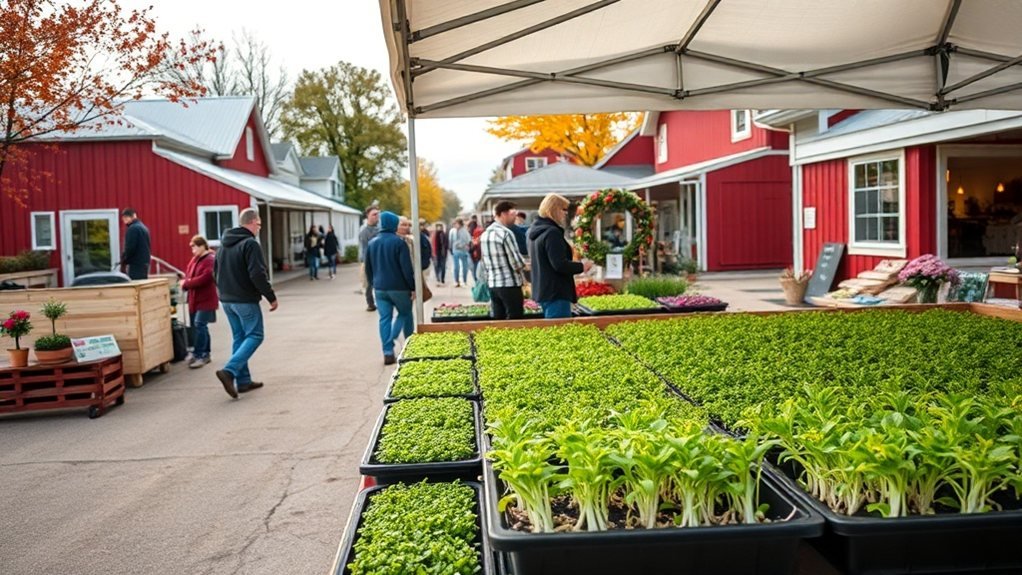
Before you apply to any Wisconsin market, you need to evaluate several operational variables that directly affect your viability as a vendor, including foot traffic patterns, vendor fee structures, and existing competition from other specialty produce sellers. Madison’s network of markets, anchored by the Dane County Farmers’ Market on Capitol Square, operates with high vendor density and selective application processes, meaning your product differentiation as a microgreens grower matters significantly during review. Milwaukee and Green Bay present relatively accessible entry points, with neighborhood markets and regional venues that often have shorter waitlists and more flexible application windows for specialty crop vendors.
What to Look for Before You Apply
Choosing the right Wisconsin farmers market isn’t simply a matter of proximity or convenience — it’s a strategic decision that shapes how quickly your microgreens business gains traction.
Before you submit a single application as a farmers market vendor in Wisconsin, audit each market’s vendor composition. If three other booths already carry microgreens, your differentiation challenge becomes structural, not just presentational.
Examine foot traffic patterns, market tenure, and whether the customer base skews toward culinary-focused buyers. Your microgreens booth at a farmers market positioned near restaurant districts or food co-ops will perform differently than one anchored in a suburban parking lot.
Scrutinize vendor fees against realistic volume, and confirm the market’s operating calendar aligns with your production cycle before committing your application.
Markets Near Madison
Once you’ve assessed what to look for before applying, the Madison metro area gives you one of the more concentrated testing grounds for microgreens in Wisconsin.
The Dane County Farmers’ Market, operating on Capitol Square, draws substantial foot traffic and attracts buyers already familiar with specialty produce, making it a competitive but high-value target.
Surrounding communities like Middleton, Sun Prairie, and Fitchburg run smaller weekly markets where vendor competition is considerably thinner.
If you’re actively searching microgreens for sale wisconsin listings to benchmark your positioning, studying what Madison vendors already carry helps you identify gaps.
Each madison farmers market within this corridor operates under distinct application timelines, so you’ll want current data before committing.
Utilize the free Market Finder at markets.microgreensworld.com to locate every option available.
Markets Near Milwaukee and Green Bay
Across the Milwaukee and Green Bay corridors, the market landscape shifts considerably from what you’d encounter in the Madison metro, and that shift carries real implications for how you position your microgreens operation.
The milwaukee farmers market scene operates within a dense, competitive urban environment where buyer sophistication is high and product differentiation matters more than volume.
Green Bay presents a contrasting dynamic: the green bay farmers market draws a tighter regional customer base, meaning your presence compounds in value across consecutive weeks.
Both corridors reward vendors who understand their specific buyer demographics before applying. You’re not just finding an open table, you’re selecting a commercial context that either accelerates or stalls your growth.
Utilize the free Market Finder at markets.microgreensworld.com to identify current openings across both corridors.
What to Expect When You Get There

Once you secure a spot at a Wisconsin farmers market, you’ll encounter booth fees that typically range from a flat daily rate to a seasonal contract, with urban markets in Madison or Milwaukee often commanding higher fees than smaller community markets in Green Bay’s surrounding counties.
Setup logistics vary by market, but most Wisconsin venues expect vendors to arrive one to two hours before opening, manage their own canopy, tables, and signage, and comply with specific placement rules that organizers enforce consistently.
Knowing which microgreens varieties perform well in your target market’s customer base, such as sunflower and pea shoots at health-conscious urban markets versus milder varieties like radish and broccoli at suburban weekend markets, directly shapes how you structure your growing schedule before the season begins.
Booth Fees and Setup Basics
When you’re budgeting for your first Wisconsin farmers market, booth fees should be among the first operational costs you calculate with precision, because they vary considerably depending on market size, location, and organizational structure. Larger urban markets in Madison or Milwaukee charge more than rural weekly markets.
| Market Type | Typical Fee Range |
|---|---|
| Large urban daily | $35–$75 per day |
| Mid-size seasonal | $20–$45 per day |
| Small rural weekly | $10–$25 per day |
| Annual membership | $200–$600 per season |
Knowing how to get a farmers market booth means understanding that fees are just one variable. Wisconsin farmers market vendors also budget for tent, weights, signage, and display infrastructure before ever selling a tray.
What Moves at Wisconsin Markets
Seasoned Wisconsin vendors will tell you that microgreens don’t market themselves on name recognition alone, because most shoppers at even the larger Madison or Milwaukee markets arrive without a clear understanding of what microgreens are, how to employ them, or why the price point differs from conventional produce.
When you sell microgreens at farmers market events in Wisconsin, your booth becomes an active education point. Sunflower and pea shoots consistently outperform specialty varieties among first-time buyers, because the flavor profile translates immediately without explanation.
Local microgreens Wisconsin customers tend to prioritize freshness indicators, meaning cut-to-order or harvest-dated packaging directly influences purchasing decisions. Radish and broccoli varieties gain traction once you’ve built repeat customers who already understand the product’s culinary utility.
Getting Your Application Ready
Your application is the first substantive data point a market manager has on you, and a poorly constructed submission signals operational immaturity before you’ve sold a single tray.
Most Wisconsin markets, particularly the larger ones in Madison and Milwaukee, require documentation of your production setup, a product list with pricing, and proof of any applicable food handler certifications, so assembling these materials in advance positions you as a credible, prepared vendor.
The most common mistake growers make is submitting incomplete applications, which delays your review cycle and, in competitive markets where vendor slots fill by early spring, can push your start date back an entire season.
What Market Managers Want to See
Market managers in Wisconsin are gatekeepers operating under real constraints, and understanding what drives their decisions will determine whether your application moves forward or sits in a pile.
They’re managing vendor mix, customer expectations, and booth aesthetics simultaneously. When you’re selling microgreens locally, your farmers market vendor application needs to signal that you understand their operational reality, not just your own product enthusiasm.
Demonstrate that your packaging is clean, your pricing is retail-ready, and your booth presents professionally. Madison’s larger markets receive dozens of applications annually, so specificity matters.
Reference their customer base directly, explain how your varieties complement existing produce vendors, and attach clear photos of your setup. Managers approve vendors who reduce their risk, so position yourself accordingly.
Common Mistakes to Avoid
Getting rejected from a Wisconsin farmers market often has less to do with your microgreens themselves and more to do with how your application reads to a manager reviewing it between scheduling calls and vendor disputes.
Submitting vague product descriptions, omitting your microgreens market stand setup details, or failing to demonstrate how you’ll handle food safety documentation are consistent disqualifiers.
Managers evaluating how to sell microgreens vendors into their roster want specificity, not enthusiasm.
Don’t leave pricing structure blank because you’re still deciding.
Don’t submit without confirming your product category aligns with that market’s current vendor gaps.
Applications that arrive incomplete signal operational immaturity before you’ve sold a single tray, and Wisconsin’s more competitive markets in Madison and Milwaukee have no shortage of replacement applicants waiting.
Use the Market Finder to Shortcut Your Search
Searching through Wisconsin‘s 189 USDA-listed farmers markets one by one is the kind of inefficiency that burns time you don’t have, particularly when you’re already managing trays, harvest schedules, and germination cycles. The MGW Market Finder at markets.microgreensworld.com consolidates that data into a searchable tool, letting you filter by location and identify viable opportunities without the manual research burden.
For any microgreens grower Wisconsin-based or otherwise, proximity to your production space matters operationally, since frequent transport degrades shelf life and compresses your margin. Building a sustainable microgreens business depends on selecting markets strategically, not exhaustively browsing directories. Employ the free Market Finder at markets.microgreensworld.com to identify your next Wisconsin market, evaluate your options with precision, and move forward with a focused, informed vendor application strategy.
Frequently Asked Questions
Can I Sell Microgreens at Wisconsin Farmers Markets Without a License?
You can sell microgreens at Wisconsin farmers markets without a license if your gross sales stay under $5,000 annually through the state’s pickle bill cottage food exemption, but verify requirements with your specific market manager.
How Early Should I Arrive to Set up My Microgreens Booth?
Arrive 90 minutes before opening. You’ll need time to unload, arrange your trays, set up signage, and still have a few minutes to breathe before customers walk in.
Do Wisconsin Markets Require Liability Insurance From Microgreens Vendors?
Most Wisconsin markets require it, but the coverage amount varies. Get a general liability policy before you apply — many market managers won’t even review your application without proof of insurance attached.
What Happens if My Microgreens Sell Out Before the Market Ends?
Selling out early is a good problem, but don’t just pack up and leave. Stay at your table, talk to customers, collect contact info, and bring a sign-up sheet for your next market day.
Can I Apply to Multiple Wisconsin Farmers Markets at the Same Time?
Yes, you can apply to multiple Wisconsin farmers markets simultaneously. Most markets operate independently, so there’s no shared application system stopping you. Just track each deadline carefully and confirm each market’s exclusivity policy before committing.
Wrap-up
Wisconsin’s 189 markets give you genuine flexibility in matching your operation to the right venue. You’ve got the framework now: locate markets through the finder, assess fit against your production capacity and schedule, prepare a tight application, and show up consistently once you’re in. The vendors building repeat customer bases here aren’t doing anything extraordinary — they’re simply finding the right market, applying early, and executing reliably week after week.
Leave a Reply