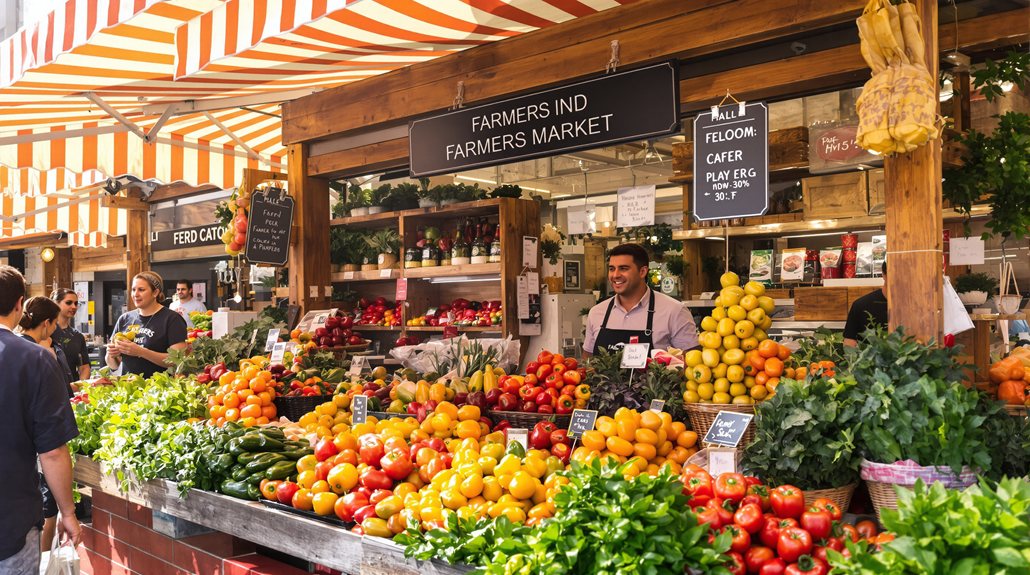
Cut microgreens on a board at the front edge of your table. The motion draws eyes, and the smell pulls shoppers in before you say a word. When someone stops, hand them a sample and ask, “Would you like to try these?” That’s it. No pitch, no shouting, no waiting. Show up every week, learn names by week three, and let your labeled cards answer questions while you’re busy. There’s more to each step.
Key Takeaways
- Cutting samples at the front edge of your table creates visible activity that draws curious shoppers in without any verbal pressure.
- Offering a sample with “would you like to try these?” hands the choice to the shopper and avoids feeling pushy.
- Standing behind your table makes your booth invisible; position yourself at the front to naturally encourage engagement.
- Clear 4×6 signs with variety names, flavor notes, and pricing let food-literate shoppers self-select without needing vendor interaction.
- Fresh-cut samples release aroma that reaches shoppers before eye contact, creating organic attraction requiring no shouting or calling out.
What is the most common mistake vendors make when trying to attract customers at a farmers market?
Most vendors make one of two mistakes at their booth. They either stand behind the table waiting, or they call out to people walking past.
Both kill sales before a conversation even starts.
Why standing behind the table and waiting does not work for specialty crops
When vendors stand behind the table and wait, they blend into the background like every other booth at the market. Shoppers walk past without stopping. You become invisible.
Specialty crops like microgreens don’t sell themselves through packaging. Customers don’t already know what they are. A passive farmers market vendor approach customers strategy doesn’t work here.
Other vendors selling tomatoes or bread get recognition fast. Microgreens need a trigger. Something has to pull people in before a word is spoken.
Standing still signals that nothing is happening at your table. Movement does the opposite. It creates curiosity.
You’re not selling a familiar product. That means the booth has to do more work than average. Waiting isn’t a strategy.
Why calling out to passersby creates resistance instead of interest
Standing still loses customers. But calling out to passersby creates a different problem. It pushes people away instead of pulling them in.
Shouting “fresh microgreens” or “come try our samples” puts people on defense. They feel targeted. Farmers market vendor customer engagement breaks down the second someone feels sold to.
People walking a market want to feel like they chose to stop. Not like they were flagged down.
Calling out signals desperation to most shoppers. It also clusters your energy on people who weren’t stopping anyway.
The fix isn’t a louder pitch or a better line. It’s removing the verbal approach entirely. Let your table do the work. Movement and activity attract the right people without a word.
What is the active demonstration approach that pulls customers without pushing?
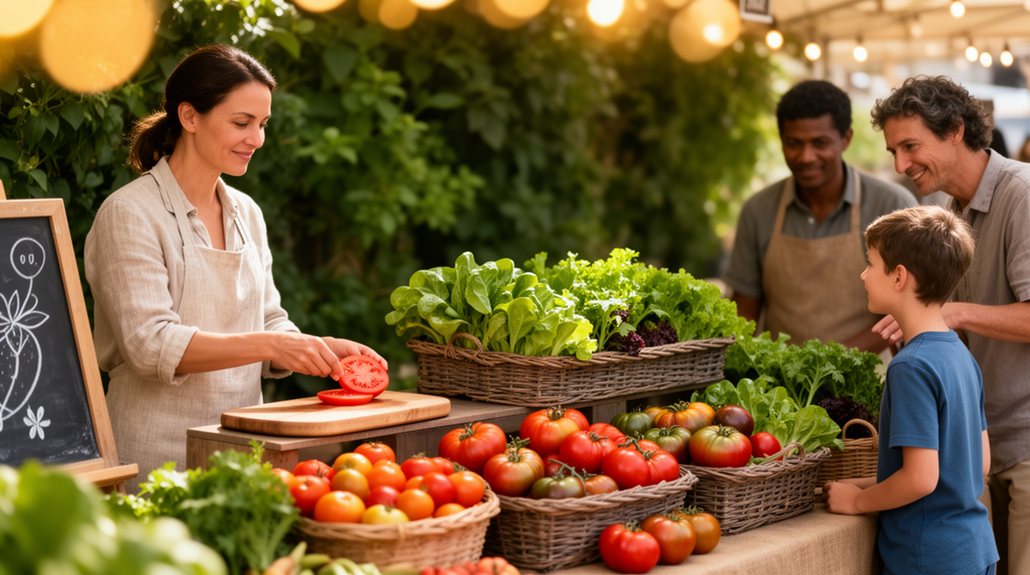
You don’t need to say a word to pull someone in. Set up a cutting board, lay your microgreens on it, and start cutting at the table.
The movement, the smell, and the visual action do the work for you.
How cutting microgreens at the table creates natural customer attraction
Most vendors at a farmers market stand behind their table and wait. That’s the wrong move.
Pick up your scissors. Place a cutting board at the front edge of your table. Cut a small amount of microgreens right there, in public view.
That single action creates movement. Movement draws eyes. The smell reaches people three feet away before they’ve looked up.
These are farmers market sampling tips that don’t require you to say a word. The cut greens, the board, and the action do the pulling.
You’re not selling. You’re working. People walk toward activity, not toward someone standing still hoping to be noticed.
What the sampling station does as a non-verbal sales mechanism
The sampling station isn’t decoration. It’s your primary sales tool at any microgreens farmers market sales setup.
Place a cutting board, scissors, and fresh-cut samples at the front edge of your table. That positioning does work you don’t have to do yourself.
When someone stops, offer a sample immediately. Say “would you like to try these?” That’s the opener. Nothing about nutrients, nothing about growing methods.
After they try it and react positively, ask one question. “What do you make for dinner most nights?” Then connect one variety to their answer.
You’re not selling. You’re matching. That’s the difference between a customer who walks away and one who buys.
What should you say when a customer approaches your booth?
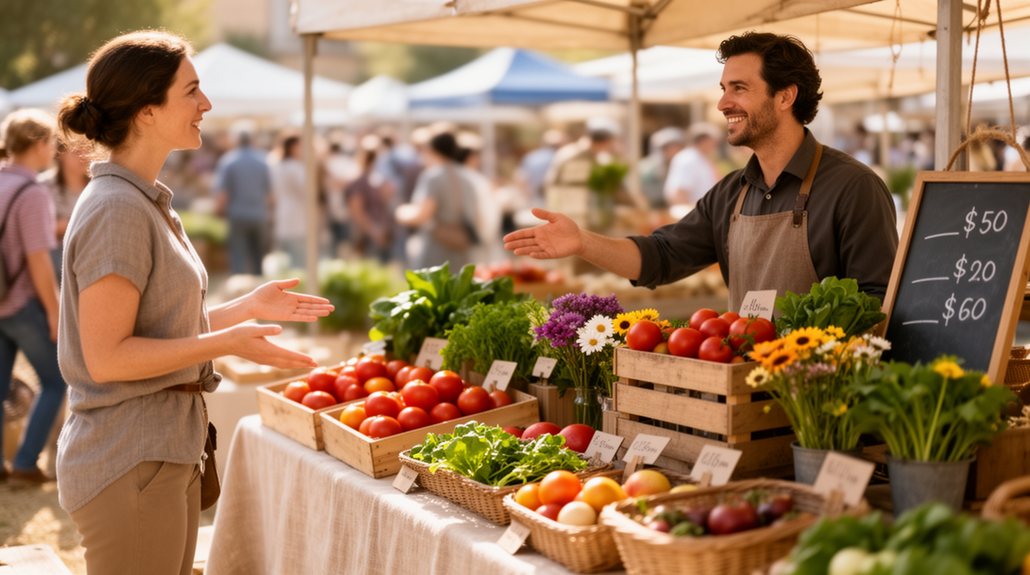
When a customer walks up, your first word matters more than your whole setup. Don’t describe the product. Ask if they’d like to try it.
The offer versus description distinction that changes the interaction
Say “would you like to try these?” the moment a customer steps close. That’s an offer. It puts the choice in their hands.
A description does the opposite. Saying “these are microgreens packed with nutrients” puts the information in their hands. They didn’t ask for it. Most people walk away.
The offer works because it invites without pressure. It’s one of the most effective farmers market demo tips you can apply on your first Saturday.
Don’t open with a list. Don’t open with a pitch. Open with a question that costs them nothing to answer yes to.
One word difference. One direction change. The customer feels welcomed, not sold to.
How to move from a sample to a purchase conversation naturally
That question does two things. It shifts the farmers market vendor customer interaction from selling to solving. It also tells you exactly which variety to suggest.
If they say pasta, point to the sunflower shoots. If they say stir-fry, hand them the pea tendrils.
One specific suggestion beats a full menu rundown every time. You’re not listing options. You’re matching their kitchen to one tray.
That’s the whole move. They feel understood, not sold to.
Most vendors skip this step and lose the sale right after the sample. Don’t skip it. One question closes the gap.
How do you turn a first-time buyer into a repeat weekly customer?
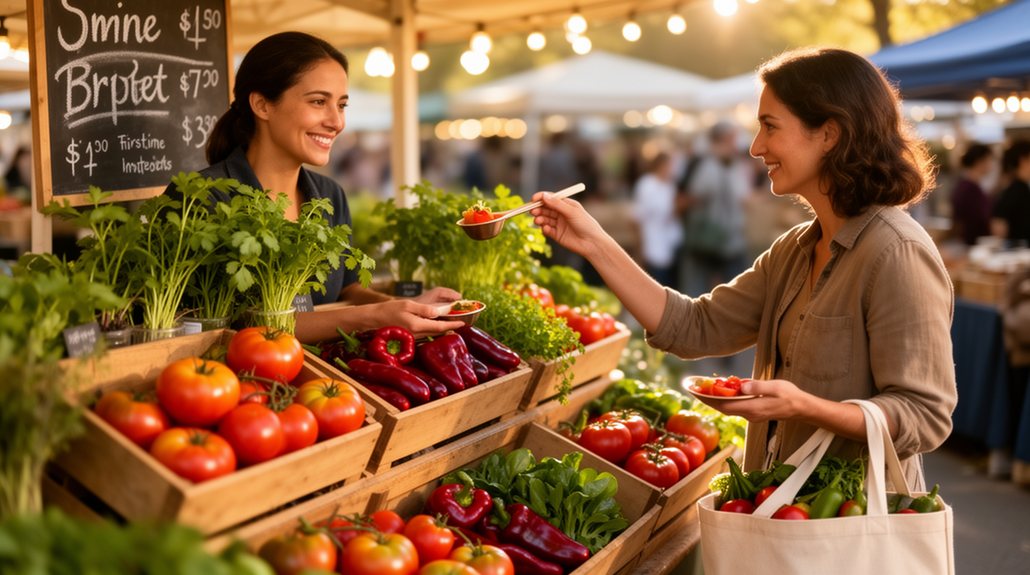
Getting a first-time buyer to return next Saturday starts with two things.
Show up every week without skipping, and remember what they bought.
Those two habits do more for repeat sales than any discount or promotion ever will.
What consistency of presence does for customer loyalty at a seasonal market
A first-time buyer comes back if you’re there every Saturday without exception. Missing one weekend breaks the habit you’re building with them.
Farmers market vendor repeat customers don’t appear by accident. They form because you showed up when they expected you.
Know their name by week three. Know their usual purchase by week five. That recognition is what makes them feel like they belong at your table.
A customer who sees your booth every week starts to plan around it. That’s the relationship you want.
Miss two Saturdays in a row and they find another option. Consistency isn’t a bonus. It’s the product.
Why knowing a customer by their usual purchase is a sales strategy not just courtesy
Most vendors treat customer recognition as a courtesy. It’s actually a sales strategy.
When Sarah comes back the third Saturday and you already have her sunflower shoots set aside, she doesn’t need to scan your table. She walks straight to you. That’s how to get customers to stop at your booth without any signage or calling out.
Write down names and usual orders after market each week. A small notebook works.
Knowing that Marcus buys two trays of pea shoots every time tells you exactly what to restock. It also tells you what to suggest when you add a new variety.
Recognition builds the habit. The habit builds your revenue floor.
What role does booth signage play in attracting customers without interaction?
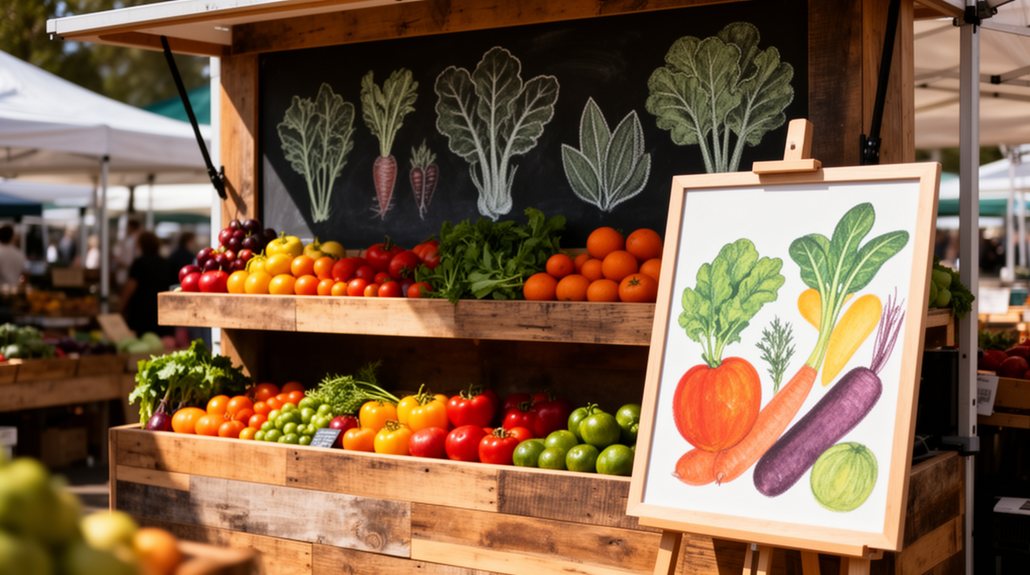
Your signage works when you can’t. If you’re with a customer, your signs answer questions for everyone else at the table.
Clear variety names and flavor notes keep food-literate buyers reading instead of walking away.
How clear variety and flavor information works when you are with another customer
When you’re talking to one customer, another one’s already reading your table. That’s your signage doing the work.
Label each tray by variety name and flavor note. “Sunflower. Nutty, mild crunch.” “Radish. Spicy, peppery bite.” Simple phrases. No paragraphs.
These farmers market booth sales techniques keep browsers engaged while you’re occupied. A customer who reads “Pea shoots. Sweet, tender” already knows if they want it before you say a word.
Put pricing on every label. Don’t make anyone ask. People leave rather than interrupt.
Use a sign stand or tent card for each variety. Keep font large enough to read from three feet away. Your table should answer the basic questions without you.
That’s how signage pulls its own weight.
What signage format pulls food-literate buyers without requiring your attention
Food-literate buyers don’t need a pitch. They need information, fast.
Use a 4×6 card for each variety. Write the name, flavor note, and one pairing. “Sunflower. Nutty. Slice onto avocado toast.” That’s enough.
Place cards at eye level. Flat cards on a table get ignored. A small wire stand fixes that.
This is how to attract customers at farmers market without saying a word. Buyers who know food will self-select. They’ll read, nod, and reach. That’s the transaction starting without you.
Skip the paragraph blocks of text. Nobody reads them at a busy market. One line per card, every time.
Font size matters. Use 24-point minimum. If someone over 50 can’t read it from two feet away, reprint it.
Frequently Asked Questions
How Early Should You Arrive to Set up Your Booth Before Opening?
Arrive 90 minutes before opening. You’ll need time to set up your table, arrange signage, and prep your sampling station so you’re ready when the first customer walks by.
What Is the Best Table Height for a Microgreens Sampling Station?
Set your sampling station at 36 inches. That’s standard counter height. It lets customers reach in naturally without bending. You’ll cut, they’ll watch, and no one feels awkward about the exchange.
How Do You Handle a Customer Who Has a Food Allergy at Sampling?
Ask what they’re allergic to before they sample. Most microgreens are single-ingredient greens. You can confirm exactly what’s in each tray. That transparency builds trust faster than any sales pitch.
Should You Accept Credit Cards or Cash Only at Your Booth?
Accept both. You’ll lose sales if you’re cash only. Most shoppers don’t carry cash anymore. Use Square or a similar reader so you never have to turn a ready buyer away.
How Many Variety Signs Should You Display on Your Table at Once?
Display three to five variety signs max. More than five creates confusion and slows decisions. You want customers choosing, not scanning. Keep each sign short: variety name, flavor note, one use.
Leave a Reply