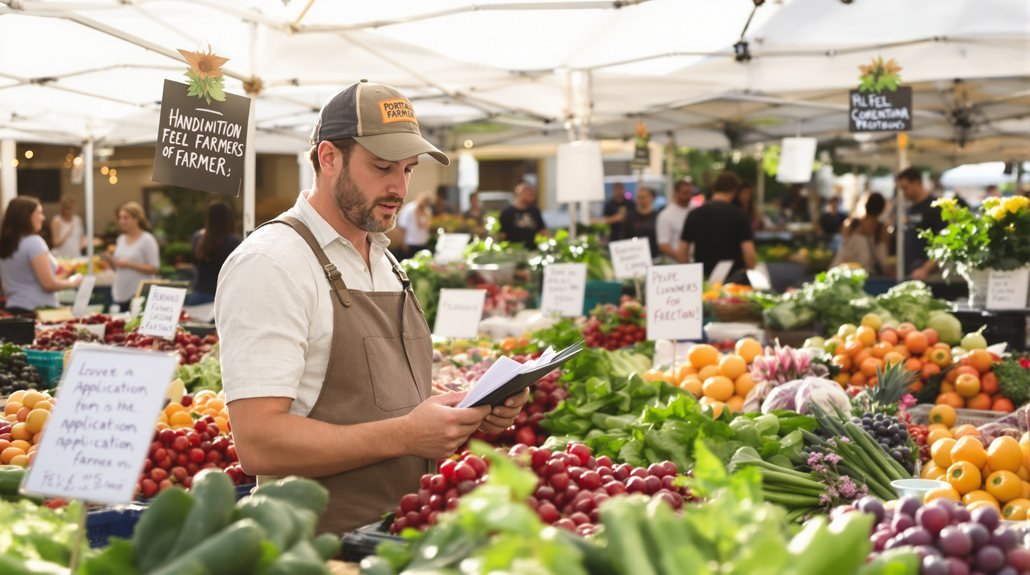
Becoming a vendor at Portland Farmers Market means applying through their nonprofit organization with proof of local production and a clear product list. The PSU Saturday location draws 10,000 to 12,000 shoppers weekly, but over 150 vendors already compete for attention. Specialty produce holds fewer than 20% of slots, so microgreens growers have a real opening. Nail your application category, document your grow operation, and keep going — there’s more you’ll want to know before you submit.
Key Takeaways
- Portland Farmers Market is managed by a nonprofit that reviews applications against existing vendor mix before approving, waitlisting, or denying applicants.
- Applications require your business name, production location, product list, and documented proof that your operation is locally based.
- Specialty produce, including microgreens, is under-represented among 150-plus vendors, giving qualified growers a competitive advantage when applying.
- Visit the market as a shopper first to count existing microgreens tables and confirm a real category gap exists before applying.
- Use the MGW Farmers Market Finder at markets.microgreensworld.com to compare PSU against nearby markets before committing to one application.
What should you know about Portland Farmers Market before you apply?
Before you apply, you need to know what you’re actually dealing with. Portland Farmers Market isn’t a small local market. It’s a high-volume, competitive operation that draws 10,000 to 12,000 shoppers each week at the PSU flagship location alone.
What Makes Portland Farmers Market Different From Other Oregon Markets
If you’ve sold at a smaller Oregon market, Portland Farmers Market at PSU operates on a different scale entirely.
The Saturday flagship draws 10,000 to 12,000 shoppers per week during peak season. That’s not a local crowd. That’s a regional buying force.
Over 150 vendors set up each week. Willamette Valley produce, Columbia River fish, and regional artisan products dominate the floor. Prepared food and baked goods vendors outnumber specialty produce vendors by a wide margin.
That gap matters when you’re building your portland farmers market psu vendor application. You’re not entering a crowded category. You’re stepping into an underserved one.
The nonprofit managing this market requires proof of local production. Volume expectations here aren’t what you’d face in Bend or Corvallis.
Who Shops There and What They Actually Buy
Most of the 10,000 to 12,000 weekly shoppers at PSU aren’t browsing. They come with a list and a reusable bag.
This crowd skews toward food-literate buyers. They read labels, ask where things are grown, and pay premium prices without hesitation.
They buy Willamette Valley produce, Columbia River fish, and artisan goods from vendors they recognize. Repeat purchases drive most sales at this market.
As a portland farmers market vendor, your customer already knows what microgreens are. You don’t need to explain them. You need to have the right varieties, clean packaging, and a consistent table.
Specialty produce moves here because the buyer base supports it. That’s the gap you’re stepping into. Know that before you apply.
What does the vendor mix look like at Portland Farmers Market?
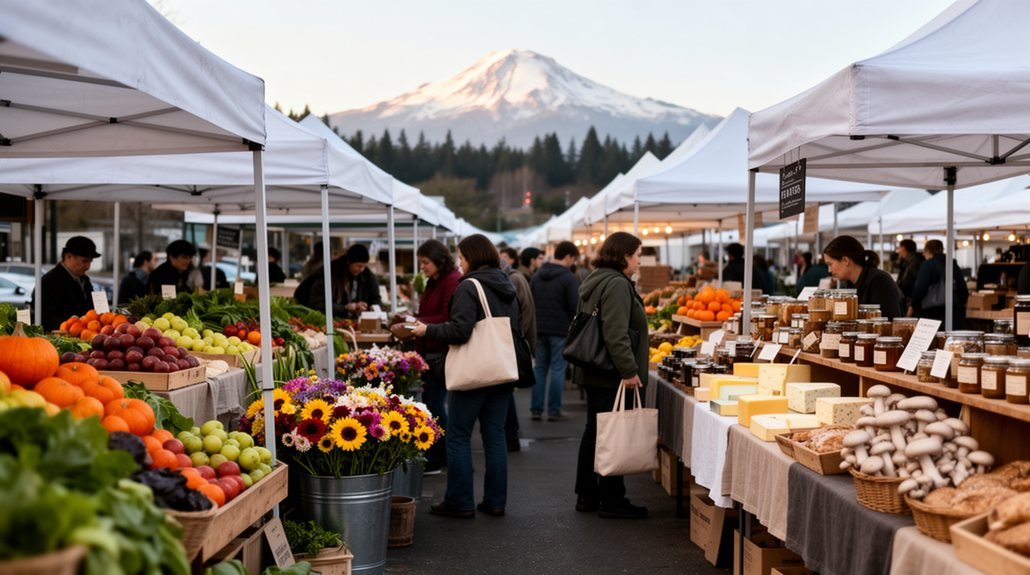
The PSU market runs over 150 vendors, but prepared food and baked goods dominate the mix.
Specialty produce vendors, including microgreens, are under-represented compared to those categories. That gap is real, and it’s where your application strategy starts.
Which categories are overrepresented at Portland Farmers Market
Prepared food and baked goods dominate the vendor mix at Portland Farmers Market. Vendors selling ready-to-eat meals, pastries, and packaged goods fill a large share of the 150-plus vendor slots.
That concentration matters when you’re reviewing Portland Farmers Market vendor requirements. The market isn’t short on crowd-pleasing food. It’s short on specialty produce.
Artisan goods and value-added products are also well-represented. You’ll find candles, soaps, and crafted preserves across multiple booths at the PSU Saturday location.
What’s missing is the fresh-growing category. Microgreens, specialty herbs, and niche vegetables occupy far fewer spots than the prepared food segment. That imbalance isn’t a problem for you. It’s an opening. Knowing where the floor is thin tells you exactly where to stand.
Where the gap is for specialty produce vendors
Specialty produce holds fewer than 20% of the vendor slots at Portland Farmers Market’s PSU Saturday location. That’s the gap you’re looking for.
Prepared food and baked goods dominate the mix. Microgreens vendors are nearly absent.
Dr. Booker T. Whatley’s framework is direct: know your customer before you choose your market. Visit the PSU Saturday market as a shopper first. Watch what sells and where the shelves empty fastest.
Microgreens at Portland Farmers Market fit a customer base that already buys local, seasonal, and specialty produce. That shopper exists here in volume. 10,000 to 12,000 people move through this market each week during peak season.
Under-represented categories get noticed. That’s not an assumption. That’s your application strategy.
What does the Portland Farmers Market vendor application process involve?
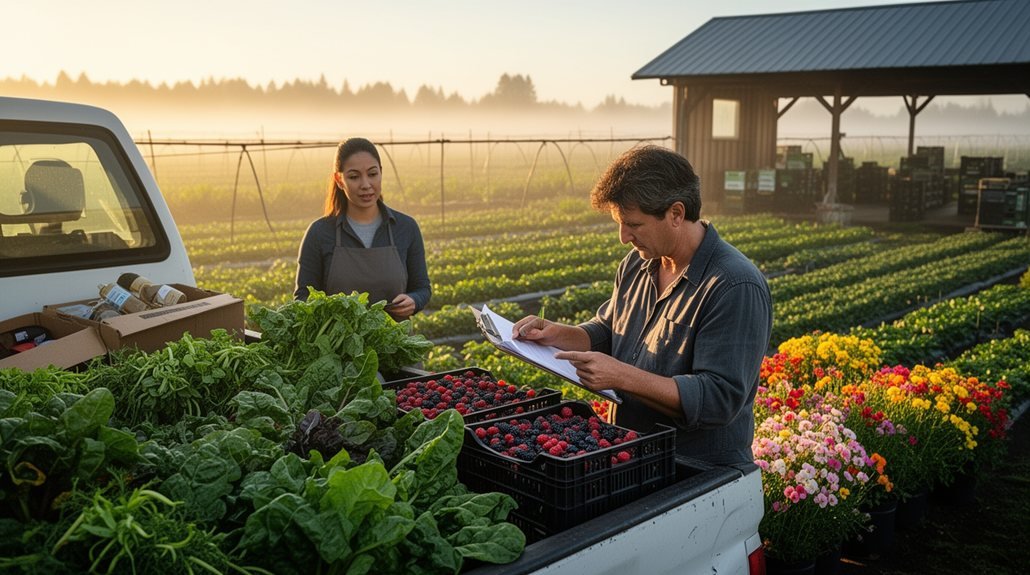
Portland Farmers Market is run by a nonprofit, and that matters for your application.
You’ll need to prove your product is locally grown before they’ll consider you.
The selection process is competitive, so knowing what they require upfront saves you time.
What Portland Farmers Market nonprofit requires before you submit an application
Every vendor slot at Portland Farmers Market goes through a formal application reviewed by the nonprofit that runs the market. That nonprofit is Portland Farmers Market, the organization behind all locations including the flagship PSU Saturday market.
The portland farmers market application process requires proof that you’re producing locally. You’ll need documentation showing your operation is based in the region.
Expect to provide your business name, production location, and a product list. The nonprofit reviews vendor mix when making decisions, so how you describe your products matters.
Microgreens fall under specialty produce. That category is under-represented at this market, which works in your favor if your application is clear and your production documentation is ready.
What the selection process looks like
Once you submit your application to Portland Farmers Market, the nonprofit reviews it against the current vendor mix. They’re looking for gaps, not duplicates.
As a portland farmers market 2026 vendor applicant, your category placement matters more than your product quality alone.
| Stage | What happens | Timeline |
|---|---|---|
| Submission | Application reviewed for completeness | 1 to 2 weeks |
| Category review | Compared against existing vendor mix | 2 to 4 weeks |
| Decision | Approval, waitlist, or denial issued | After review closes |
Specialty produce like microgreens is under-represented. That works in your favor.
If you land on the waitlist, stay ready. Spots open when vendors don’t return each season.
What do microgreens vendors specifically need to know about Portland Farmers Market?
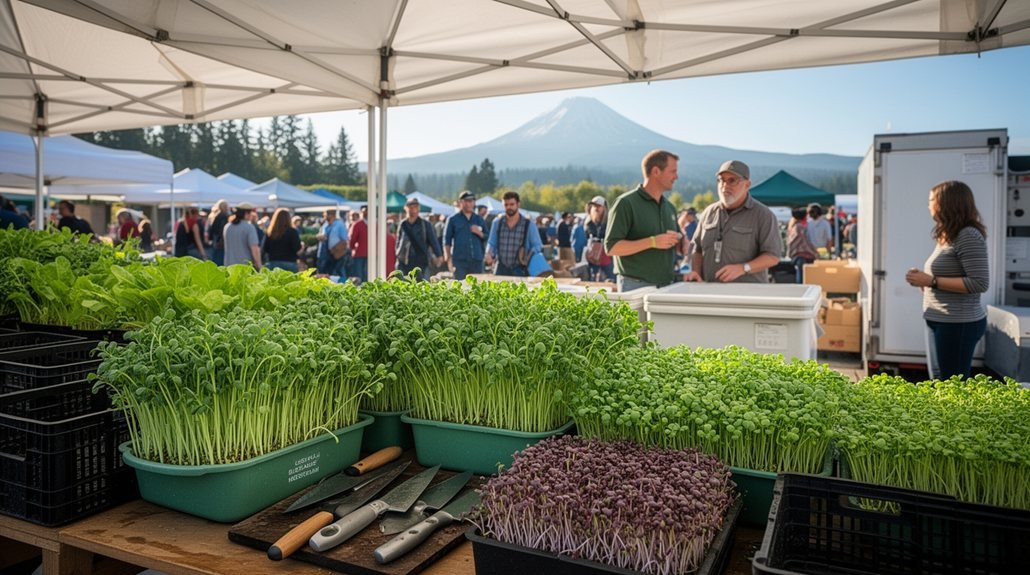
Portland Farmers Market draws 10,000 to 12,000 shoppers each Saturday at the PSU location.
That crowd skews toward buyers who already know what microgreens are and will pay for quality.
Understanding the vendor mix and the customer profile before you apply gives you a real edge.
Why Portland Farmers Market’s customer base is a strong match for specialty greens
When the PSU Saturday market runs at full pace, it draws 10,000 to 12,000 shoppers each week.
That’s not foot traffic. That’s a customer base that already shops for quality food and knows what specialty produce looks like.
Portland buyers are experienced. They read labels, ask questions, and come back when they find something they trust.
Microgreens fit that profile. They’re visual, they’re differentiated, and they’re not sitting on every table at the Portland market.
Specialty produce at this Portland market is under-represented compared to prepared food and baked goods vendors.
That gap is real.
If your product is clean, consistent, and labeled well, you belong in that conversation. The shopper base is already there. You just have to show up with the right product.
What sets successful vendors apart at Portland Farmers Market
Most vendors who last at PSU market figure out one thing early: consistency matters more than novelty. Shoppers return to the same booth every Saturday. They want to know you’ll be there.
Portland Saturday market vendor requirements include proof of local production and a documented growing operation. You can’t show up once and disappear.
Bring the same core lineup each week. Sunflower, pea shoots, radish. Price clearly. Keep your table clean and organized.
The vendors who build a following treat each market day like a shift. They show up on time, restock mid-morning, and talk to the same customers twice.
You’re not just selling greens. You’re becoming part of a weekly routine that 10,000 to 12,000 shoppers depend on.
How do you find Portland Farmers Market and locate other markets like it near you?

Portland Farmers Market is one market. Oregon has dozens more, and some of them are a better fit depending on where you grow and how far you’ll drive.
The MGW Farmers Market Finder at markets.microgreensworld.com covers 7,842 USDA-verified markets across all 50 states, and you can search by zip code, city, or state to pull up every option near you.
Using the MGW Market Finder to scout markets in Oregon
Every market in Oregon is searchable through the MGW Farmers Market Finder at markets.microgreensworld.com. The tool runs on USDA data and covers 7,842 markets across all 50 states.
Search by zip code, city, or state. You’ll see Portland Farmers Market listed alongside smaller neighborhood and rural markets you may not know about yet.
As a portland farmers market vendor prospect, you want to compare multiple markets before committing to one application. Look at vendor mix, size, and location together.
The Finder gives you that picture fast. You’re not guessing. You’re working from verified data that other growers in your area are already using to make the same decisions you’re making right now.
What to look for before you apply to any Oregon market
Finding a market is step one. Knowing whether it fits you is step two.
Before you apply as a portland farmers market vendor, check three things.
| What to check | Why it matters |
|---|---|
| Vendor mix | Spot gaps in specialty produce |
| Customer volume | PSU draws 10,000 to 12,000 weekly |
| Production proof required | Portland FM requires local sourcing documentation |
Specialty produce is under-represented at most Oregon markets. That gap is your opening.
Visit the market as a shopper first. Watch what sells. Count the microgreens tables. If you see none, that’s your answer.
Apply where there’s a real gap, not just an open slot.
Frequently Asked Questions
Does Portland Farmers Market Allow Vendors to Sell at Multiple Locations?
Yes, you can sell at multiple Portland Farmers Market locations. They operate Saturday, Wednesday, and Monday markets. Vendors often appear at more than one site during the season.
What Liability Insurance Requirements Do Portland Farmers Market Vendors Need?
You’ll need general liability insurance with a minimum of $1,000,000 per occurrence. Portland Farmers Market must be listed as an additional insured on your policy before your first market day.
Can Vendors Share a Booth Space With Another Grower at This Market?
You can’t share a booth at Portland Farmers Market. Each vendor holds their own application, approval, and space. Partnering with another grower means you both apply separately.
Does Portland Farmers Market Offer Any Reduced Fees for First-Year Vendors?
Portland Farmers Market doesn’t offer reduced fees for first-year vendors. You pay the same rate as returning vendors. Check the current fee schedule directly at portlandfarmersmarket.org before you budget for your first season.
What Happens if a Vendor Misses a Scheduled Market Day Without Notice?
You’ll risk losing your spot. Portland Farmers Market tracks absences. Missing a scheduled day without notice can trigger a warning or permanent removal from the vendor roster.
Leave a Reply