Most vendors pick a market by name or distance. That’s the wrong filter. Year-round markets report 65.2% specialty crop sales versus the 39.3% overall average. Urban markets hit 60.8%. Rural and Southern markets drop to roughly 25%. Before you apply anywhere, check whether the market is year-round, urban, or producers-only. Those three filters cut your list fast and protect your revenue. Keep going to see exactly how to run that filter.
Key Takeaways
- Most vendors choose markets by name or proximity, which wastes application effort and can cost revenue before the first sale.
- Filter markets by three criteria: year-round schedule, urban location, and a vendor mix missing specialty produce.
- Year-round markets report 65.2% specialty crop sales versus a 39.3% overall average, making format your most important filter.
- Walk every market row before applying, counting produce vendors and flagging gaps like zero microgreens stalls.
- Apply to three well-matched markets instead of ten random ones, using counted gaps as your application hook.
What is the biggest mistake vendors make when choosing a farmers market to apply to?
Most vendors pick a market because it’s close or because they’ve heard the name. That’s the wrong starting point, and it costs you before you sell a single tray.
The format of the market — year-round, producers-only, urban — predicts your success far more than location or reputation.
Why proximity and reputation are the wrong selection criteria
For a lot of new vendors, the first question is “what’s the closest market?” or “which one has the best reputation?” Both are the wrong starting point for your farmers market selection strategy.
Proximity tells you nothing about buyer behavior. Reputation tells you nothing about vendor mix.
| Criteria | What it tells you | What it misses |
|---|---|---|
| Distance | Travel cost | Buyer demographics |
| Reputation | General popularity | Specialty produce gaps |
| Size | Foot traffic volume | Category saturation |
| Name recognition | Community awareness | Vendor competition |
| Convenience | Logistics | Sales potential |
The market that fits your product is rarely the nearest one. Find where specialty produce is missing. That gap is where you belong.
What the data says about which market formats actually work for specialty crops
When vendors skip market research, they leave money on the table. Lee and Miller (2026, HortTechnology 36(3)) show exactly where the best farmers market for microgreens exists.
Year-round markets report 65.2% specialty crop sales. The overall average is only 39.3%. That’s a 25.9-point gap you can’t ignore.
Producers-only markets hit 57.6%. Urban markets reach 60.8%. Western markets come in at 52.1%.
Rural and Southern markets drop to 25.9% and 25%. Those numbers tell you where not to apply.
Market format is the single most predictive factor for specialty crop success. You’re not guessing. You’re using real data to find your place at the right table.
Does market type determine where specialty crops sell best?
Market type is the single most predictive factor for specialty crop sales, according to Lee and Miller (2026, HortTechnology 36(3)). Year-round markets report 65.2% specialty crop sales compared to the 39.3% overall average.
Producers-only markets hit 57.6%, which tells you something specific about the buyer you’ll find there.
Why year-round markets outperform seasonal ones by a wide margin
Year-round markets consistently outperform seasonal ones for specialty crop vendors. The data backs this up completely.
Lee and Miller (2026, HortTechnology 36(3)) found that year-round markets report 65.2% specialty crop sales. The overall market average is just 39.3%.
That gap is 25.9 percentage points. For a microgreens grower, that difference changes whether you build a real customer base or just test the water a few times per year.
Seasonal markets close. Your repeat buyers disappear. You restart from zero every spring.
Year-round markets are better for specialty crops because buyers return weekly. You build recognition. You become the vendor people look for.
Check whether a market operates 12 months before you do anything else. That single filter eliminates most weak options immediately.
What producers-only markets tell you about the buyer you will find there
Format matters beyond just the calendar. Producers-only markets report 57.6% specialty crop sales, according to Lee and Miller (2026, HortTechnology 36(3)).
That number tells you something specific about the buyer. Shoppers at producers-only markets came to buy food. They’re not there for crafts or candles.
These buyers already value knowing who grew what they’re eating. That’s your community before you even set up a table.
The producers-only farmers market advantage is real, but it only works if your product fits the gap. Microgreens and specialty greens are under-represented at most of these markets.
Check the vendor list before you apply. If no one is selling specialty produce, that space is yours to fill.
Does your region or city type change which market to target?
Your location shapes your odds before you do anything else.
Urban markets hit 60.8% specialty crop sales rates.
Rural markets drop to 25.9%.
How urban markets compare to rural ones in specialty crop sales rates
Location type changes your numbers fast. Urban farmers market specialty crops sell at a 60.8% rate. Rural markets sit at 25.9%.
That’s not a small gap. It’s more than double.
If you’re selling microgreens, urban markets give you a built-in advantage. The customer base is larger and more familiar with specialty produce.
Rural markets aren’t impossible. But the sales data tells you the uphill climb is real.
Check where your target market sits before you apply. City location matters more than you’d expect.
The vendor mix gap still applies here. Urban markets with low specialty produce representation are your best combination. That’s where you belong and where the numbers work.
What the regional data means for vendors in the South and rural areas
Region changes the numbers just as much as city type does. Southern markets average 25% specialty crop sales. Rural markets sit at 25.9%.
Those numbers matter for your application strategy. Farmers market customer demographics in these areas skew toward familiar staples. Microgreens aren’t a familiar staple for most of those buyers yet.
That gap cuts both ways. You face lower baseline demand, but you also face fewer specialty produce competitors.
Your move in a Southern or rural market is different. You’re not walking into a crowd that already buys microgreens. You’re building that crowd from scratch. Pick markets with producers-only status or year-round schedules to offset the regional disadvantage.
What should you do before you apply to any farmers market?
Most vendors apply to a market based on how close it’s or how well-known it is.
That’s the wrong move.
You need to visit first, count what’s there, and find the gap that makes your application hard to ignore.
The pre-application visit that changes your odds
Before you fill out a single application, go to the market as a paying customer. This is how to research a farmers market before applying the right way.
Walk every row. Count what’s already there.
| What to observe | What to count | What to flag |
|---|---|---|
| Produce vendors | Total stalls | Overrepresented categories |
| Specialty greens | Empty gaps | Missing microgreens |
| Buyer behavior | Repeat customers | High-traffic spots |
Note which categories are crowded. Baked goods, honey, and crafts fill most markets fast.
Find the gap. Microgreens are missing at most markets. That gap is your angle, not your description on an application.
You belong where you fill a need nobody else is filling.
How to count the vendor mix and find the gap that is your application hook
Bring a notepad and count every vendor stall at the market. Write down each category: baked goods, honey, crafts, produce, prepared food.
Total the produce vendors. Then find out how many sell specialty greens or microgreens. At most markets, that number is zero.
That zero is your application hook.
Farmers market vendor mix research shows that baked goods and crafts are overrepresented at most markets. Specialty produce is not. Market managers know that gap exists. Your job is to name it in your application.
Don’t describe yourself as passionate or dedicated. Tell them what the market is missing and show that you fill it.
You become the answer to a problem they already have. That’s the position you want.
How do you use market data to narrow your application list?
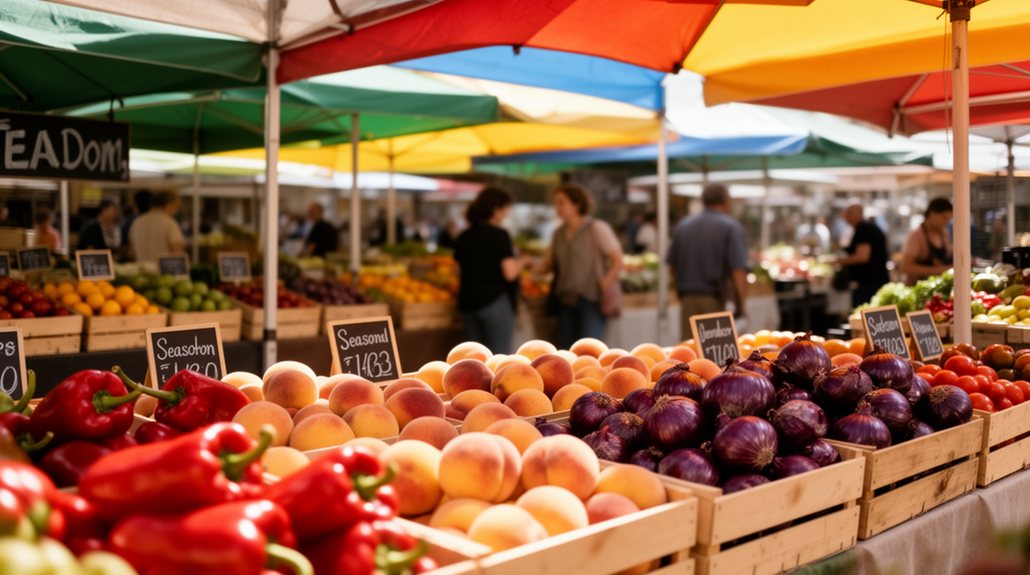
Most vendors pick a market by name or distance. That’s the wrong filter.
You need three data points before you apply: market format, location type, and vendor mix.
The three filter questions to ask about any market before you apply
When you’re ready to apply, narrow your list with three filter questions before you spend time on any application.
First: Is the market year-round or producers-only? Lee and Miller (2026) found year-round markets hit 65.2% specialty crop sales. That number matters for farmers market vendor selection.
Second: Is it in an urban location? Urban markets reach 60.8% specialty crop sales versus 25.9% at rural ones.
Third: Does the vendor mix have a specialty produce gap? Walk the market first. Count produce vendors. Find what’s missing.
If a market fails two of these three filters, remove it from your list. Don’t apply hoping it works out.
How to use the MGW Market Finder to find markets matching the right profile
Now that you’ve got three filter questions, you need markets to run them against. That’s where the MGW Farmers Market Finder comes in.
Go to markets.microgreensworld.com. Search by your zip code or city. You’ll see verified USDA data on 7,842 markets across all 50 states.
Filter for year-round markets first. Then look for producers-only or urban designations. Those two filters cut your list fast.
What’s left is your working shortlist. These are the markets worth researching deeper as part of your farmers market application strategy.
Don’t apply to ten markets blindly. Apply to three that match the profile. You belong in markets where the data already supports specialty produce.
Frequently Asked Questions
How Many Vendors Does a Typical Farmers Market Allow per Category?
Most markets cap produce vendors at 3 to 5 per category. You’ll often find that specialty crops like microgreens get their own slot, meaning less competition if you apply strategically.
What Documents Do Most Farmers Markets Require in an Application?
Most markets ask for a business license, proof of insurance, a product list, and photos of your setup. Some add a cottage food permit or farm verification if you’re selling produce.
How Long Does a Farmers Market Application Process Usually Take?
Most markets take two to eight weeks to respond. Some run one annual application window. Submit early, follow up after ten days, and have your documents ready before you apply.
Can You Apply to Multiple Farmers Markets at the Same Time?
Yes, you can apply to multiple farmers markets at the same time. Most markets expect it. Just track each deadline, fee, and required document separately so nothing slips.
What Booth Fees Should You Expect at a Year-Round Urban Market?
Year-round urban markets typically charge $25 to $75 per day. Some high-traffic markets run $100 or more. Budget for seasonal fee increases too. You’ll fit in faster when you know the real costs upfront.
Leave a Reply