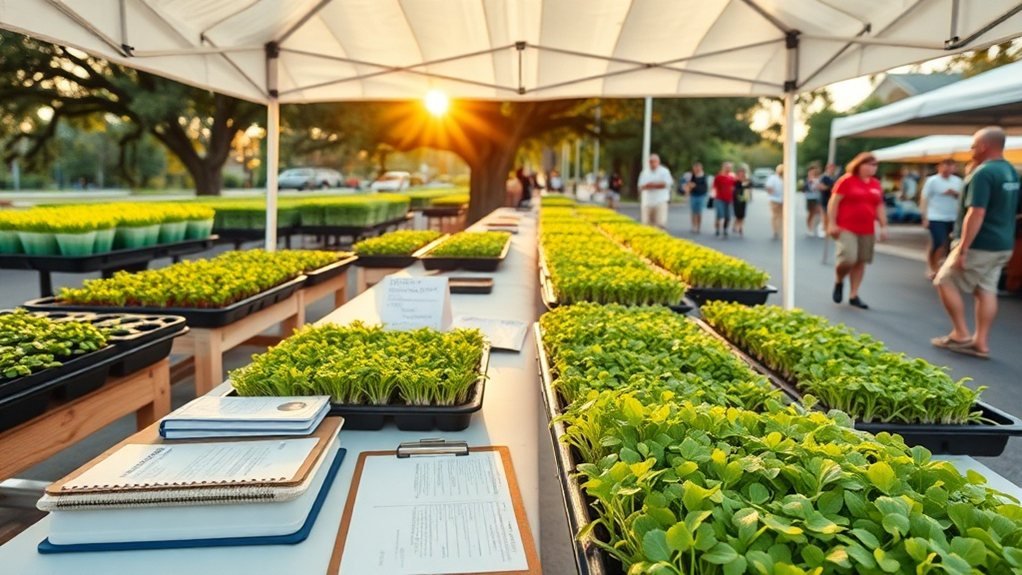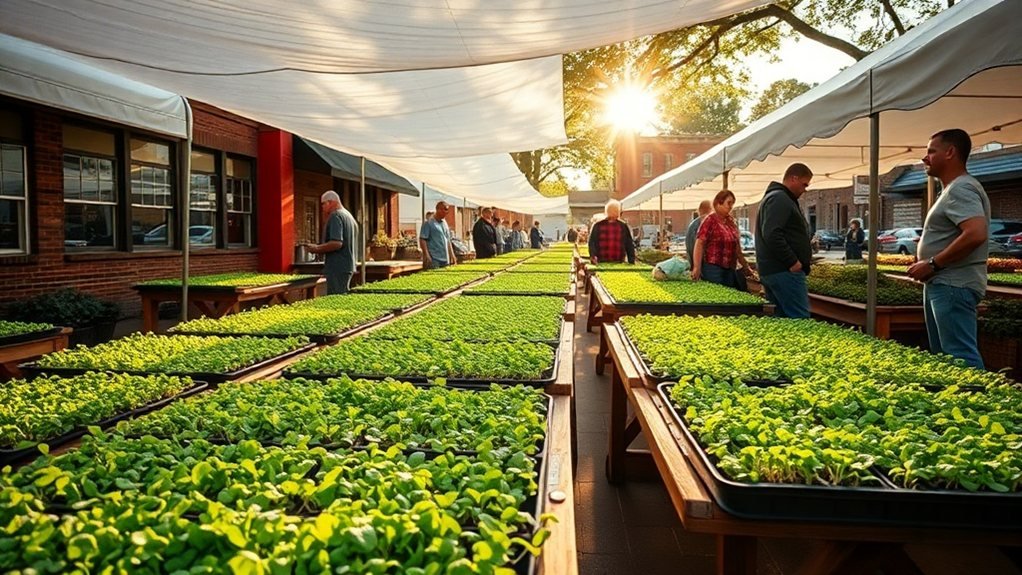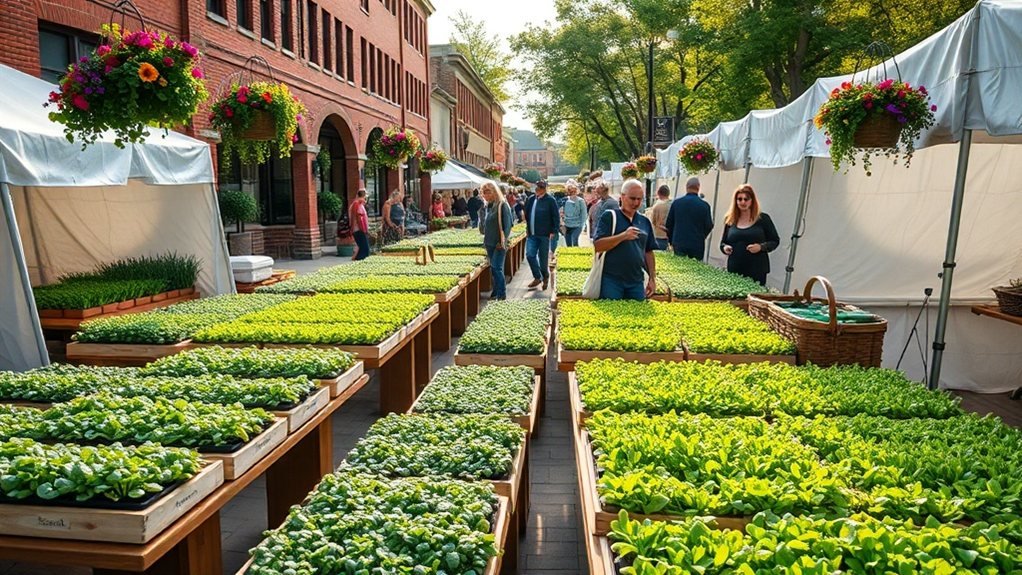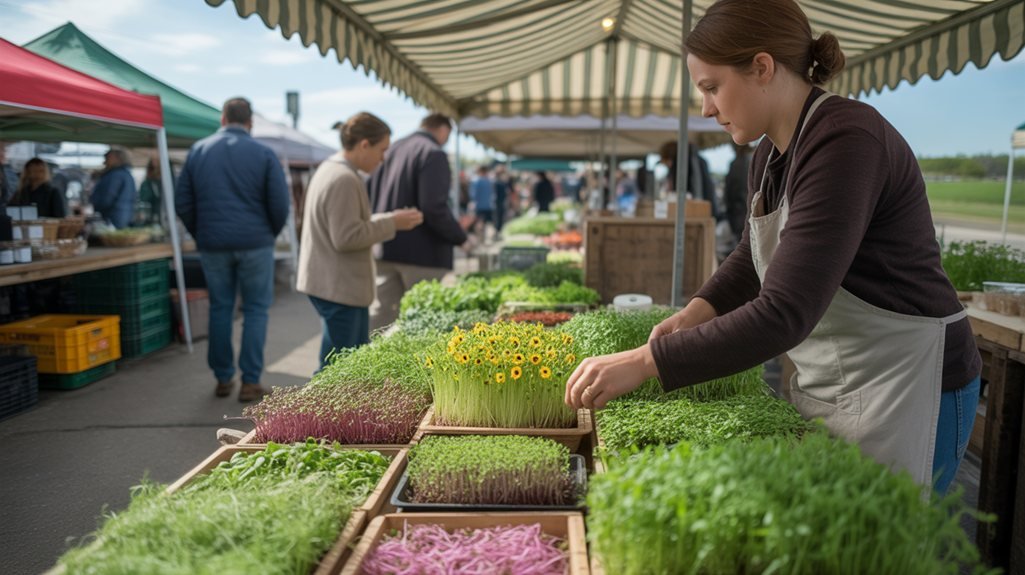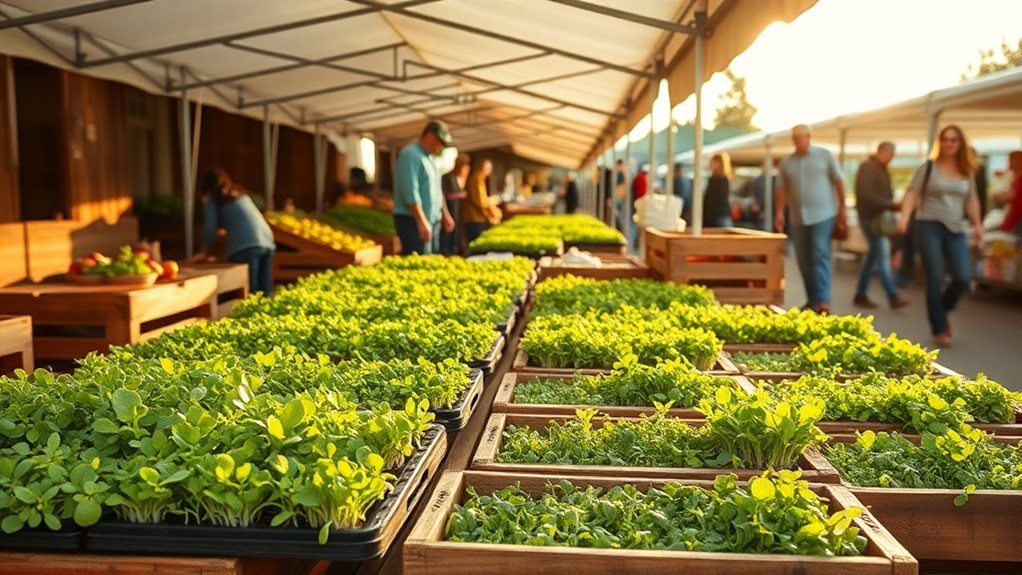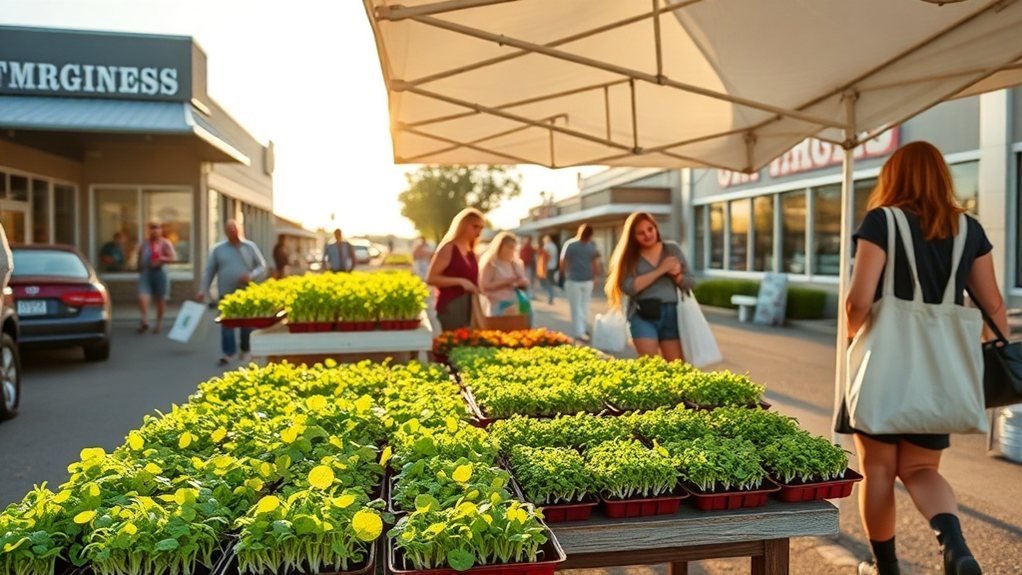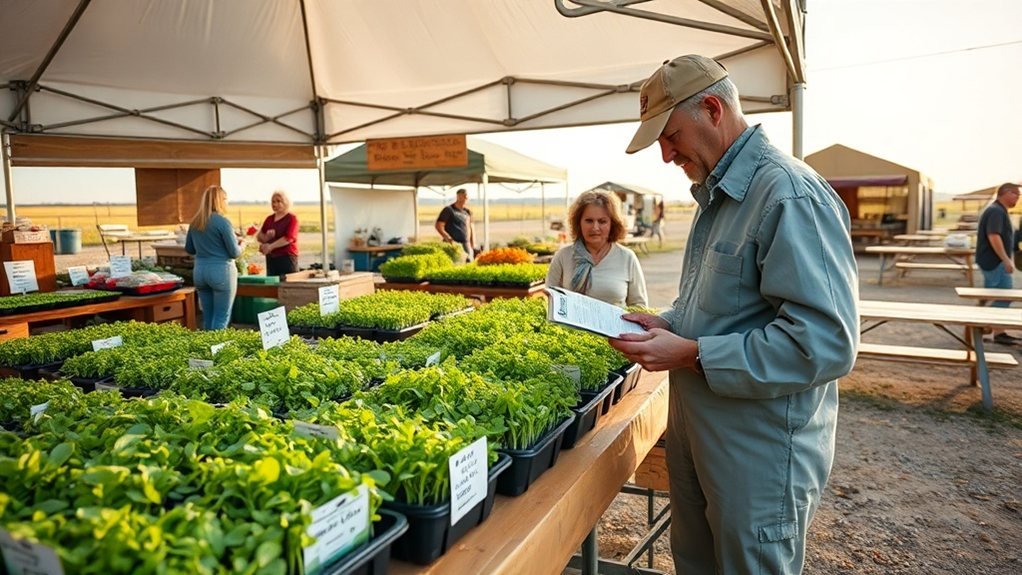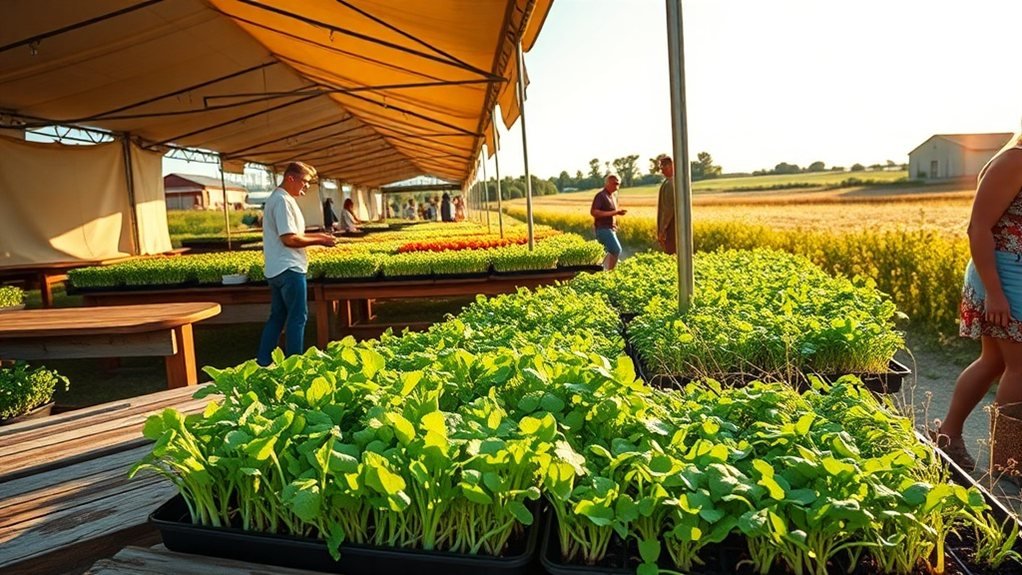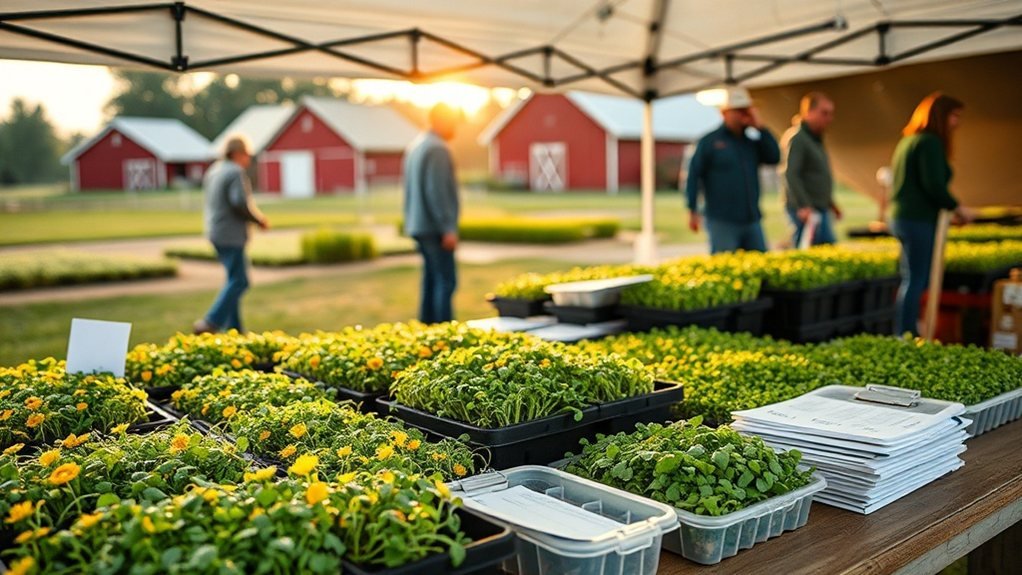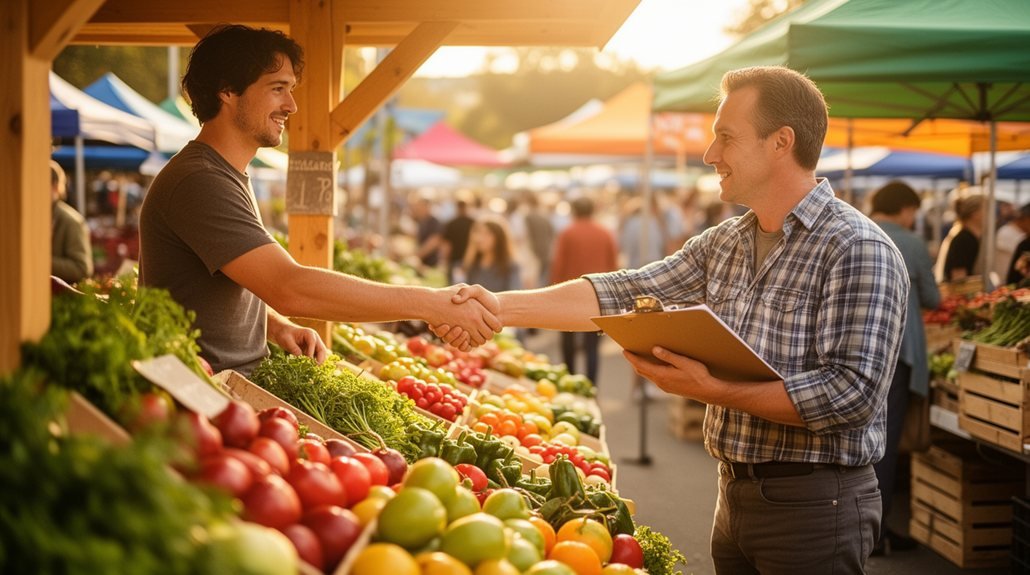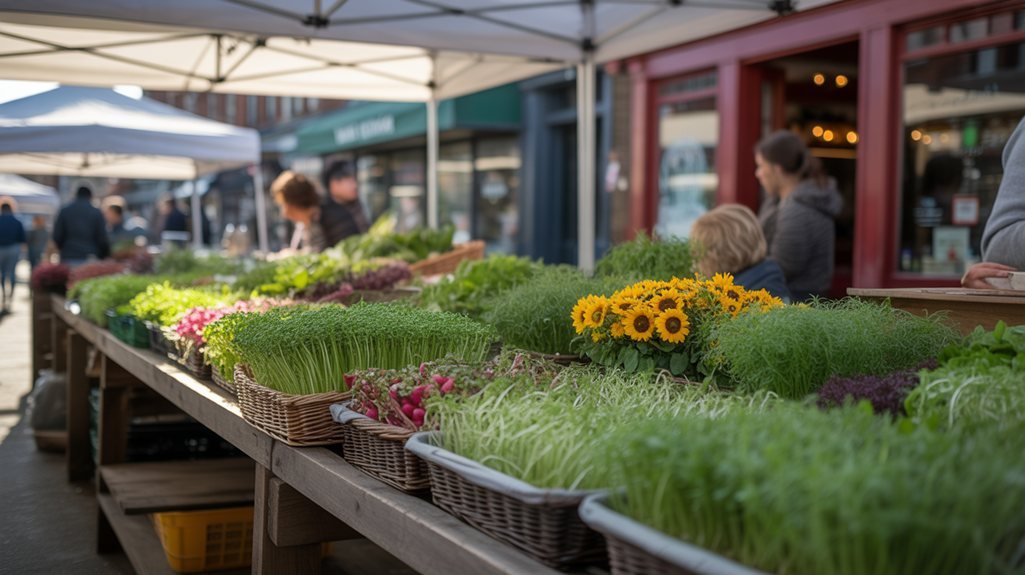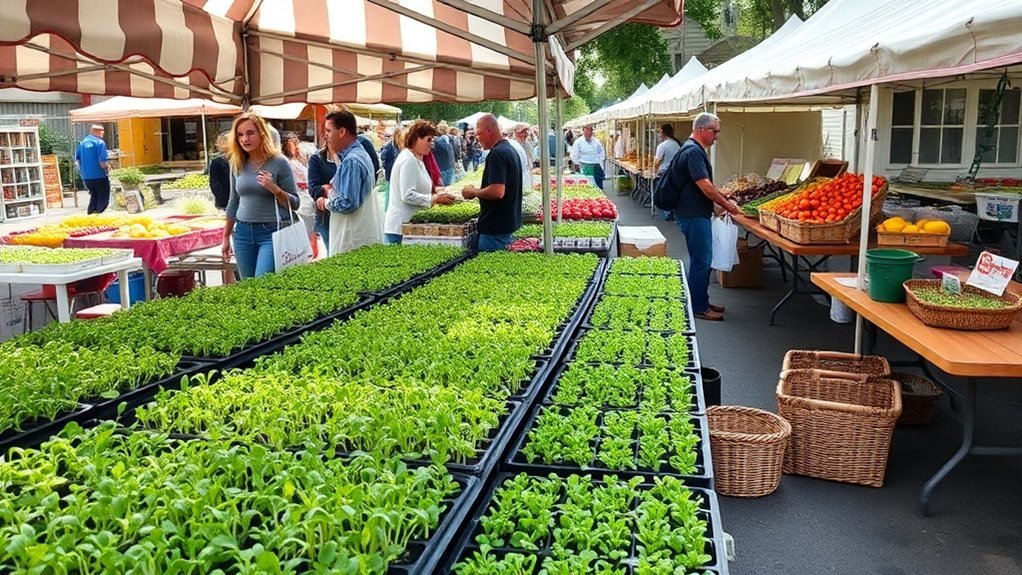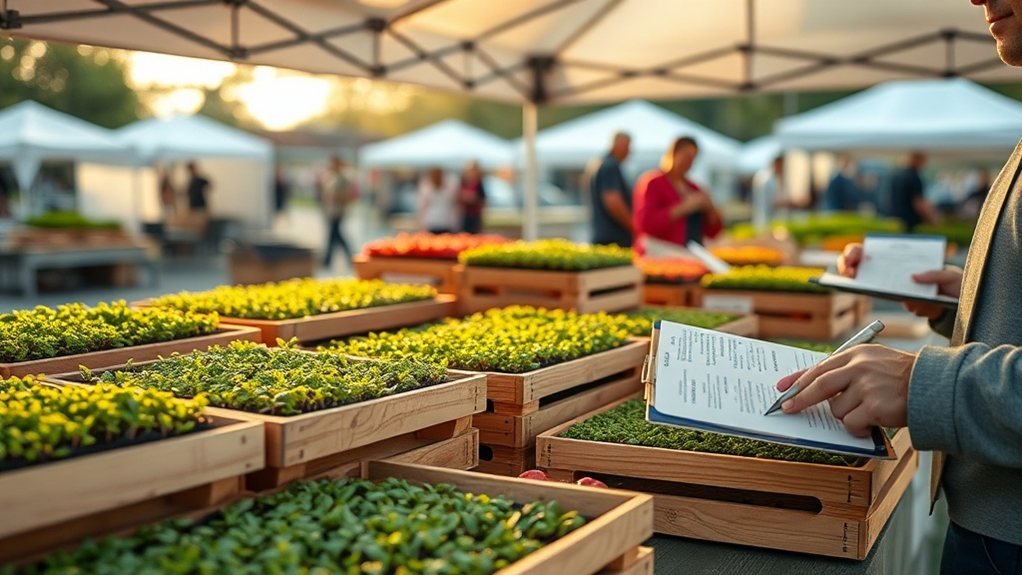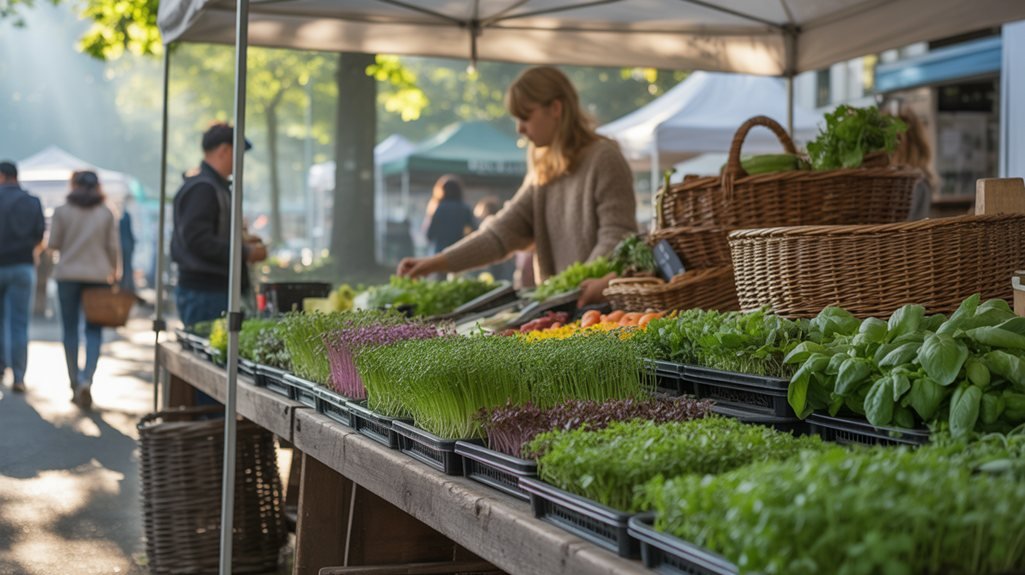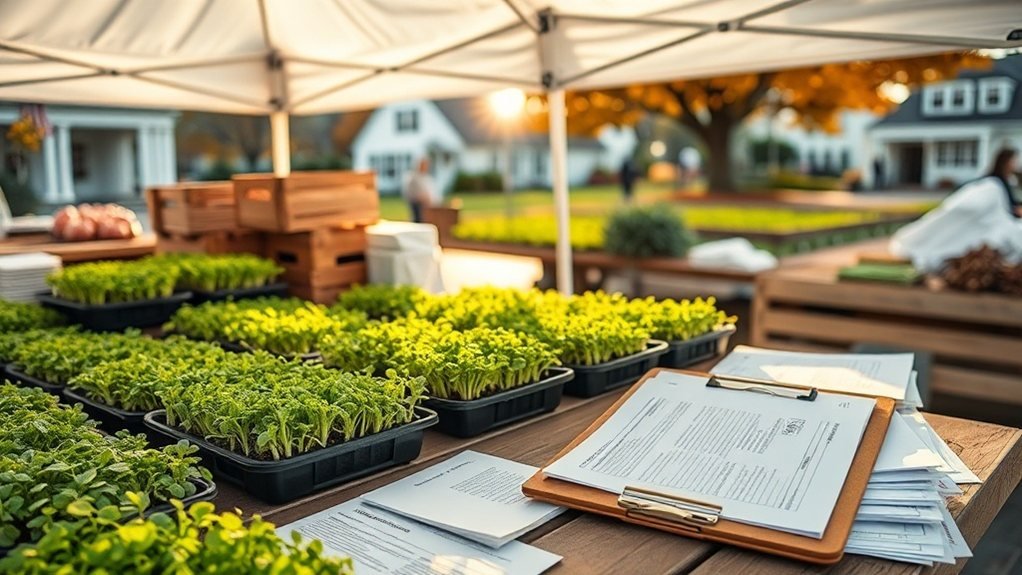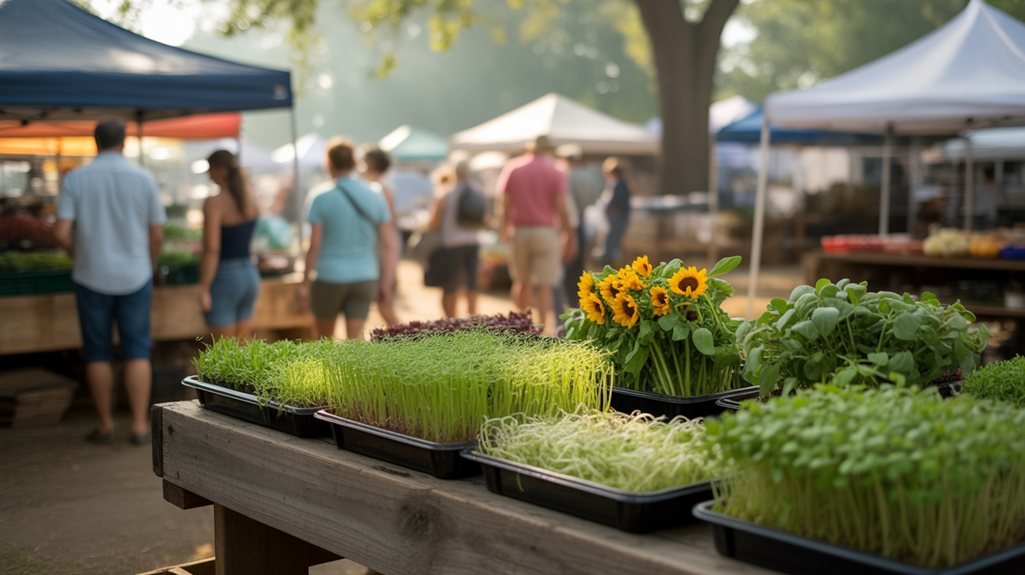
Louisiana’s approximately 108 USDA-listed farmers markets give microgreens vendors a seasonally aligned entry point, with the densest opportunities concentrated in New Orleans, Baton Rouge, and Lafayette. The primary season runs October through April, reducing cooling costs while extending shelf life at the booth. Each city attracts distinct buyer profiles — culinary professionals in New Orleans, home cooks in Baton Rouge and Lafayette — which directly shapes your product selection and pricing strategy. There’s considerably more to unpack as you continue.
Key Takeaways
- Louisiana has approximately 108 USDA-listed farmers markets, concentrated in New Orleans, Baton Rouge, and Lafayette, offering strong placement options for microgreens vendors.
- The primary market season runs October through April, aligning with microgreens’ cooler growing preferences and reducing infrastructure costs at the booth.
- New Orleans markets attract restaurant buyers and food-literate consumers, while Baton Rouge and Lafayette skew toward home cooks favoring local culinary traditions.
- Sunflower, radish, and pea shoots perform reliably across most Louisiana markets, making them strong core offerings for new microgreens vendors.
- The MGW Farmers Market Finder at markets.microgreensworld.com provides a searchable index of Louisiana markets, streamlining venue identification and vendor applications.
Farmers Markets in Louisiana for Microgreens Vendors
Louisiana’s approximately 108 USDA-listed farmers markets represent a substantial distribution network for microgreens vendors, with market density concentrated in New Orleans, Baton Rouge, and Lafayette, where consumer traffic and culinary culture consistently support specialty produce.
Unlike northern states where outdoor market seasons collapse under winter conditions, Louisiana’s calendar runs primarily fall through spring, aligning precisely with microgreens’ preference for cooler growing temperatures and reducing the climate-related production stress vendors face in peak summer months.
You’re working with a state where the season structure and the crop biology reinforce each other, which changes the calculus on whether farmers markets are worth pursuing as your primary sales channel.
Why Louisiana Markets Are Worth Your Attention
If you’re growing microgreens and looking for a reliable sales channel, Louisiana’s farmers market ecosystem deserves serious consideration. The state maintains approximately 108 markets in the USDA database, giving you meaningful geographic optionality as a microgreens farmers market vendor.
| Market Factor | Louisiana Reality |
|---|---|
| Total Markets | ~108 statewide |
| Peak Season | Fall through Spring |
| Key Cities | New Orleans, Baton Rouge, Lafayette |
The fall-through-spring calendar aligns precisely with microgreens’ production strengths, since cooler temperatures improve shelf stability and buyer demand rises during holiday and Mardi Gras seasons. Farmers markets Louisiana vendors access range from small neighborhood setups to high-traffic urban markets drawing serious culinary buyers. That diversity means you can match your current production volume to an appropriately scaled market.
What the Louisiana Market Season Looks Like
That geographic optionality matters most when you understand how Louisiana’s market calendar actually distributes across the year. Unlike northern states where vendors work compressed summer windows, Louisiana’s primary season runs fall through spring, aligning almost precisely with peak microgreens production conditions.
Cooler temperatures between October and April reduce your cooling infrastructure costs and extend shelf life at the booth. As a microgreens vendor Louisiana, you’re entering markets when your product naturally performs best.
Summer markets do exist, particularly in Baton Rouge and New Orleans, but they operate with reduced attendance and greater logistical demands. For farmers market Louisiana microgreens operations, the fall launch window is your strongest entry point, giving you access to holiday shoppers, peak chef sourcing cycles, and the most favorable growing conditions simultaneously.
How to Find the Right Market in Louisiana
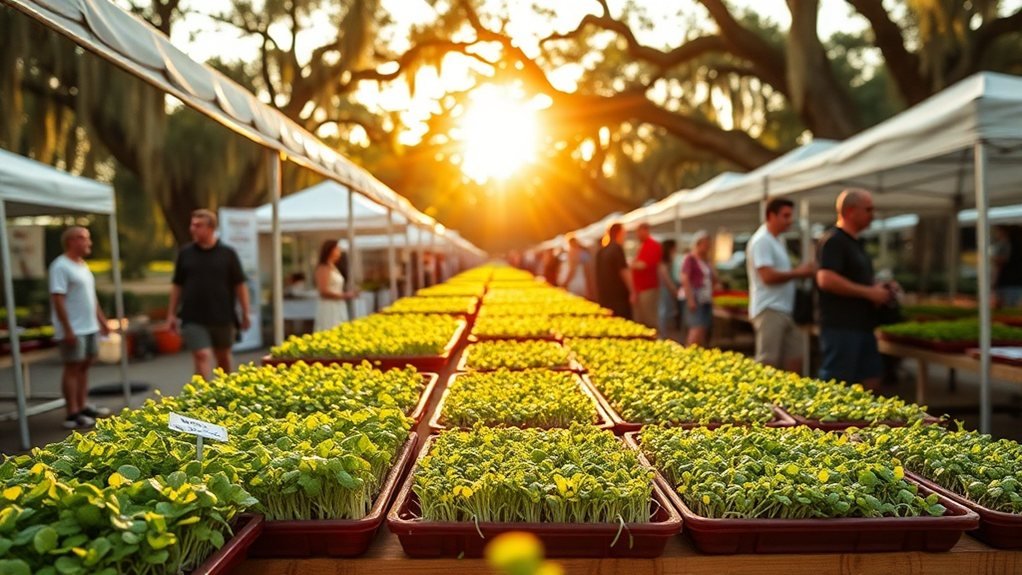
Selecting the right market isn’t simply a matter of proximity; it requires evaluating foot traffic patterns, vendor composition, and whether the market’s customer base already purchases specialty produce.
New Orleans markets, particularly those in the Crescent City Farmers Market network, attract an educated, culinary-focused demographic that responds well to microgreens, while Baton Rouge and Lafayette markets offer steadier, community-anchored attendance with less seasonal volatility.
Before you apply anywhere, confirm the market’s current vendor mix, its policy on agricultural versus value-added products, and how frequently a microgreens vendor has historically held a spot there.
What to Look for Before You Apply
Before you submit a single application, you need to evaluate whether a given market actually fits what you’re selling. For farmers markets louisiana microgreens vendors, the most consequential variable is customer demographics, specifically whether a given market attracts buyers who already understand specialty produce. Check vendor composition before you pursue how to get a farmers market booth, because a market saturated with commodity vegetable growers signals a price-sensitive environment where microgreens struggle to hold margin.
Assess foot traffic patterns, not just attendance figures, since a Tuesday morning market with 200 consistent regulars often outperforms a weekend market drawing 800 casual browsers. Contact the market manager directly, ask about current vendor categories, and request a walkthrough date before you formalize anything.
Markets Near New Orleans
The New Orleans metro consistently offers some of the most viable entry points for microgreens vendors in Louisiana, largely because its consumer base skews toward culinary awareness, with a dense concentration of restaurant-adjacent shoppers, chefs sourcing directly from market stalls, and households that treat specialty produce as a routine purchase rather than an occasional indulgence.
As a microgreens vendor Louisiana, this translates to buyers who already understand your product. The Crescent City Farmers Market operates multiple locations, giving you scheduling flexibility across the week. When evaluating any new orleans farmers market, prioritize foot traffic data over reputation alone. Vendor saturation matters too; a well-attended market with four existing microgreens sellers demands a sharper differentiation strategy than a smaller market with none.
Markets Near Baton Rouge and Lafayette
Baton Rouge and Lafayette each present distinct market environments worth evaluating on their own terms, rather than treating them as a single regional bloc.
The Baton Rouge farmers market scene draws a professional, urban demographic familiar with specialty produce, which means your microgreens pitch needs to be tight and your pricing defensible.
Lafayette farmers market culture runs deeper into Cajun culinary identity, where vendors who connect their product to local cooking traditions tend to gain traction faster.
You’re not selling the same way in both cities, and recognizing that distinction shapes how you position your trays and your story.
Before committing to either location, consult the MGW Market Finder at markets.microgreensworld.com to identify specific venues, seasonal windows, and application contacts across both markets.
What to Expect When You Get There
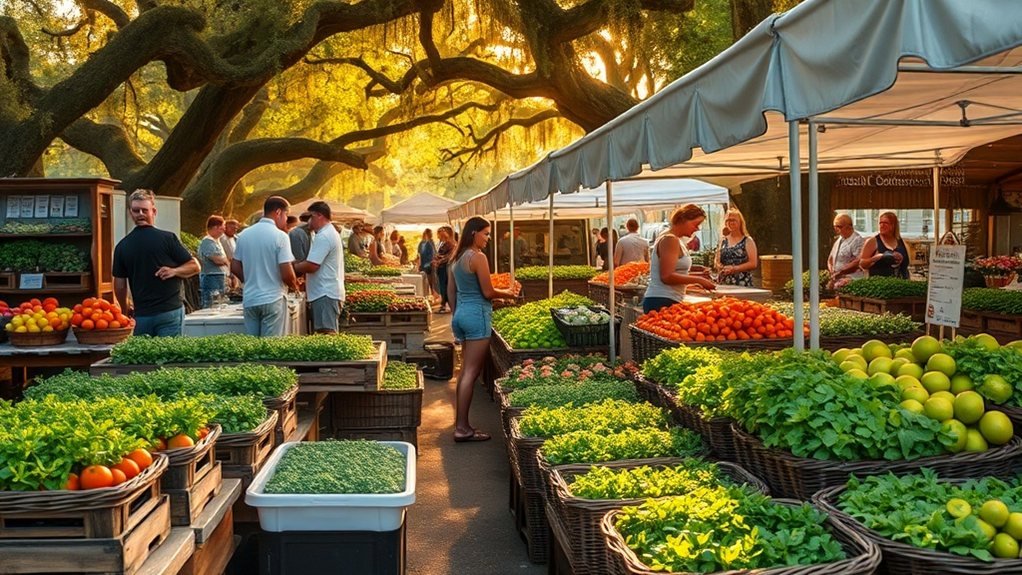
Once you’ve secured a spot, you’ll encounter booth fees that typically range from $15 to $50 per market day, depending on the market’s size, location, and foot traffic volume.
Larger urban markets in New Orleans or Baton Rouge often command higher fees, reflecting the denser customer base and the organizational infrastructure those markets maintain.
Beyond fees, you’ll need a canopy, a folding table, and a reliable cooler, since microgreens require temperature management to stay presentation-ready through a full Louisiana morning.
Booth Fees and Setup Basics
Before you commit to a market, you need a clear picture of what booth fees actually look like in Louisiana, because the range is wider than most new vendors expect.
A microgreens booth at a farmers market in a smaller parish might run $15 to $25 per market day, while established urban markets in New Orleans or Baton Rouge regularly charge $30 to $75.
Some markets assess annual membership fees on top of daily rates.
As a farmers market vendor in Louisiana, you should also budget for a canopy, weighted anchors, a folding table, and a portable display system.
Many markets require proof of liability insurance before approving your application, so confirm that requirement early.
What Moves at Louisiana Markets
Seasoned microgreens vendors in Louisiana will tell you that what sells isn’t always what you’d predict from growing trends elsewhere in the country. When you’re selling microgreens locally, Creole and Cajun culinary traditions shape buyer preferences in measurable ways. Shoppers here reach for varieties that complement bold, layered flavors, so sunflower, radish, and pea shoots tend to perform reliably across most markets. Microgreens for sale Louisiana vendors who track weekly sales consistently report that culinary familiarity drives repeat purchases more than nutritional marketing does.
New Orleans markets skew toward restaurant buyers and food-literate consumers, while Baton Rouge and Lafayette markets attract a stronger home-cook demographic. Understanding that distinction before you set up your booth helps you bring the right varieties, in the right quantities, on day one.
Getting Your Application Ready
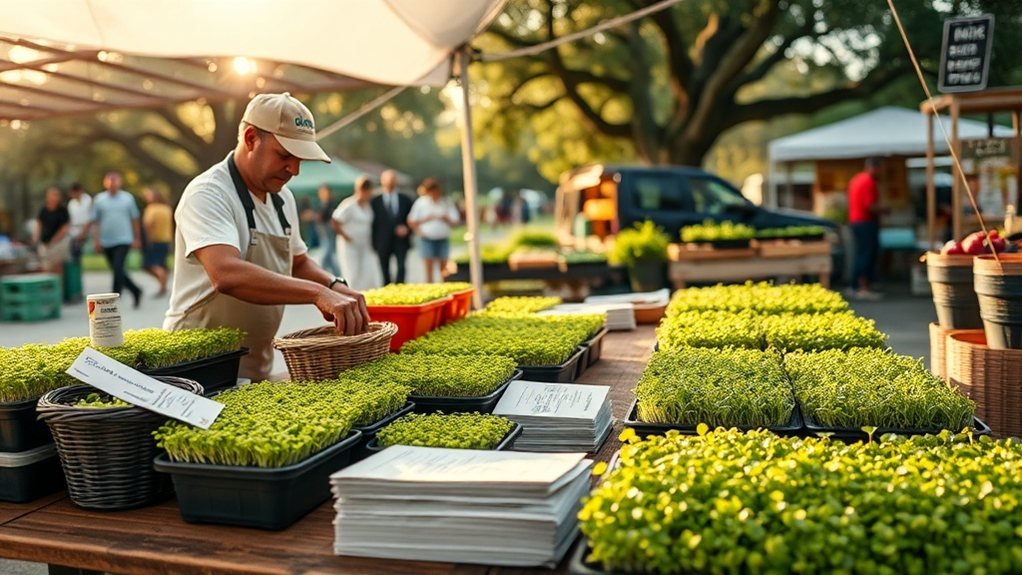
Your application is the first substantive signal a market manager receives about how you’ll operate as a vendor, so precision and completeness matter more than most growers anticipate.
Louisiana markets, particularly those in New Orleans and Baton Rouge, frequently receive more applications than available slots, which means an incomplete submission or vague product description gets filtered out before any conversation begins.
Before you submit, verify that your product list is specific, your liability insurance documentation is current, and your cottage food or commercial kitchen compliance reflects Louisiana’s particular regulatory requirements.
What Market Managers Want to See
Getting accepted into a Louisiana farmers market isn’t just about showing up with a product that looks good — market managers are evaluating whether you fit the operational and regulatory standards their market is already built around.
As a microgreens grower Louisiana, you’ll need to demonstrate compliance with cottage food laws or commercial kitchen requirements, depending on how your product is classified locally. Your farmers market vendor application should include proof of liability insurance, your growing setup documentation, and any relevant licensing.
Market managers want vendors who reduce their administrative burden, not create it. Submit clean, complete paperwork the first time. If your application references specific certifications upfront, you signal professionalism before the manager ever sees your product.
Common Mistakes to Avoid
Knowing what market managers want is only half the equation — the other half is making sure your application doesn’t undermine the credibility you’re trying to establish. Farmers market Louisiana vendors frequently disqualify themselves before a manager reads past page one.
| Mistake | Why It Costs You |
|---|---|
| Incomplete certifications | Signals unpreparedness to managers |
| Generic product descriptions | Fails to differentiate your microgreens |
| Missing liability insurance | Immediate disqualification at most markets |
When you sell microgreens at farmers market venues in Louisiana, precision in your paperwork communicates the same professionalism your booth will eventually display. A vague application suggests a vendor who hasn’t thought through operations. Managers selecting from competitive applicant pools will move past yours without a second look if foundational details are absent.
Use the Market Finder to Shortcut Your Search

Tracking down viable farmers markets in Louisiana doesn’t have to mean hours of cold calls, dead-end websites, and outdated spreadsheets. The MGW Farmers Market Finder at markets.microgreensworld.com pulls directly from USDA data, giving you a current, searchable index of approximately 108 Louisiana markets.
When you’re figuring out how to sell microgreens and need to build your microgreens market stand calendar strategically, that kind of consolidated data removes the guesswork. You can identify markets by region, cross-reference seasonal operating windows against Louisiana’s fall-through-spring cycle, and prioritize outreach toward high-density corridors like New Orleans, Baton Rouge, and Lafayette.
Time spent researching is time not spent growing. Employ the tool, filter your targets, and move directly into vendor applications with confidence. Start your search now at markets.microgreensworld.com.
Frequently Asked Questions
Can I Sell Microgreens at Multiple Louisiana Markets Simultaneously?
You can absolutely sell at multiple Louisiana markets simultaneously. Many vendors stack weekend markets to maximize volume. Just confirm each market’s exclusivity rules before signing agreements, since some restrict competing vendors within their zone.
Do Louisiana Markets Require Liability Insurance for Microgreens Vendors?
Most Louisiana markets require liability insurance, but coverage amounts vary. You’ll typically see $1M per occurrence requested. Confirm each market’s specific requirement during the application process before purchasing a policy.
How Do Louisiana’s Humidity Levels Affect Microgreens Display at Markets?
Louisiana’s humidity wilts your trays fast and fogs clamshells. You’ll want a small battery fan, ice packs under your table, and shaded setup to keep cuts looking fresh and sellable.
Are There Louisiana Markets That Operate Year-Round Without Seasonal Breaks?
A few Louisiana markets do run year-round, particularly in New Orleans and Baton Rouge. You’ll want to verify each market’s specific schedule directly, since even “year-round” markets sometimes take short holiday breaks.
What Licensing Does Louisiana Require Specifically for Selling Microgreens?
Louisiana classifies microgreens as produce, so you’ll need a Cottage Food or Produce Dealer license depending on your sales volume. Check with the Louisiana Department of Agriculture and Forestry before your first market day.
Wrap-up
You’ve got the framework now—find active markets, understand their operational patterns, and submit a complete application. Louisiana’s 108 markets, concentrated in New Orleans, Baton Rouge, and Lafayette, give you genuine flexibility in building a sustainable weekly route. Don’t overcomplicate the entry process; employ the market finder, verify current schedules, and target two or three markets that align with your production capacity before expanding. Your first vendor slot is closer than you think.