Tag: farmers markets

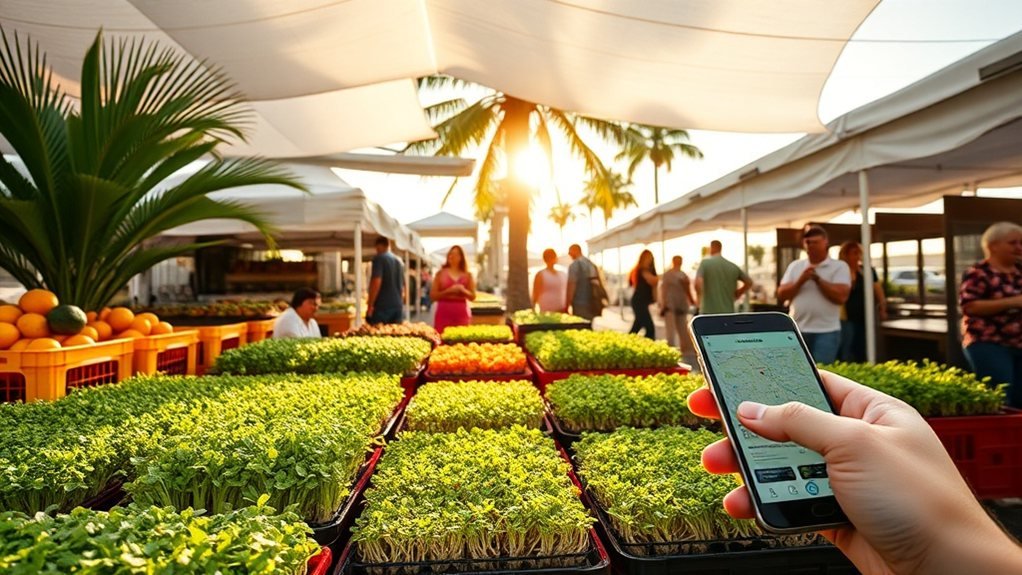
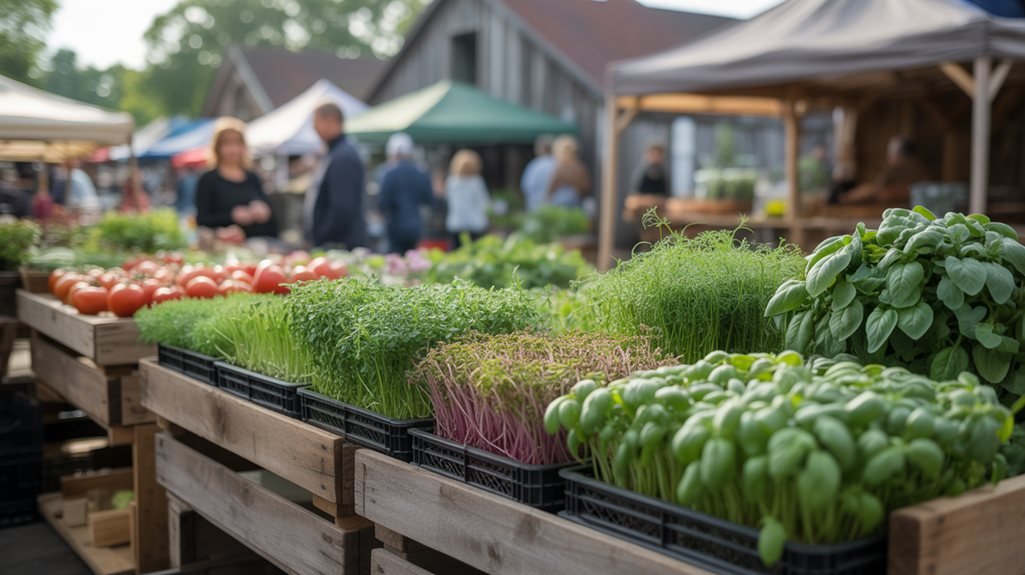
  • Farmers Markets in Michigan for Microgreens Vendors

    Farmers Markets in Michigan for Microgreens Vendors

    Michigan’s 241 USDA-listed farmers markets span community, regional, and established urban venues, each carrying distinct fee structures, buyer demographics, and competitive dynamics you’ll need to evaluate carefully. Detroit’s Eastern Market operates year-round, while most markets run May through October, making production timing critical. Sunflower shoots, radish, and accessible mixes consistently convert buyers, but vendor density varies significantly by location. Matching your volume to the right market profile—rather than chasing reputation—determines whether you recover booth costs and build sustainable revenue.

    Key Takeaways

    • Michigan has approximately 241 USDA-listed farmers markets, with density concentrated in Detroit, Ann Arbor, and Grand Rapids for microgreens vendors.
    • Sunflower shoots, pea shoots, radish, and broccoli microgreens sell consistently at Michigan markets among health-conscious buyers.
    • Booth fees range from $15–$25 at small markets to $50+ at established urban venues like Eastern Market.
    • Apply early, include exact variety names, product photos, liability insurance, and a valid cottage food license to avoid rejection.
    • The free Market Finder at markets.microgreensworld.com filters all 241 Michigan markets by geography and season for vendor planning.

    Farmers Markets in Michigan for Microgreens Vendors

    Michigan’s approximately 241 USDA-listed farmers markets represent a substantial commercial infrastructure for microgreens vendors seeking consistent, direct-to-consumer sales channels, with notable market density concentrated in Detroit, Ann Arbor, and Grand Rapids.

    You’re working within a defined seasonal window here, as the Michigan market calendar operates primarily spring through fall, which shapes how you’ll plan your production cycles, manage inventory, and time your vendor applications.

    Understanding both the scale of available market opportunities and the seasonal constraints specific to Michigan gives you a strategic foundation before you commit booth fees, adjust grow schedules, or submit a single application.

    Why Michigan Markets Are Worth Your Attention

    The scale of opportunity in Michigan’s farmers market ecosystem is something most microgreens growers underestimate until they start mapping it out. With approximately 241 farmers markets michigan vendors can access through the USDA database, the state presents a genuinely substantial landscape for building consistent sales channels. Markets in Detroit, Ann Arbor, and Grand Rapids operate with meaningful foot traffic and customer bases already familiar with specialty produce.

    When you’re positioning microgreens farmers market inventory across these urban corridors, you’re working within an established buyer culture, not creating demand from scratch. Michigan’s spring-through-fall calendar gives you a defined selling window with predictable planning parameters. That structure actually helps you allocate production capacity more deliberately than year-round markets in warmer states typically allow.

    What the Michigan Market Season Looks Like

    Once you understand the rhythm of Michigan’s agricultural calendar, planning your microgreens production schedule around it becomes considerably more straightforward.

    Most farmers markets michigan microgreens vendors target open between May and October, with peak activity concentrated in summer months when foot traffic justifies higher production volumes.

    Detroit’s Eastern Market operates year-round, offering a rare winter opportunity for the microgreens vendor michigan growers often overlook when first mapping their season.

    Ann Arbor and Grand Rapids markets follow tighter seasonal windows, typically closing by late October.

    Your grow cycles need to align with these opening and closing dates, not the other way around. Build your production calendar backward from your target market start date, accounting for germination and harvest timelines specific to each variety you’re running.

    How to Find the Right Market in Michigan

    match production to market demand

    Before you apply to any market, you need to evaluate vendor density, customer foot traffic patterns, and whether competing microgreens sellers are already established there. Michigan’s 241 USDA-listed markets vary significantly in scale and audience, from Detroit’s Eastern Market, which draws tens of thousands of visitors weekly, to smaller community markets in Ann Arbor and Grand Rapids that offer tighter vendor communities and more consistent repeat customers. Matching your current production volume to a market’s actual demand profile, rather than its reputation alone, determines whether you can sustain a vendor spot through Michigan’s spring-to-fall season.

    What to Look for Before You Apply

    Applying to the wrong market wastes time you could spend growing, so evaluating fit before you submit an application is a non-negotiable step in your vendor strategy.

    Before you pursue how to get a farmers market booth, confirm the market already attracts buyers who purchase specialty produce, since microgreens for sale Michigan vendors move consistently in markets where customers prioritize local, nutrient-dense food.

    Review the vendor mix carefully. If three other greens vendors already hold spots, your margin for differentiation narrows considerably.

    Check application fees, annual versus seasonal structures, and whether the market requires liability insurance minimums that affect your operating costs.

    A market in Ann Arbor‘s dense food-culture corridor performs differently than a rural weekend market, and that distinction shapes your entire sales approach.

    Markets Near Detroit

    Detroit’s market ecosystem is dense enough that choosing the wrong entry point can set your vendor trajectory back by a full season.

    The Eastern Market district operates year-round with Saturday markets drawing substantial foot traffic, making it a competitive but high-visibility environment for any microgreens vendor in Michigan.

    Smaller neighborhood markets in Ferndale and Royal Oak attract buyers who already understand specialty produce, which reduces your education burden at the table considerably.

    As a detroit farmers market applicant, you’re competing against established vendors who’ve held spots for years, so timing your application early, understanding each market’s vendor composition, and identifying gaps in current microgreens coverage will sharpen your positioning before you ever submit paperwork.

    Find markets near Detroit at [markets.microgreensworld.com](https://markets.microgreensworld.com).

    Markets Near Ann Arbor and Grand Rapids

    Moving west from the Detroit metro, the vendor landscape shifts in ways that matter for how you position your microgreens. The ann arbor farmers market operates under city management, attracting a buyer demographic that consistently responds to specialty produce with strong provenance. You’re competing alongside established growers there, so product differentiation isn’t optional.

    Grand Rapids presents a different dynamic. The grand rapids farmers market draws both wholesale-adjacent buyers and direct consumers, giving you two distinct conversion opportunities within a single selling session. Michigan’s 241 USDA-listed markets mean neither city exhausts your options, and surrounding communities often have shorter waitlists with buyers just as motivated to spend. Employ the free Market Finder at markets.microgreensworld.com to identify which specific markets currently have vendor openings near you.

    What to Expect When You Get There
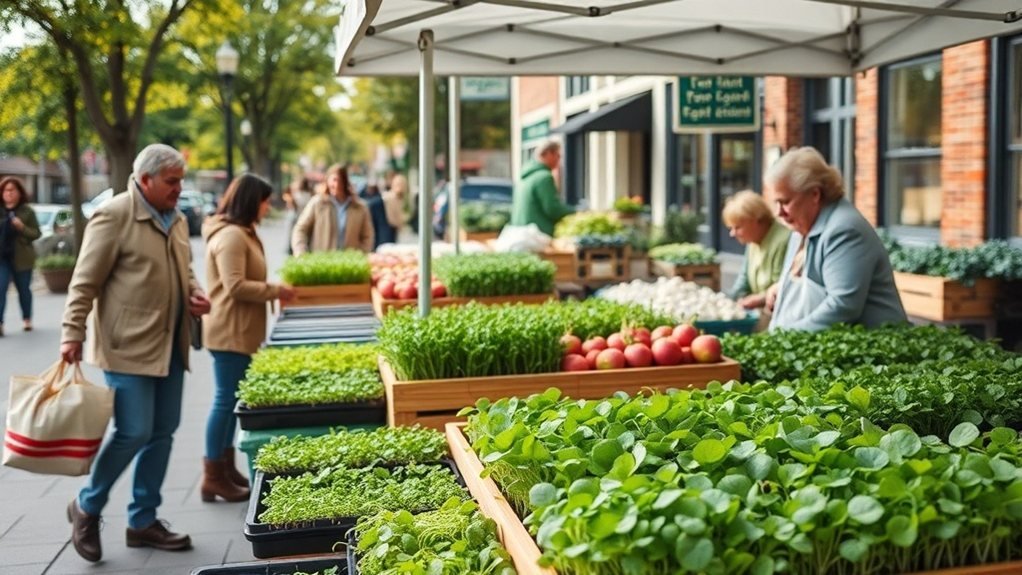
    pricing packing presentation determine success

    Once you secure a vendor spot, the operational realities of a Michigan farmers market will shape how you price, pack, and present your microgreens from the first Saturday morning onward.

    Booth fees across Michigan markets typically range from modest daily rates at smaller community markets to higher seasonal contracts at established venues like the Ann Arbor Farmers Market, where consistent foot traffic justifies the premium. Understanding what actually moves at Michigan markets, particularly which varieties and pack sizes generate consistent turnover, determines whether you recover your costs or simply practice your sales pitch.

    Booth Fees and Setup Basics

    Booth fees across Michigan’s farmers markets vary more than most new vendors anticipate, ranging from roughly $15 per day at smaller community markets to $50 or more at established urban venues like Eastern Market in Detroit or the Ann Arbor Farmers Market, where foot traffic and vendor competition drive costs upward.

    Market Type Typical Fee Range Setup Expectation
    Small community $15–$25/day Minimal infrastructure
    Mid-size regional $25–$40/day Designated stall spacing
    Urban established $50+/day Strict layout compliance

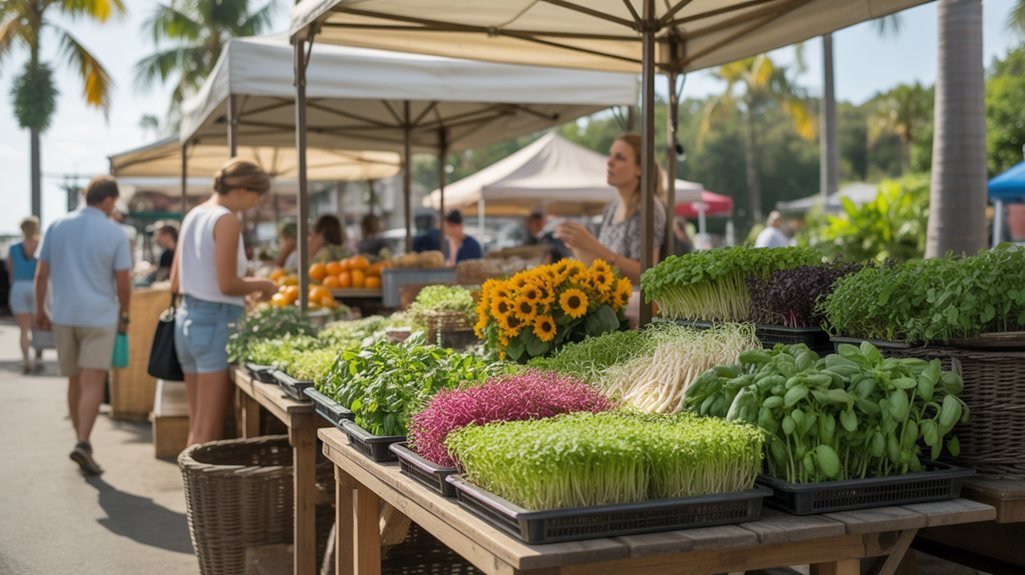
    As a farmers market vendor michigan, you’ll need a canopy, folding table, and weights. Your microgreens booth farmers market setup should communicate freshness immediately, because buyers form judgments within seconds of approaching your space.

    What Moves at Michigan Markets

    Veteran microgreens vendors at Michigan markets will tell you that not every variety sells at the same pace, and understanding those patterns before your first market day saves you from packing out product you thought would fly.

    Sunflower and pea shoots consistently draw farmers market michigan vendors toward high-volume production because buyers recognize them immediately. Radish and broccoli move steadily among health-conscious shoppers who already seek out local microgreens michigan growers. Mixes priced accessibly tend to convert first-time buyers faster than single-variety trays, which sell better to returning customers who’ve developed preferences.

    What stalls are you bringing those trays to, though? Start identifying your best Michigan market options at [markets.microgreensworld.com](https://markets.microgreensworld.com) using the free Market Finder tool before your next grow cycle finishes.

    Getting Your Application Ready

    clear compliant microgreens vendor application

    Your application is the first filter market managers employ to assess whether your product fits their vendor mix, so treating it as a formal business document rather than a casual inquiry significantly improves your acceptance rate.

    Most Michigan market managers evaluate applications on product category alignment, food safety compliance, and table presentation consistency, meaning a microgreens vendor who submits clear product photos, a valid cottage food or processor license, and a defined price list stands out from the majority of incomplete submissions.

    The most common mistake growers make is applying without researching whether the market already has a microgreens vendor, since many markets cap category representation to maintain product diversity across their vendor roster.

    What Market Managers Want to See

    When a market manager opens your application, they’re making a judgment call within the first few minutes, often before they’ve finished reading the second page. Your farmers market vendor application signals whether you understand professional market culture or whether you’ll create administrative friction later.

    To successfully sell microgreens at farmers market venues across Michigan, you need documentation that reflects operational clarity: current cottage food or commercial kitchen certification, liability insurance meeting the market’s minimum threshold, and product photos showing clean, labeled packaging. Managers reviewing dozens of applications will prioritize vendors who demonstrate they’ve already solved compliance problems independently. If your application reads like you’re still figuring out your setup, they’ll move to the next file. Precision and completeness in your submission communicate vendor maturity before you’ve spoken a single word.

    Common Mistakes to Avoid

    Most application rejections aren’t random, and if you study the pattern, a handful of consistent errors account for the majority of declined submissions across Michigan markets.

    Submitting without a complete product list is the first critical failure, because managers evaluating how to sell microgreens need exact variety names, not vague descriptions.

    Sending applications outside the acceptance window signals poor research, particularly at high-traffic Detroit and Ann Arbor markets where timing matters considerably.

    When you’re selling microgreens locally, arriving without liability insurance documentation or cottage food compliance materials eliminates you immediately, regardless of product quality.

    Many growers also underestimate the value of professional photography, submitting blurry booth images that undercut an otherwise strong application.

    Each of these errors is preventable through disciplined preparation before you submit anything.

    find michigan farmers markets

    Searching for available vendor spots across Michigan’s 241 USDA-listed farmers markets can eat up hours of manual research, but the MGW Market Finder at markets.microgreensworld.com consolidates that database into a single, searchable interface built specifically for growers.

    Michigan has 241 USDA-listed farmers markets. The MGW Market Finder puts them all in one place.

    As a microgreens grower Michigan-based or otherwise, you filter by geography and season, eliminating markets that don’t align with your production schedule before you’ve made a single call.

    The tool surfaces market contacts, locations, and operational details that would otherwise require individual site visits or phone inquiries.

    Rather than assembling a patchwork of county extension websites and local directories, you work from one structured source.

    When you’re ready to position your microgreens market stand in front of consistent foot traffic, start your search at markets.microgreensworld.com.

    Frequently Asked Questions

    Can I Sell Microgreens at Multiple Michigan Markets Simultaneously?

    You can absolutely run multiple Michigan markets simultaneously. Most vendors stack weekend markets strategically, covering Saturday and Sunday slots across different cities to move more product before your harvest window closes.

    Do Michigan Farmers Markets Require Proof of Commercial Kitchen Use?

    Most don’t, but some do. You’ll need to contact each market manager directly to confirm their specific requirements before you apply. Utilize the Market Finder at markets.microgreensworld.com to locate Michigan markets fast.

    How Early Should I Arrive to Set up My Microgreens Booth?

    Arrive at least 90 minutes before opening. You’ll need time to unload, find your assigned spot, set up your display, and arrange your trays before shoppers walk in. Early arrival also lets you connect with neighboring vendors.

    What Happens if My Microgreens Sell Out Before the Market Ends?

    Selling out early is a win, but don’t pack up yet. Put out a sign-up sheet for pre-orders, chat up browsers, and note what sold fastest so you’re better stocked next week.

    Are There Michigan Markets That Run Indoors During Winter Months?

    Yes, several Michigan markets run indoors through winter, including year-round venues in Detroit, Ann Arbor, and Grand Rapids. Search your target area at markets.microgreensworld.com to find markets listing winter or indoor operating schedules.

    Wrap-up

    You’ve got the framework now—finding the right Michigan market, steering applications, and showing up prepared. The state’s 241 listed markets represent real selling opportunities, particularly in Detroit, Ann Arbor, and Grand Rapids, where specialty produce demand remains consistently strong. Work within the seasonal window rather than against it, target markets matching your production volume, and submit complete applications early. Your next step is straightforward: employ the market finder and identify three viable locations within your region.

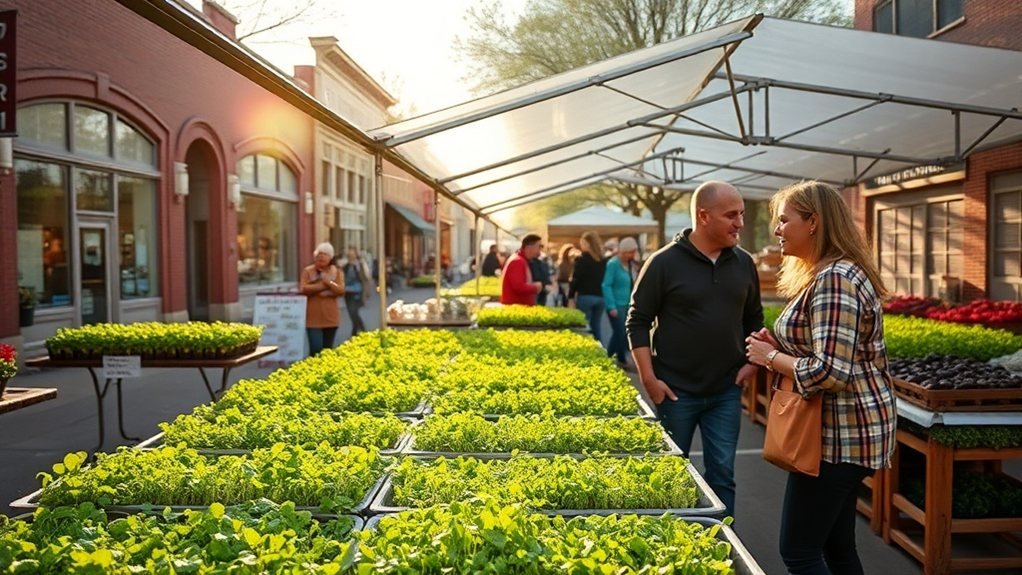
  • Farmers Markets in Ohio for Microgreens Vendors

    Farmers Markets in Ohio for Microgreens Vendors

    Ohio’s approximately 286 USDA-listed farmers markets give you a substantial network to enter as a microgreens vendor, spanning urban anchors like Columbus, Cleveland, and Cincinnati down to smaller community venues. Each city supports distinct buyer profiles, with health-conscious, food-literate demographics that reduce your educational burden considerably. You’ll need to assess vendor density, booth fees ranging from $25 to $75+, and seasonal scheduling before applying. The sections ahead break down exactly how to negotiate each step strategically.

    Key Takeaways

    • Ohio has approximately 286 USDA-listed farmers markets, concentrated in Columbus, Cleveland, and Cincinnati, offering microgreens vendors numerous venue options.
    • Market season runs late April through early November, with peak microgreens demand occurring mid-July through August.
    • Urban markets attract health-conscious, food-literate buyers, reducing the educational burden when selling specialty produce like microgreens.
    • Use the MGW Farmers Market Finder at markets.microgreensworld.com to filter Ohio markets by location and identify realistic delivery radii.
    • Before applying, visit markets on peak days to assess vendor density, existing greens categories, and potential saturation.

    Farmers Markets in Ohio for Microgreens Vendors

    Ohio’s approximately 286 USDA-listed farmers markets represent a substantial commercial infrastructure for microgreens vendors seeking consistent, repeat-customer sales channels.

    The state’s primary urban corridors, Columbus, Cleveland, and Cincinnati, concentrate significant market density, giving you multiple venue options within a manageable driving radius.

    Your market season runs predominantly spring through fall, which aligns naturally with peak microgreens production cycles and consumer demand for fresh, locally grown product.

    Why Ohio Markets Are Worth Your Attention

    When you’re evaluating where to sell microgreens, the scale and distribution of Ohio’s farmers market infrastructure makes it a genuinely competitive option. The USDA database lists approximately 286 farmers markets ohio vendors can access, with market density concentrated in Columbus, Cleveland, and Cincinnati. That concentration matters because it gives you real geographic flexibility when you’re mapping your vendor strategy.

    As a microgreens vendor ohio has enough active markets that you can test multiple venues without exhausting your options quickly. The spring-through-fall calendar aligns well with microgreens production cycles, giving you a sustained selling window rather than a narrow one.

    Ohio’s urban corridors also support health-conscious buyer demographics that consistently respond well to specialty produce, which positions microgreens favorably against conventional market offerings.

    What the Ohio Market Season Looks Like

    The Ohio market season typically runs from late April through early November, giving microgreens vendors a sustained operational window of roughly six to seven months across the state’s primary urban corridors. Columbus markets tend to open earlier in spring, while Cleveland’s lakefront locations often extend into October given their consistent weekend foot traffic.

    If you’re planning to sell microgreens at farmers markets in Ohio, you need to account for mid-July through August as your peak demand window, when competition increases but so does buyer volume. Understanding this seasonal arc matters because your production schedule, variety selection, and booth application timing all connect directly to it. Farmers markets Ohio microgreens vendors who ignore seasonal pacing often find themselves unprepared during the highest-value weeks of the calendar.

    How to Find the Right Market in Ohio

    evaluate markets for microgreens

    Before you apply to any Ohio market, you need to evaluate vendor density, customer traffic patterns, and seasonal scheduling to determine whether a given market can realistically support a specialty crop like microgreens.

    Columbus-area markets, particularly those operating through the North Market network, tend to attract health-conscious urban buyers who are already familiar with microgreens as a product category, which reduces your educational burden at the table.

    Cleveland and Cincinnati each host distinct market ecosystems, with Cleveland’s West Side Market drawing high foot traffic in a competitive, established vendor environment, while Cincinnati’s Findlay Market offers a comparably dense commercial atmosphere that rewards vendors who come prepared with consistent weekly supply.

    What to Look for Before You Apply

    Finding the right Ohio farmers market isn’t simply a matter of proximity, and applying to the nearest option rarely yields the best outcome for a microgreens vendor. Before you pursue how to get a farmers market booth, you need to assess each market’s customer demographics, foot traffic patterns, and existing vendor composition. A Columbus neighborhood market drawing health-conscious professionals will convert microgreens sales far more efficiently than a rural flea-style market where commodity produce dominates.

    As a farmers market vendor in Ohio, you should request current vendor lists, visit on peak days before applying, and identify whether a saturated greens category already exists. That pre-application research separates vendors who build sustainable weekly revenue from those who abandon markets after a single unproductive season.

    Markets Near Columbus

    Columbus gives microgreens vendors a meaningful advantage that most Ohio metros can’t match: a dense, geographically concentrated population of food-literate buyers distributed across distinct neighborhood markets. The North Market Downtown anchor draws consistent foot traffic from buyers already accustomed to premium specialty produce.

    Smaller satellite markets in Clintonville, Bexley, and Dublin serve hyperlocal clientele with demonstrated spending habits around fresh, locally grown food. When you position your microgreens booth at a Columbus farmers market strategically, you’re not guessing at demand, you’re entering an ecosystem where that demand already exists.

    Employ USDA-listed data to cross-reference which Columbus farmers market locations have the shortest vendor waitlists and the highest weekly attendance, then apply accordingly.

    Find Columbus markets and beyond at [markets.microgreensworld.com](https://markets.microgreensworld.com).

    Markets Near Cleveland and Cincinnati

    When you shift focus from Columbus to Cleveland and Cincinnati, you’re entering two distinct market ecosystems, each shaped by its own demographic pressures, neighborhood geography, and buyer behavior.

    Factor Cleveland Farmers Market Cincinnati Farmers Market
    Market Culture Working-class roots, growing foodie corridor Health-conscious, strong urban core demand
    Vendor Competition Moderate, concentrated near West Side Market Higher saturation in premium neighborhoods
    Buyer Behavior Value-driven with emerging premium interest Willing to spend on specialty crops
    Best Entry Points Suburban satellite markets Hyde Park, Findlay Market adjacents

    Both cities reward vendors who study neighborhood income patterns before applying. Employ the free Market Finder at [markets.microgreensworld.com](https://markets.microgreensworld.com) to filter Ohio listings by region.

    What to Expect When You Get There

    ohio market operational realities

    Once you’ve secured a spot, the operational realities of Ohio markets will shape nearly every decision you make, from how you price your trays to how you structure your production schedule. Booth fees across the state’s 286 USDA-listed markets vary considerably, with urban Columbus and Cleveland venues often running higher than rural or seasonal markets, so your cost-per-market calculation needs to account for that variance before you commit.

    Understanding which microgreens varieties actually move in your specific market, whether that’s sunflower in a health-focused neighborhood market or specialty mixes at a high-traffic urban venue, determines whether you leave with empty trays or haul product back home.

    Booth Fees and Setup Basics

    Booth fees across Ohio’s farmers markets vary more than most new vendors expect, and understanding that variance before you apply saves you from committing to a market that quietly eats into your margins.

    As a microgreens farmers market vendor in Ohio, you’ll encounter daily fees ranging from roughly $25 at smaller community markets to $75 or more at established urban venues. Some farmers market Ohio vendors pay seasonal flat rates instead, which rewards consistent attendance but demands upfront capital.

    Beyond fees, most markets require a six-foot table, a canopy with weighted legs, and your applicable Ohio cottage food or produce vendor permits. Know these requirements before your first setup day, not after you’ve already loaded the van.

    What Moves at Ohio Markets

    Knowing your fees and setup requirements gets you through the gate, but what actually sells once you’re behind the table is a separate education entirely. As a microgreens grower Ohio markets have trained, you’ll notice buyers respond to visual contrast and variability across your spread.

    What Shoppers Notice What Converts to Sales
    Dense, colorful trays Sunflower and pea shoots
    Familiar names Radish and broccoli
    Sample availability Repeat purchases
    Professional labeling Perceived value increase
    Consistent weekly presence Customer loyalty

    Positioning microgreens for sale Ohio-wide means understanding that Columbus weekend markets move volume differently than rural county markets. Expertise here requires tracking what sells by location, not assumptions.

    Find your next Ohio market at [markets.microgreensworld.com](https://markets.microgreensworld.com).

    Getting Your Application Ready

    prepare detailed vendor application

    Your application is the market manager’s first point of evaluation, and it needs to demonstrate that you’re a serious, prepared vendor before you’ve ever set up a table.

    Most Ohio market managers are reviewing multiple applicants simultaneously, so your submission has to clearly communicate what you grow, how you handle food safety compliance, and why your product fits their existing vendor mix.

    Growers who treat the application as a formality, submitting vague product descriptions or missing liability insurance documentation, typically get passed over in favor of applicants who’ve addressed every requirement with specificity.

    What Market Managers Want to See

    Market managers in Ohio are gatekeepers with limited booth space and consistent pressure to maintain product diversity, so understanding what they’re assessing before you submit your application will save you from easily avoidable rejections.

    Your farmers market vendor application signals whether your microgreens business operates with professionalism or improvisation.

    Managers evaluate proof of liability insurance, your Ohio cottage food registration or commercial kitchen documentation, and evidence that your product fills a gap rather than duplicating an existing vendor.

    Columbus markets, for instance, often already carry one microgreens vendor, making differentiation through specialty varieties or value-added products strategically crucial.

    Present clean product photography, a clear pricing structure, and a defined growing practice.

    Applications lacking these elements get deprioritized, regardless of product quality.

    Common Mistakes to Avoid

    Understanding what managers evaluate is only part of the equation; the other part is recognizing where growers consistently undermine their own applications before a manager ever reads them carefully.

    Mistake Why It Costs You
    Vague product descriptions Managers can’t assess your market fit
    No proof of compliance Applications get deprioritized immediately
    Generic cover letters Shows no knowledge of that specific market
    Late submissions Spots fill before you’re even considered

    When you’re selling microgreens locally in Ohio, these errors signal inexperience to managers who review dozens of applications. Local microgreens ohio vendors who research each market’s specific vendor demographics, customer base, and product gaps before applying consistently outperform those who submit identical packets everywhere.

    ohio microgreens market finder

    Searching for a viable market slot in Ohio doesn’t have to mean driving across counties on a hunch or cold-calling market managers who may not have openings. The MGW Farmers Market Finder at markets.microgreensworld.com pulls from USDA data across Ohio’s approximately 286 listed markets, letting you filter by location before you commit a single hour of outreach. If you’re figuring out how to sell microgreens systematically rather than reactively, this tool compresses weeks of manual research into a focused, actionable shortlist.

    You can identify which microgreens market stand opportunities exist within a realistic delivery radius, cross-reference market schedules against your production timeline, and approach managers with precision. Try the free Market Finder at markets.microgreensworld.com to start building your Ohio vendor strategy today.

    Frequently Asked Questions

    Can I Sell Microgreens at Ohio Farmers Markets Without a License?

    You can sell microgreens at Ohio farmers markets without a license in most cases, but you’ll need to verify each market’s specific vendor requirements, since individual markets sometimes add their own rules beyond state regulations.

    How Much Does a Typical Ohio Farmers Market Vendor Booth Cost?

    Ohio farmers market booth fees typically run $20 to $50 per day, though seasonal spots can cost $200 to $800 upfront. Find markets that fit your budget at markets.microgreensworld.com.

    Do Ohio Markets Require Liability Insurance From Microgreens Vendors?

    Most Ohio markets require it. You’ll typically need a general liability policy with $1 million coverage and the market listed as an additional insured. Budget around $300 to $500 annually.

    Can I Sell at Multiple Ohio Farmers Markets on the Same Weekend?

    Yes, you can, but you’ll need separate vendor applications and fees for each market. Scheduling conflicts and staffing your tables simultaneously are the real barriers most Ohio microgreens vendors hit first.

    What Ohio Cottage Food Laws Apply to Packaged Microgreens Sales?

    Ohio’s cottage food law doesn’t cover microgreens because they’re considered produce, not processed food. You’ll sell them as fresh agricultural products, so standard food handler requirements and market rules apply instead.

    Wrap-up

    Ohio’s farmers market landscape offers microgreens growers genuine, scalable entry points, from high-volume Columbus markets to lower-competition regional venues. You’ve got the production side covered; now it’s about matching your output to the right venue, submitting a complete application, and arriving prepared. Don’t wait until the season opens to start researching. Employ the Market Finder at markets.microgreensworld.com to identify Ohio markets near you and begin the vendor process before available spots disappear.

  • Farmers Markets in Illinois for Microgreens Vendors

    Farmers Markets in Illinois for Microgreens Vendors

    Illinois hosts approximately 249 farmers markets, with the densest concentrations in Chicago, Naperville, and Evanston — each presenting distinct buyer behaviors and revenue potential for microgreens vendors. You’ll find urban Chicago markets deliver higher foot traffic and culinary engagement, while Naperville’s suburban demographic responds strongly to premium positioning. Application deadlines for high-traffic locations typically close January–February, so aligning production planning with your market search is essential. What follows breaks down exactly how to manage that process strategically.

    Key Takeaways

    • Illinois has approximately 249 farmers markets listed in the USDA database, with the highest density in Chicago, Naperville, and Evanston.
    • The primary selling season runs May through October, with Chicago-area markets sometimes extending from late April through November.
    • Urban markets like Lincoln Park and Logan Square offer high foot traffic but attract more competition among microgreens vendors.
    • Vendor application deadlines for high-traffic urban markets frequently close in January or February, requiring early preparation.
    • Sunflower, pea shoots, and radish are the most consistently moving microgreens varieties across Illinois farmers markets.

    Farmers Markets in Illinois for Microgreens Vendors

    illinois microgreen market density

    Illinois offers microgreens vendors a substantial entry point into direct-to-consumer sales, with approximately 249 farmers markets listed in the USDA database spanning urban centers, suburban corridors, and smaller agricultural communities.

    If you’re already producing and looking to move product consistently, the state’s market density, particularly in Chicago, Naperville, and Evanston, means you’re rarely more than a short drive from a viable selling opportunity.

    The Illinois market calendar runs primarily spring through fall, so you’ll want to identify your target markets early, since vendor applications for the busiest urban locations close well before the first Saturday of the season.

    Why Illinois Markets Are Worth Your Attention

    With roughly 249 farmers markets listed in the USDA database, Illinois offers microgreens vendors a substantial pool of potential selling locations, concentrated heavily in the Chicago metro area, Naperville, and Evanston.

    That density matters because it gives you genuine optionality when you’re deciding where to test your product and pricing. As a microgreens vendor in Illinois, you’re not limited to one seasonal window either, since the spring-through-fall calendar across the state provides enough active market weeks to build consistent revenue patterns.

    Chicago’s sheer population base means foot traffic at established markets runs high, which accelerates your ability to gather customer feedback and hone your variety mix. If you’re serious about scaling, Illinois is a competitive but genuinely viable landscape worth entering deliberately.

    What the Illinois Market Season Looks Like

    Most Illinois farmers markets operate on a spring-through-fall schedule, typically running from May through October, though some Chicago-area markets extend into November or open as early as late April. When you’re planning to sell microgreens at farmers markets, understanding this seasonal window shapes your entire production calendar.

    Season Phase Months Vendor Opportunity
    Early Season April–May Limited competition, high demand
    Peak Season June–August Maximum foot traffic
    Late Season September–November Dedicated buyer loyalty

    Chicago-area farmers market Illinois schedules tend to compress vendor application deadlines into January and February, meaning your production planning and market applications need to run simultaneously, well before your first tray gets seeded.

    How to Find the Right Market in Illinois

    assess foot traffic and exclusivity

    Finding the right Illinois market starts before you ever fill out an application, because the variables you assess early, such as foot traffic patterns, vendor density, and category exclusivity policies, determine whether your microgreens will actually move.

    Chicago’s concentration of high-volume markets, including those operating in Lincoln Park, Logan Square, and the broader North Shore corridor, offers competitive but lucrative placement opportunities for vendors who can sustain consistent weekly supply.

    Naperville and Evanston each support well-established market ecosystems where buyer demographics skew toward health-conscious households, making them strategically viable entry points if Chicago’s saturation presents barriers.

    What to Look for Before You Apply

    Before you submit a single application, you need to assess whether a given Illinois market is actually worth your time and effort. Not every microgreens farmers market opportunity translates into productive vendor activity, and Illinois presents enough variety across its 249 USDA-listed markets to demand deliberate selection criteria. Examine foot traffic patterns, vendor density, and whether existing produce sellers already dominate the stall layout.

    As a farmers market vendor Illinois operates within a competitive, region-specific ecosystem, where Chicago’s Saturday markets draw substantially different demographics than Naperville’s mid-week formats. Confirm the market’s operating schedule aligns with your production cycles, since microgreens have narrow harvest windows.

    Request the vendor agreement before applying, reviewing fee structures, product restrictions, and exclusivity clauses that could limit your positioning against competing specialty growers.

    Markets Near Chicago

    Chicago’s metropolitan footprint spans enough distinct neighborhoods and suburbs that you’re effectively steering through multiple micro-markets within a single regional context, each carrying its own demographic profile, purchasing behavior, and vendor saturation level.

    A microgreens booth at a chicago farmers market in Lincoln Park competes differently than one operating in Evanston or Oak Park, where foot traffic patterns, price tolerance, and buyer familiarity with specialty produce shift considerably.

    You need to identify which markets have existing microgreens vendors before applying, because walking into a saturated slot rarely produces the results you want.

    Naperville’s suburban markets tend toward consistent weekend attendance, while Chicago’s neighborhood markets reward vendors who understand hyperlocal buyer identity.

    Match your production volume and variety selection to the specific market’s demonstrated demand before committing an application.

    Markets Near Naperville and Evanston

    Naperville and Evanston represent two structurally different market environments, and understanding that distinction shapes how you approach vendor applications in each area.

    The Naperville farmers market draws a suburban consumer base with strong disposable income, meaning buyers there respond well to premium positioning and consistent weekly presence.

    Evanston operates differently. The Evanston farmers market sits adjacent to a dense urban corridor, attracting shoppers who prioritize sourcing transparency and product variety, which rewards vendors who communicate growing methods clearly.

    Both markets carry competitive vendor pools, so your application needs to demonstrate reliability and production capacity, not just product quality.

    Employ the free Market Finder at markets.microgreensworld.com to identify current vendor opportunities across both markets and compare application windows before committing to either location.

    What to Expect When You Get There

    farmers market microgreens margins

    Once you’ve secured a spot, the operational realities of an Illinois farmers market will shape how you allocate your time, capital, and product inventory from the first weekend forward.

    Booth fees across the state vary considerably, ranging from modest flat rates at smaller suburban markets to percentage-based structures at high-traffic venues in Chicago and Naperville, so your margin calculations need to account for that variability before you commit.

    Knowing which microgreens varieties move consistently at Illinois markets, particularly sunflower, pea shoots, and radish in spring-to-fall conditions, lets you calibrate your grow schedule to actual demand rather than assumption.

    Booth Fees and Setup Basics

    Expect booth fees at Illinois farmers markets to vary considerably depending on the market’s location, size, and organizational structure, with weekly vendor fees typically ranging from $25 to $75 at mid-sized community markets and climbing well above $100 at high-traffic urban markets in Chicago or Naperville. Knowing how to get a farmers market booth means budgeting accurately before you apply.

    Market Type Typical Weekly Fee
    Small community market $25 to $45
    Mid-sized suburban market $50 to $75
    High-traffic urban market $100 and above

    For farmers markets Illinois microgreens vendors target, most require a six-foot table, a canopy, and liability insurance. Confirm electrical access requirements early, since some markets prohibit extension cords entirely.

    What Moves at Illinois Markets

    Budgeting your booth fee is only part of what determines whether a market works for you, because the other half is understanding what Illinois shoppers actually buy once you’re set up behind that table.

    Farmers market Illinois vendors who track sales consistently report that sunflower and pea shoots move fastest, particularly at urban markets where culinary awareness runs higher.

    If you’re putting microgreens for sale Illinois customers haven’t seen before, expect questions before purchases.

    Shoppers in Evanston and Naperville tend to engage more deeply than those at smaller rural stops, which affects how you position variety against volume.

    You’ll learn more from two markets than from any prep work, so get in front of actual buyers and let the data guide your next decision.

    Getting Your Application Ready

    present complete professional microgreens application

    Your application is the market manager‘s first and only impression of you before you ever set up a table, so treating it as a formal business document rather than a casual inquiry significantly improves your odds of acceptance.

    Most Illinois market managers are evaluating product fit, vendor reliability, and whether your microgreens complement or duplicate what’s already in their lineup, which means you’ll want to present clean product photography, a clear growing methodology, and any applicable food handler certifications upfront.

    Growers who submit incomplete applications, omit their product list, or fail to specify whether they’re selling fresh-cut or living product are routinely passed over, even when the market has open slots.

    What Market Managers Want to See

    When you submit an application to an Illinois farmers market, the manager reviewing it isn’t looking for enthusiasm — they’re performing a functional audit of whether your operation fits the market’s existing vendor mix, regulatory standing, and logistical capacity. As a microgreens farmers market vendor application, your documentation signals professionalism before you ever set up a table.

    What They Review Why It Matters
    Illinois food handler certification Confirms regulatory compliance
    Cottage food or processing license Establishes legal product category
    Proof of grow location Validates local microgreens illinois sourcing
    Liability insurance certificate Protects market from vendor incidents
    Product photos or samples Demonstrates presentation and quality standards

    Submit complete packages only. Incomplete applications get deprioritized, not followed up on.

    Common Mistakes to Avoid

    Most application rejections don’t come from bad microgreens — they come from incomplete paperwork, misread deadlines, and documentation that doesn’t match what Illinois market managers are actually required to verify.

    When you’re pursuing a farmers market vendor application, submit every document requested, not just what seems relevant to you. Your cottage food registration, liability insurance certificate, and grow space photos should arrive together, not piecemeal.

    Many growers selling microgreens locally underestimate how seriously managers treat incomplete files; an application missing one attachment gets shelved, not followed up on.

    Confirm the application window directly with each market, because USDA listing dates frequently differ from actual submission deadlines. Read the vendor category requirements carefully before applying, since misclassifying your product creates avoidable friction with managers from the first contact.

    find illinois microgreens markets

    Tracking down viable farmers markets in Illinois doesn’t have to mean hours of scattered web searches, cold calls to municipal offices, and half-updated event pages. The MGW Farmers Market Finder at markets.microgreensworld.com consolidates USDA data covering approximately 249 Illinois markets, giving you a structured starting point rather than a fragmented one.

    If you’re still figuring out how to vend microgreens at your first market, filtering by region narrows the field immediately. Chicago, Naperville, and Evanston show the densest concentrations, which matters when you’re evaluating whether your microgreens market stand can realistically serve a location without unsustainable travel.

    Employ the tool to identify markets aligned with your production capacity and season, then move directly into outreach. Start your search at markets.microgreensworld.com.

    Frequently Asked Questions

    Can I Sell Microgreens at Multiple Illinois Markets Simultaneously?

    You can sell at multiple Illinois markets simultaneously by assigning different team members or trusted reps to each location. Just confirm each market’s exclusivity clauses first, since some prohibit vendors from working competing nearby markets.

    Do Illinois Farmers Markets Require Product Liability Insurance for Microgreens Vendors?

    Most Illinois farmers markets require product liability insurance, and you’ll typically need $1M per occurrence. Get your certificate before applying because market managers ask for it upfront during the vendor approval process.

    How Early Should I Arrive to Set up My Microgreens Booth?

    Arrive 90 minutes before opening. You’ll need time to unload, position your table, set up your display, and still have a few minutes to breathe before customers walk in.

    Are There Illinois Markets That Run Indoors During Winter Months?

    Yes, some Illinois markets do run indoors during winter, particularly in Chicago and surrounding suburbs. You’ll want to verify each market’s season dates directly, since indoor winter schedules vary widely by location and venue availability.

    What Licenses Do Illinois Microgreens Growers Need Before Selling?

    You’ll need an Illinois Food Handler certificate and must register as a cottage food operation or obtain a food business license depending on your annual sales volume and where you’re selling.

    Wrap-up

    You’ve got the information you need to move forward. Illinois markets are competitive, but they’re also accessible if you approach the process systematically—researching vendor requirements early, preparing compliant documentation, and targeting markets where foot traffic justifies your setup costs. Don’t wait until spring to start your outreach. Vendor rosters close before the season opens, and the microgreens category fills quickly. Employ the market finder, identify your targets, and submit your applications now.

  • Farmers Markets in Texas for Microgreens Vendors

    Farmers Markets in Texas for Microgreens Vendors

    Texas offers roughly 298 USDA-listed farmers markets, giving microgreens vendors a substantial and geographically diverse pool of venues to evaluate. Peak market activity runs October through May, though Austin, Dallas, and Houston sustain year-round opportunities across distinct neighborhood demographics. Southern Texas mild temperatures extend consumer foot traffic beyond northern seasonal limits. You’ll need to assess booth fees, vendor rules, and specialty produce gaps before committing to any application—factors this guide breaks down systematically ahead.

    Key Takeaways

    • Texas has roughly 298 USDA-listed farmers markets statewide, with peak vendor activity running October through May.
    • Austin, Dallas, and Houston offer the densest market clusters, giving microgreens vendors multiple application opportunities within single metros.
    • Peripheral Austin markets in Cedar Park, Round Rock, and Pflugerville present lower competition for first-time microgreens vendors.
    • Use the MGW Market Finder at markets.microgreensworld.com to filter Texas markets and identify openings without manually searching all 298 listings.
    • Target markets where specialty produce exists but microgreens remain underrepresented to maximize sell-through and reduce direct competition.

    Farmers Markets in Texas for Microgreens Vendors

    Texas holds roughly 298 farmers markets in the USDA database, making it one of the more target-rich environments for a microgreens vendor building a consistent sales schedule. Because the state’s climate runs hot through the summer months, most markets concentrate their peak activity from fall through spring, which aligns well with the production cycles many indoor microgreens growers already maintain. You’re working with a seasonal window that actually favors your operation, particularly in cities like Austin, Dallas, and Houston, where market density gives you multiple venue options within a single metro area.

    Why Texas Markets Are Worth Your Attention

    If you’re looking for a regional market environment with genuine scale, Texas stands out for straightforward reasons. The USDA database lists approximately 298 texas farmers markets statewide, a figure that represents meaningful vendor opportunity across urban, suburban, and rural corridors.

    As a microgreens vendor texas, you’re operating in a state where year-round mild temperatures, particularly across the southern regions, sustain consistent consumer foot traffic well outside typical northern growing seasons. The Texas market calendar runs primarily fall through spring, which aligns precisely with when microgreens perform best in controlled indoor growing environments.

    Austin, Dallas, and Houston each anchor dense market clusters, giving you multiple entry points within a single metropolitan radius, reducing travel costs while maximizing application attempts across high-volume, well-attended venues.

    What the Texas Market Season Looks Like

    Understanding the scale of available markets gets you only so far without understanding when those markets are actually open and accepting vendors. Texas operates primarily on a fall-through-spring calendar, which aligns directly with your production cycles as a microgreens farmer.

    The brutal summer heat compresses outdoor market activity significantly, particularly in Houston and Dallas, where August temperatures routinely exceed 100°F. You’ll find the densest vendor opportunity windows running October through May, with some year-round farmers markets in Texas cities maintaining weekly schedules regardless of season. Austin’s markets tend to sustain stronger off-season attendance than most.

    Timing your vendor applications to arrive well before fall openers, typically around August or September, positions you ahead of the competition at any microgreens farmers market worth pursuing.

    How to Find the Right Market in Texas

    assess markets by timing traffic

    Before you apply to any market, you need to assess foot traffic patterns, vendor fee structures, and whether the market’s customer base aligns with the price points microgreens command. Texas offers roughly 298 USDA-listed markets, with dense clusters in Austin, Dallas, and Houston, giving you multiple viable options within a single metropolitan area. Austin’s year-round market activity, compared to Dallas and Houston markets that follow a more pronounced fall-through-spring calendar, means your timing and product availability will factor directly into which application you prioritize.

    What to Look for Before You Apply

    Choosing the right market before you apply matters far more than most new vendors realize, because not every farmers market in Texas is structured to support specialty produce like microgreens.

    As a farmers market vendor Texas, you need to assess customer demographics, foot traffic patterns, and vendor category saturation before committing your application fee. A microgreens booth farmers market setup performs best where health-conscious shoppers already dominate the buyer pool, such as markets adjacent to fitness districts or university neighborhoods.

    Review each market’s vendor rules carefully, particularly restrictions on pre-packaged goods, signage dimensions, and table configurations.

    Contact the market manager directly to ask whether a produce or specialty greens slot is currently open, because many Texas markets maintain waitlists that aren’t publicly disclosed.

    Markets Near Austin

    Around Austin, the density of farmers markets gives microgreens vendors more entry points than almost any other metro area in Texas, but that volume also means you’ll encounter more competition for specialty produce slots.

    The austin farmers market ecosystem spans multiple neighborhoods, each with distinct customer demographics and vendor saturation levels. Established markets in central Austin draw experienced microgreens growers texas-wide, making newer satellite markets in Cedar Park, Round Rock, and Pflugerville more accessible for first-time vendors building a track record.

    Applying to a smaller peripheral market first lets you hone your display, pricing, and sales rhythm before competing for limited slots at higher-traffic venues.

    Employ the MGW Market Finder at markets.microgreensworld.com to identify which Austin-area markets currently have openings.

    Markets Near Dallas and Houston

    Dallas and Houston operate on a scale that changes how you approach market selection entirely. A dallas farmers market in a high-traffic district like Farmers Market Dallas draws consistent foot traffic, but so does intense vendor competition. You’re not just showing up; you’re competing against established microgreens producers who’ve held those spots for years.

    Houston follows a similar pattern. The houston farmers market network spans multiple neighborhoods, each with distinct buyer demographics and vendor expectations. Midtown attracts different customers than suburban Katy or The Heights.

    In both metros, your strategy should prioritize markets where specialty produce vendors are present but microgreens specifically remain underrepresented. Employ the MGW Market Finder at [markets.microgreensworld.com](https://markets.microgreensworld.com) to identify exactly those gaps.

    What to Expect When You Get There

    market specific microgreens booth realities

    Once you secure a vendor spot, the operational realities of Texas markets will define your early weeks more than your growing schedule will.

    Booth fees across the state vary considerably, typically ranging from modest daily rates at smaller community markets to recurring weekly commitments at established urban venues in Austin, Dallas, and Houston, where demand and foot traffic justify the higher cost.

    Understanding which microgreens varieties actually move in your specific market, whether that’s sunflower in high-volume suburban settings or specialty blends at curated urban markets, shapes how you allocate tray space before you ever load the truck.

    Booth Fees and Setup Basics

    Booth fees at Texas farmers markets vary more than most new vendors expect, typically ranging from $25 to $75 per market day at mid-sized urban markets, though premium spots in Austin’s SFC Farmers’ Market or Houston’s Urban Harvest can climb higher depending on placement and season. When you’re figuring out how to get a farmers market booth, factor that fee against your projected sell-through before committing.

    Most Texas markets require a 10×10 canopy, weighted properly against wind, which is a real consideration at open-air venues. Tables, signage, and a cash or card processing setup complete your footprint.

    Selling farmers markets Texas microgreens means your display needs refrigeration awareness too, since living trays or cut product degrades fast in direct heat. Plan accordingly before your first market day.

    What Moves at Texas Markets

    Getting your setup dialed in matters, but it won’t tell you what actually sells once you’re standing behind that table. Texas farmers market vendors operating in fall-through-spring windows consistently report stronger movement on mild, versatile varieties that complement regional cooking. As a microgreens for sale texas vendor, understanding demand patterns gives you a real operational edge.

    Variety Market Performance
    Sunflower High visual appeal, strong repeat buyers
    Radish Fast turnover, price-sensitive customers
    Pea Shoots Consistent demand, chef interest

    Farmers market texas vendors who track weekly sales by variety outperform those who guess. Your table data, collected across four to six market days, will reveal which crops justify expanded tray production and which occupy space inefficiently.

    Getting Your Application Ready

    tailored complete vendor application essentials

    Your application is the market manager‘s first substantive evidence of whether you’re a serious vendor, and most rejections stem from incomplete submissions rather than weak product lines. When you prepare your materials, you’ll want to anticipate what managers are actually evaluating: proof of food handler certification, liability insurance documentation, and clear product descriptions that situate your microgreens within the market’s existing vendor mix.

    The growers who secure spots consistently are those who treat the application as a competitive brief, tailoring each submission to reflect that specific market’s stated priorities rather than submitting a generic packet across every available venue.

    What Market Managers Want to See

    Market managers in Texas receive dozens of vendor applications each season, and the ones that move to the top aren’t necessarily from the most experienced growers. What distinguishes a strong farmers market vendor application is evidence of operational readiness, not just enthusiasm.

    When you sell microgreens at farmers market locations across Texas, managers are evaluating your food handler certification, liability insurance documentation, and your understanding of the market’s existing vendor mix. They want confirmation that you won’t create logistical problems.

    Bring photos of your booth setup, your product labeling, and a clear description of your growing methods. A manager reviewing twenty applications will favor the vendor who demonstrates they’ve already solved the problems that newer growers typically create on their first market day.

    Common Mistakes to Avoid

    Knowing what managers want is only half the work, because the application itself is where many growers quietly eliminate themselves from consideration. Incomplete product lists, vague descriptions, and missing permits signal inexperience to managers reviewing dozens of submissions for your local microgreens texas market.

    Mistake Why It Hurts Fix It
    Vague product descriptions Managers can’t assess fit List every variety specifically
    Missing cottage food permits Automatic disqualification File before applying
    No photos submitted Weakens credibility Include booth and product shots

    Your microgreens business depends on treating the application like a professional document, not a formality. Review every field twice, attach everything requested, and submit before the deadline without assuming extensions exist.

    texas microgreens market finder

    Searching through 298 markets manually isn’t a viable approach when you’re already managing grow cycles, harvest schedules, and delivery logistics. The MGW Farmers Market Finder at markets.microgreensworld.com filters that entire Texas database into actionable results, letting you identify viable selling microgreens locally opportunities without the friction of unstructured research.

    As a microgreens grower Texas, you need proximity, scheduling compatibility, and market fit working together before you commit to an application. The tool pulls directly from USDA data, so the listings reflect verified markets rather than outdated directories.

    Enter your location, review what surfaces near you, and prioritize based on what your current production volume can actually support. Start your search now at markets.microgreensworld.com and move from research to application faster.

    Frequently Asked Questions

    Can I Sell Microgreens at Multiple Texas Markets Simultaneously?

    You can absolutely run multiple Texas markets at once. Most vendors stack weekend markets across different cities to move more volume. Just make sure your production schedule can actually support the demand before you commit.

    Do Texas Markets Require a Cottage Food License for Microgreens?

    Microgreens don’t fall under Texas cottage food law since they’re not processed foods. You’ll likely need a grower’s permit or nursery license instead. Check with your specific market manager before assuming either applies.

    How Early Should I Arrive to Set up My Market Booth?

    Arrive at least 90 minutes before opening. You’ll need time to unload, organize your display, and troubleshoot anything unexpected. Most experienced vendors show up even earlier when they’re working a new market.

    What Happens if My Application Gets Rejected by a Market?

    Don’t take it personally. Ask the market manager for feedback, fix whatever they flagged, and reapply next season. Meanwhile, apply to other markets. Rejection from one rarely means rejection everywhere.

    Are There Texas Markets That Run Year-Round Indoors During Summer?

    A few Texas markets do run year-round indoors, but they’re rare. Check Houston’s Urban Harvest and Austin’s HOPE Farmers Market. Employ the Market Finder at markets.microgreensworld.com to confirm current schedules before you apply.

    Wrap-up

    You’ve got the foundational knowledge to move forward strategically. Texas offers a substantial market infrastructure, but your success depends on matching your production capacity, schedule, and geographic reach to the right venues. Don’t waste time on guesswork—use the MGW Farmers Market Finder at markets.microgreensworld.com to identify viable options near you, evaluate them against the criteria covered here, and submit applications to the markets that align with your operational realities.

  • Farmers Markets in California for Microgreens Vendors

    Farmers Markets in California for Microgreens Vendors

    California’s 827 USDA-listed farmers markets offer microgreens vendors an exceptionally dense, year-round sales landscape, with major concentrations in Los Angeles, San Francisco, and San Diego serving health-conscious, food-literate buyers. Coastal markets move sunflower, pea shoots, and radish consistently, while inland venues reward broader variety and strong visual presentation. Evaluating foot traffic, booth fees, and competing vendors before applying significantly improves your placement odds. The sections ahead break down exactly what you’ll need to succeed.

    Key Takeaways

    • California has 827 USDA-listed farmers markets, offering microgreens vendors one of the densest vendor opportunity landscapes in the country.
    • Most California metropolitan markets operate year-round, enabling vendors to build consistent customer relationships and refine booth operations continuously.
    • Top-selling microgreens vary by region: radish and sunflower lead in San Francisco, while broccoli and cilantro dominate Los Angeles.
    • Use the MGW Market Finder at markets.microgreensworld.com to filter all 827 California markets by location and vendor openings.
    • Successful applications require complete documentation, including cottage food permits, business licenses, liability insurance, and professional product photos.

    Farmers Markets in California for Microgreens Vendors

    California’s 827 USDA-listed farmers markets represent one of the densest vendor opportunity landscapes in the country, with major concentrations in Los Angeles, San Francisco, and San Diego that sustain consistent foot traffic across demographic segments favorable to specialty produce.

    Unlike most states where market seasons contract sharply in winter, California’s predominantly year-round calendar means you’re not planning around a short selling window but rather building a sustainable weekly presence across all four quarters.

    That structural difference matters when you’re deciding whether to invest in booth infrastructure, packaging systems, and the operational rhythm that distinguishes vendors who last from those who don’t.

    Why California Markets Are Worth Your Attention

    If you’re growing microgreens at scale and looking for a market presence worth building around, California is one of the more compelling places to do it. The state lists approximately 827 farmers markets in the USDA database, which means your odds of finding a viable slot improve considerably compared to smaller states.

    A microgreens farmers market presence here benefits from year-round operating calendars, so you’re not rebuilding customer relationships every spring. The Los Angeles farmers market ecosystem alone spans multiple districts, demographics, and price points, giving you real flexibility when you’re selecting a fit for your product positioning.

    California’s culinary culture also generates consistent demand from chefs, health-focused households, and food-literate shoppers who already understand what they’re buying.

    What the California Market Season Looks Like

    One advantage that compounds everything discussed about California’s market density is that the selling calendar doesn’t reset on you. Unlike growers in seasonal climates who lose four to six months of revenue each year, a microgreens vendor in California can sustain consistent market participation across all twelve months.

    Farmers markets in California operate year-round in most metropolitan corridors, including Los Angeles, San Diego, and the Bay Area, meaning your production schedule never needs a full pause. This continuity matters operationally, because you can hone your variety mix, customer relationships, and booth presentation without the interruption of a seasonal gap. As a microgreens vendor in California, you’re working within a structure that rewards ongoing commitment rather than compressed seasonal sprints.

    How to Find the Right Market in California

    match markets to capacity

    Before you submit a single application, you need to evaluate each market against your production capacity, your pricing structure, and the competitive density of vendors already selling fresh greens.

    Los Angeles County alone contains dozens of active markets, ranging from the high-traffic Santa Monica Wednesday market to smaller neighborhood operations in Pasadena and Long Beach, each drawing a distinct customer base with different purchasing behaviors.

    San Francisco and San Diego present comparably stratified landscapes, where Ferry Plaza commands premium positioning but demands proven sales history, while markets in Mission Hills or North Park offer more accessible entry points for vendors establishing their first consistent revenue cycle.

    What to Look for Before You Apply

    Choosing the right market before you apply is one of the most consequential decisions you’ll make as a microgreens vendor in California, and it shapes nearly everything that follows. As a farmers market vendor California, you need to evaluate foot traffic patterns, customer demographics, and competing produce vendors before committing an application fee.

    Visit the market on a peak day, observe whether shoppers engage with specialty greens, and note whether a microgreens booth farmers market presence already exists. Saturated markets rarely accommodate a second microgreens vendor profitably. Assess booth fees relative to realistic sales volume for that specific location.

    A Thursday afternoon market in a suburban neighborhood operates very differently from a Saturday morning market near a dense urban corridor, and those differences directly affect your sell-through rate.

    Markets Near Los Angeles

    Within the Los Angeles metropolitan area, you’re working with one of the densest concentrations of farmers markets in the entire country, and that density cuts both ways. Competition is real, but so is throughput. When you sell microgreens at farmers market locations across LA County, you’re accessing consumer bases with genuine familiarity with specialty produce.

    The Santa Monica Wednesday market, for instance, draws regulars who already understand what sunflower shoots are. That baseline knowledge accelerates your sales conversations considerably. A los angeles farmers market in an underserved neighborhood, however, may require more education but face less microgreens competition.

    Neither scenario is inherently superior. Your production volume, travel radius, and booth budget determine which environments you can actually sustain week after week.

    Markets Near San Francisco and San Diego

    San Francisco and San Diego operate as structurally distinct markets, and understanding that distinction matters before you commit time and application fees to either region.

    The san francisco farmers market network skews toward year-round, high-volume venues like the Ferry Plaza, where vendor competition is dense and application cycles are formalized. You’ll need documentation, product photos, and often a waiting period.

    The san diego farmers market landscape is comparably active but more geographically distributed, with markets spreading across neighborhoods like Hillcrest, Little Italy, and Pacific Beach. That distribution actually creates more entry points for newer vendors.

    Each region rewards preparation differently, so research specific market managers before applying. Employ the free Market Finder at markets.microgreensworld.com to locate verified California markets matching your production capacity and target geography.

    What to Expect When You Get There

    booth fees and crop selection

    Once you’ve identified a viable California market and submitted your vendor application, the operational realities of booth participation will require immediate attention, particularly regarding fee structures and product positioning.

    Booth fees across California markets vary considerably, ranging from modest daily rates at smaller community markets to weekly fees exceeding $100 at high-traffic urban venues in Los Angeles or San Francisco, with some markets additionally charging a percentage of gross sales.

    Understanding which microgreens varieties move consistently at California markets, specifically sunflower, pea shoots, and radish, positions you to allocate tray space strategically before your first setup day.

    Booth Fees and Setup Basics

    Booth fees at California farmers markets typically range from $25 to $150 per market day, though that spread reflects meaningful structural differences across market types, locations, and management organizations. A certified farmers market in a high-traffic coastal corridor charges differently than a neighborhood market in the Central Valley.

    Before submitting your farmers market vendor application, confirm whether fees are flat-rate or percentage-based, since some markets take 6 to 10 percent of gross sales instead. Your setup requirements for microgreens for sale california markets generally include a 10×10 canopy, weighted anchors, a display table, and signage showing your farm name.

    Some markets mandate specific tablecloth colors or banner dimensions, so request the vendor handbook early and review it carefully before your first setup day.

    What Moves at California Markets

    California’s farmers market landscape rewards growers who understand regional demand before they load the van. Coastal markets in San Francisco and Los Angeles consistently pull health-conscious buyers who recognize microgreens and purchase without hesitation. Inland markets require more variety, particularly sunflower and pea shoots, which carry visual weight on a table.

    Market Region Top-Moving Varieties Buyer Behavior
    San Francisco Bay Area Radish, sunflower, pea shoots High-frequency repeat buyers
    Los Angeles Basin Broccoli, amaranth, cilantro Cuisine-driven purchasing
    San Diego County Sunflower, basil, arugula Health and restaurant buyers

    Knowing farmers markets california microgreens demand by region helps you decide how to get a farmers market booth positioned competitively, before your first setup day arrives.

    Getting Your Application Ready

    operational readiness through documentation

    Your application is the first substantive evidence a market manager reviews when evaluating whether your business belongs in their vendor mix, so the document you submit needs to reflect operational readiness, not aspiration.

    Most California market managers specifically assess compliance documentation, product scope, and pricing structure, because these three indicators collectively signal whether a vendor will perform consistently across a season.

    Applicants who submit incomplete cottage food permits, missing liability certificates, or vague product descriptions are routinely passed over, even when their microgreens are otherwise competitive.

    What Market Managers Want to See

    Getting approved as a vendor at a California farmers market starts well before you fill out an application, because market managers are evaluating your operation as much as they’re evaluating your product. They want confirmation that your microgreens business is structured, compliant, and sustainable, not just that you grew a beautiful tray of sunflower shoots.

    Expect requests for your Cottage Food registration or commercial kitchen documentation, your business license, and proof of liability insurance. When selling microgreens locally, managers also assess your display consistency and whether you can commit to regular attendance. Missing dates upsets their vendor lineup and frustrates repeat customers.

    Come prepared with photos of your setup, a clear crop list, and documentation that demonstrates you’ve already solved the operational problems most new vendors haven’t considered yet.

    Common Mistakes to Avoid

    Most application rejections aren’t random, and they’re rarely about product quality. The more common failure points are procedural, and they’re largely preventable.

    Submitting incomplete documentation is the most frequent disqualifier, particularly missing liability certificates or unsigned agreements.

    When you’re positioning your microgreens market stand, vague product descriptions undermine your application, because managers need to understand exactly what local microgreens california shoppers will encounter at your booth.

    Applying to markets outside your certified kitchen’s jurisdictional coverage is another costly oversight that signals inexperience.

    Many vendors also misjudge timing, submitting applications months after waitlists have closed.

    Review each market’s requirements independently, since California’s 827-plus markets operate under varying rules, and assumptions borrowed from one application rarely transfer cleanly to the next.

    california farmers markets tool

    Tracking down viable farmers markets in California without a structured tool can eat up hours you’d be better spending in the grow room. The MGW Market Finder at markets.microgreensworld.com pulls from USDA data covering all 827 California markets, letting you filter by location instead of manually cross-referencing county websites and scattered directories.

    As a microgreens grower in California, you’re operating in a state with concentrated demand in Los Angeles, San Diego, and San Francisco, where knowing how to sell microgreens starts with identifying which markets actually have vendor openings. The tool shortcuts the research phase considerably, compressing what might take days into a focused session.

    Employ it to build your target list, then redirect your energy toward outreach and application. Start your search at markets.microgreensworld.com.

    Frequently Asked Questions

    Can I Sell Microgreens at Multiple California Markets Simultaneously?

    You can absolutely sell at multiple California markets simultaneously. Many growers run two or three markets weekly. Just confirm each market’s exclusivity rules first, since some prohibit vendors from selling at competing nearby markets.

    Do California Farmers Markets Require Proof of Commercial Kitchen Use?

    Most don’t, but some do. You’ll need to verify with each market directly, since requirements vary by county health department and individual market management policies.

    How Do California Cottage Food Laws Affect Microgreens Vendor Permits?

    California’s Cottage Food Law doesn’t cover microgreens because they’re a fresh produce item, not a processed food. You’ll bypass that pathway entirely and work directly through your county agricultural commissioner for a certified producer’s certificate.

    Are There California Markets That Specifically Recruit Specialty Produce Vendors?

    Yes, many California markets actively recruit specialty produce vendors, especially those running year-round. You’ll find them faster by filtering with the MGW Market Finder at markets.microgreensworld.com.

    What Happens if a California Market Cancels Due to Weather or Events?

    When a California market cancels, you’re typically not refunded your fee. Keep your vendor agreement handy since it spells out the policy. Some markets offer credit toward future dates, but don’t count on it.

    Wrap-up

    California’s farmers market network is one of the most accessible entry points for microgreens vendors who’ve already built reliable production capacity. You’ve got the supply side covered, so now it’s about matching your output to the right venue, customer demographic, and seasonal schedule. Employ the MGW Farmers Market Finder to identify available spots, cross-reference application requirements, and start building the consistent market presence that converts occasional buyers into returning customers.

  • Farmers Markets in Florida for Microgreens Vendors

    Farmers Markets in Florida for Microgreens Vendors

    Florida’s approximately 211 USDA-listed farmers markets give microgreens vendors a year-round selling infrastructure unavailable in most northern states. You’ll find concentrated demand in Miami, Tampa, and Orlando, where markets like Coral Gables and Hyde Park attract distinct buyer profiles. Peak seasons vary by region — South Florida runs October through April, while Central Florida extends into May. Sunflower, pea shoots, and radish varieties consistently move well. Continue exploring to understand how market selection, booth operations, and application strategy determine your actual results.

    Key Takeaways

    • Florida hosts approximately 211 USDA-listed farmers markets, offering microgreens vendors genuine year-round booth availability across major urban corridors.
    • Miami, Tampa, and Orlando each present distinct buyer profiles; Miami attracts premium health-conscious shoppers, while Orlando’s tourist traffic complicates repeat customer cultivation.
    • Sunflower, pea shoots, and radish microgreens sell most consistently at Florida markets, with lighter varieties preferred during hot summer months.
    • Weekly booth fees range from $15 for small community markets to $200 for festival-style events, directly affecting vendor profit margins.
    • Successful applications require documented production schedules, pricing structure, and proof of consistent supply to satisfy market manager evaluation criteria.

    Farmers Markets in Florida for Microgreens Vendors

    Florida’s approximately 211 USDA-listed farmers markets represent one of the most accessible entry points for microgreens vendors operating in the continental United States, given the state’s population density and concentrated urban corridors in Miami, Tampa, and Orlando.

    Unlike markets in northern states, where seasonal closures compress your selling window into six or seven months, Florida’s calendar runs predominantly year-round, which means you can build a consistent customer base and hone your booth operations without an annual restart. That structural continuity matters when you’re trying to establish vendor relationships and move product reliably week over week.

    Why Florida Markets Are Worth Your Attention

    When you’re evaluating where to sell microgreens, the sheer density of Florida’s market infrastructure makes it a serious candidate regardless of where you’re based in the state.

    The USDA database lists approximately 211 farmers markets florida vendors can access, a figure that translates directly into genuine slot availability across multiple metro corridors.

    Miami, Tampa, and Orlando each sustain concentrated market ecosystems, meaning competition exists but so does volume.

    As a microgreens vendor florida, you’re operating in a year-round calendar state, which eliminates the seasonal revenue compression that growers in northern climates absorb. That structural advantage compounds over time.

    More market dates mean more opportunities to build a consistent customer base, hone your display, and develop relationships with market managers who control vendor placement decisions.

    What the Florida Market Season Looks Like

    Understanding that year-round availability is baked into Florida’s market structure is one thing; knowing how that calendar actually behaves across the state’s distinct climate zones is what lets you plan production schedules with any real precision. The florida market calendar shifts meaningfully between regions, and farmers markets florida microgreens vendors who ignore those shifts tend to overproduce in slow windows.

    Region Peak Vendor Season Slower Window
    South Florida October through April June through August
    Central Florida September through May July through August
    North Florida October through May July through September

    Attendance and buyer volume drive those peaks, not market closures. You’re still operating year-round, but knowing when foot traffic thins helps you calibrate tray counts before it costs you product.

    How to Find the Right Market in Florida

    evaluate markets by demographics

    Before you submit a single application, you need to evaluate each market against criteria that directly affect your sell-through rate: foot traffic volume, vendor density, and proximity to demographics that purchase specialty produce. Miami’s year-round markets, particularly those operating in Coral Gables and the Wynwood district, attract health-conscious consumers with consistent weekly attendance, making them viable entry points for vendors with reliable production volume. Tampa and Orlando present a different structural dynamic, where suburban markets in areas like Hyde Park and Winter Park often carry lower competition among specialty growers, giving you a more defensible position on the vendor floor.

    What to Look for Before You Apply

    Not every farmers market in Florida is going to be the right fit for your microgreens, and applying without doing your homework first can cost you time, money, and a vendor spot you can’t get back. Before you pursue how to get a farmers market booth, evaluate each market on its actual conditions.

    Factor What to Check Why It Matters
    Customer traffic Weekend vs. weekday attendance Determines sell-through rate
    Vendor competition Existing microgreens farmers market presence Signals saturation risk
    Fee structure Application and weekly booth costs Affects your margin directly
    Permit requirements Florida cottage food vs. commercial rules Determines compliance path
    Market frequency Weekly, biweekly, or seasonal schedule Shapes your production planning

    Matching your capacity to the right market separates sustainable vendors from those who quit after one season.

    Markets Near Miami

    Miami’s density works in your favor if you’re selling microgreens, because the metro area supports a concentration of farmers markets that few other Florida cities can match. When you search for a miami farmers market, you’ll encounter a range of formats, from weekend neighborhood markets in Coral Gables to larger destination markets near Brickell and Wynwood. Each draws a distinct customer profile, which matters when you’re positioning microgreens for sale florida-wide but refining your pitch locally.

    Coral Gables Farmers Market and the Coconut Grove Organic Market both attract buyers already comfortable paying premium prices for specialty produce. Study vendor density before you apply, because a market saturated with greens vendors will compress your margin before you sell your first tray.

    Markets Near Tampa and Orlando

    Tampa and Orlando represent two distinct market ecosystems, and understanding that distinction before you apply anywhere will save you considerable time.

    The tampa farmers market scene skews toward neighborhood-anchored events with loyal, repeat customer bases, where vendors build relationships incrementally across seasons. Orlando operates differently. The orlando farmers market landscape there pulls heavier tourist foot traffic, which means volume can spike unpredictably, but repeat buyers are harder to nurture. Tampa rewards consistency; Orlando rewards adjustability.

    Before you submit a single application, map which dynamic aligns with your current production capacity and sales approach. Applying to the wrong market type doesn’t just waste an application fee, it costs you weeks of setup time you won’t recover.

    Use the free [MGW Market Finder](https://markets.microgreensworld.com) to locate verified opportunities across both regions.

    What to Expect When You Get There

    booth fees and local preferences

    Once you’ve identified a viable market, the practical realities of vending in Florida require your attention before your first setup day. Booth fees across Florida markets typically range from modest daily rates to annual contracts, and understanding that structure upfront determines whether a given market fits your operating margin. What you put on the table matters just as much as showing up, because Florida shoppers at year-round markets have developed specific preferences for fresh, locally grown products like sunflower, pea shoots, and radish microgreens that move consistently in warm-climate growing regions.

    Booth Fees and Setup Basics

    Before you commit to a market, you need a clear picture of what booth fees actually look like in Florida, because the range is wider than most new vendors expect. As a farmers market vendor Florida, your weekly cost varies significantly by market size, location, and management structure.

    Market Type Typical Weekly Fee
    Small community market $15 – $30
    Mid-size suburban market $35 – $65
    Urban/high-traffic market $70 – $150
    Seasonal specialty market $50 – $90
    Festival-style market $100 – $200

    Your microgreens booth farmers market setup typically requires a 10×10 canopy, weighted anchors, a folding table, and signage. Florida wind and afternoon rain make proper canopy anchoring non-negotiable, not optional.

    What Moves at Florida Markets

    Florida markets sort themselves out quickly once you’re behind the table, and what you observe in the first few weeks will shape how you think about your entire product lineup. As a microgreens grower Florida climate conditions influence heavily, you’ll notice that heat-sensitive customers gravitate toward lighter, fresher varieties rather than dense, pungent options during summer months.

    Sunflower and pea shoots tend to generate consistent traffic, while radish and spicy mixes attract a narrower but highly loyal customer segment. Selling microgreens locally requires you to read purchasing patterns methodically, tracking which trays return empty versus which ones you haul back home.

    Branding your table clearly as locally grown matters here, because Florida shoppers respond measurably to proximity claims supported by visible, well-labeled growing information.

    Getting Your Application Ready

    professional complete vendor application preparation

    Your application is the market manager’s first substantive assessment of your operation, so presenting it with professional precision directly influences your likelihood of acceptance.

    Most managers evaluate vendor submissions against criteria including product category fit, insurance compliance, and demonstrated production capacity, meaning a disorganized or incomplete packet signals operational immaturity before you’ve set up a single display.

    You’ll want to review each market’s specific vendor requirements before submitting, since a Tampa weekend market catering to health-conscious consumers may weight certifications and product labeling differently than a smaller Orlando neighborhood market focused on local sourcing.

    What Market Managers Want to See

    Getting accepted into a Florida farmers market starts well before you fill out the first application form, because market managers are evaluating your operation as much as your product. They want farmers market florida vendors who present a coherent, professional setup, not just someone with trays of sunflower shoots.

    Your documentation needs to reflect that you understand how to sell microgreens at a commercial level, meaning a valid cottage food license or food handler certification, depending on county requirements. Managers also scrutinize your booth presentation concept, your pricing structure, and whether you can maintain consistent weekly supply.

    Showing up with a clear production schedule and proof of reliable output signals that you’re treating this as a business, which is precisely what they’re screening for.

    Common Mistakes to Avoid

    Most microgreens vendors who get rejected from Florida markets didn’t fail because of their product. They failed because their farmers market vendor application revealed gaps in preparation that managers couldn’t overlook.

    Mistake Why It Matters Fix
    Missing liability insurance Disqualifies application immediately Obtain $1M general liability
    Vague product descriptions Signals inexperience to managers List specific varieties and weights
    No pricing structure submitted Suggests unpreparedness to sell microgreens at farmers market Include full price sheet

    Submitting incomplete documentation is the fastest way to get deprioritized, particularly in competitive markets like Miami or Tampa, where vendor slots attract multiple qualified applicants. Review every requirement before submitting.

    Find Florida markets accepting vendors at [markets.microgreensworld.com](https://markets.microgreensworld.com).

    filter florida usda markets

    Tracking down viable vendor spots across Florida’s 211 USDA-listed markets takes time that most growers don’t have to spare, which is exactly where the MGW Market Finder cuts through the noise.

    Rather than cold-calling market managers or manually cross-referencing outdated directories, you can filter by location and identify active markets aligned with your production schedule.

    For a local microgreens florida operation, that precision matters considerably, since entering the wrong market wastes booth fees, travel costs, and harvest cycles.

    Building a sustainable microgreens business depends on placing your product where qualified buyers actually shop, not where you simply found an opening.

    The tool aggregates USDA data into a searchable format, giving you a clear starting point before you commit resources.

    Start your search now at markets.microgreensworld.com.

    Frequently Asked Questions

    Do Florida Farmers Markets Require a State Food Handler Certification for Microgreens Vendors?

    Florida doesn’t require a state food handler certification specifically for microgreens vendors, but individual markets set their own rules, so you’ll need to confirm directly with each market manager before applying.

    Can You Share a Booth With Another Vendor at Florida Markets?

    Yes, you can share a booth, but both vendors typically need separate market applications and permits. Confirm the policy directly with each market manager before assuming co-vending is allowed.

    How Do Florida Markets Handle Vendor Spots During Hurricane Season Disruptions?

    Most markets cancel or postpone during active storms, then resume quickly. You’ll keep your spot if you’ve built a reliable attendance record. Always confirm directly with your market manager before each event during hurricane season.

    Are There Florida Markets That Specifically Recruit Specialty Produce Vendors?

    Yes, some Florida markets actively recruit specialty produce vendors, especially upscale or farm-focused markets in Miami and Tampa. You’ll find those opportunities faster by searching markets.microgreensworld.com before cold-calling market managers directly.

    Do Year-Round Florida Markets Charge Higher Annual Fees Than Seasonal Ones?

    Year-round markets don’t automatically charge more, but you’ll often pay higher annual totals simply because you’re booking more weeks. Compare the per-day rate, not the annual figure, when you’re evaluating your real cost.

    Wrap-up

    You’ve got the framework now—how to identify viable markets, what operational realities to anticipate, and how to position your application competitively. Florida’s year-round calendar and 211-market inventory create genuine scalability opportunities that most states can’t match. Start with one well-researched market, establish consistent attendance, and expand methodically from there. The infrastructure’s already in your trays; the revenue channel is simply the next variable to solve.