
Texas offers roughly 298 USDA-listed farmers markets, giving microgreens vendors a substantial and geographically diverse pool of venues to evaluate. Peak market activity runs October through May, though Austin, Dallas, and Houston sustain year-round opportunities across distinct neighborhood demographics. Southern Texas mild temperatures extend consumer foot traffic beyond northern seasonal limits. You’ll need to assess booth fees, vendor rules, and specialty produce gaps before committing to any application—factors this guide breaks down systematically ahead.
Key Takeaways
- Texas has roughly 298 USDA-listed farmers markets statewide, with peak vendor activity running October through May.
- Austin, Dallas, and Houston offer the densest market clusters, giving microgreens vendors multiple application opportunities within single metros.
- Peripheral Austin markets in Cedar Park, Round Rock, and Pflugerville present lower competition for first-time microgreens vendors.
- Use the MGW Market Finder at markets.microgreensworld.com to filter Texas markets and identify openings without manually searching all 298 listings.
- Target markets where specialty produce exists but microgreens remain underrepresented to maximize sell-through and reduce direct competition.
Farmers Markets in Texas for Microgreens Vendors
Texas holds roughly 298 farmers markets in the USDA database, making it one of the more target-rich environments for a microgreens vendor building a consistent sales schedule. Because the state’s climate runs hot through the summer months, most markets concentrate their peak activity from fall through spring, which aligns well with the production cycles many indoor microgreens growers already maintain. You’re working with a seasonal window that actually favors your operation, particularly in cities like Austin, Dallas, and Houston, where market density gives you multiple venue options within a single metro area.
Why Texas Markets Are Worth Your Attention
If you’re looking for a regional market environment with genuine scale, Texas stands out for straightforward reasons. The USDA database lists approximately 298 texas farmers markets statewide, a figure that represents meaningful vendor opportunity across urban, suburban, and rural corridors.
As a microgreens vendor texas, you’re operating in a state where year-round mild temperatures, particularly across the southern regions, sustain consistent consumer foot traffic well outside typical northern growing seasons. The Texas market calendar runs primarily fall through spring, which aligns precisely with when microgreens perform best in controlled indoor growing environments.
Austin, Dallas, and Houston each anchor dense market clusters, giving you multiple entry points within a single metropolitan radius, reducing travel costs while maximizing application attempts across high-volume, well-attended venues.
What the Texas Market Season Looks Like
Understanding the scale of available markets gets you only so far without understanding when those markets are actually open and accepting vendors. Texas operates primarily on a fall-through-spring calendar, which aligns directly with your production cycles as a microgreens farmer.
The brutal summer heat compresses outdoor market activity significantly, particularly in Houston and Dallas, where August temperatures routinely exceed 100°F. You’ll find the densest vendor opportunity windows running October through May, with some year-round farmers markets in Texas cities maintaining weekly schedules regardless of season. Austin’s markets tend to sustain stronger off-season attendance than most.
Timing your vendor applications to arrive well before fall openers, typically around August or September, positions you ahead of the competition at any microgreens farmers market worth pursuing.
How to Find the Right Market in Texas
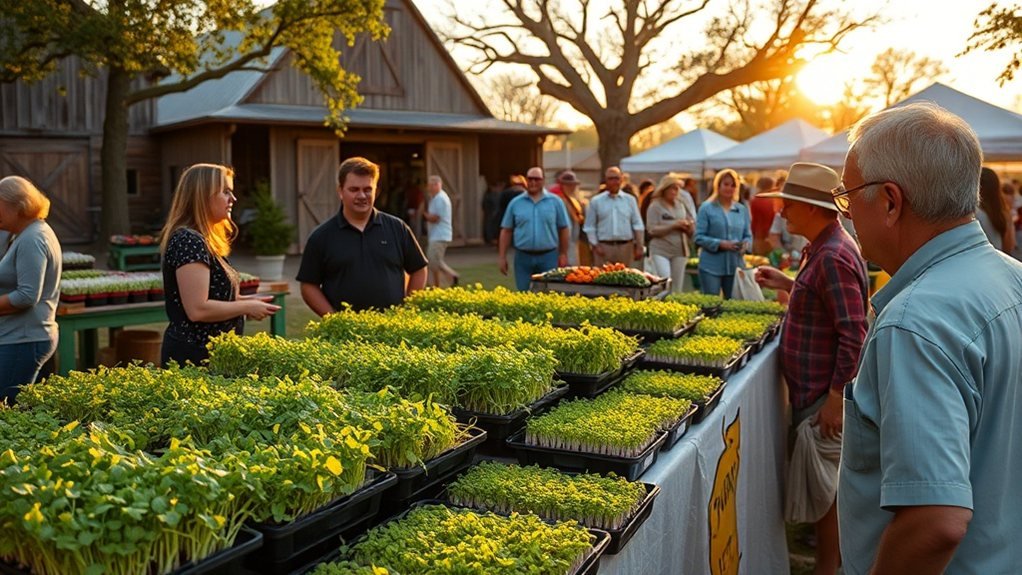
Before you apply to any market, you need to assess foot traffic patterns, vendor fee structures, and whether the market’s customer base aligns with the price points microgreens command. Texas offers roughly 298 USDA-listed markets, with dense clusters in Austin, Dallas, and Houston, giving you multiple viable options within a single metropolitan area. Austin’s year-round market activity, compared to Dallas and Houston markets that follow a more pronounced fall-through-spring calendar, means your timing and product availability will factor directly into which application you prioritize.
What to Look for Before You Apply
Choosing the right market before you apply matters far more than most new vendors realize, because not every farmers market in Texas is structured to support specialty produce like microgreens.
As a farmers market vendor Texas, you need to assess customer demographics, foot traffic patterns, and vendor category saturation before committing your application fee. A microgreens booth farmers market setup performs best where health-conscious shoppers already dominate the buyer pool, such as markets adjacent to fitness districts or university neighborhoods.
Review each market’s vendor rules carefully, particularly restrictions on pre-packaged goods, signage dimensions, and table configurations.
Contact the market manager directly to ask whether a produce or specialty greens slot is currently open, because many Texas markets maintain waitlists that aren’t publicly disclosed.
Markets Near Austin
Around Austin, the density of farmers markets gives microgreens vendors more entry points than almost any other metro area in Texas, but that volume also means you’ll encounter more competition for specialty produce slots.
The austin farmers market ecosystem spans multiple neighborhoods, each with distinct customer demographics and vendor saturation levels. Established markets in central Austin draw experienced microgreens growers texas-wide, making newer satellite markets in Cedar Park, Round Rock, and Pflugerville more accessible for first-time vendors building a track record.
Applying to a smaller peripheral market first lets you hone your display, pricing, and sales rhythm before competing for limited slots at higher-traffic venues.
Employ the MGW Market Finder at markets.microgreensworld.com to identify which Austin-area markets currently have openings.
Markets Near Dallas and Houston
Dallas and Houston operate on a scale that changes how you approach market selection entirely. A dallas farmers market in a high-traffic district like Farmers Market Dallas draws consistent foot traffic, but so does intense vendor competition. You’re not just showing up; you’re competing against established microgreens producers who’ve held those spots for years.
Houston follows a similar pattern. The houston farmers market network spans multiple neighborhoods, each with distinct buyer demographics and vendor expectations. Midtown attracts different customers than suburban Katy or The Heights.
In both metros, your strategy should prioritize markets where specialty produce vendors are present but microgreens specifically remain underrepresented. Employ the MGW Market Finder at [markets.microgreensworld.com](https://markets.microgreensworld.com) to identify exactly those gaps.
What to Expect When You Get There

Once you secure a vendor spot, the operational realities of Texas markets will define your early weeks more than your growing schedule will.
Booth fees across the state vary considerably, typically ranging from modest daily rates at smaller community markets to recurring weekly commitments at established urban venues in Austin, Dallas, and Houston, where demand and foot traffic justify the higher cost.
Understanding which microgreens varieties actually move in your specific market, whether that’s sunflower in high-volume suburban settings or specialty blends at curated urban markets, shapes how you allocate tray space before you ever load the truck.
Booth Fees and Setup Basics
Booth fees at Texas farmers markets vary more than most new vendors expect, typically ranging from $25 to $75 per market day at mid-sized urban markets, though premium spots in Austin’s SFC Farmers’ Market or Houston’s Urban Harvest can climb higher depending on placement and season. When you’re figuring out how to get a farmers market booth, factor that fee against your projected sell-through before committing.
Most Texas markets require a 10×10 canopy, weighted properly against wind, which is a real consideration at open-air venues. Tables, signage, and a cash or card processing setup complete your footprint.
Selling farmers markets Texas microgreens means your display needs refrigeration awareness too, since living trays or cut product degrades fast in direct heat. Plan accordingly before your first market day.
What Moves at Texas Markets
Getting your setup dialed in matters, but it won’t tell you what actually sells once you’re standing behind that table. Texas farmers market vendors operating in fall-through-spring windows consistently report stronger movement on mild, versatile varieties that complement regional cooking. As a microgreens for sale texas vendor, understanding demand patterns gives you a real operational edge.
| Variety | Market Performance |
|---|---|
| Sunflower | High visual appeal, strong repeat buyers |
| Radish | Fast turnover, price-sensitive customers |
| Pea Shoots | Consistent demand, chef interest |
Farmers market texas vendors who track weekly sales by variety outperform those who guess. Your table data, collected across four to six market days, will reveal which crops justify expanded tray production and which occupy space inefficiently.
Getting Your Application Ready
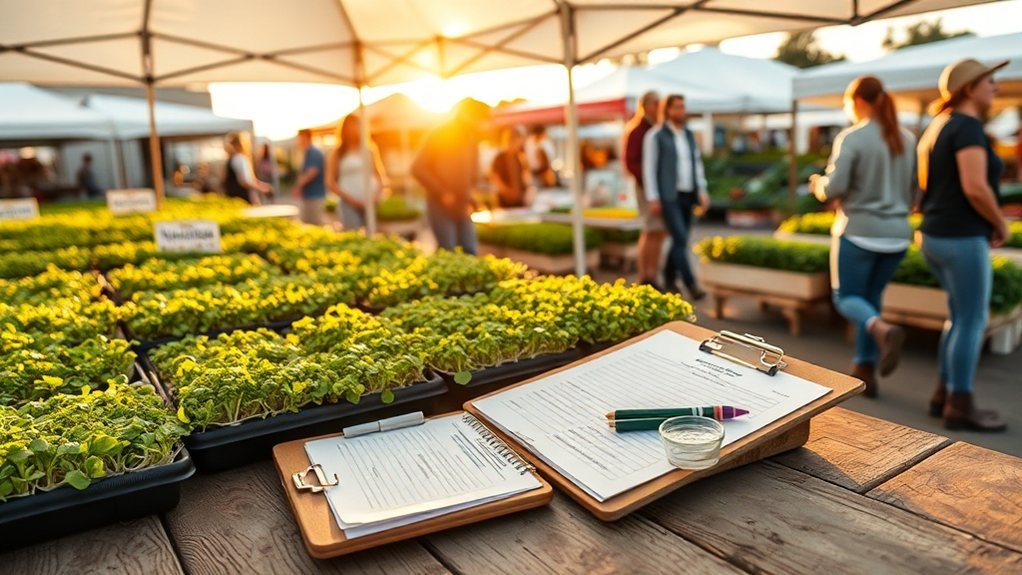
Your application is the market manager‘s first substantive evidence of whether you’re a serious vendor, and most rejections stem from incomplete submissions rather than weak product lines. When you prepare your materials, you’ll want to anticipate what managers are actually evaluating: proof of food handler certification, liability insurance documentation, and clear product descriptions that situate your microgreens within the market’s existing vendor mix.
The growers who secure spots consistently are those who treat the application as a competitive brief, tailoring each submission to reflect that specific market’s stated priorities rather than submitting a generic packet across every available venue.
What Market Managers Want to See
Market managers in Texas receive dozens of vendor applications each season, and the ones that move to the top aren’t necessarily from the most experienced growers. What distinguishes a strong farmers market vendor application is evidence of operational readiness, not just enthusiasm.
When you sell microgreens at farmers market locations across Texas, managers are evaluating your food handler certification, liability insurance documentation, and your understanding of the market’s existing vendor mix. They want confirmation that you won’t create logistical problems.
Bring photos of your booth setup, your product labeling, and a clear description of your growing methods. A manager reviewing twenty applications will favor the vendor who demonstrates they’ve already solved the problems that newer growers typically create on their first market day.
Common Mistakes to Avoid
Knowing what managers want is only half the work, because the application itself is where many growers quietly eliminate themselves from consideration. Incomplete product lists, vague descriptions, and missing permits signal inexperience to managers reviewing dozens of submissions for your local microgreens texas market.
| Mistake | Why It Hurts | Fix It |
|---|---|---|
| Vague product descriptions | Managers can’t assess fit | List every variety specifically |
| Missing cottage food permits | Automatic disqualification | File before applying |
| No photos submitted | Weakens credibility | Include booth and product shots |
Your microgreens business depends on treating the application like a professional document, not a formality. Review every field twice, attach everything requested, and submit before the deadline without assuming extensions exist.
Use the Market Finder to Shortcut Your Search

Searching through 298 markets manually isn’t a viable approach when you’re already managing grow cycles, harvest schedules, and delivery logistics. The MGW Farmers Market Finder at markets.microgreensworld.com filters that entire Texas database into actionable results, letting you identify viable selling microgreens locally opportunities without the friction of unstructured research.
As a microgreens grower Texas, you need proximity, scheduling compatibility, and market fit working together before you commit to an application. The tool pulls directly from USDA data, so the listings reflect verified markets rather than outdated directories.
Enter your location, review what surfaces near you, and prioritize based on what your current production volume can actually support. Start your search now at markets.microgreensworld.com and move from research to application faster.
Frequently Asked Questions
Can I Sell Microgreens at Multiple Texas Markets Simultaneously?
You can absolutely run multiple Texas markets at once. Most vendors stack weekend markets across different cities to move more volume. Just make sure your production schedule can actually support the demand before you commit.
Do Texas Markets Require a Cottage Food License for Microgreens?
Microgreens don’t fall under Texas cottage food law since they’re not processed foods. You’ll likely need a grower’s permit or nursery license instead. Check with your specific market manager before assuming either applies.
How Early Should I Arrive to Set up My Market Booth?
Arrive at least 90 minutes before opening. You’ll need time to unload, organize your display, and troubleshoot anything unexpected. Most experienced vendors show up even earlier when they’re working a new market.
What Happens if My Application Gets Rejected by a Market?
Don’t take it personally. Ask the market manager for feedback, fix whatever they flagged, and reapply next season. Meanwhile, apply to other markets. Rejection from one rarely means rejection everywhere.
Are There Texas Markets That Run Year-Round Indoors During Summer?
A few Texas markets do run year-round indoors, but they’re rare. Check Houston’s Urban Harvest and Austin’s HOPE Farmers Market. Employ the Market Finder at markets.microgreensworld.com to confirm current schedules before you apply.
Wrap-up
You’ve got the foundational knowledge to move forward strategically. Texas offers a substantial market infrastructure, but your success depends on matching your production capacity, schedule, and geographic reach to the right venues. Don’t waste time on guesswork—use the MGW Farmers Market Finder at markets.microgreensworld.com to identify viable options near you, evaluate them against the criteria covered here, and submit applications to the markets that align with your operational realities.
Leave a Reply